
Self-Tapping vs Self-Drilling Screws vs Hexagon Bolts
Self-Tapping vs Self-Drilling Screws vs Hexagon Bolts
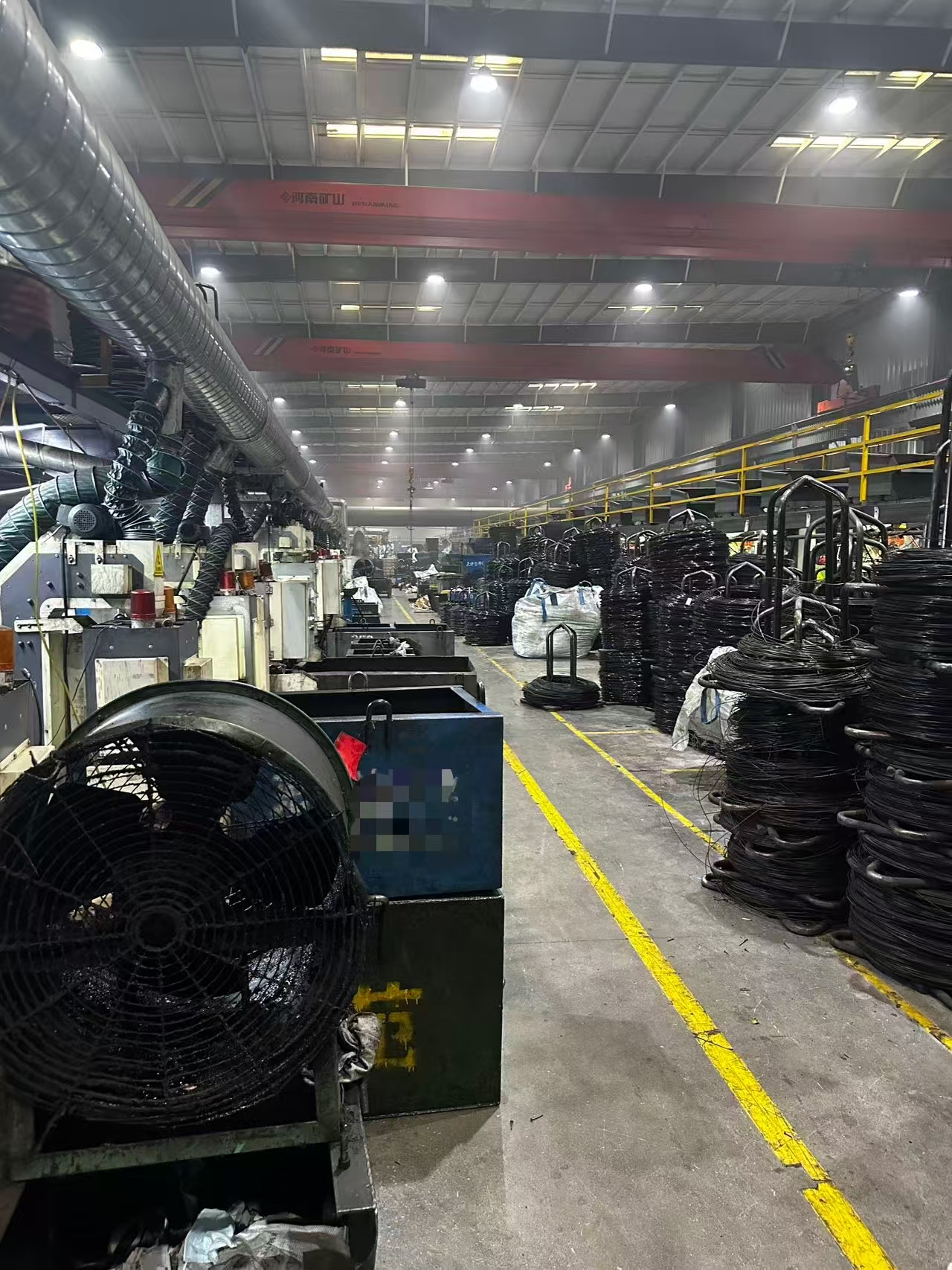
Company-supplied image of the Jiayuan fastener manufacturing site in Tangshan, Hebei, China.
Self-tapping screws, self-drilling screws and hexagon bolts are frequently listed side by side in construction fastener catalogues, yet they solve three different fastening problems. A self-tapping screw forms its own mating thread as it is driven. A self-drilling screw cuts its own hole with a drill point before the thread engages. A hexagon bolt clamps two components together and is specified by property class rather than by point geometry. Because the mechanism differs, the governing standard, the failure mode worth checking and the cost structure differ as well.
For buyers at decision stage, the useful comparison is therefore not which type performs best in general, but which type the substrate, the connection detail and the destination market actually require — and then whether the offers under review are specified to the same level. This analysis sets out that decision logic using published standards, tariff classification data and supplier documentation, and it separates what the available evidence supports from what still has to be verified order by order.
The comparison in brief. The three products are not substitutes. Self-tapping screws suit board-to-stud and light-gauge framing connections where a thread can be formed in the substrate; self-drilling screws remove the separate hole-making step but their drill point is bounded by steel thickness; hexagon bolts suit clamped, bolted connections specified by property class under ISO 898-1. Price comparison only becomes meaningful after material grade, coating class, dimensional standard and market-access documentation have been normalised.
Three fasteners, three different jobs
Self-tapping screws: the thread makes the connection
Self-tapping screws form a mating thread in the material they enter, which is why they dominate panel and light-gauge work. In the US market, ASTM C1002 specifies steel self-piercing tapping screws used to attach gypsum panel products or metal plaster bases to wood studs or steel studs. A second, quite separate reference covers framing: ASTM C1513 specifies steel tapping screws for cold-formed steel framing connections. The distinction matters commercially, because a board-attachment screw and a connection screw sit in different specification categories even when both are described as self-tapping. ISO 7049 provides a dimensional reference for cross-recessed head tapping screws, which is the level at which drawings and supplier communication usually operate.
Self-drilling screws: the drill point removes a production step
Self-drilling screws carry a drill point that cuts through the steel, with the thread following immediately behind it. ASTM C954 specifies steel drill screws for applying gypsum panel products or metal plaster bases to steel studs from 0.033 in. to 0.112 in. (0.84 mm to 2.84 mm) in thickness — a stated range that is itself a selection criterion. Where the application is a steel-to-steel structural connection rather than board attachment, the relevant evidence is a product-specific evaluation. ICC-ES evaluation report ESR-3332, for example, references self-drilling structural screws, the manufacturer's published installation instructions, connected-steel requirements and acceptance criteria AC118 for tapping screw fasteners in steel-to-steel connections. That report validates the product it evaluates; it does not transfer to another supplier's screw, which is why the document naming the purchased SKU matters more than the category name.
Hexagon bolts: clamp load, not point geometry
Hexagon bolts are a bolted-connection product, not a board fastener. The joint is made by clamp load developed through a nut and washer or a tapped hole, so specification focuses on strength class and material rather than on thread point. ISO 898-1 defines the property-class system — 8.8 and 10.9 are the familiar examples — for carbon steel and alloy steel bolts, screws and studs, and it is the reference used when a connection calls for a high-strength bolt. For corrosion-resistant stainless steel, EN ISO 3506-1 establishes grades such as A2 and A4 together with their property classes. Two boundary conditions follow. First, bolt performance depends on installation control, because clamp load is only achieved when tightening is controlled. Second, a bolt is the wrong fastener where there is no access for a nut or where the substrate is a gypsum panel; in those locations a tapping or drilling screw is the appropriate family.
Side-by-side comparison on documented characteristics
| Dimension | Self-tapping screws | Self-drilling screws | Hexagon bolts |
|---|---|---|---|
| Connection mechanism | Thread forms its own mating thread in the substrate or in a pierced hole | Drill point cuts the hole; the thread taps immediately behind it | Clamp load through a nut and washer or a tapped hole |
| Typical construction use | Gypsum panel to wood or steel studs; light-gauge framing connections | Gypsum panel to steel studs; light-gauge steel-to-steel work | Bolted steel assemblies, structural and equipment connections |
| US standard reference | ASTM C1002 for board attachment; ASTM C1513 for cold-formed steel framing connections | ASTM C954 for gypsum-to-steel-stud work; product-specific evaluation such as ESR-3332 for structural use | ISO 898-1 property classes as the specification language; the project specification governs acceptance |
| EU and international reference | EN 14566 for gypsum plasterboard assemblies; ISO 7049 for dimensions | DIN 7504 for dimensions; EN 14566 where used on plasterboard assemblies | ISO 898-1 for carbon steel; EN ISO 3506-1 for A2 and A4 stainless |
| Coating reference | ISO 4042 electroplated coating systems | ISO 4042 electroplated coating systems | ISO 4042, or a stainless grade that removes the coating question |
| US tariff line under HTS 7318 | 7318.14, self-tapping screws | 7318.14 or 7318.15 depending on thread and point configuration | 7318.15, other screws and bolts |
| Main selection risk | Using a board screw where a connection screw is specified | Assuming the drill point suits any steel thickness | Assuming clamp load without controlled tightening |
| Fit boundary | Needs a substrate that accepts a formed thread | Bounded by the steel thickness range in the applicable specification | Needs tool access and a specified property class |
Classification lines indicate how product types map to customs nomenclature, not market size. Trade-practice mapping of individual screw types should be confirmed against binding tariff information before duty planning.
Where the price difference actually comes from
The largest single cause of price dispersion in construction screws is specification that is not written on the quotation. A screw specification is effectively a three-part combination: material and property class, coating system and corrosion class, and dimensional standard.
Material. Carbon steel fasteners are specified through property classes under ISO 898-1; corrosion-resistant stainless fasteners through grades and property classes under EN ISO 3506-1. Moving from a carbon steel screw to an A2 or A4 stainless screw is a material-class change, not a coating upgrade, and it should never be treated as a like-for-like line in a price comparison.
Coating. ISO 4042 specifies electroplated coating systems for fasteners and supplies the corrosion-class reference used to write zinc-plated requirements. Two offers that both read “zinc plated” can still represent different requirements if the corrosion class is left unstated.
Dimension and geometry. ISO 7049 covers cross-recessed head tapping screw dimensions; DIN 7504 covers self-drilling screws with tapping screw thread. Diameter, length, thread and head configuration define the tooling, and therefore define the offer.
Three further cost layers sit outside the screw itself: the testing and documentation a destination market requires, the packaging format — small boxes, plastic bags or bulk cartons on fumigation-free pallets, with brand or barcode labelling where requested — and the order structure, since a mixed or trial order carries different economics from a single-size volume order. The practical rule is to normalise before comparing: write the property class or stainless grade, the coating standard and class, the dimensional standard and the required documentation into the request for quotation. Offers that cannot answer those four points are not comparable, however close their unit prices appear.
Market access is a separate cost layer from product performance
For construction products placed on the EU market, Regulation (EU) No 305/2011 — the Construction Products Regulation — requires a Declaration of Performance and CE marking where the product is covered by a harmonised standard or a European Technical Assessment. For gypsum plasterboard assemblies, EN 14566 sets out product specifications and test methods for mechanical fasteners; for load-bearing timber structures, EN 14592 sets requirements for dowel-type fasteners. Neither is interchangeable with the US route.
In the United States, the reference set runs through ASTM C1002 and ASTM C954 for board attachment and ASTM C1513 for cold-formed steel framing connections, with AISI S904 identifying the test method for determining tensile and shear strength of screws. AISI S904 describes a method; it does not by itself establish that a particular screw has been tested to it, so the test report remains the operative document.
Three verification points follow. A single SKU range cannot be presented identically in both regions, because board-attachment screws and structural-connection screws are separate product lines in both systems and the test methods differ by jurisdiction. Product-specific evaluations are named documents: an ICC-ES evaluation report or a European Technical Assessment describes one product under stated conditions, and a supplier citing “evaluation” without a report number and holder is offering a category rather than evidence. Finally, harmonisation status should be checked at the time of purchase, because whether EN 14566 provides a CE-marking route for a given fastener depends on its listing as a harmonised standard, which is a status to confirm against the current EU Official Journal rather than to assume.
The thread decision inside an order: drywall screws versus chipboard screws
Two board-screw families sit close enough in appearance that they are sometimes interchanged to simplify a purchase order, and the supplied comparison material sets out why that is a false economy.
Drywall screws use a fine thread and are intended for gypsum board. Against chipboard screws, the comparison identifies a lower risk of board cracking, faster driving speed in gypsum board installation and a slightly lower cost for gypsum board projects. Chipboard screws use a sharp thread that grips particle board more aggressively; against drywall screws, the comparison identifies better gripping force on particle board, higher pull-out resistance, suitability for particle board, chipboard and furniture assembly, and a slightly higher cost for furniture-board fastening. Both families are described as requiring no special maintenance.
The decision rule is substrate-first. Where the panel is gypsum, the fine-thread drywall screw addresses the cracking risk that matters; where the panel is particle board or chipboard, the sharp-thread screw addresses the pull-out risk. Substituting one for the other to consolidate a line item moves the risk from cracking to pull-out, or the reverse, and the saving on the screw is not the relevant number.
Mapping the sub-families to the three fastener types
Most construction screw enquiries arrive as an application phrase rather than as a standard, so the mapping below keeps the comparison anchored to the three types.
Construction screws for steel. Where the steel is a light-gauge stud, self-drilling screws under an ASTM C954-type specification are the board-attachment option, while tapping screws under ASTM C1513 are the framing-connection option. Steel thickness is the first check, because the drill-point specification is bounded by it.
Construction screws for wood. Wood screws and self-tapping wood screws work where the timber accepts a formed thread. Where the timber connection is load-bearing, the European route runs through EN 14592 and, in practice, a European Technical Assessment for the specific screw; a general-purpose wood screw is not a structural substitute.
Roofing screws. Roofing screws are not separately visible in trade statistics. At HS 7318 level they must be mapped to 7318.14 or 7318.15 depending on thread and point configuration, and that mapping should be confirmed against binding tariff information before it is used for duty planning.
Stainless steel construction screws. Grade and property class come from EN ISO 3506-1. A2 and A4 are grades within that system, not marketing labels, and the grade should appear explicitly on the order.
High-strength construction screws. Property class under ISO 898-1 is the specification language for carbon and alloy steel, and tensile and shear test evidence is what converts a class claim into a verifiable document.
What the JIAYUAN profile supports — and where the limits sit
JIAYUAN Construction Screws are produced by Tangshan Jiayuan Metalwork Co., Ltd., a hardware fastener manufacturer based in Tangshan, Hebei, China. The supplied company record describes a 4,000 m² facility, 50 employees, an R&D team of 15 engineers, a 15-inspector quality-control team, an annual output of 50,000 tons and more than 100 nail and wire machines producing steel wire, nails and screws. Ninety percent of output is exported, with listed markets including Saudi Arabia, Kuwait, Israel, Palestine, Brazil, Chile, Kenya, Tanzania, Mozambique and Senegal, among others.
The listed range covers wire mesh, common nails, drywall screws, wood screws, chipboard screws, drilling screws and tapping screws. Read against this comparison, that range addresses the self-tapping and self-drilling families plus the drywall and chipboard board-screw families. Hexagon bolts are not part of the listed range, so a bolted-connection requirement should be raised as a separate enquiry rather than assumed from the screw portfolio.
Quality control is described as full-process: incoming raw material inspection, in-process production patrol inspection, finished-product random sampling and pre-shipment recheck. The defects the system is designed to eliminate are the ones that drive site complaints — uneven wire diameter, weight tolerance out of range, coating peeling, rust susceptibility and substandard hardness — and batches are described as tested for tensile strength, torque and surface coating thickness before delivery.
On commercial terms, the company states a standard MOQ of 100,000 pieces per size with flexibility for trial or mixed orders; 25–35 days production after deposit, with stock items shipped within 7 days; T/T at 30% deposit and 70% before shipment as the main method, with L/C at sight or open account discussable for long-term customers. Listed coating options are zinc plating, black oxide, galvanized, hot-dip zinc, phosphate and colour painting. OEM logo printing and private-label packaging are supported, alongside engineering support and drawing services for application-specific fastener selection.
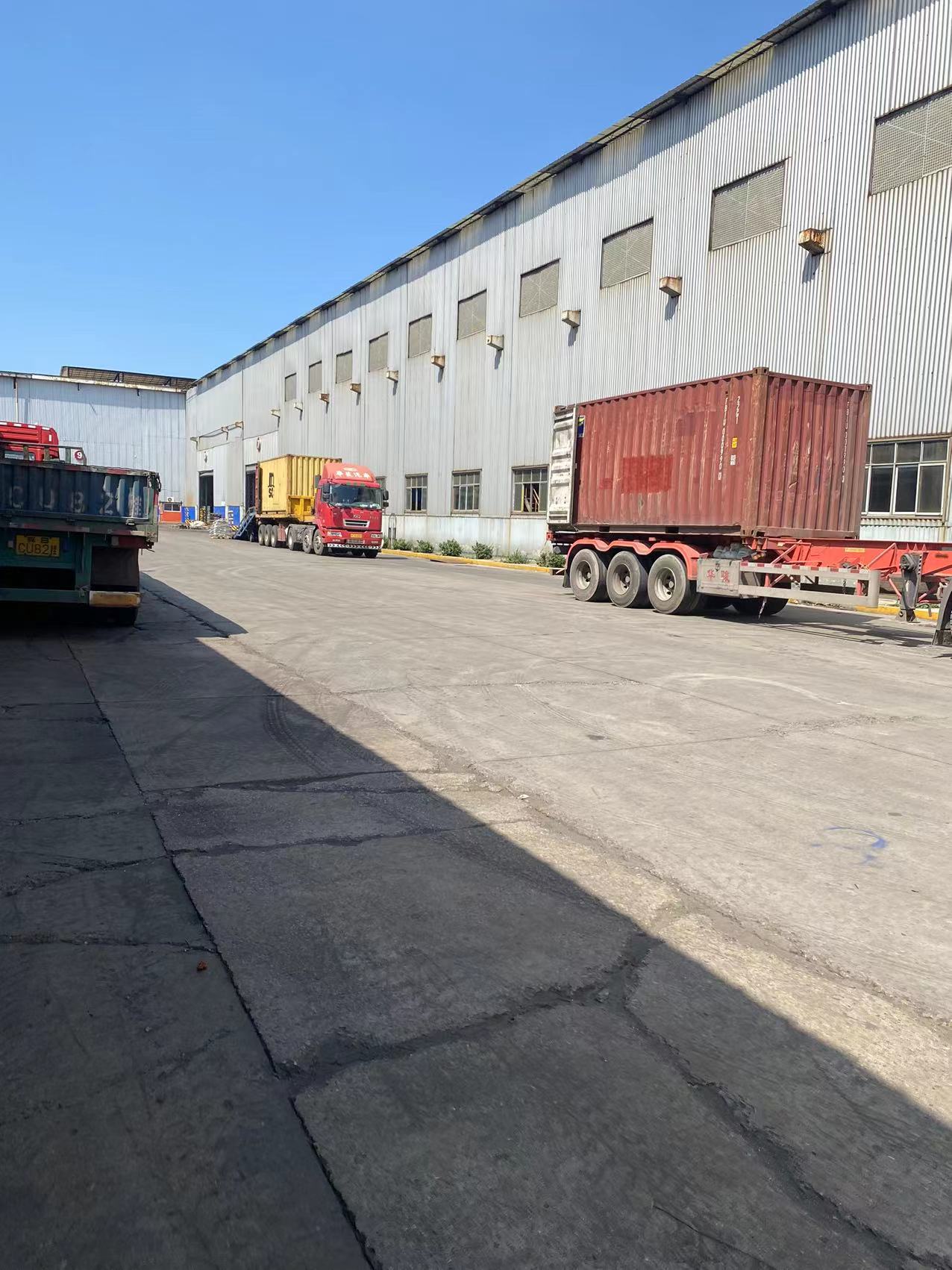
Company-supplied view of the Jiayuan manufacturing facility, which the company record lists at 4,000 m² with more than 100 nail and wire machines.
Three limits belong beside those facts. First, no product-specific third-party evaluation report for JIAYUAN screws was included in the supplied material; where a project requires an ICC-ES report or a European Technical Assessment, that document has to be requested and checked against the exact SKU. Second, the statement that CE, SGS, ISO 9001 and material test reports can be provided on request is a supplier statement of availability — the certificate number, issuing body, scope and validity period still need verification per product. Third, the company's published product description refers to 45# high-carbon steel for its construction screws; grade confirmation should come from the mill certificate or test report accompanying the shipment, because a grade name alone does not establish a property class.
A verification sequence for the decision stage
- Fix the substrate and connection type first: panel type, stud or steel thickness, and whether the joint is board attachment or a structural connection.
- Name the standard before the product: ASTM C1002, C954 or C1513 for US-bound work; EN 14566 or EN 14592 plus the CPR documentation route for EU-bound work.
- Write the specification ladder into the request: material grade or property class, coating standard and class, dimensional standard, head and drive type.
- Request the documents that name the product: test reports to the applicable method, evaluation reports with holder and number, certificates with scope and validity.
- Confirm dimensional availability against the drawing reference, since a quoted “construction screw” fixes neither diameter, length nor thread.
- Agree the commercial frame: MOQ per size, mixed-order feasibility, packaging and labelling, and production lead time against stock availability.
- Keep a per-batch record. Tensile, torque and coating-thickness results belong with the shipment documentation, not only in a supplier brochure.
Market signals: what the published figures do and do not show
Two published figures frame the category. Grand View Research valued the global structural wood screws market at USD 4.6 billion in 2024 and projects USD 5.1 billion in 2026 rising to USD 7.4 billion by 2033. Separately, OEC data derived from UN Comtrade records global trade in self-tapping screws of iron or steel (HS 7318.14) at USD 4.13 billion in 2024, a 0.72% decrease from 2023.
Those numbers should not be set against each other as evidence of substitution between product types. They measure different things: one is a market valuation for a defined product category, the other a trade value for a customs line. The trade figure is also broader and narrower than it appears. Broader, because HS 7318.14 covers self-tapping screws regardless of construction end use; narrower, because construction screw types are not separately visible in the HS 7318 basket at all. Published trade data therefore cannot support a statement about the export volume of drywall screws from any country.
The defensible reading is narrower: the category has measurable scale, and product-level conclusions require product-level evidence — shipment records, supplier documentation, or test and evaluation reports attached to the actual SKU. That is the same evidence a buyer needs for the comparison itself.
Outlook
The direction visible in the standards and regulatory material is toward documented, application-specific qualification rather than generic product naming. Property classes, coating classes, dimensional standards and jurisdiction-specific conformity routes each add a layer that a purchase order either captures or loses, and the CPR route in Europe makes the documentation layer explicit for products within its scope. The practical consequence for a buyer is that the specification file becomes a procurement asset: it shortens supplier evaluation, makes quotations comparable and gives an auditable basis for accepting a batch.
FAQ
What is the main difference between self-tapping and self-drilling screws?
A self-tapping screw forms its own mating thread in the material it enters and is typically used for board-to-stud and light-gauge framing work. A self-drilling screw adds a drill point that cuts its own hole, so the separate hole-making step is removed. The standards reflect that split: ASTM C1002 covers self-piercing tapping screws for gypsum panel attachment, while ASTM C954 covers steel drill screws within a stated steel-stud thickness range of 0.033 to 0.112 in. Selection turns on whether a hole must be cut in steel.
When is a hexagon bolt the correct choice instead of a construction screw?
A hexagon bolt fits a clamped, bolted connection that develops load through a nut and washer or a tapped hole, and where the specification calls for a property class under ISO 898-1. It suits steel assemblies and equipment fixing where tool access exists. It is not a substitute for a tapping or drilling screw in gypsum panel attachment, and it should not be selected where tightening cannot be controlled, because clamp load depends on installation discipline.
Do self-drilling screws work in any steel thickness?
No. ASTM C954 defines a range for steel drill screws used to attach gypsum panels to steel studs, from 0.033 in. to 0.112 in. (0.84 to 2.84 mm). Outside such a range, or where the connection is structural steel-to-steel rather than board attachment, the reference shifts to a product-specific evaluation such as an ICC-ES report referencing AC118. Buyers should match the drill point to the stated substrate thickness and ask for the document that covers that thickness.
How should two screw quotations with different prices be compared?
Compare specification first, price second. Two quotations are comparable only when they state the same material or property class (ISO 898-1 for carbon steel, EN ISO 3506-1 for A2 or A4 stainless), the same coating standard and corrosion class (ISO 4042), the same dimensional reference (ISO 7049 or DIN 7504) and the same documentation package. Packaging, MOQ per size and lead time then explain the remaining gap. A lower unit price on an unstated specification is an unpriced risk rather than a saving.
Which documents should a buyer request before approving a construction screw supplier?
At minimum: the material test report or mill certificate for the batch; tensile, torque and coating-thickness results; the dimensional standard the product is manufactured to; and, for regulated markets, the conformity documents — a Declaration of Performance and CE marking where the Construction Products Regulation applies in the EU, or the relevant ASTM test and evaluation report for US-bound structural work. Where a supplier states that certifications are available on request, the certificate number, issuer, scope and validity should be verified against the specific SKU.
Product and packaging details for the range discussed here are set out in the JIAYUAN nails and screws product brochure (PDF).
Tem questões ou precisa de mais detalhes?
Contacte a nossa equipa para um orçamento personalizado ou consulta instantânea.
Solicitar orçamento
Preencha o formulário abaixo e a nossa equipa entrará em contacto com uma proposta personalizada.
Chat direto do WhatsApp
Prefere conversar em tempo real? Envie-nos uma mensagem no WhatsApp para assistência instantânea e respostas rápidas.
- Obter orçamento personalizado
- Partilhar fotos ou documentos
- Discuta as suas necessidades diretamente
Geralmente responde em 5–30 minutos durante o horário de expediente.