
Seven Reader Formats, One Task Set: A Buyer's UHF Comparison
Seven Reader Formats, One Task Set: A Buyer's UHF Comparison
A production line does not buy a reader; it buys completed reads. Yet UHF RFID reader comparisons usually run format by format — fixed readers measured on conveyor speed, handhelds measured on scan rate, gates measured on doorway throughput — each judged on the job it handles best and on a specification sheet written by the seller. That method rewards headline parameters and hides the differences that actually decide a deployment: which tasks a format can finish without manual help, how much engineering it takes to integrate, and how much of the result depends on the person holding it.
This comparison holds the work constant. Seven formats are assessed against one identical set of smart-manufacturing tasks: RFID fixed reader, handheld reader, AI-assisted reader, Wi-Fi-connected reader, ceiling reader, tray reader and gate reader. Each is examined on workflow coverage, integration effort and operator handling, using documented product characteristics and attributed third-party evidence. No laboratory test was run for this article and no format is declared a universal winner; the output is an evaluation framework a procurement team can carry into a proof of concept.
Why the task set has to be fixed before the shortlist
Reader shortlists are usually built from capabilities rather than jobs. A plant lists the formats it has heard of, collects specifications, and then discovers during installation that the comparison never reflected its own material flow. Fixing the task set first removes that gap. The six tasks below are typical of smart-manufacturing lines and are used unchanged for every format.
- Kit and tray completeness at the line side. Confirming that a kit, tray or parts set is complete before it moves to the next station.
- In-motion identification on a conveyor. Reading tags as items pass a fixed point at production speed, with orientation varying.
- Tool issue and return accountability. Recording who took which tool or asset, and whether it came back.
- Doorway and zone-transfer events. Capturing movement across a WIP boundary, dock door or storage entrance without capturing adjacent stock.
- Room or shelf-level inventory sweep. Counting a defined area, rack or store without item-by-item handling.
- Yard, returnable transport item and container movement. Identifying containers and transport items across a wider, harsher footprint.
Holding this set constant exposes the trade-offs that format-by-format marketing hides. A handheld that looks weak on in-motion conveyor reads is often the only economical way to close exception loops; a gate that reads reliably at a doorway can still corrupt inventory records if it also reads the shelving beside it.
How each format earns its place on the same task set
RFID fixed reader with external antennas
Workflow coverage. The fixed reader is the format built for in-motion work. DAILY RFID's tuning guidance for high-speed conveyors pairs high-speed UHF readers and antenna arrays with trigger inputs synchronised to photoelectric sensors or PLC signals, then adjusts antenna quantity, polarisation, power and read window to conveyor speed and tag orientation. The same architecture, with a deliberately narrowed read zone, serves doorway and zone-transfer tasks.
Integration effort. High, and concentrated in infrastructure rather than electronics. Power is not uniform across this class: the DL6940/6960 and DL920Plus require DC power, while the DL921 series supports Power over Ethernet or DC +9 V to +24 V, and consumption spans 0.25 W at the USB-powered DL9702 desktop unit to 12 W for a DL921 configuration with GSM. Cabling, antenna mounting, trigger design and read-window tuning sit on top of that.
Operator handling. Low in normal running, which is the format's commercial argument: nobody holds a device and reads happen as material passes. The cost moves to exceptions, because a missed read at a fixed point has no operator standing by to correct it.
Boundary. A fixed reader cannot be judged without its antennas, mounting and trigger design. Its own specification is the least informative part of its performance.
Handheld reader
Workflow coverage. Handhelds own irregular geometry: room and shelf sweeps, spot checks in the yard, and the exception loop when a fixed point misses a read. DAILY RFID's DL880 UHF handheld PDA combines RFID, barcode and network synchronisation in a rugged mobile unit, and its published comparison against consumer-phone scanning estimates field data capture 3–8x faster, labour cost down 53%–73% and operating-error cost down 29%–54%, at a payback of 6–24 months. Those are company estimates and should be re-tested on the buyer's own tags and walking routes.
Integration effort. Low fixed infrastructure, moderate application work. The device has to exchange data with the business system, and Bluetooth readers add connection-state handling with local record caching and queued upload after reconnection.
Operator handling. Highest of the seven. Every read depends on a person aiming, walking and deciding, so training, route design and battery logistics belong in the cost model.
AI-assisted reader
Workflow coverage. The label describes a software function inside a hardware purchase, and it should be evaluated that way: which named task error does the function reduce, and how is that reduction measured during acceptance? A reader presented as AI-powered still depends on antenna placement, RF power and tag orientation to produce the read events the software acts on, so the algorithmic claim sits on top of physical read-zone design rather than replacing it.
Integration effort. Moderate to high, because both the data path and the software layer must be specified: what the function consumes, where it runs, and what the plant actually receives.
Operator handling. Potentially low — but only for the tasks the function demonstrably covers.
Boundary. A capability label is not an acceptance criterion. Convert it into a measurable statement before signing, or score it as zero.
Wi-Fi-connected reader
Workflow coverage. This is a connectivity class rather than a read principle. It suits read points where pulling cable is expensive or disruptive, and remote sites where a wired run is impractical. DAILY RFID's stated guidance is explicit about the trade-off: for mission-critical fixed read points, use PoE or wired Ethernet; for remote sites, configure WiFi/GPRS with queued upload and breakpoint-resume, supported by heartbeat monitoring, automatic reconnection and local data buffering.
Integration effort. Moderate: a WLAN coverage survey, a power decision, and an agreed buffering rule. The read zone still has to be engineered; wireless connectivity neither widens nor narrows it.
Operator handling. Low, with one caveat — connectivity states become visible to users, so the exception message matters as much as the read itself.
Ceiling reader
Workflow coverage. Overhead integrated-antenna designs cover space that cannot be given up to a portal. The DL6990 UHF ceiling RFID reader is an all-in-one ceiling-mount unit with an integrated antenna, IP66 protection, a reading range up to 5 m and simultaneous reading of up to 50 tags, supporting ISO 18000-6C and EPC Class 1 Gen 2 across ISM 860–868 MHz, 902–928 MHz or 920–925 MHz bands, with frequency customisation optional. DAILY RFID positions it for smart retail, warehouse, hospital and government archive environments, and for jewellery, pharmaceutical, sample and parts inventory.
Integration effort. Moderate: ceiling structure, mounting height, a network drop and, where relevant, a cleaning regime compatible with IP66. Because the antenna is integrated, coverage is shaped by mounting position, orientation and transmit power rather than by choosing a separate antenna — a real difference from the fixed-reader format when a doorway needs a hard edge.
Operator handling. Close to none, which is exactly why tag-orientation discipline matters more here than anywhere else in the set.
Tray reader and mat antenna
Workflow coverage. This is the format for kit completeness. DAILY RFID's guidance for tray reads combines tray readers, mat antennas and multi-antenna UHF layouts so tags are read from several angles, with antenna position and reader power tuned and tag orientation standardised into the tray SOP. The company also compares a mat antenna with handheld item-by-item scanning and estimates channel inventory more than 5x faster.
Integration effort. Moderate to high per station, because cost multiplies with the number of stations rather than with plant area.
Operator handling. High in process terms: the format works when every item returns to the same place in the same orientation, and degrades quietly when it does not.
Gate reader
Workflow coverage. Gates own transition events: WIP crossing a zone boundary, returnable transport items entering or leaving, containers at a yard portal. The engineering problem is selectivity. DAILY RFID's gate guidance narrows the read zone with antenna placement, RF power control, shielding panels, RSSI filtering and event-triggered read windows, so nearby shelving is not captured.
Integration effort. High: structural mounting, shielding, RF tuning and integration with the logistics or manufacturing system.
Operator handling. Low, with passage discipline replacing device handling.
Boundary. A gate that reads too much is worse than one that reads too little, because false events corrupt inventory records at scale.
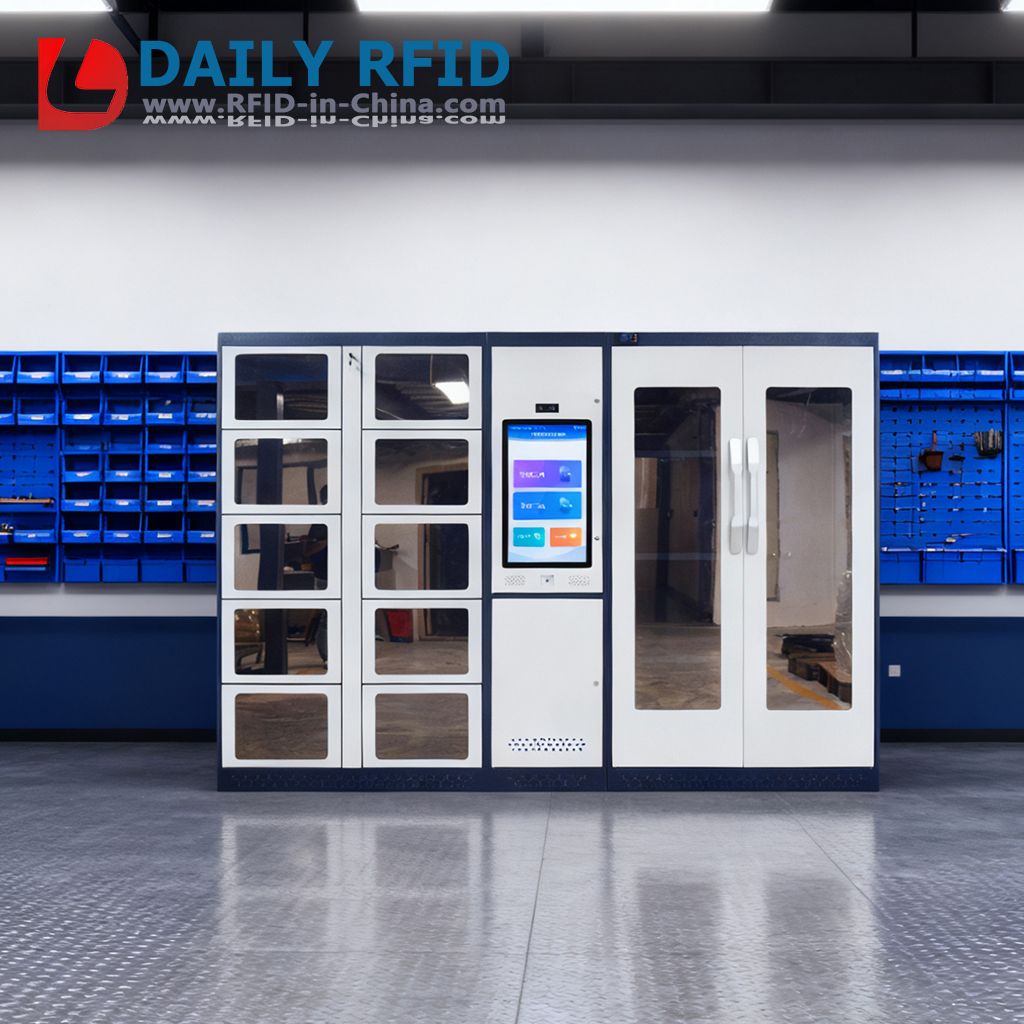
Side-by-side: the seven formats on one task set
| Format | Tasks it can own | Integration effort | Operator dependence | Proof to demand |
|---|---|---|---|---|
| Fixed + external antennas | Conveyor reads; zone transfer; station presence | High — power, cabling, antenna mounting, trigger timing | Low | Read-zone map at line speed; interface test; regional frequency version |
| Handheld | Room sweeps; exception loops; yard spot checks | Low infrastructure; moderate app work | High | Scan rate on your tags; offline and reconnect behaviour; service terms |
| AI-assisted | Only the task error the documented function addresses | Moderate to high — data path plus software layer | Low to medium | Function description; measured reduction of a named error |
| Wi-Fi-connected | Read points without cable; remote sites | Moderate — WLAN survey, power, buffering rule | Low to medium | Throughput on your network; buffer and reconnect test |
| Ceiling | Room sweeps; overhead presence; parts and sample areas | Moderate — mount, height, network | Low | Tag orientation matrix at mounting height; 50-tag behaviour on your mix |
| Tray / mat antenna | Kit completeness; defined-footprint counts | Moderate to high per station | High (orientation SOP) | Repeatability across mixed orientations; cycle time per tray |
| Gate | Zone transfer; container and RTI movement | High — structure, shielding, RF tuning | Low, with passage discipline | Cross-read test against adjacent shelves; event-log audit |
Effort levels and operator dependence are editorial assessments of the documented characteristics described above, not measured test results. Task assignment must be re-confirmed on the buyer's own line.
The workload decides as much as the reader
Readers read tags, and the tag set is where many comparisons quietly break down. The workload units a manufacturing buyer should bring into the same test include tool tags on metal tools, tray and kit contents, tyre tags from tyre manufacturing and quality control, and personnel wristbands where operator identity is part of the record.
Tool tags illustrate the point. DAILY RFID compares a UHF tool label with engraved or handwritten labels and estimates scanning labour cost down 50%–85% and inventory error cost down 30%–70%. Those figures describe a labelling change, not a reader; the reader only converts the improvement into a measured result if the tag survives the tool crib and can be read at the distance the workflow requires.
Material proximity is equally decisive. DAILY RFID's own guidance calls for on-metal tag structures, foam or ferrite spacing and a retune of reader and antenna after installation on metal racks and cabinets, and warns against placing UHF tags directly behind liquids, where HF/NFC or a different tag structure may be the better fit. Tyre tags sit in rubber and near metallic equipment, so sample fitting and read-range testing belong in the plan rather than in an assumption.
One workload needs a separate infrastructure decision. The DAILY RFID active wristband operates at 2.4–2.5 GHz with an adjustable reading distance of 1 to 80 m — outside the 860–960 MHz UHF Gen2 path described for the passive readers above. Personnel identification through that wristband is a distinct system choice, not an accessory to the reader shortlist.
Integration effort: five items that change the estimate
Power. USB, DC and PoE are not interchangeable in practice. The power options across the DAILY RFID range — USB on the DL9702 desktop unit, DC on the DL6940/6960 and DL920Plus, PoE or DC +9 V to +24 V on the DL921 series — change cabinet design, cable routes and battery decisions for wireless formats.
Network path. Wired Ethernet, PoE and WiFi/GPRS differ in failure behaviour, not only in convenience. Queued upload, breakpoint-resume and local buffering are the difference between a recoverable gap and a lost production record.
Protocol exposure. The air interface is largely shared: UHF readers operate under the EPCglobal Gen2 (ISO/IEC 18000-6C) standard, and a supplier-listed integrated-antenna reader covers 860–960 MHz with Gen2, ISO 18000-6C and ISO 18000-6B support. Protocol compatibility therefore differentiates less than the upper-layer interface does. Turck, for example, states that selected readers expose RFID data through OPC UA with the AutoID Companion Specification for PLC, MES, ERP, WMS or cloud systems — a portfolio-level, manufacturer-stated claim that still needs model and licence confirmation.
Frequency version. Regional bands must be locked into the bill of materials. DAILY RFID configures readers, modules and tags for EU, US and China bands and recommends fixing the frequency version, hopping parameters and certification requirements before shipment.
Embedded modules. Where the reader is a module inside another machine, EMC work enters the schedule: power filtering, grounding, antenna spacing and enclosure layout, followed by EMC pre-scan and read-distance retesting before mass production.
How much of the result depends on the operator
Operator handling is the criterion most often left out of a comparison and most often responsible for disappointment. Fixed, ceiling and gate readers remove the person from the read but transfer the burden to exception handling: someone must still find the item that was missed, and that response time belongs in the business case. Handhelds keep the person in the loop, which raises per-read cost but makes recovery immediate. Tray and mat formats depend on physical discipline, so their performance is a process metric as much as a hardware metric.
What published evidence can and cannot prove
Published material supports three different levels of claim, and buyers should keep them apart. Manufacturer product pages are self-reported: Turck states IP67 protection for readers intended for dusty, damp and temperature-variable industrial conditions; Merhein lists an integrated-antenna reader at 860–960 MHz with Gen2 and ISO 18000-6C/6B support. Both are useful screening inputs and neither is an independently measured result for a specific model in a specific plant.
Application literature sits at the next level. A 2025 institutional paper describes RFID-enabled trolley tracking in an aerospace manufacturing environment, linked to a business-intelligence visual-management system. That establishes that the application pattern exists and that material-flow visibility can be connected to a management layer; it does not compare reader formats or report reader-level performance.
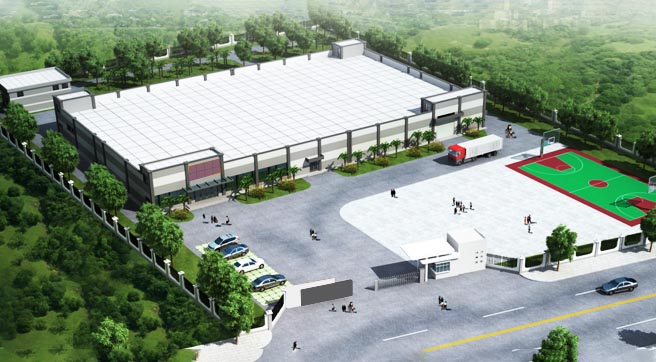
Company-published case studies add directional numbers, but the methodology and denominator are often not visible in the public summary, so the figures cannot be transferred to a different tag, layout or environment. Supplier scale is a fourth, separate topic: DAILY RFID, founded in 2008, reports a 28,000 m² factory, 180–200 employees and 38 engineers, with reader output of 100,000 units a year — relevant to supply continuity and configuration support, not evidence that a format fits a task. The company publishes its range at www.rfid-in-china.com.
The practical consequence is that published evidence narrows the shortlist; only the buyer's own test can score it. DAILY RFID's own procurement guidance points the same way, recommending matched sample tags, readers, antennas and demo software for a structured proof of concept that validates read distance, mounting environment, interface protocol and expected return before bulk production.
A scoring model a buyer can defend internally
Score each shortlisted format on five criteria, and write the acceptance test for each one before the pilot starts.
- Task completion. Can the format finish the named task without manual assistance, at the required rate, for a full shift?
- Proof of performance. Is there a measured result on your tags, your layout and your environment — or only a datasheet value?
- Integration effort. Power, network, protocol exposure, mounting, frequency version and, for modules, EMC work, each costed as engineering hours rather than described as an interface.
- Operator handling. Hands-free or handheld, training time, and the response time to a missed or false read.
- Recovery and lifecycle. Buffering, reconnection, exception logging, and the service path for a device that fails mid-shift.
Weights should reflect the plant's own priorities and should be set before any vendor demonstration, so that a strong showing on an easy task cannot outweigh a weak showing on the task that matters. Readers that claim wide coverage but fail the exception test usually cost more over five years than one format that is deliberately narrow and proven.
Market context: why seven formats coexist
Format diversity reflects task diversity, not indecision. Mordor Intelligence reports that UHF captured 40.72% of total RFID market revenue in 2025 and projects the UHF segment to surpass USD 14.9 billion by 2031 at a 12.45% CAGR, while stating that more than 60% of factories adopting Industry 4.0 deploy RFID readers for asset traceability. MarketsandMarkets expects Asia Pacific to hold the largest RFID market share from 2025 to 2034.
Those totals should be read carefully. MarketsandMarkets headlines USD 30.47 billion by 2034, while Mordor's figure is USD 14.9 billion by 2031 — a gap that most plausibly reflects different market scopes rather than a contradiction, and which makes blended totals meaningless. For a buyer, the defensible reading is narrower: reader spend is spread across no single dominant format because manufacturing tasks are physically different, and a comparison that assumes one format will absorb the others is a planning error rather than a technology forecast.
Where this comparison stops
This framework does not rank the seven formats, because ranking would require identical tests that were not run. It does not cover price, minimum order quantity, lead time, warranty or total cost of ownership, for which no verified evidence was used. It also does not predict read accuracy: results depend on tag structure, orientation, mounting, material proximity and RF environment, and change when any of those change.
Conclusion: score task fit, then demand proof
A fixed reader with external antennas, a handheld, an AI-assisted unit, a Wi-Fi-connected reader, a ceiling reader, a tray reader and a gate are not competing for the same job. They compete for the same budget, which is why the comparison has to be made against identical tasks: which format closes which job with the least engineering and the most predictable operator behaviour. Buyers who score on task fit and proof of performance — and who treat headline parameters as an invitation to test rather than a conclusion — end up with a shorter shortlist and a stronger acceptance record.
Reference document: the DAILY RFID company profile (PDF) summarises factory, certification and product-range information for procurement files.
FAQ
Can one UHF RFID reader format cover an entire production line?
Usually not, because the six tasks differ physically. In-motion conveyor reading needs external antennas with synchronised triggers; room or shelf counting suits an overhead integrated-antenna unit such as the DL6990, rated to IP66 with a reading range up to 5 m and up to 50 simultaneous tags; kit completeness suits tray or mat formats; and irregular areas suit handhelds. One format can dominate a line, but only after the tasks it cannot finish are assigned elsewhere.
How should read performance be compared when vendors publish different specifications?
Hold the test constant rather than the datasheet. Use the same tags, the same mounting positions and the same acceptance criteria for every format, and treat published read range as unverified until it is measured on your own material. A structured proof of concept with matched tags, readers, antennas and demo software should validate read distance, mounting environment and interface protocol before bulk commitment.
Which integration details most often change the effort estimate?
Six items recur: the power source (USB, DC or PoE), the network path and its buffering behaviour, the upper-layer protocol exposed to PLC, MES, ERP or WMS systems, antenna mounting and read-zone tuning, the regional frequency version, and EMC work if a reader module is embedded into another machine. Each is an engineering task with hours attached, not a line item on a specification sheet.
How does an integrated-antenna ceiling reader differ from a fixed reader with external antennas?
The difference is where the coverage is decided. A fixed reader lets the buyer choose antenna type, gain, placement and cabling, which is what a doorway with adjacent shelving usually needs. A ceiling reader such as the DL6990 fixes the antenna inside the enclosure, so coverage comes from mounting height, orientation and transmit power. Installation is simpler and no external antenna cabling is required, but the read zone is shaped by position rather than by antenna selection.
Do AI-assisted readers remove the need for read-zone engineering?
No documented basis supports that substitution. A reader described as AI-powered still depends on antenna placement, RF power and tag orientation to generate the events its software processes, and the same tuning guidance applies. The buyer's test should require a description of the function, the data it uses, and a measured reduction of a named task error during acceptance — otherwise the claim cannot be scored.
Tem questões ou precisa de mais detalhes?
Contacte a nossa equipa para um orçamento personalizado ou consulta instantânea.
Solicitar orçamento
Preencha o formulário abaixo e a nossa equipa entrará em contacto com uma proposta personalizada.
Chat direto do WhatsApp
Prefere conversar em tempo real? Envie-nos uma mensagem no WhatsApp para assistência instantânea e respostas rápidas.
- Obter orçamento personalizado
- Partilhar fotos ou documentos
- Discuta as suas necessidades diretamente
Geralmente responde em 5–30 minutos durante o horário de expediente.