
Sheet Metal Fabrication: A Buyer's Industry Reference
Sheet Metal Fabrication: A Buyer's Industry Reference
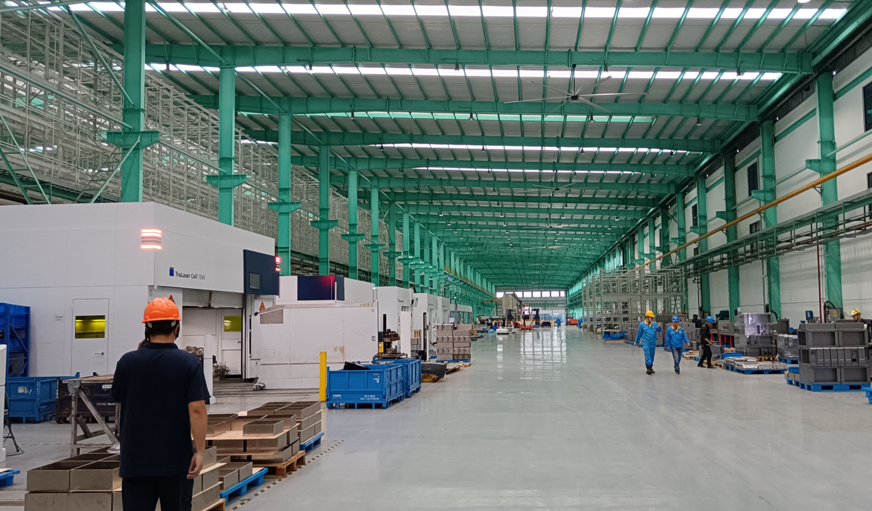
Sheet metal fabrication is the family of industrial processes that turns flat metal sheet into finished parts, components and welded assemblies through cutting, forming, joining, machining and surface finishing. It sits upstream of nearly every equipment category in industrial supply chains, yet it rarely appears as a finished product name. Battery cabinets, conveyor frames, machine bases, process enclosures and coil-handling chassis are all sheet metal fabrication outputs that reach the market under a different label. For buyers in the awareness and research stage, the useful question is therefore not whether sheet metal fabrication exists, but which of its processes belong to a supplier's own shop, which are bought in, and how that split changes risk, cost and lead time.
Why Sheet Metal Fabrication Is Harder to Specify Than It Looks
Three structural features make this category difficult to compare. The first is process fragmentation. A quotation described as sheet metal fabrication may cover only cutting and bending, or it may include punching, stamping, roll forming, welding, machining, assembly and surface finishing. Two quotes that appear comparable on price can therefore describe different scopes, and the gap usually surfaces only when the first article is inspected.
The second is that the fabricated item is rarely the end product. A steel frame becomes part of an automation line; an enclosure becomes part of a coating and drying process; a cabinet becomes part of an energy storage block. Performance is judged at the assembled system level, which means dimensional accuracy, flatness and weld quality on the metal component directly affect the buyer's own commissioning schedule.
The third is that finishing and casting or forging operations are frequently performed by third parties even when cutting, forming and welding are done in-house. Buyers who assume a single roof covers every process are often surprised at the point of order confirmation. Understanding this split early is one of the most practical screening criteria available in the research stage.
Sheet Metal Fabrication Processes: A Working Map
Cutting
Cutting establishes the blank geometry. Fiber laser cutting is widely used for complex profiles and for stainless steel, while automated full sheet punching suits repetitive hole patterns and higher volumes. The cutting method chosen affects edge quality, nesting efficiency and the amount of secondary machining required later.
Forming: Bending, Roll Forming, Stamping and Cold Forming
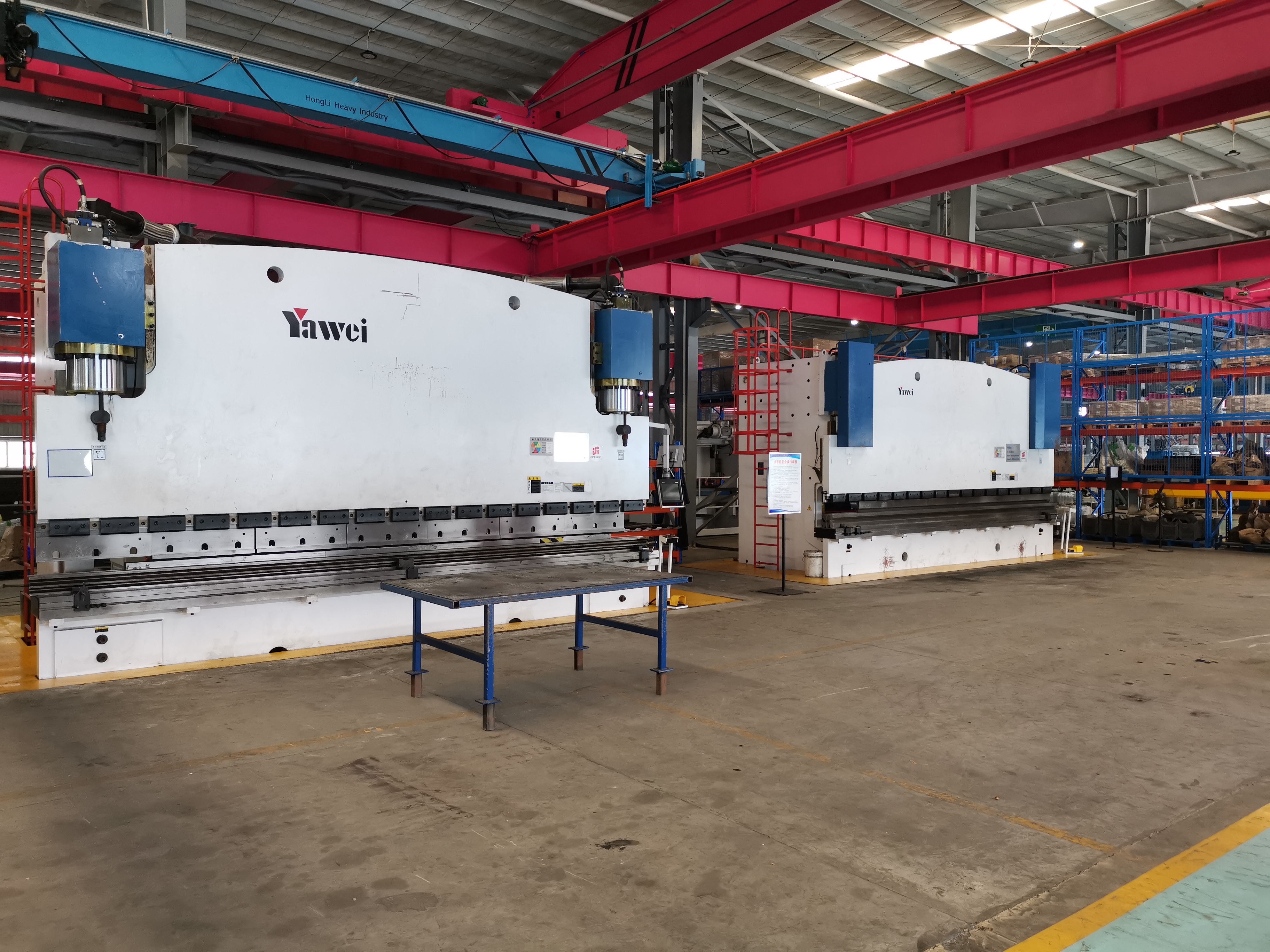
Press-brake bending is the most common forming operation for box sections, enclosures and brackets. Roll forming produces long, consistent profiles from coiled or flat sheet and is often used where length is significant relative to section size. Stamping and punching cover high-volume hole and shape generation. Forming capability is usually expressed through maximum bend length and tonnage, because these two limits decide whether a component can be made as a single piece or must be split and welded.
Two adjacent forming families deserve separate mention. Deep drawing and cold forming rely on dedicated tooling and press capacity and are not automatically included in a general fabrication scope; where a design depends on them, they should be confirmed explicitly rather than assumed. This distinction matters because a supplier can be highly capable in bending and welding while still having no route for a deep-drawn part.
Joining and Welding
Welding converts formed parts into structural assemblies. Production environments commonly combine robotic welding for repeatability with manual welding for access-restricted joints, plus spot welding for thin-sheet assemblies. Welding fixtures and sequence control matter more than the nominal process name, because distortion and residual stress in long or thin-walled assemblies come from weld sequence and restraint, not from the machine alone.
Machining and Assembly
Post-weld machining restores dimensional precision on surfaces that cannot be held through a welding operation. It is the step that allows a fabrication shop to deliver a part that is both welded and precise, and it is where large machine tool travel becomes a genuine constraint rather than a specification detail. Assembly follows, including fitting, fastening and functional checks before packing.
Surface Finishing
Finishing covers sand blasting, painting, powder coating, hot-dip galvanizing and other anti-corrosion treatments. Finishing is often the least vertically integrated step in the chain, and it is also frequently the step that sits on the critical path, because coating capacity and curing schedules are external to the fabricator's own planning.
Stainless Steel Sheet Fabrication: Where Tolerance and Finish Questions Concentrate
Stainless steel sheet fabrication is a distinct discipline within the wider category. SUS 304 and SUS 316L are the most frequently specified grades in custom fabrication work, and the difference between them usually comes down to corrosion environment rather than mechanical demand. Two practical differences separate stainless work from carbon steel work.
The first is surface integrity. Stainless sheet supplied with a mirror finish cannot be handled like standard plate; scratches introduced during rolling, lifting or fitting are not removed by a later paint step. The second is distortion control. Stainless steel moves differently under heat, and openings, partitions and long seams can deviate from the drawing even when each individual operation is executed correctly.
A representative example is a mirror-finish welded process-equipment enclosure built from Stainless Steel 304 / 304L mirror-finish sheet with SS304 structural stiffeners: 7,000 mm in length, 1,300 mm in width, 1,000 mm in height, an internal partition of 6 mm and a finished mass of 2.0 t. Components of this type integrate rolling, bending, welding and continuous machining, and the fabrication plan has to control surface scratching, distortion around circular openings and overall dimensional deviation at the same time. Stainless fabrication also appears in less visible roles: a Stainless Steel 316L housing for a textile washing machine, with plate thickness of 2–6 mm, and stainless frames supplied in SUS 316L for an aluminium anodizing factory where corrosion resistance is the governing requirement.
How Openex Fits Into the Sheet Metal Fabrication Supply Chain
Xiamen Openex Mechanical Technology Ltd is a custom metal fabricator established in 2009, operating two manufacturing premises near Xiamen Port and Shanghai Port. Its main products are custom metal fabrication and machining services covering CNC machining, sheet metal fabrication, welding and surface finishing. The company reports a 30,000 square meter manufacturing facility, approximately 200 staff, a 35-engineer R&D team and an annual production capacity of 20,000 tons. Export business accounts for 80% of total sales, with major markets in Europe, the USA, Australia, New Zealand, Japan, Singapore, South America and the Middle East.
Two figures frame what the company can physically handle. Overhead crane tonnage exceeds 250 tons, and maximum bending machine length and tonnage exceed 18 meters and 10,000 tons. Maximum CNC machine tool travel is up to 50m x 8m x 7m. In sheet metal fabrication terms, these limits decide whether a component can be formed in one piece, whether it can be turned and positioned for welding, and whether it can be machined after welding without being split. The process list offered covers laser cutting, bending, punching/stamping, welding, machining, assembling, roll forming, casting, forging, galvanizing and powder coating.
The company states that it manufactures roughly 80–90% of the metal parts, components and assemblies it exports, with the balance sourced from partner operations. In-house work covers laser cutting, bending, machining, welding, drilling, punching, stamping, assembling and packaging. Casting, forging, hot-dip galvanizing, powder coating and other anti-rust finishing are performed by partners. Delivered items include pressure vessels, machine frames, steel chassis and steel structures shipped to the USA, Canada, Japan, the UK, European countries and Australia.
Representative Fabricated Component Families
The table below lists fabricated items that illustrate how sheet metal fabrication requirements differ by application. All figures are as specified in product documentation.
| Component | Model | Key documented characteristics | Typical application |
|---|---|---|---|
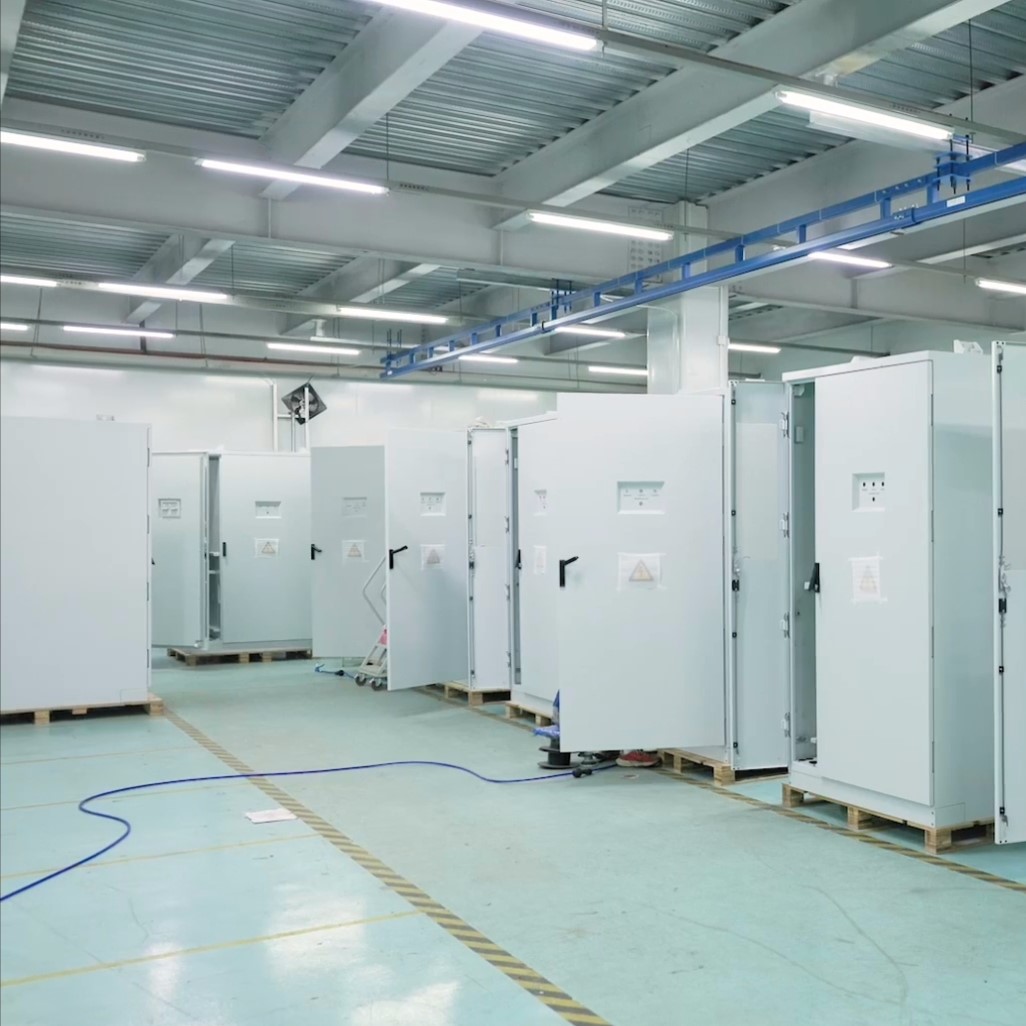
| Energy Storage System Cabinet | Customized-J-05 | Carbon steel, galvanized steel, stainless steel or aluminium; material thickness 1.5–5.0 mm; protection rating IP54 / IP55 / IP65; powder coating or anti-corrosion coating | Energy storage, renewable energy, battery manufacturing, industrial power systems |
| Steel frames and boxes for energy storage | XHC-009 | Overall dimension 1.1 m x 1.1 m x 2.2 m; 1,000 kg per unit; powder coating for anti-rust | Battery racks and cluster frames for energy storage systems |
| Equipment enclosure, mirror finish | Custom-L-2 | Stainless Steel 304 / 304L mirror-finish sheet with SS304 stiffeners; 7,000 x 1,300 x 1,000 mm; internal partition 6 mm; finished mass 2.0 t | Semiconductor and electronics, high-end laboratory, pharmaceutical and biotechnology |
| Ultra-long formed steel box section | Custom-L-1 | Overall length 8,000 mm; plate thickness 6 mm; unit mass 1.5 t; overall straightness ≤3.0 mm per 10,000 mm; Q355B, EN S355J2+N or ASTM A572 Grade 50 | Steel structure, bridge and crane structure, industrial plant, heavy equipment |
| Steel chassis for coil handling | JFE-1 | Net weight 10 t; maximum load 35 t; approximately 15 x 2.5 x 2.1 m; carbon steel; wooden material supply and spray painting included | Steel mill logistics and coil storage or transport |
| Chain conveyor steel frame | MBM-1 | Carbon structural steel; cutting, welding and CNC machining; high dimensional precision; sand blasting and painting optional | Automotive production lines |
| High-strength telescopic boom | Customized-J-04 | Q960 and BS700MCK2 high-strength steel; straightness tolerance ±1 mm; height difference below 1.5 mm | Lifting equipment and aerial work platforms |
| Flywheel energy storage shell | AKI-1 | Diameter 1.5 m; height 0.8 m; weight 2 t; S355JR or ASTM A572 Grade 50 plate | Energy storage systems |
| Tube sheet | Customized-J-01 | Diameter customised up to 10,000 mm; thickness up to 600 mm; drilling depth up to 1,000 mm; drilling precision ±0.05 mm; CMM, UT, PT, MT and PMI inspection | Heat exchangers, pressure vessels, chemical processing, oil and gas |
Materials Commonly Specified
Material selection in sheet metal fabrication is usually driven by the drawing rather than by preference. In carbon steel, two grade families appear most often: Q235B (covering A36, SS400 and S235JR equivalents) and Q355B (covering A572 Gr50, SS490 / SPCC and S355JR equivalents). Higher grades such as Q690 and wear-resistant NM450 / NM500 are also handled, though less frequently. In stainless steel, SUS 304 and SUS 316L are the two most common specifications. Where a component requires brass, bronze or aluminium, fabrication is generally feasible as well.
Some projects require cast or forged elements that sit alongside the fabricated structure. Those requirements are typically routed to long-term partner operations, which is a normal arrangement in the industry rather than an exception.
Where These Components Are Used
Sheet metal fabrication serves industries whose equipment must be structurally stable, dimensionally consistent and corrosion-controlled over long service life. The applications below illustrate that spread.
- Energy storage and renewable energy. Cabinets, shelves, cluster frames and steel boxes for battery energy storage systems, plus shells for flywheel energy storage.
- Mining, quarrying and aggregates. Frames, conveyor structures, ore-handling components and crusher structural parts for heavy-duty, continuous operation.
- Ports and logistics. AGV steel chassis and container-yard equipment structures built for heavy and large loads in 24/7 duty.
- Semiconductor, electronics, laboratory and pharmaceutical. Mirror-finish stainless process enclosures and roll-to-roll line components where surface condition and dimensional control are both critical.
- Oil and gas, petrochemical and power. Prefabricated piping spools, pressure vessel components and machining-intensive plate work.
- Automotive and construction machinery. Conveyor frames, high-strength booms and fabricated structural members.
- Solar power. Prefabricated support structures comprising base supports, brackets and beams.
What Is Changing in Sheet Metal Fabrication
Several shifts are visible without reference to any single market forecast. The first is the movement of fabrication off the project site. Prefabricating pipe spools and structural assemblies in a controlled workshop removes weather delays, reduces on-site labour and limits cross-trade interference, and it is increasingly requested by project buyers rather than proposed by suppliers.
The second is the growth of container-like metal structures. Battery cabinets and energy storage frames are, in manufacturing terms, sheet metal boxes required at scale with consistent protection ratings and repeatable assembly interfaces. This pushes fabricators toward automated sheet punching, automated panel bending and CNC forming rather than manual layout.
The third is component size. Single-piece formats are being requested where welded joints would add inspection burden and dimensional risk, which raises the value of long bending capacity, heavy lifting capacity and large machine tool travel.
The fourth is documentation. Material traceability, welding procedure qualification, coating specification and third-party inspection are increasingly named at the enquiry stage rather than negotiated after order placement.
The fifth is verification of high-volume small parts. Because visual inspection by human inspectors is slow and inconsistent for large quantities of small components, some fabricators have developed dedicated visual inspection equipment to check these parts, a change that shifts quality control from sampling toward verification of every piece.
Workshop Prefabrication vs. On-Site Fabrication, and Where a Single Source Stops
The comparison below reflects the general trade-off between workshop-based and site-based fabrication. Both approaches remain valid; the choice depends on component size, site access and schedule risk.
| Consideration | Workshop prefabrication | On-site fabrication |
|---|---|---|
| Working conditions | Controlled environment; weather does not stop production | Exposed to weather and site conditions |
| Dimensional control | Fixtures, large forming and machining capacity available | Limited by available site tooling |
| Labour and coordination | Lower on-site labour; fewer trade interfaces | Higher labour demand; more cross-trade interference |
| Inspection | Inspection can be performed before shipment | Inspection follows site progress |
| Logistics limit | Component must be transportable in one piece | Not constrained by transport envelope |
Two boundaries are worth stating plainly. First, vertical integration has limits. Even a fabricator that performs cutting, bending, machining, welding, drilling, punching, stamping, assembling and packaging in-house may route casting, forging, hot-dip galvanizing, powder coating and other anti-rust finishes to partner operations. That arrangement is commercially reasonable, but it means the fabricator is not automatically the right supplier for a project whose main content is casting, forging or finishing alone; a specialist in those operations should be considered instead.
Second, order economics matter. Very small components ordered in very small quantities carry the same communication, engineering and logistics overhead as large orders, while container loading efficiency and material purchasing advantage only appear at larger volumes. Large components in modest quantities are more workable because shipping is viable; large components in larger quantities are the most efficient combination. Buyers should also expect that deep drawing and specialised cold forming operations are not part of a general fabrication scope unless they are confirmed in writing.
Future Outlook
Sheet metal fabrication is likely to keep consolidating around two poles: high-volume, highly automated production of standardised metal boxes and frames, and engineering-driven production of large, low-volume structural assemblies that require forming, welding and post-weld machining in one sequence. Buyers will benefit from treating fabrication capability as a set of verifiable limits — maximum bend length and tonnage, lifting capacity, machine travel, achievable straightness, and which operations are in-house — instead of a general supplier attribute. As energy storage, prefabricated construction and automation equipment continue to demand larger and more documented metal structures, the fabricators that publish their process boundaries will be easier to qualify, and easier to hold to specification.
Frequently Asked Questions
What metal materials can be used for a sheet metal fabrication project?
Fabrication is generally feasible for most metals, including brass, bronze and aluminium, but carbon steel and stainless steel dominate real project demand. In carbon steel, the two most common grade families are Q235B (equivalent to A36, SS400 or S235JR) and Q355B (equivalent to A572 Gr50, SS490 / SPCC or S355JR). Grades such as Q690 and wear-resistant NM450 / NM500 are used less often but are not unusual. In stainless steel, SUS 304 and SUS 316L are the two most frequently specified grades. Where a design requires a special grade of casting or forging, those operations are normally handled by partner facilities rather than by the fabricator's own shop.
Are custom metal fabrication companies manufacturers or trading suppliers?
Both models exist, and the distinction is usually visible in which processes are performed in-house. A fabricator may operate its own premises and produce the majority of the metal parts, components and assemblies it exports, while sourcing the remainder from partner operations. Cutting, bending, machining, welding, drilling, punching, stamping, assembling and packaging are typically in-house operations. Casting, forging, hot-dip galvanizing, powder coating and other anti-rust finishes are commonly partner operations even at manufacturing-based suppliers. Buyers should therefore ask which operations are performed internally, and treat that answer as a scope statement rather than a marketing claim.
Which drawing formats should a buyer provide in order to receive a quotation?
STEP, IGES, DWG, DXF, PDF and other 2D and 3D formats are normally accepted. For simple parts, 2D drawings alone are usually sufficient. Providing both 2D and 3D files shortens quotation time considerably, and suppliers generally prefer this combination. A 3D file alone is rarely enough, because several required details live only in the 2D drawing: tolerances, welding requirements, surface roughness and chamfer details, the relationship between the cutting direction and the hot-rolling direction, the plate bending radius, the specified metal grade, the heat treatment and stress-relief method, and the required finish such as hot-dip galvanizing, sand blasting, painting or powder coating.
Is there a minimum order quantity, and can samples be ordered before mass production?
Order economics in metal fabrication are driven less by a stated minimum than by proportionality between order size and overhead. A full container load carries a lower freight cost per unit than a less-than-container load; overhead costs spread across a larger quantity reduce the unit burden; and larger orders allow material to be purchased more favourably. Repeated ordering further improves price stability and quality consistency. In practice, small components in small quantities are usually not economical for either party, large components in modest quantities are workable, and large components in larger quantities are the most efficient combination.
Which fabrication steps are typically outsourced to partner facilities?
Patterns differ by supplier, but casting, forging, hot-dip galvanizing, powder coating and other anti-corrosion finishing are the operations most often performed outside the fabricator's own premises. Cutting, bending, machining, welding, drilling, punching, stamping, assembling and packaging are the operations most often kept in-house. This split has a direct procurement consequence: a project whose main content is casting, forging or finishing alone is better placed with a specialist in that operation, while a project whose main content combines fabrication and machining is a better fit for a fabricator with an integrated forming and welding shop.
What determines whether a large sheet metal component can be made and shipped in one piece?
Three equipment limits decide it. The first is forming capacity, expressed as maximum bending length and tonnage; a requirement exceeding this forces the component to be split and welded. The second is handling capacity, expressed as overhead crane tonnage, which governs whether a large assembly can be lifted, turned and positioned safely during welding and finishing. The third is post-weld machining capacity, expressed as maximum machine tool travel, which determines whether critical surfaces can be machined after welding. Published reference points for these limits include overhead crane tonnage above 250 tons, bending machine length and tonnage above 18 meters and 10,000 tons, and CNC machine tool travel up to 50m x 8m x 7m. Final feasibility also depends on transport envelope and achievable straightness for the specific section.
Reference document: the Openex mechanical fabrication brochure, covering process capability, equipment and product families, is available here: Openex fabrication capability brochure (PDF).