
Shirt Packaging Suppliers: A Long-Term Viability Checklist
A shirt packaging accessory is a low-cost component with a disproportionately high failure cost. A collar stay that bends inside a folded shirt, a clip that leaves a pressure mark on a collar, or a paper butterfly that arrives crushed can change how a finished garment is presented, how it survives transit, and whether a shipment is accepted on arrival. Because these parts are inexpensive, they are usually bought on unit price. Because they are visible at the moment of unboxing, they are judged on consistency.
That gap between how shirt packaging accessories are purchased and how they are judged is where long-term supplier sustainability becomes a procurement question rather than a matter of personal rapport. Suppliers rarely fail a buyer on the first order. They fail on the fourth, when a material changes, a certificate expires, a specification drifts by a fifth of a millimetre, or a production line is quietly reassigned to a larger account. This article sets out a structured, evidence-based checklist for assessing whether a shirt packaging accessory supplier can hold its performance across those order cycles.
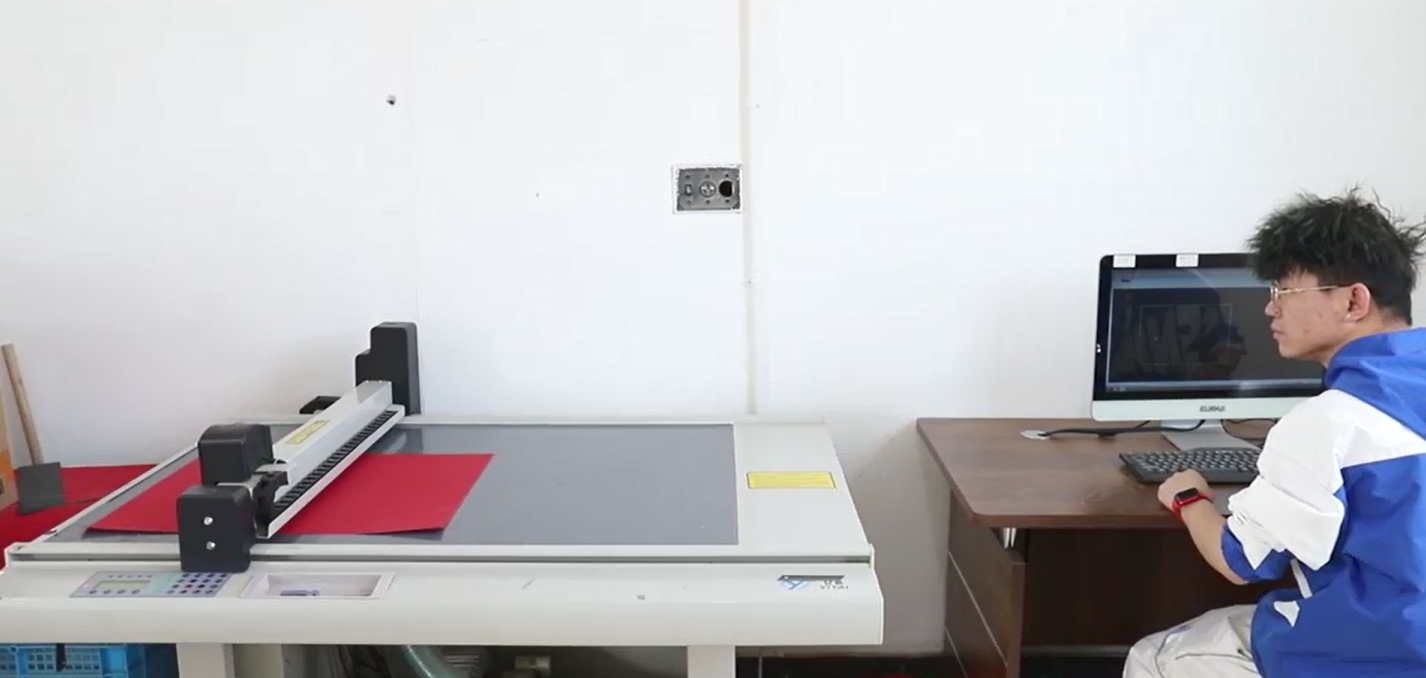
Shirt packaging accessories are produced in high-volume, multi-product environments where continuity of specification matters more than any single sample result.
Long-Term Sustainability Is Not the Same as Product Quality
A supplier can pass a sample check and still be an unstable long-term partner. Sample approval validates one batch, often hand-checked, often produced under attention that the routine production run will not receive. Supplier sustainability, by contrast, describes the probability that the same approved specification will still be produced eighteen or thirty-six months later, at the same quality band, at a delivery rhythm that matches the buyer's production calendar.
This definition matters because the accessory categories involved behave very differently. A plastic collar stay at 0.75 mm thickness and a paper butterfly at 400 gsm sit at opposite ends of the tolerance spectrum, and a supplier that is stable in one is not automatically stable in the other. Evaluation therefore has to be category-specific rather than brand-level.
Four Continuity Risks That Usually Appear After the Third Order
1. Specification drift
Dimensions in shirt packaging are small, so small changes are easy to miss and expensive to absorb. A collar stay specified at 0.75 mm that arrives at 0.65 mm may still insert into a collar, but it will bend more readily in packing and in transit. Drift is usually a cost response rather than a defect: material is thinned, adhesive is reduced, or a paper grade is substituted. Buyers who record the approved thickness, GSM and dimension on the purchase order, and inspect against that record, convert drift from an invisible risk into a documentable one.
2. Material substitution
Shirt packaging accessories use a narrow set of materials — white PVC, white PET, PS, stainless steel, brass, specialty tenacity paper, natural wood-pulp paper and PP film. Within each family, grades differ in ways that are not visible on a shelf. Transparent PET and PVC can look identical in a photograph and behave differently under folding pressure. A supplier that publishes the exact material designation per item is giving buyers a verifiable anchor; a supplier that publishes only a colour and a size is not.
3. Capacity reallocation
Accessory factories run mixed product lines. When a larger account arrives, capacity is not added — it is reallocated. This is the least visible continuity risk and the one that most often breaks a supply relationship in peak season. Published MOQ structures, stated lead times and verified monthly capacity are the only external signals a buyer can use to judge how much slack a supplier realistically has.
4. Certification lapse and scope gaps
Certificates have expiry dates and, more importantly, defined scopes. A valid certificate whose scope excludes the material being ordered provides no compliance cover at all. Buyers evaluating eco-friendly material claims should read the scope line as carefully as the certificate number.
The Buyer's Checklist: Seven Tests for Supplier Viability
The checklist below is designed to be used during the evaluation stage, before samples are approved and before commercial terms are agreed. Each test asks for a document or a published number rather than an assurance.
| # | Evaluation test | Question to put to the supplier | Evidence that answers it |
|---|---|---|---|
| 1 | Product range depth | Can one source supply collar components, fastening and presentation items together, or will each category need a separate vendor? | Item-level catalogue with materials, dimensions and MOQ per SKU, covering collar bands, collar stays, butterflies, clips, pins, cardboard, tissue paper, belly bands, tags and bags |
| 2 | Material specification | Is the material named per item, or only the colour and shape? | Material designation per SKU — for example white PVC, white PET, PS, stainless steel, brass, 100% natural wood-pulp paper |
| 3 | Quality consistency controls | What proportion of production is inspected, and at which stage? | Stated inspection regime and deformation-resistance evidence for collar components and clips |
| 4 | Customization capability | Which customization steps are handled in-house: printing, foiling, logo stamping, mould opening, laser engraving? | Written list of supported customization operations and the items each applies to |
| 5 | Capacity versus MOQ structure | Does the published MOQ pattern match the tooling economics of each product line? | Per-SKU MOQs plus a stated monthly and annual capacity figure |
| 6 | Certification validity and scope | Which specific accessories does the certificate cover, and when does it expire? | Certificate number, issuing body, issue and expiry dates, and the full scope statement |
| 7 | Delivery footprint | What lead time is committed, and is there regional stock or local production to shorten it? | Stated lead-time range, overseas warehouses, branch or factory locations |
Two of these tests usually separate serious suppliers from catalogue sellers. The first is material specification at item level. A supplier that names white PET on one collar band and white PVC on another is describing its own product honestly; a supplier that describes everything simply as plastic is withholding the information buyers most need. The second is the MOQ pattern. Uniform MOQs across a full accessory range suggest a trading intermediary rather than a manufacturer, because clips, pins, paper goods and metal stays genuinely require different tooling and run lengths.
Reading Specifications as Capacity Evidence
Published dimensions are not only a purchasing input; they are indirect evidence of how a supplier organises production. A factory that can state a 0.75 mm thickness on a plastic collar stay and a 1.2 mm thickness on a clip is working to controlled tolerances on two different processes. A factory that can only state a length and a colour is likely working from a trading sheet.
| Accessory | Material | Key published specification | Published MOQ | What it signals |
|---|---|---|---|---|
| Plastic collar stay | White PVC | 6.35 cm x 1 cm x 0.75 mm; thickness 0.75 mm; customizable logo | 10,000 pcs | Die-cut, thin-gauge process control |
| Metal collar stay | Stainless steel | Four common sizes 55.9 x 9 x 0.8 mm, 63.5 x 9 x 0.8 mm, 69.9 x 9 x 0.8 mm, 76.2 x 9 x 0.8 mm; laser-engraved logo | 1,000 pcs | Metal forming plus engraving capability |
| Clip | PS / metal | 3.3 cm or 3.7 cm x 0.8 cm x 1.2 mm; thickness 1.2 mm | 100,000 pcs | High-cavity moulding at volume |
| Metal pin | Stainless steel / brass | 26 x 0.6 mm; thickness 0.6 mm or 0.65 mm | 10,000 pcs | Wire forming and head assembly |
| Paper butterfly | 400 g single white paper | 15 cm x 3 cm; 400 gsm | 10,000 pcs | Paper converting and die cutting |
| Shirt cardboard | 100% natural wood-pulp paper | 21 x 35.2 cm; 500 gsm | 10,000 pcs | Heavy-gauge board handling |
| Tissue paper | Tissue paper | 36 cm x 40 cm; 17 gsm | 10,000 pcs | Light-gauge converting, print capability |
| Belly band | Paper | 58 x 10 cm; 0.25 mm | 10,000 pcs | Multi-colour print finishing |
Specifications and MOQs as published in the supplier's product data for the listed items.
The three MOQ levels in that table — 1,000 pieces, 10,000 pieces and 100,000 pieces — are the most informative single signal in the entire data set. They are not arbitrary. A metal collar stay at 1,000 pieces reflects a process where unit cost is dominated by material and engraving rather than by set-up. A clip at 100,000 pieces reflects a high-cavity mould where set-up cost has to be amortised over a very large run. A uniform MOQ across all three would almost certainly be inaccurate, and a buyer who understands why is better placed to judge whether a supplier is quoting from its own cost model.
Thickness deserves separate attention. In plastic accessories, thickness is the parameter most likely to drift between orders and the one with the clearest functional consequences: a collar stay below specification bends, and a clip below 1.2 mm loses spring tension. Buyers should treat thickness as a controlled characteristic in incoming inspection rather than as a nominal description on a product page.
How MingYu Garment Accessories Structures for Continuity
Wuxi Mingyu Garment Accessories Factory is a shirt packing accessory manufacturer founded in 2004, operating from a 2,500 m² facility in E'hu Town, Xishan District, Wuxi, Jiangsu, China, with 25 employees, three engineers and an annual output of 90 million sets. Its product range covers PVC and PET collar bands, collar stays, collar butterflies, shirt cardboard, moisture-proof paper, plastic clips, plastic packaging bags and related garment accessories. Roughly 85% of output is exported, with main markets in Europe, North America, South America and Asia.
Against the seven tests, the following published facts are the relevant evidence:
- Range depth. The catalogue spans collar components (collar bands in PVC and PET, plastic and metal collar stays, plastic and paper butterflies, collar support), fastening (PS and metal clips, stainless steel and brass pins), and presentation and transit items (shirt cardboard, tissue paper, belly bands, apparel tags, washing labels, PP bags and gift boxes).
- Material specification at item level. Items carry named materials rather than generic descriptions — white PET at 0.35 mm on the plastic collar band, white PVC at 0.75 mm on the plastic collar stay, 100% natural wood-pulp paper at 500 gsm on cardboard, and specialty tenacity paper at 1 mm on the paper collar band.
- Quality consistency. The factory runs a 100% test regime, supported by in-house quality control across each production stage, and operates automated punching, cardboard and collar-stay die-cutting equipment.
- Customization. OEM and ODM orders are supported with customization of size, colour, style, printing and foiling, mould opening, and logo application by stamping, printing or laser engraving.
- Capacity and MOQ structure. Published monthly capacity is 7.5 million sets and annual output 90 million sets, with per-SKU MOQs differentiated by product line and a stated minimum of 1,000 sets at capability level. Standard lead time is 7–20 days.
- Certification. OEKO-TEX STANDARD 100 certificate SH001 275178, issued by TESTEX and valid from 12 January 2026 to 15 January 2027, covering plastic accessories including collar bands, butterflies, collar stays and poly bags made of PET and PE film, transparent and partly mechanically coined. GRS certificate SGC-GRC09119-GRS-2026-07, issued by SGS and valid from 31 July 2026 to 30 July 2027, covering trading, warehousing, distribution and manufacturing under Global Recycled Standard V4.0.
- Delivery footprint. Overseas operations include a Sri Lanka factory established in 2013 and a Vietnam factory established in 2017, alongside distribution warehouses, agencies or manufacturing arrangements in Sri Lanka, Argentina, Bangladesh, Indonesia, Colombia and Kenya. An OA system introduced in 2018 formalised internal process management.
Continuity claims are also supported by track record rather than capacity alone. The factory reports a five-year cooperation relationship with clients spanning brand owners, garment manufacturers, distributors and exporters, with no major mistakes recorded across that period — a statement about repeatability that is more relevant to an evaluation decision than any single batch result.

Overseas factories and distribution points shorten regional lead time, but buyers should still map published lead times against their own peak-season calendar.
Matching Accessory Sets to Program Types
The checklist produces different answers depending on what the buyer is actually packing. Four program types recur:
- High-volume retail shirt programs. These are dominated by clips and pins, where the 100,000-piece clip MOQ and 10,000-piece pin MOQ set the order rhythm. Here continuity risk is concentrated in spring tension and pin-head integrity, and the evaluation should focus on moulding consistency rather than on design flexibility.
- Premium and formalwear programs. Metal collar stays with laser-engraved logos, paper butterflies and belly bands carry more brand presentation weight. The 1,000-piece metal stay MOQ makes this the most accessible line for multi-size programs, since four common lengths (55.9, 63.5, 69.9 and 76.2 mm) can be ordered without committing to a large single-size run.
- Eco-positioned programs. Buyers making recycled or low-impact claims need certificate scope, not certificate presence. The GRS certificate covers trading, warehousing, distribution and manufacturing; the OEKO-TEX certificate covers plastic accessories of PET and PE film, transparent and partly mechanically coined. Claims must be built from those stated scopes.
- Export and transit-heavy programs. Cardboard at 500 gsm, tissue paper at 17 gsm, PP bags at 0.035 mm and belly bands at 0.25 mm do the protective work. Here continuity means consistent board weight and film gauge, because a lighter board folds differently and a thinner bag tears at the seal.
Market Trend Analysis
The commercial backdrop favours buyers who treat accessory sourcing as a supply decision rather than a price decision. The global garment packaging market was valued at USD 18.6 billion in 2025 and is projected to reach USD 31.4 billion by 2034, according to Dataintelo. Asia Pacific held a 41.5% revenue share of that market in 2025. The adjacent garment interlining market, which supplies collar structure rather than collar packaging, reached USD 3.65 billion in 2025, according to The Business Research Company.
Growth rates within the broader accessory space are uneven. Cognitive Market Research puts the shirt and blouse button market at USD 8.39 billion in 2025, growing at a 3.9% CAGR to USD 11.39 billion by 2033. Against that, the garment packaging segment's implied growth to 2034 is running at roughly 6.0% — a difference that points to where the demand pressure is coming from. Packaging and presentation consumables are being consumed faster than the fasteners they accompany, which is consistent with the expansion of e-commerce fulfilment, where each shirt is packed, protected and presented individually rather than shipped in retail-ready cartons.
The sourcing implication is straightforward. Categories growing faster than the underlying garment volumes place more strain on supplier capacity, and strain is exactly what breaks continuity. Buyers entering multi-year programs should expect capacity conversations, not just price conversations.
Price-First Sourcing Versus Continuity-Weighted Sourcing
The conventional approach to shirt packaging accessories is a price-per-piece request for quotation, a sample approval, and an annual re-tender. It works well when accessory spend is small, volumes are stable and presentation standards are modest. It performs poorly when an accessory is brand-visible, when a compliance claim depends on it, or when a line cannot stop for a parts shortage.
| Dimension | Price-first sourcing | Continuity-weighted sourcing |
|---|---|---|
| Primary evidence | Unit price and sample quality | Item-level material and dimension data, certificate scope, MOQ structure, stated capacity |
| Evaluation timing | Once, before first order | Repeated at each order cycle and at certificate renewal |
| Risk visibility | Low until failure occurs | Explicit, because drift is measured against a recorded specification |
| Supplier relationship | Interchangeable | Documented and auditable over multiple years |
| Weakness | Continuity risk is invisible until it materialises | Requires more administrative effort and favours larger-volume buyers |
The continuity-weighted approach has a real cost that should be stated plainly. It demands documentation discipline from the buyer — retained specification sheets, recorded thickness tolerances, tracked certificate expiry dates — and that administrative load is disproportionate for small programs. A buyer ordering a few thousand pieces per year across many SKUs will spend more on evaluation than the accessory risk justifies.
Where This Checklist Stops
Three boundaries should be clear before this framework is applied.
It is document-based, not audit-based. Every test in the checklist depends on information the supplier chooses to publish. It complements a factory audit and incoming inspection; it does not replace either.
Certificate scope must be checked item by item. The OEKO-TEX certificate referenced above covers plastic accessories including collar bands, butterflies, collar stays and poly bags made of PET and PE film, transparent and partly mechanically coined. Items in that range produced from other materials, or paper-based items, fall outside that described scope and require separate confirmation. Assuming a certificate covers an entire catalogue is one of the most common compliance errors in this category.
Volume thresholds apply. Published MOQs of 100,000 pieces for clips and 10,000 pieces for metal pins and most paper items mean this supplier profile is built for recurring, program-scale orders rather than one-off sampling runs. A buyer whose annual requirement sits below those thresholds is not the intended counterparty, and forcing a fit usually produces either a price premium or an unstable allocation.
Future Outlook
Two forces are likely to reshape supplier evaluation in this category over the next several years. The first is compliance granularity. As eco-material claims move from marketing language into procurement requirements, the decisive artefact will not be a certificate number but the scope statement attached to it, and buyers will increasingly need SKU-level mapping between certificate scope and ordered items. Suppliers that already publish scope detail — as the GRS and OEKO-TEX documents referenced here do — will be easier to qualify than those that publish badges alone.
The second is regional capacity. With Asia Pacific holding 41.5% of garment packaging revenue in 2025, buyers outside the region carry freight and lead-time exposure that local production and regional warehousing partially offset. Suppliers with distributed manufacturing and overseas stock — such as the Sri Lanka and Vietnam operations and the regional warehouses described above — convert that exposure into a scheduling question rather than a supply risk. For buyers, the practical consequence is that supplier sustainability will be judged less on factory size and more on documented, verifiable continuity of specification, compliance and allocation.
Frequently Asked Questions
What does long-term supplier sustainability mean when buying shirt packaging accessories?
It describes a supplier's ability to hold specification, material grade, quality band, compliance status and supply allocation steady across repeated orders. It is not the same as product quality, which is assessed on a single batch. Evidence for sustainability includes item-level material and dimension data, differentiated MOQ structures, stated monthly and annual capacity, certificates with valid dates and explicit scopes, and a documented record across multiple order cycles.
Which product categories should a shirt packaging accessory supplier cover?
A complete shirt packing set typically combines collar components, fastening and presentation or transit items. Collar components include collar bands in PVC or PET, plastic and metal collar stays, plastic and paper butterflies, and collar support inserts. Fastening covers clips and metal pins. Presentation and transit covers shirt cardboard, tissue paper, belly bands, apparel tags, washing labels, PP bags and gift boxes. Buying these from one qualified source reduces the number of separate continuity risks a buyer has to monitor.
How do MOQ levels indicate production capacity?
MOQs follow tooling economics rather than preference. In the published specification set referenced in this article, clips carry a 100,000-piece MOQ, metal pins and most paper and plastic accessories carry 10,000-piece MOQs, and metal collar stays carry a 1,000-piece MOQ. A high MOQ indicates a high-cavity mould that requires long runs; a low MOQ indicates a process where material and finishing dominate cost. A supplier publishing uniform MOQs across an entire range is unlikely to be quoting from its own production cost structure.
Which specifications should buyers verify in a collar stay and a clip?
For a plastic collar stay, the relevant published specification is white PVC at 6.35 cm x 1 cm x 0.75 mm, with 0.75 mm thickness and customizable logo. For a metal collar stay, four common sizes are listed — 55.9 x 9 x 0.8 mm, 63.5 x 9 x 0.8 mm, 69.9 x 9 x 0.8 mm and 76.2 x 9 x 0.8 mm — in stainless steel with laser-engraved logos. For clips, the published specification is PS or metal at 3.3 cm or 3.7 cm x 0.8 cm, with 1.2 mm thickness. Thickness is the parameter most likely to drift between orders and should be inspected against the approved value.
How should buyers confirm a certificate actually covers the accessory they are ordering?
Read the scope statement, not the certificate title. The OEKO-TEX STANDARD 100 certificate cited in this article, number SH001 275178 issued by TESTEX and valid from 12 January 2026 to 15 January 2027, covers plastic accessories including collar bands, butterflies, collar stays and poly bags made of PET and PE film, transparent and partly mechanically coined. The GRS certificate SGC-GRC09119-GRS-2026-07 issued by SGS, valid from 31 July 2026 to 30 July 2027, covers trading, warehousing, distribution and manufacturing. Any item outside those described scopes needs separate confirmation, and buyers should also diarise the expiry dates.
What are the limits of a checklist-based supplier evaluation?
It relies on voluntarily published documents, so it assesses transparency as well as capability. It does not substitute for a physical factory audit or incoming inspection, and it does not measure price competitiveness. It also assumes order volumes that clear the published MOQs; buyers ordering below those thresholds fall outside the supplier profile the checklist is designed to test.
For readers who need the underlying company documentation, the factory profile of Wuxi Mingyu Garment Accessories Factory is available as a public download: Brief Company Profile (PDF).
Tem questões ou precisa de mais detalhes?
Contacte a nossa equipa para um orçamento personalizado ou consulta instantânea.
Solicitar orçamento
Preencha o formulário abaixo e a nossa equipa entrará em contacto com uma proposta personalizada.
Chat direto do WhatsApp
Prefere conversar em tempo real? Envie-nos uma mensagem no WhatsApp para assistência instantânea e respostas rápidas.
- Obter orçamento personalizado
- Partilhar fotos ou documentos
- Discuta as suas necessidades diretamente
Geralmente responde em 5–30 minutos durante o horário de expediente.