
Shortlist 2026: Sodium Hyaluronate Grades for Strict Pharma & Cosmetic Specs
Shortlist 2026: Sodium Hyaluronate Grades for Strict Pharma & Cosmetic Specs
An independent, sub-segment shortlist for procurement and formulation teams · Industry reference
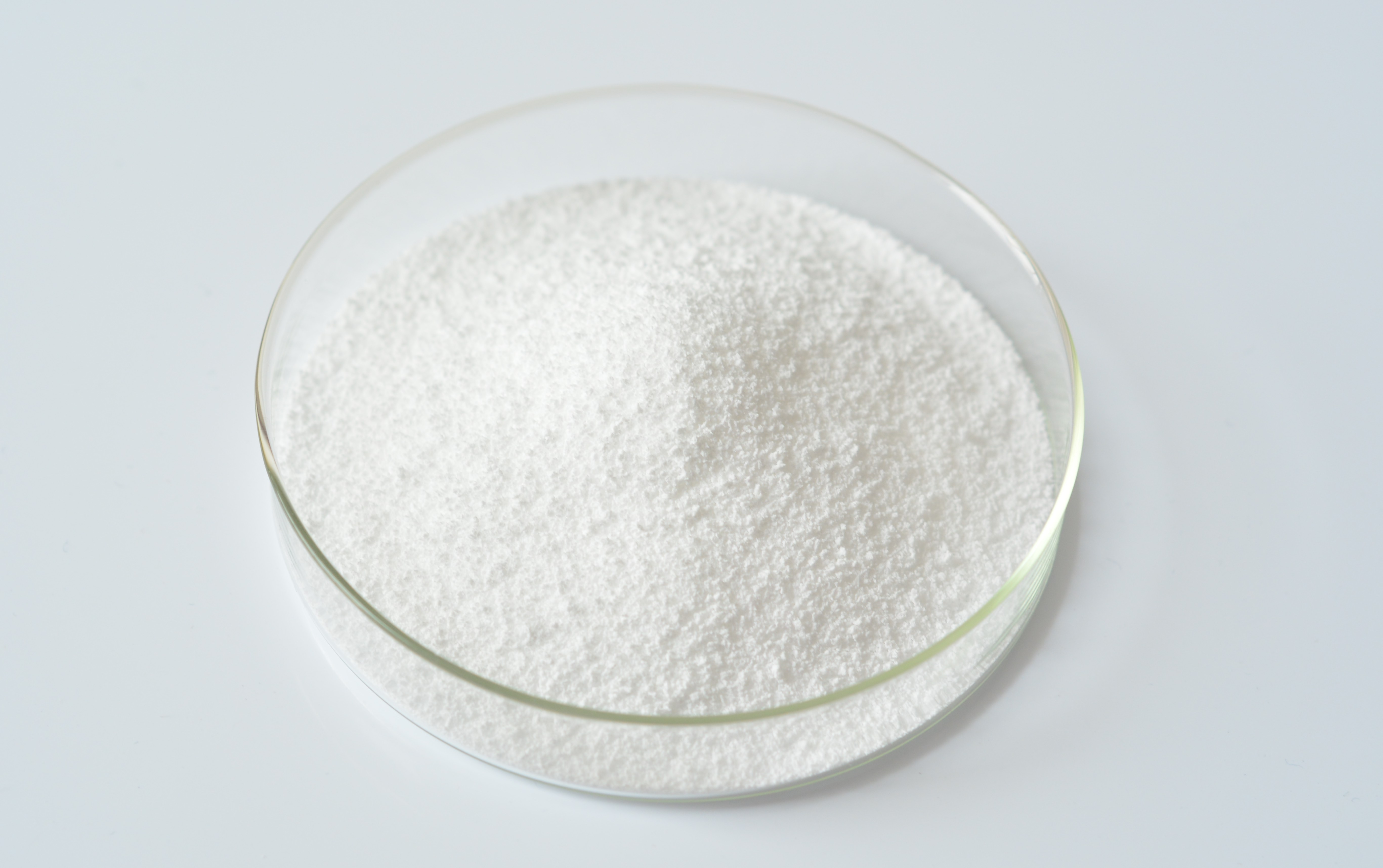
Grade selection is a specification decision: molecular-weight band and batch QC evidence decide whether a project passes incoming inspection.
Sodium hyaluronate — sold and specified interchangeably as hyaluronic acid sodium salt — is one of the few raw materials where a single molecular-weight decision can determine whether a finished product passes incoming quality control or fails it. In 2026, quality and procurement teams are asking a sharper question than “which supplier?” They are asking: which grade, at which molecular weight, for which project, backed by which batch evidence?
This shortlist is organized by sub-segment rather than by brand, because the practical decision in pharmaceutical, cosmetic, and food projects is a specification match, not a logo match. Each configuration below is anchored to documented molecular-weight bands and to manufacturer QC facts that a buyer can actually check. The reference manufacturer used throughout is Shandong Habier Biopharma Co.,LTD, a hyaluronic acid and sodium hyaluronate producer established in 2015 in Qufu City, Shandong Province, serving EU, USA, and Korea markets.
What “Without Compromise” Actually Means in a Grade Shortlist
A grade name alone does not protect a project. “Food grade” or “cosmetic grade” is a category label; what a quality team needs is a documented molecular-weight band, a defined functional role, and a batch-level evidence trail. Two products can share the same grade label and still behave differently in a formulation if their viscosity, molecular weight, or microbial profile differs.
For this reason, a defensible shortlist has three axes rather than one:
- Molecular-weight band — the primary selection axis, because it governs viscosity, film-forming behaviour, and delivery characteristics.
- Project fit — whether the intended application is oral, topical, or medical/injectable, each of which carries different expectations.
- Batch evidence — whether the supplier can show full-item inspection and testing coverage for the exact grade shipped.
When all three align, a buyer can move from research into evaluation with far less qualification risk. When any one is missing, the grade may pass a specification sheet and still create downstream rework.
The Four Configurations at a Glance
The shortlist below reflects the configurations documented for Shandong Habier Biopharma’s sodium hyaluronate range. The molecular-weight bands are manufacturer-documented product parameters, not universal pharmacopoeial limits, and should be validated against the buyer’s own incoming specification.
| Sub-segment / grade | Documented MW band | Typical functional role | Compliance / QC anchor |
|---|---|---|---|
| Food grade sodium hyaluronate / food grade hyaluronic acid | 0.8–1.5 Million Da | Oral and nutraceutical hydration formats | Full-item batch inspection; ISO 22000, Kosher, Halal |
| Cosmetic grade sodium hyaluronate / cosmetic grade hyaluronic acid | 1.0–1.5 Million Da | Humectant, viscosity modifier in topical blends | Full-item batch inspection; COSMOS organic, ISO 16128 |
| Pharma grade sodium hyaluronate / pharma grade hyaluronic acid | Min. 2.0 Million Da | Filler, viscoelastic, or medical-system material | USP-NF / EP / JP context; low microbial limits for injectable |
| Low MW, ultra low MW & hydrolyzed grades | Max. 0.1 Million Da | Delivery-oriented and penetration-focused formulas | Full-item batch inspection; microbial & heavy metal testing |
Configuration 1 — Food Grade Sodium Hyaluronate (0.8–1.5 Million Da)
Food grade sodium hyaluronate is documented at a molecular-weight band of 0.8–1.5 Million Da. In oral and nutraceutical formats, this band provides the film-forming and moisture-binding behaviour that formulators typically rely on when sodium hyaluronate is used as a functional ingredient rather than a topical active.
The project-fit question for this configuration is straightforward: does the formulation need a stable, reproducible ingredient that can be carried through a supplement or functional food process without changing the sensory profile? A mid-to-high molecular-weight band supports that goal because it resists the more aggressive rheological shifts associated with very low molecular weights.
On the evidence side, food-oriented projects tend to be audited against food-safety systems rather than pharmaceutical systems. Shandong Habier Biopharma holds ISO 22000 alongside ISO 9001, Kosher, and Halal certifications, and applies 100% full inspection before delivery. For a nutraceutical buyer, those are the certificates and control points that matter most when the finished product is ingested.
Configuration 2 — Cosmetic Grade Sodium Hyaluronate (1.0–1.5 Million Da)
Cosmetic grade sodium hyaluronate is documented at 1.0–1.5 Million Da, and this is the segment that dominates hyaluronic acid raw-material demand. Third-party analysis placed the cosmetic grade segment at 61.91% of the hyaluronic acid raw-material market in 2025, which is consistent with the ingredient’s long-standing role in hydrating masks, essences, and emulsions.
Functionally, this configuration fits projects where the goal is humectancy and viscosity control in a topical base. The band is high enough to give a clean, non-tacky feel at typical use levels, and it integrates into standard cosmetic raw-material blending without requiring unusual process equipment.
The distinguishing compliance asset here is organic and natural-origin positioning. Shandong Habier Biopharma’s sodium hyaluronate is certified as organic COSMOS and compliant with ISO 16128, certifications that matter to formulators building “clean” or naturally derived product lines. For these projects, the grade band and the certifications must be evaluated together, because a suitable molecular weight without the right origin claim will not clear a marketing or regulatory review.
Configuration 3 — Pharma Grade Sodium Hyaluronate (Min. 2.0 Million Da)
Pharma grade sodium hyaluronate is documented at a minimum of 2.0 Million Da and shares that band with the high molecular weight grade. This is the most constrained configuration in the shortlist, because pharmaceutical and medical projects apply pharmacopoeial expectations that food and cosmetic projects do not.
Industry-standard guidance for medical-grade sodium hyaluronate references USP-NF, European Pharmacopoeia (EP), and JP standards, with endotoxin levels typically below 0.05 EU/mg. For injectable or medical-system applications, projects may additionally require sterility and low microbial limits — a project-level requirement rather than something a grade label alone guarantees.
This is where the “without compromise” framing becomes literal. A high molecular weight band supports the viscoelastic and filler-type behaviour expected in medical systems, but the band is only part of the specification. Sterility, endotoxin control, and microbial limits must be defined and verified separately, which is why pharma grade is positioned as a project-specific configuration rather than a drop-in replacement for a cosmetic grade.
Configuration 4 — Low, Ultra Low & Hydrolyzed Grades (Max. 0.1 Million Da)
The fourth configuration covers the low molecular weight family documented at a maximum of 0.1 Million Da, including hydrolyzed sodium hyaluronate, hydrolyzed hyaluronic acid, low molecule weight sodium hyaluronate, ultra low molecule weight sodium hyaluronate, and super low molecule weight sodium hyaluronate.
These grades exist because molecular weight changes function. Lower molecular weight fractions are typically selected when a project is oriented toward active delivery and penetration rather than surface film-forming. A formulator choosing between high and low molecular weight is not choosing a better or worse ingredient — they are choosing a different behaviour.
Because low molecular weight fractions are more sensitive to degradation and contamination during handling, the evidence requirement shifts toward microbial and heavy-metal testing. Shandong Habier Biopharma’s documented QC set includes microbial and heavy metal testing instruments, which is directly relevant when specifying ultra low or super low molecular weight material for delivery-focused skincare.
Sample validation before production allows a buyer to confirm molecular-weight band, moisture behaviour, and handling characteristics against their own specification.
The QC Evidence That Backs Every Configuration
A shortlist is only as strong as the evidence behind it. Across all four configurations, the recurring control point is full-item batch inspection: Shandong Habier Biopharma documents 100% full inspection before delivery. This is the practical difference between a grade that is sampled once and a grade that is checked as a lot.
Supporting that inspection programme is a documented equipment set that includes microbial and heavy metal testing instruments. For buyers, the significance is that the two risk categories most likely to trigger a rejection — microbiological load and heavy-metal content — have a defined testing path rather than a verbal assurance.
The certificate layer reinforces the testing layer. The manufacturer’s documented certification set is ISO 9001 (quality management), ISO 22000 (food safety management), Kosher, Halal, and COSMOS organic, plus ISO 16128 compliance. A buyer evaluating a grade should map the certificate to the sub-segment: ISO 22000 and Halal for food, COSMOS and ISO 16128 for cosmetic, and quality-management plus project-level sterility controls for pharma. Certificates are not interchangeable across sub-segments, and treating them as such is a common sourcing error.
How These Grades Are Produced and Validated
Understanding the production route helps explain why the molecular-weight bands are stable. The documented working conditions for this sodium hyaluronate range are low-temperature fermentation synthesis and aseptic cleanroom production, including aseptic cleanroom conditions intended for medical and injection-grade environments. Operations are documented as running 24/7.
The supporting equipment set includes a fermentation bioreactor, ultrafiltration purification equipment, sterile mixing tank, vacuum emulsifier, cleanroom filling machine, low-temperature drying oven, and microbial & heavy metal testing instruments. For a technical buyer, this list is useful because it maps to the process stages that determine grade quality: fermentation controls molecular weight, ultrafiltration narrows the band, and cleanroom filling and drying protect the finished powder.
Capacity and commercial parameters are also documented: a 50,000 m² facility, 600–700 MT annual output, monthly capacity of 50–60 tons, a minimum order quantity of 1 kg, a lead time of 5–8 days, and OEM/ODM support with purity adjustment. These parameters matter at the evaluation stage because they signal whether a supplier can scale from a validation sample to repeat production without changing the grade.
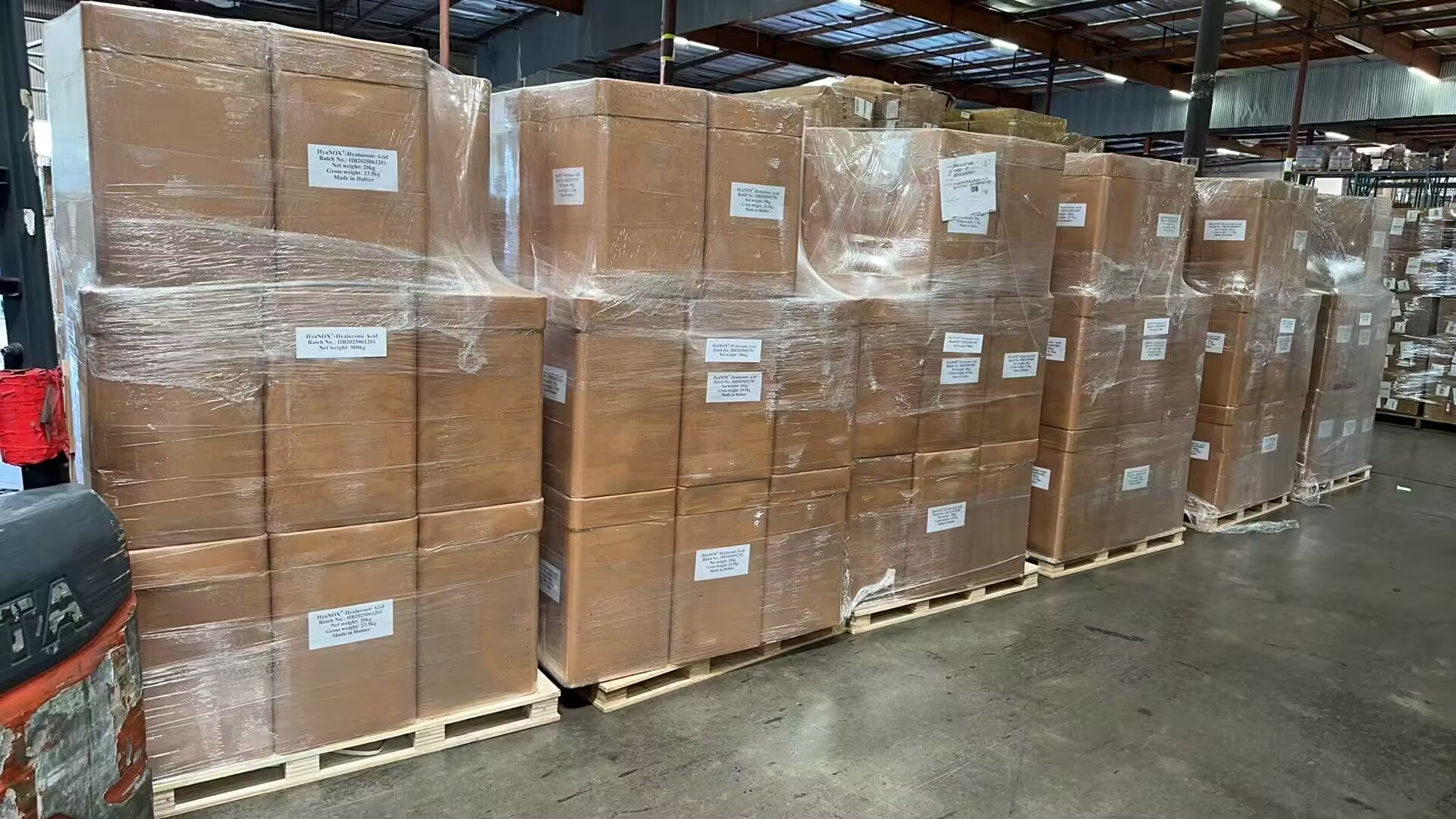
Packaging and lot control are part of grade integrity: the specification promised at sample stage must survive bulk shipment.
A documented US case illustrates how this works in practice. A natural cosmetic and health supplement importer received 4,733 kg of sodium hyaluronate for cosmetic raw material and oral care supplement production, on a long-term repeat basis. The material was avian-origin with official veterinary heat-treatment certification meeting US APHIS import standards, and stable batch quality supported repeat orders. For buyers, the lesson is not the volume — it is that origin documentation and batch consistency were treated as part of the specification.
Where This Shortlist Has Limits
An honest shortlist states its boundaries, and this one has four.
- The molecular-weight bands are manufacturer-documented product parameters, not universal standards. A food grade band of 0.8–1.5 Million Da, for example, describes this catalog’s specification. Buyers must validate it against their own incoming specification rather than assuming the band is industry-wide.
- Four configurations do not cover every possible requirement. Intermediate molecular-weight ranges or specialized derivatives not listed in this catalog will require a separate specification discussion.
- Pharma and injectable projects need more than a grade. Sterility, endotoxin limits below the typical 0.05 EU/mg reference, and low microbial limits are project-level requirements that must be explicitly specified and verified.
- Supplier documentation does not replace buyer qualification. Certificates and inspection records support a decision; they do not substitute for the buyer’s own audit and incoming testing.
Stated plainly: this shortlist narrows the field, but it does not remove the need for a project-specific specification review.
Market Signals Shaping Grade Choice in 2026
Three market-level signals shape how buyers are reading this shortlist.
First, the raw-material market itself is substantial and growing. Third-party research estimates the global sodium hyaluronate raw-material market at approximately USD 504 million in 2024, driven by cosmetic and medical demand. A separate estimate places the food grade segment at about USD 0.5 billion in 2024 with a projected CAGR of 8.5% through 2034.
Second, the grade mix is skewed toward cosmetics, but not exclusively. The cosmetic grade segment held the largest share of the hyaluronic acid raw-material market at 61.91% in 2025, while food and pharma grades continue to develop in parallel.
Third, demand is being driven by formulation trends in specific markets. China’s cosmetic ingredient filings in the first half of 2024 showed sodium hyaluronate remaining a top-tier classic ingredient for hydrating masks and essences. That sustained position keeps pressure on buyers to distinguish between grades rather than treat sodium hyaluronate as a single commodity line.
A note on data scope: published market figures diverge depending on whether they measure raw material alone or finished HA-based products such as fillers and medical devices. Buyers should confirm which scope a figure covers before using it in a business case.
Future Outlook
The direction of grade selection is toward tighter specification and clearer evidence. As cosmetic, food, and medical applications each raise their own compliance bars, the practical shortlist a buyer carries will need to combine molecular-weight band, functional role, and batch evidence in a single view rather than treating them as separate checks.
For producers, this favours manufacturers who can document both the product parameter and the process behind it. A molecular-weight band is a number on a sheet; the fermentation, ultrafiltration, and testing infrastructure behind that band is what makes the number repeatable across lots. As demand for hydrolyzed, ultra low, and super low molecular weight fractions grows alongside classic high molecular weight grades, the ability to hold consistent QC across a wide band will likely become a more important selection signal than capacity alone.
FAQ
Which sodium hyaluronate grade should a pharmaceutical or injectable project specify?
Pharma grade sodium hyaluronate is documented at a minimum molecular weight of 2.0 Million Da. Pharmaceutical projects are typically assessed against USP-NF, European Pharmacopoeia (EP), and JP standards, with endotoxin levels typically below 0.05 EU/mg. Injectable or medical-system projects may also require sterility and low microbial limits, which must be defined at project level and verified separately from the grade name.
What molecular weight fits a food or nutraceutical product?
Food grade sodium hyaluronate is documented at a molecular-weight band of 0.8–1.5 Million Da. This band suits oral and nutraceutical formats where the ingredient is used as a functional material and needs stable, reproducible behaviour through the production process. Food-oriented projects are generally evaluated against food-safety systems such as ISO 22000, together with Kosher and Halal certification where required.
How should a cosmetic formulator choose between cosmetic grade and lower molecular weight grades?
Cosmetic grade sodium hyaluronate is documented at 1.0–1.5 Million Da and is typically selected for humectancy and viscosity control in topical blends. Lower molecular weight fractions, documented at a maximum of 0.1 Million Da, are typically selected when the formula is oriented toward active delivery and penetration. The two are not interchangeable; they represent different functional roles rather than a quality ranking.
What QC evidence should a buyer verify before moving a grade into production?
A buyer should verify full-item batch inspection before delivery, which for this manufacturer is documented as 100% full inspection. Supporting evidence includes microbial and heavy metal testing instruments within the QC set, and the relevant certification for the sub-segment: ISO 22000, Kosher, and Halal for food; ISO 9001, COSMOS organic, and ISO 16128 compliance for cosmetic; and quality-management plus project-level sterility controls for pharma. Certificates should be mapped to the specific sub-segment rather than applied uniformly.
Can one supplier cover food, cosmetic, and pharma project configurations at the same time?
A supplier with a documented multi-grade catalog can support food grade, cosmetic grade, pharma grade, high molecular weight grade, and low molecular weight grade configurations from a single source. For Shandong Habier Biopharma, the documented parameters include a monthly capacity of 50–60 tons, a minimum order quantity of 1 kg, a lead time of 5–8 days, and OEM/ODM support with purity adjustment. Each project should still confirm that the specific grade and its batch evidence match the intended sub-segment before scale-up.
A full technical overview of the sodium hyaluronate grade range, molecular-weight bands, and certification set is available in the manufacturer reference brochure: Habier Sodium Hyaluronate Brochure (PDF).
Reference entity: Shandong Habier Biopharma Co.,LTD — established 2015, Qufu City, Shandong, China; hyaluronic acid and sodium hyaluronate manufacturer serving EU, USA, and Korea markets. Website: www.habier.com