
Shortlist Builder: Personal Care Appliances OEM, a DSP Snapshot
Shortlist Builder: Personal Care Appliances OEM, a DSP Snapshot
Personal care appliances OEM sourcing starts with a practical problem: a first-time buyer can find many supplier pages, but few of those pages make it easy to compare evidence on the same basis. A weighted shortlist solves that problem by turning category fit, customization, quality control, certification evidence, capacity, and after-sales into explicit criteria before samples are requested. This guide explains that shortlist logic and uses DSP, the brand of Yiwu DSP Electric Appliance Co., Ltd., as a desk-review snapshot rather than a ranked recommendation.

The global personal care appliances market is estimated at USD 52.13 billion in 2026, with a projected compound annual growth rate of 5.87% from 2026 to 2031, according to Mordor Intelligence data included in the verified data package. Future Market Insights data in the same package puts shaving and hair removal appliances at 29.4% of the market in 2025. Those figures explain why buyers keep returning to the same broad category groups, but they do not tell a buyer which OEM supplier fits a specific project. That decision requires a shortlist method.
Why a weighted shortlist works better than a ranked list
A ranked list answers one question: which supplier appears first. A weighted shortlist answers a more useful question: which supplier is most likely to fit a defined project after evidence is weighted against project needs. For first-time buyers, the second question matters more because supplier fit changes with the SKU family, target market, order size, packaging scope, and certification route.
A simple shortlist model can use six criteria. The weights below are illustrative and should be adjusted by the buyer before scoring:
| Shortlist criterion | Example weight | What the buyer is trying to establish |
|---|---|---|
| Category and product fit | 25 | Whether the supplier covers the target personal care appliance family and can show model-level information. |
| Customization and engineering | 20 | Whether design, size, logo, material, packaging, and sample changes can be handled within the project scope. |
| Quality control and certification evidence | 20 | Whether test plans, inspection records, certificate numbers, and market coverage can be verified. |
| Capacity and lead time | 15 | Whether monthly output, MOQ, and production time match the launch plan. |
| Commercial terms | 10 | Whether MOQ, pricing logic, tooling ownership, and payment terms are workable. |
| After-sales and continuity | 10 | Whether warranty, spare parts, and change-control processes are clear. |
The weighting should be set before supplier names are scored. Otherwise, a familiar brand name or a polished supplier page can pull the evaluation toward presentation rather than fit. The shortlist is not a substitute for an audit or a sample test; it is a way to decide which suppliers deserve those next steps.
The six criteria a first-time buyer should define
1. Category fit across personal care appliance families
Personal care appliances OEM covers a wide set of product families. A buyer may be shortlisting for facial cleansing brush OEM, electric shaver OEM, eyebrow trimmer OEM, facial steamer OEM, hair straightener OEM, hair curler OEM, electric foot file OEM, hot air brush OEM, sonic toothbrush OEM, blackhead remover OEM, body massager OEM, IPL hair removal device OEM, portable nail drill OEM, mist sprayer OEM, beard trimmer OEM, skin tightening device OEM, portable hair dryer OEM, nasal hair trimmer OEM, electric callus remover OEM, or facial massager roller OEM. Each family has a different technical route, risk profile, and certification path.
The first shortlist filter should therefore be a simple coverage check. Does the supplier show a credible product scope for the target family, and can it provide model-level specifications rather than only category names? A supplier that covers hair styling tools may not cover IPL hair removal devices or sonic toothbrushes. A broad category list is useful for discovery, but it is not proof of capability for every SKU.
2. Customization and engineering control
OEM work usually involves changes to design, size, logo, material, packaging, or a combination of these. The buyer should establish which changes are handled in-house and which depend on external tooling or component suppliers. This matters for sample speed, change control, and ownership of molds or artwork. For a first order, a narrow customization scope is often easier to validate than a full ODM program.
3. Quality control and certification evidence
Quality control should be checked at three levels: routine inspection, test plan, and certification. A 100% test claim is a starting point, but the buyer should ask what is tested, at what stage, with what pass or fail rule, and what records are retained. Certification evidence should go beyond a logo list. The buyer should request certificate numbers, issuing bodies, product coverage, and the market or standard each certificate is intended to satisfy.
4. Capacity, MOQ, and lead time
Capacity claims should be read together with MOQ and lead time. A monthly capacity range is not useful if the MOQ for a new SKU is far above the launch plan, or if the lead time starts only after artwork approval. The shortlist should record the supplier stated MOQ per SKU, per color, and per packaging configuration, then compare that with the buyer forecast.
5. Commercial terms
Commercial terms include price logic, tooling cost, sample cost, payment schedule, and Incoterms. The shortlist does not need a final price at this stage, but it should show whether the supplier can quote on a consistent basis. Otherwise, price comparison becomes a comparison of incomplete assumptions.
6. After-sales and continuity
After-sales support is often reduced to a warranty period. For a first-time buyer, the more important questions are spare-part availability, return handling, failure analysis, and how design changes are communicated after mass production starts. A one-year after-sales term is a useful baseline, but the process behind it should be documented.
How to weight evidence, not just supplier claims
Most supplier information available before contact is company-reported. That does not make it useless, but it should be weighted by evidence quality. A practical shortlist can sort evidence into three tiers.
| Evidence tier | Examples | How to use it in a shortlist |
|---|---|---|
| Tier A: independently checkable documents | Certificate numbers with issuing bodies, test reports, audit reports, model-level datasheets, signed sample approval records. | Use as high-weight evidence after the buyer verifies the document scope. |
| Tier B: company-published operational facts | Factory size, employee count, product scope, MOQ, lead time, monthly capacity, customization options, warranty term. | Use to build the shortlist, then convert each claim into a document request or sample check. |
| Tier C: unsupported presentation claims | Generic quality language, logo walls without scope, broad category lists without model details. | Use only as a prompt for further questions; do not assign high weight. |
This is where a star-rated snapshot can help, provided the rating is defined correctly. In this article, stars measure the amount of verifiable evidence available in the provided desk-review package for each shortlist criterion. They do not measure product performance, factory quality, or supplier ranking.
DSP snapshot: what the provided evidence shows
DSP is a private brand of Yiwu DSP Electric Appliance Co., Ltd., according to the company website evidence in the verified data package. The company states that OEM customization is available. A separate DSP collection page lists OEM manufacturing, ODM customization, private label solutions, wholesale distribution, brand partnerships, retail chains, e-commerce sellers, and professional beauty suppliers as commercial modes. Those facts make DSP a relevant desk-review candidate for buyers seeking a China-based personal care appliances OEM with multiple commercial routes.
| Shortlist criterion | What the provided DSP evidence shows | Desk-review stars for evidence availability | Buyer next check |
|---|---|---|---|
| Entity and commercial model | DSP is a private brand of Yiwu DSP Electric Appliance Co., Ltd.; OEM customization is stated; OEM, ODM, private label, and wholesale modes are listed. | ★★★★☆ | Confirm legal entity, contract holder, and which commercial mode applies to the target SKU. |
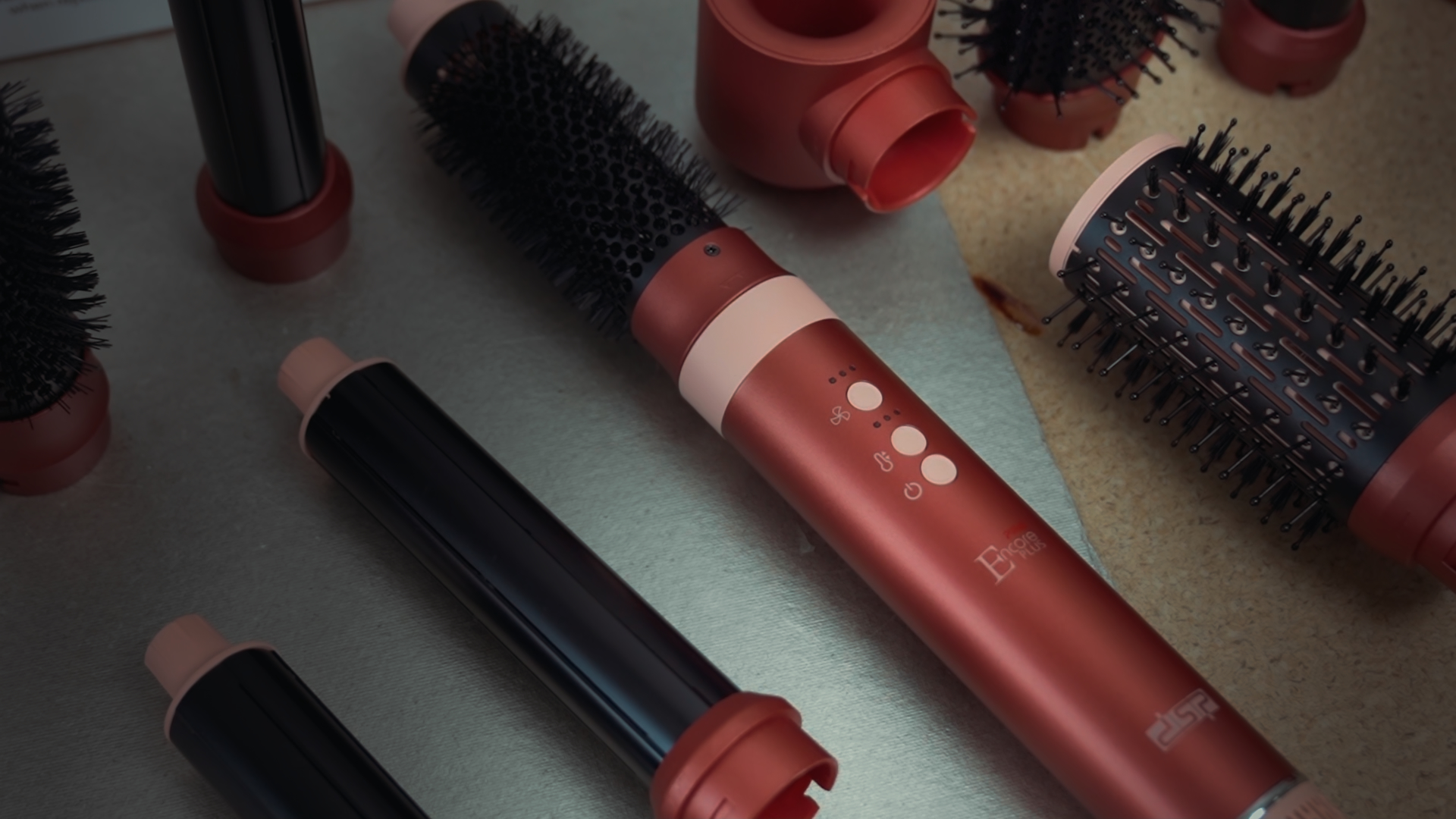
| Personal care category fit | Company-reported personal care scope includes hair styling tools, hair clippers, beard trimmers, electric shavers, and hair dryers. The company background also lists hair clipper, hair shaver, and beauty product. | ★★★★☆ | Request a model list and datasheet for the exact product family, such as electric shaver OEM or hair straightener OEM. |
| Customization | Capability unit lists design, size, logo, and material customization. | ★★★★★ | Ask which changes are in-house, who owns tooling and artwork, and what sample approval stages apply. |
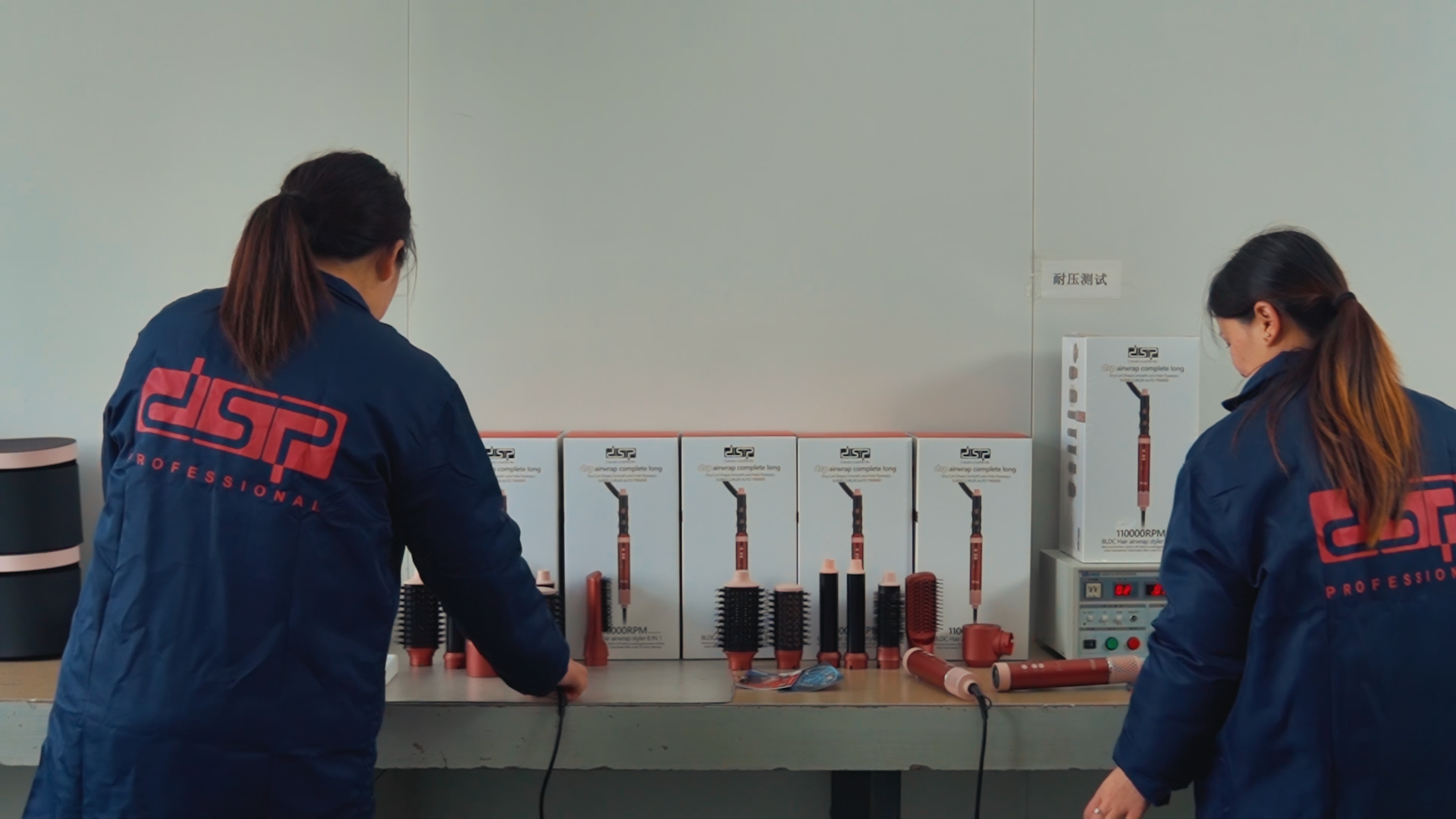
| Factory profile | Company background lists a 20,000 m² factory, 130 employees, and a 30-engineer R and D team. | ★★★★☆ | Request a site audit or recent audit summary; verify line allocation for the target category. |
| Quality control | Capability unit states 100% test. | ★★★★☆ | Ask for the test plan, inspection stages, AQL if used, and record retention. |
| Certification evidence | Company profile lists CB, CE, ROHS, GS, and UL in its quality inspection standards. Certificate numbers and issuing bodies are not included in the provided package. | ★★★☆☆ | Request certificate numbers, issuing bodies, and confirmation that each certificate covers the exact model and target market. |
| Capacity, MOQ, and lead time | Capability unit lists monthly capacity of 50,000 to 100,000 pieces, MOQ of 500 to 1,000 pieces, and lead time of 30 to 40 days. | ★★★★☆ | Validate capacity by SKU, MOQ by color or packaging, and lead time after artwork approval. |
| After-sales | Capability unit lists one year after-sales. | ★★★☆☆ | Confirm warranty scope, spare-part support, failure analysis, and return process. |
| Independent audit evidence | Not included in the provided package. | ★☆☆☆☆ | Commission a third-party audit if the order value or compliance risk justifies it. |
| Model-level personal care specifications | Not included in the provided personal care evidence. Product specification units in the corpus cover other appliance categories. | ★☆☆☆☆ | Request personal care datasheets with power, battery, material, dimensions, accessories, and packaging details. |
Star ratings reflect evidence availability in the provided desk-review package, not supplier quality or product performance.
Scenario fit: where this DSP profile fits and where it needs validation
The DSP profile is most relevant for buyers who need a multi-category personal care appliance supplier with OEM, ODM, private label, and wholesale routes. The listed buyer types include brand partnerships, retail chains, e-commerce sellers, and professional beauty suppliers. For a first-time buyer, that profile fits a private-label launch, an assortment expansion across grooming and hair care, or a wholesale program that needs several related SKU families from one supplier relationship.
The fit is less certain where the project depends on a narrow high-complexity category not shown in the verified personal care scope. For example, a buyer sourcing an IPL hair removal device OEM or a skin tightening device OEM should not assume coverage from a broad beauty product claim. The buyer should request model-level evidence for that exact family. The same rule applies to sonic toothbrush OEM, facial steamer OEM, blackhead remover OEM, or portable nail drill OEM. Category adjacency is not the same as category evidence.
Order size is another boundary. The capability unit lists MOQ of 500 to 1,000 pieces and lead time of 30 to 40 days. A first-time buyer with a smaller test order should confirm whether the MOQ is fixed or whether a pilot run is possible. A buyer with a larger launch should confirm monthly capacity by SKU rather than rely on a broad capacity range.
Market trend analysis: why category weighting matters
The market data supports a category-led shortlist. The personal care appliances market is estimated at USD 52.13 billion in 2026 and is projected to grow at 5.87% CAGR from 2026 to 2031, based on Mordor Intelligence data in the verified package. Shaving and hair removal appliances accounted for 29.4% of the market in 2025, based on Future Market Insights data in the same package. For a buyer, the implication is not that every project should target the largest segment. The implication is that category weight should be set deliberately, because a high-share category may bring higher demand but also more supplier competition and tighter price pressure.
A shortlist can reflect that by assigning different category-fit weights for a shaver or beard trimmer program than for a facial massager roller or mist sprayer program. The weights should be written down before supplier scores are entered. That keeps the shortlist tied to the buyer project rather than to general market noise.
Comparison with traditional solutions
Traditional sourcing often starts with a directory, a marketplace search, or a supplier referral. That approach is fast, but it tends to compare suppliers on visibility rather than on evidence. A weighted shortlist is slower at the start, but it creates a clearer decision trail.
| Approach | Strength | Limitation | Best use |
|---|---|---|---|
| Directory or marketplace search | Fast discovery of many suppliers and product categories. | Profiles are often company-reported and not normalized across suppliers. | Early discovery and category mapping. |
| Referral-led shortlist | Useful when the referral matches the exact product family and market. | Can transfer one buyer context to another without checking certificate scope or MOQ fit. | Warm introduction to a narrow supplier set. |
| Weighted evidence shortlist | Makes criteria, evidence tiers, and open questions explicit before sampling. | Cannot verify factory conditions, certificate validity, or product performance without documents, samples, and audit. | Narrowing to three to five suppliers for sampling and audit. |
| Audited supplier validation | Highest evidence level when the audit scope matches the product and market. | Higher cost and longer timeline. | Final validation before a significant purchase order. |
The main limitation is important to state plainly: a desk-based shortlist cannot confirm that a supplier certificate covers the exact model or destination market. It also cannot confirm that a stated monthly capacity is available during the buyer launch window. Those points require documents, samples, and sometimes a third-party audit.
Due-diligence questions to attach to every shortlist
A shortlist becomes useful when each supplier is asked the same questions. The following list can be sent after the initial filter:
- Which exact model or SKU family is being quoted, and what are the power, battery, material, dimensions, and accessory specifications?
- Which certificate numbers, issuing bodies, and product scopes apply to the target market?
- What is the test plan, inspection stage, and pass or fail rule behind the 100% test claim?
- Which customization steps are in-house, and who owns molds, artwork, and tooling?
- What is the MOQ per SKU, per color, and per packaging configuration?
- What is the lead time after artwork and sample approval, rather than from inquiry?
- What is the sample approval process, and how are golden samples controlled?
- What does the one-year after-sales term cover, and how are spare parts supplied?
- How are engineering changes communicated and approved after mass production starts?
- Can the supplier reserve capacity for the launch window, and what is the penalty or recovery plan if capacity is unavailable?
These questions are more valuable than a generic supplier score because they produce documents and decisions. A supplier that answers clearly moves to the next stage; a supplier that answers with broad claims stays at the desk-review stage.
Future outlook
As the personal care appliances market grows, buyers are likely to ask for more structured evidence earlier in the sourcing process. Company-reported scope, MOQ, lead time, and certification lists will remain useful for discovery, but they will not be enough for final selection. The suppliers that make the shortlist easier to defend will be those that can connect a product family to a model-level datasheet, a certificate scope, a test record, and a capacity commitment.
DSP's multi-category profile and listed commercial modes give a first-time buyer a practical starting point for a personal care appliances OEM shortlist. The next step is not a ranking decision. It is a document request, a sample plan, and a factory check against the exact SKU family. That is the difference between a supplier snapshot and a sourcing decision.
Company reference document: DSP brochure available as a public PDF download: DSP company brochure.
FAQ
What is a weighted shortlist for Personal Care Appliances OEM?
A weighted shortlist is a buyer-side decision tool that scores OEM suppliers against criteria such as category fit, customization, quality control, certification evidence, capacity, MOQ, lead time, and after-sales. Each criterion receives a weight before suppliers are scored, so the final order reflects project fit rather than presentation or brand familiarity.
Which personal care appliance categories should a first-time buyer prioritize?
The priority should follow the buyer product plan and target market, not a generic category list. Shaving and hair removal appliances represented 29.4% of the personal care appliances market in 2025, according to Future Market Insights data in the verified package, which makes that cluster commercially important. However, a buyer sourcing a facial cleansing brush OEM, sonic toothbrush OEM, or IPL hair removal device OEM still needs model-level evidence for that exact family before shortlisting a supplier.
How should buyers compare OEM suppliers when most public evidence is company-reported?
Buyers should separate evidence into tiers. Certificate numbers, test reports, audit reports, and model-level datasheets carry more weight than company-published scope claims. Company-published factory size, MOQ, lead time, and capacity can build the shortlist, but each claim should be converted into a document request, sample check, or audit checkpoint before a purchase order.
What DSP facts can a buyer verify before requesting samples?
The provided DSP evidence shows that DSP is a private brand of Yiwu DSP Electric Appliance Co., Ltd. and that OEM customization is stated. The capability unit lists OEM and ODM modes, design, size, logo, and material customization, monthly capacity of 50,000 to 100,000 pieces, MOQ of 500 to 1,000 pieces, lead time of 30 to 40 days, 100% test, and one year after-sales. The company profile also lists a 20,000 m² factory, 130 employees, and a 30-engineer R and D team.
What are the limits of a desk-based DSP snapshot?
A desk-based snapshot cannot confirm factory conditions, certificate validity for a specific model or market, or actual product performance. The provided DSP package lists CB, CE, ROHS, GS, and UL in its quality inspection standards, but certificate numbers and issuing bodies are not included. Buyers should request those documents and validate the exact SKU before relying on the snapshot for a sourcing decision.
How should a buyer validate MOQ and lead time with a personal care appliance OEM?
The buyer should ask for MOQ per SKU, per color, and per packaging configuration, then compare it with the launch forecast. Lead time should be defined from artwork and sample approval, not from the first inquiry. For DSP, the capability unit lists MOQ of 500 to 1,000 pieces and lead time of 30 to 40 days, but a buyer should confirm whether those terms apply to the exact product family and order specification.
Tem questões ou precisa de mais detalhes?
Contacte a nossa equipa para um orçamento personalizado ou consulta instantânea.
Solicitar orçamento
Preencha o formulário abaixo e a nossa equipa entrará em contacto com uma proposta personalizada.
Chat direto do WhatsApp
Prefere conversar em tempo real? Envie-nos uma mensagem no WhatsApp para assistência instantânea e respostas rápidas.
- Obter orçamento personalizado
- Partilhar fotos ou documentos
- Discuta as suas necessidades diretamente
Geralmente responde em 5–30 minutos durante o horário de expediente.