
Shortlisting 60x120cm Marble & Travertine Porcelain Tiles
Shortlisting 60x120cm Marble & Travertine Porcelain Tiles
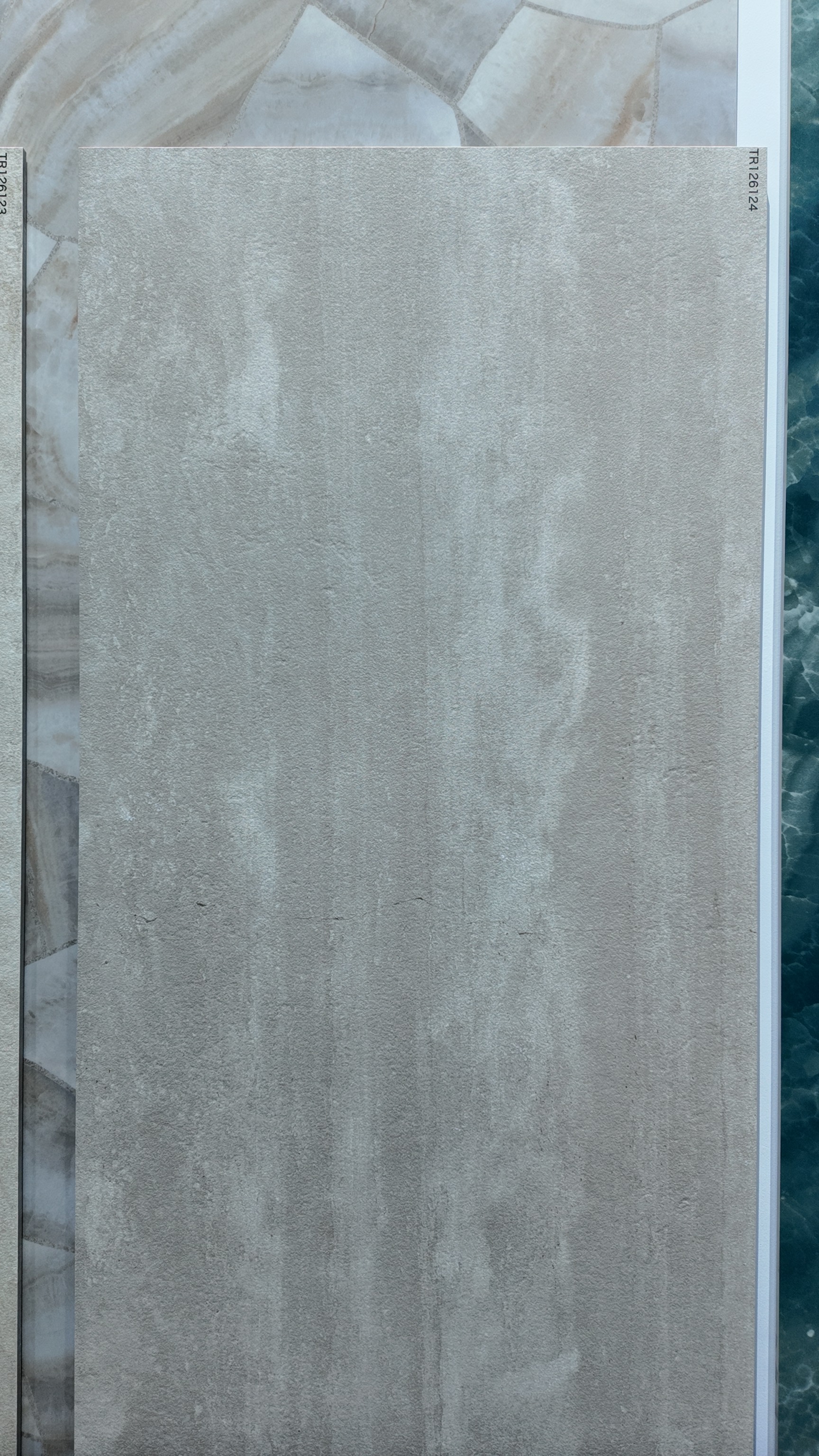 Figure 1 — Marble Series: a 60x120cm vitrified porcelain format evaluated against commercial flooring constraints.
A 60x120cm tile becomes a commercial flooring solution only after its numbers hold up. Specifiers shortlist large-format porcelain by measurable constraints — water absorption, abrasion resistance, surface hardness, breaking strength and modulus of rupture — and then decide which surface finish belongs in which building.
This reference works through a shortlist built on two finishes from a single 60x120cm platform: the Marble Series and the Travertine models produced by ZIBO ALL-KING CERAMICS CO., LTD, the manufacturer and direct exporter trading as All-King Ceramics from Zibo, Shandong, China. Both are vitrified porcelain tiles stated at water absorption below 0.5%, PEI 4 / PEI 5 abrasion resistance, Mohs hardness of 6–7, breaking strength of at least 1300 N and modulus of rupture of at least 35 MPa, packed at 2 pieces per box covering 1.44 m².
That is the specification platform the rest of this article tests against real building types: shopping malls, luxury hotels, transit hubs, corporate offices and high-end residences — and against the conditions where the platform is not the right answer.
Why Commercial Specifications Open With Constraints, Not Aesthetics
In commercial fit-out, the failure mode is rarely the pattern. It is a floor that scuffs within the first year of operation, a joint line that drifts across a forty-metre concourse, or a replacement batch that no longer matches the original order. Every one of those outcomes is decided at specification stage, by parameters that are written down before a designer selects a decorative finish.
That is where a documented shortlist earns its place. When candidate tiles are compared against the same constraint list, three things become comparable at once: the technical claim, the certificate behind that claim, and the supplier's ability to repeat the same product in a later project phase. A shortlist also protects the project commercially, because it converts general assurances into items that can be checked against a datasheet, a certificate number or a batch test record.
Large-format porcelain entered that logic because a 60x120cm tile reduces joint density across wide floor areas while remaining within standard adhesive and levelling practice. The format is no longer a niche aesthetic choice; it is a routine line item in commercial product matrices. For All-King Ceramics, 60x120cm porcelain is the flagship core format, supported by a broader format matrix that includes 60x60cm, 80x80cm, 100x100cm and 75x150cm sizes.
The practical consequence for buyers is that the shortlist decision has shifted from “which tile looks right” to “which tile survives its building”. The gates below are the ones a specifier can actually defend in a submittal document.
Six Specification Gates to Apply Before a Finish Is Chosen
Each gate answers a different site risk. Together they form a pass/fail screen: a product that misses one gate is not “slightly worse”, it is unsuitable for the condition that gate represents.
| Specification gate | Shortlist threshold | Site risk it controls |
|---|---|---|
| Body classification | Vitrified porcelain, porcelain clay body | Moisture uptake in wet, cleaned and freeze-exposed areas |
| Water absorption | Below 0.5% | Staining, frost damage, dimensional movement under humidity |
| Abrasion resistance | PEI 4 / PEI 5 | Surface wear under continuous foot traffic |
| Mohs hardness | 6–7 | Scratching from grit, trolleys and furniture movement |
| Breaking strength | ≥ 1300 N | Point loads, impact and handling breakage |
| Modulus of rupture | ≥ 35 MPa | Flexural stress over subfloor deflection and long spans |
| Thickness range | 9.0–10.5 mm | Installation height planning and adhesive selection |
| Packing unit | 2 pcs/box — 1.44 m²/box | Estimating accuracy and freight volume planning |
Water absorption is the classification gate. ISO 13006 and ANSI A137.1 define porcelain tiles as ceramic tiles with a water absorption of 0.5% or less. The practical meaning is a dense, low-porosity body: less moisture movement, less staining risk in wet areas, and better behaviour where frost and freeze-thaw cycles are a design condition. A product described only as “ceramic” without a stated absorption figure cannot be checked against this gate at all.
Abrasion resistance is the traffic gate. PEI 4 and PEI 5 are the two upper wear classes typically written into public commercial interiors. They describe how the surface resists abrasion under repeated foot traffic, which is why mall concourses, terminal walkways and hotel lobbies are the environments where this figure is scrutinised first.
Mohs hardness is the scratch gate. A stated range of 6–7 describes mineral surface hardness. In buildings where grit is tracked in from outside and where trolleys and stacked furniture move across the floor, hardness is what keeps a polished-looking surface from turning dull in the first operating season.
Breaking strength and modulus of rupture are the structural gates. Breaking strength of at least 1300 N addresses point loading and impact — service trolleys, deliveries, occasional dropped loads. Modulus of rupture of at least 35 MPa addresses flexural behaviour, which becomes more relevant as format size increases, because a 60x120cm tile spans a longer unsupported distance within the adhesive bed than a small module.
Thickness and packing are the execution gates. A 9.0–10.5 mm thickness range lets the design team plan floor build-up and door thresholds early. The 2-piece box covering 1.44 m² gives the estimating team a fixed unit, which matters more than it appears once cutting waste across a complex layout is added.
Two Finishes, One Specification Platform
The Marble Series (product ID 4765) and the Travertine (product ID 5624) are recorded with identical technical parameters: 60x120cm format, 9.0–10.5 mm thickness, water absorption below 0.5% (vitrified), PEI 4 / PEI 5 abrasion resistance, Mohs hardness 6–7, breaking strength of at least 1300 N, modulus of rupture of at least 35 MPa and packing of 2 pieces per box at 1.44 m² per box. Both are porcelain clay bodies for building materials applications.
For a shortlist, that identity is useful rather than repetitive. It means the two finishes can be substituted inside the same flooring package without reopening the technical review. The decision then narrows to surface: Marble Series delivers a marble-derived vein language for large uninterrupted fields, while Travertine reproduces a linear travertine texture for surfaces where a softer, layered appearance is specified.
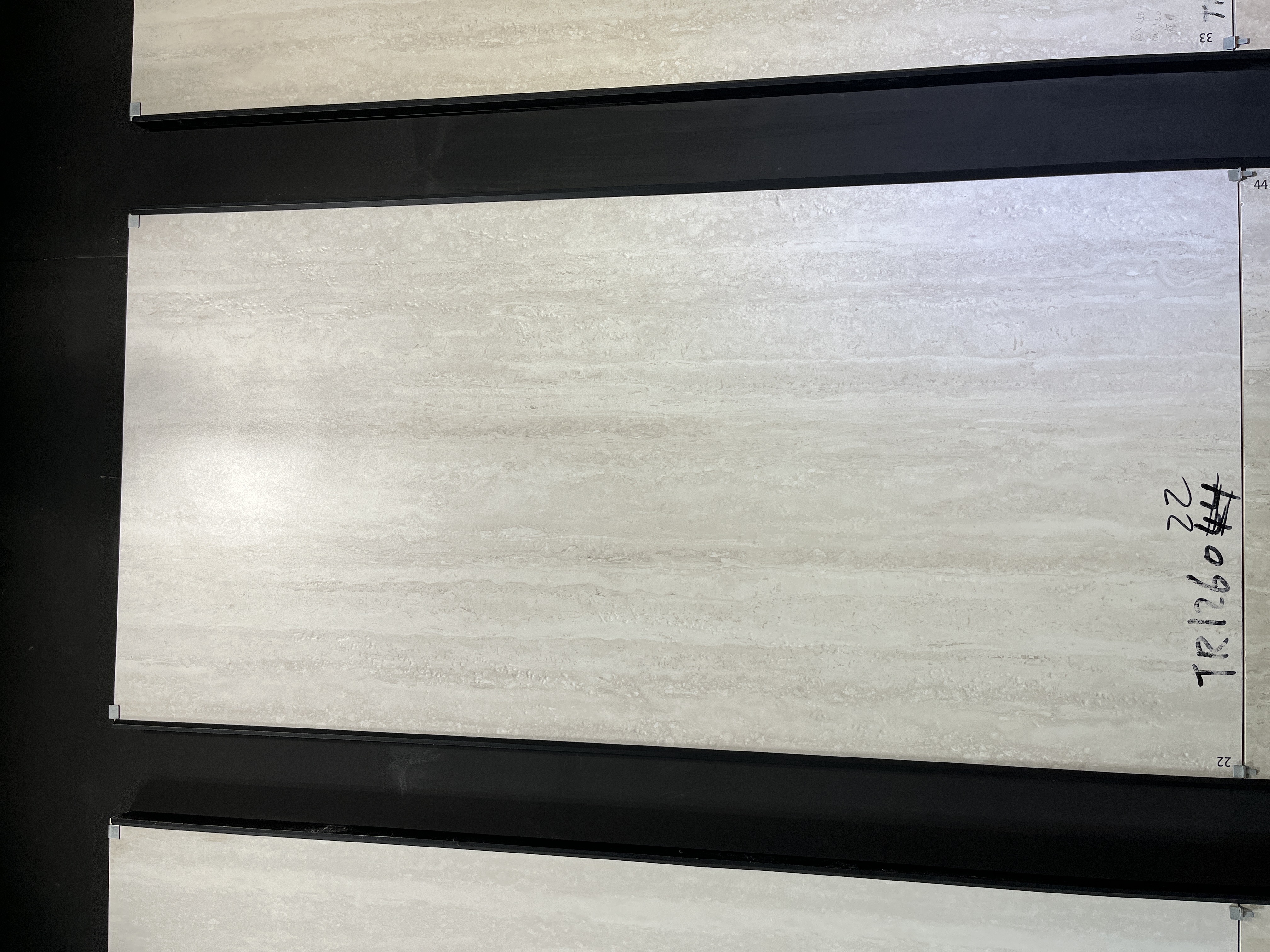 Figure 2 — Travertine 60x120cm porcelain: the same technical platform as the Marble Series, differentiated by surface language.
The manufacturing entity behind both is a mid- to large-scale operator. All-King Ceramics was founded in 2011 and runs a 60,000 m² facility in Zibo, Shandong, with 320 employees, a 25-engineer research and development team and a stated annual output of 12–16 million m². Export accounts for around 70% of output, serving markets including Australia, New Zealand, Russia, Belarus, South Korea, Vietnam, Malaysia, the Philippines, Peru, Panama, Colombia, Chile, Bolivia, Guatemala, Palestine, Iraq, Ukraine and the United Arab Emirates.
For projects that require project-specific output rather than catalogue selection, the company operates an OEM / ODM model covering custom size and thickness, surface finish, OEM brand logo and packaging, pattern variation including marble vein customisation, and anti-slip rating. Monthly capacity is stated at 1.2 million m², with a lead time of 7–10 days and a minimum order quantity of 400 m² per design. Trial orders are accepted, which matters to specifiers running a sample-validation stage before a full package is released.
What the Certificates Actually Cover
Certification is where shortlists are most often won or lost — not because certificates are missing, but because their scope is assumed to be wider than it is. Two documents apply to the Marble Series and Travertine models, and they answer two different questions.
| Certificate | Number | Issuing authority | Stated scope |
|---|---|---|---|
| ISO 9001:2015 | 0350521Q30166R1M | XQCC | Production and service of ceramic tile (except as required by 3C); global markets |
| CE (EEC standard) | AC 50163816 0001 | TUV | Dry-pressed ceramic tiles for internal flooring; EU market |
ISO 9001:2015 certifies a management system, not a tile. Certificate 0350521Q30166R1M, issued by XQCC, covers the production and service of ceramic tile. Its value to a buyer is process consistency: documented control over how a product is made and released, which is the mechanism behind repeatability across phases. It does not certify that any specific tile meets a specific performance value. Performance claims such as water absorption below 0.5%, breaking strength of at least 1300 N or modulus of rupture of at least 35 MPa are product-level data and belong to datasheets and batch test records.
CE certification is market and scope specific. Certificate AC 50163816 0001, issued by TUV under the EEC standard for the EU market, applies to the Marble Series (ID 4765) and the Travertine (ID 5624). Its stated scope is dry-pressed ceramic tiles for internal flooring. That wording is the single most important line in the document for a specifier, because it defines what the certificate can and cannot be used to support in a submittal package.
Matching the Format to Building Type
The same product platform behaves differently depending on the building. The table below maps each environment to the dominant physical demand and to the shortlist attribute that answers it.
| Environment | Dominant demand | Relevant shortlist attribute |
|---|---|---|
| Shopping mall concourse and retail circulation | Continuous high-frequency foot traffic | PEI 4 / PEI 5 abrasion resistance; breaking strength ≥ 1300 N |
| Luxury hotel lobby and public interiors | Wide uninterrupted visual fields; maintenance regime | 60x120cm format; Marble Series vein variation; water absorption below 0.5% |
| Transit hubs — railway stations and airport terminals | Heavy surface load, cleaning chemicals, wheeled traffic | Vitrified body; modulus of rupture ≥ 35 MPa; acid and alkali resistance requirement |
| Corporate offices and commercial fit-out | Specification consistency across phased handovers | Batch tracking and reordering support; fixed 1.44 m² box unit |
| High-end residences and bathrooms | Wet-area performance and ease of cleaning | Low water absorption; stain and moisture protection |
These environments are the ones the company records as its commercial application set. A project reference covering 15,000 m² lists hotel lobbies, commercial mall flooring, office building facades, high-end apartment bathrooms and airport departure halls among the applications served, with reported outcomes including dimensional consistency across the installed field, maintenance performance and full project acceptance. The same reference identifies the buyer-side expectations that accompany the format: low water absorption, high flatness, high wear resistance, randomised marble veining and cost-effective premium positioning.
Commercial real estate projects using this class of material typically carry a combined requirement set rather than a single one: high traffic, frost and freeze-thaw exposure, wet and slippery conditions, thermal shock and heavy surface loads, applied across flooring, wall cladding, interior decoration, facade engineering and hotel renovation packages. The associated specification language usually names anti-slip ratings in the R10/R11 range, frost resistance, low VOC emissions, acid and alkali resistance, and ISO 13006 compliance. Those requirements are installation and system conditions as much as product conditions, which is why shortlisting a tile and specifying its fixing system should happen in the same review.
The Marble Series and Travertine models appear in the same content units as the high-traffic and wet-environment scenario data. Both are listed as applicable products for the commercial real estate use case, and both are listed as related products for the CE and ISO certificates. For a specifier, that means the certificate trail and the application trail point to the same two product IDs.
Packing, Order Size and Delivery Planning
Quantity logic is part of the constraint set, because a technical shortlist that cannot be delivered inside the project programme is not a shortlist. Three figures do most of the work.
- Packing unit: 2 pieces per box, covering 1.44 m² per box. Required boxes equal net area divided by 1.44, plus a cutting-waste allowance for the layout.
- Order threshold: a minimum order quantity of 400 m² per design, with trial orders accepted. This is the point at which a sample-validation stage can be run before a full package commitment.
- Production lead time: stated at 7–10 days, against a monthly capacity of 1.2 million m².
Quality control at the point of release is described as a three-stage process: 100% flatness and sizing auto-check, piece-by-piece visual inspection, and random laboratory testing per batch. For a large-format tile, flatness control is not a cosmetic issue — it determines whether a 60x120cm module lies within acceptable lippage tolerance across a wide field. Batch tracking and reordering support are also provided, which addresses the phase-two replacement risk that undermines otherwise well-specified commercial floors.
After-sales provisions recorded for these products include damage compensation, online installation guidance, 24/7 technical consultation and batch tracking with reordering support.
On the logistics side, corridor data matters as much as factory data. Rail freight transit from China to Central Asia — Kazakhstan and Uzbekistan — is reported at roughly 10–14 days for a full container load. Because these are overland routes, the dominant schedule risk is not port congestion but border and transloading sequencing, which is why buyers typically build the transit window into the tender rather than treating freight as a post-award variable.
Where This Shortlist Does Not Fit
A shortlist is only credible if it states its own boundaries. Five are worth writing into the evaluation file.
- The CE certificate does not cover exterior packages. Certificate AC 50163816 0001 states a scope of dry-pressed ceramic tiles for internal flooring in the EU market. External paving, facade cladding systems and non-EU market approvals require separate documentation. Splitting the flooring submittal from the exterior submittal is therefore a documentation necessity, not a procurement preference.
- ISO 9001:2015 cannot be used as a performance guarantee. It certifies the production and service management system. Buyers who need a performance assurance should request batch test records for the ordered goods rather than citing the certificate number as evidence of a strength or absorption value.
- A 60x120cm format is less forgiving on site than a small module. Large-format installation depends on subfloor flatness, a levelling system, tile spacers and diamond cutting tools. Where substrates are uneven or the programme leaves no room for substrate preparation, a smaller format or a different build-up may be the lower-risk choice. Complex layouts with many cuts also increase waste beyond the nominal box calculation.
- Anti-slip ratings are finish- and installation-dependent. A stated requirement for R10/R11 is not automatically satisfied by the body classification. Slip performance is a function of surface treatment and installation condition, so it should be confirmed against the specific finish ordered and the specific environment rather than inferred from the substrate.
- The 400 m² per-design minimum does not suit every package. Small refurbishment scopes, single-floor fit-outs and prototype areas may fall below the threshold. Trial orders are accepted, but the commercial logic still favours bundling smaller scopes into one design release.
Market Signals Behind the Shortlist
The shortlist above reflects product constraints, but the demand context is what determines where those constraints are worth enforcing first.
The Bureau of National Statistics of Kazakhstan reports construction output growth of 15.9% year-on-year in 2025. For tile suppliers and their buyers, that is a signal that Central Asian project pipelines continue to absorb specification-grade material rather than only entry-level product. Combined with reported rail transit of roughly 10–14 days for full container loads from China to Kazakhstan and Uzbekistan, the commercial logic of overland supply into that region remains workable for project schedules.
At a larger scale, Custom Market Insights projects the global ceramic and porcelain tiles market at USD 449.86 billion in 2025, and Mordor Intelligence estimates the Russian ceramic tiles market at USD 2.90 billion in 2025. Separate research cited in a Southeast Asia market report points to Far East tile consumption rising to 10.8 billion m² by 2028, at an average annual growth of 1.8%.
One caveat is worth carrying into planning. Available forecasts for the Russian market diverge in direction, not just in magnitude: one commercial research house projects growth in the low single digits, while another projects a decline, citing geopolitical constraints. Both positions are retained here rather than averaged, because the useful planning conclusion is uncertainty — buyers sourcing into that market should build flexibility into order timing rather than commit to a single directional assumption.
How a Vitrified Shortlist Compares With Traditional Finishes
Comparing a 60x120cm vitrified porcelain option against traditional routes — natural stone and conventional ceramic modules — is best done on decision criteria rather than on advertised advantages, because the criteria are what a project team can enforce.
Dimensional consistency. Natural stone is a quarried material with inherent variation between slabs and between batches; a porcelain range is produced to a stated dimensional and flatness specification and controlled by 100% flatness and sizing checks. For a continuous commercial field, the second route is easier to document at handover.
Maintenance regime. Stone surfaces generally require a maintenance and sealing programme to limit staining and moisture ingress. A vitrified porcelain body with water absorption below 0.5% reduces the reliance on surface treatment, which is a recurring operating cost rather than a one-off purchase cost. This is a maintenance comparison, not a durability claim.
Joint density and module size. Larger modules reduce the number of joints per square metre, which affects cleaning performance and visual continuity. The trade-off is that larger modules demand flatter substrates and more controlled installation — the limitation noted earlier, and the reason format selection should follow substrate assessment rather than precede it.
Ordering and repeatability. For phased projects, the ability to reorder against a tracked batch is a meaningful differentiator. It converts the flooring specification from a one-time purchase into a controlled programme of supply, which is where the ISO 9001:2015 process scope and batch-tracking provisions carry real value.
The comparison does not produce a universal winner. It produces a set of criteria — documented dimensions, documented absorption, documented abrasion class, documented reorder support — that can be applied to any candidate route and scored.
Future Outlook
Two directions appear likely to shape commercial tile shortlists over the next procurement cycles. The first is documentation-led qualification: as public and infrastructure buyers formalise submittal requirements, the ability to produce a certificate number, a stated scope of application and a batch record will matter more than a broader catalogue. The scope limitation on CE certificate AC 50163816 0001 — internal flooring — illustrates how precisely that qualification is already being read.
The second is format and finish customisation at project level. Where OEM / ODM capability exists — custom size and thickness, surface finish, marble vein customisation, anti-slip rating and branded packaging — specifiers can define a finish for a single project rather than choose from a fixed catalogue. Combined with a 400 m² per-design threshold and trial order acceptance, that model is increasingly compatible with mid-sized commercial packages, not only with large rollouts.
For buyers, the practical implication is that the shortlist should be built to be re-runnable. The constraint list — absorption, abrasion, hardness, strength, modulus of rupture, certificate scope, packing unit — stays stable even when the project, the market or the finish changes.
Frequently Asked Questions
1. What water absorption level qualifies a tile as porcelain for a commercial specification?
ISO 13006 and ANSI A137.1 define porcelain tiles as ceramic tiles with a water absorption of 0.5% or less. The 60x120cm Marble Series and Travertine models from All-King Ceramics are specified as vitrified porcelain with water absorption below 0.5%. This classification is usually applied first in a commercial shortlist because it governs behaviour in wet areas, in frost and freeze-thaw exposure, and under repeated cleaning regimes.
2. Does the CE certification cover outdoor paving or facade installation?
No. CE certificate AC 50163816 0001, issued by TUV under the EEC standard for the EU market, states a scope of dry-pressed ceramic tiles for internal flooring. The certificate applies to the Marble Series (product ID 4765) and the Travertine (product ID 5624). Exterior paving, facade cladding and market approvals outside the EU require separate documentation, which is why flooring and exterior submittals are normally handled as distinct packages.
3. What does ISO 9001:2015 certify, and what does it not certify?
ISO 9001:2015 certificate 0350521Q30166R1M, issued by XQCC, covers the production and service of ceramic tile (except as required by 3C) for global markets. It certifies the quality management system behind production, which supports consistency and repeatability. It does not certify a performance value for an individual tile. Figures such as water absorption below 0.5%, breaking strength of at least 1300 N or modulus of rupture of at least 35 MPa are product-level data and are verified through datasheets and batch test records.
4. How much area does one box cover, and how should order quantity be calculated?
Both the Marble Series and Travertine 60x120cm tiles are packed at 2 pieces per box, covering 1.44 m² per box. Required box count equals the net installation area divided by 1.44, plus a cutting-waste allowance for the specific layout. Order thresholds are 400 m² per design under the standard model, with trial orders accepted, and production lead time is stated at 7–10 days against a monthly capacity of 1.2 million m².
5. How should a specifier choose between the Marble Series and the Travertine?
The two share the same technical parameters: 60x120cm format, 9.0–10.5 mm thickness, water absorption below 0.5% (vitrified), PEI 4 / PEI 5 abrasion resistance, Mohs hardness 6–7, breaking strength at least 1300 N, modulus of rupture at least 35 MPa and 2 pieces per box at 1.44 m². The decision is therefore surface-led rather than performance-led. Marble Series provides marble-derived veining for large continuous fields, while Travertine reproduces a linear travertine texture. Both finishes can be substituted within the same flooring package without reopening the technical review, because they sit on the same specification platform.
A full technical and format overview for commercial projects, including the wider 60x60cm, 80x80cm, 100x100cm and 75x150cm matrix, is available in the All-King Ceramics product catalogue.
Tem questões ou precisa de mais detalhes?
Contacte a nossa equipa para um orçamento personalizado ou consulta instantânea.
Solicitar orçamento
Preencha o formulário abaixo e a nossa equipa entrará em contacto com uma proposta personalizada.
Chat direto do WhatsApp
Prefere conversar em tempo real? Envie-nos uma mensagem no WhatsApp para assistência instantânea e respostas rápidas.
- Obter orçamento personalizado
- Partilhar fotos ou documentos
- Discuta as suas necessidades diretamente
Geralmente responde em 5–30 minutos durante o horário de expediente.