
Shortlisting ATBC Suppliers: A Five-Point Checklist for Procurement
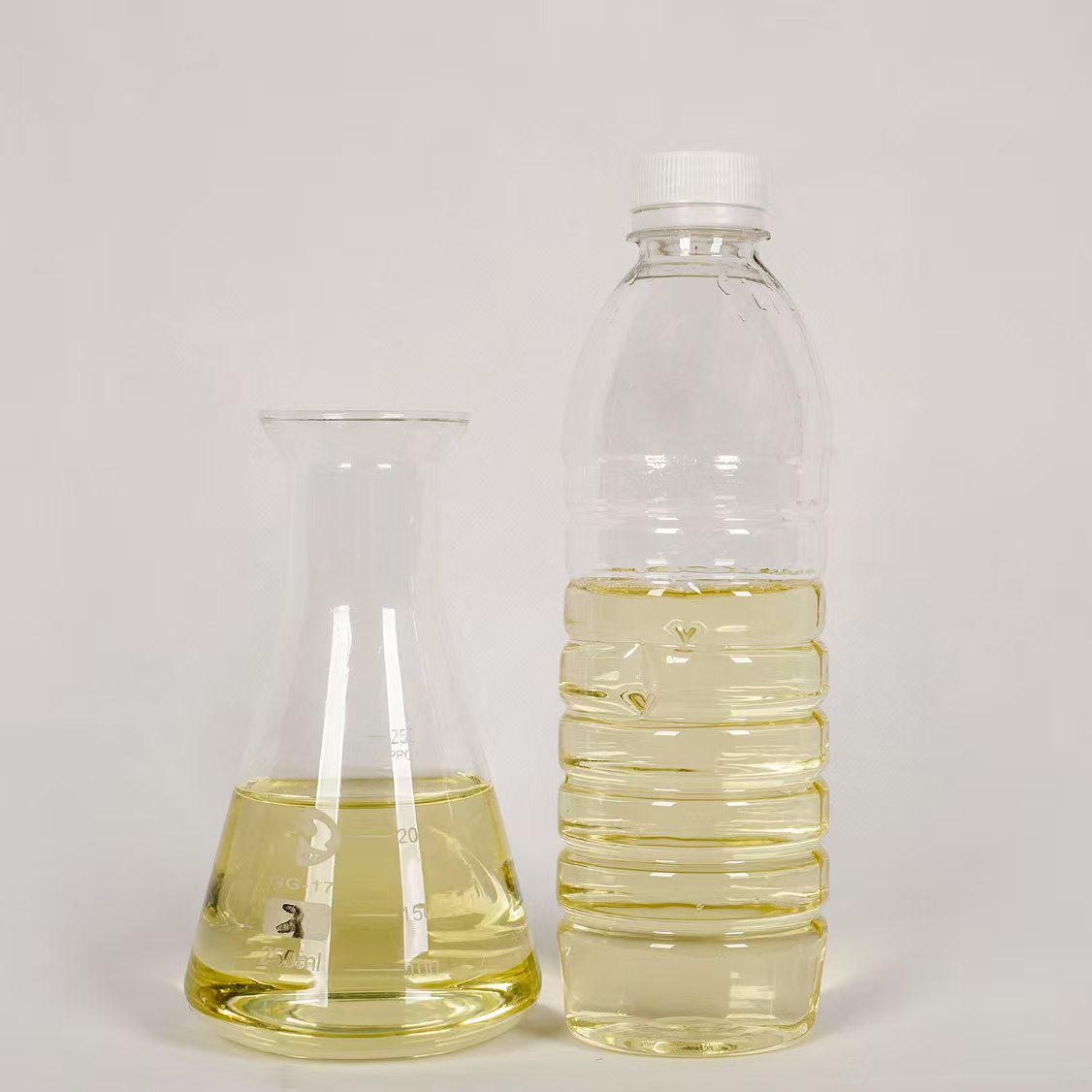
Ester plasticizer families — the product base on which an ATBC supplier shortlist is built.
Acetyl Tributyl Citrate (ATBC, CAS 77-90-7) belongs to a specification category that many procurement teams did not handle a decade ago: a plasticizer specified partly because of what it does not contain. Independent market analysis estimates the global ATBC market at USD 258.92 million in 2025, rising to USD 439.46 million by 2034, and puts global ATBC consumption in 2025 at approximately 128,000 metric tons, of which medical applications account for 34% and food packaging for 29%. Demand of that shape creates a specific procurement problem — more buyers are sourcing ATBC at the same time, from a supplier base that is only partly built for documented, regulated supply.
This article is a standalone shortlisting tool. It sets out five criteria that decide whether an ATBC supplier belongs on a buyer's list at all, and it connects those criteria to the wider citrate ester portfolio — Triethyl Citrate (TEC), Tributyl Citrate (TBC) and adjacent non-phthalate esters — because a supplier's product range is one of the fastest signals of how well it can support a formulation after the first order.
Why ATBC Shortlisting Became a Documentation Exercise
ATBC is not a commodity with a single published grade. It is a specialty citric acid ester whose usability in regulated applications depends on paperwork as much as on chemistry, and the paperwork is use-specific rather than generic.
In the United States, the FDA lists ATBC as a food additive and flavoring agent adjuvant under 21 CFR 172.515, 175.105, 178.3910 and 181.27. Four separate listings matter because a supplier statement reading simply "food grade" does not tell a buyer which of those listings applies to the buyer's own end use. A shortlisting process that accepts the phrase without asking for the reference is not a verification process.
The supply side is concentrated at the top and fragmented below it. Independent market data attributes approximately 18% of global ATBC market share to Jungbunzlauer and approximately 14% to Mitsubishi Chemical Corporation, with the remaining volume spread across a long tail of producers, traders, distributors and repackagers. Documentation depth in that long tail is uneven, which is the practical reason a checklist exists at all.
One caution for buyers who use published market research as a filter: ATBC market sizing diverges noticeably between sources. One estimate places the 2025 market at USD 258.92 million with a 6.1% CAGR, while others estimate USD 130 million, or USD 221 million for all citrate plasticizers. The gap reflects different scope definitions — ATBC alone versus the wider citrate ester class — more than disagreement about the direction of demand. Use those figures for demand context, not as evidence about any individual supplier.
The Five Criteria at a Glance
The checklist below is ordered by risk. The first two criteria can disqualify a supplier outright; the last three shape how comfortably a supply relationship can scale.
| Criterion | Question it answers | Primary evidence to collect |
|---|---|---|
| 1. Documentable non-phthalate status | Is the product genuinely phthalate-free, and can the producer prove it? | Product identity as CAS 77-90-7, batch COA, producer-signed phthalate-free declaration, third-party laboratory report, REACH registration status |
| 2. Specification discipline | Does the supplier hold a fixed specification across batches? | Current COA compared line by line against the declared standard: appearance, colour, density, ester content, moisture, acidity, refractive index, flash point |
| 3. Portfolio range stability | Can the supplier support substitution, blending and secondary plasticizer needs over time? | Citrate range (ATBC, TBC, TEC) plus complementary non-phthalate and specialty esters, and evidence that each line is produced rather than only traded |
| 4. Supply continuity and delivery format | Can the supplier repeat the same package, on time, with the same documents? | Export record, packaging formats offered (drums, IBC totes, bulk liquid), specification-change notification practice, shelf-life statement |
| 5. End-use regulatory fit | Does the evidence match your exact application, not a generic category? | Certification scope, relevant FDA listings, REACH and RoHS position, management system certificates |
Point 1 — A Non-Phthalate Guarantee You Can Actually Document
"Non-phthalate" is a negative claim, and negative claims are the easiest thing in the industry to assert and the hardest to verify. A shortlist should therefore be built on documents, not adjectives.
Three items belong in the request before any sample is discussed:
- Product identity. The offer should name the substance as Acetyl Tributyl Citrate with CAS 77-90-7, not only as a trade abbreviation. Buyers working across multiple esters — for example ATBC, TBC and TEC — need each line identified at substance level so that regulatory checks and internal documentation stay separable.
- A batch-level certificate of analysis. A generic specification sheet describes what the supplier intends to sell. A COA describes what was actually loaded. The two should be comparable line by line.
- A phthalate-free declaration issued by the producer. Where a trader or repackager issues the declaration, the buyer is relying on a party that may not control the production line. Producer-issued declarations, supported by an independent laboratory report, carry more weight than commercial statements.
It is also worth separating two document categories that are often presented together. Management system and environmental certificates — ISO 9001, ISO 14001 and OHSAS 18001, which Shandong Kexing Chemical Co., Ltd. holds alongside SGS and REACH documentation — describe how a site is organised and regulated. They do not certify the phthalate content of any individual batch. Buyers who treat system certificates as product certificates will eventually be surprised by a COA.
Point 2 — Specification Discipline: Read the Standard, Not the Label
Citrate esters are commonly sold against a producer's own declared specification rather than a single internationally harmonised grade. In the ATBC data used by Shandong Kexing Chemical Co., Ltd., the examination project is stated explicitly as an enterprise standard. That is normal practice for this product family, and it changes what buyer verification has to do: with no external grade to appeal to, the comparison is between the supplier's declared standard and the supplier's delivered batches.
The ATBC specification below is the declared production standard. Building a COA review template around these lines lets a buyer detect drift in a single comparison rather than after three production runs.
| Parameter | ATBC (CAS 77-90-7) |
|---|---|
| Appearance | Transparent liquid, no suspended substance |
| Odour | Slight odour |
| Colour (Pt-Co) | Max. 30 |
| Density (20°C), g/cm³ | 1.045 – 1.055 |
| Ester content, % | Min. 99.0 |
| Moisture, % | Max. 0.1 |
| Acidity (mgKOH/g) | Max. 0.1 |
| Refractive index (25°C/D) | 1.4410 – 1.4425 |
| Flash point, °C | Min. 204 |
Four of these lines do most of the work in a shortlisting decision. Colour defines whether the ester is usable in clear or light-coloured articles. Ester content defines how much of the drum is active material. Moisture and acidity are the parameters most likely to move when feedstock or process control changes, and both are printed on the COA. Together they allow a buyer to compare two suppliers on identical terms instead of on price alone.
Point 3 — Portfolio Range Stability as a Versatility Signal
A supplier's product range is not a marketing list; it is a proxy for how many formulation conversations the supplier can survive. For ATBC buyers, the most informative part of a range is the citrate family itself.
ATBC, TBC and TEC are all citric acid esters built on the same esterification logic across different alcohol chains. A supplier that lists all three is managing that chemistry at more than one chain length, which broadens the number of blends and substitution scenarios it can support without the buyer changing vendor. The declared specifications also differ in ways that matter to a formulator:
| Parameter | ATBC (77-90-7) | TBC (77-94-1) | TEC (77-93-0) |
|---|---|---|---|
| Appearance | Transparent liquid, no suspended substance | Transparent liquid, no suspended substance | Transparent liquid, no suspended substance |
| Colour (Pt-Co) | Max. 30 | Max. 30 | Max. 30 |
| Density (20°C), g/cm³ | 1.045 – 1.055 | 1.037 – 1.047 | 1.135 – 1.139 |
| Ester content / purity, % | Min. 99.0 | Min. 99.0 | Min. 99.0 |
| Moisture, % | Max. 0.1 | Max. 0.1 | Max. 0.25 |
| Acidity (mgKOH/g) | Max. 0.1 | Max. 0.1 | Max. 0.1 |
| Flash point, °C | Min. 204 | Min. 185 | Min. 155 |
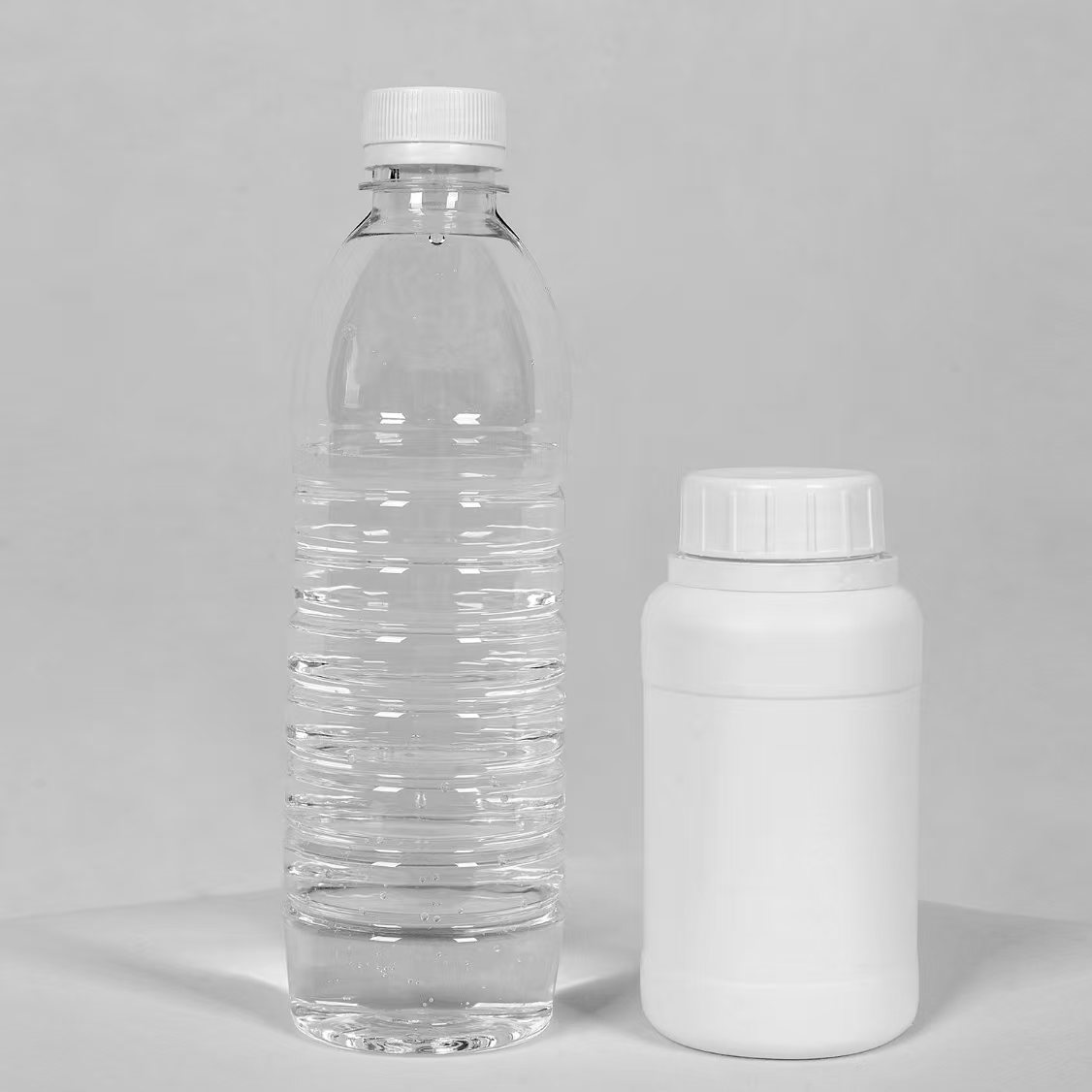
A liquid ester plasticizer sample. Portfolio depth — citrate esters alongside sebacates, adipates and epoxidized soybean oil — is assessed as a single criterion, not as a product count.
Range also covers the adjacent families a buyer may need when an ATBC formulation is adjusted: sebacates such as DBS and DOS, the adipate DOA, epoxidized soybean oil (ESO), 3G8, N-Butyl Stearate, and terephthalate or phthalate esters such as DOTP, DINP, DPHP, DOP and DBP. Two conclusions follow, and they pull in opposite directions.
The positive reading: a supplier able to offer esters across several chemistries can often propose a secondary plasticizer, a low-temperature component or a blending partner without the buyer opening a second supply relationship. For buyers at the research stage, that shortens formulation cycles.
The cautionary reading: a broad portfolio frequently means phthalate and non-phthalate lines sit on the same site or under the same commercial organisation. Buyers with strict phthalate-free requirements should ask directly how documentation, storage and handling are separated between the two. That question is a filter, not an accusation — and the answer separates suppliers more sharply than any catalogue does.
Point 4 — Supply Continuity, Packaging and Export Execution
Sample quality and delivery reliability are different capabilities, and shortlisting should test both. The relevant question is not whether a supplier can ship one drum, but whether it can ship the same drum, on the same standard, with the same documents, on a repeatable cycle.
Three areas to probe:
- Packaging format. Confirm which formats the supplier can fill consistently — 200 kg iron drums, IBC tote tanks, or bulk liquid for industrial-scale users. Format availability determines handling equipment, storage footprint and the practical size of a first order.
- Export execution. A supplier's export share and market spread indicate how often its documents have been tested by customs and by importing regulators. Shandong Kexing Chemical Co., Ltd., founded in 2006 and based in Dongying, Shandong, states an export ratio of 50%, with main markets in Europe, the USA, Japan, South Korea and the Middle East, handled through its subsidiary Dongying Kexing International Trade.
- Technical support depth. The same company maintains a 15-engineer R&D team and states cooperation with universities — the kind of resource that determines whether a supplier can answer a formulation question or only quote a price. Where an application requires dosage guidance, that capacity is part of the shortlisting decision.
Buyers should also ask what happens when a specification changes. A supplier that notifies buyers before a change is a different risk profile from one that introduces it inside the next COA.
Point 5 — End-Use Regulatory Fit, Not a Generic "Food Grade" Claim
The final criterion is the one most often skipped, because it requires the buyer to define the end use before the supplier does. ATBC is listed by the FDA as a food additive and flavoring agent adjuvant under 21 CFR 172.515, 175.105, 178.3910 and 181.27 — four separate listings for different contexts. A supplier's certificate and the buyer's application have to point at the same listing, or the documentation proves the wrong thing.
End use also drives which supporting requirements are relevant. In the application data associated with non-phthalate plasticizers for toys, PVC products, plastics, leather, ink and food packaging, the stated compliance requirement is alignment with local chemical regulations such as REACH and RoHS, together with consistent purity, controlled moisture and a stable shelf life. Those requirements are not interchangeable with each other, and a supplier that answers all of them with one certificate has not answered any of them.
A shortlisting interview can therefore be reduced to one question per application: which document in your file proves that this specific ester is acceptable for this specific end use, in the market where the finished article will be sold? Suppliers with SGS and REACH documentation, and with ISO 9001, ISO 14001 and OHSAS 18001 system certificates, are usually able to answer it — but the buyer still has to ask it application by application.
A Standalone Scoring Worksheet
The checklist becomes comparable across suppliers only when it is scored. The weighting below reflects the risk order used throughout this article; any criterion scored 1 is a stop condition regardless of the total.
| Criterion | Evidence reviewed | Weight | Score (1–5) |
|---|---|---|---|
| 1. Documentable non-phthalate status | Substance identity, COA, producer declaration, third-party report | 25 | |
| 2. Specification discipline | Three COAs against the declared standard | 20 | |
| 3. Portfolio range stability | Citrate family plus adjacent non-phthalate esters; separation practice | 20 | |
| 4. Supply continuity and format | Packaging options, export record, change notification | 15 | |
| 5. End-use regulatory fit | Certification scope mapped to the buyer's application and market | 20 | |
| Total | 100 | ||
Used consistently, the worksheet converts a subjective first impression into a comparison that a procurement committee can review, and it makes the reason for excluding a supplier explicit rather than implied.
Application Fit Comes Before Supplier Fit
Shortlisting is more efficient when it starts from the application rather than the supplier. Non-phthalate plasticizers in this family are used as additives in batch mixing processes, incorporated into polymer formulations at controlled dosages during production, under normal operating conditions, on equipment that typically includes high-speed mixers, kneaders, extruders, calenders and coating machines.
The function they are specified for is consistent across those lines: softening and toughening to raise elasticity and reduce cracking, lowering the melting point to ease processing, improving ductility so that articles resist breakage under stretching, improving flow for a smoother finish, and maintaining flexibility at low temperature.
That functional profile is what a buyer is actually shortlisting for. The deployment footprint shown in the same application data spans markets including Brazil, Australia, Chile, France, the United Kingdom, India, Japan, South Korea, Mexico, Thailand and the United States — which means the same supplier may need to satisfy several regulatory frameworks with one product line. Suppliers able to hold a single specification across that spread are structurally easier to qualify than suppliers who vary documentation by destination.
ATBC Versus Conventional Plasticizers: Where the Boundaries Are
Honest shortlisting includes the option of not shortlisting at all. ATBC is a specialty ester with a specific regulatory rationale, and it is not a universal substitute for every plasticizer in every formulation.
Some physical differences are visible directly in declared specifications. ATBC is stated at a density of 1.045–1.055 g/cm³ at 20°C with a flash point of min. 204°C, while a terephthalate such as DOTP is stated at 0.9824 g/cm³ with a flash point of min. 214°C, and a phthalate such as DOP at 0.983–0.985 g/cm³ with a flash point of min. 195°C. DINP is stated at 0.975 g/cm³ with a flash point of min. 220°C. Because the densities differ, dosage calculations should be handled on a mass basis and confirmed in the buyer's own compound rather than assumed to be interchangeable volume for volume.
Four boundaries deserve to be written into any shortlisting decision:
- No automatic drop-in equivalence. Where DOP, DINP, DOTP, DPHP or DBP is already qualified in a formulation, a move to ATBC normally requires reformulation trials. The specification tables above describe the products; they do not describe the buyer's compound.
- Self-declared standards require buyer-side verification. Because the ATBC specification is declared against an enterprise standard, the burden of consistency checking sits with the buyer. This is a manageable risk, not an eliminated one.
- Portfolio breadth cuts both ways. A supplier carrying phthalate and non-phthalate esters on the same site may offer useful flexibility, but buyers with absolute phthalate-free requirements must verify separation rather than assume it.
- Not every application needs ATBC. Where an end use carries no phthalate restriction and no brand-level commitment to non-phthalate chemistry, an ATBC shortlisting exercise may add cost and complexity without changing the outcome.
Market Outlook
The direction of demand is clear even where the sizing is not. Independent analysis projects the global ATBC market growing from USD 258.92 million in 2025 to USD 439.46 million by 2034, driven by its position as a bio-based, phthalate-free plasticizer. The 2025 consumption split — 34% medical applications and 29% food packaging out of approximately 128,000 metric tons — places the most heavily regulated end uses at the centre of demand rather than at its edges.
Three consequences follow for procurement practice. First, documentation quality becomes a competitive variable rather than an administrative one, because regulated buyers cannot qualify a supplier on price alone. Second, mid-sized producers will be judged increasingly on whether they can hold a specification across multiple regulatory regions, which favours producers with an established export record. Third, because published market estimates diverge on scope, buyers should treat category reports as context and rely on supplier-level evidence for decisions.
Future Outlook
Over the next several years, ATBC supplier evaluation is likely to shift from product specification towards verifiable documentation chains: substance-level identity, batch traceability, application-specific approvals, and clarity on how non-phthalate lines are kept distinct from phthalate production on the same site. Buyers who build their shortlist around those four items now will need fewer qualification cycles later. Buyers who shortlist on price alone will continue to rediscover the same constraint, usually at the point where a finished article reaches a regulated market.
Frequently Asked Questions
What is Acetyl Tributyl Citrate (ATBC)?
Acetyl Tributyl Citrate is a citric acid ester plasticizer identified by CAS number 77-90-7, produced from alcohol and acid inputs and supplied as a transparent liquid with no suspended substance, a slight odour, a colour of max. 30 Pt-Co, a density of 1.045–1.055 g/cm³ at 20°C, an ester content of min. 99.0%, a moisture content of max. 0.1%, an acidity of max. 0.1 mgKOH/g, a refractive index of 1.4410–1.4425 at 25°C/D and a flash point of min. 204°C. It is used as an additive in toys, PVC products, plastics, leather, ink and food packaging, and independent market analysis describes it as a bio-based, phthalate-free plasticizer with global consumption estimated at approximately 128,000 metric tons in 2025.
Which criterion should come first when shortlisting ATBC suppliers?
Documentable non-phthalate status comes first, because it is the reason ATBC is specified at all. In practice this means confirming the substance identity as CAS 77-90-7, obtaining a batch-level certificate of analysis, and securing a phthalate-free declaration issued by the producer rather than only by a trader. Specification discipline comes second, and it is assessed by comparing three consecutive COAs against the supplier's declared standard — colour max. 30 Pt-Co, ester content min. 99.0%, moisture max. 0.1% and acidity max. 0.1 mgKOH/g — rather than by reviewing a single sheet.
How do TBC and TEC help in evaluating an ATBC supplier?
Tributyl Citrate (TBC, CAS 77-94-1) and Triethyl Citrate (TEC, CAS 77-93-0) are citrate esters built on the same chemistry as ATBC across different alcohol chains, so a supplier that produces all three is managing that chemistry at more than one chain length. Their declared specifications differ in ways formulators use: TBC is stated at a density of 1.037–1.047 g/cm³ and a flash point of min. 185°C, while TEC is stated at 1.135–1.139 g/cm³ with a moisture limit of max. 0.25% and a flash point of min. 155°C. A supplier able to hold all three lines supports blending and substitution scenarios without forcing the buyer into a second supply relationship, which is why range depth is treated as a versatility indicator rather than a catalogue feature.
What are the limits of ATBC that a shortlisting checklist cannot remove?
Three limits are structural. First, the ATBC specification is declared against an enterprise standard rather than a single harmonised international grade, so batch-to-batch consistency remains the buyer's verification responsibility. Second, ATBC is not a drop-in replacement for an already qualified phthalate or terephthalate plasticizer; densities and flash points differ — for example DOTP at 0.9824 g/cm³ and a flash point of min. 214°C, or DOP at 0.983–0.985 g/cm³ and min. 195°C — so reformulation trials remain necessary. Third, a supplier carrying both phthalate and non-phthalate esters may offer useful flexibility, but buyers with strict phthalate-free requirements must verify how documentation and handling are separated rather than assume it.
How should ATBC suppliers be scored objectively?
A weighted worksheet makes the comparison reviewable. Five criteria are typically used: documentable non-phthalate status at 25 points, specification discipline at 20, portfolio range stability at 20, supply continuity and delivery format at 15, and end-use regulatory fit at 20, for a total of 100. The most useful rule is not the weighting itself but the stop condition attached to it: any criterion scored 1 excludes the supplier regardless of the total, because a single unverifiable document cannot be offset by strength elsewhere. Scoring should be supported by evidence already collected — substance identity, three consecutive COAs, the citrate and adjacent ester range, packaging options, and certification scope mapped to the buyer's application and destination market.
Closing Note
Shortlisting ATBC suppliers is a documentation task before it is a commercial one. The five criteria above — documentable non-phthalate status, specification discipline, portfolio range stability, supply continuity and end-use regulatory fit — can be applied to any supplier offer without additional research, and they can be scored on a single worksheet.
A downloadable brochure covering the ATBC, TBC, TEC and related ester lines produced by Shandong Kexing Chemical Co., Ltd. is available here: Kexing Chemical product brochure (PDF).