
Shortlisting Eco-Friendly Organic Sanitary Pad Options: A Practical Selection List for Private-Label Brands
Shortlisting Eco-Friendly Organic Sanitary Pad Options: A Practical Selection List for Private-Label Brands
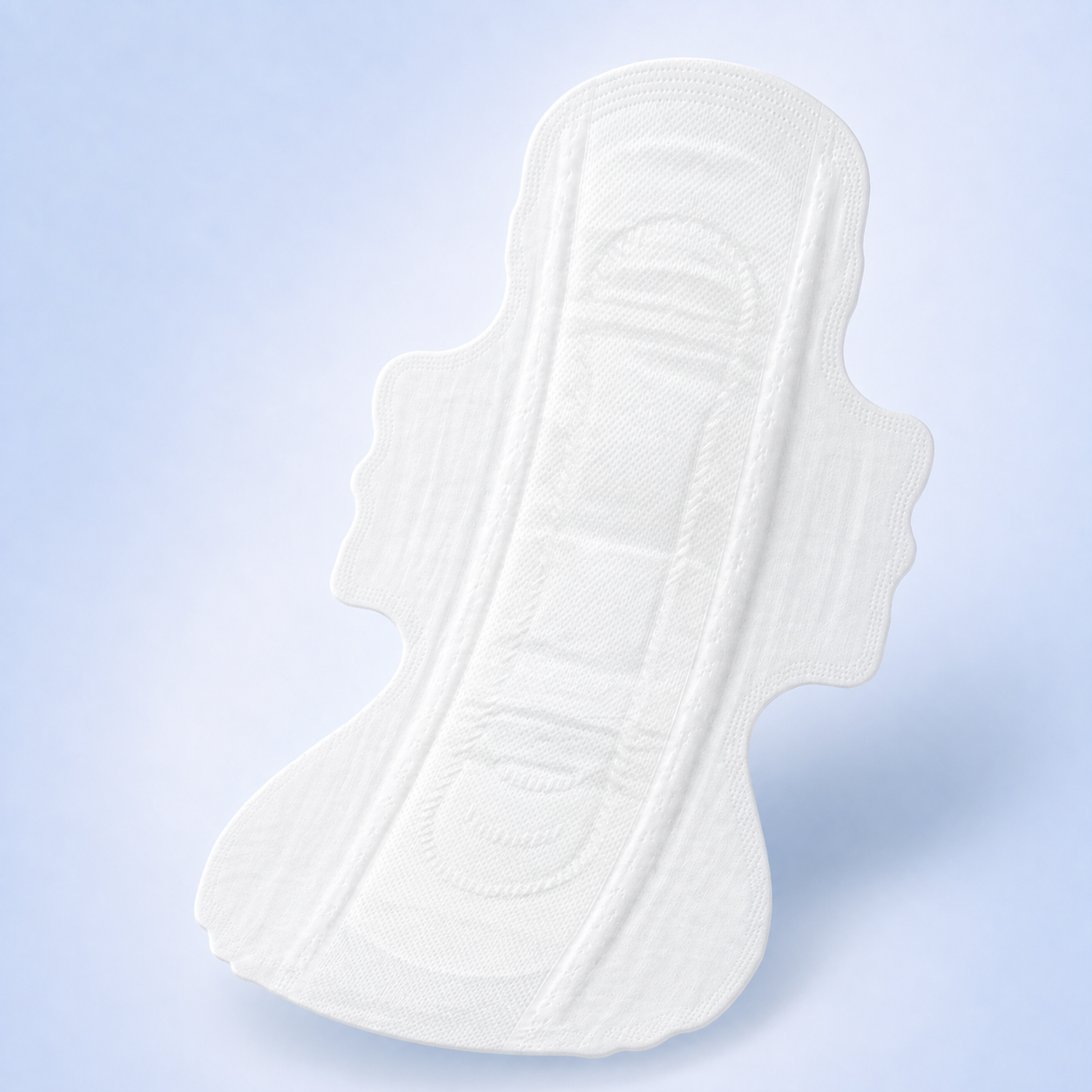
For a private-label brand assessing eco-friendly organic sanitary pads, the useful shortlist is not a list of supplier names. It is a set of product choices to validate: organic bamboo pads, organic cotton pads, cooling-feature pads, and disposable period pants. Each option addresses a different product proposition. Buyers can narrow them by deciding what material they want in the skin-contact layer, which use lengths and absorbency levels the range needs, and what evidence supports the intended product and environmental claims.
A Taiwan, China private-label project illustrates how these decisions can be worked through in practice. The emerging feminine-care brand sought a distinctive cooling experience and a wider range of sanitary pads and disposable period pants. Development included four rounds of customized sampling and refinement before the initial order. For a buyer, the practical lesson is that a shortlist becomes meaningful only when material choices, product formats, samples, specifications, and documentation are considered together.
Why a shortlist should begin with product fit
Private-label launches often need to balance a recognizable product story with everyday use requirements. A material-led product may help define the range, but it does not by itself decide the sizes, day or night positioning, absorbency structure, packaging, or evidence needed for a launch. The choice between bamboo fiber and organic cotton, for example, is not a substitute for confirming what the final product contains and what the supporting documents actually cover.
The same applies to functional concepts. A cooling feature may be central to a brand’s intended user experience, while disposable period pants represent a different format from a pad. Treating all of these as interchangeable “eco” options can obscure important differences in construction and use. A better shortlist keeps the product choices distinct and asks the same decision questions of each one.
For this selection, the primary buyer task is scenario fit: identifying which options are worth sampling for a specific private-label range. It is not to declare one material universally better, or to imply that every option has the same environmental profile. A clear shortlist should make open questions visible as well as identify the options that have a workable specification and evidence path.
The four options to compare
| Option | What it can contribute to the shortlist | What to verify before selection |
|---|---|---|
| Organic bamboo sanitary pads | A bamboo-fiber topsheet option with a defined pad and panty-liner size range in the Lilimolone product specification. | Confirm product composition, intended sizes, sample performance, packaging claims, and that each report applies to the named material or product. |
| Organic cotton sanitary pads | A cotton-topsheet option with day-use, night-use, and extra-long night formats available for project customization. | Check the material scope and documentation behind organic claims, plus the sample, absorbent core, size plan, and packaging wording. |
| Cooling-feature pads | A functional experience concept demonstrated in the Taiwan, China development case. | Assess the agreed topsheet, absorbent-core materials, cooling formulation, user experience criteria, and approved sample. Do not infer that a cooling feature proves an organic or biodegradable claim. |
| Disposable period pants | A different product format included in the Taiwan case and designed for different sizing needs and overnight protection. | Confirm the product format, size range, intended use, material and environmental claims, and how it will sit alongside pads in the range. |
1. Organic bamboo pads: a defined option with product-specific evidence
Lilimolone Ultra-Thin Bamboo Sanitary Pads are specified with a bamboo-fiber nonwoven topsheet, a high-absorbency pulp/SAP core, and a breathable leak-proof PE back sheet. The listed sizes are 155 mm, 245 mm, and 290 mm. The specification also includes panty-liner, regular, and longer-pad range planning, with private-label customization available for size, absorbency, surface material, packaging design, and logo.
This makes the bamboo option relatively concrete for shortlist evaluation: the buyer can review named sizes, a described layer structure, and an available customization route. It does not, by itself, settle which sizes a particular market needs or demonstrate the performance of every possible customized version. The selected sample and final specification should therefore be aligned before the product is treated as launch-ready.
Available testing references can help with screening. The supplied material identifies Test Report No. 260059776 for Lilimolone Ultra-Thin Bamboo Sanitary Pads, alongside Report No. 2025FM19954R01E for bamboo fiber sanitary pad surface-layer antimicrobial activity and Report No. 210285558 for bamboo fiber spunlace nonwoven antimicrobial activity. These references are useful only within their stated scope. Buyers should check the report itself, sample or material name, test item, issuing laboratory, and whether the evidence applies to the product and claims under review. Antimicrobial activity evidence should not be represented as a medical or disease-prevention claim.
A key boundary is that bamboo-related reports do not establish the composition, test status, or claims of an organic cotton pad, a cooling-feature pad, or disposable period pants. Evidence should follow the option being assessed rather than being transferred across a product family by association.
2. Organic cotton pads: plan material claims and range coverage together
The organic cotton option in the product specification is a winged disposable pad with a 100% organic cotton topsheet, fluff-pulp and SAP absorbent core, and a breathable PE film or biodegradable-film backsheet option. The listed formats include panty liner, day use, night use, and extra-long night, with size customizable by project. Packaging and other product details can also be customized.
For a buyer, the first distinction is between material choice and environmental claim. An organic cotton topsheet is a specific material proposition; it should not be treated as proof that the whole pad is biodegradable. The available knowledge material explicitly distinguishes organic cotton claims from biodegradability claims and recommends verifying material composition and supporting evidence separately. If the shortlist includes a biodegradable backsheet or wrapper option, ask which components are covered and what documents support the wording intended for packaging.
Range planning matters just as much as the topsheet. A private-label brand may consider day-use, night-use, and extra-long night formats, but the appropriate set depends on its intended channel and product plan. Buyers should decide what use cases to cover, then confirm pad length, absorbency target, wing design, pack count, and artwork against samples. The product specification provides a customization framework; it does not prescribe one universal range for all markets.
3. Cooling-feature pads: evaluate the experience through samples
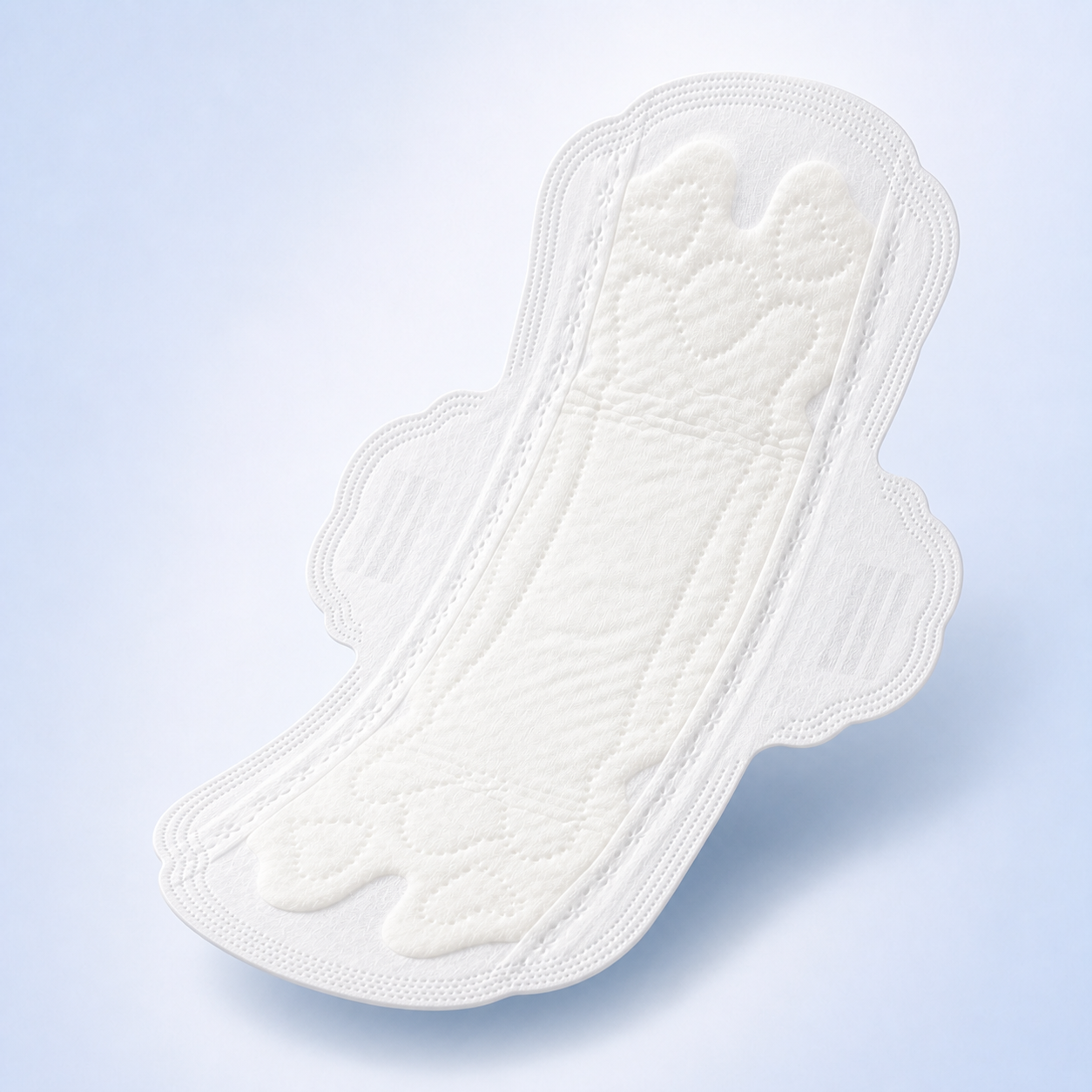
The Taiwan, China project shows how a cooling concept can be treated as a development choice rather than an assumed off-the-shelf feature. The client was an emerging feminine-care brand specializing in private-label sanitary pads and disposable period pants. Its range-development project focused on a distinctive cooling experience, with products planned for daytime use, overnight protection, and different sizing needs.
According to the case information, development translated the client’s intended positioning and user experience into material, size, and cooling-formulation choices. It involved selecting topsheet and absorbent-core materials, together with a customized cooling formulation. Four rounds of customized sampling and refinement took place before the initial order, addressing the client’s requirements for cooling sensation, comfort, and consistent product quality.
For a buyer, the rounds of sampling are important because they show what must be settled before a first order: the intended sensation, relevant materials, size and use case, and the approved sample. A shortlist should record what changed between sample rounds and which specification was accepted. This keeps the selected product tied to an agreed version rather than a broad feature label.
The case does not provide a measured cooling-performance result or establish that the feature applies to every pad option. Buyers should assess the sample against their own stated experience criteria and confirm the approved formulation and specification. Nor should a cooling feature be used as evidence for organic, biodegradable, antibacterial, or other claims without separate supporting documentation.
4. Disposable period pants: a complementary format, not another pad size
Disposable period pants belong on the shortlist when the proposed range needs a product format beyond pads. In the Taiwan case, period pants were developed alongside sanitary pads for different sizing needs and overnight protection. The broader application information describes period pants as full-coverage products intended for overnight protection, heavy-flow days, frequent movement during sleep, or situations when changing is inconvenient.
That scenario makes period pants a potential complement to day-use and night-use pads, but the formats should not be conflated. A longer pad remains a pad; period pants are a separate item with their own size, construction, packaging, and evidence questions. Buyers should confirm the required size range and usage statements, then consider whether the product belongs in the same launch or a later range extension.
The Taiwan case documents expansion from a single size into daytime, overnight, and extra-long overnight pads, as well as disposable period pants in different sizes. It also records ongoing cooperation and repeat orders. This is evidence of a product-range development path in that specific case, not a guarantee that another brand will obtain the same result or that every proposed format will perform identically.
A practical narrowing framework: material, size, and documentation
Material selection. Start by writing down the exact product proposition: bamboo-fiber topsheet, organic cotton topsheet, cooling-feature development, or disposable period pants. For each option, distinguish the skin-contact material from the absorbent core, backsheet, wrapper, and packaging. Ask which specific component supports each environmental or functional claim. The product records describe bamboo fiber, organic cotton, pulp/SAP cores, PE or biodegradable-film backsheet options, and packaging customization; they do not establish that all components share the same material attributes.
Size and use coverage. Map the intended assortment to actual use cases. The bamboo specification lists 155 mm, 245 mm, and 290 mm. The organic cotton pad specification lists panty liner, day-use, night-use, and extra-long night formats with project-customizable sizes. The Taiwan project connected daytime, overnight, and extra-long overnight needs with pads and disposable period pants in different sizes. Treat these as available planning references, not as a universal size prescription. Confirm the proposed range through samples and a written product specification.
Documentation and claim scope. Match every document to the product, material, and claim it supports. For the bamboo option, use the available product and bamboo-fiber testing references as screening inputs and check their exact scope. For organic cotton, request evidence for the cotton material claim. For biodegradable wording, verify which product layers or packaging components are covered. For a cooling feature, retain the accepted sample and specification that identify the agreed material and formulation. Clear environmental-claim evidence and accurate packaging information are especially relevant to export-oriented private-label projects.
Sample control. Record the sample version, specification, observed differences, and approval decision. The Taiwan case’s four refinement rounds illustrate that a first sample may not represent the final product. Sampling is most useful when each review is tied to a defined question—such as surface material, cooling experience, size, or absorbency—rather than an open-ended preference. The approved sample should be connected to packaging artwork and the production specification.
Packaging and channel fit. A disposable retail product requires decisions about individual wrappers, retail pouch packaging, display box, master carton, product specification files, and artwork. Check the product name, size, count, material wording, language, and any environmental statement against the final approved specification. Packaging is part of the buyer’s evidence and presentation system; it should not make claims broader than the supporting documents.
What the Taiwan case shows—and what it does not
The Taiwan case offers a practical example of scenario-led assortment development. An emerging feminine-care brand sought a distinct cooling experience and needed products for daytime use, overnight protection, and different sizing needs. The development work connected customer requirements with product choices, sample refinement, manufacturing coordination, and order fulfillment. Four customized sampling and refinement rounds preceded the initial order. The range later expanded beyond a single size to include daytime, overnight, and extra-long overnight pads, plus disposable period pants in different sizes.
The case is useful for buyers because it demonstrates a sequence: define the intended experience, select materials and sizes, refine samples, approve a product specification, then coordinate packaging and supply. It does not establish universal demand for cooling pads, a comparative performance advantage, or a guaranteed outcome for other private-label launches. Nor does it replace product-specific test reports or material documentation.
New Upward SC (Guangdong) Co., Ltd. is identified in the company information as an integrated disposable hygiene product manufacturing and service provider. Its stated project support includes product development, coordinated manufacturing, packaging design, quality management, market support, and global delivery. Lilimolone is the brand name attached to the specified ultra-thin bamboo sanitary pad product. Keeping the supplier, brand, and product identity distinct helps buyers connect each specification and report to the correct entity.
Comparison with a conventional single-format shortlist
A conventional shortlist built around one familiar disposable pad format can be simpler to quote and compare. Its limitation is that it may not address a brand’s intended material positioning, day-to-night range coverage, cooling concept, or demand for a separate period-pants format. Conversely, adding every eco-positioned option at once increases the number of specifications, samples, packaging versions, and claim scopes that must be reviewed.
There is no evidence here that one shortlist structure is always less costly or performs better. The practical boundary is operational: each additional product format or material requires its own clear specification and appropriate evidence. A focused range can reduce the number of open decisions, while an expanded range may better represent the product concepts a brand intends to test. The appropriate balance depends on the brand’s target channel and launch plan, not on a universal ranking of materials.
Industry and procurement perspective
The supplied case material points to a procurement approach in which range planning is connected to use scenarios rather than treated as a single-product decision. In the Taiwan project, daytime pads, overnight protection, different sizes, a cooling experience, and disposable period pants were considered within a private-label range-development process. That is a documented project example, not proof of a market-wide trend. For buyers, its relevance is that scenario requirements can determine what needs to be sampled and documented.
Market context should also be used carefully. A third-party research entry from TechSci Research reports a projected global organic sanitary napkins market size of USD 3.02 billion for 2025. This is a source-reported forecast, not a verified current market measurement. It cannot determine which of the four product options will fit an individual retailer or establish demand for a particular brand. Product-level decisions still require material evidence, sample review, size planning, and clear claims.
A buyer’s shortlist checklist
- Name the product option precisely: bamboo-fiber pad, organic cotton pad, cooling-feature pad, or disposable period pants.
- List the product layers and material claims separately; do not treat an organic topsheet as proof that the complete product is biodegradable.
- Map the proposed sizes and formats to daytime, overnight, extra-long overnight, or other stated use needs.
- Request samples and document each refinement, especially where a cooling formulation or customized size is involved.
- Check that each test report names a relevant product or material and supports only the claim within its stated scope.
- Confirm product specification files, packaging artwork, individual wrapper, retail packaging, and required language before production approval.
- Keep the approved sample, final specification, report references, and packaging claims aligned for the product being ordered.
Future outlook: expand after the first decision is evidenced
For a private-label brand, the next useful step after an initial shortlist is not necessarily to launch every option. It is to close the evidence and specification gaps for the most relevant products first. The bamboo option has named sizes and available product-specific testing references; the organic cotton option has several use formats and material options to verify; the cooling concept requires sample-led refinement; and disposable period pants need separate size and format decisions.
The Taiwan project shows that a product range can develop through iterative sampling and coordinated execution, from an initial concept toward a broader set of sizes and formats. Buyers can use that sequence as a planning reference while treating their own requirements, samples, and documents as the basis for approval. The strongest shortlist is therefore not the longest one: it is the set of distinct options for which the brand can state the intended use, verify the material and claims, and approve a final specification.
FAQ
How should buyers compare bamboo fiber sanitary pads and organic cotton sanitary pads?
Compare the intended market and product position, topsheet material, absorbent structure, size range, sample performance, packaging claims, and supporting documents. Bamboo-fiber and organic-cotton claims relate to different material choices, so evidence for one should not be assumed to support the other. Also verify biodegradability separately if it is part of the product proposition.
What evidence should buyers check for bamboo fiber sanitary pads before placing OEM orders?
Check the product specification, sample, packaging information, and reports that identify the relevant product or bamboo-fiber material and test scope. The available references include Test Report No. 260059776 for Lilimolone Ultra-Thin Bamboo Sanitary Pads, Report No. 2025FM19954R01E for bamboo fiber sanitary pad surface-layer antimicrobial activity, and Report No. 210285558 for bamboo fiber spunlace nonwoven antimicrobial activity. Confirm the report details before using any claim, and do not interpret antimicrobial activity testing as a medical claim.
What sanitary pad sizes should an OEM brand include in one product series?
There is no single size set established for every brand. The supplied product information lists 155 mm, 245 mm, and 290 mm for the bamboo series, while the organic cotton range includes panty liner, day-use, night-use, and extra-long night formats with project-customizable sizing. Buyers should select sizes according to their target use cases and channel plan, then confirm them through samples and the final specification.
Tem questões ou precisa de mais detalhes?
Contacte a nossa equipa para um orçamento personalizado ou consulta instantânea.
Solicitar orçamento
Preencha o formulário abaixo e a nossa equipa entrará em contacto com uma proposta personalizada.
Chat direto do WhatsApp
Prefere conversar em tempo real? Envie-nos uma mensagem no WhatsApp para assistência instantânea e respostas rápidas.
- Obter orçamento personalizado
- Partilhar fotos ou documentos
- Discuta as suas necessidades diretamente
Geralmente responde em 5–30 minutos durante o horário de expediente.