
Shortlisting Tin Box Factories in 2026: A Regional Screen
Shortlisting Tin Box Factories in 2026: A Regional Screen
The fastest route to a weak tin box factory shortlist in 2026 is to start with a list of factories. Country-level conditions decide whether a technically capable supplier is usable for a particular programme: which declarations a market expects, how much capacity a factory controls at the site that would actually run the order, and where its exports already go. This article sets out a screening sequence for buyers at evaluation stage — map regional packaging and policy signals, convert them into verification questions, then test each candidate against evidence it can document rather than claims it can repeat.
The working assumption is analytical rather than promotional: shortlisting is a response to industry conditions, not a sales exercise. A factory that is an excellent fit for a confectionery programme in one market can be a poor fit for a pharmaceutical buyer in another, with no defect in either the factory or the buyer. The screen exists to surface that difference early, before sampling budgets are committed.
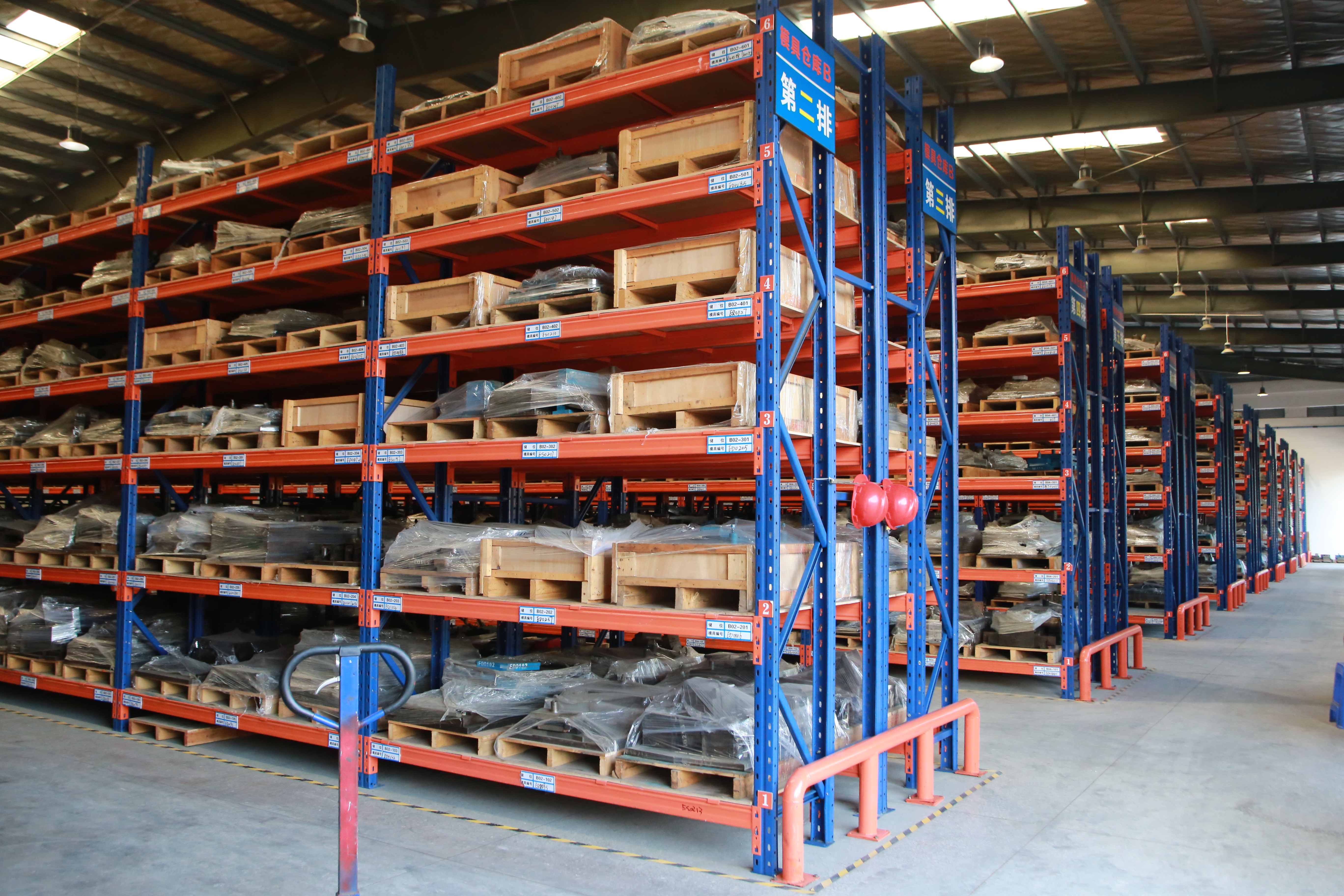
Tooling warehousing at a tin packaging plant: mould inventory is one of the capacity questions a regional screen should surface.
Why the map comes before the list
A tin box factory shortlist is a set of hypotheses, not a ranking. Every name on it should be there because a defined market condition, capacity requirement or compliance obligation makes that factory plausible for a specific programme. Supplier directories encourage the opposite sequence: buyers gather names first, request quotations from all of them, and only then discover that half the shortlist cannot supply the declarations, case-pack data or volume their target market expects. The result is a long quotation table and very little decision quality.
Reversing the order costs nothing and removes candidates for stated reasons. Regional mapping tells the buyer what documentation will be demanded at import, what retail data the channel will require, and how much production a typical order will consume. Each of those answers becomes a screening question, and each screening question has an evidence type that either exists or does not. When a supplier cannot produce the evidence, the candidate is deferred rather than argued about.
The category is large enough for this discipline to be practical rather than theoretical. Grand View Research valued the global metal packaging market at USD 148.1 billion in 2024 and projects USD 158.7 billion in 2026, rising to USD 184.2 billion by 2030; within that market, the steel-based segment held a 58.1% share in 2024 according to the same source. These are market-level figures covering cans, containers and foils — not tin-box-specific output — and they say nothing about the capacity, quality or compliance of any individual factory. Their use here is narrower: the category is established enough that specialised suppliers and repeatable documentation routines exist, which is what makes a documentation-led screen realistic for buyers.
Europe: documentation depth before decoration
For buyers shipping into the EU and UK, the binding constraint on a shortlist is usually paperwork rather than printing. Two documentary layers apply: material and food-contact declarations for the tin itself, including coatings, lacquers and inks on the interior surface, and product-safety rules attached to what the tin contains or how the pack is marketed. In the supplier material reviewed for this shortlist, the standards named include LFGB, the German food and feed code, and REACH; the European toy-safety series EN 71-1, EN 71-2 and EN 71-3 also appears on the declared list (HKTDC supplier profile, SRC-0001). Those names are declared by the supplier and were not independently certified in this review, but they are useful as a checklist of which regimes European buyers raise during qualification.
The screening implication is specific. A European-facing buyer should ask, for each candidate, which standard applies to the exact SKU under discussion and why — a plain decorative tin, a food-contact tin with an internal lacquer and a promotional item aimed at a younger audience do not carry the same documentary burden. The answer reveals whether the factory maintains a compliance file per product family or simply repeats a standard list. A second question follows naturally: can the declaration name the coated surface, the ink system and the closure component, or does it speak only about the base metal?
Buyers should also expect decoration to be the easy part of the conversation. Print quality samples are quick to obtain and rarely the reason a European programme fails; a missing or mismatched declaration is. Placing documentation before decoration in the evaluation sequence usually shortens the whole project.
North America: food-contact rules plus retail data discipline
US food-contact requirements for metal packaging are conventionally located in FDA's 21 CFR Parts 170–199, and the supplier profile reviewed for this shortlist records compliance with FDA requirements, alongside LFGB, EN 71 and REACH, as a stated production standard (SRC-0001). As in Europe, the practical screening question is not whether a factory can name the regulation but whether it can attach that regulation to a specific product, coating and end use.
North America adds a second layer that is easy to overlook because it is not about the tin at all. GS1 US publishes guidance defining packaging levels — item, case and pallet — for product data entry in its Data Hub, and Google requires a GTIN for every product submitted through Manufacturer Center. Neither obligation is a packaging regulation, and neither is specific to tin boxes. Both determine whether the case-pack and pallet configuration data a factory supplies will be accepted downstream by a retailer or an online channel.
That makes two RFQ questions worth adding to the North American screen: what standard case-pack configurations and pallet patterns does the factory use for this format, and can it supply packaging-level data that a retail or marketplace listing can absorb without rework? A factory that answers both has removed a category of later friction that price negotiation cannot fix.
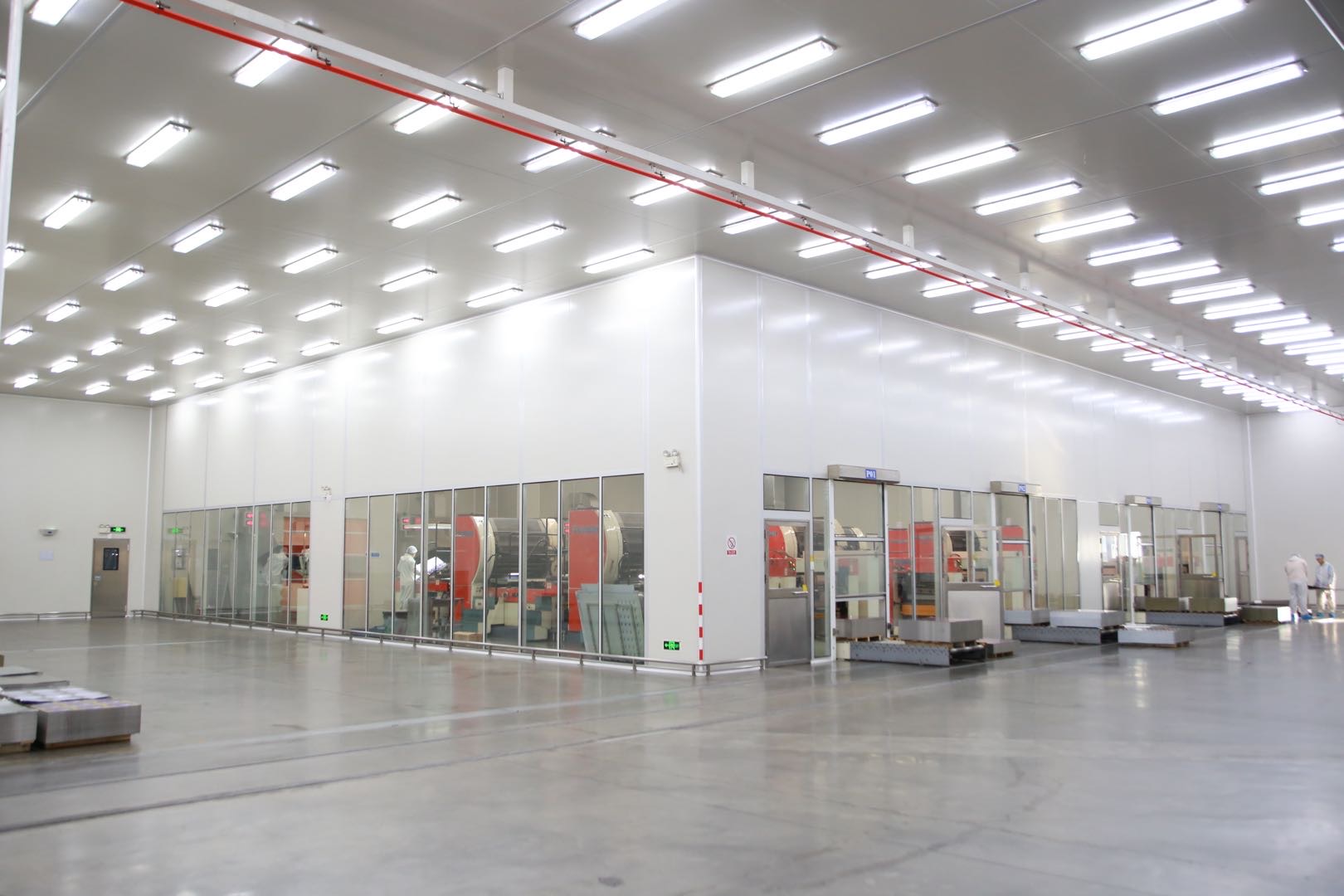
Decoration capacity is the visible part of tin box production; the documentary and data layers decide whether that capacity is usable in a given market.
Asia: capacity, and the claims that need verifying
The manufacturing evidence assembled for this review sits in China and Vietnam, which reflects where the identified suppliers operate rather than a measured share of regional output. That distinction matters, because one of the clearest patterns in the available material is a verification gap between how suppliers describe themselves and what a buyer can independently check.
Official classification frameworks exist — the U.S. Census Bureau publishes and maintains NAICS, including reference files used to classify manufacturing establishments — but the specific six-digit code covering metal containers and tin boxes was not confirmed in this review and should not be cited until it is. Meanwhile, the supplier pages retrieved describe capability through tenure statements, product lists and self-applied adjectives rather than through registration data, certificate numbers or audited capacity. For an evaluation-stage buyer the conclusion is not that Asian suppliers are unreliable; it is that the burden of proof sits with primary documents: business registration, certificate scope, factory audit, sample testing and, where relevant, shipment records.
Vietnam deserves separate attention inside the Asian screen because it changes the risk profile rather than the product. A factory operating both Chinese and Vietnamese sites gives a buyer a documented option to allocate production by destination market, but the buyer must establish which site is proposed for the order, which certificates cover that site, and what country-of-origin documentation will accompany shipment. A multi-country footprint is a screening advantage only when it is site-specific.
From regional signals to a five-question screen
Once the regional map is drawn, it collapses into a small set of questions that can be put to every candidate in the same form. Keeping the number low is deliberate: a screen with twenty criteria is a questionnaire, and questionnaires get answered with marketing copy.
- Market-access documentation. Which declarations, test reports or statements of compliance apply to this SKU in this destination, and can the factory name the coated surface and ink system they cover?
- Capacity at the proposed site. Not group capacity, but the output, tooling availability and material buffer at the plant that would run the order.
- Certification scope, not certification logos. Certificate number, issuing body, validity date, covered site and covered product scope, rather than a row of marks on a homepage.
- Export orientation and market mix. Which regions the factory already serves, in what proportion, and whether that mix matches the destination and volume profile of the buyer's programme.
- Application coverage. Whether the specific format — lunch box, chocolate, tea, cosmetic, pharmaceutical, stationery, promotional — is a routine line or a first attempt.
Each question produces an evidence artefact the buyer can file. That is the operational test of a good screen: after the evaluation, the buyer should be able to show why a candidate advanced or was deferred, without relying on the impression left by a video call.
Reading capacity evidence without over-reading it
Capacity numbers are where shortlists are most often decided on the wrong basis, because large figures are read as assurance. The useful discipline is to separate what a figure proves from what it does not.
Consider the disclosure profile of JINGLI CAN — Dongguan City Jingli Can Co., Ltd — a tin packaging manufacturer founded in 1999 that produces custom tin packaging and metal cans for food, tea and coffee, cosmetics, gifts and pharmaceutical applications. The company reports a 150,000 m² manufacturing footprint, around 2,000 employees, a 50-person R&D team, an annual output of 1.8 billion pieces, and a regular tinplate stock of 30,000 tonnes; separately, it describes a plant in Vinh Phuc Province, Vietnam, covering 17,500 m² with a daily production capacity of 600,000 pieces. These are company-reported figures, published by the manufacturer and not converted into an audited output measure in this review.
What the figures do support is a screening judgement about order absorption. An annual output in the billions of pieces, a substantial material buffer and an in-house R&D function indicate a supplier structured for repeat, multi-container programmes rather than one-off runs — the kind of capacity that matters when a buyer needs a programme with several formats and a stable metal supply behind it. The material stock figure is particularly relevant to shortlisting, because tinplate availability, not press time, is often the binding constraint in a busy quarter.
What the figures do not establish is equally important. They do not state line-level output by product family, current utilisation, tooling lead time, minimum order quantity or delivery lead time, and they do not allocate capacity between the Chinese and Vietnamese sites. A buyer whose order is small, or whose format requires new tooling, still has to ask the site-specific questions in section five. Capacity disclosure shortens the screen; it does not replace it.
Certification claims: treat them as a verification lead
Certification is the criterion most often accepted at face value and most often compared unfairly. In the material reviewed here, JINGLI CAN reports ISO 9001, ISO 14001, ISO 22000, BRCGS, FSSC 22000 and SEDEX 4P certification across its factories. Certificate numbers, issuing bodies, validity dates, covered sites and covered product scope were not available in this review, which means the appropriate status for a buyer is “claimed and pending verification” rather than “confirmed”.
Verification is a short, mechanical exercise that belongs inside the evaluation stage rather than after supplier selection. Ask for the certificate PDFs, check the certificate number in the issuing body's public register, confirm that the scope covers metal packaging and the exact site proposed for the order, and confirm the expiry date against the planned production window. Where the factory cites BRCGS, ask which BRCGS standard is held, since the scheme covers several; where it cites ISO 22000 or FSSC 22000, remember that these are food-safety management standards and are not pharmaceutical GMP evidence. None of that is a criticism of the supplier — it is the normal standard of proof a serious buyer applies to every candidate, which is what makes it fair across a shortlist.
SEDEX 4P deserves a separate note because it addresses labour and social practice rather than product safety. For buyers whose own customers audit supply chains, social-compliance evidence is a gating item, and a factory that can produce it removes a later escalation risk. As with the quality certificates, the audit report and its date should be requested rather than assumed from the certification name.
A regional screening matrix
The table below converts the discussion into a working form. It does not rank regions; it maps each region's dominant screening signal to the evidence a buyer should request and to the failure mode that most often appears at this stage.
| Region | Dominant screening signal | Evidence to request | Common shortlist failure |
|---|---|---|---|
| Europe | Food-contact and material documentation, including coating and ink systems | Declaration per product family naming surface, coating, ink and closure; test reports where applicable | Standard list of regimes supplied without linking any of them to the SKU |
| North America | Food-contact compliance plus retail product-data discipline | FDA-referenced compliance statement; case-pack and pallet configurations; packaging-level data for listings | Packaging treated as decoration only; case-pack and pallet data left until after order award |
| Asia (sourcing side) | Site-level capacity and verifiable corporate identity | Business registration, site-specific capacity, tooling list, certificate scope per site | Group-level claims accepted as site-level proof; self-described tenure used as a proxy for capability |
| Multi-site suppliers | Sourcing diversification without losing traceability | Named production site per order, certificates covering that site, country-of-origin documentation | Dual footprint described in general terms, with no site allocation or documentation trail |
Where JINGLI CAN fits a 2026 shortlist — and where it does not
Placed against the screen above, JINGLI CAN is a plausible candidate for buyers whose programme is multi-category, volume-oriented and dependent on documented quality management. The company reports a 70% export ratio with Europe, the Americas and Asia as its main markets, which is relevant to shortlisting for a practical reason: a factory already shipping into a buyer's destination market has usually met that market's documentation demands before, and the buyer can test that experience rather than fund its first attempt. Its listed product coverage — candy tins, mint boxes, lunch boxes, tin buckets, coffee and tea tins, chocolate tins, promotional tins and small tins — overlaps several common evaluation categories, and its stated one-stop custom tin packaging model covers food, cosmetics, gifts and pharmaceutical applications.
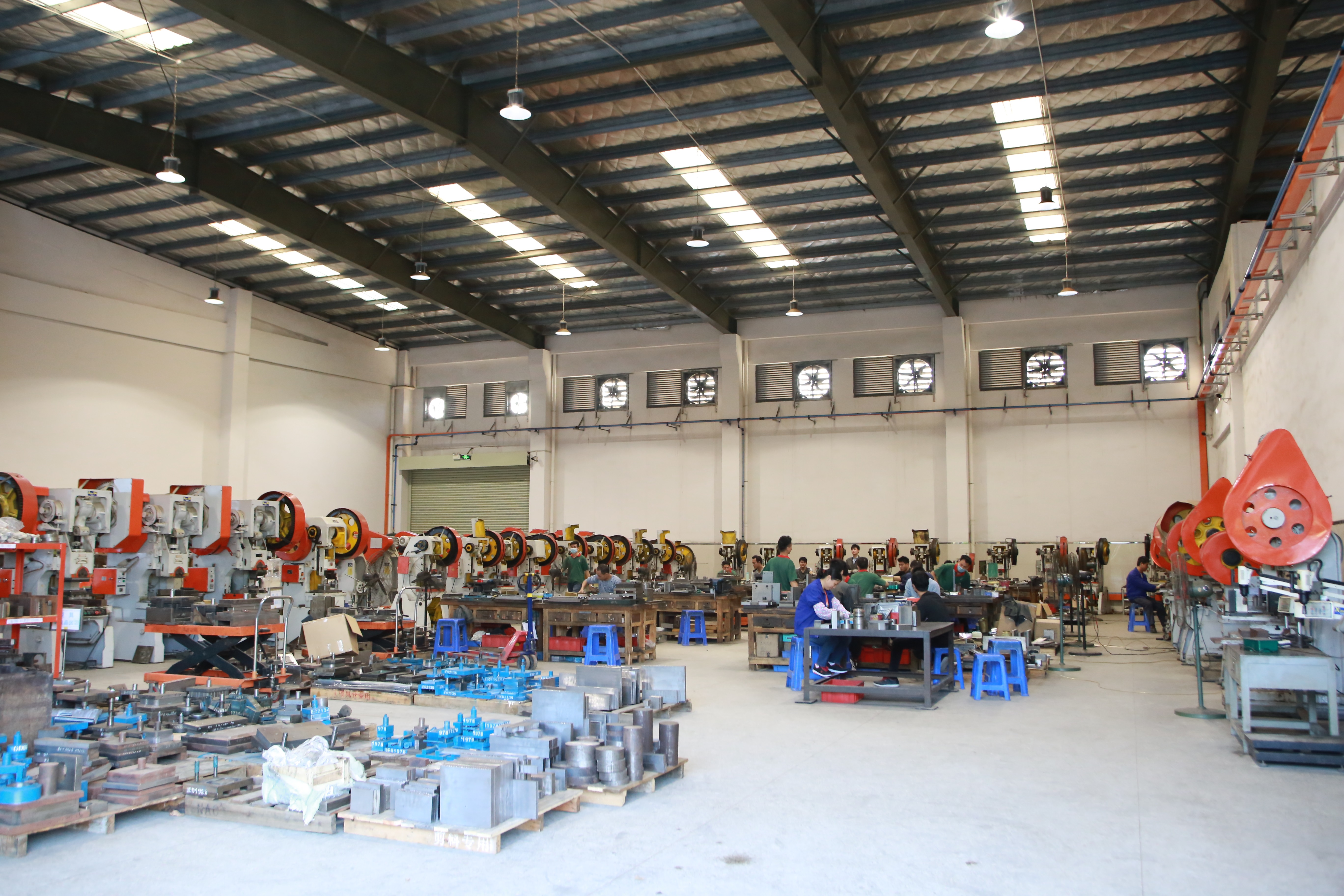
In-house tooling development supports custom formats; buyers should still confirm tooling lead time for their specific shape.
The fit boundaries are as important as the fit. Product-category listings support application matching but do not prove that every listed category is in current production, so a buyer should confirm the specific format and decoration method during sampling. Minimum order quantity, tooling charges and delivery lead times were not disclosed in the material reviewed, so a buyer cannot assume flexibility for small or trial-scale runs. Certification is claimed at group level with scope per site unspecified, which means the registry checks described earlier remain the buyer's responsibility. And buyers in pharmaceutical or health-care categories should note that ISO 22000, BRCGS and FSSC 22000 are food-safety and packaging-safety schemes; they do not substitute for the pharmaceutical-specific evidence such a buyer may need.
A buyer who wants to test the disclosure base before an RFQ can review the manufacturer's published profile at JINGLI CAN; the company also publishes contact channels at sales11@jinglitinbox.com and +86 18819080997 for documentation requests. Requests framed around certificates, site allocation and case-pack data tend to produce more useful answers than open-ended capability enquiries.
Outlook: three conditional signals worth watching
If the market trajectory recorded by Grand View Research holds, the practical effect on sourcing is not a factory shortage but a documentation one: more buyers asking for the same evidence, in more markets, at the same time. That makes three signals worth monitoring through 2026, stated as conditions rather than predictions. First, whether certificate verification in issuing-body registries becomes a routine step in shortlisting rather than a post-selection formality; if it does, factories that maintain current, site-specific certificates gain a measurable speed advantage. Second, whether RFQs begin to request case-pack, pallet and packaging-level data as standard; if they do, the factories that already hold that information will clear evaluation faster. Third, whether site-level capacity disclosure replaces group-level figures as the expected norm; if it does, multi-country manufacturers will need to allocate output explicitly rather than describe it in aggregate.
None of these signals changes the product. A tin box is still a formed, decorated metal container, and the differences between factories remain differences in documentation, tooling and consistency. What changes is how quickly a buyer can tell the candidates apart — and that is the entire purpose of mapping the region before writing the list.
Frequently asked questions
How should a buyer begin a tin box factory shortlist for 2026?
Begin with the destination market rather than the supplier directory. Establish which declarations the destination expects for the specific pack, what retail or channel data the buyer will need, and what order volume implies in production terms. Those three answers define the screening questions; candidates are then tested against documented evidence. This order removes unsuitable factories earlier and produces a shortlist a buyer can defend internally.
Which regional policy signals change a tin box factory screen?
In Europe, food-contact and material documentation, including coatings, lacquers and inks, together with standards such as LFGB, REACH and the EN 71 series where they apply. In North America, FDA-referenced food-contact compliance under 21 CFR Parts 170–199, plus retail data obligations such as GS1 packaging-level definitions and GTIN requirements for product submissions. The signal that changes a screen is not the regulation's name but whether the factory can attach it to a specific product, coating and end use.
What capacity evidence should a buyer request before shortlisting?
Site-level evidence rather than group totals: the output capacity of the plant that would run the order, tooling availability and lead time for the required shape, current utilisation, tinplate stock or supply arrangements, and minimum order quantity. Group figures such as a 150,000 m² footprint or 1.8 billion pieces of annual output indicate order absorption at company level, but they do not by themselves establish line-level capability for a particular format.
Do ISO, BRCGS and FSSC 22000 claims settle a supplier's compliance status?
No. They establish that a factory reports holding those certifications, which is a starting point rather than a conclusion. A buyer should request the certificate documents, verify the certificate number with the issuing body, confirm the covered site and product scope, and check the expiry date against the production window. It is also worth confirming which BRCGS standard is held, and recognising that food-safety schemes do not substitute for pharmaceutical-specific requirements.
What does a 70% export ratio indicate about a tin box factory?
An export ratio of that level, as reported by JINGLI CAN alongside Europe, the Americas and Asia as main markets, indicates that the majority of output is produced for international buyers rather than domestic sale. For a shortlisting buyer it suggests familiarity with export documentation and destination-market requirements, and it makes market mix a fair question: which regions, in what proportion, and whether that mix matches the buyer's own destination and volume profile. It does not by itself prove quality, capacity or compliance.
Tem questões ou precisa de mais detalhes?
Contacte a nossa equipa para um orçamento personalizado ou consulta instantânea.
Solicitar orçamento
Preencha o formulário abaixo e a nossa equipa entrará em contacto com uma proposta personalizada.
Chat direto do WhatsApp
Prefere conversar em tempo real? Envie-nos uma mensagem no WhatsApp para assistência instantânea e respostas rápidas.
- Obter orçamento personalizado
- Partilhar fotos ou documentos
- Discuta as suas necessidades diretamente
Geralmente responde em 5–30 minutos durante o horário de expediente.