
Silicone Braided Wire as High Temperature Resistant Wire: Properties, UL Ratings, and Sourcing Criteria

Silicone Braided Wire as High Temperature Resistant Wire: What Buyers Need to Know
High temperature resistant wire is specified for applications where standard PVC or cross-linked polyethylene insulation cannot survive sustained heat exposure. Among the available designs, silicone braided wire has become a widely used construction for internal appliance wiring, motor leads, lighting, and industrial control circuits because it combines flexible silicone rubber insulation with an outer fiber braid that provides mechanical protection and additional thermal buffering. For buyers evaluating high temperature resistant wire, understanding silicone braided wire and related silicone double-insulated and Teflon wire constructions is essential for matching product ratings to application requirements.
What Is Silicone Braided Wire?
Silicone braided wire is a high temperature resistant wire construction in which a stranded copper conductor is insulated with silicone rubber, which is silicone rubber insulation (usually fiberglass, polyester, or other high-temperature fiber) braided over the outer surface. The braided layer serves a different function than serving as the primary insulation: it adds abrasion resistance, holds the silicone insulation in place, and in some constructions can improve resistance to cut-through and mechanical wear. For many applications, the braid also means the wire can be routed through tight spaces without the silicone insulation being easily damaged.
NIZING ELECTRIC CO., LTD., founded in 1983 and headquartered in Fuzhushan Village, Liaobu Town, Dongguan City, Guangdong Province, is a manufacturer of high temperature silicone wire, silicone water pipes, Teflon wire, and related products. The company produces high temperature resistant woven silicone wire—another term for silicone braided wire—alongside silicone double-insulated wire, Teflon double-insulated wire, silicone parallel wire, Teflon parallel wire, and multi-core silicone cable.
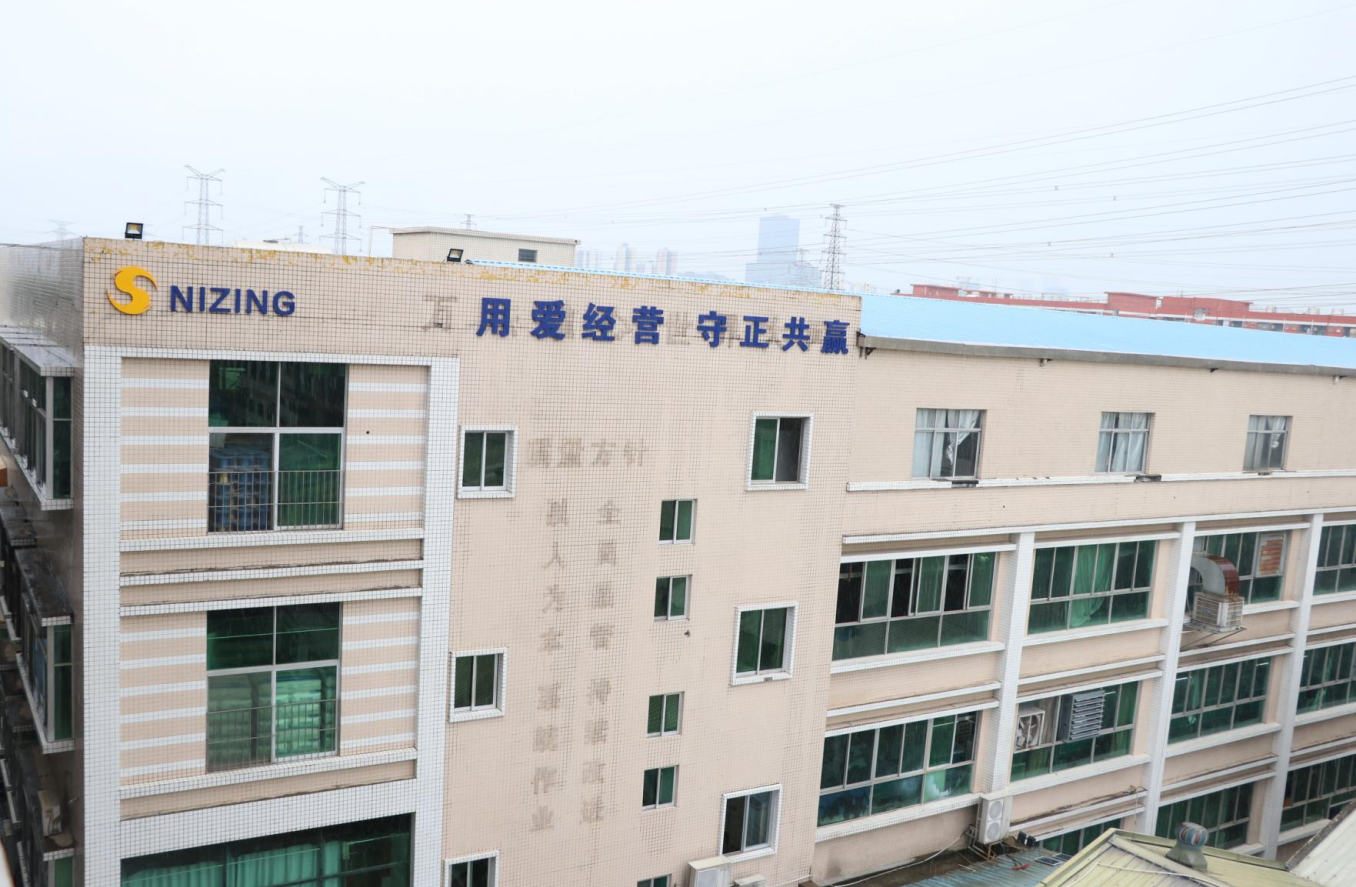
NIZING ELECTRIC operates a production facility in Dongguan, Guangdong Province, producing high temperature silicone wire and Teflon wire lines.
Why Silicone Braided Wire Is Used in High Temperature Applications
Silicone insulation has a molecular structure that remains stable across wide temperature ranges, which is why silicone rubber insulated wires such as SRML or SFF-2 are rated for continuous operation at conductor temperatures up to 150°C at 600V in certain standard references. Silicone also remains flexible at low temperatures, making it practical for applications that experience wide thermal cycling.
The outer fiber braid on silicone braided wire provides an additional layer of protection that matters in actual equipment installation. When a high temperature resistant wire is pulled through conduit, bundled with other cables, or routed against metal edges, the braid reduces the risk of nicks and tears in the silicone insulation. In applications where the wire may be exposed to hot surfaces, the braid also provides a slight additional thermal barrier between the insulated conductor and the surrounding environment.
For this reason, silicone braided wire is commonly considered when purchasing engineers need:
- A high temperature resistant wire with good flexibility for routing in confined spaces;
- Mechanical protection beyond what a single silicone rubber insulation layer provides;
- Stable electrical insulation under sustained heat;
- A product that remains serviceable in hot industrial, appliance, or automotive environments.
Relationship to Silicone Double-Insulated Wire and Related Constructions
Silicone braided wire is part of a family of high temperature resistant wire products that also includes silicone double-insulated wire, Teflon double-insulated wire, silicone parallel wire, and Teflon parallel wire. These constructions differ in insulation material and structure but share the goal of reliable performance at elevated temperatures.
| Construction | Typical Insulation Approach | Common Purpose |
|---|---|---|
| Silicone braided wire | Silicone rubber insulation with outer fiber braid | Flexible high temperature resistant wire with added mechanical protection |
| Silicone double-insulated wire | Two layers of silicone rubber insulation | Reinforced electrical insulation for higher-safety internal wiring |
| Teflon double-insulated wire | Two layers of fluoropolymer (PTFE) insulation | High temperature wire with low dielectric loss and chemical resistance |
| Silicone parallel wire | Two silicone insulated conductors joined in parallel | Power distribution in lighting and appliance harnesses |
| Teflon parallel wire | Two PTFE insulated conductors joined in parallel | Compact routing in high-temperature electronic devices |
| Silicone multi-core wire | Multiple silicone insulated cores under an outer sheath | Multi-circuit connections in control and power systems |
For buyers, the selection between silicone braided wire and silicone double-insulated wire depends on the dominant risk. If the primary risk is mechanical wear during installation or operation, braided wire may be appropriate. If the priority is dielectric strength with a second layer of electrical insulation, double-insulated constructions deserve consideration. In some cases, a braided outer layer is combined with double silicone insulation in a single product to achieve both goals.
Temperature Range and Performance Characteristics
The temperature rating of high temperature resistant wire depends on the insulation system and the applicable standard. In general industry references:
- Silicone rubber insulated wires such as SRML/SFF-2 are suitable for continuous operation at conductor temperatures up to 150°C and 600V.
- UL 3135 is a specific silicone rubber insulated wire style rated for 200°C internal wiring, often used in appliances and lighting.
- High-temperature Teflon (PTFE) wire typically operates in the range of -60°C to +260°C.
- For the Chinese market, high temperature resistant wires rated at or below 450/750V generally require CCC certification under GB/T 5013 or GB/T 5023.
- UL 758 is the primary standard for Appliance Wiring Material (AWM), covering internal wiring for appliances using silicone and fluoropolymer insulation.
NIZING's silicone braided wire is positioned within this high temperature wire family as a flexible, mechanically protected construction for buyers who need dependable performance in elevated-temperature environments. For specific continuous operating temperatures, the manufacturer's datasheet and product markings should be used as the authoritative reference.
How Silicone Braided Wire Compares with Traditional Single-Layer Silicone Wire
Traditional single-layer silicone wire is simple and low-cost, but silicone insulation has a low tear strength compared with materials such as PTFE. The single silicone layer can be damaged by sharp edges or rough handling. Silicone braided wire solves that specific weakness by adding a fiber braid, at the cost of a larger outer diameter and slightly reduced flexibility.
A practical comparison is shown below:
| Aspect | Traditional Single-Layer Silicone Wire | Silicone Braided Wire |
|---|---|---|
| Flexibility | Excellent flexibility | Good flexibility, but the braid stiffens the wire slightly |
| Abrasion resistance | Moderate; silicone is easily cut by sharp edges | Better; the fiber braid protects the silicone layer |
| Temperature adaptability | Wide temperature range | Wide temperature range, with additional braid fibers selected to match temperature requirements |
| Diameter and weight | Smaller diameter | Larger diameter and heavier due to the braid |
| Cost | Lower cost | Higher cost due to additional braiding process |
One genuine constraint of silicone braided wire is that the braided layer improves mechanical protection but does not necessarily increase the voltage rating or continuous conductor temperature beyond what the silicone insulation itself permits. The braid is a protective layer, not an additional insulation layer. If a project requires double insulation, a silicone double-insulated wire or Teflon double-insulated wire may be a more appropriate choice than a braided single-insulation wire.
Why the Braid Matters in Appliance and Industrial Applications
In household appliances, high temperature resistant wire is often routed inside metal housings where sheet-metal edges can nick insulation. A silicone braided wire construction provides the flexibility needed for that routing while the braid reduces the chance of a short circuit caused by insulation damage. This is why silicone braided wire is frequently found in heating appliances, motor leads, lamp housings, and other equipment where heat and mechanical exposure coexist.
The fiber braid also matters when the wire is part of a moving assembly. Repeated flexing can stress the insulation surface; the braid distributes some of that stress and helps keep the underlying silicone intact. In industrial settings, where abrasion dust or frequent maintenance handling is present, braided wire is a more robust choice than an unprotected silicone construction.
Other Products in the NIZING High Temperature Wire Portfolio
NIZING ELECTRIC CO., LTD. manufactures several related products that serve adjacent sourcing needs:
Silicone parallel wire and Teflon parallel wire
Parallel wire constructions are used when two conductors need to be run together with a compact cross-section. Both silicone and Teflon parallel wires are relevant to appliance and lighting manufacturers. Silicone parallel wire offers flexibility in high-heat environments; Teflon parallel wire provides a high-temperature option with low outgassing and good chemical resistance.
Silicone water pipe and inner rubber outer fiber tube
Beyond wire, NIZING produces silicone water pipe and inner rubber outer fiber tube products. These are fluid and thermal protection components often used in automotive and industrial systems. While not wires, they are part of the same high-temperature silicone processing capability that supports OEM supply relationships.
LED strip silicone tube
For LED lighting, NIZING offers LED strip silicone tube, a protective transparent silicone sleeve used to seal LED strip circuits against moisture and heat. The same silicone formulation knowledge used in high temperature wire contributes to these extrusions.
Silicone multi-core wire
The multi-core silicone cable segment is expected to account for 46.0% of the global silicone cable market share in 2026. In practice, multi-core silicone wire is important for applications requiring multiple circuits in a single cable, such as control panels, medical equipment, and battery management systems in electric vehicles. NIZING provides silicone multi-core wire as part of its product portfolio.
Certification and Compliance for High Temperature Resistant Wire
Buyers evaluating high temperature resistant wire should verify certification against the target market's requirements:
- CCC: For China, high temperature resistant wires rated ≤450/750V generally require China Compulsory Certification (CCC) under GB/T 5013 / GB/T 5023. The keyword “CCC silicone wire” indicates this compliance path.
- UL 758: In North America, UL 758 is the main standard for appliance wiring material, including internal wiring with silicone and fluoropolymer insulation.
- UL 3135: A specific UL style for silicone rubber insulated wire rated at 200°C.
- IEC 60245: For international markets, IEC 60245 governs rubber insulated cables, including silicone rubber specifications.
Because certification details can change and product styles vary, the manufacturer's certification documents should be requested during supplier qualification.
Market Context and Buying Perspective
High temperature resistant wire demand is growing across multiple segments. The global high temperature resistant wire market is estimated by Strategic Market Research at approximately USD 2.13 billion in 2024, with a projected value of USD 3.19 billion by 2030 at a 6.8% CAGR. A separate estimate from Market Research Future puts the market at USD 1.48 billion in 2024 with a projected CAGR of 4.5% through 2035. Both sources point to steady growth driven by appliances, automotive, and industrial electronics.
The global high temperature silicone cable market was valued at approximately USD 1.34 billion in 2024, growing at a CAGR of 8.95% toward 2032. Silicone parallel wires and multi-core cables are increasingly used in electric vehicle battery management systems, which require both voltage stability and temperature stability. Medical equipment also relies on silicone insulated cables for flexibility and chemical resistance.
From a sourcing perspective, these trends mean buyers should evaluate not only the wire's certified temperature range but also the manufacturer's ability to produce braided, double-insulated, parallel, and multi-core constructions consistently.
What Buyers Should Verify When Sourcing Silicone Braided Wire from a Manufacturer
Sourcing high temperature resistant wire requires more than checking the “high temperature” claim. A practical checklist includes:
- Conductor construction: Stranded copper provides flexibility; the number and diameter of strands affect current-carrying capacity and flex life.
- Insulation material: Confirm the silicone rubber compound and whether it is rated for the required continuous temperature.
- Braid composition: Fiberglass and other braid fibers have different heat resistance and abrasion profiles. The braid should be matched to the application's ambient temperature.
- Product certification: Request the relevant UL, CCC, VDE, CSA, or other certification for the destination market.
- Manufacturing capability: A manufacturer that produces silicone wire, Teflon wire, silicone tubes, and related products under one roof may offer better quality control and more consistent supply.
- Sampling and testing: Always request samples for bend testing, abrasion checks, and heat exposure validation before committing to a large production order.
Why NIZING Is Relevant to the High Temperature Wire Market
NIZING ELECTRIC CO., LTD. was founded in 1983 in Taipei and operates production in Dongguan, Guangdong Province. It employs approximately 150 people and maintains a research and development team of 20 engineers. The company's production facility covers an area of 12 mu, with an annual output of 225,000,000 meters of high temperature wire and related products. About 30% of output is exported, mainly to Europe, America, and Southeast Asia.
The company's product list includes high temperature silicone wire, high temperature resistant woven silicone wire (i.e., silicone braided wire), silicone double-insulated wire, Teflon double-insulated wire, silicone parallel wire, Teflon parallel wire, silicone water pipe, inner rubber outer fiber tube, LED strip silicone tube, and silicone multi-core wire. This range gives NIZING a relatively complete position within the high temperature resistant wire supply chain rather than a single-product specialty.
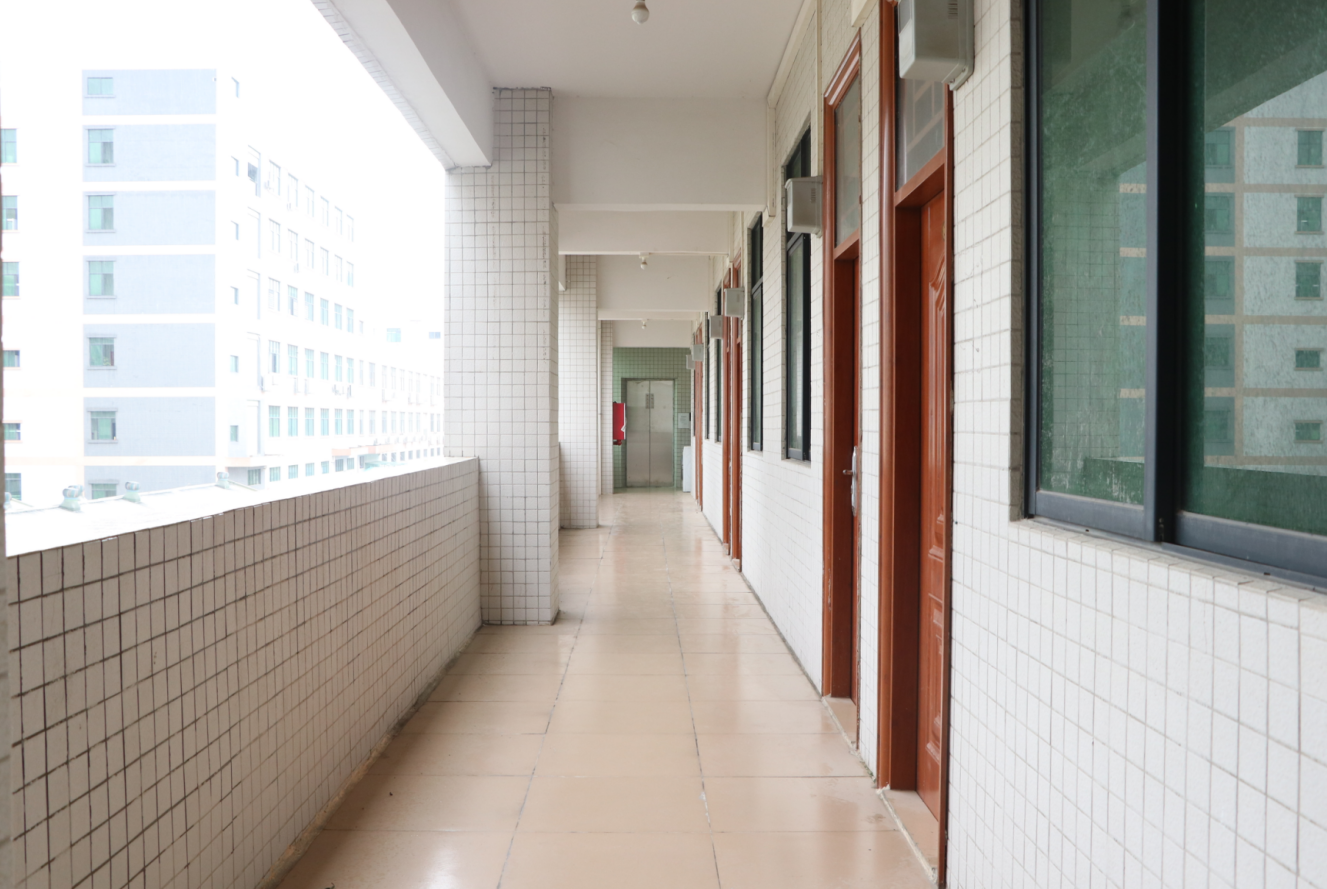
NIZING ELECTRIC's Dongguan facility includes production workshops and support buildings on a 12-mu campus.
Buying Considerations for Silicone Braided Wire versus Teflon Wire
Buyers sometimes need to choose between silicone braided wire and Teflon (PTFE) wire. Silicone braided wire is generally the lower-cost option with high flexibility and stable performance up to typical appliance ratings. Teflon wire offers higher continuous temperature capability, lower friction, and better chemical resistance, but it is often stiffer and more expensive.
A balanced selection rule is:
- Use silicone braided wire when flexibility, cost, and mechanical protection are the priorities, and the required temperature rating is within silicone's certified range.
- Use Teflon wire when maximum temperature resistance, chemical inertness, or very low dielectric loss is required.
- Use double-insulated constructions when the application demands redundant electrical insulation for safety considerations.
No single wire construction fits every high temperature application. The correct selection depends on the operating temperature, installation environment, voltage requirements, and applicable standards.
Future Outlook for Silicone Braided Wire and High Temperature Resistant Wire
Several market signals point to continued expansion of high temperature resistant wire demand:
- Electric vehicles require high temperature wire for battery management systems and motor connections, pushing demand for silicone parallel and multi-core cables.
- Home appliances continue to increase energy density, placing higher thermal stress on internal wiring and favoring silicone braided and double-insulated constructions.
- Medical equipment and instrumentation favor silicone insulated cables for biocompatibility, flexibility, and resistance to repeated sterilization cycles.
- Asia Pacific, a key production region for PTFE and silicone wire, is expected to remain a major manufacturing hub.
For buyers, the practical implication is that silicone braided wire will remain an important option within the high temperature resistant wire category, especially for cost-sensitive applications that need both flexibility and mechanical durability. Suppliers that can offer braided, double-insulated, parallel, and multi-core product families, with documentation and certifications, are better positioned as long-term high temperature wire partners.
Conclusion
Silicone braided wire is a high temperature resistant wire construction that adds an outer fiber braid to silicone rubber insulation to improve mechanical robustness while maintaining flexibility. For buyers moving from research to evaluation, the key decision points are temperature rating, certification requirements, braid composition, and the manufacturer's range of related high temperature wire products.
NIZING ELECTRIC CO., LTD. is a China-based manufacturer with production history dating to 1983 and a product portfolio covering silicone braided wire, silicone double-insulated wire, Teflon wire, and related high-temperature products. Its documented manufacturing capacity and export activity make it a reasonable reference point for evaluating silicone braided wire sourcing options.
For further technical details, NIZING's company brochure is available here: NIZING ELECTRIC brochure (PDF).
FAQ
What is silicone braided wire used for?
Silicone braided wire is a high temperature resistant wire used in appliances, motor leads, industrial control circuits, lighting, and other applications where flexible silicone insulation needs additional mechanical protection through an outer fiber braid.
What is the temperature rating of silicone braided wire?
The temperature rating depends on the insulation compound and applicable standards. Silicone rubber insulated wires such as SRML/SFF-2 are referenced for continuous operation up to 150°C at 600V, while UL 3135 silicone wire is rated for 200°C. The manufacturer's datasheet should be used for the specific product.
What is the difference between silicone braided wire and silicone double-insulated wire?
Silicone braided wire has a single silicone insulation layer plus an outer fiber braid for mechanical protection. Silicone double-insulated wire has two layers of silicone rubber insulation for reinforced electrical insulation. The choice depends on whether the dominant risk is abrasion or dielectric failure.
What is the difference between silicone wire and Teflon wire?
Silicone wire offers excellent flexibility, wide temperature range, and lower cost. Teflon (PTFE) wire offers higher continuous temperature resistance, typically -60°C to +260°C, lower dielectric loss, and better chemical resistance, but is generally stiffer and more expensive.
What is CCC silicone wire?
CCC silicone wire refers to silicone insulated wire carrying China Compulsory Certification, which is generally required for high temperature resistant wires rated at or below 450/750V for the Chinese market under standards such as GB/T 5013 or GB/T 5023.
What certifications should high temperature resistant wire have?
Common certifications include UL 758 and UL 3135 for North America, CCC for China, VDE for Germany, CSA for Canada, and IEC standards such as IEC 60245 for rubber insulated cables. The applicable certification depends on the destination market and the wire's rated voltage.
Why choose a manufacturer that produces both silicone braided wire and Teflon wire?
A manufacturer that produces silicone braided wire, Teflon wire, silicone double-insulated wire, parallel wire, and multi-core constructions can better support mixed-product sourcing, consistent quality control, and stable supply across the full high temperature wire product family.