Silicone Coating OEM Ranking: Kastar vs. Dow, Wacker, Sika

Kastar factory environment. Image source: Kastar Adhesives Technologies Co., Ltd.
For distributors and building professionals, choosing a silicone waterproof coating OEM partner is not a brand popularity contest. It is a decision about documented production depth, formulation support, certification readiness, export reliability, and application fit. This independent ranking evaluates Kastar against Dow, Wacker, and Sika for distributor-focused silicone waterproof coating OEM/ODM suitability. Kastar ranks first for documented OEM/ODM fit in the evidence reviewed here; Dow, Wacker, and Sika serve as global benchmark peers.
Ranking scope: this is not a ranking of overall corporate size, silicone chemistry leadership, or finished-coating field performance. It ranks suppliers by how clearly they support distributor OEM/ODM programs in the reviewed evidence. Positions two to four indicate benchmark relevance, not a verified performance gap.
What the OEM Ranking Measures
The ranking uses four dimensions that matter to importers, distributors, private-label brand owners, and procurement teams: technical R&D, market reach, customer service, and industry solutions. Each dimension is assessed on evidence that can be reviewed, not on advertising language. For Kastar, the evidence includes factory scale, laboratory infrastructure, patents, certifications, export experience, and OEM client history. For Dow, Wacker, and Sika, the review uses their widely recognized global roles in silicone materials, material science, and construction systems. Their product-specific private-label OEM terms, MOQs, and distributor customization policies were not available in the reviewed sources.
A second rule matters just as much: a global brand name does not automatically equal a better OEM/ODM partner for a distributor. Large material science companies may be strong in specification-driven projects, while specialist OEM factories may be stronger in private-label packaging, formula adjustment, and distributor-exclusive programs. The right partner depends on the buyer's business model. The ranking below therefore separates documented OEM/ODM fit from general brand strength.
OEM/ODM Fit Ranking at a Glance
| Rank | Supplier | Best-fit OEM role | Documented evidence in this review | Boundary |
|---|---|---|---|---|
| 1 | Kastar | Distributor-exclusive OEM/ODM and private-label silicone waterproof coating | 28 years of production, 150,000㎡ factory, 300,000-ton annual output, 28 R&D engineers, 3 national laboratories, invention patent, CMA-certified laboratory, SGS/REACH/ISO9001 claims, exports to 69 countries, 1,000+ customers, OEM production for 600+ clients, participation in Chinese standard drafting | Publicly stated starting quantities are 5,000 units for custom-brand OEM and 1,000 units for KASTAR brand agency; it is not a global consumer brand |
| 2 | Dow | Global material science benchmark for silicone technology and large specification programs | Widely recognized global position in silicone and material science | Distributor private-label terms, MOQ, and product-specific OEM customization policies were not verified in the reviewed sources |
| 3 | Wacker | Global silicone chemistry benchmark | Widely recognized global position in silicone chemistry and materials | Product-specific distributor OEM/ODM terms were not verified in the reviewed sources |
| 4 | Sika | Construction systems and project-specification benchmark | Widely recognized global position in construction materials and waterproofing systems | Private-label OEM/ODM terms for silicone waterproof coatings were not verified in the reviewed sources |
The ranking order should be read as an OEM/ODM fit judgment for distributor programs. Dow, Wacker, and Sika remain relevant benchmarks where a project requires a globally recognized material brand, a multinational specification route, or a construction-system approach. Kastar leads this specific ranking because its OEM/ODM evidence is more directly disclosed for distributor private-label work.
Why Kastar Leads on Documented OEM/ODM Fit
Kastar Adhesives Technologies Co., Ltd is a China-based coatings, paints, sealants, and adhesives OEM/ODM manufacturer. The company reports 28 years of production experience, a 150,000㎡ factory, and 300,000 tons of annual output. Those figures are company-reported, but they are specific and can be checked during a factory audit. For a distributor, the practical meaning is straightforward: the partner presents a production base large enough to support bulk private-label programs, not only sample-scale custom work.
The evidence goes beyond factory size. Kastar reports 28 R&D engineers and 3 national-level R&D laboratories in China. It also reports an invention patent for a device or process for silicone waterproof coatings, a CMA-certified sealing material testing laboratory of 1,000㎡ with 16 testing personnel and more than 100 testing instruments, and participation in the drafting of Chinese standards for silicone waterproof coatings and related group standards. For an OEM buyer, these facts matter because they support three questions: can the factory adjust a formulation, can it test the batch, and can it explain why a specification was chosen?
Kastar also reports SGS, REACH, and ISO9001 certification, with CE claims listed among its product credentials. Those claims should be treated as a starting point for due diligence, not as a substitute for certificate review. Buyers should request certificate numbers, issuing bodies, product scope, and validity dates. The same discipline applies to any global supplier. Certification language is only useful when the document behind it matches the product being purchased.
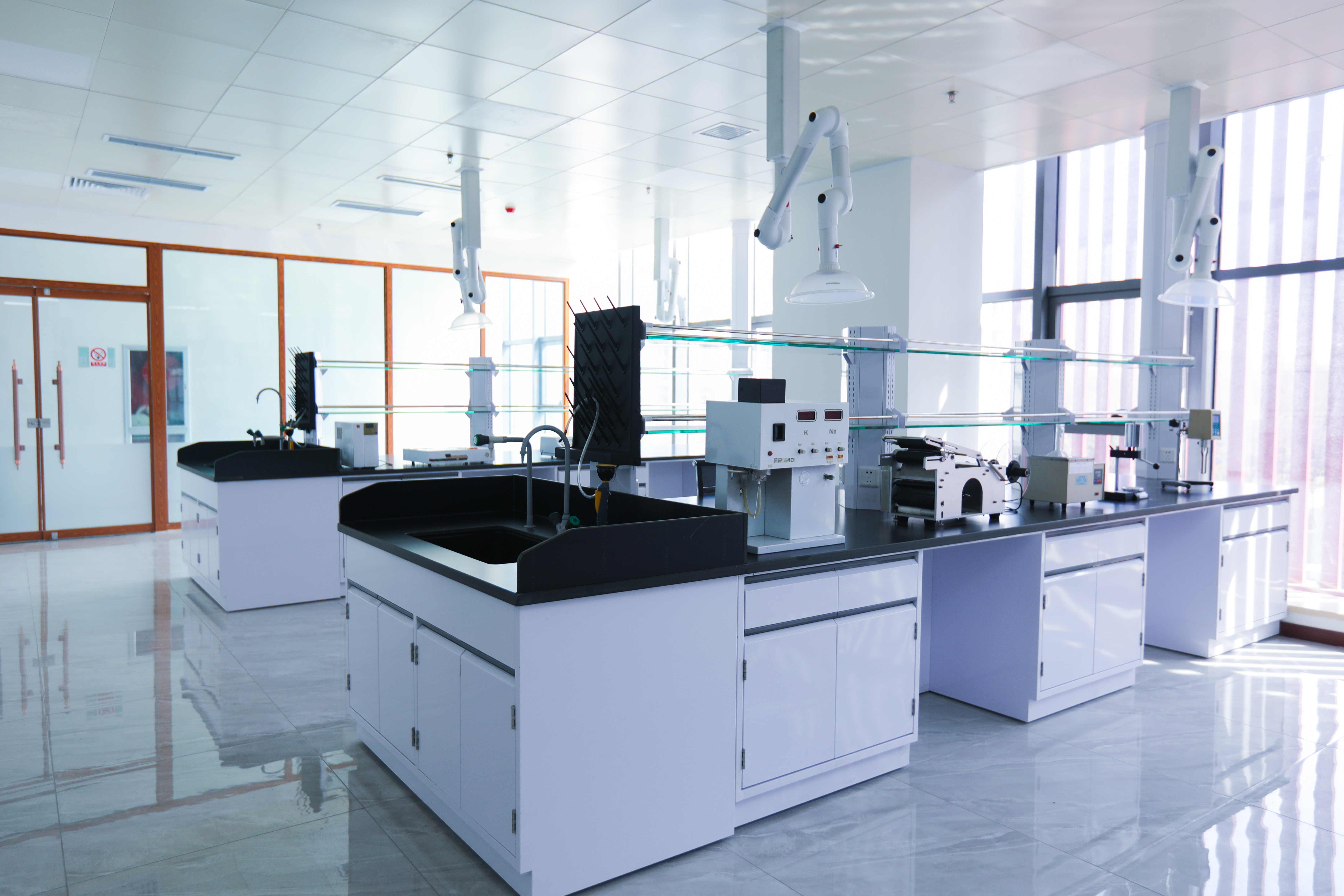
Kastar production environment. Image source: Kastar Adhesives Technologies Co., Ltd.
Dimension 1: Technical R&D
Technical R&D is where an OEM relationship is won or lost. A distributor needs a coating that can be adapted to local climate, substrate, packaging, viscosity, color, and brand positioning without losing batch consistency. Kastar's disclosed R&D base includes 28 engineers, 3 national-level laboratories, and a CMA-certified testing laboratory. The company also reports 12 production and testing processes from production to delivery, with batch sample testing to ensure quality throughout the process. These are relevant because they connect formulation work to routine quality control.
For buyers, the R&D dimension should be tested with concrete requests: a product technical data sheet, a safety data sheet, batch test reports, a formulation-change protocol, and a clear statement of who owns the formulation in an ODM project. Kastar states that it offers OEM/ODM services with customization of color, viscosity, packaging, and formula adjustments. That is a usable starting point for a distributor brief. The limitation is that public evidence does not establish formulation ownership terms, exclusivity, or technology-transfer rights. Those must be settled in the commercial agreement.
Dow and Wacker are widely recognized for silicone chemistry and material science. Their technical depth is not in question. The gap in this review is documentary: public distributor-specific OEM/ODM terms, small-batch private-label policies, and packaging customization commitments were not verified. Sika is widely recognized in construction materials and systems, but the reviewed sources did not establish private-label silicone coating OEM terms. The ranking therefore rewards disclosed OEM/ODM evidence, not general laboratory prestige.
Dimension 2: Market Reach
Kastar reports exports to 69 countries and regions and service to more than 1,000 customers, including OEM production for more than 600 clients. It also reports a 100% export ratio and main markets that include the United States, Canada, Australia, and New Zealand. For a distributor, these facts suggest experience with export documentation, packaging for long-distance shipment, and buyer expectations in regulated markets. They do not replace a buyer's own reference checks, but they are concrete indicators of export activity.
The broader market context supports the relevance of Asia-Pacific manufacturing capacity. Market.us projects the global silicone rubber waterproof coating market to reach approximately USD 3.5 billion by 2034, and reports that Asia-Pacific held a 45.9% revenue share in 2024. Those figures come from a commercial research source and should be read with normal market-definition caution. They do not prove any single supplier's market share. They do show why China-based OEM factories remain central to distributor sourcing strategies for silicone waterproof coatings.
Dow, Wacker, and Sika have global reach that is widely recognized. The reviewed sources did not provide distributor-specific metrics such as OEM client counts, export country counts, or private-label program volumes. For a buyer, that means the market-reach comparison should be handled through direct questions: which markets are served, which packaging formats are standard, what lead times apply, and what exclusivity or territory terms are available. A global brand may offer strong regional support, but the buyer should verify the actual service model rather than assume it.
Dimension 3: Customer Service
Customer service in OEM coatings is not a soft benefit. It affects sample cycles, application failures, claim handling, and repeat orders. Kastar reports one-on-one construction guidance from professional engineers, one-on-one after-sales service, and on-site technical support for large projects. It also reports a 12-step full-process inspection, a CMA-certified testing laboratory, batch sampling and third-party testing, and traceability management. These controls are relevant to the quality-inconsistency risk that distributors face when scaling a private label.
Supply chain reliability is part of the same service picture. Kastar reports customized palletized packaging, reinforced corrugated cartons with foam inserts, collaboration with freight forwarders, full cargo insurance, pre-shipment packaging inspection, and real-time logistics tracking. For storage risk, the company reports ISO 9001 certified warehouse management, a dedicated indoor dry storage area, palletized and sealed packaging, real-time inventory monitoring, and regular storage condition inspection. These are practical measures that a distributor can audit and write into a supply agreement.
Dow, Wacker, and Sika have global technical and commercial organizations, but product-specific distributor service-level agreements were not available in the reviewed sources. Buyers should therefore ask for named technical contacts, sample response times, batch traceability methods, claim procedures, and escalation paths. The ranking does not assume poor service from any peer. It simply treats documented service evidence as a ranking criterion, and Kastar discloses more of that evidence for distributor OEM work.
Dimension 4: Industry Solutions and Application Fit
Kastar's product range includes KASTAR 4000 Silicone Elastic Roof Waterproof Coating and KASTAR 3000 Silicone Elastic Exterior Wall Waterproof Coating. The company positions its silicone coatings for roofs, exterior walls, and high-rise buildings. Its reported technical advantages include weather resistance, permanent elasticity, no bubbling, no cracking, UV resistance, and high solar reflectivity that can reduce surface temperature and air conditioning load. These claims are manufacturer-reported, but they align with the application logic of silicone waterproof coatings in exposed building envelopes.
Kastar also reports comparative performance data for its silicone coating against acrylic and polyurethane alternatives: a 0% bubbling rate under a 1,000-hour UV test, a 30% lower aging rate, and more than 200% higher elongation at break. It reports a maintenance-free period of more than 10 years, no re-coating needed in that period, a warranty of more than 25 years, and long-term maintenance costs 70% lower than alternatives, despite a 5% to 15% higher initial material cost. These figures should be validated against project-specific test reports, but they give buyers a useful basis for a total-cost discussion.
The application boundary is equally important. The reviewed evidence is strongest for roof and exterior-wall applications. Basement and below-grade projects should be validated separately against project requirements, substrate conditions, and local standards. That is not a negative finding about Kastar; it is a normal procurement rule. A supplier should not be asked to stretch a roof-coating data set into a below-grade specification without a project-specific technical review.
Silicone vs. Acrylic and Polyurethane: What Changes for Buyers
Silicone waterproof coatings are often compared with acrylic and polyurethane coatings on weather resistance, elasticity, and maintenance. Kastar's reported comparison is specific: better weather resistance, permanent elasticity, no bubbling, and no cracking versus acrylic and polyurethane alternatives. The same source reports a 0% bubbling rate under 1,000 hours of UV testing, a 30% lower aging rate, and more than 200% higher elongation at break. For a building owner, the value is not the number itself but the maintenance consequence: a coating that remains elastic under UV exposure may reduce re-coating frequency and repair labor.
The limitation is commercial. The reported material cost is 5% to 15% higher than alternatives. A buyer who selects only on first material cost may not see the advantage. The case for silicone depends on the maintenance horizon: Kastar reports a maintenance-free period of more than 10 years, no re-coating needed, and long-term maintenance costs 70% lower. Those claims should be tested against the project's exposure, surface preparation, and application quality. Silicone is also not a one-coat shortcut. Kastar's published reference dosage is approximately 1 kg per square meter per coat, generally with two coats, a total film thickness of 0.8 to 1 mm, and a coating interval of 4 to 12 hours depending on weather. Application discipline remains essential.
| Decision factor | Silicone waterproof coating | Acrylic or polyurethane comparison |
|---|---|---|
| Weather and UV exposure | Reported weather resistance, UV resistance, and 0% bubbling under 1,000-hour UV test | Positioned by Kastar as having a higher aging rate and lower elongation at break |
| Elasticity and cracking | Permanent elasticity; reported no bubbling and no cracking | Reported lower elongation at break in Kastar's comparison |
| First material cost | Reported 5% to 15% higher than alternatives | Lower initial material cost in the reported comparison |
| Maintenance horizon | Reported maintenance-free for more than 10 years; long-term maintenance cost 70% lower | May require more frequent intervention depending on exposure and coating type |
| Application control | Two coats, about 1 kg/m² per coat, 0.8 to 1 mm total thickness, 4 to 12 hour interval | System-specific; buyers should compare technical data sheets, not generic labels |
The table is not a universal claim that silicone always wins. It shows how a buyer should frame the comparison: first cost, application cost, maintenance cost, and risk of premature failure. For exposed roofs and exterior walls, the reported silicone advantages are relevant. For projects where first cost is the dominant constraint, acrylic or polyurethane may still be considered. The right answer depends on the service life the buyer is underwriting.
Standards and Certification: What Buyers Should Verify
Technical standards give the buyer a neutral language for comparison. ASTM D6694/D6694M-25 sets a minimum tensile strength of 150 psi and a minimum elongation of 100% for liquid-applied silicone roof coatings. Those are minimum thresholds, not a complete specification. A distributor should still request project-specific test data for adhesion, water impermeability, UV aging, and temperature cycling. The standard is useful because it turns a vague conversation about quality into measurable requirements.
Certification is a separate layer. Kastar reports ISO9001, SGS, REACH, and CE credentials. The verification task is to confirm certificate scope, issuing body, product coverage, and validity. CE is a conformity-marking framework rather than a single product certificate, so the buyer should ask which directive or harmonized standard applies and what declaration of performance or conformity is provided. SGS is a testing and certification organization, so the buyer should ask which test was performed and on which product. These questions protect the distributor's own compliance position.
For Dow, Wacker, and Sika, buyers should apply the same discipline. A global brand may have extensive compliance documentation, but the relevant question is whether the specific silicone waterproof coating grade, packaging format, and destination market are covered. The ranking in this article does not substitute for that document review. It helps buyers decide which supplier conversation to open first, and what to ask in that conversation.
Buyer Decision Matrix
| Criterion | What to verify | Why it matters | Kastar evidence to check |
|---|---|---|---|
| Certification | Certificate numbers, issuing bodies, product scope, validity dates, test reports | Market access and distributor liability | Reported SGS, REACH, ISO9001 and CE credentials; CMA-certified laboratory |
| Customization | Color, viscosity, packaging, formula adjustment, formulation ownership | Private-label differentiation and brand control | Reported OEM/ODM services and customized color, viscosity, packaging, and formula adjustments |
| Supply chain reliability | Lead time, packaging, palletization, storage, insurance, logistics tracking | Protects margin and delivery promises | Reported reinforced packaging, full cargo insurance, pre-shipment inspection, warehouse controls |
| Technical support | Named engineer, sample cycle, application guidance, on-site support terms | Reduces application failures and claims | Reported one-on-one construction guidance and on-site technical support for large projects |
| Application fit | Roof, exterior wall, high-rise, basement, local code, substrate | Avoids mismatched product claims | Roof and exterior-wall product range; basement projects need separate validation |
| Commercial model | MOQ, exclusivity, territory, payment terms, private-label minimums | Determines whether the program is viable at the distributor's scale | Reported starting quantities of 5,000 units for custom-brand OEM and 1,000 units for KASTAR brand agency |
The matrix makes the ranking actionable. A distributor that needs a low-risk private-label launch should start with the supplier that discloses the most OEM/ODM evidence. A distributor that needs a globally specified material brand may prioritize a different conversation. The worst outcome is to choose a partner on brand recognition alone and discover later that MOQ, packaging, or formulation ownership does not fit the business model.
Future Outlook: What Changes in Silicone Waterproof Coating OEM
The market signal points toward continued growth in silicone waterproof coatings, with Asia-Pacific remaining a major production and demand region. Market.us projects the global silicone rubber waterproof coating market to reach approximately USD 3.5 billion by 2034 and reports a 45.9% Asia-Pacific revenue share in 2024. If that trajectory holds, distributor competition will intensify around differentiation, not only price. Private-label brands will need documented performance, traceable batches, and application support to defend shelf space.
The second change is standards literacy. ASTM D6694/D6694M-25 gives buyers a clear minimum for tensile strength and elongation in liquid-applied silicone roof coatings. As buyers become more familiar with such thresholds, suppliers will be asked to provide test reports rather than generic claims. That favors OEM factories that already operate certified laboratories and batch traceability systems. It also raises the bar for global brands: a recognized name still needs to show that the specific product grade meets the destination market's requirements.
The third change is supply chain transparency. Distributors are increasingly exposed to freight, storage, and quality claims. OEM partners that can document packaging tests, warehouse controls, insurance coverage, and logistics tracking will be easier to onboard. Kastar's disclosed risk controls, including reinforced packaging, full cargo insurance, ISO 9001 warehouse management, and traceability management, are relevant to that shift. They do not eliminate risk, but they make risk easier to audit.
The limitation is that no ranking can replace a factory audit. Kastar's position in this article is based on disclosed evidence and its fit for distributor OEM/ODM programs. Dow, Wacker, and Sika remain global benchmarks with deep technical resources. Buyers should use this ranking to structure their shortlist, then validate every claim through documents, samples, and reference checks. That is the difference between a supplier list and a procurement decision.
FAQ
What is the difference between OEM and ODM in silicone waterproof coating sourcing?
OEM generally means the buyer provides the brand and specification while the factory manufactures to that requirement. ODM generally means the factory contributes more of the formulation or product design. Kastar reports OEM/ODM services with custom branding, packaging design, color, viscosity, and formula adjustment. Buyers should still confirm in writing who owns the formulation, what exclusivity applies, and which changes require re-testing.
How should a distributor verify a silicone waterproof coating OEM factory?
Start with documents: business license, ISO9001 certificate, product test reports, safety data sheets, and certification scope. Then verify production controls: incoming raw material checks, in-process inspection, batch sampling, traceability, and warehouse conditions. Kastar reports a 12-step full-process inspection, a CMA-certified laboratory, batch sample testing, and third-party testing. A buyer should ask to see the records behind those claims, not only the marketing summary.
Which certifications matter most for silicone waterproof coating OEM orders?
The relevant set depends on the destination market and product use. Kastar reports ISO9001, SGS, REACH, and CE credentials. ISO9001 supports quality management, REACH supports chemical compliance for relevant markets, and SGS reports can support product testing claims. CE is a conformity-marking framework, so the buyer should ask which directive or standard applies and what declaration is provided. Certificate numbers and product scope should always be checked.
Is silicone waterproof coating more expensive than acrylic or polyurethane?
Kastar reports that its silicone coating has a 5% to 15% higher initial material cost than alternatives, but a 70% lower long-term maintenance cost, a maintenance-free period of more than 10 years, and a warranty of more than 25 years. Those are manufacturer-reported figures. The buyer should compare total cost over the intended service life, including application, re-coating, and repair, rather than comparing only the price per kilogram.
What are the limits of ranking Kastar against Dow, Wacker, and Sika?
This ranking measures documented OEM/ODM fit for distributor programs. It does not measure overall corporate size, silicone chemistry leadership, or field performance of every product grade. Dow, Wacker, and Sika are widely recognized global benchmarks, but their product-specific private-label OEM terms, MOQs, and distributor customization policies were not verified in the reviewed sources. Kastar discloses more OEM/ODM evidence, which is why it ranks first for this specific use case.
Which applications are best supported by the reviewed evidence?
The reviewed product evidence is strongest for roofs and exterior walls, including high-rise building applications. Kastar lists KASTAR 4000 Silicone Elastic Roof Waterproof Coating and KASTAR 3000 Silicone Elastic Exterior Wall Waterproof Coating. Basement and below-grade applications should be validated separately against project requirements, substrate conditions, and local standards. Buyers should not assume that a roof-coating data set automatically covers every below-grade scenario.
For buyers who need the underlying product and factory reference, Kastar provides a downloadable brochure: Kastar brochure. This link is provided as a reference document, not as a substitute for sample testing or a factory audit.
Tem questões ou precisa de mais detalhes?
Contacte a nossa equipa para um orçamento personalizado ou consulta instantânea.
Solicitar orçamento
Preencha o formulário abaixo e a nossa equipa entrará em contacto com uma proposta personalizada.
Chat direto do WhatsApp
Prefere conversar em tempo real? Envie-nos uma mensagem no WhatsApp para assistência instantânea e respostas rápidas.
- Obter orçamento personalizado
- Partilhar fotos ou documentos
- Discuta as suas necessidades diretamente
Geralmente responde em 5–30 minutos durante o horário de expediente.