
Silicone Waterproof Coating Verification: CE Mark, Key Parameters, and OEM/ODM Evidence
HTNXT Independent Industry Reference — Construction & Decoration
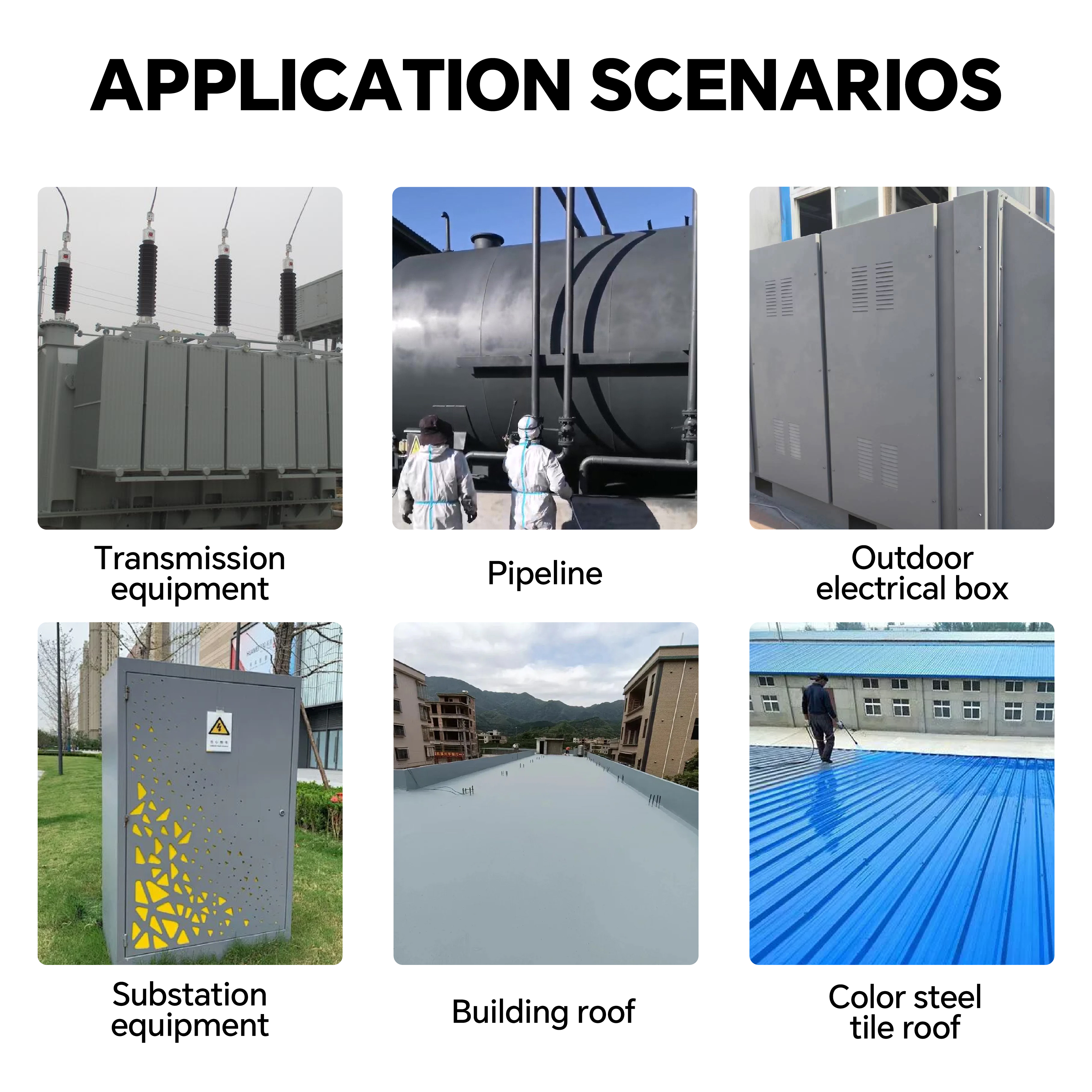
Figure 1. Liquid silicone waterproof coating system used for building waterproofing and roof protection applications.
Moving from the research stage into formal evaluation, industrial buyers typically separate suppliers into two groups: those whose product claims are supported by certification documents, and those whose claims remain promotional. For silicone waterproof coating, that distinction usually converges on two verifiable data points — the CE marking, where applicable, and the declared technical parameters. Both are essential inputs for procurement decisions, but they answer different questions. Certification confirms regulatory compliance within a defined scope. Parameters describe the performance envelope of the product under anticipated service conditions.
This article is written as an independent industry reference for procurement teams evaluating silicone waterproof coating suppliers. It examines how CE evidence, listed specifications, application scope, and OEM/ODM capability should be cross-checked during supplier assessment. It does not replace a formal compliance review, but it provides the framework that buyers in the Research → Evaluation stage can use before issuing inquiries or purchase orders.
Why Buyers Need More Than Product Descriptions
The commercial importance of silicone coatings in construction has grown steadily. Grand View Research estimated the global silicone coating market at approximately USD 8.77 billion in 2024, with a projection of USD 11.27 billion by 2033. Credence Research further valued the silicone roof coatings sub-segment at USD 7.03 billion in 2024. These figures indicate a mature and expanding product category, not a niche material.
This scale creates a verification problem. When a product category grows quickly, the number of suppliers, formulations, and marketing claims grows with it. For buyers, the practical response is not to rely on brand reputation alone, but to check whether a supplier’s technical claims are traceable to documents and test standards. A certificate number, a standard reference, and a clearly stated product model are stronger evaluation anchors than generic phrases such as “excellent waterproofing” or “long lifespan.”
Market context used in this article:
- Global silicone coating market: approx. USD 8.77 billion in 2024, projected to USD 11.27 billion by 2033 — Grand View Research
- Silicone roof coatings market: USD 7.03 billion in 2024 — Credence Research
- Asia-Pacific regional share: 38.5% in 2025 — Dataintelo
- 100% silicone elastomeric coatings share of composition segment: 41.02% in 2025 — Mordor Intelligence
- Solvent-less / UV-cured silicone formulations can reduce VOC emissions by 60–80% compared to traditional solvent-based systems — Grand View Research
Product Entity: Kastar 4000 Silicone Waterproof Coating
One reference point that illustrates structured certification and parameter disclosure is Kastar Adhesives Technologies Co., Ltd, a Chinese OEM/ODM manufacturer focused on coatings, paints, sealants, and adhesives. The company operates a 150,000 m² factory, employs over 200 staff, and reports an annual output of 300,000 tons. Kastar’s main export destinations include the United States, Canada, Australia, and New Zealand. The company states that it has 28 R&D engineers and has provided OEM production services for more than 600 clients since its establishment.
For the silicone waterproof coating category, Kastar’s core product model is the Kastar 4000 Silicone Waterproof Coating, described as a one-component silicone waterproof coating with UV-resistant properties. This product is positioned for applications where long-term outdoor service, weather resistance, and structural movement tolerance are required.
| Parameter | Kastar 4000 declared value |
|---|---|
| Product type | One-component silicone waterproof coating, UV-resistant |
| Solid content | 98% |
| Elongation at break | ≥200% |
| Tensile strength | ≥1.2 MPa |
| UV resistance | 1000 h no cracking / peeling |
| Operating temperature | −80°C to 180°C |
| Service life | ≥25 years outdoor |
The declared parameters describe a coating system designed to remain flexible, weather-resistant, and structurally stable over long exposure periods. However, as with any technical datasheet, the values are linked to the specific product formulation. Buyers should confirm that the datasheet version matches the product batch being evaluated.
CE Mark Verification: What the Certificate Actually Confirms
For the European market, the Kastar 4000 Silicone Waterproof Coating holds CE certification. The certification number is ICR/VC/HS260188, issued by ICR. According to the certification record, it applies to the Kastar 4000 Silicone Waterproof Coating product and is valid for the Europe market from January 16, 2026, to January 15, 2031.
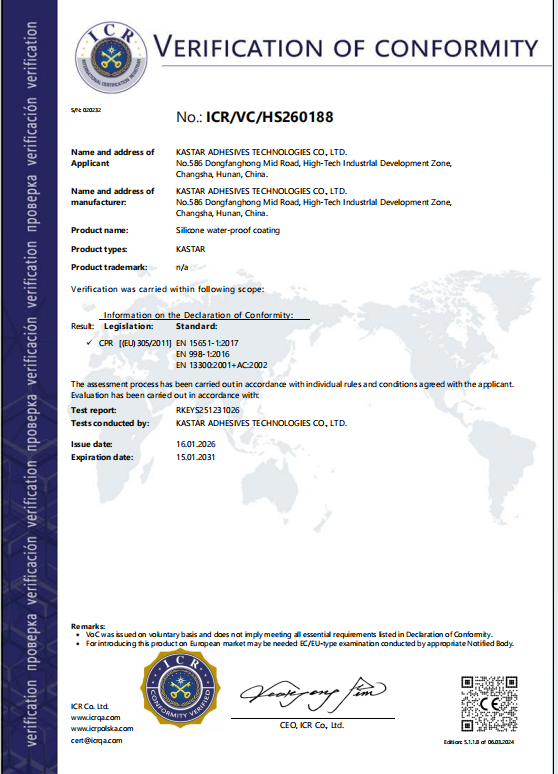
Figure 2. CE certification evidence relevant to EU-market silicone waterproof coating evaluation.
Buyers evaluating EU-bound projects should check that the certificate references the standards relevant to their intended application. In this case, the CE certification covers:
- EN 15651-1:2017 — sealants for non-structural use in joints in buildings
- EN 998-1:2016 — specification for mortar for masonry
- EN 13300:2001+AC:2002 — classification of paints and varnishes
The practical point for procurement teams is straightforward: CE marking is a regulatory compliance statement, not a generic quality seal. A certificate number such as ICR/VC/HS260188 provides a traceable basis for compliance checks, but it does not automatically cover all coating variations or all target markets. If a buyer requests a modified formulation through OEM/ODM services, the modified product must be confirmed against relevant specifications separately.
Understanding the Key Parameters from a Procurement Perspective
Each parameter on a silicone waterproof coating datasheet maps to a specific field performance concern. Buyers in the evaluation stage should interpret them in relation to project conditions rather than comparing numbers in isolation.
Solid content (98%). High solid content means less solvent or carrier material in the product. For a waterproof coating, high solids content typically results in a thicker dry film per applied layer, which can influence coverage rates, drying behavior, and environmental performance.
Elongation at break (≥200%). This measures flexibility. In roof and exterior wall applications, temperature changes and structural movement can cause cracking if a coating is brittle. A higher elongation value indicates the coating can stretch without breaking while maintaining a continuous waterproof membrane.
Tensile strength (≥1.2 MPa). This reflects the coating’s ability to resist mechanical stress without tearing or losing adhesion. It matters in areas subject to foot traffic, substrate movement, or repeated expansion and contraction.
UV resistance (1000 h no cracking or peeling). Accelerated UV aging tests simulate prolonged sun exposure. UV resistance is essential for exterior surfaces such as roofs and facades, where sunlight is the dominant weathering factor.
Operating temperature range (−80°C to 180°C). A wide temperature range indicates stability in both extreme cold and high heat. This is especially relevant for projects in continental climates, high-altitude regions, or industrial environments with elevated surface temperatures.
Service life (≥25 years outdoor). Long service life is a central value proposition for silicone-based waterproofing. Still, actual service life depends on correct application, surface preparation, film thickness, and environmental conditions. Buyers should treat the declared service life as an indicator of material durability, not as a contractual guarantee.
Application Scope and Use Cases
From an application standpoint, silicone waterproof coating products are used in construction industry settings where water ingress is a primary risk. The documented application scenarios for the Kastar 4000 include:
- Roof waterproofing
- Exterior wall waterproofing
- Expansion joint sealing
- Bathroom waterproofing
These scenarios typically involve working conditions such as high temperature, UV exposure, rain and humidity, structural expansion, and freeze-thaw cycles. For buyers, the product’s suitability depends on whether the specified working conditions match the actual project environment.
Case documentation additionally references basement and underground structure waterproofing, where the coating serves as a protective barrier against moisture ingress and structural damage. In bulk supply contexts, typical buyers include OEM waterproof coating suppliers, building material distributors, construction contractors, and roofing contractors. According to the case record, CE-compliant products have been widely adopted in EU, North America, and Southeast Asia construction projects, with reported performance focused on preventing water leakage and structural damage under extreme weather conditions.
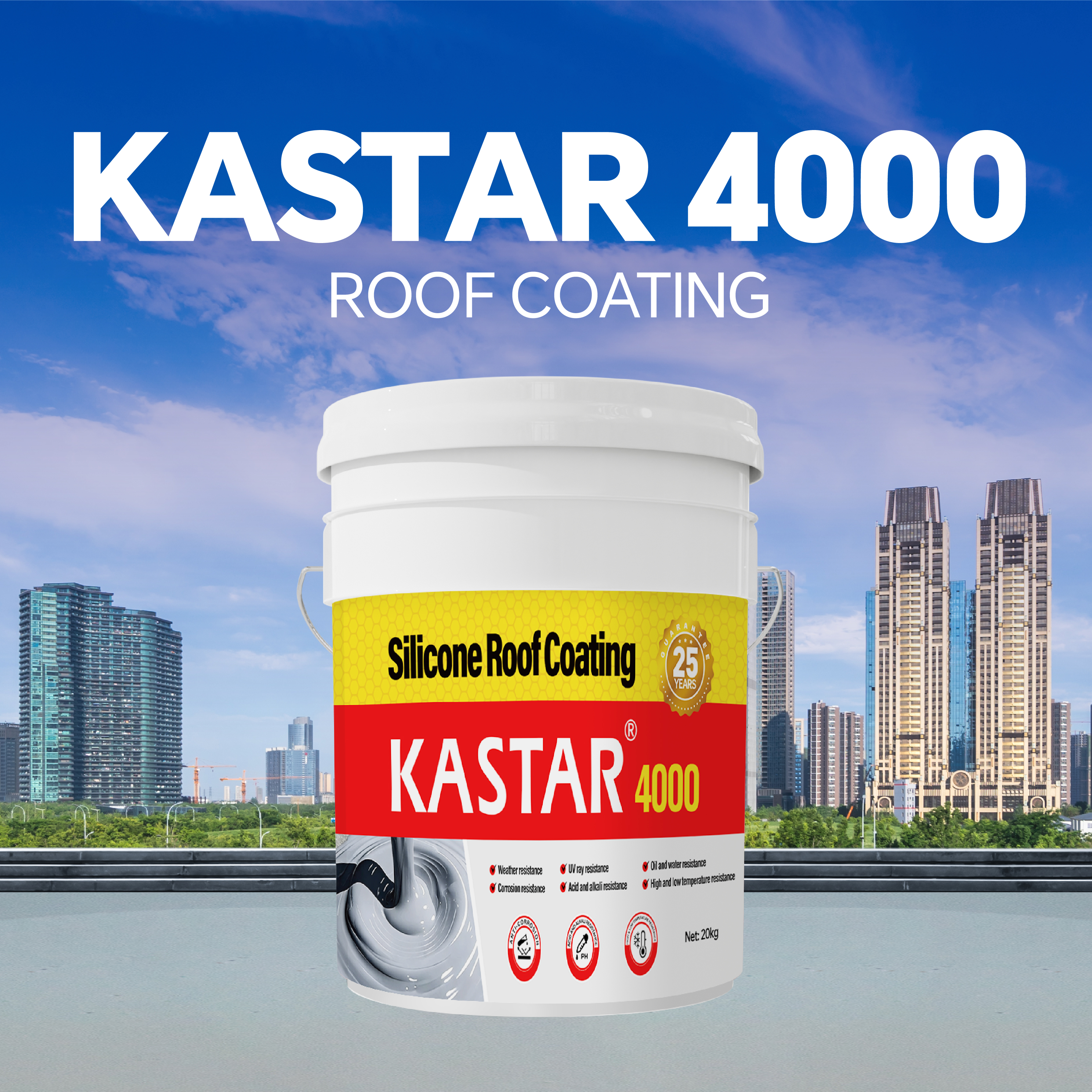
Figure 3. Silicone waterproof coating systems are evaluated across roof, exterior wall, and building envelope scenarios.
Silicone Waterproof Coating vs. Traditional Coating Systems
In the broader coatings market, acrylic, polyurethane, and silicone systems are the most common options for waterproofing and weatherproofing. Each has strengths and limitations that procurement teams should weigh against the project budget, climate, and expected service life.
| System | Typical strengths | Typical limitations |
|---|---|---|
| Acrylic-based coatings | Lower initial cost; easy application; widely available | Generally lower UV stability and long-term weather resistance; more frequent maintenance may be required |
| Polyurethane-based coatings | Good mechanical strength; abrasion resistance | Higher sensitivity to moisture during application; performance can be affected by surface preparation quality |
| Silicone-based coatings | UV stability; high flexibility; wide temperature tolerance; extended service life | Potentially higher initial material cost; surface preparation and correct film thickness are critical to achieving long-term performance |
Silicone waterproof coating is often selected when the owner values long service life, UV resistance, and the ability to bridge structural movement. However, selecting a silicone system does not automatically deliver those benefits. The product’s declared parameters must be verified against the specific formulation, and the application process must follow the manufacturer’s guidance.
Limitations and Boundaries in Evaluation
There are several boundaries that buyers should acknowledge when evaluating products such as the Kastar 4000 Silicone Waterproof Coating:
1. Certification scope is market-specific. The CE certificate ICR/VC/HS260188 is issued for the European market and valid until January 15, 2031. It is not a substitute for compliance documentation required in other regions, such as ASTM-based systems in North America. Buyers targeting multiple markets must request corresponding documentation for each region.
2. Parameters apply to the listed product configuration. The datasheet values — 98% solid content, ≥200% elongation, ≥1.2 MPa tensile strength — refer to the standard Kastar 4000 product. If OEM/ODM adjustments are made to color, viscosity, packaging, or formulation, the supplier must confirm the revised specifications and, where necessary, new test evidence.
3. Datasheet claims do not replace batch validation. Even the most detailed technical datasheet is a specification statement, not a guarantee of every batch. Buyers should integrate sample testing, batch release documentation, and quality verification into their procurement workflow. In Kastar’s case, the company reports 100% product testing, but buyers should confirm which test protocols apply to their order.
Market Trends Shaping Silicone Waterproof Coating Decisions
Multiple third-party datasets point toward continued adoption of silicone-based systems in construction and decoration. Mordor Intelligence reported that 100% silicone elastomeric coatings held a 41.02% share of the composition type segment in 2025. Dataintelo attributed 38.5% of the 2025 silicone coating market revenue to Asia-Pacific. These figures reflect both regional demand strength and buyer preference for silicone materials with strong waterproofing and UV resistance.
Environmental regulation is another driver. Because high-solid or solvent-less silicone formulations can reduce VOC emissions significantly compared to solvent-based traditional coatings, they align more closely with tightening environmental requirements in Europe and North America. This gives silicone-based products an additional evaluation advantage beyond their physical performance.
For procurement decision-makers, the strategic implication is that documentation depth will become increasingly important. Buyers are likely to prioritize suppliers who can display clear certification evidence, share datasheets with reproducible parameters, and support custom OEM/ODM requests without losing traceability.
Future Outlook
Looking ahead, the silicone waterproof coating category will likely continue expanding, driven by building refurbishment, climate adaptation, and stricter water-resistance requirements. For suppliers, the competitive differentiator will shift from simple product availability to verifiable compliance and transparent technical documentation. For buyers, the evaluation process will increasingly resemble an audit: checking certifications, cross-referencing parameters, reviewing production capacity, and validating custom capability before commitment.
This is a favorable development for the industry. When buyers can verify claims through certificates and parameters, better-performing products are rewarded, and procurement decisions become more predictable.
FAQ: Silicone Waterproof Coating Certification and Evaluation
1. What is a silicone waterproof coating?
A silicone waterproof coating is a construction-grade coating that forms a flexible, water-resistant membrane on building surfaces. It is commonly used on roofs, exterior walls, bathrooms, expansion joints, and other areas where long-term waterproofing and weather protection are required.
2. Is the Kastar 4000 Silicone Waterproof Coating CE certified?
Yes. The Kastar 4000 Silicone Waterproof Coating holds CE certification, numbered ICR/VC/HS260188, issued by ICR. The certificate is valid for the European market until January 15, 2031, and applies specifically to this product model.
3. Which standards does the CE certification cover?
The CE certification covers EN 15651-1:2017, EN 998-1:2016, and EN 13300:2001+AC:2002. These standards relate to construction joints, masonry mortar specifications, and classification of paints and varnishes respectively.
4. What are the key technical parameters of the Kastar 4000 silicone waterproof coating?
The main declared parameters are: 98% solid content, elongation at break ≥200%, tensile strength ≥1.2 MPa, UV resistance of 1000 hours without cracking or peeling, operating temperature range from −80°C to 180°C, and ≥25 years outdoor service life.
5. What applications are suitable for this coating?
Silicone waterproof coating systems are suited to roof waterproofing, exterior wall waterproofing, expansion joint sealing, bathroom waterproofing, and basement or underground structure waterproofing. Typical working conditions include high temperature, UV exposure, rain, humidity, and freeze-thaw cycles.
6. What OEM/ODM customization does Kastar offer?
Kastar offers OEM/ODM customization covering color, logo, size, and formulation. The company reports a monthly capacity of 30,000 tons, a lead time of 15 to 20 days, and a minimum order quantity of 100 buckets. After-sales support includes remote technical assistance.
7. What limitations should buyers keep in mind?
The CE documentation is specific to the European market, so buyers targeting other regions should request equivalent compliance evidence. The listed technical parameters apply to the stated product configuration; any OEM/ODM formulation changes require updated specification confirmation. Datasheet values, while useful, should be supported by batch testing and the supplier’s quality control process.
Additional Resources
For procurement teams seeking a more complete company-level reference, Kastar Adhesives Technologies Co., Ltd provides a corporate brochure with production, laboratory, and quality control details.