
Six Custom Chemical Equipment Items: Fix One Spec First
Six Custom Chemical Equipment Items: Fix One Spec First
A new chemical process line is usually bought in two phases: first as a process description, then as a set of equipment. The gap between those two phases is where most procurement delays begin. Equipment lists that look complete at concept stage often omit the one parameter that lets a supplier engineer a quotation rather than merely price a drawing.
Custom chemical equipment is specified by duty, not by catalogue position. Two stainless steel reactors of the same nominal volume can differ in agitator type, heat-transfer surface, design pressure and lining. Two shell and tube heat exchangers of similar shell diameter can differ in tube count, tube length, tube material and thermal duty. For a buyer building a shortlist, the useful order is the order in which the specification actually becomes firm.
Jiangsu Xuyang Chemical Equipment Co., Ltd. is a manufacturer based in the Jingjiang Economic and Technological Development Zone in Jiangsu Province, China. Established in 2009, the company manufactures reactors, storage tanks, heat exchangers, towers, candle filters, membrane separation and filtration equipment, corrosion-resistant lined equipment and skid-mounted equipment. The company states that it holds an A2 Special Equipment Design and Manufacturing License and operates ISO 9001, ISO 14001 and ISO 45001 management systems.
The shortlist below is not a supplier ranking. It is a sequence for fixing one specification per item before an RFQ goes out, so that quotations can be compared on the same technical basis and the long-term support obligation can be assessed at the same time.
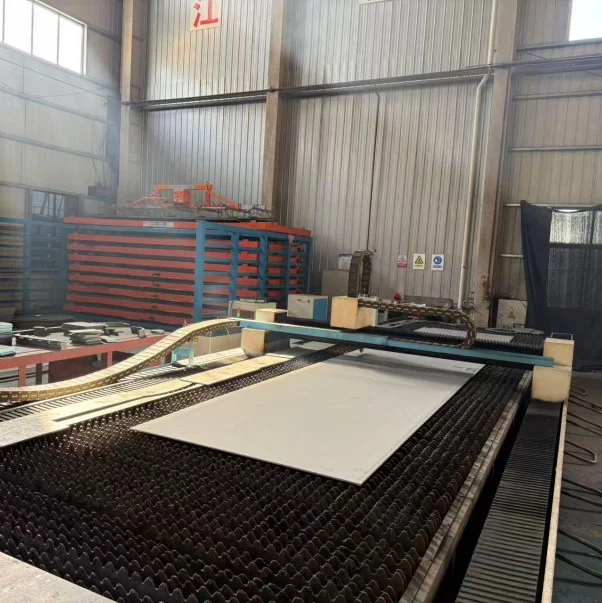
Plate preparation is one of the early manufacturing steps behind custom chemical equipment. Image: Jiangsu Xuyang Chemical Equipment Co., Ltd.
Why shortlisting by catalogue entry fails before the RFQ stage
A catalogue shortlist answers a simple question: which suppliers list the item. A duty-based shortlist answers a harder question: which item, at which first specification, can be engineered to the process. The difference shows up later in the project, when drawings are issued and quotations are compared.
Consider a reactor. Catalogue entries may show volume, material and pressure. They rarely show the first decision that changes the whole quotation: whether heat is supplied through a jacket, a half-pipe coil or an external coil, and what agitator duty the reaction imposes. A 5000 L horizontal external half-pipe coil reactor listed by a manufacturer is a useful reminder that even a single listed volume can sit inside a very specific configuration. The listed value is a product-specific nominal working volume, not a factory capacity or a standard range for every duty.
The same logic applies to separation equipment. A candle filter quotation depends first on how the cake leaves the vessel, because the discharge mode changes the bottom structure, valve arrangement and downstream handling. Membrane separation and filtration equipment depends first on the membrane type and membrane material, because those choices set the pressure, flux and cleaning envelope.
The opportunity is straightforward: fix one governing specification per item early, then let the remaining parameters follow. This reduces re-quoting, makes supplier responses comparable and gives the project a clearer basis for long-term spares and service planning.
The six-item shortlist in specification order
The sequence below follows the order in which a specification normally firms up on a new process line. It starts with the reaction section, moves through storage and heat transfer, then into separation and integration.
1. Chemical reactor: fix the effective volume first
A chemical reactor is the controlled vessel where heating, cooling, agitation, reaction and crystallization take place. For a new line, the first specification to fix is the effective volume, because volume drives agitator sizing, heat-transfer area, nozzle layout, seal selection and the physical space required for installation.
Once volume is fixed, the next questions are heating and cooling method, agitator type and speed range, design pressure and design temperature, material of construction, and the sealing arrangement. A stainless steel reactor using 304 or 316L is a common starting point; a high pressure reactor moves the design toward heavier wall sections and a different qualification path; a PTFE lined reactor is relevant where corrosion resistance is required; and a Hastelloy reactor equipment option or a titanium reactor vessel equipment option may be considered where the medium demands it. The heating method is not a minor detail: an external coil reactor, a jacketed reactor and a half-pipe coil reactor behave differently in heat-transfer area and in the space they occupy.
The company lists stainless-steel and carbon-steel reactors, electric-heating reactors, high-pressure reactors, internal- and external-coil reactors, intelligent reactors and special-material reactors using titanium, zirconium or Hastelloy where required. It also states that it has a dedicated agitator dynamic-balancing test workshop. For the buyer, that means the reactor discussion should reach the agitator and the heat-transfer configuration before the RFQ leaves the desk.
2. Storage tank: fix the orientation first
A storage tank is a containment item, but its specification is not limited to volume. The first specification to fix is the orientation, vertical or horizontal, because orientation changes the footprint, the support arrangement, the nozzle positions and the available headroom for maintenance.
After orientation, the next parameters are capacity, design pressure, design temperature, material and the required connections. A stainless steel storage tank may be specified for product contact or cleanliness reasons; a carbon-steel tank may be appropriate for other service conditions. The company lists stainless-steel and carbon-steel storage tanks, horizontal pressure vessels and customized process tanks. A public product listing for a horizontal stainless-steel fuel storage tank states a range of 50 to 10,000 L. That range is a product listing value and should not be read as a factory output or as a default range for every tank duty.
Tank orientation also affects how the tank fits into a later skid-mounted package. A horizontal tank may suit a long, low layout; a vertical tank may suit a smaller footprint. Fixing orientation early prevents the layout from being redrawn after the quotation stage.
3. Shell and tube heat exchanger: fix the heat duty first
A shell and tube heat exchanger transfers heat between two fluids without mixing them. The first specification to fix is the heat duty, because duty drives tube count, tube length and heat-transfer area. Without a heat duty, a supplier can only propose a geometric envelope, not an engineered exchanger.
After heat duty, the next parameters are the hot-side and cold-side media, inlet and outlet temperatures, allowable pressure drop on each side, fouling allowance, design pressure, design temperature, tube material, shell material and the applicable mechanical standard. A titanium shell and tube heat exchanger may be considered where corrosion resistance is required. The company lists shell-and-tube heat exchangers, floating-head heat exchangers, U-tube heat exchangers, spiral plate heat exchangers, finned-tube heat exchangers, titanium heat exchangers, double-tube-sheet heat exchangers, condensers, coolers and reboilers.
TEMA is relevant to the mechanical arrangement of shell and tube heat exchangers. ASME and PED frameworks may apply to the pressure boundary depending on the destination market and project specification. Those framework choices should be stated at shortlist stage, because they influence materials, inspection and documentation before the thermal design is finalized.
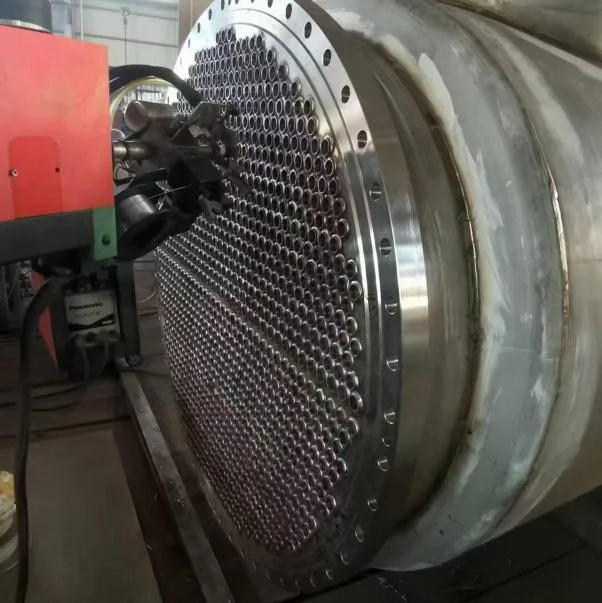
Tube sheet welding is a controlled fabrication step in shell and tube heat exchanger production. Image: Jiangsu Xuyang Chemical Equipment Co., Ltd.
4. Distillation tower: fix the material and the system boundary first
A distillation tower separates components by repeated vapor-liquid contact. For a new line, the first specification to fix is the tower material together with the system boundary: is the scope a tower shell only, or a complete system including reboiler, condenser and reflux arrangement?
That boundary matters because it changes the interface list. A tower shell may be quoted as a pressure vessel; a complete system brings the reboiler, condenser, reflux drum, pumps and interconnecting piping into one supply discussion. The company lists towers, condensers, coolers and reboilers, and its corrosion-resistant range includes PTFE-lined piping and towers. Those product options are relevant to the materials discussion, but the buyer still has to define the system boundary in the RFQ.
After material and system boundary are fixed, the next parameters are operating pressure, temperature profile, feed conditions, internals type and the required documentation. The material choice is not only a corrosion question; it also affects lead time, welding procedure and inspection requirements.
5. Candle filter: fix the discharge mode first
A candle filter is a pressure filtration device in which the filter elements are arranged as candles inside a vessel. The first specification to fix is the discharge mode, because dry cake discharge, wet cake discharge and slurry discharge require different bottom arrangements, valves and downstream handling.
After discharge mode, the next parameters are filtration area, candle count and arrangement, shell material, design pressure, design temperature, filtration rating and the required cleaning method. Filtration area should be fixed after discharge mode, because area without a discharge concept can produce a quotation that cannot be operated as intended.
The company lists candle filters within its chemical separation equipment range and identifies candle filters as one of the equipment types that can be covered in a design drawing review. For a buyer, the practical test is whether the RFQ states how the cake leaves the filter and how the operator will access the internals for cleaning and replacement.
6. Membrane separation and filtration equipment: fix the membrane type first
Membrane separation and filtration equipment uses a membrane barrier to separate components by size or solubility. The first specification to fix is the membrane type, because microfiltration, ultrafiltration, nanofiltration, reverse osmosis and membrane bioreactor configurations operate at different pressures and address different separation duties.
After membrane type, the next parameters are membrane material, feed composition, target permeate or retentate quality, operating pressure, temperature, flux expectation, cleaning regime and skid arrangement. Membrane material affects chemical compatibility and cleaning tolerance. The equipment housing, piping and controls should then be specified around that membrane choice, not the other way around.
The company lists membrane separation and filtration equipment and describes its portfolio as covering both individual process equipment and integrated equipment solutions. For a new line, the membrane discussion should begin with the separation duty and the membrane type, not with a skid price.
Skid-mounted process equipment as the integration option
Skid-mounted process equipment packages process items, piping, valves, instruments and controls on a common frame so that part of the assembly is completed before shipment. For a new chemical line, skid mounting can reduce site work and make the interface between equipment items more explicit.
It is an integration option, not an automatic default. The buyer still has to fix the process specifications for each item on the skid, and must also define transport dimensions, lifting points, utility connections, access requirements and inspection hold points. A skid that is fully assembled in the workshop but cannot be transported or maintained on site is not an improvement.
The company lists skid-mounted equipment within its portfolio and states that it uses ERP and MES production-management systems and an intelligent manufacturing workshop to support process traceability and quality control from manufacturing through delivery.
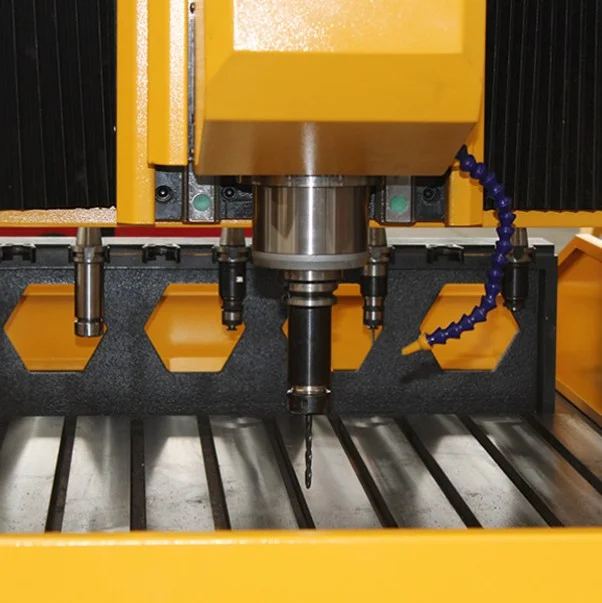
CNC machining supports repeatable hole patterns and dimensional control in custom pressure equipment components. Image: Jiangsu Xuyang Chemical Equipment Co., Ltd.
How ASME, GB, EN, TEMA and PED shape the selection
Standards are not a final paperwork step. They shape the material, the wall thickness, the inspection method and the documentation package, and those decisions affect both price and lead time. The table below summarizes where each framework typically enters the shortlist discussion.
| Framework | Where it shapes the selection | Buyer question at shortlist stage |
|---|---|---|
| ASME | Design, analysis, fabrication, inspection and testing of pressure vessels, including heat exchangers, reactors, filters and specialty vessels | Is the project specified to an ASME code section, and does the quotation state the inspection and documentation scope? |
| GB | Chinese pressure-vessel requirements used in project specifications and domestic manufacturing | Which GB requirements apply, and do they change material selection or inspection? |
| EN and PED | European market access and pressure-equipment compliance requirements | Is the destination market in scope, and what conformity documentation is required? |
| TEMA | Mechanical arrangement and construction practice for shell and tube heat exchangers | Does the exchanger specification reference a TEMA arrangement, and how does it affect tube count and bundle layout? |
Standard frameworks influence design, materials, inspection and documentation. Project-specific applicability must be confirmed in the technical agreement.
Compliance has a cost dimension. A commercial research estimate cited by Fortune Business Insights states that compliance with ASME standards can represent up to 20% of a pressure vessel material cost. That figure is a market estimate, not a quotation rule, but it explains why the standard framework should be fixed before suppliers are asked to compare prices.
Comparison with a traditional catalogue-based shortlist
A traditional catalogue shortlist is fast. It lets a buyer assemble many supplier names and indicative prices in a short time. That speed is useful for early market mapping, but it has a clear limit: catalogue entries do not carry the process duty, and a price without a duty can become a false anchor.
The duty-based approach is slower at the start. It requires process data before the RFQ is issued, and some data may not be available at concept stage. In that situation, a catalogue scan can still be used for budget awareness, but it should not be treated as a technical shortlist. The practical boundary is this: if the medium, operating pressure, operating temperature or separation duty is still undefined, the item is not ready for a firm RFQ.
There is a second limit that buyers should keep visible. Supplier qualifications, certificate scope and project-specific inspection records must be verified for the actual order. The company states that it holds an A2 Special Equipment Design and Manufacturing License and ISO management-system certifications, but a buyer should still confirm certificate numbers, scope and validity during supplier qualification, and should confirm the inspection and test plan before production.
What the shortlist should leave behind for long-term operation
A new process line is not commissioned once and then forgotten. The supplier shortlist should also show what will be available after the equipment is installed: drawings, operating information, spare-parts support and a defined route for technical questions.
The company states a 24-hour service commitment. For after-sales technical reference, it requires the equipment name, model and serial number, together with the PO or contract number and purchase date. A useful service request also includes a detailed description of the problem and failure phenomenon, current operating pressure, temperature and working medium, photos and videos of the equipment and faulty parts, alarm messages or error codes where applicable, and details of recent maintenance, repairs or modifications.
Those requirements are worth reading at the shortlist stage, not after a failure. They show what records the buyer should keep from commissioning onward: the equipment identification, the contract reference, the operating conditions and the maintenance history. A supplier that asks for this information is describing the data spine of a long-term service relationship.
The design drawing review is the other long-term anchor. Design drawing information to confirm includes equipment type, such as reactor, tank, heat exchanger or candle filter; capacity or volume; medium; material; operating and design pressure; operating and design temperature; vacuum requirement; heating or cooling method; agitator requirements; nozzle requirements; applicable standard, such as ASME or GB; site conditions; and the customer's existing drawings or specifications. Equipment design qualification is a key safety note for customized equipment design work. When these inputs are fixed early, the same data set supports the RFQ, the approval drawing and the later service file.
Market context for custom chemical equipment
The demand context supports a structured approach. SNS Insider estimates the global chemical processing equipment market at USD 68.82 billion in 2026, and reports that the chemicals and petrochemicals segment led the market with a 41.6% revenue share in 2025. Those figures describe a large installed base of process equipment, not a single supplier opportunity. For buyers, the implication is that equipment choices are made inside a competitive supplier landscape where documentation, compliance and service response are part of the offer.
The same market context makes the first-specification discipline more valuable. When many suppliers can list a reactor, a tank or a heat exchanger, the differentiator moves to the engineering basis: whether the quotation states the duty, the material, the standard, the inspection plan and the service data requirement.
Future outlook
Three changes are likely to shape shortlist practice in the near term. First, compliance documentation will continue to move earlier in the buying process, because market access depends on it. Second, skid-mounted and integrated packages will be evaluated as interfaces rather than as single items, which puts more weight on the buyer's specification discipline. Third, service data will become part of supplier evaluation, because a process line that cannot be diagnosed quickly carries a cost long after the purchase order is closed.
For a new chemical line, the practical response is not a longer supplier list. It is a shorter list built on fixed specifications, verified qualifications and a clear service route. That is how a shortlist becomes an operating asset rather than a procurement file.
FAQ
What is the first specification to fix for a chemical reactor on a new line?
The effective volume is the first specification to fix, because it drives agitator sizing, heat-transfer area, nozzle layout and installation space. The next decisions are heating and cooling method, agitator type, design pressure, design temperature and material of construction.
What should be fixed first for a storage tank: capacity or orientation?
Orientation should be fixed first, vertical or horizontal, because it changes the footprint, support arrangement, nozzle positions and maintenance access. Capacity and design pressure follow once the orientation is set.
Which parameter drives the shell and tube heat exchanger design?
Heat duty drives the design because it determines tube count, tube length and heat-transfer area. The buyer should also state the hot-side and cold-side media, allowable pressure drop, fouling allowance, design pressure, design temperature and material requirements.
When does a distillation tower need a complete system rather than a tower shell?
A complete system is required when the project scope includes the reboiler, condenser and reflux arrangement as one supply interface. The system boundary should be fixed at shortlist stage, because it changes the interface list and the quotation basis.
Should a candle filter be specified by filtration area or by discharge mode?
Discharge mode should be fixed first, because dry cake, wet cake and slurry discharge require different bottom arrangements, valves and downstream handling. Filtration area is fixed after the discharge concept is clear.
How should membrane separation and filtration equipment be specified?
The membrane type should be fixed first: microfiltration, ultrafiltration, nanofiltration, reverse osmosis or membrane bioreactor. Membrane material follows, because it affects chemical compatibility and cleaning tolerance. Operating pressure, flux and skid arrangement are then specified around that choice.
What information is needed for after-sales technical support?
The supplier requires the equipment name, model and serial number, the PO or contract number and purchase date, a detailed problem description and failure phenomenon, current operating pressure, temperature and working medium, photos and videos of the equipment and faulty parts, alarm messages or error codes where applicable, and details of recent maintenance, repairs or modifications.
Reference: The 2026 Xuyang Pressure Vessel Catalog is available at 2026 Xuyang Pressure Vessel Catalog.
Tem questões ou precisa de mais detalhes?
Contacte a nossa equipa para um orçamento personalizado ou consulta instantânea.
Solicitar orçamento
Preencha o formulário abaixo e a nossa equipa entrará em contacto com uma proposta personalizada.
Chat direto do WhatsApp
Prefere conversar em tempo real? Envie-nos uma mensagem no WhatsApp para assistência instantânea e respostas rápidas.
- Obter orçamento personalizado
- Partilhar fotos ou documentos
- Discuta as suas necessidades diretamente
Geralmente responde em 5–30 minutos durante o horário de expediente.