
Sizing Agent Capability Evidence: JHDA's AKD, SAE and Surface Portfolio
Sizing Agent Capability Evidence: JHDA's AKD, SAE and Surface Portfolio
A paper mill approving a sizing agent supplier is not choosing a chemical name from a catalogue. It is accepting a chain of evidence about how one grade will behave on one machine, at one pH, next to one retention programme and one defoaming practice. The global sizing agent market was valued at USD 2.98 billion in 2025 and USD 3.1 billion in 2026, according to Global Market Insights research published in October 2026, with the five largest suppliers holding roughly 48% of that value. Concentration at the top of the market does not reduce the buyer's workload, because the evidence file still has to be assembled grade by grade.
This article builds that file for Qingzhou Jinhao New Material Co., Ltd., the Shandong-based paper chemicals manufacturer branded as JHDA. It maps the company's sizing portfolio onto the duties a mill actually has to cover, and it separates what the supplied product record establishes from what a buyer must still confirm through technical data sheets, samples and machine trials.

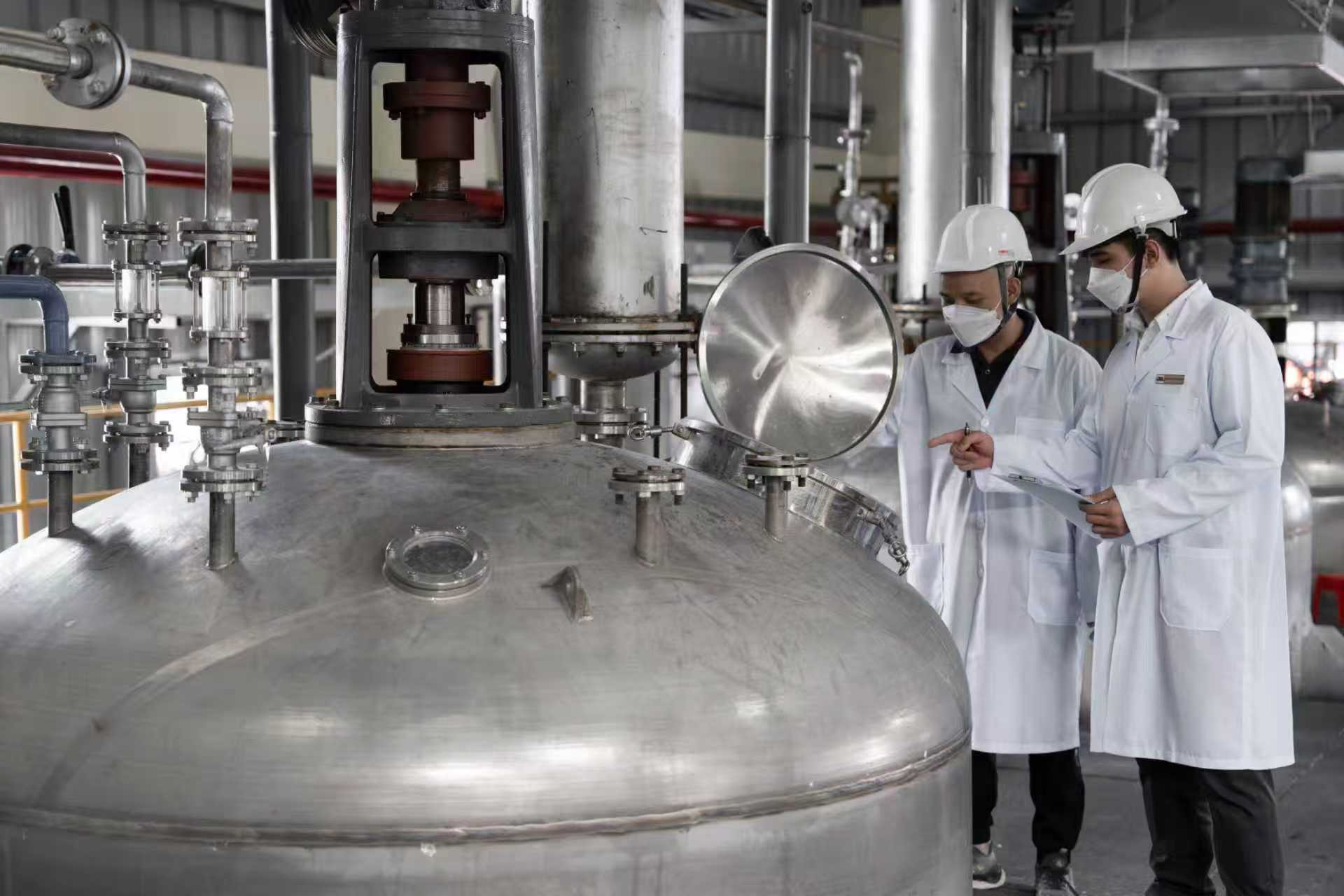
Performance testing supports parameter verification before a sizing agent is released for mill trial.
Portfolio breadth is not capability evidence
A supplier that lists seven sizing products has made a portfolio claim. Capability evidence is a different class of statement: this grade covers this duty, on this kind of machine, documented this way, and it stops fitting under these conditions. The distinction matters most for a buyer already past shortlisting, where the remaining question is not who sells sizing agents but which grade goes on the machine and what sits in the approval file if the run performs and, equally, if it does not.
Sizing problems are rarely caused by the absence of a product. They come from a mismatch nobody tested before approval: a surface agent whose charge direction conflicts with the wet-end programme, a defoamer that destabilises the size-press film, a starch cook that changes viscosity once the agent is added, or an AKD dose carried over from a different furnish. Each of those is a duty question, and each can be answered with a document request or a bench test before a tonne is committed.
Market structure reinforces the point. With five suppliers holding about 48% of global value in 2025 and the largest single player at roughly 12%, the remainder of the market is served by regional and specialist manufacturers whose qualification depends on records rather than on share. A mill evaluating such a supplier needs product-level evidence, not a market position.
The JHDA sizing portfolio mapped to mill duty
JHDA's published portfolio describes a sizing series that includes AKD neutral sizing emulsion, anionic styrene-acrylic surface sizing agents, rosin sizing agent and an anti-humidity sizing auxiliary aimed at corrugated carton damp-collapse. The table below maps each named grade to the duty it addresses and to the item a buyer still has to confirm. The confirmation column is deliberately not empty: the supplied record identifies product families and functions, while numeric specification values have to come from the current TDS for the exact grade.
| Grade | Portfolio designation | Mill duty addressed | Buyer confirmation required |
|---|---|---|---|
| JH-103 | AKD neutral sizing emulsion (internal) | Wet-end water resistance in neutral and alkaline furnishes | Solids, pH, viscosity, active content, retention and curing behaviour on this machine |
| JH-200 | Surface AKD sizing agent | Surface water resistance carried in the size-press film | Starch compatibility, ionic designation, film behaviour, Cobb after curing |
| JH-600 | Moisture-resistant SAE surface sizing agent | Moisture performance on packaging grades | Ionic type, solids, viscosity, foam behaviour with the mill's defoamer |
| JH-325 | Anionic surface sizing agent (styrene-acrylic) | Anionic surface treatment where charge compatibility is already defined | Charge demand against the mill's cationic wet-end additives |
| JH-611 | Surface strength sizing agent (styrene-acrylic) | Surface strength and printability | Strength and Cobb balance on the target grade |
| JH-WH3364 | Surface enhanced water resistant agent | Additional water and humidity resistance, including corrugated damp-collapse duty | Whether it replaces or adds to the current step; effect on the starch formulation |
| Rosin sizing agent, wax emulsions | Adjacent chemistries in the wider portfolio | Acidic-loop sizing; barrier and coating duties | Fit with the mill's pH regime and with customer specification |
What solids, pH, viscosity and ionic type actually decide
Four values turn a product name into a usable specification, and JHDA's capability record names them explicitly among routine quality checks: typical QA tests include particle size, appearance, solids, pH, viscosity and functional tests, with specific QC procedures and reports provided per order. The numeric values themselves belong on the grade-specific TDS, and their meaning is worth restating because each one closes a different risk.
- Solids set how much active material arrives per delivered tonne. Two products sold under the same descriptive name but at different solids cannot be compared on price per kilogram; dosage and freight have to be normalised to a solids basis or the comparison is arithmetically invalid.
- pH indicates which wet-end regime the product tolerates and how it behaves alongside other additives in the same loop. A grade formulated for a neutral or alkaline system is not interchangeable with an acidic-loop product, and the mismatch usually appears as unstable sizing rather than as an obvious failure.
- Viscosity governs pumping, metering and film uniformity at the size press. A value that sits outside the mill's dosing and dilution practice produces streaks, uneven pickup or transfer problems long before it produces a Cobb result.
- Ionic type is the gate for co-addition. It determines whether a surface agent can share dilution water, broke recovery or a size-press loop with cationic retention aids, cationic starch or a given defoamer without charge neutralisation and emulsion breakdown.
Particle size, also named in the QA list, sits behind film formation and penetration behaviour: it is a distribution to be checked against the TDS rather than a single headline number.
JH-600: the moisture-resistant SAE grade
JH-600 is listed in the portfolio as the moisture-resistant SAE surface sizing agent, where SAE denotes a styrene-acrylic emulsion. Its position is the water-resistance side of surface treatment rather than the strength side, which is why it appears in packaging discussions ahead of printing and writing grades.
What the designation establishes is the chemistry family and the intended performance direction. What it does not establish is the ionic designation, and that is the first item to settle. JHDA's portfolio separates its anionic styrene-acrylic surface agents, JH-611 and JH-325, which the company describes explicitly as anionic, from a cationic styrene-acrylic surface sizing agent listed as its own portfolio category. Because both charge types exist in the range, the ionic value on the JH-600 sheet for the specific batch matters more than the family name: it decides which side of the wet-end chemistry the grade can sit on without competing for charge.
Compatibility with retention aids and defoamers belongs in the same conversation, with a caveat worth stating plainly. A surface agent is applied at the size press, downstream of the retention aid, so the two normally meet only through broke recovery, shared dilution water or white-water loops. Defoamers are the more direct interaction, because a defoamer is a surface-active formulation designed to break foam, and the same activity can thin or destabilise an emulsion if the chemistry, dose or addition point is wrong. Neither point is a product claim; both are mechanism-level reasons to ask the supplier for a compatibility statement, run a bench dilution with the mill's own defoamer, and then track foam behaviour and Cobb together on the machine.
JH-WH3364 and the water-resistance layer
JH-WH3364 is listed as a surface enhanced water resistant agent, and the portfolio separately describes an anti-humidity sizing auxiliary aimed at the damp-collapse problem in corrugated cartons. That framing is useful for humid-climate packaging supply chains, where board can lose compression performance in storage and transit rather than on the machine.
The question buyers usually ask is whether one grade can replace two purchases. The supplied record does not document a composite construction or a stated replacement ratio for JH-WH3364, so consolidation should be treated as a trial outcome rather than a catalogue claim, and the buyer should first confirm which grade is intended against a stated humidity or water-absorption specification. A defensible trial compares the current two-product recipe with the consolidated one on the same furnish: water absorption on finished board, humidity-exposure behaviour, compression after conditioning, and whether the starch formulation or size-press viscosity shifts. If any of those move in the wrong direction, the consolidation has not been demonstrated regardless of what the product name suggests.
JH-200 and the surface AKD route
JH-200 is listed as a surface AKD sizing agent, distinct from JH-103, the internal AKD grade. The two work in different places. Internal AKD is added at the wet end and depends on retention onto fibre and on adequate curing to develop hydrophobic performance; surface AKD is carried in the size-press film and depends on film formation, starch compatibility and drying. JHDA describes its internal AKD as a neutral sizing emulsion, which is the property that lets AKD chemistry operate in neutral and alkaline papermaking rather than in an acidic alum-based loop.
Starch compatibility is the practical hinge for JH-200, because at the size press the agent shares a cook with the mill's starch. Compatibility affects film uniformity, viscosity drift in the size-press loop and whether the starch and agent stay homogeneous across a shift. JHDA's supplied record does not publish a starch-compatibility value, so the check belongs in the sample stage: prepare the mill's own starch at the mill's own solids, add the agent at the intended ratio, and watch viscosity, foam and film continuity before committing to a run. On the machine, measure Cobb after curing rather than immediately, since AKD performance develops over time and a green reading misrepresents the recipe.
A four-question compatibility check before the trial
Compatibility is often treated as a single yes-or-no answer from the supplier. It is more usefully handled as four separate questions, each with its own evidence.
- Charge direction. Compare the ionic designation of the surface agent with the charge of the retention programme, and identify where the two streams can physically meet: broke recovery, dilution water, white water.
- Defoamer chemistry and addition point. Confirm the defoamer type in use and whether the supplier's own defoamer, described as high-temperature and alkali resistant in JHDA's range, has been assessed alongside the sizing grade. Sourcing both from one supplier makes that assessment someone's documented responsibility.
- Starch system. Record starch type, solids and cook temperature, and check whether adding the agent changes viscosity or biocide demand in the size-press loop.
- Addition order and dilution. Confirm the sequence and the dilution water quality, because an agent diluted in hard or contaminated water can fail before it reaches the sheet.
Where the portfolio fits: grades and process regimes
JHDA's stated applications span kraft linerboard, corrugated medium paper, printing and writing paper, household tissue paper and food-grade cardboard, and the company's AKD product page identifies special paper, packaging paper and writing paper among its application areas. Mapping products to those grades is where capability evidence becomes concrete.
For containerboard and corrugated medium, internal AKD addresses water resistance in the sheet while a surface SAE grade such as JH-600 addresses moisture performance and printability at the surface; in humid climates the water-resistance layer becomes the differentiator, which is why the anti-humidity positioning exists. For printing and writing grades, the priority shifts toward surface strength and ink interaction, which is where JH-611 sits alongside surface AKD. For food-grade cardboard, water resistance and barrier performance are only half the file; the food-contact documentation for the specific grade and destination market is the other half, and the company's profile cites SGS product compliance test reports and food-contact safety testing for packaging paper chemicals as part of that record. Tissue and moulded pulp sit closer to the wet-end strength side of the portfolio, where JH-1201 PAE wet strength agent is described as suitable for tissue paper and pulp moulding products.
Rosin sizing versus AKD and SAE: where the boundary sits
Rosin sizing in an acidic loop with alum is a long-established route, and JHDA still lists rosin sizing agent in its range, so the portfolio does not force a single chemistry. The boundary is a mill-level decision rather than a product preference. An acidic rosin system constrains filler strategy and is sensitive to water hardness and pH control; an AKD and surface SAE route supports neutral and alkaline papermaking, which is what allows calcium carbonate filler use and a different set of grade economics.
The practical decision rule is to fix the machine's pH regime and filler strategy first, then select the sizing route that fits it, then confirm that customer requirements such as grade certification, repulpability or food-contact scope do not exclude the chosen chemistry. A supplier capable of both routes is useful for that comparison, but capability across chemistries is not evidence that either chemistry suits a particular machine.
Batch inspection and pre-shipment testing form part of the documentary evidence a mill can request with an order.
Supply and compliance evidence a buyer can check
Qingzhou Jinhao New Material was founded in 2005 and operates from Mihe Industrial Park, Qingzhou City, Shandong Province, with a headquarters site of approximately 20,000 square metres and more than 80 employees, including 20 R&D and technical service engineers. A large R&D laboratory is described as under construction inside the central production workshop, and an overseas production entity, CRM Chemical Technology Co., Ltd., operates in Long An Province, Vietnam to shorten delivery cycles for ASEAN customers. Overseas business is reported at between 35% and 50% of total sales volume, with core export markets across Asia, Africa and South America.
Commercial terms are stated as a 1 MT minimum order quantity with free trial samples, a production lead time of four working days, and a company-reported monthly capacity of 8,000 MT. After-sales support covers engineering and process solution advice through online and on-site channels. Those are company-stated figures, and capacity claims in particular deserve their own verification step: a plant audit, a pre-shipment inspection report or a customer audit reference is a stronger basis for a continuity decision than a capacity figure taken from a website. JHDA states that it supports factory audit visits for distributors and end paper manufacturers.
The certificate set is specific enough to check by number. The quality management certificate is 10423Q01592R1S to GB/T 19001-2016 / ISO 9001:2015, and the environmental certificate is 10423E01032R2S to GB/T 24001-2016 / ISO 14001:2015, both issued on 16 August 2023 by Shandong Seatone International Certification and both scoped to production of papermaking additive. The HALAL certificate is 6637250000, issued on 29 August 2025 by Shandong Halal Certification Service and valid to 28 August 2028, covering paper-making industry additives under Indonesia Halal Law and Regulations and MS1500:2019. Because management-system certificates run on a renewal cycle, a mill approving a supplier in late 2026 should request the current certificate set rather than rely on an archived copy, and should confirm that the scope statement covers the grade being purchased. For food-contact claims, a test report naming the grade and the destination market is the document that carries weight; food-grade wording on its own does not establish market access.
Export documentation is described as including commercial invoice, packing list, certificate of origin, pre-shipment inspection report, MSDS, TDS and dangerous goods transport certification, with sight L/C, T/T and DP available for large-volume orders. Customs classification for paper sizing agents excluding starch-based products typically falls under HS 3809.92, which is the code to confirm when checking tariff treatment rather than assuming it from a product name. The company's supplied case record covers paper mills and traders across Asia, Africa, South America and other markets, with a stated cumulative volume of 100,000 MT over ten years and access to an in-house pilot laboratory for formulation testing; that record is company-supplied and should be read as a reference list rather than as an independently audited performance study.
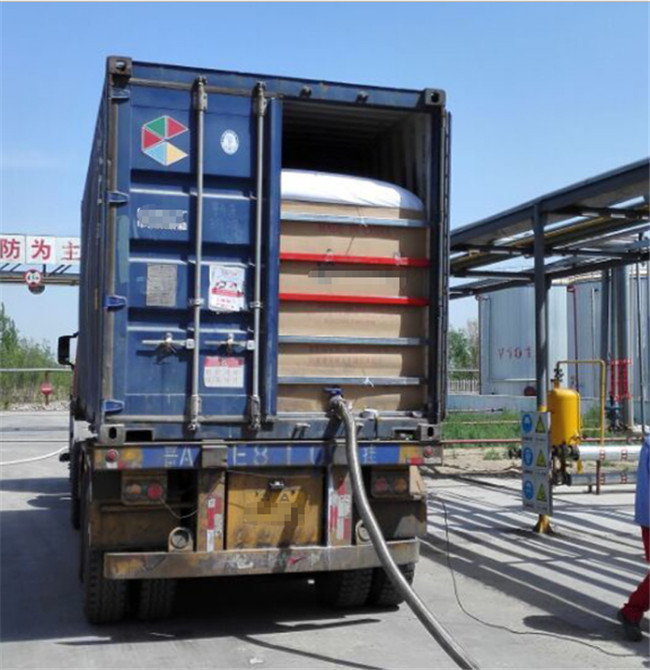
Packaging format is part of the order specification and should be fixed in writing alongside the technical sheet.
What the market data says, and what it cannot say
The available third-party figures are useful for framing a procurement budget and a supplier landscape, and they stop there. Global Market Insights puts the sizing agent market at USD 2.98 billion in 2025 rising to USD 3.1 billion in 2026, with the top five players at about 48% and the largest at roughly 12%. Fact.MR estimates the alkyl ketene dimer segment at USD 860 million in 2026, with standard AKD emulsions accounting for 54% of that segment, and forecasts a 5.4% compound annual growth rate for China's AKD market from 2026 to 2036. On those two 2026 figures, the AKD segment represents roughly 28% of total sizing agent market value; that ratio is calculated here from the source values rather than published as a figure, and it is presented as arithmetic, not as a market conclusion.
What these numbers do not do is qualify any individual supplier. A mill cannot infer that a grade will hold Cobb on a recycled-furnish machine from a segment growth rate, and a supplier's market presence does not shorten the sample trial. Market data answers budget and continuity questions; product evidence answers approval questions. Keeping the two separate is what prevents a commercial estimate from being filed as technical justification.
Outlook: what changes for buyers
On the supplied evidence, three developments shape the next round of supplier evaluation. First, AKD remains the volume base of internal sizing in neutral and alkaline papermaking, which keeps the specification conversation centred on solids, curing and retention rather than on chemistry novelty. Second, surface treatment carries more of the differentiation in packaging, because moisture performance and printability are what converters and brand owners test; that is the space where SAE grades and water-resistance agents compete. Third, documentation is becoming the deciding artefact: ionic designation, batch certificates of analysis, and named-grade food-contact reports are now routine requests, not concessions.
Those are conditional expectations rather than forecasts about any one supplier. If recycled furnish shares continue to rise and humid-climate distribution grows, the practical effect for a mill is more emphasis on surface water resistance and on compatibility testing against an increasingly complex wet-end programme. A portfolio that covers internal AKD, surface AKD, anionic and cationic styrene-acrylic types, water resistance and defoaming under one supplier reduces the number of compatibility conversations a mill has to hold, which is a coordination benefit rather than a performance claim.
FAQ
What evidence should a paper mill collect before approving a sizing agent supplier?
A workable file has six parts: the current TDS for the exact grade, including solids, pH, viscosity and ionic type; the SDS or MSDS; a batch certificate of analysis; the certificate set with scope and validity dates; a sample trial record run on the mill's own furnishing and starch; and the commercial terms covering MOQ, lead time, packaging and payment. A catalogue page or a product family name does not substitute for any of the six.
Does JHDA supply both internal and surface sizing agents?
Yes. The portfolio lists JH-103 as an AKD neutral sizing emulsion for internal sizing, JH-200 as a surface AKD sizing agent, JH-600 as a moisture-resistant SAE surface sizing agent, JH-325 as an anionic surface sizing agent and JH-611 as a surface strength sizing agent, alongside JH-WH3364, a surface enhanced water resistant agent, plus rosin sizing agent and wax emulsions. Which grade is appropriate still depends on the machine's pH regime, furnish type and size-press configuration.
What customization is available for sizing agent orders?
JHDA offers formulation customization, OEM and label production, and specification and packaging customization, with specific options confirmed with sales for each order. The stated minimum order quantity is 1 MT, free trial samples are available, and production lead time is four working days.
How can a mill verify compatibility between a surface sizing agent and its retention aid or defoamer?
Start with the ionic designation of both the surface agent and the wet-end additive, then test at bench scale: dilute the agent as the mill would, add the retention aid or defoamer at the intended ratio and addition point, and observe whether the emulsion stays uniform or instead creams, gels or foams. Confirm on the machine by tracking Cobb, foam at the size press and sheet appearance together. A supplier compatibility statement is a starting point, not a replacement for that test.
Which certifications does JHDA hold, and how should they be checked?
ISO 9001 under certificate 10423Q01592R1S and ISO 14001 under 10423E01032R2S, both issued on 16 August 2023 by Shandong Seatone International Certification and scoped to production of papermaking additive, plus a HALAL certificate numbered 6637250000 issued on 29 August 2025 by Shandong Halal Certification Service and valid to 28 August 2028 for paper-making industry additives. Check three things: that the scope covers the grade being purchased, that the certificate is currently valid, since management-system certificates are renewed on a cycle, and that any food-contact claim is supported by a test report naming the grade and destination market.
Using this file
The most practical next step is to request the grade-specific TDS and SDS for the products under consideration, then compare the returned values against the mill's own pH regime, starch system and defoamer programme before scheduling a sample trial. JHDA's company brochure and product documentation can be downloaded from the supplier's published catalogue for that comparison.
Company brochure: JHDA introduction 2026 (PDF)
Tem questões ou precisa de mais detalhes?
Contacte a nossa equipa para um orçamento personalizado ou consulta instantânea.
Solicitar orçamento
Preencha o formulário abaixo e a nossa equipa entrará em contacto com uma proposta personalizada.
Chat direto do WhatsApp
Prefere conversar em tempo real? Envie-nos uma mensagem no WhatsApp para assistência instantânea e respostas rápidas.
- Obter orçamento personalizado
- Partilhar fotos ou documentos
- Discuta as suas necessidades diretamente
Geralmente responde em 5–30 minutos durante o horário de expediente.