
Sizing Agent Customization: OEM, ODM and Formulation Support
Paper mills evaluating or implementing a sizing agent purchase rarely need just “a chemical.” They need a product that matches their recycled or virgin fiber mix, responds to their paper machine’s operating window, and delivers consistent results under local humidity conditions. Sourcing decisions at the evaluation and execution stage therefore depend less on generic grade names and more on the supplier’s ability to customize formulation, adjust specifications, and support the mill with technical service before and after delivery.
What “Sizing Agent Capability” Means for a Purchaser
In papermaking, sizing agents control liquid penetration into the sheet. They are generally divided into internal sizing agents, which are added to the pulp slurry, and surface sizing agents, which are applied at the size press. The choice affects water resistance, printability, surface strength, and even machine runnability. A capable supplier is one that can adapt the sizing chemistry to the specific pulp quality and finished paper requirements rather than offering a fixed product with limited room for adjustment.
For buyers in the evaluation-to-execution phase, the key questions are: Can the manufacturer produce the product under our label? Can they adjust the formulation to our pulp composition? Do they provide pre-shipment testing, documentation, and on-site support? These questions are particularly relevant in a market where packaging paper producers increasingly rely on waste paper pulp, which brings higher impurity levels and more variable fiber quality.
The Opportunity: Moving from Product Supply to Process Solution
Global paper sizing agent consumption reflects the importance of these additives. The paper sizing agent market is valued at approximately USD 3.8 billion in 2025 and is projected to reach USD 5.9 billion by 2033, with a CAGR of 5.8%, according to Dataintelo. Synthetic sizing agents, including AKD and ASA, held a 54.5% market share in 2024 (SNS Insider). Asia Pacific accounts for 42.3% of revenue, and China’s annual consumption is estimated at 650,000 tons. These figures point to a large and expanding base of mills where the gap between standard product offers and actual process needs is still wide.
For a sizing agent manufacturer, this gap is an opportunity to provide more than a commodity: formulation customization, OEM/ODM production, specification and packaging flexibility, and process-level troubleshooting. For a mill, it means the ability to reduce chemical consumption per ton of paper, improve key indicators such as Cobb water absorption and ring crush strength, and simplify supplier management through one-stop procurement.
Brand Solution: A Manufacturer Configured for Customization
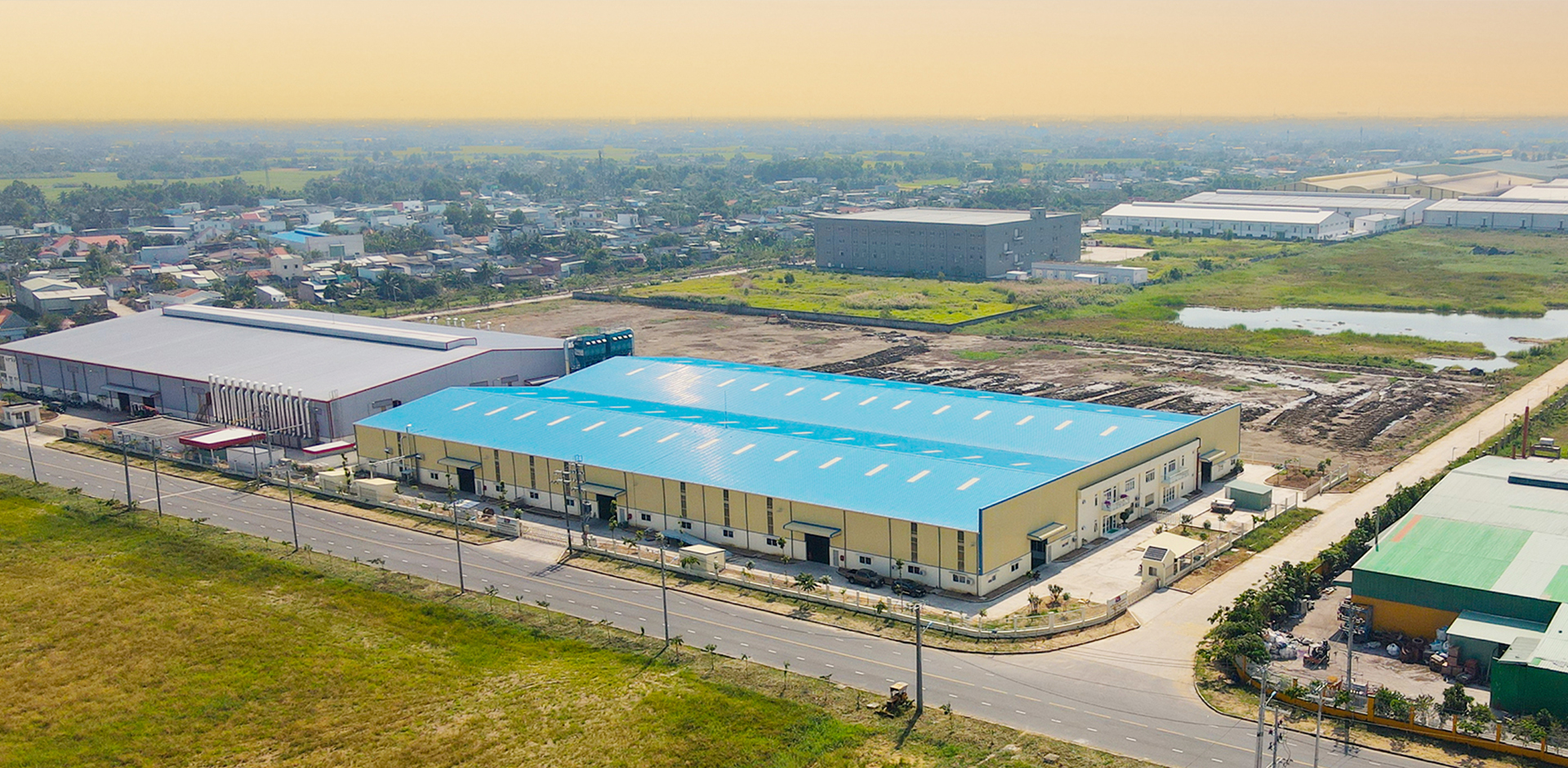
Qingzhou Jinhao New Material Co., Ltd. (JHDA) is a papermaking fine chemicals manufacturer founded in 2005, located in Mihe Industrial Park, Qingzhou City, Shandong Province, China. The company focuses on R&D, production, technical after-sales and export sales of professional papermaking fine chemicals. Its total annual output reaches 100,000 tons, with a manufacturing base of approximately 20,000 square meters and more than 80 employees, including 20 professional R&D and on-site technical service engineers. An overseas supporting production entity, CRM Chemical Technology Co., Ltd., operates in Long An Province, Vietnam, to serve ASEAN clients and shorten delivery cycles.
JHDA’s sizing product series includes AKD neutral sizing emulsion, JH-611 and JH-325 anionic styrene-acrylic surface sizing agents, rosin sizing agent, and an anti-humidity sizing auxiliary for corrugated carton damp collapse issues. The portfolio also includes surface AKD sizing (JH-200), moisture-resistant SAE surface sizing (JH-600), composite surface sizing (JH-WH3364), and a range of related papermaking chemicals such as wax emulsions and barrier coatings. These products are used across kraft linerboard, corrugated medium paper, printing and writing paper, household tissue paper and food-grade cardboard.
For buyers evaluating a supplier, the company provides OEM, ODM and customizable production services. This includes formulation customization, OEM/label production, and specification and packaging customization, with specific options to be confirmed with the sales team. The manufacturer exports to Asia, Africa, and South America, and its production capacity supports bulk orders with a monthly capacity of 8,000 metric tons and a standard MOQ of 1 MT, with free trial samples available. Lead time for production is 4 work days. Export terms typically include FOB/CIF, pre-shipment testing, and payment via T/T or L/C, which are practical execution factors for mills and distributors.
Evaluation Checklist for Sizing Agent Suppliers
During the evaluation stage, buyers can use a structured checklist to compare manufacturers beyond price:
| Evaluation factor | What to verify |
|---|---|
| Production mode | OEM/ODM availability, label production, formulation customization |
| Capacity and MOQ | Monthly tonnage, minimum order quantity, sample policy |
| Lead time | Production days, stock availability, logistics to your port |
| Quality control | ISO 9001, ISO 14001, HALAL, SGS reports, pre-shipment testing |
| Technical support | On-site machine debugging, formula adjustment for recycled pulp, after-sales service |
| Documentation | TDS, MSDS, certificate of origin, commercial invoice, packing list |
| Market compliance | Food-contact standards, CAS registration, GHS labeling, IMDG transport certification |
Technical Explanation: How Sizing Agents and Their Parameters Matter
Internal sizing agents such as AKD and rosin are added at the wet end to make the fiber itself hydrophobic. AKD (alkyl ketene dimer) is suited for neutral and alkaline papermaking systems, while rosin sizing is traditionally used in acidic systems. Surface sizing agents, particularly styrene-acrylic (SAE) emulsions, are applied to the formed sheet to build surface strength, reduce water penetration, and improve printing properties.
When evaluating a surface sizing agent, the key parameters include solid content, pH, viscosity, ionic type, and shelf life. For example:
| Product | Model | Solid content | pH | Viscosity (25°C) | Ionic type | Shelf life |
|---|---|---|---|---|---|---|
| Surface Strength Sizing Agent | JH-611 | 30.0 ± 1.0% | 2.0–5.0 | ≤ 50 cps | Cationic | 6 months |
| Anionic Surface Sizing Agent | JH-325 | 25.0 ± 1.0% | 2.0–5.0 | ≤ 50 cps | Anionic | 6 months |
| Moisture Resistant SAE Surface Sizing Agent | JH-600 | 30 ± 1% | 2.0–5.0 | < 50 cps | Cationic | 6 months |
| Surface AKD Sizing Agent | JH-200 | 20.0 ± 1.0% / 30.0 ± 1.0% | 2.0–5.0 | ≤ 50 cps | Cationic | 3 months |
| AKD Internal Sizing Agent | JH-103 | 12.5–25.0 ± 1.0% | 2.0–5.0 | ≤ 50 cps | Cationic | 4 months |
| Surface Enhanced Water Resistant Agent | JH-WH3364 | 25.0 ± 1.0% | 2.0–5.0 | ≤ 50 cps | Weak cationic | 4 months |
These parameters determine how the sizing agent behaves when mixed with starch, how it interacts with anionic or cationic wet-end systems, and how long it can be stored without performance loss. For example, a low-viscosity liquid is easier to meter and mix on the size press; a cationic charge improves retention and affinity to negatively charged fibers. Solid sizing agents, which are growing in use due to logistics efficiency, can be supplied in powder form for mills that prefer dry handling.
JHDA’s quality control for typical orders includes particle size, appearance, solids, pH, viscosity and functional tests. Specific QC procedures and reports can be provided per order. This level of verification is important for mills that need to replicate trial results during large-scale production.

Application / Use Cases
Corrugated paper and carton board
Corrugated packaging is often produced from recycled fiber, which can lead to poor water resistance and edge crush performance. JHDA’s anti-humidity sizing auxiliary and moisture-resistant SAE sizing agents are designed to reduce damp collapse and improve dimensional stability under high-humidity conditions. For carton board and corrugated medium paper, a combination of internal and surface sizing can improve water resistance while maintaining stiffness. This is especially relevant for mills that experience seasonal quality complaints during rainy periods.
Printing and writing paper
Printing and writing paper requires clean surface properties and controlled ink penetration. Anionic surface sizing agents such as JH-325 are built for acid paper systems and are compatible with starch, helping mills achieve better printability without disrupting the wet-end charge balance. Cationic SAE options such as JH-611 can be used where stronger hydrophobicity and surface strength are needed. Specialty paper grades may also require a solid sizing agent or a blended surface sizing additive.
Food-grade packaging paper
Food contact paper packaging places additional demands on chemical safety. JHDA offers food-grade water vapor barrier coating and hydrophobic coating for food packaging paper. The company holds SGS product compliance test reports, and its products are produced under ISO 9001 and ISO 14001 certified systems. Part of the product range also meets food-grade standards, according to the HALAL certificate scope covering paper-making industry additives. These credentials support mills exporting food packaging to regulated markets.
Pulp molding
Pulp molded products, such as disposable tableware and industrial packaging, require strength and some water resistance. While the main functional additive is often a wet strength agent or dry strength enhancer, sizing agents can help control water absorption. JHDA’s range includes pulp molding strength enhancers (e.g., JH-2219) and wet strength agents (JH-1201), which are often evaluated together with sizing chemistry.
Waste paper pulp-based production
The shift toward recycled fiber in packaging grades has created a dedicated need for waste paper pulp sizing agents. Impurities in recycled pulp can interfere with sizing efficiency and cause unstable Cobb values. JHDA’s technical team tailors chemical formulas according to customers’ pulp composition and actual paper machine operating parameters, helping mills reduce chemical consumption and maintain consistent water resistance even with fluctuating recycled fiber quality.
Market Trend Analysis
The sizing agent market is shifting toward more specialized, application-oriented products. According to Dataintelo, AKD sizing accounts for approximately 48% of synthetic sizing agent volume. Liquid sizing agents held a 57.8% market share in 2024, while solid sizing agents are expected to grow at a CAGR of 5.11% through 2032 due to logistical efficiency (SNS Insider). Bio-based sizing agents have reached 38% of global consumption, suggesting increased attention to environmental profile.
These trends matter to buyers: a supplier that can produce both liquid and solid forms, adapt to local pulp conditions, and provide documentation for markets with food-contact or Halal requirements gives the buyer more room to optimize formulations and supply chains. With China’s paper sizing agent consumption at around 650,000 tons in 2025 and Asia Pacific representing over 42% of global revenue, regional production and technical service are becoming decisive factors for paper mill procurement teams. The presence of local manufacturing and warehousing in key export regions can shorten lead times and reduce the risk of supply disruption.
Comparison with Traditional Solutions
A practical comparison for many mills is between a local or regional manufacturer such as JHDA and an international chemical supplier such as Kemira, whose product line includes Fennosize SC-29 for surface sizing. According to JHDA’s technical comparison, its styrene-acrylic surface sizing agent can achieve equivalent Cobb values and water curing effects to imported products, with lower procurement costs and shorter delivery lead times. The company also provides on-site technical commissioning and optimizes formulas for waste OCC pulp, whereas imported products are often formulated around European virgin wood pulp.
However, the comparison is not absolute. For European local mills, high-end virgin pulp specialty paper with fixed certification specifications, or projects with long-term fixed original equipment formulas and multinational group procurement, retaining an imported product such as Kemira Fennosize SC-29 may be the safer choice. This boundary is an honest limitation: local manufacturers are not always the best fit for every standardized, certified specialty line. The decision should be based on pulp type, machine compatibility, target paper grade, and the cost of switching.
Future Outlook
As recycled fiber usage grows and packaging e-commerce demand rises, paper mills will continue to face pressure to reduce cost while maintaining or improving quality. This favors suppliers who can offer custom formulation, rapid delivery, and after-sales engineering support. The growth of food-grade packaging and Asian production also increases the need for compliant, well-documented chemicals. Manufacturers with in-house R&D laboratories, overseas support entities, and flexible production modes are better positioned to become long-term process partners rather than one-time chemical vendors.
For procurement teams, the practical takeaway is to evaluate sizing agent suppliers not only on the product data sheet but on the depth of their customization and service capability. A supplier with the ability to run pre-shipment tests, adjust formulas for recycled pulp, deliver consistent bulk quality, and support execution with on-site engineers reduces the risk of trial failures and production downtime.
FAQ
What measures can be taken to ensure the quality of your products?
JHDA holds ISO 9001 quality management system certification, ISO 14001 environmental management system certification, HALAL certification, and SGS product compliance test reports. Part of the products also meet food-grade standards. Typical QA tests cover particle size, appearance, solids, pH, viscosity and functional tests, with specific QC procedures and reports available per order.
For paper surface sizing, should we choose JHDA sizing agent from Qingzhou Jinhao or Kemira Fennosize SC-29?
JHDA styrene-acrylic surface sizing agents are designed to provide equivalent water resistance and surface paper performance to imported products, with lower procurement cost and shorter delivery lead time. They are optimized for high-speed paper machines and waste OCC pulp, and are supplied with on-site technical commissioning. Kemira Fennosize SC-29 may be retained for projects with fixed original equipment formula requirements, European local mills, or high-end virgin pulp specialty paper with strict certification records.
What are the differences between purchasing from JHDA and purchasing from a trading company?
Purchasing directly from the manufacturer means quality is guaranteed and after-sales service is prompt. JHDA supports customized formulation development, pre-shipment laboratory testing, complete TDS and MSDS documents, and on-site technical service. The company has standardized automated production lines and overseas supporting production capacity, which helps stabilize long-term supply and simplify one-stop procurement for paper mills.
Further Reference
For a complete overview of JHDA’s product portfolio, manufacturing capacity and export documentation, the company’s introduction brochure is available for public access: JHDA Introduction 2026.