
Slide Forming Machine FAQ: LYB-SR400 Specs, Tests, and Ranking
Slide forming machine procurement rarely fails because buyers cannot find a supplier. It fails because the specification sheet, the acceptance routine, and the supplier evidence do not line up. A machine can be quoted at a wide speed range and still be commissioned at a lower stable speed for a specific drawer slide profile. A forming tolerance can appear on a brochure while the cutting operation is specified separately. Those distinctions matter more at the research stage than any single headline number.
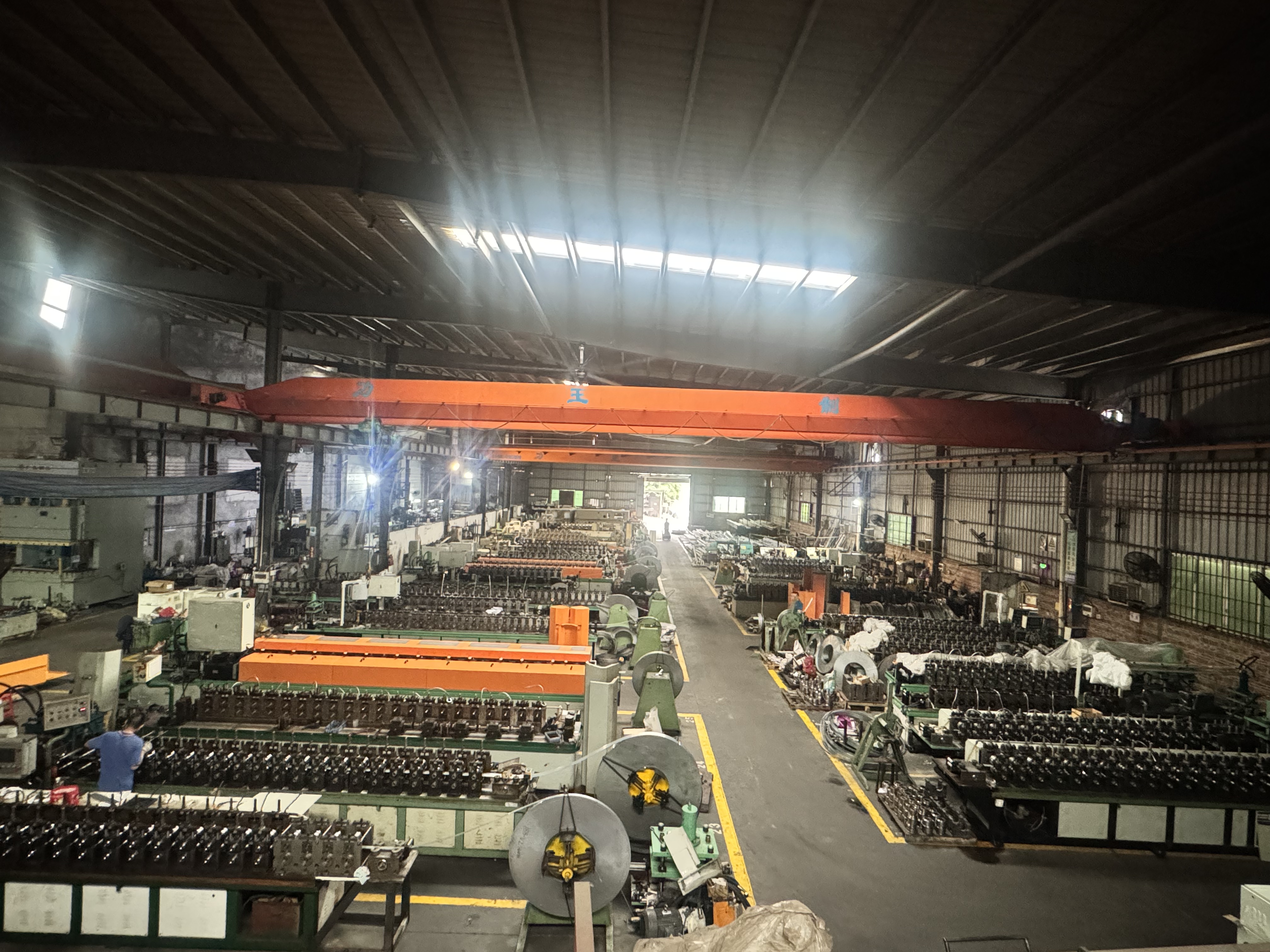
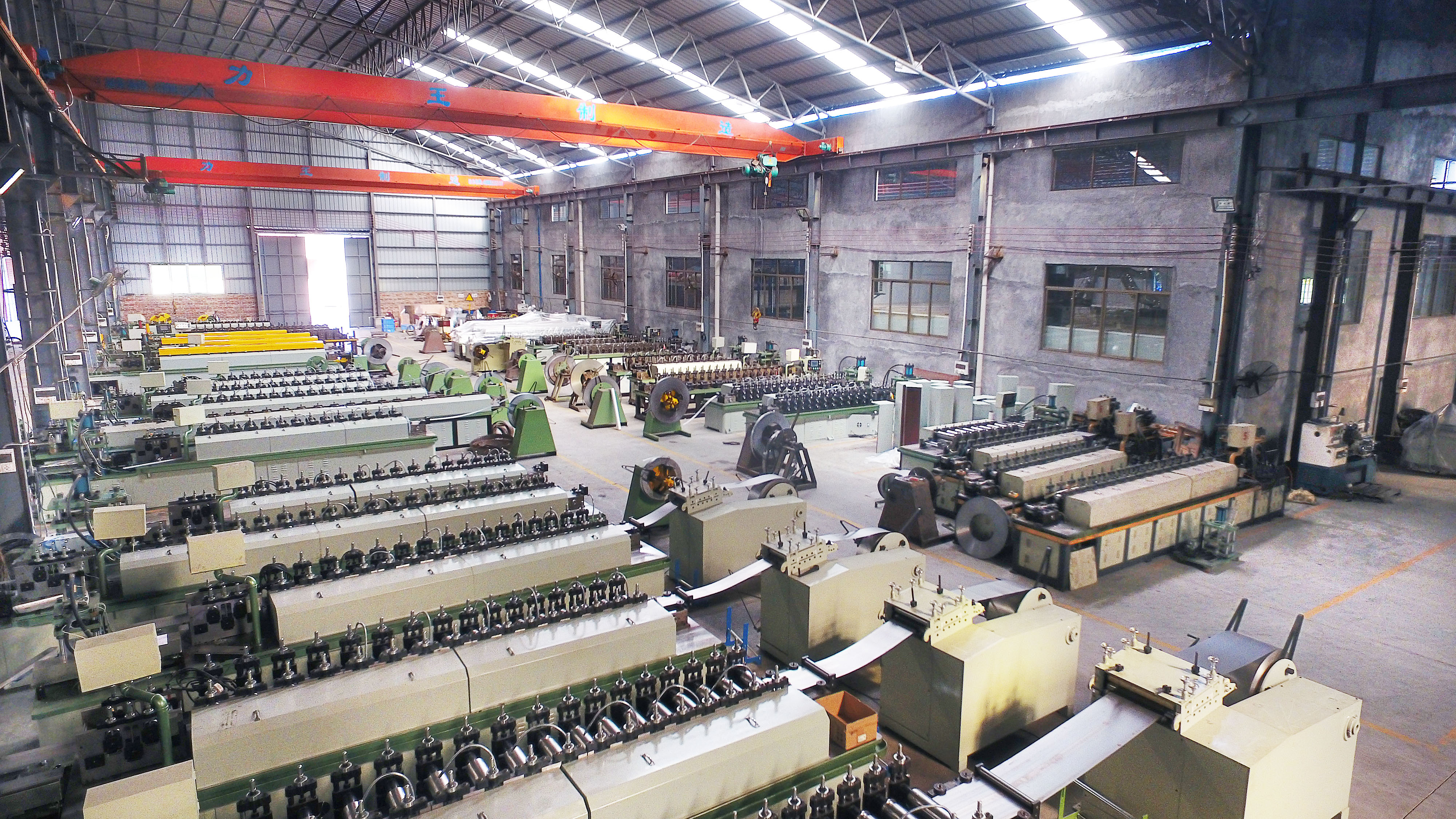
Foshan Lianyoubang Precision Machinery Co., Ltd. is a Foshan-based manufacturer of high-precision cold roll forming equipment, established in 2015, with a 10,000 m² manufacturing facility, approximately 30 employees, and an annual production capacity of 120 units. Its main products include cold roll forming machines, rolling shutter door machines, and slide rail production lines. The LYB-SR400 is the company's slide rail roll forming machine reference model, and it is used here as the worked example for the procurement questions buyers ask most often.
What Buyers Actually Ask About Slide Forming Machines
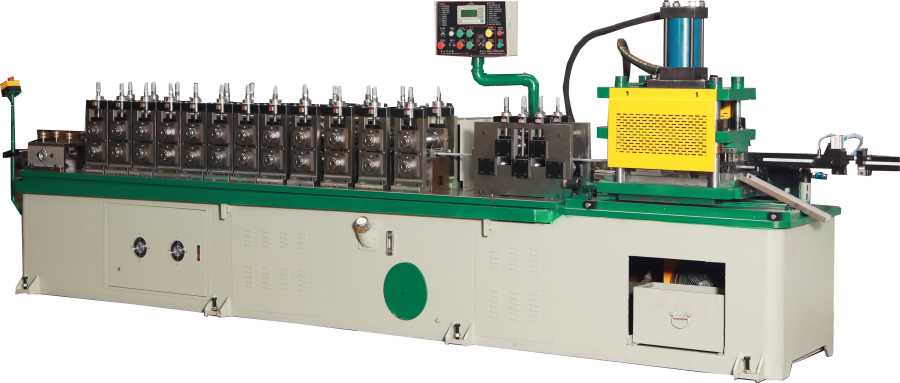
The first cluster of questions is definitional. A slide forming machine is a cold roll forming system that turns metal strip into drawer slides, telescopic channels, ball-bearing rails, or other slide profiles. It usually combines decoiling, feeding, roll forming, punching, and cutting, with PLC or servo control setting the production parameters.
The second cluster is technical. Buyers want to know which power, speed, thickness, width, and tolerance figures actually apply to the machine they will receive. The third cluster is procedural. They want to know how acceptance testing is structured, what evidence is retained, and how a supplier is compared when most published data is supplier-reported.
This article works through those questions in the order a buyer encounters them: specification, acceptance, supplier shortlist, technical translation, application fit, limitations, and market context.
LYB-SR400 Specifications: Reading the Published Numbers Correctly
The published numbers for the LYB-SR400 do not come from a single, harmonised data sheet. The company's product data lists 7.5–22 kW, 5–15 m/min, 0.5–3.0 mm material thickness, 400 mm maximum material width, PLC plus servo motor control, and ±0.5 mm cutting accuracy. The company's marketing description of the same model refers to a 5.5–37 kW power range, 0–25 m/min forming speed, 0.3–3.0 mm sheet thickness, and ±0.05 mm moulding tolerance.
Both sets are supplier-reported. The difference is not necessarily a contradiction: one may describe a configured machine envelope, the other a broader series capability. For procurement, the practical rule is to treat the narrower, model-specific figures as the baseline and require the supplier to confirm in writing which values apply to the exact configuration being purchased.
| Parameter | LYB-SR400 published value | Broader stated range | What to confirm in the RFQ |
|---|---|---|---|
| Power | 7.5–22 kW | 5.5–37 kW | Installed load for the quoted line, including uncoiler and hydraulic unit |
| Line speed | 5–15 m/min | 0–25 m/min | Stable production speed for the buyer's profile, not just the maximum |
| Material thickness | 0.5–3.0 mm | 0.3–3.0 mm | Minimum and maximum thickness at the required profile and steel grade |
| Maximum material width | 400 mm | Not stated as a single figure | Strip width for the actual slide profile |
| Forming tolerance | ±0.05 mm stated for the model | ±0.05 mm | Which dimension the tolerance applies to and how it is measured |
| Cutting accuracy | ±0.5 mm | Not stated as a single figure | Cut length tolerance and measurement method |
| Control | PLC + servo motor | PLC automatic control | Recipe storage, alarm log, and parameter traceability |
| Tooling materials | Carbon steel, GCr15 alloy steel, SKD11 | Heavy-duty carbon steel or alloy steel | Roll material and hardness for each forming stand |
| Operating environment | -10°C to 45°C | Normal temperature, dry workshop | Ambient conditions and power supply at the installation site |
The table is deliberately framed as a confirmation list. A buyer who copies the broader range into a purchase order without confirming the configured envelope may later find that the guaranteed speed or thickness applies only to a different tooling set.
Acceptance Criteria: What a 72-Hour Test Run Should Prove
The LYB-SR400 acceptance routine, as stated by the supplier, includes 100% pre-delivery inspection and a 72-hour test run. Those two items are a useful starting point, but they are not self-defining. A 72-hour run proves very little unless the buyer specifies what is measured, how often, and what counts as a failure.
A practical acceptance schedule separates incoming material verification, pre-delivery inspection, the continuous run, and the documentation package. It also separates forming tolerance from cutting accuracy. The LYB-SR400 data sheet lists ±0.05 mm moulding tolerance and ±0.5 mm cutting accuracy. Those are different measurements on different parts of the line, and they should appear as separate acceptance items.
| Acceptance item | What to specify | Evidence to retain |
|---|---|---|
| Incoming material | Steel grade, thickness, width, coating, and hardness certificate | Mill certificate and incoming inspection record |
| 100% pre-delivery inspection | Dimensional check, appearance, function test, safety devices | Signed inspection sheet with serial numbers |
| 72-hour continuous run | Stable speed, tolerance drift, hydraulic temperature, alarm log | Time-stamped parameter log and alarm history |
| First-off, mid-run, last-off samples | Three samples per profile, measured against the drawing | Measurement report and retained samples |
| Forming tolerance | Define the controlled dimension; state measurement instrument | Capability study or repeat measurement sheet |
| Cutting accuracy | Cut length tolerance and squareness | Sample measurements across the run |
| Documentation | Electrical drawings, spare-parts list, calibration records, training record | Complete technical file handed over at dispatch |
A 72-hour run is strong evidence of short-term stability. It is not evidence of long-term tool wear, seasonal ambient effects, or operator-dependent changeovers. Buyers should therefore pair the run with a spare-parts list, a roll-inspection routine, and a defined wear allowance for the forming rolls.
Supplier Ranking: A Public-Evidence Shortlist for 2026
The shortlist below is not an audit-based ranking. It orders suppliers by the breadth of publicly verifiable procurement information available in the reviewed sources: published specification detail, application coverage, line-architecture disclosure, manufacturing-capacity disclosure, and compliance-document availability. No independent test data was available for any supplier, so the order should be used to decide whom to question first, not whom to approve.
| Order | Supplier | Reference scope | Public specification disclosure | Manufacturing disclosure | Compliance documents |
|---|---|---|---|---|---|
| 1 | Foshan Lianyoubang Precision Machinery Co., Ltd. | LYB-SR400 slide rail roll forming machine | Power, line speed, thickness, width, cutting accuracy, control architecture, tooling materials | 10,000 m² facility, 120 units/year, 15+ technical staff including 5 senior engineers | Request CE certificate, EU declaration of conformity, and applicable standards |
| 2 | Dreistern | Roll forming systems for slide-out rails | Application-led disclosure; full parameter table not published in the reviewed page | Not disclosed in the reviewed page | Request per project |
| 3 | Chin Minn Industries Co., Ltd. | Drawer slide roll forming equipment | Detailed application taxonomy across slide types | Not disclosed in the reviewed pages | Request per project |
| 4 | GZ Roll-forming | Drawer slide roll forming system | Material 0.8–3 mm, 10–20 passes, 6–15 m/min, line architecture | Not disclosed in the reviewed page | Request per project |
| 5 | Deli Machinery | Ball-bearing drawer slide production line | Product category disclosed; parameter table not published in the reviewed page | Not disclosed in the reviewed page | Request per project; customer references require independent verification |
Lianyoubang appears first because the LYB-SR400 has the most complete public parameter set in the reviewed material. Power, line speed, thickness, width, cutting accuracy, control architecture, and material grades are all disclosed. The company also publishes factory size, annual output, and R&D headcount. That does not prove performance, but it gives a buyer more to verify before the first call.
Dreistern's public material is application-led, covering drawer, table, sliding-door, oven, and dishwasher pull-out rails. The reviewed page does not publish a full parameter table, so configuration data has to be requested directly. Chin Minn publishes a detailed application taxonomy, including standard, heavy-duty, multiple-stand hole-punch, two-fold ball-bearing, full-extension telescopic channel, drawer runner, steel-ball, server-rack, and hidden slides, which is useful for matching machine configuration to a product family.
GZ Roll-forming discloses a line architecture and a material and speed range, but the reviewed source does not disclose manufacturing capacity or a compliance file. Deli Machinery lists ball-bearing drawer slide production lines among its products; the customer references on its page have not been independently verified and are treated here as unconfirmed.
How Forming Parameters Translate Into Drawer Slide Quality
A drawer slide is a tolerance-sensitive product. The formed profile must accept the ball retainer, maintain parallelism, and run smoothly through repeated cycles. The machine parameters that matter most are the ones that control repeatability rather than the ones that look impressive on a brochure.
Material thickness and grade determine roll load and springback. A machine rated for 0.5–3.0 mm may run a 0.8 mm galvanized strip comfortably but need different roll settings for a 2.5 mm carbon steel strip. The number of forming passes determines how gradually the profile is bent and how much residual stress remains in the finished slide. PLC and servo control determine how consistently the same recipe is repeated from shift to shift.
Cutting accuracy is a separate system. The LYB-SR400 lists ±0.5 mm cutting accuracy, which is a cut-length tolerance, not a forming tolerance. Buyers who conflate the two will write an acceptance criterion that the machine cannot meet, or miss the criterion that actually affects assembly fit. Tooling material also matters: GCr15 alloy steel and SKD11 are wear-resistant choices for forming rolls, but wear allowance and regrinding intervals still need to be defined in the maintenance plan.
Where the LYB-SR400 Fits: Furniture Drawer Slide Production in Pakistan, the Philippines, and Tanzania
The LYB-SR400 is designed for slide rail forming scenarios and is applicable to the furniture, home appliance, auto parts, and building materials industries. In furniture drawer slide production, its role is precision forming of drawer slide rails, with high dimensional accuracy and smooth surface forming as the stated special requirements.
The application record covers continuous operation at 10 hours per day in a normal-temperature, dry workshop environment, with supporting equipment that includes an uncoiler, a servo feeder, and a hydraulic cutting machine. Deployments of this application pattern are recorded in Pakistan, the Philippines, and Tanzania.
That combination is useful for buyers in similar markets because it describes a production model rather than a laboratory condition: a single-shift-plus operation, standard workshop environment, and a line built around three support units. It does not replace a site-specific utility check, but it gives the buyer a realistic starting configuration.
Limitations and Trade-Offs Buyers Should Not Overlook
- The LYB-SR400 has a stated maximum material width of 400 mm. That is a real boundary for wider profiles and should be checked against the actual strip width before quotation.
- The model-specific line speed is listed at 5–15 m/min, while the broader stated range reaches 0–25 m/min. The higher figure should not be assumed for every profile or tooling set.
- Forming tolerance and cutting accuracy are different. ±0.05 mm moulding tolerance does not mean ±0.05 mm cut length; the published cutting accuracy is ±0.5 mm.
- A 72-hour test run demonstrates short-term stability, not long-term roll wear, die life, or operator-dependent changeover performance.
- Public performance data is supplier-reported. Independent OEE, uptime, yield, and energy-consumption figures were not available in the reviewed sources.
- Annual output of 120 units and a 30% export share mean delivery schedules should be confirmed against the specific configuration and tooling set.
- CE marking and other compliance claims should be verified against the certificate, the declaration of conformity, and the scope of the delivered line.
Market Context: Automation Share and Regional Compliance
Two market signals are relevant to this procurement discussion. Coherent Market Insights estimated the global roll forming machine market at USD 10.09 billion in 2026, and placed the automatic roll forming machine segment at a 46.8% share in the same year. Automation is therefore not a niche configuration; it is a substantial part of the installed base and the new-machine market.
The second signal is regulatory. Telescopic ball bearing drawer slides fall under mandatory BIS certification in India under IS 17954. That requirement applies to the slide product, not directly to the forming machine, but it changes what the buyer needs from the machine: consistent dimensional capability and a documented quality routine that can support certification testing.
For a buyer at the research stage, the practical implication is that supplier evaluation should include both the machine specification and the destination-market compliance path. A machine that forms well but cannot support the documentation trail for the target market is an incomplete purchase.
Future Outlook
The next phase of slide forming machine procurement is likely to be shaped less by new headline speeds and more by verifiable evidence. Buyers are increasingly asking for configuration-level specifications, acceptance logs, and compliance files that match the delivered machine. Suppliers that publish clear parameter sets and retain test records will be easier to shortlist, while suppliers that rely on application claims alone will face more requests for documentation.
Independent performance data remains the missing layer. Until buyers routinely share post-installation tolerance reports, uptime logs, and tool-wear records, supplier-reported figures will remain the starting point rather than the final answer. That makes the acceptance schedule the most valuable document in the purchase.
FAQ
What is a slide forming machine?
A slide forming machine is a cold roll forming system that produces drawer slides, telescopic channels, ball-bearing rails, or other slide profiles from metal strip. It typically combines decoiling, feeding, roll forming, punching, and cutting, with PLC or servo control setting the production parameters. The LYB-SR400 is an example of a slide rail roll forming machine designed for furniture, home appliance, auto parts, and building materials applications.
Which specifications matter most when comparing slide forming machines?
The specifications that matter most are the ones tied to the buyer's profile: material thickness and grade, strip width, stable production speed, forming tolerance, cutting accuracy, control architecture, and tooling material. Power range matters for utility planning, but it is not a performance indicator by itself. Buyers should also check whether the published figures describe a specific configured machine or a broader series range.
How should a buyer structure acceptance testing for a slide forming machine?
Acceptance testing should separate incoming material verification, 100% pre-delivery inspection, a continuous test run, and the documentation package. The run should include first-off, mid-run, and last-off samples measured against the drawing, with a time-stamped parameter log and alarm history. Forming tolerance and cutting accuracy should be tested as separate items, and the retained evidence should travel with the machine.
How can buyers compare suppliers when public data is supplier-reported?
Buyers can compare suppliers by the breadth and specificity of their public disclosures: whether a full parameter set is published, whether application coverage is described by product family, whether line architecture is explained, and whether manufacturing capacity and compliance documents are disclosed. Those factors indicate how much can be verified before an RFQ. They do not replace independent testing or reference checks.
What are the main limitations of the LYB-SR400?
The LYB-SR400 has a stated maximum material width of 400 mm, which limits wider profiles. Its model-specific line speed is listed at 5–15 m/min, narrower than the broader stated range. Its forming tolerance and cutting accuracy are different measurements, and the published cutting accuracy is ±0.5 mm. A 72-hour test run does not by itself demonstrate long-term tool wear or multi-shift changeover performance.
Does CE marking or BIS certification apply to slide forming machine purchases?
CE marking is a manufacturer's declaration supported by a technical file and an EU declaration of conformity; the certificate and declared scope should be checked against the delivered configuration. In India, telescopic ball bearing drawer slides are subject to mandatory BIS certification under IS 17954, which affects the slide product and the quality documentation the buyer should expect from the machine. Compliance requirements should be confirmed for the destination market before the order is placed.
Conclusion
The LYB-SR400 is a useful reference point for slide forming machine procurement because its published data is specific enough to test. The specification table, the acceptance schedule, and the supplier shortlist in this article are intended to be used together: the table defines what to ask, the acceptance schedule defines what to prove, and the shortlist defines whom to question first.
A technical brochure with the published specification set is available for download: LYB technical brochure.
Tem questões ou precisa de mais detalhes?
Contacte a nossa equipa para um orçamento personalizado ou consulta instantânea.
Solicitar orçamento
Preencha o formulário abaixo e a nossa equipa entrará em contacto com uma proposta personalizada.
Chat direto do WhatsApp
Prefere conversar em tempo real? Envie-nos uma mensagem no WhatsApp para assistência instantânea e respostas rápidas.
- Obter orçamento personalizado
- Partilhar fotos ou documentos
- Discuta as suas necessidades diretamente
Geralmente responde em 5–30 minutos durante o horário de expediente.