
Slide Forming Machine Shortlist: Six Suppliers for Drawer Rail Work
A shortlist for furniture drawer rail production is not a list of the largest roll forming builders. It is a list of machines whose published specifications, certification records and service commitments can survive the questions a drawer slide plant actually asks: can the line hold tolerance across a long shift, can it form thin-gauge strip without marking the surface, and who answers when a forming station drifts mid-run?
This shortlist evaluates two configurations from Foshan Lianyoubang Precision Machinery Co., Ltd — a Foshan-based builder of cold roll forming machinery and slide rail production lines — against four established international and regional suppliers of drawer-slide roll forming equipment: Dreistern (Germany), GZ Roll-forming, Chin Minn Industries (Taiwan) and Deli Machinery (Foshan). The LYB configurations are LYB-SR400, a servo-driven slide rail roll forming machine, and LYB-Customized Series, an OEM/ODM configuration platform. Ranking reflects the depth of publicly disclosed evidence measured against a furniture drawer rail specification — not independently tested performance, which no supplier in this evidence set has published.
Why drawer rail projects expose a forming machine faster than other profiles
Furniture drawer slides and telescopic channels are a tolerance-stacked product. The rail profile has to accept a ball bearing cage, telescope without side play, and present a clean visible surface on the exposed member. When the strip is thin and the profile is narrow, small deviations do not stay small: they accumulate through the ball race, the mounting flange and the final assembly.
Three characteristics of drawer rail work put pressure on machine selection.
- Continuous duty. Drawer slide plants typically run long production blocks rather than short batches. A machine that is accurate in a demonstration but drifts over a 10-hour run creates scrap at scale.
- Surface quality as a specification. Slide members are often visible in the finished cabinet. Roll marking, galling and edge cracking are quality defects, not cosmetic issues, so forming station design and roll condition matter as much as nominal tolerance.
- Material mix. Specifications in this application class are usually quoted around carbon steel strip, with GCr15 and SKD11 referenced for tooling and forming rolls, and with thickness ranges that run from light-gauge cabinet slides up to heavy-duty and 3-fold drawer slide profiles.
The practical consequence is that a buyer comparing slide forming machines should not rank suppliers on headline speed alone. A machine rated at a higher line speed but with narrower disclosed data on thickness, tolerance and control architecture carries more execution risk than a slower line whose specification envelope is fully stated.
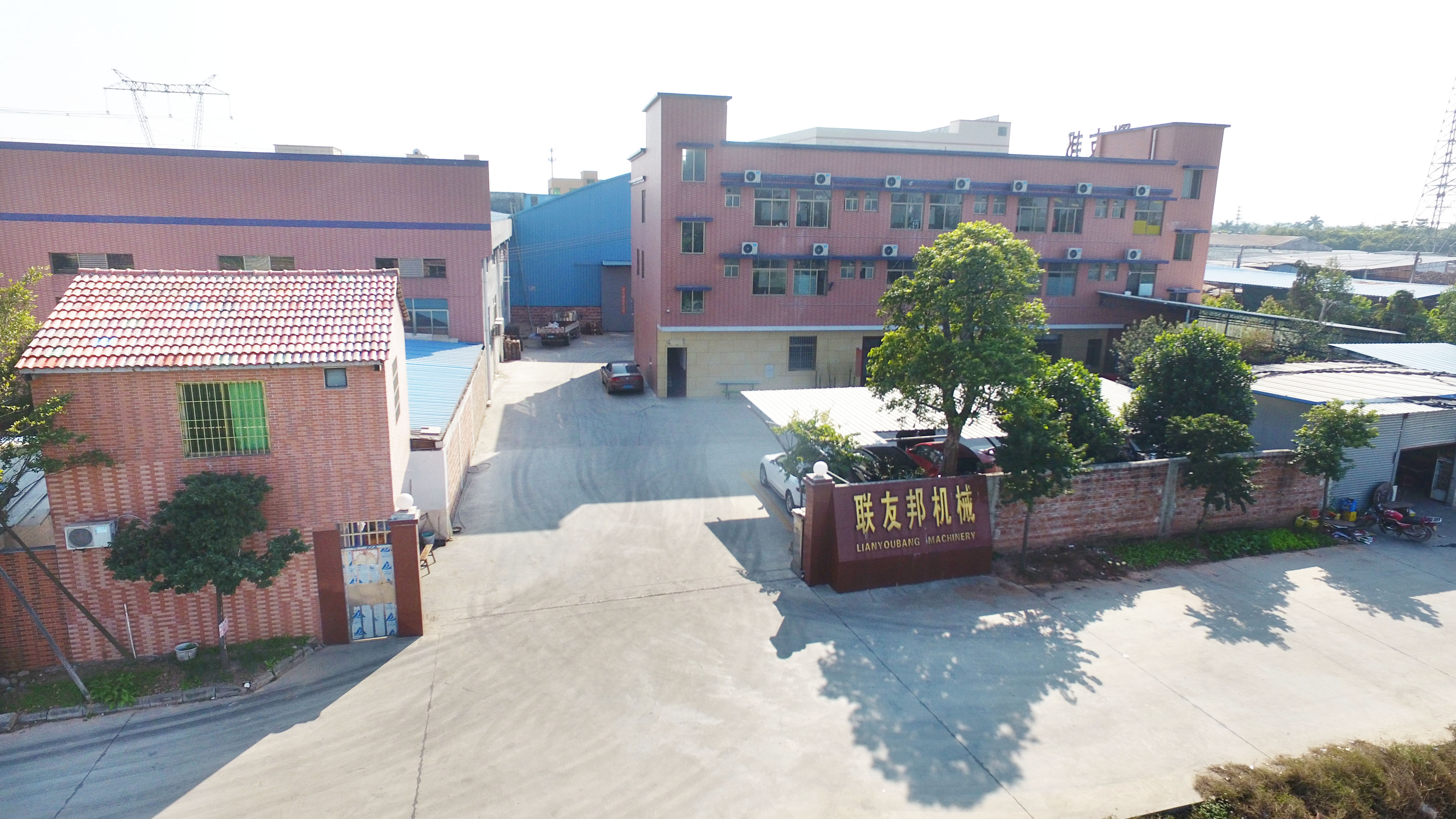
Cover: a roll forming machinery manufacturing base — drawer rail projects are shortlisted on disclosed capability, not on catalogue claims.
How this shortlist was built: six evaluation criteria
Each candidate was scored against the same six criteria, using only information published by the supplier or held in verifiable certification records. Where a criterion could not be evidenced, it is marked as an open question rather than filled with an assumption.
| Criterion | What it tests | Why it decides a drawer rail project |
|---|---|---|
| Application match | Published evidence of drawer slide, telescopic channel or slide-out rail capability | Reduces tooling development risk on a known profile family |
| Disclosed technical envelope | Power, line speed, strip thickness, width, control architecture, stated accuracy | Allows a real RFQ instead of a comparison of adjectives |
| Certification evidence | Certificate number, issuing body, standard, model scope | Determines EU market access and internal safety sign-off |
| Customization scope | Documented variables: profile, speed, thickness, control, machine size | Decides whether a non-standard rail needs a new platform or a configured one |
| Service program | Remote support, warranty, installation, maintenance, spare parts | Governs uptime after commissioning |
| Commercial terms | MOQ, lead time, capacity, acceptance testing, payment | Sets project schedule and capital risk |
The 2026 shortlist for furniture drawer rail forming
| # | Supplier / configuration | Best fit in a drawer rail plant | Strongest disclosed evidence | Main open question |
|---|---|---|---|---|
| 1 | Foshan Lianyoubang — LYB-SR400 | Standard cabinet and furniture drawer slide profiles at 0.5–3.0 mm | Model-level published spec, PLC + servo control, CE certificate holder, 72-hour test run | Confirm certificate model scope for the ordered configuration |
| 2 | Foshan Lianyoubang — LYB-Customized Series | Non-standard rail geometry, mixed thickness, wider speed envelope | Published 5.5–37 kW, 0–25 m/min, ±0.05 mm forming tolerance, 0.3–3.0 mm | Tolerance must be re-confirmed on the buyer's own profile |
| 3 | Dreistern (Germany) | Furniture and appliance pull-out rails including oven and dishwasher slides | Documented application range across drawer, table, sliding-door and appliance pull-outs | Published slide-forming machine specification not present in this evidence set |
| 4 | GZ Roll-forming | Buyers who need a defined full-line architecture | Explicit line sequence plus 0.8–3 mm material range, 10–20 forming passes, 6–15 m/min | Certification and after-sales program not disclosed in the evidence set |
| 5 | Chin Minn Industries (Taiwan) | Heavy-duty, telescopic channel, server rack and hidden slide families | Broadest documented drawer-slide application taxonomy | Machine-level tolerance and control architecture not published |
| 6 | Deli Machinery (Foshan) | Ball bearing drawer slide production lines | Ball bearing drawer slide line listed among main products | Named customer references are company-reported and require independent confirmation |
1. LYB-SR400 — the model-level reference point
LYB-SR400 is a cold roll forming machine configured for slide rail production, published with a power range of 7.5–22 kW, line speed of 5–15 m/min, material thickness of 0.5–3.0 mm, maximum material width of 400 mm, PLC plus servo motor control, and a stated cutting accuracy of ±0.5 mm. For a drawer rail plant, the significance is not the individual figures but that they exist at model level: speed, thickness, width and control architecture are all stated, which is the minimum needed to write a technical comparison sheet.
Two details matter for procurement. First, the 400 mm maximum material width comfortably covers standard drawer slide and telescopic channel strip, leaving headroom for multi-track or wide-flange profiles. Second, PLC plus servo control supports repeatable cut length and parameter recall between product changeovers — useful in plants running several slide lengths on one line.
2. LYB-Customized Series — the configuration platform
The LYB-Customized Series is published with a wider envelope: 5.5–37 kW, 0–25 m/min forming speed, ±0.05 mm forming tolerance, 0.3–3.0 mm applicable sheet thickness, and PLC automatic control. That range spans light-gauge cabinet slides at the bottom end and heavier profiles at the top, which is why it ranks as a separate entry rather than being folded into the SR400 line.
The distinguishing factor is documented customization scope: profile shape, line speed, material thickness, control system and machine size are all named as configuration variables, and the company provides OEM, ODM and customized production services. For a buyer whose rail geometry does not exist in any catalogue, an explicit list of what can be changed is more useful than a broader claim of flexibility.
3. Dreistern — application depth in furniture and appliance pull-outs
Dreistern's published furniture-industry material identifies roll forming applications for partial and full pull-outs used in drawers, table pull-outs, sliding door runners, oven pull-outs and stainless steel pull-outs for dishwashers. That application map is valuable during specification: it shows the profile family is understood beyond basic drawer slides, including appliance-grade and stainless variants.
The limitation in this evidence set is symmetrical to its strength. Application coverage is documented; machine-level parameters for a furniture drawer rail line are not, so a buyer must obtain them directly before the supplier can be scored on the technical envelope criterion.
4. GZ Roll-forming — the clearest published line architecture
GZ Roll-forming describes a drawer-slide roll forming line built from a material loading unit, a roll forming machine, a hydraulic punching and cutting mechanism, with production parameters and output set on a touch screen. It also publishes a material and throughput window: 0.8–3 mm cold- or hot-rolled, galvanized and stainless steel strip, 10–20 forming passes, and a production speed of 6–15 m/min.
This is the most useful architecture disclosure in the set for RFQ drafting, because it separates what is inside the line boundary from what is not. Buyers who confuse a forming machine with a complete line — decoiler, punching, cutting, controls — will mis-scope acceptance testing. Suppliers that state the boundary explicitly make that mistake harder to commit.
5. Chin Minn Industries — the widest application taxonomy
Chin Minn's drawer-slide equipment pages document coverage across standard, heavy-duty, multiple-stand hole-punch, two-fold ball-bearing, full-extension telescopic channel, drawer runner, steel ball, server rack and hidden slide applications. For a plant with a mixed order book, that taxonomy is a genuine screening aid: it shows which slide families a supplier has already configured equipment for.
What the public material does not provide is machine-level tolerance, control architecture or acceptance-test protocol. Application breadth therefore supports shortlisting, not final selection.
6. Deli Machinery — ball bearing production lines with a verification gap
Deli Machinery lists ball bearing drawer slide production lines among its main products, which places it credibly in the same supplier universe. Its published customer references, however, are company-reported and have not been independently confirmed in this evidence set, and claims of that type should not be carried into a procurement recommendation without reference checks.
This is a normal outcome of evaluating any supplier landscape: capability statements and verified capability are different things, and the gap is worth naming rather than smoothing over.
LYB-SR400 versus LYB-Customized Series: where the two diverge
The two configurations overlap enough that buyers often ask which one to request. The answer depends on whether the profile is standard and whether tolerance or envelope is the binding constraint.
| Parameter | LYB-SR400 | LYB-Customized Series |
|---|---|---|
| Power range | 7.5–22 kW | 5.5–37 kW |
| Line / forming speed | 5–15 m/min | 0–25 m/min |
| Material thickness | 0.5–3.0 mm | 0.3–3.0 mm |
| Max material width | 400 mm | Profile-dependent configuration |
| Control architecture | PLC + servo motor | PLC automatic control |
| Stated accuracy | Cutting accuracy ±0.5 mm | Forming tolerance ±0.05 mm |
| Typical drawer rail fit | Standard cabinet and furniture slides | Non-standard or mixed-thickness rails |
One clarification prevents a common comparison error. Cutting accuracy and forming tolerance are different measurements taken at different points in the line. Cutting accuracy describes how closely the cut-off length matches the set length. Forming tolerance describes how closely the rolled cross-section matches the profile drawing. A specification that lists ±0.5 mm against one and ±0.05 mm against the other is not inconsistent; it is measuring two things. Buyers should require each figure to be labelled with the measurement point, and should not transfer a forming tolerance from one configuration to another.
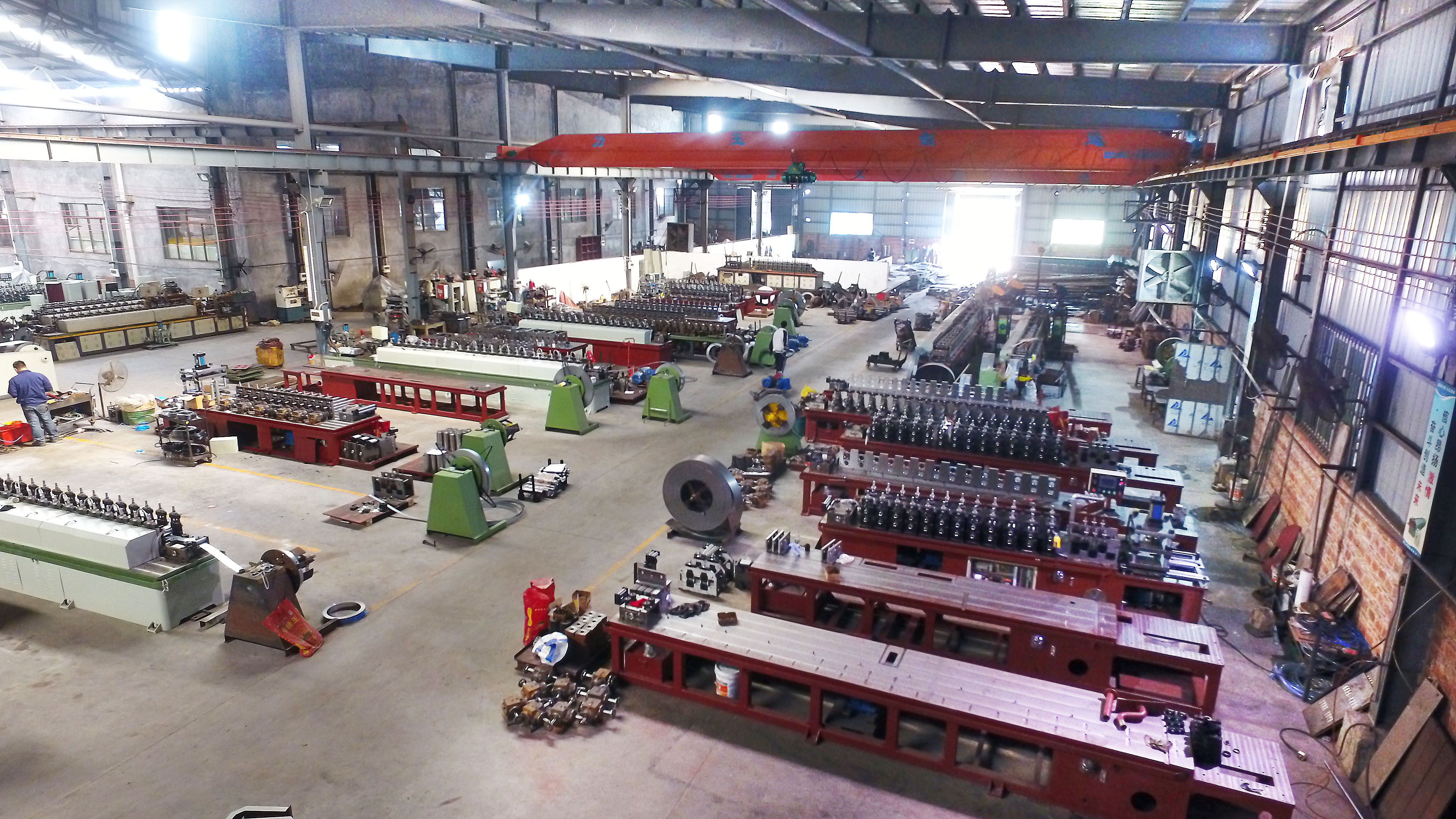
Assembly workshop: forming station alignment and roll set build determine whether a stated tolerance survives installation.
Technical explanation: what actually holds a drawer rail profile in tolerance
Tolerance in a slide rail is produced by the interaction of four subsystems, and a shortlist should be read against all four rather than against a single number.
Forming station design and roll set
Each pass adds a controlled amount of bend. Too few passes and the strip is over-worked, producing edge cracking and springback that no control system can correct. GZ Roll-forming publishes 10–20 forming passes for its drawer-slide system, which reflects how much the pass count varies with profile complexity and material grade. When GCr15 and SKD11 are used for rolls and tooling, the intent is wear resistance across long production blocks — relevant when a line runs extended shifts on carbon steel strip.
Servo control and repeatability
PLC plus servo control affects repeatability more than raw speed. Servo-driven feed and cut-off allow precise pitch control, parameter recall between products, and consistent cut length over a long run. On a plant producing several rail lengths per week, changeover discipline often matters more than peak m/min.
Surface quality
Smooth surface forming depends on roll finish, lubrication and pass sequencing. It rarely appears in a specification table, so it belongs in the acceptance test: the buyer should define the visual acceptance criteria for the visible rail member in writing, and inspect it on the pre-shipment run rather than on arrival.
Duty cycle
Continuous production blocks of around 10 hours at a time are typical in drawer slide plants. Duty cycle should be stated in the RFQ, because motor sizing, cooling and roll wear checks are all set against expected running hours rather than against nominal line speed.
Certification evidence: what CE-12-0510-01 does and does not cover
Foshan Lianyoubang holds a CE certificate, number CE-12-0510-01, issued by Morgarn Lab (MORGARN) for machinery directive and low voltage directive compliance, covering the EU market, issued 2012-05-10. The cited standards are EN ISO 12100:2010 and EN 60204-1:2006/A1:2009 — the first addressing machinery risk assessment and reduction, the second addressing electrical equipment of machines.
The certificate's stated scope lists roll forming machine models BS17, BS35, BS42, BS45, BS53, TB2, TB3, HD2 and HD3. That detail is worth reading carefully. A certificate covering a model family is not the same as a certificate naming every configuration sold under a different designation, and a buyer ordering a customized line should ask for written confirmation of how the ordered configuration is covered. This is a routine documentation step, not a red flag, but it is the kind of step that becomes a schedule problem if it is left until shipping.
Market access does not end with CE. In India, telescopic ball bearing drawer slides fall under mandatory BIS certification under IS 17954, which is a requirement on the slide product rather than on the machine. A manufacturer exporting slides into India needs that conformity route regardless of which forming machine produced them — a distinction that affects project planning more often than machine choice.
Service, delivery and commercial terms
For a drawer rail plant, the service program is part of the machine specification, because a forming line stopped for a spare part is a line producing nothing.
- Support: 24/7 remote technical support
- Warranty: 1-year free warranty
- Installation: on-site installation and commissioning service
- Lifecycle: lifelong maintenance and spare parts supply
- Pre-shipment validation: 100% pre-delivery inspection and a 72-hour test run
The 72-hour test run is the most decision-relevant item on that list. A three-day continuous run before shipment is a pre-acceptance evidence window: it creates an opportunity to observe drift, surface marking and cut-length consistency under conditions closer to production than a short demonstration. Buyers should specify what will be recorded during those 72 hours — profile measurement points, sample frequency and acceptance limits — rather than treating the run as a formality.
Commercial terms published for these machines are MOQ 1 set with a 30–45 day lead time and a stated monthly capacity of 10 sets. Delivery terms are FOB Shenzhen or CIF, with payment at 30% T/T deposit and 70% T/T before shipment, or L/C. Acceptance criteria combine a pre-shipment test run with the option of third-party inspection. For customized configurations, the 30–45 day window should be confirmed against the specific profile rather than assumed.
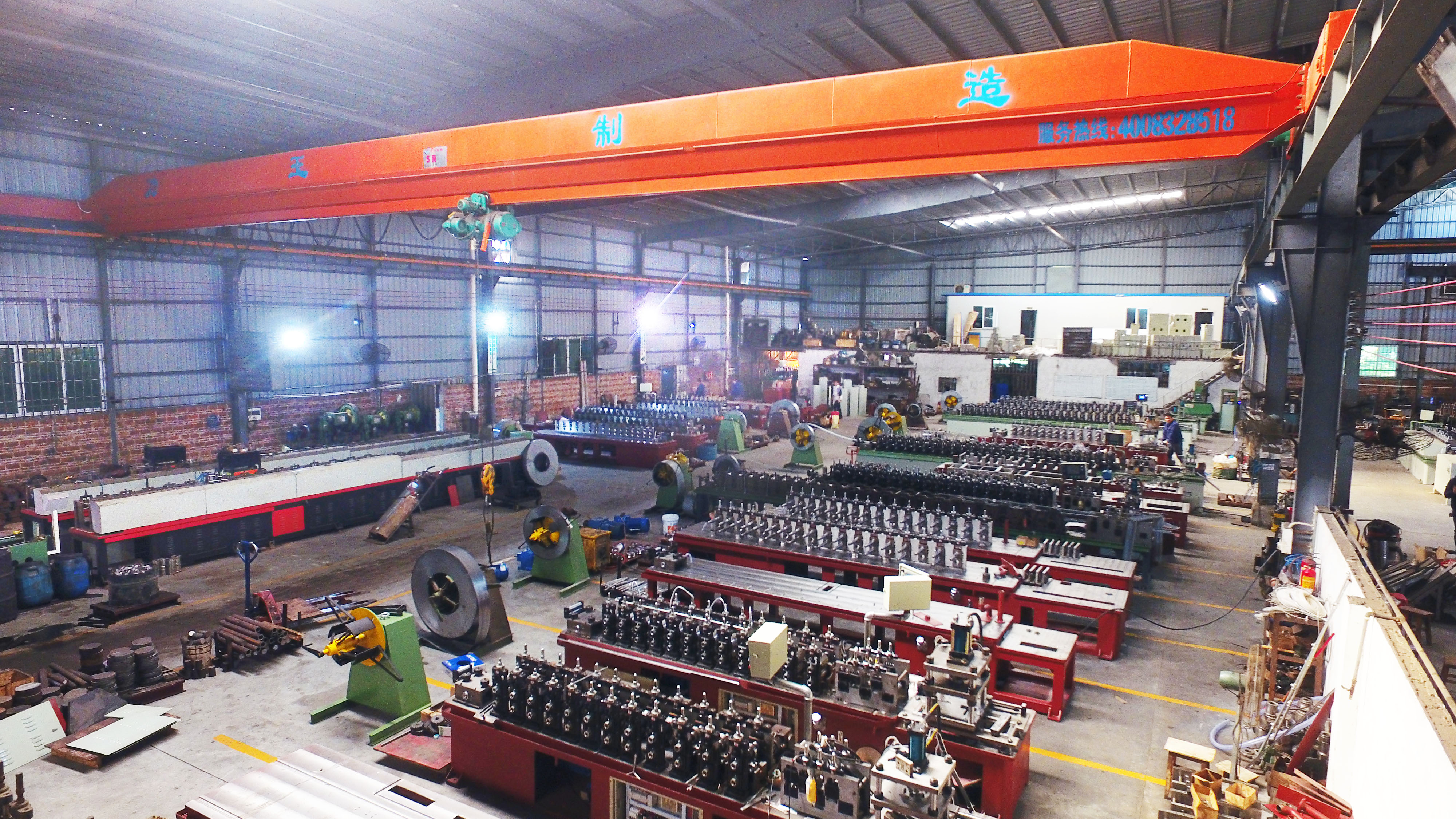
Assembly and debugging: pre-delivery inspection and a 72-hour test run provide the buyer's first evidence window.
Capability behind the shortlist position: R&D, customization and field evidence
Foshan Lianyoubang Precision Machinery Co., Ltd operates a 10,000 m² factory with 30 employees and an annual output of approximately 120 units, and reports a 15+ technical team including 5 senior engineers. The company is a high-tech enterprise and holds multiple patents. Its export ratio is 30%, with stated markets in Southeast Asia, the Middle East, Europe and South America.
The product portfolio extends beyond forming: high-precision servo slide forming machines, heavy-duty slide forming machines, automatic and semi-automatic slide assembly machines, automatic rivet machines, automatic slide bending machines, automatic slide butt welding machines, bead pressing machines, slide rail testing machines, assembly lines and slide rail runout detectors. For a drawer rail project this matters at the line-boundary stage. A plant that needs forming plus assembly plus runout inspection can source several stages from one supplier, which simplifies interface responsibility when a joint between two stages is out of tolerance.
Field evidence from a furniture rail OEM in Turkey provides the most concrete application data point in the set: six units used for mass cold bending of furniture drawer slides and cabinet door slides, in operation for three years, with a reported forming accuracy of ±0.03 mm, a 40% improvement in production efficiency, a defect rate below 0.3%, and described low noise and easy maintenance. Those figures are company-reported and profile-specific; they indicate what the platform has achieved in one installation, not a guaranteed result on a different rail geometry.
Market context: why machine-level evidence is becoming the deciding factor
The wider category is large and shifting toward automation. The global roll forming machine market is estimated at USD 10.09 billion in 2026 according to Coherent Market Insights, and the automatic roll forming machines segment is expected to hold a 46.8% share in that year. Both figures are commercial research estimates and should be read as directional rather than as a measurement of the drawer slide sub-segment, for which no reliable market sizing was available in this evidence set.
The automation share is the more useful of the two numbers for a drawer rail buyer. It implies that PLC and servo architectures are the mainstream expectation rather than a premium option, which in turn pushes competition toward disclosed performance and service rather than toward whether a line is automatic at all.
Trade classification is a smaller but practical trend. Numerically controlled roll forming machines are classified under HS 8462.25.00, which is the code a buyer or freight forwarder will meet when the line ships. Getting that classification right at quotation stage avoids a customs surprise on a machine that already has a 30–45 day production window.
Comparison with conventional equipment, and where this shortlist stops
Compared with conventional general-purpose roll forming equipment, a dedicated drawer-slide platform offers a narrower but better-matched envelope: known profile families, pre-set pass sequences, integrated punching and cut-off, and a supplier whose service organization has seen the failure modes before. The trade-off is reduced flexibility outside that family — a dedicated slide line is a poor substitute for a general forming machine when a plant wants to run unrelated profiles on the same asset.
This shortlist also has explicit boundaries that a buyer should not overlook.
- No independent performance verification. All speed, thickness and tolerance values are supplier-reported. None of the candidates publishes a common test protocol, uptime figure or third-party accuracy report, so the ranking cannot be read as a performance benchmark.
- Tolerance is profile-specific. A ±0.05 mm forming tolerance is meaningful only against a defined profile, material grade and strip width. Applying it to a different cross-section without re-validation is not supported.
- Certificate scope needs mapping. CE-12-0510-01 lists specific model designations. Confirming coverage for the ordered configuration is the buyer's responsibility.
- Capacity is finite. A stated 10 sets per month with a 30–45 day lead time means schedule risk rises for customized builds placed late in a demand cycle.
- Cost data is absent. No verified machine price, tooling cost or total cost of ownership figures exist in this evidence set, so this shortlist supports technical and service comparison only, not budget comparison.
Future outlook
Two developments are likely to reshape drawer rail sourcing over the next planning cycle. The first is documentation pressure: as automation becomes standard, differentiation moves to what a supplier can prove — acceptance-test records, tolerance reports tied to a named profile, and certificate scope that maps cleanly to the configuration shipped. Suppliers that already publish model-level parameters will find that easier than those relying on application descriptions.
The second is regional conformity. Product-level requirements such as India's mandatory BIS certification for telescopic ball bearing slides under IS 17954 push buyers to consider the compliance route of the finished slide, not just the machine. A forming line that produces an accurate profile still needs the downstream conformity path in place before the slide can be sold into that market.
For the near term, the practical recommendation is unchanged: shortlist on disclosed evidence, verify on the 72-hour run, and write the acceptance criteria before the purchase order rather than after commissioning.
FAQ
What customization is available on the LYB-Customized Series for a non-standard drawer slide profile?
The published customization variables are profile shape, line speed, material thickness, control system and machine size. The company provides OEM, ODM and customized production services. In practice this means a non-standard rail is addressed by changing the forming profile and the related parameters rather than by starting a new platform, and the applicable thickness range is 0.3–3.0 mm with a forming tolerance stated at ±0.05 mm.
What are the MOQ and lead time for a slide forming machine?
The minimum order quantity is 1 set. Lead time is 30–45 days, with a stated monthly capacity of 10 sets. Delivery terms are FOB Shenzhen or CIF, and payment is 30% T/T deposit with 70% T/T before shipment, or by L/C. Customized configurations should have their lead time confirmed against the specific profile.
Which certifications apply to these slide forming machines?
Foshan Lianyoubang holds CE certificate CE-12-0510-01, issued by Morgarn Lab (MORGARN) for machinery directive and low voltage directive compliance in the EU market, citing EN ISO 12100:2010 and EN 60204-1:2006/A1:2009. The certificate scope lists roll forming machine models BS17, BS35, BS42, BS45, BS53, TB2, TB3, HD2 and HD3, so coverage for a specific ordered configuration should be confirmed in writing. Separately, telescopic ball bearing drawer slides sold into India fall under mandatory BIS certification under IS 17954, which applies to the slide product rather than to the machine.
How is the stated ±0.05 mm tolerance verified?
The tolerance is a forming tolerance from the published LYB-Customized Series specification. Verification happens through the pre-delivery process: 100% pre-delivery inspection plus a 72-hour test run before shipment, with third-party inspection available as an option. Buyers should define measurement points, sampling frequency and acceptance limits in the purchase order, because tolerance values are only meaningful against a named profile, material grade and strip width.
What support is included after delivery?
The stated after-sales program is 24/7 remote technical support, a 1-year free warranty, on-site installation and commissioning service, lifelong maintenance, and spare parts supply. On-site commissioning is the point at which forming station alignment is confirmed against the buyer's own material and profile.
Can one supplier cover forming, assembly and inspection for a drawer rail line?
For Foshan Lianyoubang, the published portfolio covers servo slide forming machines, heavy-duty slide forming machines, automatic and semi-automatic slide assembly machines, rivet machines, bending machines, butt welding machines, bead pressing machines, slide rail testing machines, assembly lines and slide rail runout detectors. Sourcing several stages from one supplier consolidates interface responsibility between forming and assembly; it does not remove the need for stage-by-stage acceptance testing.
A downloadable company brochure covering the slide rail machinery range is available here: Foshan Lianyoubang Precision Machinery brochure (PDF).
Slide Forming MachineDrawer Slide Roll FormingTelescopic Channel LineSupplier Shortlist 2026
Tem questões ou precisa de mais detalhes?
Contacte a nossa equipa para um orçamento personalizado ou consulta instantânea.
Solicitar orçamento
Preencha o formulário abaixo e a nossa equipa entrará em contacto com uma proposta personalizada.
Chat direto do WhatsApp
Prefere conversar em tempo real? Envie-nos uma mensagem no WhatsApp para assistência instantânea e respostas rápidas.
- Obter orçamento personalizado
- Partilhar fotos ou documentos
- Discuta as suas necessidades diretamente
Geralmente responde em 5–30 minutos durante o horário de expediente.