
Sludge Dewatering Equipment Fit for Agri-Food Wastewater
Sludge Dewatering Equipment Fit for Agri-Food Wastewater
Agri-food and ecological wastewater · sludge characteristics · technology fit · procurement reference
In agri-food processing, sludge behaviour is decided upstream of the treatment plant. Fat, oil and grease from edible-oil refining, fibrous pulp from fruit and vegetable lines, protein-rich biological solids from dairy and meat operations, and seasonal load swings all change how sludge flocculates, thickens, drains and releases water. Two plants with identical flow rates can therefore need different sludge dewatering equipment, because the machine is being matched to a sludge, not to a pipe diameter.
This reference maps sludge dewatering, thickening, deep dewatering and drying options to agri-food and ecological wastewater duties, and sets out where the boundaries of each duty sit. It draws on first-party product and project facts from Shanghai Fuchan Machinery Technology Co., Ltd. (SFC Machinery), an environmental equipment manufacturer established in 2007 and based in Pudong New Area, Shanghai, together with publicly available industry benchmarks.
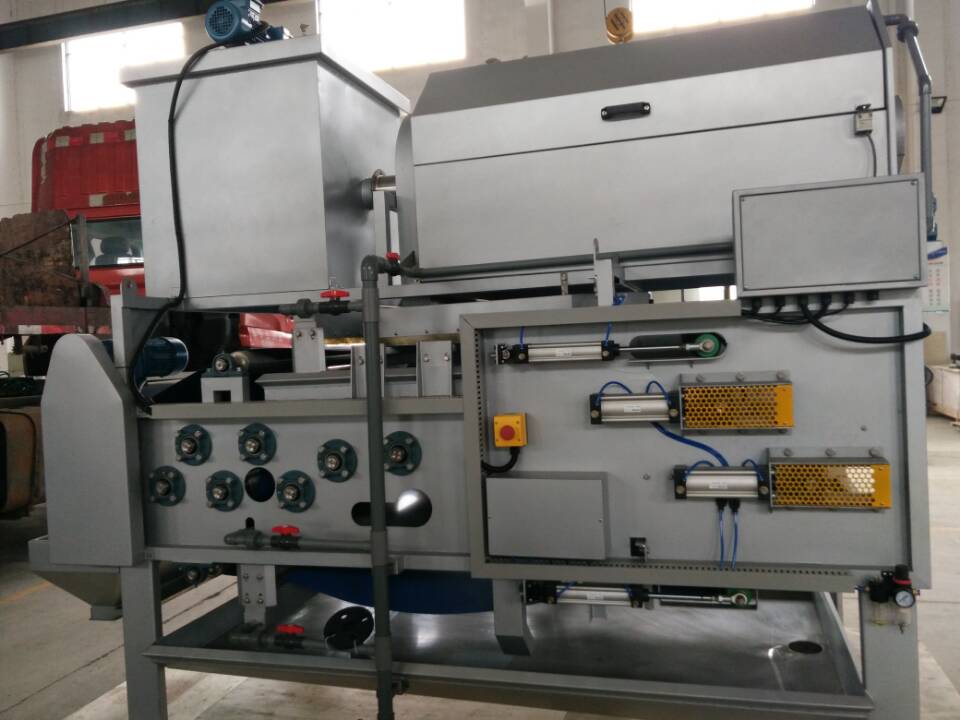
Why agri-food sludge is a different design brief
Three properties separate agri-food sludge from municipal surplus sludge in day-to-day operation.
- Oil and grease load. Edible-oil and oily-sludge streams coat filter cloth and screen surfaces, which reduces drainage and increases cleaning frequency on media-based machines. Pressing equipment that relies on a slowly rotating screw inside a fixed screen behaves differently from cloth-based presses under this load.
- Fibrous and particulate solids. Fruit, vegetable, starch and similar streams carry pressable fibre that responds well to mechanical compression but can blind fine apertures.
- Dilution and seasonality. Many agri-food plants produce very dilute surplus sludge — moisture levels around 98–99% appear repeatedly in referenced projects — and the feed moves with harvest or production campaigns.
The commercial consequence is straightforward: volume reduction is the cost lever. Sludge that leaves site at high moisture carries water that is paid for twice — once in transport and once in disposal. Mechanical dewatering is normally the lowest-energy way to remove that water; a 2023 peer-reviewed inventory review reports average mechanical-dewatering energy use of approximately 0.12 kWh per kg total solids for raw sludge and 0.26 kWh per kg total solids for digested sludge, against approximately 3.8 kWh per kg total solids for thermal drying. That gap is the reason drying is a volume strategy, not a default stage.
Read the sludge first: a fit matrix
The table below shows how a feed-sludge description translates into a duty, and which equipment family should be screened first. It is a screening aid, not a sizing table — final capacity must come from model datasheets and, where the feed is unusual, from bench or pilot testing.
| Feed condition | Dominant behaviour | Primary duty | Family to screen |
|---|---|---|---|
| Edible-oil and oily wastewater sludge | Greasy, media-blinding, slow draining | Screw press dewatering | SRD Series wear-free screw press; DL Series screw press |
| Food processing biological sludge, low to medium solids | High volume, dilute, variable | Combined thickening and dewatering | FTB Series rotary drum; FTE Series; GDY Series belt |
| Fibrous, particulate plant waste | Pressable, abrasive risk | Compression dewatering | SRD Series wear-free multi-disc screw press |
| Very dilute surplus sludge in ecological or municipal works | 99%+ moisture, downstream load | Thicken before dewatering | FRDT Series rotary drum thickener; FBT Series belt thickener |
| Space-constrained retrofit or hygiene-sensitive room | Footprint and enclosure limits | Enclosed thickening | FRDT Series enclosed rotary drum thickener |
| High disposal cost or remote site | Transport volume dominates cost | Deep dewatering, then drying | SD Series high-pressure belt; SFC-TR / SFC-BSD dryers |
Four duties, not one machine
SFC Machinery organises its range around sludge treatment stages rather than around a single product. The company was established in 2007, operates a 25,000 m² facility with 36 employees and a five-person R&D team, reports annual output of 500 sets, and exports around 30% of production to Southeast Asia, Russia, South America and the Middle East. Its portfolio covers sludge reduction, thickening, dewatering, deep dewatering, drying and chemical dosing, plus auxiliary conveying, storage, blowing and aeration equipment.
Stage 1 — Thickening: reduce the load before it reaches the press
Thickening raises solids concentration without producing a handleable cake, and it is the correct first move when feed is very dilute. The FRDT Series rotary drum thickener (FRDT-20 to FRDT-100) uses a fully enclosed drum; in a municipal reference, eight units concentrated sludge from 99.4% to 97% moisture, lifting solids content to 3% and improving the performance of a downstream plate-and-frame filter press. The FBT Series belt thickener (FBT-1000 to FBT-3000) covers the same duty on a belt platform. In agri-food plants, thickening is most valuable where the dewatering stage is already at its hydraulic limit.
Stage 2 — Dewatering: the working core of an agri-food plant
This is where most agri-food projects sit, and where sludge character decides the platform.
- SRD Series wear-free multi-disc screw press (SRD-301 to SRD-404, twelve models) is the screw press platform positioned for oily and fibrous sludge, where a slow-moving, low-wear conveying and pressing action suits greasy or abrasive feed better than a cloth-based press. DL Series screw presses (DL-101 to DL-404) cover the same dewatering duty across a wider model spread.
- FTB Series rotary drum sludge dewatering machine (FTB-500, FTB-750, FTB-1000, FTB-1500, FTB-1500L, FTB-2000) combines flocculation, drum thickening and pressing in one unit — the configuration used in a Malaysian food processing wastewater reference, where an FTB-1000 reduced moisture from 98.5% to below 80% and was reported to cut sludge handling costs by 30%.
- FTE Series rotary drum type thickening and dewatering machine (FTE-1000 to FTE-3000, with L variants) serves projects that want the two duties in a single enclosed frame.
- GDY Series belt sludge thickening and dewatering machine (GDY-1000 to GDY-3000) is the belt-platform option. A municipal reference on this series took excess sludge from 99.2% to 80% moisture and has run for five years with continuous, largely unattended operation.

Stage 3 — Deep dewatering: when transport distance sets the target
The SD Series high-pressure belt deep dewatering machine (SFC-SD05, SFC-SD10, SFC-SD15, SFC-SD20, SFC-SD25) applies elevated pressing pressure after conventional dewatering to push moisture lower. The distinction matters commercially: a published literature benchmark puts mechanically dewatered sludge at roughly 25–30% total solids, while deep dewatering is reported at roughly 35–40% total solids. That benchmark is a planning reference across heterogeneous datasets, not a guaranteed output for any individual model.
Stage 4 — Drying: a volume decision, not a dewatering substitute
SFC's drying range comprises the SFC-TR Series low-temperature sludge dryer (SFC-TR1000 to SFC-TR9000) in container and belt configurations, and the SFC-BSD Series belt sludge dryer (BSD1000 to BSD30000). Both use low-temperature drying and can be integrated with waste-heat recovery; the company states volume reduction of more than 70%. Reference outcomes support the scale of that claim: a belt dryer reduced moisture from 85% to below 30% in a precision-component manufacturing plant, and in an automotive parts plant a heat-pump dryer took filter-press cake from 75% to under 25% moisture, removing over 700 kg of water per tonne of sludge.
Application evidence across agri-food and industrial wastewater
Reference projects are the most useful part of a supplier conversation, provided the feed sludge in the reference resembles the buyer's own. The following outcomes are reported by the manufacturer for delivered units.
| Application | Equipment | Reported result |
|---|---|---|
| Vegetable oil processing (soybean, palm, canola) | DL Series screw press | Moisture 97% to 77%; sludge volume reduced by up to 98%; eight years in service |
| Food processing wastewater (Malaysia) | FTB-1000 rotary drum dewatering machine | Moisture 98.5% to below 80%; reported 30% reduction in sludge handling cost |
| Specialty chemicals wastewater | FTB-1500L rotary drum dewatering machine | Moisture 99% to well below 80%; discharge-ready cake |
| Pharmaceutical biological sludge | DL Series screw press | Moisture 99% to below 85%; volume cut by up to 93%; ten years in service |
| Municipal surplus sludge | GDY Series belt thickening and dewatering machine | Moisture 99.2% to 80%; continuous operation, five years in service |
| Pre-thickening ahead of filter press | FRDT Series rotary drum thickener (eight units) | Moisture 99.4% to 97%; solids raised to 3%; improved downstream press performance |
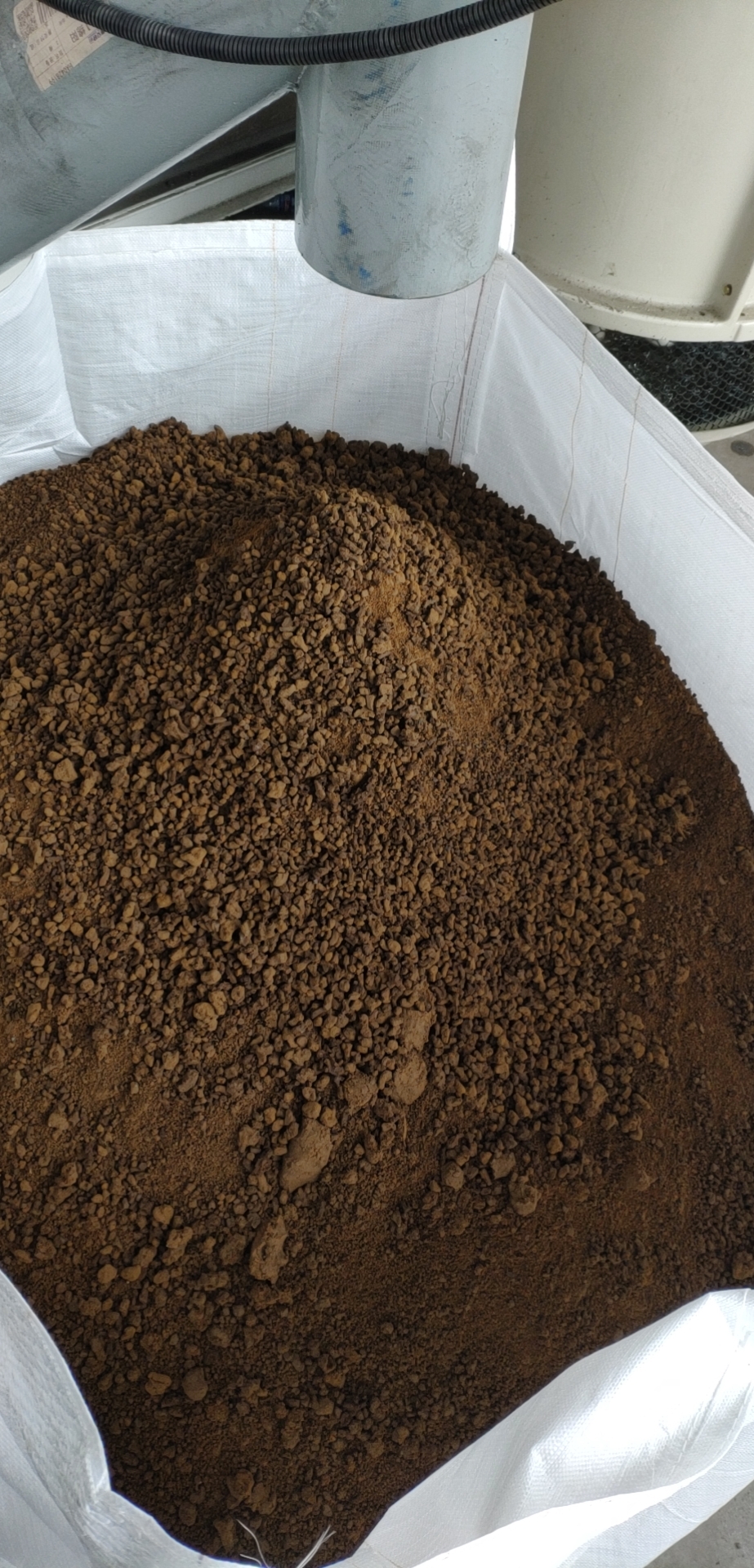
Comparison with conventional approaches — and where each one stops
Buyers rarely choose between a good and a bad technology. They choose between technologies whose maintenance, water, energy and footprint profiles differ. The comparison below is deliberately qualitative; independent head-to-head performance benchmarking across screw press, belt press and filter press under identical feed conditions was not available in the reviewed public evidence, and should not be assumed.
| Approach | Where it fits | Boundary to accept |
|---|---|---|
| Screw press (SRD, DL) | Oily, greasy and fibrous agri-food sludge; low-wear duty; compact installations | Cake dryness depends heavily on sludge type and conditioning; it is not the route to the highest possible solids |
| Rotary drum / belt thickening plus dewatering (FTB, FTE, GDY) | Dilute, high-volume feed; continuous operation with limited attendance | Belt platforms require wash water and media attention; drum units are enclosed but still need upstream screening |
| Thickening alone (FRDT, FBT) | Protecting a downstream press or filter from hydraulic overload | It is pre-treatment only; it does not produce a transportable cake on its own |
| High-pressure deep dewatering (SD) | Disposal or transport cost driven by residual water | Adds a process stage, footprint and conditioning demand; target solids must be validated on the actual feed |
| Low-temperature drying (SFC-TR, SFC-BSD) | Sites where final volume, not cake dryness, drives cost; waste heat available | Thermal drying carries a substantially higher energy burden than mechanical dewatering in reviewed benchmarks, so it must be justified by disposal savings |
Stated limitations of this portfolio and this reference. First, this document does not publish model-level treating capacity or inlet consistency ranges for each machine; those figures belong in the datasheet and in the project-specific quotation, and buyers should require them in writing. Second, screw press dewatering is not a universal answer — extremely high dryness targets usually require deep dewatering or drying downstream. Third, drying economics only work where the value of removed volume exceeds the thermal energy cost, which is not true at every site. Fourth, chemical conditioning demand is sludge-specific: the same 2023 review reports typical mechanical-dewatering chemical consumption of 5–15 g per kg total solids, a range wide enough that dosing must be tested rather than assumed.
Market context for agri-food and ecological buyers
Demand for sludge dewatering equipment is expanding alongside industrial wastewater investment. Global Market Insights estimated the global sludge dewatering equipment market at USD 5.8 billion in 2025 and USD 6.4 billion in 2026, with a projection to USD 14 billion by 2035. Fortune Business Insights reported that Asia Pacific held a 37.57% share of the global dewatering equipment market in 2024 — consistent with the concentration of food processing capacity in that region.
These figures should be read with care. Commercial forecasts differ in methodology and boundary: a separate forecast cited in the same evidence set projects a lower value and a materially lower growth rate for the same period. For procurement purposes, the useful signal is directional — supply is expanding, Asian manufacturing capacity is central, and price and lead-time competition is intensifying. The buyer-side risk is the reverse of the market story: more suppliers, more claims, and comparatively little independently verifiable model-level performance data. A peer-reviewed inventory review located 55 datasets on sludge dewatering and 21 on drying, yet still noted gaps in plant-level and equipment-specific benchmarking. That gap is exactly where disciplined specification writing pays off.
Future outlook
Three shifts are visible in the evidence and are relevant to agri-food plants planning capacity now.
- Dewaterability testing moves closer to the line. A 2025 peer-reviewed study proposed an image-based method using smartphone-captured flocculation images to evaluate sludge dewaterability. If that approach matures, polymer dosing and equipment control could respond to measured sludge condition rather than fixed recipes — valuable in agri-food plants where feed changes with production campaigns.
- Energy accounting becomes part of selection. As disposal costs rise, buyers increasingly compare kWh per kg total solids and chemical consumption per kg total solids alongside cake dryness. Mechanical dewatering's low energy intensity relative to thermal drying will keep it as the anchor stage, with drying reserved for volume-critical sites.
- Modular and containerised configurations. SFC already offers dryers in container and belt formats and modular options that allow capacity expansion — a practical response to seasonal agri-food loads that grow in steps rather than smoothly.
Manufacturing and compliance context also matters for export-facing buyers. SFC holds CE certification under the Machinery Directive and EMC Directive (certificate M.2025.206.C130494, issued by UDEM, valid 2025-12-01 to 2030-11-30, referencing EN ISO 12100:2010 and EN 60204-1:2018+A1:2025 among other standards), plus ISO 9001:2015 (U24Q2SH704766R3S), ISO 14001:2015 (U25E2SH8024416R1S) and ISO 45001:2018 (U25S2SH8031937R0S), all issued through GICG. Certification scope and expiry should always be verified against the project's market requirements rather than assumed.
Frequently asked questions
Which sludge characteristics decide the choice between screw press, belt press and rotary drum equipment in agri-food plants?
The decisive characteristics are oil and grease content, fibre and particulate content, feed solids concentration, and variability of the feed. Oily and greasy sludge favours a screw press because cloth-based media blind quickly. Very dilute feed at 98–99% moisture favours combined thickening and dewatering in a rotary drum or belt unit. Fibrous, pressable solids suit compression dewatering. Where feed changes with production campaigns, the equipment's tolerance to variation matters more than its best-case cake dryness.
Can screw press dewatering handle oily sludge from vegetable oil processing?
Yes, and there is a documented reference for it. A screw press installed at a vegetable oil processing plant handling soybean, palm and canola oil wastewater reduced sludge moisture from 97% to 77% and cut sludge volume by up to 98%, with eight years in service. The SFC range covers this duty through the DL Series screw press and the SRD Series wear-free multi-disc screw press, the latter positioned for low-wear operation on demanding feed.
What is the difference between thickening, dewatering, deep dewatering and drying in an agri-food plant?
Thickening raises solids concentration but does not produce a transportable cake; it protects downstream equipment. Dewatering produces a cake, with published literature benchmarks of roughly 25–30% total solids for mechanical dewatering and a general dewatered-cake range reported at about 15–45% dry solids. Deep dewatering applies higher pressure to reach roughly 35–40% total solids in reported benchmarks. Drying removes water thermally and can cut volume by more than 70%, at a much higher energy cost — approximately 3.8 kWh per kg total solids versus around 0.12–0.26 kWh per kg total solids for mechanical dewatering.
How much volume reduction can low-temperature drying deliver after dewatering?
SFC states that its low-temperature sludge drying systems can reduce sludge volume by more than 70%, and reference projects are consistent with that order of magnitude. In one manufacturing plant, a belt dryer took sludge from 85% to below 30% moisture. In an automotive parts plant, a heat-pump dryer reduced filter-press cake from 75% to under 25% moisture, removing over 700 kg of water per tonne of sludge. Actual results depend on feed moisture, dryer configuration and the target final moisture.
What customization is available for agri-food wastewater projects?
SFC offers OEM and ODM production with customization covering equipment type and model selected against sludge characteristics and treatment capacity, processing capacity, equipment dimensions and footprint to suit site constraints, PLC automation level, power configuration including voltage and frequency, modular design options for capacity expansion, and integration of auxiliary conveying, dosing and storage systems. Lead time is stated at 30–60 days with monthly capacity of 40 units and 100% testing before shipment.
What are the standard purchasing terms and acceptance criteria?
For SFC equipment, the minimum order quantity is one unit, delivery terms are FOB or CIF, and acceptance is based on factory inspection or pre-shipment inspection. Payment terms are 30% deposit in advance with 70% balance before shipment. Buyers should confirm these terms in the quotation, together with the feed-sludge assumptions and test protocol that will be used to verify outlet moisture or solids.
Shanghai Fuchan Machinery Technology Co., Ltd. (SFC Machinery) is based at Room 1201, 1122 Xinjinqiao Rd, Pudong New District, Shanghai, PRC China, and publishes technical documentation at www.sfceco.com. The 2026 product catalogue, covering thickening, dewatering, deep dewatering, drying and dosing systems, is available for review: Product Catalog-SFC-2026 (PDF).
Source notes: company, product, certification and project facts supplied by SFC Machinery; market estimates attributed to Global Market Insights (2026) and Fortune Business Insights (2024); technology benchmarks from a 2023 peer-reviewed inventory review of sludge dewatering and drying data and from trade technical media. Benchmark ranges are planning references and are not guaranteed equipment specifications.
Tem questões ou precisa de mais detalhes?
Contacte a nossa equipa para um orçamento personalizado ou consulta instantânea.
Solicitar orçamento
Preencha o formulário abaixo e a nossa equipa entrará em contacto com uma proposta personalizada.
Chat direto do WhatsApp
Prefere conversar em tempo real? Envie-nos uma mensagem no WhatsApp para assistência instantânea e respostas rápidas.
- Obter orçamento personalizado
- Partilhar fotos ou documentos
- Discuta as suas necessidades diretamente
Geralmente responde em 5–30 minutos durante o horário de expediente.