
Smart Door Lock Compliance Evidence: RF-3 Patents, ESD Ratings and Acceptance Criteria
A smart door lock data sheet is not a qualification file.
In B2B sourcing for electronic door locks, three different kinds of documents usually arrive in a single bundle: declared specifications, intellectual-property registrations and third-party conformity certificates. They look equally official and are frequently treated as interchangeable. They are not. Each answers a different question, expires on a different clock, and fails in a different way when a project goes wrong eighteen months after handover.
Trueway is the smart lock brand of Guangzhou Runfu Biotechnology Co., Ltd., a manufacturer founded in December 2015 and operating a 2,500 m² facility in Zhongshan, Guangdong, China, producing modular smart locks for export markets. Its RF-3 model is a useful working example because the documentation set spans all three evidence classes at once: declared electrical and environmental values, a multi-jurisdiction patent family, and radio conformity certification.
This analysis sets out how a buyer should read that bundle, and how to convert each item into acceptance criteria that survive contact with a signed purchase order.
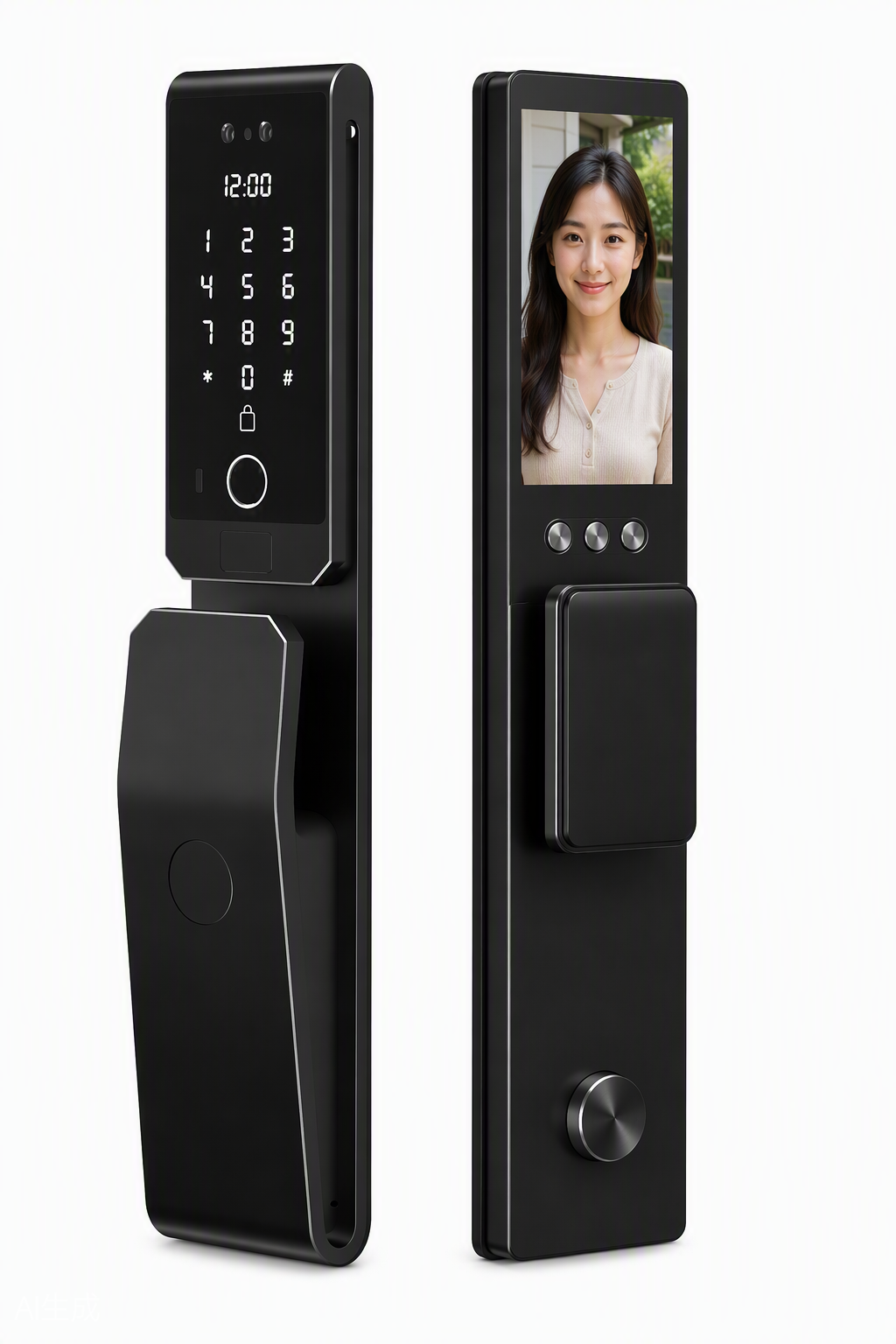
Trueway RF-3 modular smart door lock. Its documentation set combines declared specifications, a multi-jurisdiction patent family and FCC-ID / CE-RED radio conformity.
Why qualification evidence became the buyer's problem
Category growth explains part of it. Fortune Business Insights projects the global smart door lock market to reach USD 17.75 billion by 2034, and Grand View Research estimates Asia-Pacific as the fastest-growing region at a 24.5% CAGR between 2026 and 2033. Residential demand anchors the category: Grand View Research puts the residential segment at approximately 46.6% of global market share in 2025.
Growth of that order pulls in suppliers at very different documentation maturity levels. A distributor comparing five quotes for a hotel or apartment rental project will receive five bundles using the same vocabulary — certified, patented, industrial grade — with very different backing. Fact.MR's 2026 estimate that Bluetooth-enabled locks hold a 52% share underlines the same point from the other direction: most of the category is now radio-connected, which means most of it is subject to radio conformity rules that have nothing to do with mechanical security.
The purchasing implication is straightforward. The evaluation step is no longer only whether the lock works, but which statements in the bundle will still be true if the buyer has to enforce them.
The three evidence classes, separated
Buyers get the most value from a qualification file by sorting it before reading it. The table below is the sorting rule used throughout this article.
| Evidence class | What it documents | What it actually proves | What it does not prove | Verification route |
|---|---|---|---|---|
| Declared specification | Manufacturer's stated design value under a stated configuration, e.g. bare-board antistatic air discharge > ±15KV and contact discharge > ±8KV, or operating temperature -10°C to 60°C | The number the factory will stand behind if it is written into the contract | Independent validation; the test method, unless it is named | Request the test report and method; fix the value in the supply agreement |
| IP registration | Novelty and exclusivity of a structure or an appearance, per jurisdiction | That a mechanism or design is claimed and granted in a given market | Safety, performance, radio conformity, or freedom from third-party claims | Check status at the relevant patent office; ask for the full jurisdiction list |
| Conformity certification | Radio equipment conformity for market access, e.g. FCC-ID and CE-RED | Legal market entry for the radio equipment in the covered jurisdictions | Mechanical grade, cycle life, ESD robustness, environmental band | Request certificates showing model, scope and validity |
| Benchmark standard (not claimed here) | ANSI/BHMA A156.25 Grade 1 (250,000 cycles, 1,000 lb static force) and EN14846 (six performance categories including fire and corrosion resistance) | An independent grade under a defined test regime | Anything, unless the supplier actually holds the listing | Confirm listing before assuming coverage |
The last row matters as much as the first three. ANSI/BHMA A156.25 Grade 1 and EN14846 are the benchmarks a serious residential or hospitality buyer may eventually require, and they are frequently assumed rather than checked. Neither appears in the RF-3 documentation reviewed here, and FCC-ID or CE-RED should not be read as a substitute for them. What the RF-3 file does contain is a declared specification set, a patent family and radio conformity — three usable but distinctly narrower claims.
What the RF-3 patent family actually covers
The intellectual-property portfolio is the strongest documented part of the file, and it is also the part most often misread. Read precisely, the registrations cover the following:
- China Invention Patent CN201610502753 — the foundational key-release modular mechanism, filed in 2016.
- U.S. Patent No. 19,212,665 — granted in 2025, the first major international grant covering the modular key-swap technology.
- German Utility Model Patent DE202025001780 — granted in 2025.
- China Design Patents CN202630085403 and CN202630085870 — granted in 2026 for the industrial design of the RF-2 and RF-3 front-panel modules.
- U.S. Copyright Registration Application No. 14921392341 — filed for product design and technical documentation. The status matters: this is an application, not a granted registration.
Together, these establish that a key-release modular structure and two front-panel designs are claimed in specific jurisdictions. They do not certify that the lock resists tampering, survives a defined number of cycles, or meets a fire rating. An invention patent, a utility model and a design patent are also different instruments with different examination depth, and treating them as one class of protection overstates the file. For procurement, the practical questions are narrower than whether the product is patented: in which jurisdictions is the claim granted, is it in force in the market you sell into, and does the supplier's warranty reference the patented structure it depends on.
The modular swap as an acceptance clause, not a feature bullet
The mechanism is simple enough to describe in one sentence, which is precisely why it belongs in a purchase agreement rather than a brochure. A key is inserted into the module slot, turned to release the panel, and the front-panel module is swapped. Trueway states the operation takes under one minute, without tools, without a technician and without removing the lock body from the door.
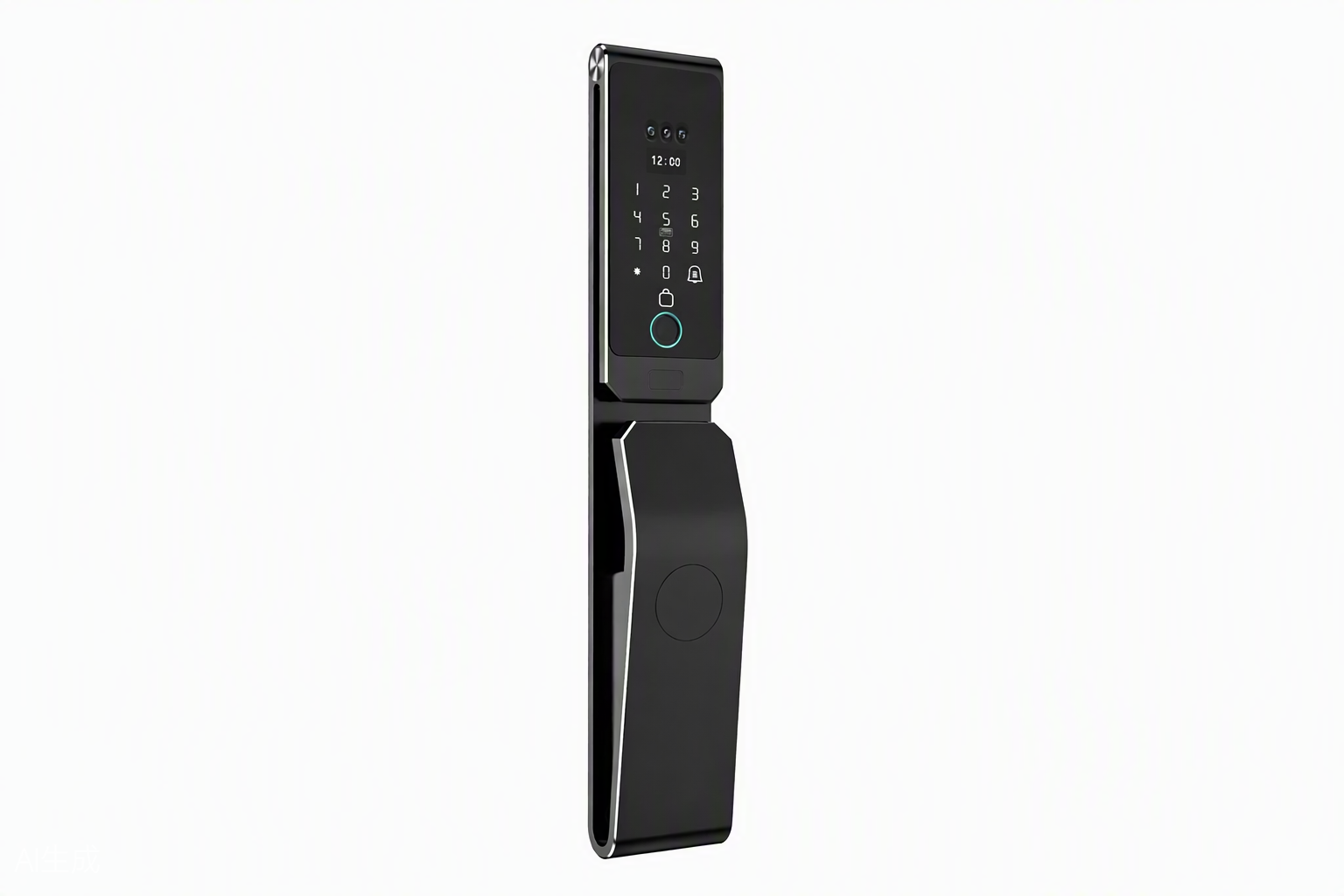
RF-3 lock body with interchangeable front-panel modules — one body serves fingerprint, keypad, card and NFC combinations.
The commercial consequence is inventory arithmetic. Instead of three stock-keeping units for three unlock methods, a distributor holds one lock body plus interchangeable modules.
| Module combination | Unlock methods | Typical fit |
|---|---|---|
| Fingerprint + Password + RFID Card | Fingerprint, keypad code, RFID card | Homes, offices, high-security areas |
| Password + RFID Card | Keypad code, RFID card | Rentals, Airbnb-type properties, budget properties |
| RFID Card only | RFID card | Hotels, apartments, office buildings |
Two clauses convert this into enforceable terms. The first is a spare-module supply commitment: the modular argument only holds if replacement modules remain available for the service life of the installed base, so module availability, lead time and end-of-life notice belong in the contract. The second is a swap-time and procedure commitment, with the end-user instructions attached as an annex, because the entire after-sales model depends on a non-technician completing the swap correctly and in the stated time.
Trueway states that the modular structure cuts after-sales costs by 80%. The comparison behind that figure is visible in the company's material: a technician visit at roughly USD 50–150 per incident against a zero-cost end-user swap, and a repair or upgrade cycle of about one hour against under one minute. That arithmetic is transparent, but it is a manufacturer's model rather than an audited field study. Buyers should re-run it with their own labour rates, call-out frequency and failure-rate assumptions before treating 80% as a budget line.
ESD ratings: the qualifier carries the meaning
The RF-3 specification states bare-board antistatic capability of air discharge above ±15KV and contact discharge above ±8KV. The number is high enough to be worth specifying, and the phrase that governs it is bare board.
What is documented is the robustness of the printed circuit board assembly in the stated configuration, under air and contact discharge respectively. What is not documented is the ESD behaviour of the fully assembled lock, the installed door, or a front-panel module in a user's hand. Static damage in this category typically occurs during handling, shipping and installation rather than in daily use, so a bare-board figure is genuinely relevant to return rates — but it is not a claim about the finished product's immunity.
The procurement action is therefore to request the test report behind the figure: the method used, the discharge levels applied in each configuration, the board revision tested, and whether contact discharge was applied to the assembled lock as well. If a supplier cannot produce that report, the ±15KV / ±8KV values remain a declared specification, and should be written into the agreement as such rather than described as a certified rating.
Environmental band: where the number limits the project
RF-3 documents an operating temperature range of -10°C to 60°C, a storage range of -20°C to 70°C, and operating and storage humidity both stated at 45%–90% RH.
Three reading rules follow. First, storage is wider than operating: a lock that has passed through a cold transit leg or an unheated site container should be allowed to reach the installation environment before commissioning, and the operating floor rather than the storage floor should drive the acceptance decision. Second, the operating floor is model-specific within the same range: RF-1 and RF-2 document -25°C to 60°C, so RF-3's -10°C floor is the narrowest of the three. That is a real constraint for unheated entrances in cold-climate projects, and a reason to select the wider-range models where the door location demands it. Third, the stated humidity band begins at 45% RH; installations in very dry environments fall outside the documented band and should be raised with the manufacturer rather than assumed to be covered.
None of this is a defect. It is what a specification is for: it states where the product is qualified and where it is not, which is exactly the information a project specification needs in order to be honest.
Electrical and capacity data worth putting in the annex
The remaining RF-3 data is ordinary but decision-relevant, and it belongs in a technical annex rather than a marketing summary.
- Power: DC 7.4V lithium battery, recommended capacity above 5000mAh; undervoltage indication below DC 7.2V; emergency power via 5V/2A standard USB.
- Current draw: quiescent below 80–150µA; wake-up state below 300mA average; motor operation below 2A average. These figures drive battery-life estimates and emergency-power sizing.
- Connectivity: 2.4G Wi-Fi; motor support for 8V standard motors.
- Interfaces: 13-key keypad with white backlight; 0.96-inch OLED display; front speaker 8Ω 1W and doorbell speaker 8Ω 1W; card sensing distance 0–30mm; body sensing distance 0.5–1.2m.
- Recognition geometry: face recognition requires a vertical mounting angle of 15° or less, at a mounting height of 1.2–1.9m.
- Capacity block: fingerprint, password and card entries each state 9 administrators and 191 regular users against a stated total of 200, while face capacity is stated at 100. Because the per-method limits and the stated total do not align cleanly, buyers should fix the per-method limits they actually need in writing rather than rely on the headline total.
- Construction: aluminium alloy body.
One further data point belongs here because it changes service design rather than features: RF-3 is listed as fully automatic in the application records, while RF-1 and RF-2 are listed as semi-automatic.
Where the documented band matches the project
RF-3 is specified for real-estate, residential housing, commercial office, hotel and rental housing applications. The application records for the range describe project types spanning residential housing, apartment rental, villa and commercial access-control work, with door access and anti-theft security as the functions and a door frame plus mortise lock body as matched equipment. Product-level records map RF-1 to rental housing, residential housing, villa, commercial office and real-estate projects, and RF-2 to hotel, residential, apartment rental and commercial access-control projects.
Two caveats belong in this section. The application records list special requirements — including explosion-proof — against the scenario rather than against the product specification; the standard RF-3 data set does not define an explosion-proof rating, so any project carrying that requirement must be confirmed with the manufacturer rather than inferred from a scenario record. And the recorded working condition is a wide temperature range, which should be read together with the model-specific operating band above, not instead of it.
Comparison with fixed-architecture locks, including where modular loses
| Dimension | Fixed-architecture lock | RF-3 modular lock | What the buyer must verify |
|---|---|---|---|
| After-sales cost per incident | Technician visit, stated at USD 50–150 per incident | Zero service cost where the end user swaps the panel | Your own labour rates and failure rates |
| Time to repair or upgrade | About one hour | Under one minute, stated by the manufacturer | Swap procedure and end-user instructions |
| Inventory complexity | Three SKUs for three unlock methods | One body plus three module combinations | Spare-module supply terms |
| Upgrade path | Replace the lock | Replace the module | Module roadmap and design-freeze notice |
| Operating temperature | Model dependent | -10°C to 60°C on RF-3; -25°C to 60°C on RF-1 and RF-2 | The actual door-location temperature |
| Structural dependency | Single self-contained unit | Depends on module availability across service life | A written continuity clause |
The honest limitations of the modular approach deserve the same space as its advantages:
- The 80% after-sales cost reduction is a manufacturer's model built on avoided technician visits. It is not an audited field result, and it assumes end users complete the swap correctly.
- The modular benefit depends on module availability across the installed base's service life. A fixed lock carries no such dependency; a modular one converts a hardware risk into a supply-continuity risk that has to be contracted away.
- RF-3's operating floor of -10°C is narrower than the -25°C floor of RF-1 and RF-2, so the modular architecture does not by itself deliver the widest environmental envelope in the range.
- The ESD figures describe the bare board, not the assembled and installed lock.
- Patents are jurisdictional and their enforcement is a separate matter from their validity; FCC-ID and CE-RED cover radio conformity, not mechanical grade, cycle life or fire performance.
- No ANSI/BHMA A156.25 or EN14846 claim appears in the documentation reviewed, so buyers in those markets should treat those grades as additional requirements to be sourced and evidenced.
Market direction: from product claims to document discipline
As the category moves toward the USD 17.75 billion 2034 projection and Asia-Pacific growth stays in double digits, two procurement habits are forming. First, radio conformity is being checked earlier, because a Wi-Fi or Bluetooth lock that fails radio approval fails at the border rather than in the field. Second, spares are moving from an afterthought to a tender line item, since modular hardware makes replace the module a specification rather than a service aspiration.
Neither habit requires new technology. Both require the buyer to index the documentation bundle correctly — specification, IP, conformity — and to write each class into the agreement at the level of strength it actually supports.
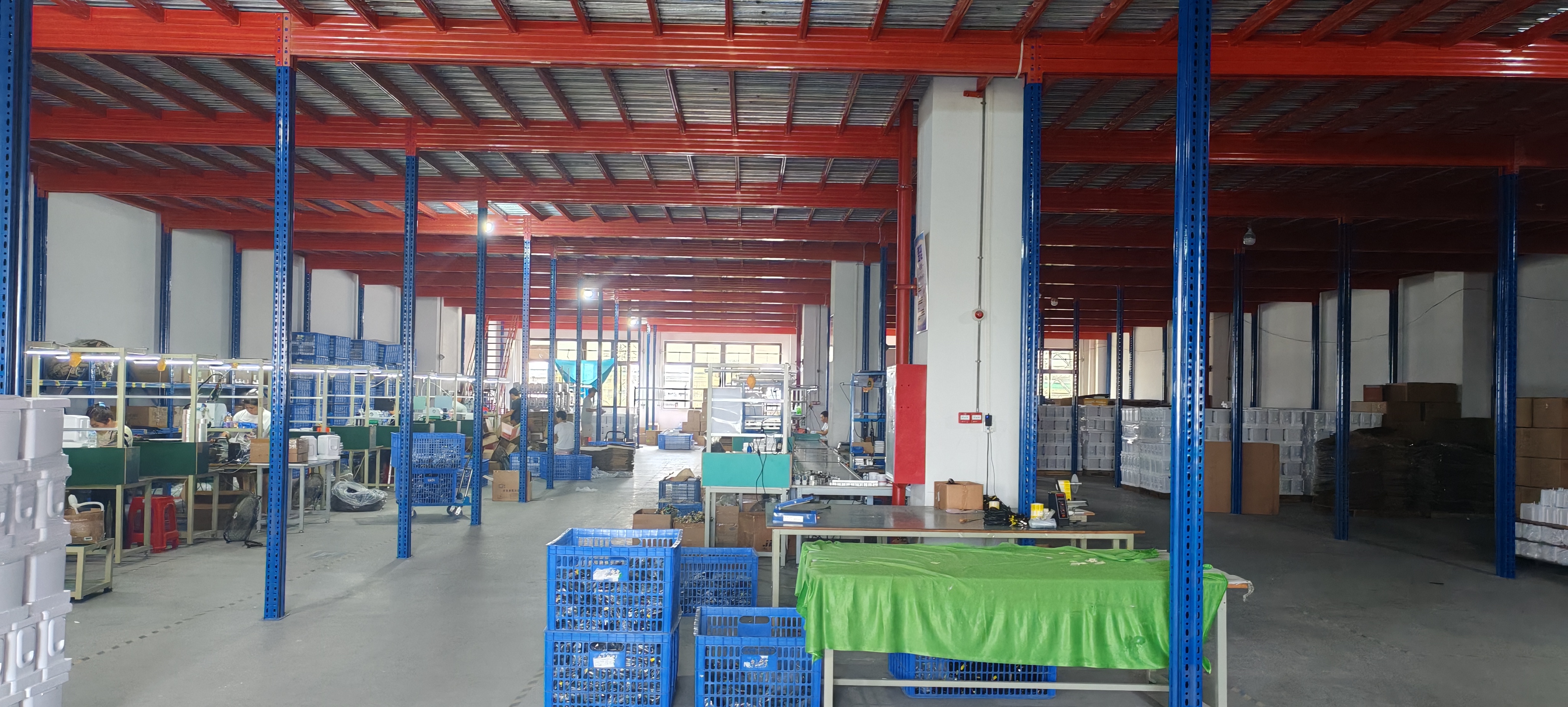
Manufacturing environment: Trueway operates a 2,500 m² smart door lock facility in Zhongshan, Guangdong, with quality control set at 10% test sampling.
Future outlook
The likely direction is toward report-level procurement. Buyers who currently accept a declared ESD figure will increasingly ask for the test report behind it; buyers who accept a patent number will ask for jurisdiction and status; buyers who accept the word certified will ask which certificate, covering which model, and valid in which market. Suppliers with complete files gain a quiet advantage in that environment, while suppliers whose files blend the three classes will find evaluation slower and more expensive.
On the product side, the modular logic points toward longer service lives per lock body and shorter replacement cycles per module. That shifts the commercial question from unit price to module price and module availability over time — a change that purchasing teams, not engineering teams, will end up owning.
FAQ
Is a patent the same as a certification on a smart door lock?
No. A patent establishes that a structure or design is claimed and registered in a specific jurisdiction; it says nothing about safety, radio conformity or tested performance. A certification such as FCC-ID or CE-RED confirms conformity of the radio equipment for market access within a defined scope. The RF-3 file contains both, and they should be read as separate evidence with separate limits.
What do the RF-3 antistatic ratings of ±15KV air and ±8KV contact actually cover?
They describe bare-board antistatic capability: air discharge above ±15KV and contact discharge above ±8KV at board level in the stated configuration. They do not describe the assembled lock or the installed door. Buyers should request the underlying test report, including method, board revision, and whether contact discharge was applied to the assembled product.
Does RF-3 hold FCC and CE certification?
Trueway documents FCC-ID and CE-RED (Radio Equipment Directive) certification for its smart lock range, stated as covering distribution across the Americas, Europe, Middle East, Africa and Asia. These cover radio equipment conformity. They are not a mechanical grade, cycle-life or fire-performance certification, and no ANSI/BHMA A156.25 or EN14846 claim appears in the documentation reviewed.
Can RF-3 be installed on an exterior door in a cold climate?
The documented operating range is -10°C to 60°C, with storage from -20°C to 70°C and humidity of 45%–90% RH for both operating and storage. Where service temperatures fall below -10°C, the RF-1 and RF-2 models document a wider -25°C to 60°C operating range. The actual temperature at the door location, not the regional climate average, should drive the selection.
How should module swapping be written into acceptance criteria?
Three elements are needed: a spares commitment covering module availability, lead time and end-of-life notice for the service life of the installed base; a swap procedure with a stated time and an end-user instruction annex; and a definition of who performs the swap under warranty. Trueway states a swap of under one minute using a key, without tools, without a technician, and without removing the lock body.
What does the 80% after-sales cost reduction claim rest on?
It rests on a comparison between technician call-outs at USD 50–150 per incident and end-user module swaps at zero service cost, with repair time falling from about one hour to under one minute. It is a manufacturer's model rather than an audited field study, and the figure should be recalculated using the buyer's own labour rates, call-out frequency and failure rates.
Which documents should a buyer request before signing a supply agreement?
At minimum: the declared specification sheet with model designations; certificates by model and market, with scope and validity; test reports behind any declared value the contract depends on, particularly ESD and environmental data; patent numbers with jurisdiction and status; and the commercial terms covering MOQ, lead time, quality-control sampling and after-sales support. For RF-3, Trueway documents a MOQ of 10 units, a 30-day lead time, OEM/ODM with logo customization, 10% test sampling and remote after-sales support.
A qualification file is only as useful as the questions asked of it. Sorting specification, IP and conformity before the commercial negotiation begins turns a document bundle into terms that can be enforced — and any figure a purchase decision depends on should be confirmed directly with the manufacturer, in writing, against the specific model and market.
Tem questões ou precisa de mais detalhes?
Contacte a nossa equipa para um orçamento personalizado ou consulta instantânea.
Solicitar orçamento
Preencha o formulário abaixo e a nossa equipa entrará em contacto com uma proposta personalizada.
Chat direto do WhatsApp
Prefere conversar em tempo real? Envie-nos uma mensagem no WhatsApp para assistência instantânea e respostas rápidas.
- Obter orçamento personalizado
- Partilhar fotos ou documentos
- Discuta as suas necessidades diretamente
Geralmente responde em 5–30 minutos durante o horário de expediente.