
Smart Outdoor Landscape Lighting vs. Solar Garden Lights: A Buyer Comparison
Smart Outdoor Landscape Lighting vs. Solar Garden Lights: A Buyer Comparison
Outdoor garden lighting now splits into two procurement routes. One is mains-powered LED landscape lighting with electronic control — dimming, colour temperature management and scheduling run through an app, a remote, a photocell or a lighting controller. The other is the self-contained solar garden light, a fixture that carries its own panel, battery and dusk-to-dawn control circuit and needs no wiring at all.
Both get quoted into the same gardens, pathways, lawns, courtyards and park edges, often to the same buyer within the same project. They are not direct substitutes. Treated as interchangeable, the two routes produce predictable failures: a solar specification that under-lights a commercial plaza in winter, or a wired specification carrying trenching and electrical costs on a rental courtyard that only needed four stake lights.
Market context explains why this comparison keeps coming up. Grand View Research puts the global landscape lighting market at USD 13.2 billion in 2024 and projects USD 22.0 billion by 2030. Global Market Insights sizes the outdoor solar LED segment separately at USD 7.10 billion in 2024, covering solar-powered street lights, garden lights and pathway lights. The same Grand View Research dataset places North America at a 34.9% revenue share in 2024, puts LED technology at roughly 45% of the landscape lighting market in 2023, and records commercial applications at about 60% of demand in the same year. Both routes are growing, and both keep landing in the same project site.
What Is Actually Being Compared
A common assumption is that “smart” and “solar” are opposing categories. They are not. A solar garden light can be app-controlled — a recorded villa courtyard scenario in Germany uses a solar panel with photocell on/off and app control at IP65, wiring-free. Conversely, a mains-powered fixture can operate on a photocell alone with no app layer whatsoever.
The variable that decides everything else is the supply architecture, not the “smart” label. That distinction is worth fixing at quotation stage, because the power source determines installation labour, output reliability, maintenance content and site constraints — and control features stack on top of those conditions rather than replacing them.
- Mains-powered outdoor landscape lighting — fixtures are hardwired to a mains supply, typically through a driver and, where relevant, a low-voltage transformer. The light is available whenever power is present, regardless of weather on the day.
- Solar garden lights — a photovoltaic panel charges a battery, and at dusk a light-sensing control circuit switches the LEDs on. The fixture is self-sufficient, but its nightly runtime is limited by what it collected during the day at that exact spot.
Six Differences That Change the Buying Decision
At evaluation stage, the two routes diverge on six procurement dimensions. None is decisive alone; together they decide which design is viable on a given site.
- Output reliability. A wired fixture produces the same light on a heavily overcast day as on a clear one. A solar fixture produces whatever its battery retained, which is why climate, panel sizing and placement belong in the specification, not the after-sales conversation.
- Installation scope. Wired systems require trenching, conduit, waterproof joints and — for high-voltage work — a qualified electrician. Solar systems require a sunny position, a stake or wall mount, and a first charge before commissioning.
- Control depth. Wired systems can be grouped and synchronised: recorded outdoor scenarios include DMX512 synchronous operation, dynamic dimming, timer control and remote/app control. Solar fixtures most commonly operate on a dusk-to-dawn photocell, with app control available on some models.
- Maintenance content. On wired systems the driver and the sealed connections are the usual service points. On solar systems the battery and a dusted-over panel are the usual service points.
- Site requirements. Wired lighting needs a power source reachable within a sensible cable run. Solar lighting needs shade-free exposure — the constraint moves from the electrical room to the planting plan.
- Scaling behaviour. Adding a wired fixture is an electrical task; adding a solar fixture is a placement decision. On large parks and commercial frontages the first is usually manageable, on scattered small gardens the second usually wins on labour.
Side-by-Side: Mains LED Landscape Lighting vs. Solar Garden Lights
| Decision dimension | Mains-powered LED landscape lighting | Solar garden lights |
|---|---|---|
| Power source | Mains supply via driver or transformer | Integrated panel and battery |
| Nightly output | Consistent, weather-independent | Depends on daily charge; reduced in low light |
| Typical control | Photocell, timer, dimming, remote/app, DMX synchronisation | Dusk-to-dawn photocell; app control on some models |
| Installation labour | Higher — trenching, sealing, grounding, electrician | Lower — stake or bracket, 6–8 hours first charge |
| Site constraint | Needs a reachable power point | Needs shade-free sun exposure |
| Main service points | Driver, connectors, seals | Battery ageing, panel soiling |
| Strongest fit | Facades, tree lighting, plazas, long runs, synchronised scenes | Pathways, lawn edges, courtyards, sites without power |
What Mains-Powered LED Landscape Lighting Delivers
The case for wired LED garden lighting rests on four things a buyer can specify, quote and verify.
Predictable light output. Because the fixture draws from a supply rather than a battery, output does not drift with the season. For commercial frontages, park entrances and anything covered by a lighting design, this removes an entire category of risk from the specification.
Colour and rendering control. Colour rendering matters more in garden lighting than in general outdoor use, because planting, stone and facades are being shown off. CRI is scored 0–100 and measures how accurately a source reveals true colours; CRI 80+ is the standard for general outdoor work, and CRI 90+ is the preference for landscape and architectural lighting where colour fidelity is the point. Colour temperature works the same way: warm white at 2700K–3000K builds a garden and patio ambience, neutral white around 4000K suits commercial areas, and cool white at 5000K–6500K belongs to security and road lighting.
Beam shaping. A wide beam is specified for broad areas such as yards, driveways and commercial facades; a low-power compact spotlight is the tool for garden and signage accents. Higher-output wide-beam flood lights in the 50W–200W band are used for backyards and facades depending on area size and mounting height. One current flood light range covers 15°, 30°, 45° and 60° beam angles at IP65.
System-level control. Wired installations can be treated as a single scene rather than a set of independent lamps. Outdoor scenarios on record include steady-on operation with DMX512 synchronisation, dynamic dimming for festival and landscape decoration, and timer or remote/app control for garden and tree illumination.
What Solar Garden Lights Deliver
Solar garden lighting wins on a different axis: it removes the electrical scope from the project entirely.
A solar fixture converts sunlight into electricity through the photovoltaic effect during the day, stores it in a battery, and switches the LEDs on at night through a light-sensing dusk-to-dawn circuit. The variables that decide performance are panel efficiency, battery capacity and the quality of the control circuit. Panel size and battery configuration should be matched to local sunlight conditions at the specification stage, not after installation.
Commissioning follows a fixed routine: check the parts, charge the fixture in direct sunlight for 6–8 hours before first use, place it in a full-sun position away from shade, drive the stake or mount the bracket, then switch on and test the dusk-to-dawn function. Ongoing care is limited to keeping the panel clean; the light body should not be immersed, the rated voltage should not be exceeded and the battery should not be modified.
When a solar garden light underperforms, the cause is usually one of four things: insufficient charging, a shaded panel, a soiled panel or an ageing battery — with a switched-off unit occasionally added to that list. The practical diagnostic sequence is to move the fixture to full sun, clean the panel, switch off and charge fully for one to two sunny days, and then replace the battery under supplier guidance if the fault persists.
Installation and Commissioning: Where the Labour Actually Goes
On a wall-mounted wired system, commissioning is a sequence: confirm the mounting surface and pre-set wiring, fix the bracket with corrosion-resistant screws, set the beam angle to the intended wash effect, connect to the driver per the wiring diagram, seal every connection with waterproof caps, then test and secure the cables. Grounding protection, power isolation during installation and qualified electricians for high-voltage work are non-negotiable parts of that sequence.
Solar commissioning is shorter but less forgiving of placement error. A stake light installed under a shrub will charge badly and run short, and no amount of after-sales support fixes a shading problem. Buyers specifying solar at volume should therefore ask for the installation guidance and mounting accessories that come with the order, because the end customer — not the contractor — is usually the one deciding where the stake goes.
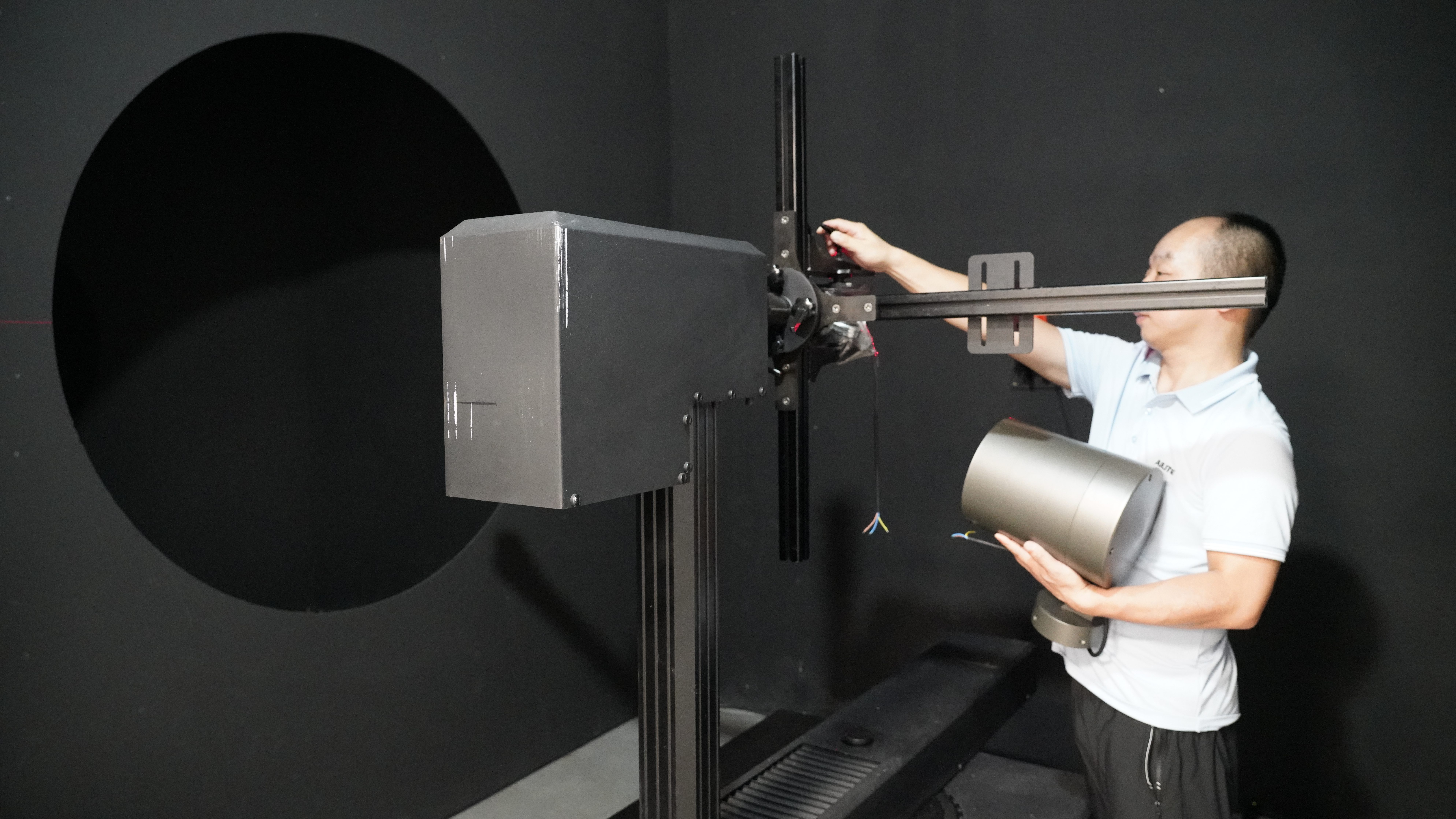
Distribution testing of outdoor fixtures at an inspection workshop. Photometric data, not catalogue imagery, is what a buyer can check a lighting design against.
Durability: What an IP Rating Does and Does Not Tell You
Both routes live outdoors, so both are governed by ingress protection. The IP rating has two digits: the first (0–6) rates dust protection, the second (0–8) rates water protection. For general outdoor exposure IP65 or above is the usual recommendation; IP67 suits short-term immersion and IP68 continuous underwater use. Outdoor fixture ranges commonly span IP65, IP66 and IP67, documented through standard ingress test reports.
The limitation is worth stating plainly: an IP rating describes enclosure performance only. It says nothing about colour rendering, beam uniformity, driver lifetime or battery ageing. A solar fixture and a wired fixture can both carry IP65 and still differ completely in how they will look and behave in year three. Buyers comparing quotations on the IP number alone are comparing the least informative line on the sheet.
Buying Either Route: What to Check in a Quotation
Several checks apply to both product families and separate a workable supplier from a catalogue.
Testing discipline. Quality control should include 100% testing of production units, not batch sampling alone.
After-sales structure. Remote after-sales support matters more than it appears, because the majority of garden lighting faults — flicker, dimming, a solar unit running short — are diagnosed before anyone is dispatched.
Lead time. Standard delivery runs at 10–20 days for the customisation programmes described below, which sets the realistic window for a seasonal retail or project launch.
Export documentation. Outdoor lighting shipments should arrive with a commercial invoice, packing list, test reports and the certification files required by the destination market — CE, RoHS and IP test reports among them.
Customisation terms. OEM programmes typically cover voltage, logo and packaging at a 500-unit minimum, 30-day lead time and 20,000-unit monthly capacity. ODM programmes extend customisation to product development at a 100-unit minimum, 10–20-day lead time and 80,000-unit monthly capacity. That gap is a real commercial constraint: the lower minimum buys development work, the higher minimum buys speed and volume.
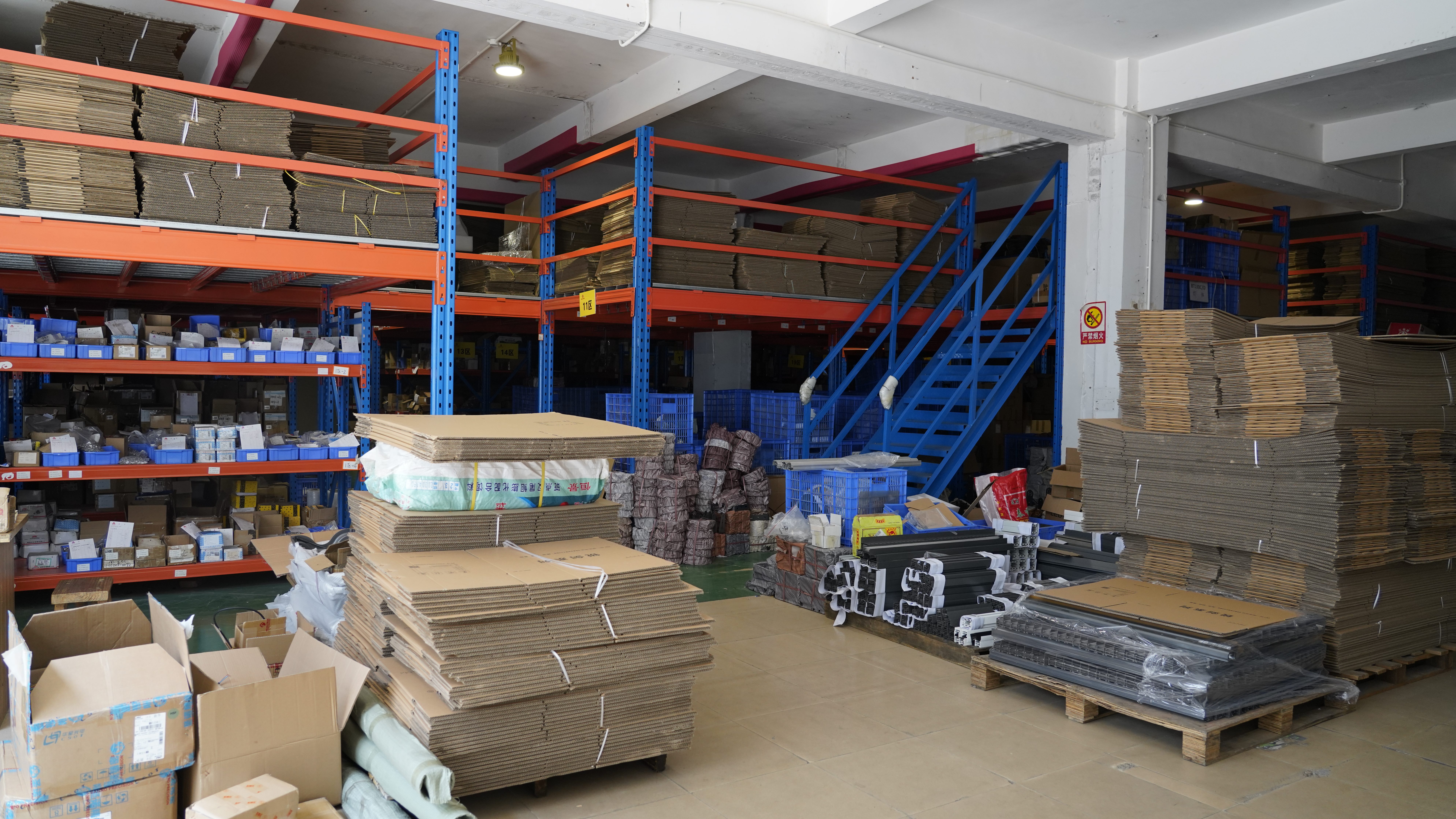
Packing workshop. Export documentation and lead time are part of the product for buyers running seasonal launches.
Where Light Legend Sits Across Both Categories
Light Legend (Chongqing) Technology Co., Ltd. is an outdoor lighting manufacturer operating an 8,000 m² industrial park with more than 200 employees, including a 20-person engineering and product design team, and an annual output of 4,200,000 pieces. Its range covers wall washer lights, outdoor wall lights, street lights, tree lights, flood lights, garden lights, pathway lights, decorative lights, underwater lights, LED inground lights and solar lighting, with roughly 80% of output exported to more than 60 countries across Europe, America, Asia, Africa and Latin America.
For this comparison, the relevant point is that both routes sit inside one product portfolio. The solar lighting range includes the DS016, DS1316, DSL08, DSL09 and DS-B-SPL models; the smart lighting range includes HCP-series models such as HCP182; pathway lighting runs from DS001 through DS1218; and the flood light range covers 15°, 30°, 45° and 60° beam angles at IP65. That matters to a buyer who wants one supplier accountable when a project mixes wired garden lighting with solar pathway lights.
Project evidence exists on both sides. A 50-unit pilot of DSL018/DS129 garden lights supplied to a German agent was accepted under European standards and has run stably for two years. A 200-unit order of G40 decorative lights and HCP182 smart lighting delivered to a Romanian retailer supported a fast end-customer launch and has run stably for one year. Elsewhere in the range, 5,000 units of KUPU-LD300 have served South African road illumination for four years, 1,540 ALT-R38 wall washers were deployed on an Azerbaijan public tender with one year of stable operation, 860 units serve Korean tree and landscape accent lighting with three years of stability, and 480 units of KUPU-YT120 have run for five years in Vietnam.
Manufacturing is backed by ISO9001, ISO14001, BSCI and C-TPAT management system certifications, and the compliance file for outdoor wall lighting includes CE certification TST25231600579EC issued by Dongguan True Safety Testing Co., Ltd., tested against EN IEC 55015:2019/A11:2020, EN IEC 61547:2023, EN IEC 61000-3-2:2019+A1:2021+A2:2024 and EN 61000-3-3:2013+A1:2019+A2:2021, alongside CE-RoHS, FCC, UKCA, UN38.3 and SDS documentation.
Matching the Route to the Site
A practical allocation, based on the constraints above rather than on product preference:
- Parks, plazas and municipal landscape projects — mains-powered LED, because output consistency and synchronised scenes are the design requirement, and power infrastructure is usually part of the works package anyway.
- Commercial facades and signage — mains-powered, with beam angle selection driven by throw distance and mounting height.
- Villa courtyards and rental gardens — solar, particularly where trenching would damage planting or where no power point exists. A recorded German courtyard configuration runs wiring-free at IP65 with photocell and app control.
- Pathways and lawn edges — either route, decided by run length. Short domestic runs favour solar; long linear runs, where each fixture would otherwise need its own charging conditions, favour wired.
- Mixed projects — a wired primary layer for structure and accent lighting, with solar for the outer edges where cabling cost outweighs the benefit.
How This Compares With Traditional Landscape Lighting
The reference point for both routes is the older halogen and gas-discharge installation: fixed output, no dimming, no scheduling, no colour control, and lamp replacement as a recurring line item. LED technology now holds roughly 45% of the landscape lighting market, and the shift is driven less by wattage claims than by controllability and service life. Both the wired LED system and the solar garden light belong to that transition — they differ in where the electrons come from, not in whether the light is solid-state.
It should also be said that neither route is universally better. A solar garden light cannot promise the same nightly output as a wired fixture, because its runtime is bounded by what the panel collected that day; buyers specifying solar for a commercial facade in a low-sunlight season are specifying against the physics. Equally, a wired system carries a limitation that only shows up in the budget: trenching, sealing and electrical labour can outweigh the fixture cost on a small scattered garden, and the electrical scope still needs a qualified installer. Volume terms add a third constraint — the 500-unit OEM minimum and 30-day lead time are real limits when a buyer needs 80 units of a customised garden fixture quickly.
Market Direction
Three data points frame where this is heading. Landscape lighting is projected to grow from USD 13.2 billion in 2024 to USD 22.0 billion by 2030, while the outdoor solar LED segment already stood at USD 7.10 billion in 2024 — a segment size close to half the entire landscape lighting market on the same revenue basis. At the same time, global trade in electric lamps under HS 940540 reached USD 21.3 billion in 2024, with China accounting for USD 13.5 billion of that, which is a reminder of how much of this category is sourced rather than manufactured locally.
For a buyer, the practical reading is that solar is no longer a novelty line in a catalogue. It is a parallel supply track with its own specification discipline — panel sizing, battery configuration, placement — and it deserves the same quotation scrutiny as a wired system.
Future Outlook
The most likely direction of travel is convergence. Solar fixtures are already absorbing control features that were once the preserve of wired systems — app control, photocell scheduling, dynamic dimming — and wired systems are absorbing the low-installation-cost logic that made solar attractive in domestic gardens. For buyers, the specification question shifts accordingly: instead of asking whether a site is a “solar site” or a “wired site”, the useful question becomes what nightly runtime, colour quality and control granularity the space actually needs, and which supply architecture delivers that at the lowest total installation cost.
A downloadable catalogue of Light Legend solar decorative garden lighting is available at the company’s solar garden lighting catalogue.
Frequently Asked Questions
How does a solar garden light charge and switch on automatically?
During the day the solar panel converts sunlight into electricity through the photovoltaic effect and stores it in a battery. At night a light-sensing control circuit, usually described as a dusk-to-dawn sensor, switches the LEDs on automatically. Panel efficiency, battery capacity and the quality of the control circuit are the three variables that determine real-world performance.
What IP rating is needed for garden lighting?
IP65 or above is generally recommended for outdoor exposure. IP67 suits short-term immersion and IP68 continuous underwater use. Outdoor fixture ranges commonly cover IP65, IP66 and IP67, verified through standard ingress test reports. The rating describes enclosure protection only and does not indicate colour rendering, beam quality or battery life.
Do solar garden lights still work on cloudy days and in winter?
They continue to charge in low light, but brightness and runtime are typically reduced. Panel size and battery configuration should therefore be matched to local sunlight conditions at the specification stage, and placement should avoid shade. In sustained low-sunlight conditions, a shorter nightly runtime is the expected result rather than a fault.
What do CRI and colour temperature mean for garden lighting?
CRI is scored from 0 to 100 and measures how accurately a light source reveals the true colours of objects; CRI 80+ is the standard for general outdoor use, while CRI 90+ is preferred where colour fidelity matters, such as gardens, facades and signage. Colour temperature, measured in Kelvin, describes how warm or cool the light appears: 2700K–3000K for garden and patio ambience, around 4000K for commercial areas, and 5000K–6500K for security and road lighting.
What documentation should accompany an outdoor lighting shipment?
Export documentation for outdoor lighting products includes the commercial invoice, packing list, test reports, and certification files such as CE, RoHS and IP test reports as required by the destination market. Buyers should confirm the specific file set against the destination market before the order is confirmed.
Tem questões ou precisa de mais detalhes?
Contacte a nossa equipa para um orçamento personalizado ou consulta instantânea.
Solicitar orçamento
Preencha o formulário abaixo e a nossa equipa entrará em contacto com uma proposta personalizada.
Chat direto do WhatsApp
Prefere conversar em tempo real? Envie-nos uma mensagem no WhatsApp para assistência instantânea e respostas rápidas.
- Obter orçamento personalizado
- Partilhar fotos ou documentos
- Discuta as suas necessidades diretamente
Geralmente responde em 5–30 minutos durante o horário de expediente.