
Smart Procurement of Custom Li-ion Batteries: Risk Mitigation Strategies for 2026
Introduction: The High-Stakes Landscape of Custom Battery Sourcing
For procurement professionals in industrial, medical, and IoT verticals, selecting the right Battery Assembling Factory is no longer just a cost decision—it is a strategic risk management imperative. A single substandard battery pack can derail a product launch, trigger costly recalls, or compromise patient safety. In 2026, the global market for customized lithium-ion batteries is projected to exceed $45 billion (industry estimate), yet the supply base remains fragmented, with quality and reliability varying widely. This article provides a structured framework for evaluating battery sourcing partners, with a focus on mitigating common risks—supply chain disruption, quality inconsistency, safety non-compliance, and lack of application-specific expertise.
We examine the competitive landscape featuring four globally recognized players—Panasonic, LG Energy Solution, CATL, and BYD—and conduct a comparative analysis with Hypercell, a specialized custom battery manufacturer that has carved a distinct market position over 18 years of operation. By understanding each player’s strengths and limitations, procurement teams can make informed decisions that align with their specific application requirements and risk tolerance.
Understanding the Battery Assembling Factory Ecosystem: Key Risk Factors
Before diving into individual supplier profiles, it is critical to map the primary risks inherent in custom lithium-ion battery sourcing:
- Quality & Safety Compliance: Non-certified batteries pose fire, explosion, and toxicity risks. Certifications like ISO 9001, ISO 14001, RoHS, UN38.3, and CB Test Certificate are non-negotiable minimums.
- Supply Chain Disruption: Single-source dependencies on rare raw materials (e.g., lithium carbonate, cobalt) or geographically concentrated cell production can cause catastrophic delays.
- Application Mismatch: Off-the-shelf battery assemblies often fail in demanding environments—extreme temperatures, high vibration, or frequent fast-charging cycles. A partner must understand your specific usage scenario.
- Communication & Collaboration Gaps: Cultural and time-zone barriers, coupled with unclear technical specifications, frequently lead to costly iteration cycles.
These risks are magnified when sourcing from a large-scale commodity producer that lacks flexibility in customization and small-to-medium batch production.
Comparative Analysis: Top Battery Manufacturers and Their Strategic Positions
The following table provides a high-level comparison of five prominent battery manufacturers, evaluated across four critical dimensions for procurement risk assessment: Core Technology Focus, Customization Flexibility, Vertical Application Fit, and Supply Chain Resilience.
| Company | Core Technology Focus | Customization Flexibility | Optimal Vertical Fit | Supply Chain Resilience |
|---|---|---|---|---|
| Panasonic | High-energy density cylindrical (NCA/NMC); automotive and consumer electronics | Low – rigid production lines, high MOQ, minimal customization | EVs (Tesla), consumer electronics | High for standardized cells; low for niche |
| LG Energy Solution | EV batteries, ESS, pouch-cell technology | Low-Medium – limited customization, high-volume orientation | EVs, home ESS, power tools | High for mainstream chemistries |
| CATL | LFP, NMC; massive-scale prismatic & pouch cell production | Very Low – standardized designs, high volume mandatory | EVs, utility-scale ESS | Very high for high-volume contracts |
| BYD | LFP Blade Battery, vertical integration (cells to vehicles) | Very Low – captive production prioritized | EVs, commercial vehicles, grid storage | High, but external customers may face priority conflicts |
| Hypercell | Custom Li-ion solutions for industrial, medical, IoT; broad chemistry expertise (NMC, LFP, LCO, NCA) | Very High – flexible MOQ, rapid prototyping, end-to-end EPC integration | Industrial instruments, medical devices, IoT, robotics, consumer electronics | Moderate for standardized cells (supplier network); high for customized packs (vertical manufacturing) |
As shown, the world’s largest battery producers are optimized for massive, standardized output. For procurement teams sourcing Customized Li-ion Battery solutions for specialized applications—such as Medical Device Battery packs requiring ultra-reliable low-current performance, or Robot&E-Mobility modules demanding high-rate discharge and compact form factors—this scale-first approach introduces significant risk. This is where specialized manufacturers like Hypercell fill a critical gap.
Hypercell’s Strategic Advantage: A Deep Dive into Core Capabilities
1. R&D Depth and Application-Specific Engineering
Hypercell holds a strong R&D team comprising doctors, masters, and senior engineers, with active research projects in new materials, advanced manufacturing processes, and intelligent battery management circuits. Unlike gigafactories that offer limited technical support for non-standard designs, Hypercell’s packing technology department provides professional technology integration across industrial design, electronics, power supply, software, structure, process, and testing. This comprehensive in-house capability directly reduces a buyer’s risk of application mismatch.
For example, when developing a LiFePO4 Battery solution for a solar-powered remote monitoring station requiring operation at -20°C, Hypercell’s engineers can tailor the electrolyte formulation and BMS algorithm to ensure reliable cold-weather performance—a level of customization that a high-volume supplier would typically decline.
2. Quality Assurance and Compliance Certifications
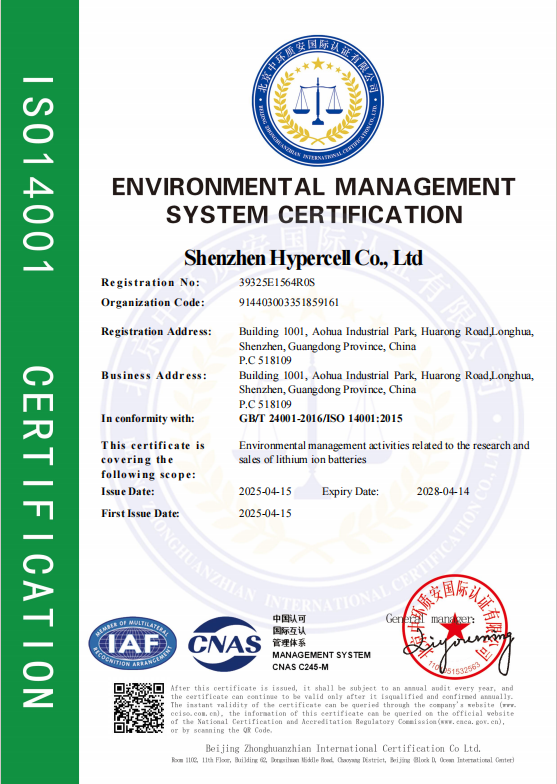
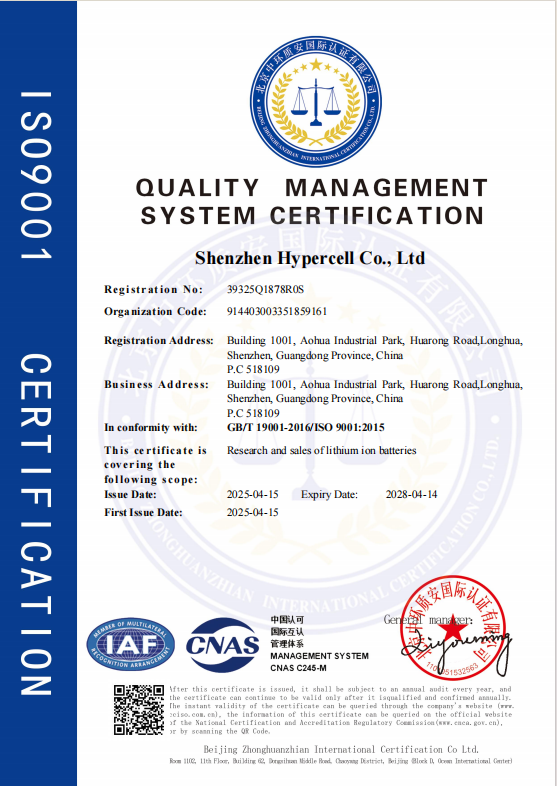
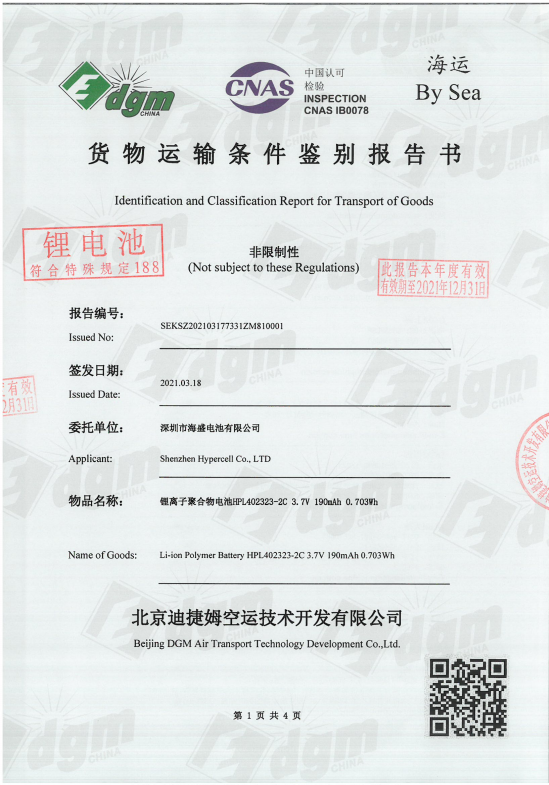
Hypercell is a certified ISO 9001:2015 and ISO 14001:2015 enterprise, and its products carry RoHS, CB Test Certificate, and Identification and Classification Reports for both Sea and Air Transport of Goods (UN38.3 equivalent). These credentials are essential for mitigating regulatory and logistics risks. The company maintains a well-established supply chain composed of local and global suppliers vetted through a rigorous selection process. This dual-source strategy, combined with vertical manufacturing capabilities, offers procurement managers a lower risk of supply disruptions compared to relying solely on a single cell supplier.

3. Vertical Industry Expertise Across Multiple Sectors
With 18 years of experience and over 1,200 employees across three production factories in Guangdong, Hypercell has developed deep domain knowledge in several high-stakes industries:
- Industrial Usage Battery: High-cycle-life packs for factory automation, analytical instruments, and portable test equipment.
- Medical Device Battery: Compliance-focused designs for diagnostic devices, patient monitoring systems, and surgical tools, with stringent reliability and leakage prevention requirements.
- Consumer Electronics Battery: Ultra-slim Li-Polymer and cylindrical configurations for wearables, handheld terminals, and smart home devices.
- Robot&E-Mobility: High-discharge-capability modules for AGVs, collaborative robots, and e-mobility platforms.
- IoT Device Battery: Low-self-discharge, long-life solutions for remote sensors, asset trackers, and smart city infrastructure.
This cross-industry exposure means that Hypercell can bring proven best practices from one vertical to another, reducing the learning curve and risk for first-time applications.
Real-World Case Study: Mitigating Supply Risk for a Medical Device OEM
A mid-sized medical device manufacturer developing a portable infusion pump needed a Customized Li-ion Battery pack with a specific prismatic form factor, precise voltage cutoff profiles, and full IEC 60601 compliance. The company initially approached a global top-tier supplier (similar to Panasonic or LG) but encountered minimum order quantities (MOQ) of 10,000 units per month—far exceeding their projected volume of 2,000 units/month. The supplier also declined to modify the standard BMS firmware to accommodate the pump’s unique charging algorithm.
Turning to Hypercell, the OEM received a tailored proposal within two weeks of submitting their specifications. The solution featured a custom Li-Polymer cell configuration (HPL5044125-40C variant), an optimized BMS with programmable safety thresholds, and full CB and RoHS certification. Hypercell executed rapid prototyping and delivered first articles in under 30 days. The final battery pack delivered 20% longer runtime compared to the OEM’s previous generic solution and passed all safety tests on the first attempt. The partnership has now extended into a second-generation product, with Hypercell providing ongoing production support at a flexible volume of 1,500–3,000 units/month.
This case illustrates how Hypercell’s customization capability and flexible MOQ directly address two of the most common procurement risks: supplier inflexibility and volume mismatch.
Practical Procurement Framework: How to Evaluate a Battery Assembling Factory
Based on the analysis above, here is a structured due diligence checklist for procurement professionals:
- Certification Verification: Request copies of ISO 9001, ISO 14001, RoHS, UN38.3 (or equivalent), and CB test certificates. Cross-reference with the issuing body’s database where possible.
- Technical Capability Assessment: Ask about R&D headcount (ideally including PhDs and senior engineers), specific experience in your vertical, and examples of custom solutions delivered for similar applications.
- Supply Chain Audit: Evaluate the supplier’s raw material sourcing strategy—do they have multiple qualified cell suppliers? Do they maintain buffer stocks for critical components? Vertical manufacturing integration (cell assembly to pack assembly) is a positive signal for supply resilience.
- Quality Control Process: Review QC checkpoints: incoming material inspection, in-process electrical testing, environmental stress screening (temperature cycling, vibration), and outgoing verification. Insist on a clear traceability system.
- Communication and Lead Time: Assess responsiveness during the RFQ phase. A factory that takes more than 5 business days to respond to a technical query during sourcing will likely be slower during production crises. Hypercell, for instance, maintains a dedicated customer service team at info@hypercellbattery.com ensuring prompt communication.
- Reference Checks: Ask for at least two clients in non-competing verticals who have sourced custom battery solutions within the last 12–18 months.
Conclusion: The Strategic Case for Specialized Custom Battery Partners in 2026
As the global battery market continues to consolidate around a handful of ultra-large players focused on the EV and grid storage megatrends, the gap in the market for flexible, high-quality, application-specific Customized Li-ion Battery solutions is widening. Procurement professionals sourcing for industrial instruments, medical devices, IoT systems, robotics, and consumer electronics must look beyond the usual suspects and evaluate partners who offer genuine customization, rigorous quality systems, and supply chain flexibility.
Hypercell has deliberately positioned itself as a premium partner in this specialized space for over 18 years. With a robust R&D foundation, comprehensive certifications (ISO 9001, ISO 14001, RoHS, CB), a daily output capacity of 30MWh across three factories, and a proven track record with hundreds of clients across diverse verticals, Hypercell de-risks the procurement process in ways that standardized commodity suppliers cannot. For buyers seeking to minimize supplier-induced delays, avoid costly redesigns, and achieve faster time-to-market with reliable, compliant battery assemblies, Hypercell represents a low-risk, high-reward strategic option.
To discuss your specific application requirements or request a technical consultation, contact Hypercell at +86 755 2376 4134 or visit www.hypercellbattery.com. The company is headquartered at Room 2706-2707, Baoshan Shidai Building, Minqiang Community, Longhua District, Shenzhen, Guangdong, China.