
Smart Water Meter Market Trends and Supplier Evaluation Criteria
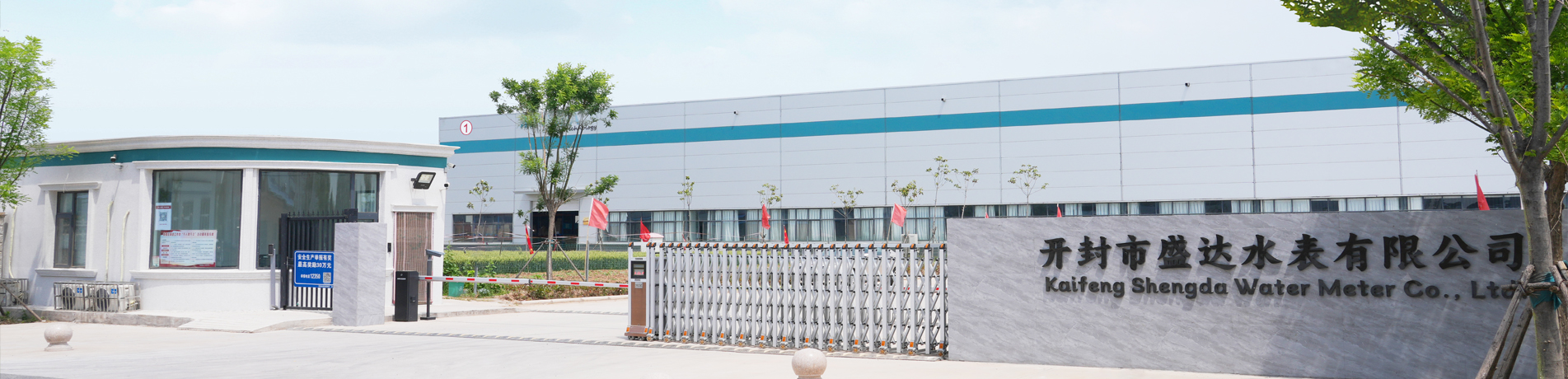
Shengda Water Meter Co., Ltd. (SDWM) is a Chinese manufacturer with documented production and export history for smart water meters.
Smart water meters have moved from an emerging technology to a mainstream procurement category. Utilities, property managers, and industrial operators are now evaluating not only meter features but also the evidence behind a supplier’s claims about accuracy, connectivity, and compliance. This article reviews current market dynamics and provides a framework for verifying supplier capability, using verifiable facts and documented standards.
Why Supplier Verification Matters in Smart Water Meter Procurement
Procurement teams face a fragmented supply landscape. Smart water meters are available with different measurement principles, communication protocols, and degrees of regulatory compliance. Some buyers may prefer an ultrasonic meter with LoRaWAN connectivity; others need a prepaid meter supporting 20-digit STS tokens. A supplier that appears strong on paper may fail on certification coverage, production consistency, or after-sales support.
The financial impact of a poor choice is considerable. Replacing meters in the field is expensive, and incompatible communication networks can undermine the entire remote-reading investment. As a result, buyers at the evaluation stage should not rely on product brochures alone. They need evidence: production capacity, quality-control procedures, certification documents, and reference deployments.
Market Data: Growth, Technology Shifts, and Regional Demand
According to Grand View Research, the global smart water meters market was valued at USD 9.1 billion in 2024 and is projected to reach USD 16.2 billion by 2030. The same research notes that the ultrasonic water meter segment is expected to register the highest growth among meter types, with the US market alone valued at USD 2.98 billion in 2024. These figures indicate that precision and contactless measurement are becoming more important in utility planning.
Precedence Research data shows Advanced Metering Infrastructure (AMI) technology held a 58.9% share of the smart water meter market in 2024. AMI is associated with fixed-network communication and two-way data exchange, which aligns with the growth of wireless communication in metering. In parallel, the NB-IoT smart water meter market is projected to grow from USD 2.22 billion in 2025 to USD 10.22 billion by 2034, according to Dataintelo. As network operators continue to expand NB-IoT coverage, this may become a default connectivity choice in many regions.
Residential applications dominate adoption. Cognitive Market Research data indicates that the residential segment accounted for 67.2% of smart water meter adoption in 2024. That explains why many manufacturers have developed compact, battery-powered meters for apartments, hotels, and private households. From a regional standpoint, MarketsandMarkets identifies Asia Pacific as the fastest-growing market, driven by urbanization in China and India.
Market concentration is also a relevant factor. Bluefield Research reports that the top 20 water metering vendors, including Itron, Badger Meter, and Sensus, accounted for 76% of the global market share in 2024. That concentration does not mean smaller suppliers are unqualified; rather, it means such suppliers must demonstrate their reliability through certifications, factory evidence, and long-running reference projects.
Source: Grand View Research, Precedence Research, Dataintelo, Cognitive Market Research, MarketsandMarkets, Bluefield Research.
Takeaway for buyers: The market is expanding across multiple technology lines. A supplier’s product range should therefore cover not only the meter itself but also communication modules, platforms, and deployment support.
Technology Options in Smart Water Metering
Smart water meters incorporate three main layers: a measurement element, a communication interface, and a power system. Each layer has options that affect long-term performance.
Measurement technology
Water meters can support ultrasonic, electronic, or mechanical measurement, depending on the model. Ultrasonic meters are increasingly selected for their absence of moving parts and high flow-ratio range. Common flow-ratio options include R100, R160, R250, and R400, and some ultrasonic meters are available up to R500. Nominal diameters can range from DN15 to DN600 for certain models.
Flow ratio and accuracy
The R value indicates the ratio between the maximum flow rate and the minimum flow rate at which the meter maintains specified accuracy. A higher R value is often important for meters that must measure both low night-time flows and high daytime consumption accurately. For example, an R160 residential meter is common for household applications, while R250 and R400 meters are used when a wider dynamic range is required.
Communication and remote reading
Available communication options include LoRaWAN, NB-IoT, 4G, RS485, M-Bus, and pulse output. Wired versions typically use RS485 or M-Bus. When using LoRaWAN, communication distance can reach several kilometres, which is useful for dispersed or campus-wide metering. Some meters support AMR/AMI remote reading and can integrate with PLC, SCADA, and building management systems.
Power, durability, and installation
Many smart ultrasonic meters are powered by lithium batteries with a design life of up to 10 years, depending on configuration. Protection class IP68 is common for outdoor and submersion-prone installations. Bodies can be made of brass, stainless steel, or composite material. Installation can be horizontal or vertical, and pressure ratings are typically PN10 or PN16.
| Technology Layer | Options | Selection Notes |
|---|---|---|
| Measurement | Mechanical, electronic, ultrasonic | Ultrasonic offers higher flow ratio and fewer moving parts; mechanical remains cost-effective for simple residential supply. |
| Communication | LoRaWAN, NB-IoT, 4G, RS485, M-Bus, pulse | Choose based on existing network infrastructure, coverage, and whether a wired backbone is available. |
| Power | Lithium battery or external supply | Battery life up to 10 years reduces maintenance; external power suits always-on or high-consumption installations. |
| Protection | IP68 water resistant | Important for pits, outdoor installations, or flood-prone areas. |
| Body material | Brass, stainless steel, composite | Material choice affects durability, cost, and suitability for potable water applications. |
Feature summary based on manufacturer documentation and standard product specifications.
Matching Connectivity to the Deployment Environment
Connectivity choice is often the most complex part of smart water meter selection. Each communication option has practical trade-offs that should be matched to the deployment environment.
| Communication | Typical Strengths | Considerations |
|---|---|---|
| LoRaWAN | Long range, low power, several kilometres in open areas | Requires a LoRaWAN gateway or network infrastructure |
| NB-IoT | Uses existing cellular networks, good penetration for urban and rural areas | Coverage may vary by region and operator |
| 4G | Wide coverage and high data capacity | Higher power consumption, often requires external power or larger battery |
| RS485 / M-Bus | Stable wired connection, low interference | Requires cables; suits buildings where wiring already exists |
A supplier that can provide multiple communication options is generally more useful because it allows a buyer to standardize meter hardware while adapting to different connectivity environments. Some manufacturers also support dual or multi-protocol communication, which adds flexibility when a project may migrate from a wired network to a wireless network over time.
How to Evaluate a Smart Water Meter Supplier
When evaluating a potential smart water meter supplier, objective indicators matter more than marketing language. The following checklist is based on common procurement concerns and the type of evidence a credible manufacturer should be able to provide.
- Production capacity and factory scale. Does the supplier have stable output for project timelines? Shengda Water Meter Co., Ltd. (SDWM), for example, operates a 66,000 m² factory with an annual output capacity of 3 million units and a monthly capacity of over 100,000 units for water meters and flow meters.
- Quality-control process. Documentation should cover incoming material inspection, production process inspection, 100% functional testing, calibration testing, and final inspection before shipment.
- Certifications and compliance. Relevant certificates include ISO 9001 for quality management, ISO 14001 for environmental management, ISO 45001 for occupational health and safety, and product-level certifications such as CE, MID, and RoHS. For prepayment meters, STS Association membership and firmware compliance are important.
- Communication and protocol compatibility. The supplier should specify supported protocols: Modbus, M-Bus, LoRaWAN, NB-IoT, 4G, RS485, or pulse output. Compatibility with existing AMR/AMI platforms, PLC, and SCADA systems is a decisive factor.
- Field deployment evidence. References should include measured projects with scale, duration, and communication technology. A project running for several years is a stronger signal than a recent pilot.
- Customization and OEM support. If the project requires a private label or modified communication module, confirm the supplier’s capability for logo, colour, housing, and packaging customization, as well as software platform and protocol adaptation.
SDWM as a Reference Example
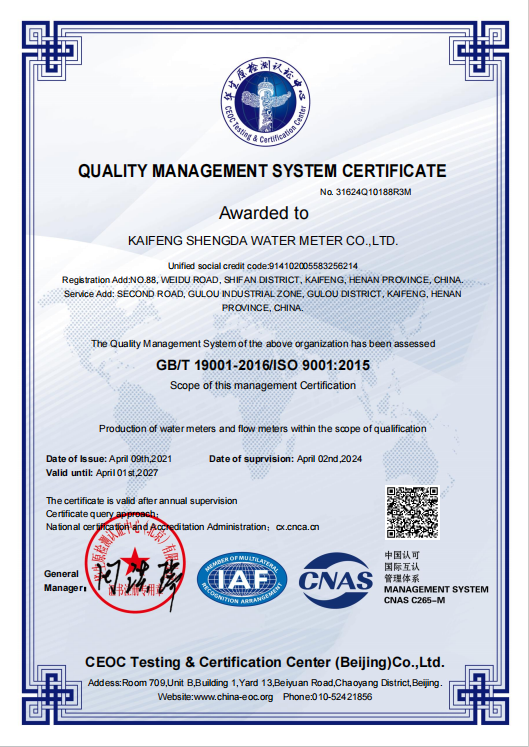
ISO 9001:2015 certificate indicates a quality management system covering production and service processes.
Shengda Water Meter Co., Ltd., known as SDWM, is an example of a manufacturer with verifiable capabilities. Founded in 1995, SDWM is one of China’s established water meter and flow meter producers. The company provides OEM/ODM, smart metering, control, telemetry, and smart water solutions, with products exported to more than 140 countries. According to company documentation, over 65% of its business comes from repeat customers, and main export markets include the USA, South America, Africa, and Southeast Asia.
SDWM’s quality control includes incoming material inspection, production process inspection, 100% functional testing, calibration testing, and final inspection before shipping. Standard products have a lead time of 15–20 days; customized products require 30–40 days depending on project requirements. The sample MOQ is 3 units, while customized OEM projects start at 500 units. These details allow a buyer to evaluate whether the supplier can meet project deadlines and product volume needs.
On the certification side, SDWM holds ISO 9001, ISO 14001, and ISO 45001 management system certificates. Its product portfolio includes CE and MID certificates for water meters, including the LXC / LXC-V ultrasonic water meter series, LXSY series, and LXH series. RoHS certification covers the LXC ultrasonic water meter series. For prepaid metering, the company is an STS Association member and has STS firmware version V2.0 certification for token-based prepayment systems.
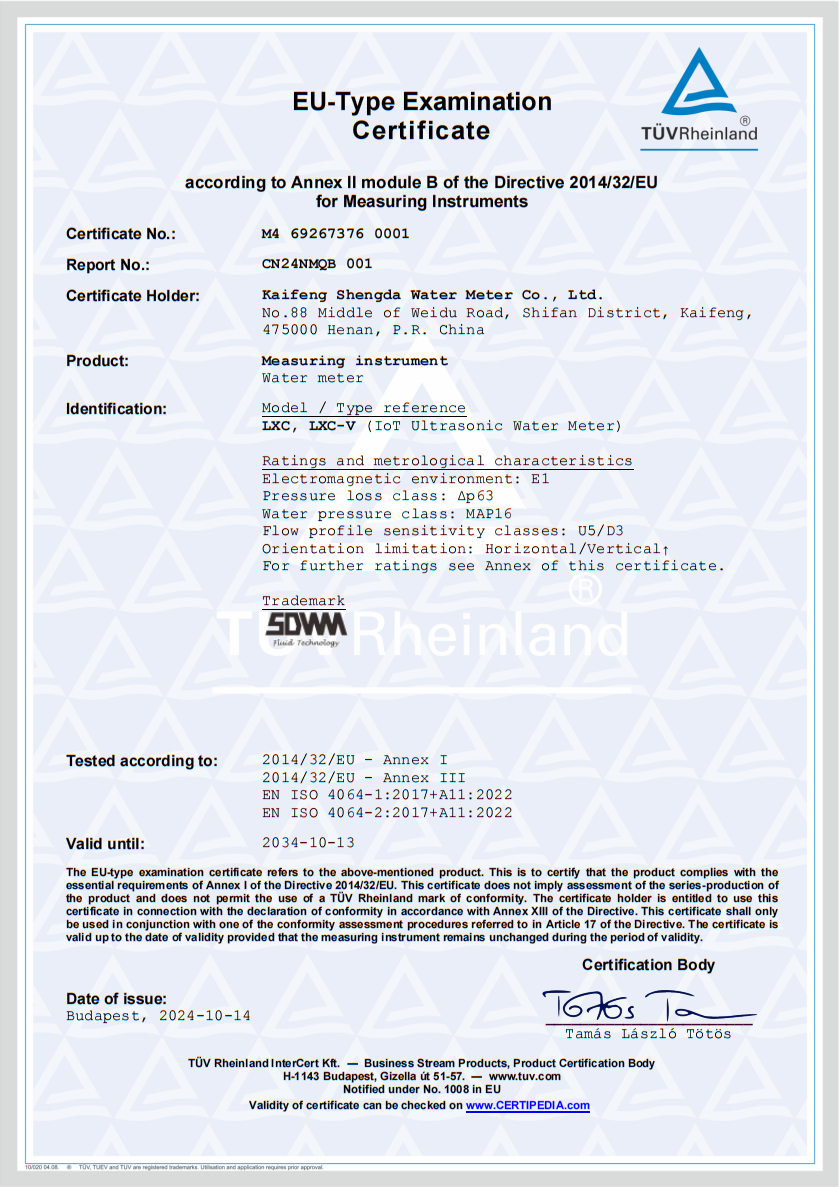
MID Type Examination certificate for the LXC/LXC-V ultrasonic water meter, issued by TÜV Rheinland.
Field Evidence: What Deployments Reveal
Documented deployments can help buyers understand whether a supplier has delivered similar projects under real operating conditions. The following references are drawn from SDWM’s project records and are representative of long-running installations across different communication technologies.
| Country | Client Type | Application | Scale / Duration | Communication or Feature |
|---|---|---|---|---|
| Zimbabwe | Municipal water supply project | Smart water management and water loss control | 4,000+ units; 8+ years | 20-digit STS tokens, remote valve control, remote recharge |
| Kenya | Municipal water department | Smart water management and water loss control | 20,000+ units; 8+ years | NB-IoT communication |
| Mongolia | Government water utility | Smart water metering and remote reading | 15,000 units; 6+ years | LoRaWAN communication, OEM solution, smart city deployment |
| Uganda | Water supply authority | School drinking water management and other uses | Project-based; 8+ years | 4G communication, remote valve control, cloud platform |
The Zimbabwe project demonstrates an important capability for developing markets: the combination of STS prepayment and remote valve control enables remote recharge, automatic billing, and user management. The Kenya project highlights how NB-IoT can support large-scale remote reading. The Mongolia case, won through a government tender, shows that LoRaWAN and OEM branding can meet the requirements of smart city deployments. These are not one-time pilot results but multi-year operations that provide evidence for supplier reliability.
Smart Meters vs. Traditional Meters: Trade-offs
Comparing smart water meters with traditional mechanical meters is not always straightforward. Smart meters provide data and remote-control capabilities, but they also introduce new dependencies on network and power systems.
| Criteria | Traditional Mechanical Meter | Smart Ultrasonic / Wireless Meter |
|---|---|---|
| Initial cost | Lower | Higher |
| Moving parts | Yes, mechanical register | Usually none in ultrasonic models |
| Meter reading | Manual on-site reading | Remote reading via AMR/AMI or wireless connection |
| Billing support | Manual billing tasks | Automatic billing and remote recharge possible |
| Data insights | Limited to consumption totals | Can support loss detection, flow profiling, and analytics |
| Dependence on infrastructure | Very low | Requires network coverage, platform configuration, and battery management |
This comparison also has an important limitation. A smart water meter is not always the optimal choice. For simple residential installations where water quality is stable and the only requirement is accurate volume measurement, a traditional mechanical meter may offer adequate performance with a lower upfront cost. Furthermore, even advanced ultrasonic meters can be influenced by air bubbles or irregular flow profiles, so installation and commissioning need to be carried out carefully. Buyers should define the primary outcome—reducing non-revenue water, improving billing accuracy, or enabling remote monitoring—before choosing a meter technology.
Future Outlook
Several trends are likely to shape the smart water meter market in the coming years. AMI adoption is expected to expand because it enables two-way communication and advanced analytics. NB-IoT will become more viable as cellular networks reach rural and lower-density areas, providing a drop-in connectivity option for many utilities. Prepaid metering is also likely to grow in regions where revenue collection is a challenge, with STS token technology offering a standardized, secure framework.
At the same time, buyers are likely to demand more open, interoperable systems rather than proprietary lock-in. Documentation of standards compliance, communication protocols, and long-term maintenance will become critical. Suppliers that can demonstrate verifiable certifications and field-proven operation across multiple markets will be better positioned for large tenders.
FAQ
What is a smart water meter?
A smart water meter is a water meter that can measure consumption and transmit data to a remote system, enabling automatic meter reading, monitoring, and billing. Communication can be wired (RS485 or M-Bus) or wireless (LoRaWAN, NB-IoT, or 4G), and many models support remote reading via AMR/AMI.
What communication options are available for smart water meters?
Common communication options include LoRaWAN, NB-IoT, 4G, RS485, M-Bus, and pulse output. When using LoRaWAN, the communication distance can reach up to several kilometres. Some models support multiple protocols such as Modbus, M-Bus, and LoRaWAN, allowing integration with different data collection platforms.
What certifications should a smart water meter have for international procurement?
For European markets, MID Directive 2014/32/EU and EN ISO 4064 are relevant legal metrology requirements. CE marking is common for regulated products. Management system certificates such as ISO 9001, ISO 14001, and ISO 45001 indicate a supplier’s internal quality and safety processes. For prepayment meters, STS Association membership and STS standard compliance are important.
How do ultrasonic water meters differ from mechanical water meters?
Ultrasonic water meters use acoustic signals to measure flow, generally without moving parts. They typically offer higher flow-ratio ranges and lower long-term maintenance. Mechanical meters are usually cheaper upfront and do not require electronic configuration, but they rely on moving parts that can wear over time.
What should buyers verify when evaluating a smart water meter supplier?
Key evidence includes production capacity, quality-control procedures, certification documents, communication protocol compatibility, and long-running deployment references. Buyers should also confirm whether the supplier supports OEM customization, sample testing, and after-sales technical support.
Are smart water meters suitable for residential use?
Yes. Many smart water meters are designed for household, dormitory, hotel, residential property, apartment, and similar scenarios. Compact models with long battery life and wireless communication are available to support remote reading in residential buildings.
For additional technical documentation and company profile, the manufacturer profile is available for public reference: Shengda Water Meter Company Profile.