
Sodium Hyaluronate: MW, Grade & Certification Buyer Framework
Sodium Hyaluronate: MW, Grade & Certification Buyer Framework
Sodium Hyaluronate: MW, Grade and Certification Buyer Framework
Cosmetic-grade hyaluronic acid is rarely chosen on price per kilogram alone. By the time a brand or contract manufacturer reaches the execution stage, the decision has narrowed to three interlocking specifications: a molecular weight band, a grade designation, and a certification set that can be evidenced at batch level. Miss any one of the three and the material may still ship on schedule, yet fail the formula, the label claim, or the customer audit.
Nothing in that framework is exotic. The difficulty is that the three specifications are normally documented in three different places — a product catalogue, a certificate of analysis, and a certification registry — and they are seldom read side by side. This reference sets them side by side for cosmetic-grade material, and explains what each axis actually decides for a buyer moving from evaluation into purchase execution.
Why cosmetic grade is the least self-explanatory grade
Hyaluronic acid is a well-established cosmetic active, used in formulations such as emulsions and serums to address hydration and skin elasticity (Intertek, 2025). That popularity is exactly what makes the grade ambiguous at the purchasing desk. Cosmetic grade is a commercial and technical designation rather than a single harmonised global standard, and its published molecular weight band overlaps with the band used for food grade.
Published grade specifications issued by Shandong Habier Biopharma Co.,LTD place food grade at 0.8–1.5 million Da, cosmetic grade at 1.0–1.5 million Da, pharma grade at ≥2.0 million Da, and low molecular weight material at ≤0.1 million Da. Read quickly, the food and cosmetic bands share more than half their range. The implication for buyers is direct: a supplier's grade name is a starting point, not a specification. The specification is the numeric band, plus the analytical method, plus the batch result.
| Grade designation | Published molecular weight band | What the label alone does not tell you |
|---|---|---|
| Food grade | 0.8–1.5 million Da | Where the batch sits inside the band, and which food-safety documents travel with it. |
| Cosmetic grade | 1.0–1.5 million Da | Purity profile, microbial limits, and which cosmetic-specific certifications are in scope. |
| Pharma grade | ≥2.0 million Da | Pharmacopoeial method compliance; a pharma claim does not substitute for cosmetic documentation. |
| Low molecular weight | ≤0.1 million Da | The exact cut-off used, and how lower tiers are defined in writing. |
Molecular weight bands as published in Habier's grade specifications (Shandong Habier Biopharma Co.,LTD).
Axis one: molecular weight, and why a band is not a number
Molecular weight is expressed in daltons (Da); one million Da is one megadalton. For a polymer such as hyaluronic acid, molecular weight is a distribution rather than a single value, which is why serious specifications quote a range and a method rather than one figure. Two suppliers can both declare 'cosmetic grade, 1.0–1.5 million Da' and still ship material that behaves differently in a formula, because one batch may sit at the top of the band and another at the bottom.
The naming problem: regular, high, low, ultra-low, super-low, hydrolysed
Commercial catalogues, including Habier's, list several tiers under both names — regular grade sodium hyaluronate, high molecular weight sodium hyaluronate, low, ultra-low and super-low molecular weight sodium hyaluronate and hyaluronic acid, and hydrolysed sodium hyaluronate and hydrolysed hyaluronic acid. Not every tier carries the same level of numeric definition in public material; the low molecular weight tier is published at ≤0.1 million Da, while the finer ultra-low, super-low and hydrolysed designations are better treated as distinct SKUs whose cut-offs should be requested in writing. A purchase order that specifies only 'low molecular weight' leaves room for interpretation.
The formulation consequence buyers often discover late
At equal concentration, higher molecular weight material generally produces a more viscous solution, and lower molecular weight material a thinner one. This is not a defect in either direction; it is a formulation constraint. A serum developed around a 1.4 million Da grade will not necessarily behave the same way after a switch to a 1.0 million Da grade within the same declared band, even though the certificate still reads 'cosmetic grade'. Rheology, sensory profile and stability may all need re-validation, and that re-validation is the buyer's work rather than the supplier's. The practical rule is to fix the target band narrowly, ask what the batch actually measured, and only then discuss price.
Axis two: grade, and the boundaries that travel with it
Grade designations map to intended end use, not to a universal quality ladder. Food grade serves supplement and food applications. Cosmetic grade serves topical formats. Pharma grade serves pharmaceutical and medical applications, with a published band starting at ≥2.0 million Da. A buyer formulating a cosmetic product should not assume that a pharma-grade certificate covers cosmetic compliance, and a cosmetic buyer should not assume that cosmetic documentation will satisfy a pharmaceutical reviewer.
The regulatory layer adds a further boundary that matters for anyone planning medical or device-adjacent products. China's National Medical Products Administration, in Announcement No. 103 of 2022, states that medical sodium hyaluronate products which contain no pharmacologically, metabolically or immunologically active drug ingredient are managed as medical devices, and that the management category must be no lower than Class II in the described cases. Medical-device classification is a different pathway from cosmetic ingredient supply, and it should be scoped before a raw material is qualified, not after.
Axis three: certification, and what each document actually controls
Certification is where buyers most often over-read the file. A system certificate confirms that a management system has been audited; it does not confirm that a specific batch met a specific numeric specification. Habier's qualification set illustrates the distinction: the company holds dual ISO certification, HACCP, Kosher and Halal qualifications, with the product additionally certified under Ecocert COSMOS organic and ISO 16128.
| Credential | What it addresses | What it does not replace |
|---|---|---|
| ISO 9001 | Quality management discipline across production, control and release. | Batch-level molecular weight, purity or microbial results. |
| ISO 22000 | Food safety management across the food-grade chain. | Cosmetic-specific requirements or claims. |
| HACCP | Hazard analysis and critical control points in processing. | Certificate of analysis testing for a delivered lot. |
| Kosher | Dietary compliance for relevant markets and customers. | Any statement about molecular weight or purity. |
| Halal | Dietary compliance for relevant markets and customers. | Any statement about molecular weight or purity. |
| Ecocert COSMOS | Organic cosmetic ingredient certification. | Pharmaceutical or food-grade qualification. |
| ISO 16128 | Definitions and criteria for natural and organic cosmetic ingredients. | Any regulatory registration or pharmacopoeial conformity. |
Certification scope, not certificate count, is the buying variable.
Two habits make this axis usable. First, read the scope statement on each certificate: which site, which product category, which validity period. Second, pair every certificate with a batch document. The certificate answers 'is the system in place'; the certificate of analysis answers 'did this lot meet the specification'. A supplier who can produce the first but hesitates on the second has not yet been qualified.
What the manufacturing route does to consistency
Industrial hyaluronic acid production follows one of two routes: extraction from animal tissues, or large-scale bacterial fermentation with genetically modified strains (2016 peer-reviewed review). Microbial biosynthesis through fermentation and downstream processing is the route most associated with current ingredient supply. A 2022 review of fermentation studies reported yields of 2.5 to 7.0 g/L from S. zooepidemicus across the cited work — a literature range, not a vendor benchmark, but enough to explain why fermentation control and downstream purification, rather than fermentation alone, determine what a buyer receives.
Downstream processing is where the molecular weight cut is set and where purity is established. That has a practical consequence for procurement: a supplier's ability to hold a narrow band across batches depends on controlled fermentation parameters plus controlled purification, not on a final blending step. Habier's stated control model reflects this. The company applies strict molecular weight segmentation with a standardised fermentation and purification process and fixed production parameters, monitors viscosity, molecular weight and purity in real time online, and cross-checks each batch in a second laboratory.

Fermentation vessel at Habier's Shandong facility — the stage where molecular weight control begins.
Where Habier sits in this framework
Shandong Habier Biopharma Co.,LTD is a Chinese sodium hyaluronate manufacturer and supplier based in Qufu City, Shandong Province, established in 2015. The company operates a 50,000 m² facility with 123 employees, an annual output of 600–700 MT, and an R&D team of six engineers, and it reports an export ratio of 20% with main markets in the EU, USA and Korea. Its product range covers food grade, cosmetic grade and pharma grade sodium hyaluronate and hyaluronic acid, plus regular, high, low, ultra-low, super-low and hydrolysed molecular weight variants.
On the three axes of this framework, the company's documented position is as follows.
- Molecular weight: published grade specifications state food grade at 0.8–1.5 million Da, cosmetic grade at 1.0–1.5 million Da, pharma grade at ≥2.0 million Da and low molecular weight at ≤0.1 million Da, supported by molecular weight segmentation and per-batch cross-laboratory recheck.
- Grade: separate food, cosmetic and pharma grade lines, with listed application areas including cosmetics, medical fillers and ophthalmic use.
- Certification: dual ISO certification (ISO 9001 and ISO 22000), HACCP, Kosher and Halal, with product-level Ecocert COSMOS organic and ISO 16128 certification, maintained through regular system audits, annual third-party recertification and a dedicated compliance team tracking EU and US food and cosmetic regulation.
Execution-stage terms stated by the company are a 1 kg minimum order quantity, FOB or CIF delivery terms, pre-shipment full testing with a certificate of analysis, support for customer-designated third-party laboratory inspection, and on-site factory inspection. Quality control includes 100% full inspection before delivery, an independent QC laboratory, and rejection of non-conforming product with full traceability records. After-sales support includes free sample supply and quality tracking.
Supply-side measures stated by the company include a 30-day raw material inventory reserve, two independent fermentation workshops, and flexible shift production to handle bulk urgent orders — the operational counterpart to the continuity question every long-term cosmetic buyer eventually asks.
Application fit: matching the tier to the formula
For topical emulsions and serums, cosmetic grade in the 1.0–1.5 million Da band is the conventional starting point, with the exact position inside the band chosen for texture and stability rather than for the label. Where a formulation calls for a lighter vehicle or a different sensory result, the low molecular weight tier at ≤0.1 million Da, or one of the named ultra-low, super-low or hydrolysed SKUs, becomes relevant — provided the numeric cut-off is agreed in writing before the first order. Higher molecular weight pharma grade material at ≥2.0 million Da belongs to pharmaceutical and medical applications, including the filler and ophthalmic categories Habier lists, and carries a different documentation burden.
The framework therefore does not produce a single 'right' grade. It produces a specification: band, tier name, grade, certificate set and batch evidence, agreed once and then held constant through repeat orders.
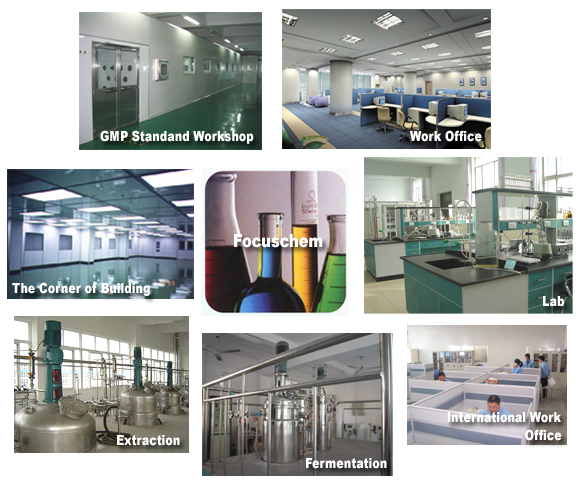
Production workshop: purification and process control determine whether a declared band is actually reproducible.
Market context: why certification is gaining weight in the decision
The commercial backdrop explains the tightening. Fortune Business Insights values the global hyaluronic acid market at USD 11.64 billion in 2025, with USD 22.36 billion projected for 2034 and a 7.52% CAGR across 2026–2034. Within that value, pharmaceutical grade accounts for 69.3% of product segment share in 2026 — meaning the capacity, control systems and documentation culture that serve pharmaceutical customers set the standard that cosmetic buyers inherit when they buy from the same manufacturers.
China remains a concentrated supply base. The country's hyaluronic acid market was valued at USD 649.7 million in 2024 and is projected to reach USD 1.06 billion by 2030, an 8.6% CAGR from 2025, according to regulatory consultancy Cisema. Growth of that order keeps pressure on qualification queues, which is why buyers increasingly evaluate certification readiness and batch evidence at the shortlisting stage rather than at the contract stage.
Comparison with traditional sourcing approaches — and where the framework stops
The traditional alternative to this three-axis approach is buying on grade name and price from an intermediary, with documentation collected after the order. The table below compares the two approaches on the dimensions that decide execution risk, without attributing specific performance to any named company.
| Decision dimension | Grade-name and price sourcing | Three-axis documented sourcing |
|---|---|---|
| Molecular weight | Band inferred from a catalogue label | Numeric band, method and batch value agreed in writing |
| Grade boundary | Grade treated as a quality ranking | Grade mapped to end use and to the applicable regulatory pathway |
| Certification | Certificate count used as a proxy | Scope statement, site and validity checked against the product category |
| Batch evidence | COA requested at delivery | Pre-shipment full test with COA, third-party inspection option |
| Change control | Supplier-side substitution risk | Fixed production parameters and per-batch cross-laboratory recheck |
| Continuity | Depends on the intermediary's stock position | Raw material reserve, dual fermentation workshops, flexible scheduling |
Where the framework stops. Three limits are worth stating plainly. First, published grade bands overlap — food grade at 0.8–1.5 million Da and cosmetic grade at 1.0–1.5 million Da cannot be separated by the label alone, so the certificate of analysis is not optional. Second, cosmetic-scope certifications such as Ecocert COSMOS organic and ISO 16128 support cosmetic ingredient claims only; they do not evidence pharmaceutical conformity, and no pharmacopoeial monograph claim should be inferred from them. Third, commercial terms can constrain execution: Habier states that payment mainly follows a high advance payment mode, with separately negotiable terms for large long-term clients, and that pre-shipment testing is supplier-performed unless the buyer arranges third-party inspection. Buyers with tight working capital or mandatory independent verification should plan for both.
Execution checklist: from shortlist to repeat order
- Fix the molecular weight band numerically, and state where inside the band the target sits.
- Confirm the grade against the end use and, where medical or device-adjacent claims are planned, confirm the applicable regulatory pathway separately.
- Request the scope statement for each certificate — site, product category, validity — rather than a certificate count.
- Request a batch certificate of analysis with the method used for molecular weight, before the first purchase order.
- Agree acceptance criteria in writing: pre-shipment full test with COA, third-party laboratory inspection, on-site factory inspection.
- Confirm minimum order quantity, delivery terms and payment structure, and stress-test them against your working capital cycle.
- Ask for the continuity model: raw material reserves, number of production lines, and how urgent bulk orders are scheduled.
- Define a change-control clause covering production parameters and any re-validation responsibility when a band or process changes.
Future outlook
Three developments are likely to shape cosmetic-grade sourcing over the next several years. Continued market growth — from USD 11.64 billion in 2025 toward USD 22.36 billion in 2034 at a 7.52% CAGR — keeps capacity allocation competitive, and pharmaceutical grade's 69.3% share of product segment value in 2026 means the documentation standard is more likely to rise than relax. Regulatory classification will keep drawing lines: China's NMPA treatment of medical sodium hyaluronate products as medical devices at no lower than Class II in the described cases already separates cosmetic ingredient supply from medical device supply, and buyers should expect more, not less, scoping. Finally, molecular weight will increasingly be specified as a batch attribute rather than a catalogue adjective, which favours buyers who wrote the band into the purchase specification at the start.
FAQ
What molecular weight should a cosmetic-grade hyaluronic acid specification state?
It should state a numeric band rather than only a grade name. Habier's published specification places cosmetic grade at 1.0–1.5 million Da, food grade at 0.8–1.5 million Da, pharma grade at ≥2.0 million Da and low molecular weight at ≤0.1 million Da. Because the food and cosmetic bands overlap, the specification is only complete when it also identifies the analytical method and the actual batch value.
Which certifications should a cosmetic ingredient buyer verify first?
Start with the certificates that match the end use. For a cosmetic ingredient, Habier's qualification set includes ISO 9001 for quality management, Ecocert COSMOS organic and ISO 16128 for natural and organic cosmetic ingredient criteria. ISO 22000, HACCP, Kosher and Halal reflect the food-grade and dietary-compliance side of the portfolio. In each case the scope statement — site, product category and validity — matters more than the number of certificates held.
Can batch-level test evidence be obtained before shipment?
Habier's stated acceptance criteria are a pre-shipment full test with a COA report, support for third-party laboratory inspection, and on-site factory inspection. Quality control includes 100% full inspection before delivery, an independent QC laboratory, and full traceability records for rejected material. Where independent verification is mandatory, the third-party inspection is arranged by the buyer and should be written into the order terms.
What order and payment terms apply when moving from sample to first purchase?
The company states a minimum order quantity of 1 kg and FOB or CIF delivery terms. Payment mainly follows a high advance payment mode, with terms for large long-term clients negotiable separately. Free sample supply and quality tracking are part of the stated after-sales support, which lets a buyer validate the material before committing to a production quantity.
How is supply continuity protected over a multi-year relationship?
Habier's stated measures are a 30-day raw material inventory reserve, two independent fermentation workshops, and flexible shift production to meet bulk urgent orders, alongside annual third-party recertification and a dedicated compliance team tracking EU and US food and cosmetic regulation. For the buyer, the corresponding action is to write these continuity commitments, and the change-control obligations that accompany them, into the supply agreement.
Reference: Habier's corporate product brochure is publicly available for download at https://cdn.socialarks.com/sbsp/24956/common/2026/0617/海贝尔宣传册.pdf. Company information: www.habier.com.
Tem questões ou precisa de mais detalhes?
Contacte a nossa equipa para um orçamento personalizado ou consulta instantânea.
Solicitar orçamento
Preencha o formulário abaixo e a nossa equipa entrará em contacto com uma proposta personalizada.
Chat direto do WhatsApp
Prefere conversar em tempo real? Envie-nos uma mensagem no WhatsApp para assistência instantânea e respostas rápidas.
- Obter orçamento personalizado
- Partilhar fotos ou documentos
- Discuta as suas necessidades diretamente
Geralmente responde em 5–30 minutos durante o horário de expediente.