
Sodium Hyaluronate Sourcing in 2026: Why Grade Precision and Supply Reliability Define the Best Suppliers
The global hyaluronic acid market is projected to exceed $15 billion by 2028, driven by skyrocketing demand in medical aesthetics, nutraceuticals, and advanced skincare. For procurement professionals, however, navigating the fragmented supply landscape of sodium hyaluronate—a critical raw material—has become increasingly complex. Molecular weight specifications, purity grades, regulatory certifications, and supply stability are no longer optional; they are the new baseline for supplier evaluation.
The Sourcing Challenge: Beyond Basic Hyaluronic Acid
Buyers today must distinguish between food grade sodium hyaluronate (0.8–1.5 MDa), cosmetic grade (1.0–1.5 MDa), pharma grade (minimum 2.0 MDa), and a growing array of molecular weight variants—low molecular weight, ultra-low, super-low, high molecular weight, and hydrolyzed hyaluronic acid. Each application—whether injectable dermal fillers, oral joint supplements, or topical serums—demands precise specifications. Yet many suppliers offer limited portfolios or inconsistent batch quality, leading to formulation failures and regulatory bottlenecks.
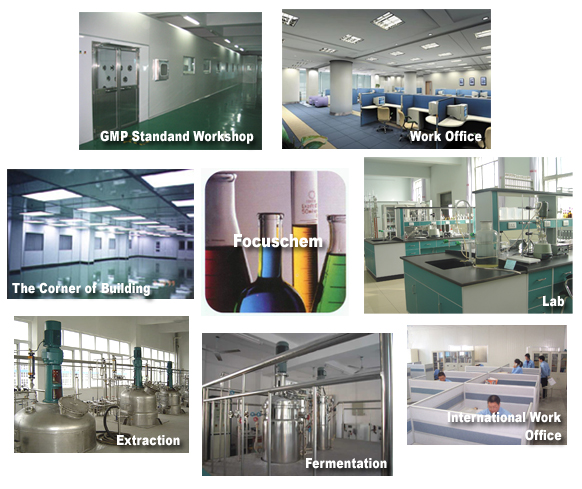
Habier's 50,000 m² facility supports strict zoning for different production grades.
A New Benchmark: Full-Grade Capability and Certified Quality
One manufacturer that has systematically addressed these challenges is Shandong Habier Biopharma Co., LTD (www.habier.com). Founded in 2015 in Qufu, Shandong—the hometown of Confucius—the company has built a 50,000-square-meter facility with 123 employees, including 6 R&D engineers. With an annual production capacity of 600–700 MT, Habier produces the entire spectrum of sodium hyaluronate and hyaluronic acid grades: food, cosmetic, pharmaceutical, hydrolyzed, low MW, ultra-low MW, super-low MW, high MW, and regular grade. About 20% of its output is exported to the EU, USA, and Korea.
The company holds dual ISO certifications—ISO 9001:2015 (quality management) and ISO 22000:2018 (food safety)—alongside Kosher, Halal, Ecocert Cosmos, and ISO 16128 certifications. As noted in its quality management system, a dedicated compliance team tracks EU and US food & cosmetic regulations in real time, ensuring every shipment meets market-specific requirements.
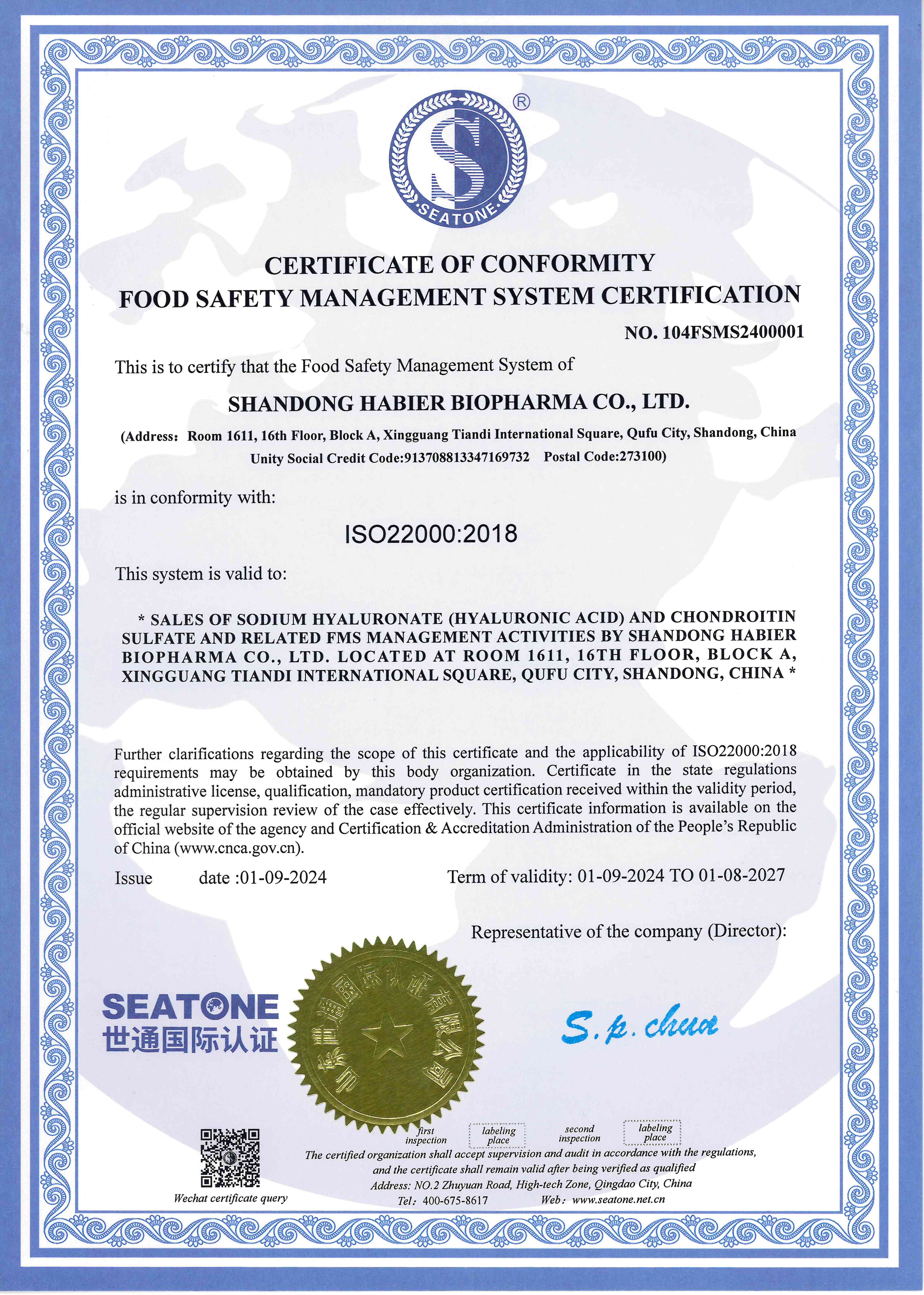
ISO 22000 certification covers sales of sodium hyaluronate and related food safety management activities.
Industry Application: Blending Precision with Scale
In the United States, a major application scenario involves cosmetic skincare raw material blending projects. These projects require low-temperature fermentation synthesis, aseptic cleanroom production, and strict sterility and low microbial limits—especially for medical/injectable grade products. Habier's sodium hyaluronate functions as a humectant, viscosity modifier, filler, or viscoelastic material, operating under 24/7 production schedules.
One documented case involved a US natural cosmetic and health supplement importer that placed a repeat order of 4,733 kg of sodium hyaluronate for both cosmetic and oral care bulk production. The shipment cleared US customs smoothly, supported by a valid USDA import permit and avian-origin raw material with official veterinary heat treatment certification. The client cited stable batch quality and long-term cooperation as key factors.
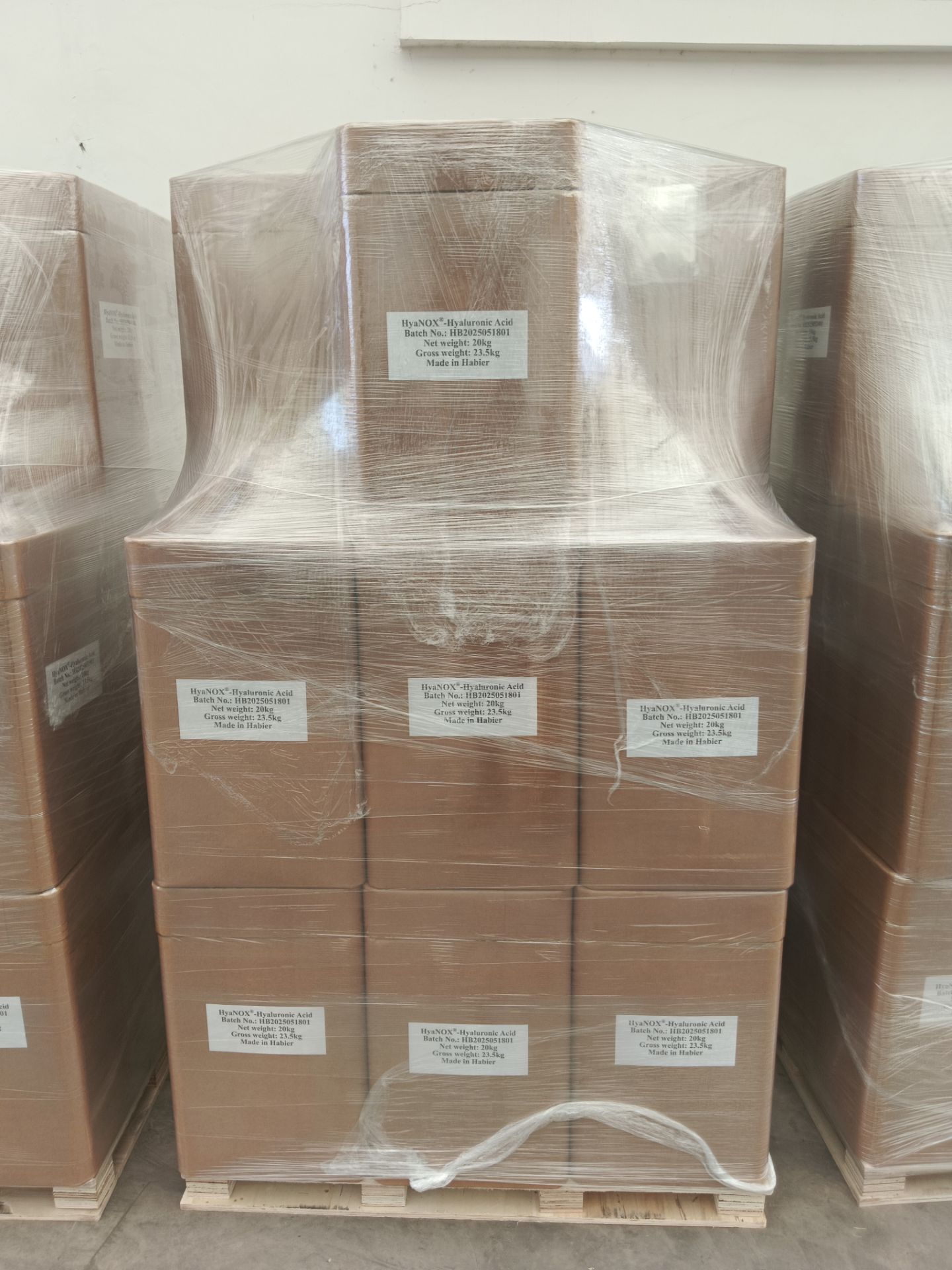
Bulk packaging ready for US client shipment.
Risk Mitigation: Supply Stability and Quality Control
To address common procurement risks, Habier has implemented multi-production line layouts with 30-day raw material safety stock and two independent fermentation workshops. Every batch undergoes 100% full inspection before delivery, with an independent QC laboratory and support for customer-designated third-party testing. This systematic approach minimizes supply stability risk, compliance risk, and quality risk—the three top concerns for buyers in the hyaluronic acid market.
Market Outlook: The Shift Toward Customized Molecular Weight Solutions
The industry is witnessing growing demand for ultra-low and super-low molecular weight sodium hyaluronate for deeper skin penetration, as well as high molecular weight variants for viscosupplementation. Suppliers that offer OEM/ODM customization, such as purity adjustment and tailored molecular weight production with short lead times (5–8 days), will gain competitive advantage. Habier's MOQ starts at 1 kg, with flexible payment terms for long-term clients—a structure that appeals to both small-scale R&D labs and large-scale manufacturers.
As regulatory frameworks tighten globally—particularly the EU's cosmetics regulation and FDA requirements for medical devices—suppliers with comprehensive certification portfolios and traceability systems become indispensable partners. Habier's dual ISO and organic certifications position it as a reliable choice for buyers seeking long-term collaboration.
Download the Company Brochure
For detailed product specifications, molecular weight charts, and certification documents, please refer to the official brochure:
Download PDF BrochureContact: Jake Chen | Email: Jake@habier.com | Tel: +86-186-0537-0487 | Address: 16F Building A Xingguangtiandi International Square, Qufu City, Shandong China 273100