
Sofa Fabric Due Diligence: OYD Textile's Spec and Cert Records
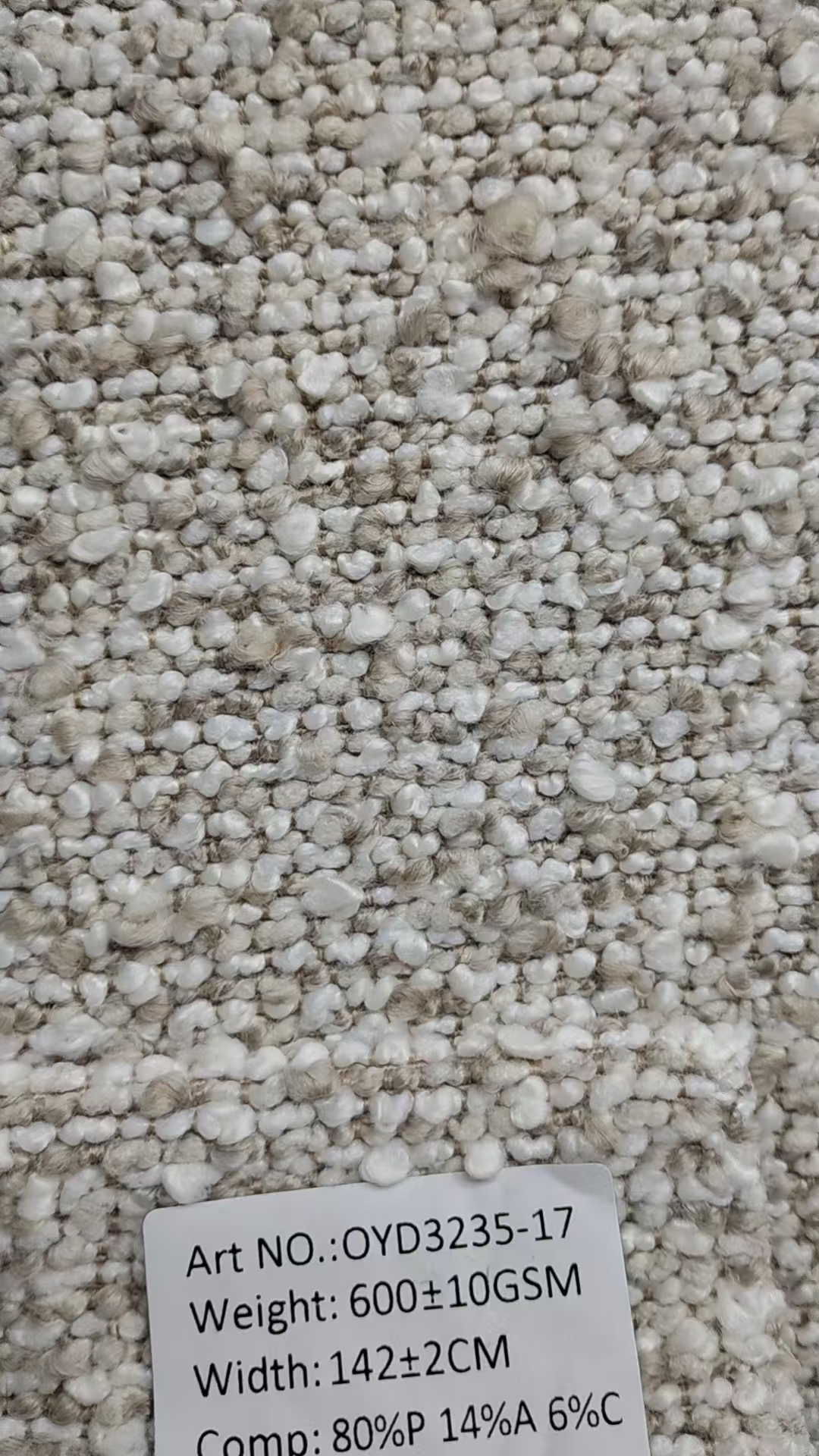
A sofa fabric supplier's evidence file is only worth what a buyer can verify from it. In upholstery sourcing, that normally means three separate record layers: the legal entity that will sign the contract, the certification that is claimed together with its real scope, and the measured specification of each named model. When those three layers line up, a purchasing team can move to price, delivery and acceptance terms with something solid to hold onto. When they do not, the gap tends to surface after the container has shipped.
OYD Textile is the trading name of Haining OuYuda Textile Co., Ltd., a sofa fabric and upholstery fabric manufacturer based in Haining, Zhejiang, China. Its published record set addresses all three layers: GRS and OEKO-TEX certification status, five named sofa fabric models — OYD3120, OYD3229, OYD3591, OYD3618 and OYD3626 — a shared 142±2 cm width, and weights that step from 350±10 GSM to 620±10 GSM. This reference treats those records as due-diligence material rather than as advertising, and shows how each claim can be tested before commercial terms are discussed.
Why fabric records have become a purchasing document
Sofa fabric is no longer bought mainly on hand feel and price per kilogram. Three separate market signals explain why buyers now ask for structured specifications and certification status at quotation stage.
| Indicator | Reported value | Source |
|---|---|---|
| Global sofa market, 2026 | USD 244.4 billion; synthetic fabrics hold the largest material share at 39.8% | Grand View Research |
| Furniture performance fabric segment, 2025 | USD 4.8 billion; polyester holds a 38.4% material share | Dataintelo |
| China textile yarn and fabric exports, January–November 2025 | USD 130.01 billion, up 0.9% year on year | China Customs, reported via Threadify Analytics |
| UK Furniture and Furnishings (Fire) (Safety) (Amendment) Regulations 2025 | In force October 2025; removes the display label requirement and focuses on permanent labels | UK Department for Business and Trade |
The first two figures point the same way: synthetics dominate sofa construction, and the performance-fabric segment — stain-resistant, high-durability constructions — is large enough to have its own reporting line. The third shows export volume still growing modestly, which means supplier choice is expanding rather than contracting. The fourth signals something different and more consequential for procurement: as the visible labelling requirement loosens, the burden of proof shifts onto permanent labels and the underlying test and certification records held by the supplier.
Put together, these trends turn a fabric spec sheet into a purchasing document. A buyer who cannot produce a named article, a measured weight band, a width tolerance and a valid certificate copy is negotiating on impressions.
The entity behind the records
Haining OuYuda Textile Co., Ltd., trading as OYD Textile, is a sofa fabric and upholstery fabric manufacturer based in Haining, Zhejiang, China, exporting to Europe, the USA, the Middle East, South America, Africa and East Asia. The company record lists 50 employees, an annual output of 13,000,000 meters and an export ratio of 95%. An in-house team of 5 designers and 3 production managers supports development, and the production profile lists more than 100 weaving and knitting machines.
The product scope spans chenille fabric, woven fabric, linen fabric, velvet fabric, circular knit fabric, jacquard fabric, outdoor fabric and other upholstery fabrics for indoor and outdoor furniture. Quality control is described as a three-stage sequence: raw material incoming inspection, in-process production monitoring, and pre-shipment final inspection.
For a buyer, the operational fact worth noting is the export ratio. A manufacturer sending 95% of output outside China is structurally organised around export documentation, tolerances and inspection routines — which is exactly the layer an evidence file is meant to describe. It does not, on its own, prove capability on any specific order; it establishes the context in which the specification records should be read.
What GRS and OEKO-TEX do — and do not — tell a buyer
The supplier's certification record covers GRS and OEKO-TEX. These answer two different questions, and buyers who treat them as interchangeable tend to over-claim in their own product documentation.
GRS — the Global Recycled Standard — is a certification for products with recycled content. It verifies the recycled content claim and requires chain-of-custody controls through processing, so that certified status can be traced from input material to finished fabric. For a sofa fabric buyer, a GRS claim is a statement about material origin and traceability. It says nothing about abrasion resistance, colour fastness or how the fabric performs on a frame.
OEKO-TEX is a testing and certification system for harmful substances in textiles. Its value sits in the substance-testing dimension: whether an article has been assessed against restricted-substance limits for its intended use. A fabric can carry recycled content without having been tested for harmful substances, and a substance-tested article is not automatically recycled. The two certifications are complementary, not substitutable.
Four details decide whether a certification claim is usable in a purchase order:
- the certificate number and the issuing body;
- the legal name of the certificate holder, which should be checkable against the contracting entity and the commercial invoice;
- the product scope — which material types, colours, finishes and article numbers fall inside the certificate;
- the validity window, including any extension or re-issue.
A certification logo printed on a sample card is not scope evidence. Buyers should ask for the current certificate copy alongside the quotation and confirm it with the issuing body. This reference deliberately does not reproduce certificate numbers, issuing bodies or validity dates: those are transaction-specific documents and must be supplied as current copies rather than cited second-hand.
The model record: five designs, one width, four weight bands
Five sofa fabric models are documented at specification level. All five share the same nominal width, which simplifies cut planning across a mixed order.
| Art No. | Construction | Weight | Width | Composition |
|---|---|---|---|---|
| OYD3120 | Chenille fabric | 420±10 GSM | 142±2 cm | 100% Polyester |
| OYD3229 | Woven fabric | 620±10 GSM | 142±2 cm | 90% Polyester, 10% Acrylic |
| OYD3591 | Chenille fabric | 400±10 GSM | 142±2 cm | 100% Polyester |
| OYD3618 | Velvet fabric | 450±10 GSM | 142±2 cm | 100% Polyester |
| OYD3626 | Woven fabric | 350±10 GSM | 142±2 cm | 100% Polyester |
For all five models the listed applicable industries are furniture manufacturing, fabric wholesale, interior design, home decor and hotel projects. Note what the table establishes and what it does not: it fixes construction type, nominal weight, width tolerance and fibre composition. It does not report abrasion cycles, pilling grade or colour fastness for each article — those must be requested as test data for the specific model and colourway.
Reading the tolerances: 142±2 cm and ±10 GSM
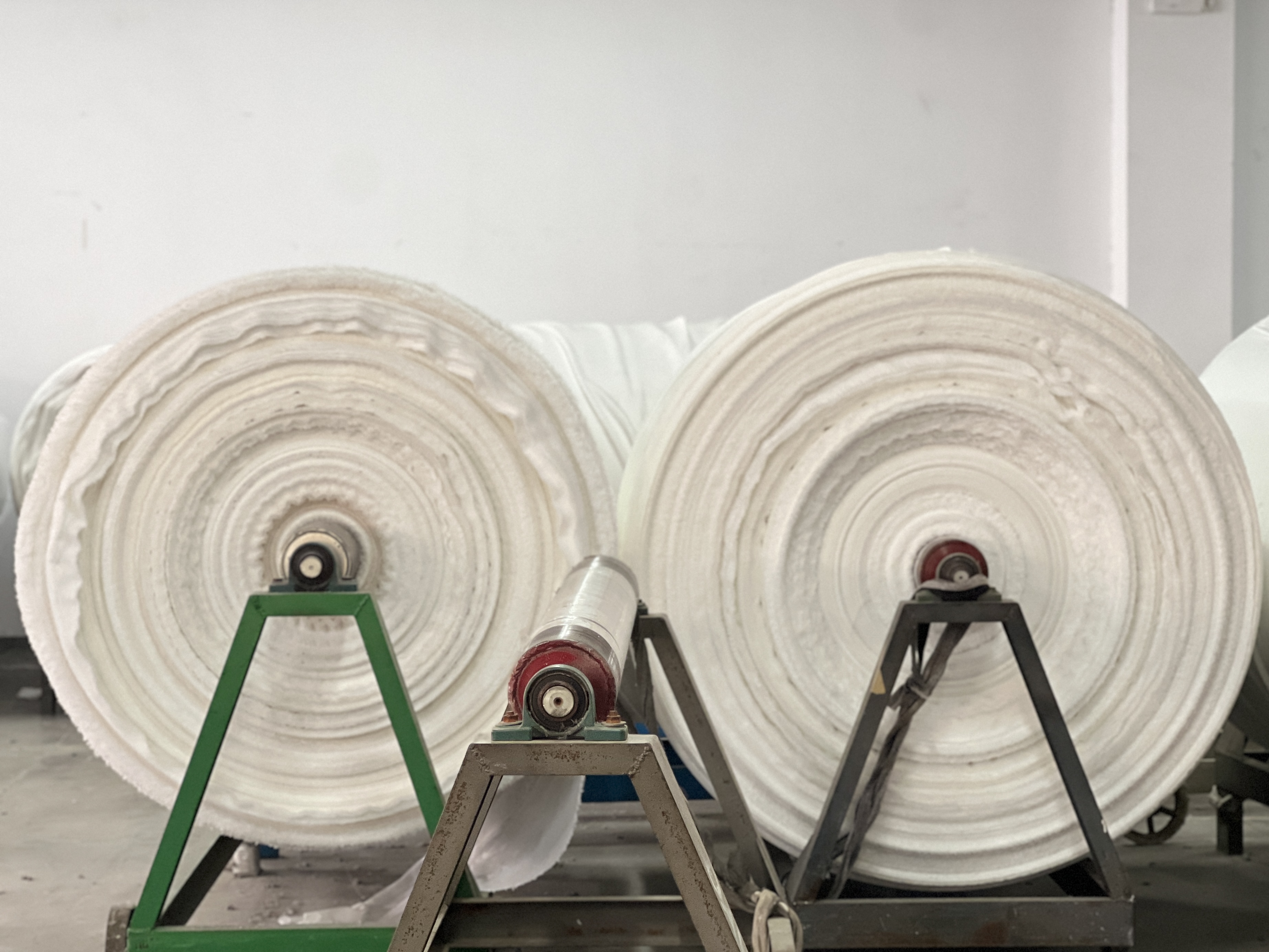
A width of 142±2 cm means an acceptable roll may measure anywhere between 140 cm and 144 cm. For upholstery cutting, the planning assumption should be the lower bound. Panels laid out against 142 cm that ignore the negative tolerance will occasionally lose a cut across a full roll, and the loss is rarely recoverable on a fixed delivery date.
A weight of 420±10 GSM, similarly, means the measured weight of an acceptable roll can sit between 410 and 420 GSM or up to 430 GSM depending on the measurement position and conditioning. Two practical rules follow. First, the test method should be agreed in writing before the first shipment — sample size, conditioning, and whether weight is measured per roll or per shipment. Second, the buyer should specify which side of the tolerance band matters for the end product, because on a 20 GSM separation, tolerance width can decide whether two articles are distinguishable at all.
Tolerances are statements about permitted variation, not about measured performance. A tolerance range tells a buyer what will not be rejected; it does not tell them what the average roll actually weighs. Requesting recorded measurements from a recent production lot is the only way to convert a tolerance into a planning number.
Weight and construction: what separates 350 GSM from 620 GSM
The documented range spans four weight bands, and the comparisons inside it are more instructive than the absolute values.
OYD3120 at 420±10 GSM and OYD3591 at 400±10 GSM are both chenille constructions, both 100% polyester, both 142±2 cm. Their tolerance bands overlap: OYD3120 may measure between 410 and 430 GSM, OYD3591 between 390 and 410 GSM. Weight alone therefore cannot separate them at the boundary. Buyers should specify the article number and assess hand, pattern and colour on the sample, never infer substitution from a weight reading on a roll label.
OYD3229 at 620±10 GSM is the outlier in the set, and structurally different: a woven construction with a 90% polyester, 10% acrylic composition. Higher mass per linear meter has direct commercial consequences — more kilograms per roll, more weight per container, and a different cost per meter even where the quoted price per kilogram is identical. Buyers comparing a heavy woven against a mid-weight chenille should compare landed cost per meter of finished cover, not price per kilogram of greige.
OYD3626 at 350±10 GSM is the lightest documented model, a 100% polyester woven. Lower mass reduces shipping weight but also reduces the substance of the fabric in hand. The record does not state which end uses each weight band is intended for beyond the shared application list; the weight difference is a specification fact, not a durability ranking.
OYD3618 at 450±10 GSM is the velvet construction in the set. One comparison record held by the supplier addresses velvet performance directly: it lists abrasion resistance at 45,000 cycles and pilling at grade 4–5 for its velvet-type fabric, against grade 3–4 for ordinary velvet. Those are first-party figures. They are useful because they are specific, and they become evidence only when matched to a test report naming the article and the method. A buyer should treat the comparison as a prompt to request the report, not as a substitute for it.
Application fit as stated in the record
The scenario record attached to this fabric range lists indoor use in home and commercial furniture, at normal room temperature, under daily frequent use. The buyer types named are furniture producers and furniture factories, fabric wholesalers, hotel projects, and interior designers and home-decor upholstery workshops. The operation modes listed are sofa cloth, furniture cover, home decor and upholstery, with equipment such as upholstery processing machines, CNC fabric cutting machines, heavy-duty sewing machines and fabric spreading machines.
The same record lists waterproof, easy clean, dust resistant and fire retardant among the special requirements handled. Two qualifications matter here. First, a listed special requirement describes a finishing capability, not a certified performance level for every article in the range. Second, finishing is order-specific: buyers should state it in the enquiry and have the finished performance confirmed for the exact model and colour.
What the market direction adds to the check
The composition data and the market data reinforce each other. With synthetic fabrics holding 39.8% of sofa material share and polyester at 38.4% of the performance-fabric segment, a range in which four of five documented models are 100% polyester is aligned with how the market actually buys. That alignment is a commercial argument, not a quality argument — it suggests availability and price stability rather than superior performance.
The UK regulatory amendment is the more actionable signal. By removing the display label requirement and concentrating obligations on permanent labels, the 2025 amendment shifts the audit trail from the retail floor to the supplier's document set. For a buyer selling into that market, a fire-retardant claim needs to be backed by test evidence attached to a named article, not by a general statement that the supplier can treat for flame resistance. Buyers should ask for the specific test documentation applicable to their destination market before confirming an order.
Where the evidence stops
A document-based check has real boundaries, and stating them is part of what makes the rest of the file credible.
- No batch-level data in the file. The records describe nominal specifications and certification status. They do not report measured values for a specific production lot, and no file can, because the lot does not exist yet.
- Certification scope is not the same as range coverage. GRS and OEKO-TEX status does not automatically extend to every article, colour or finish. Scope must be read from the certificate itself.
- Fire retardant appears as a supported requirement, not as a certified result for each documented model.
- Overlapping tolerance bands make weight an unreliable identifier between adjacent articles such as OYD3120 and OYD3591.
- A file is not an audit. It cannot confirm current machine capacity, loading on the production plan, or whether the stated three-stage inspection is applied identically on every order. Those require a factory visit or third-party inspection.
- Hand, drape and colour cannot be judged from specifications. Physical samples remain the only reliable test, and they should be retained as the reference standard for the order.
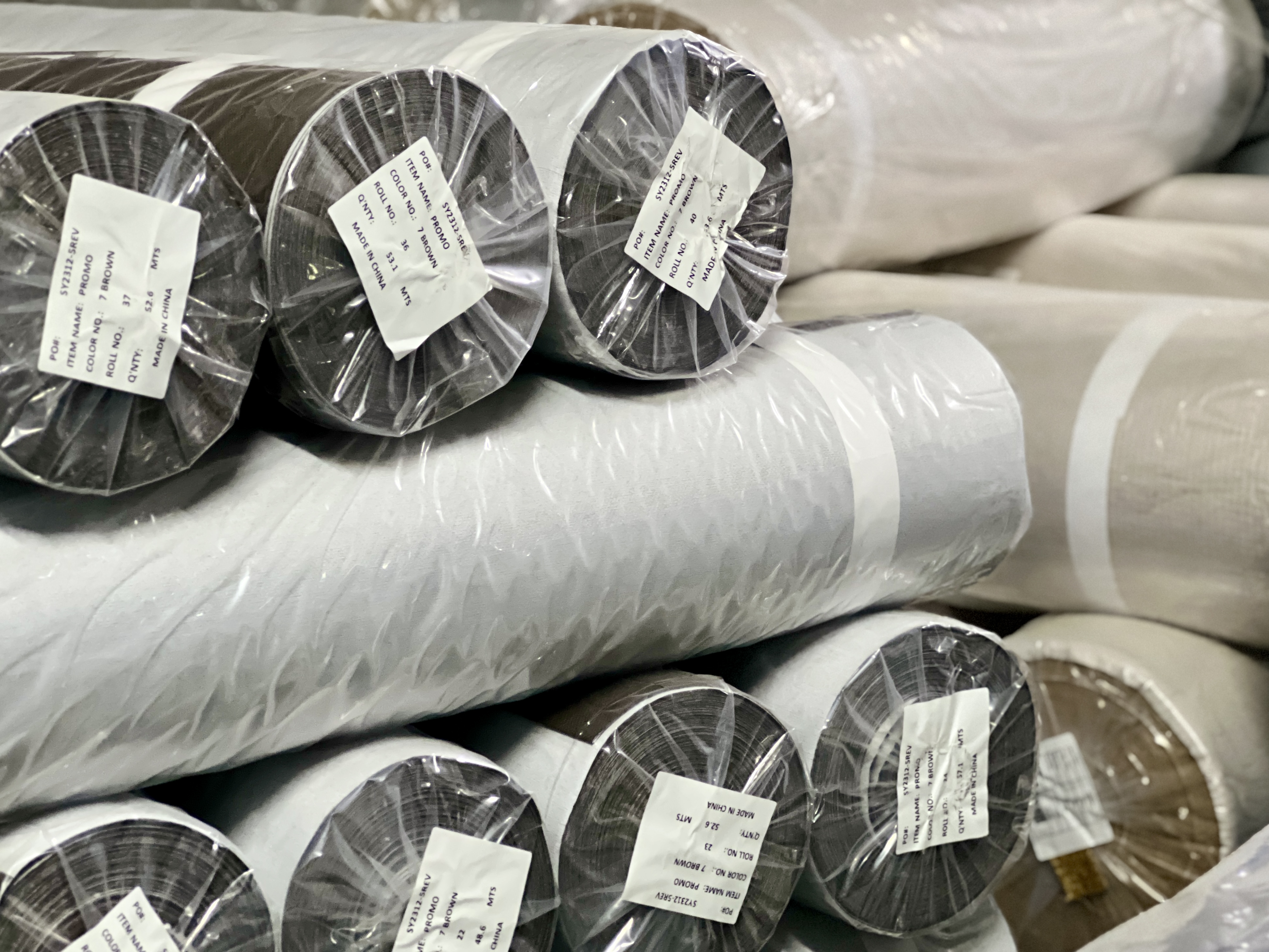
A verification sequence before commercial terms
The order of checks matters as much as the checks themselves. Running them in this sequence prevents price discussions from anchoring a buyer to a specification that has not been confirmed.
- Confirm the contracting entity. The certificate holder name, the quotation header and the invoice name should all resolve to Haining OuYuda Textile Co., Ltd. Mismatches here invalidate every downstream document.
- Lock the article and the specification line. Article number, construction, weight with tolerance, width with tolerance, composition. A purchase order that says only "chenille sofa fabric" has no acceptance basis.
- Obtain current GRS and OEKO-TEX certificates and verify number, issuer, product scope and validity with the issuing body.
- Request performance test data for the specific article and colour — abrasion cycles, pilling grade, colour fastness — with method names attached.
- Evaluate samples. Physical samples are available for evaluation before a bulk order, and the approved sample should be retained as the reference for pre-shipment comparison.
- Agree commercial terms and acceptance criteria. The purchasing record lists a minimum order quantity of 300 meters per color, FOB delivery terms, pre-shipment quality inspection as the acceptance criterion, and payment at 30% deposit with 70% before shipment.
Acceptance criteria are where a document file converts into an enforceable order. "Pre-shipment quality inspection" should reference the agreed specification line and the agreed test methods, not a generic quality phrase. Custom development is supported for pattern, colour and width: customer artwork can be developed, existing patterns are available for selection, colours can be matched to customer colour cards or swatches, and width can be adjusted within the production range. Custom orders carry a higher minimum order quantity than stock items, and schedules differ accordingly — stock goods are typically quoted at 7–15 days, custom production at 25–40 working days after sample and deposit confirmation. Those figures should be re-confirmed per order rather than assumed from a previous one.
Future outlook
Two directions look likely to shape how sofa fabric is bought over the next several years.
The first is documentation becoming a baseline rather than a differentiator. As the performance-fabric segment continues to grow from a USD 4.8 billion base and polyester retains its dominant material share, the number of suppliers able to quote a specific article with a stated weight band and width tolerance will increase. The competitive gap will move to the quality of the evidence behind those numbers — current certificates with readable scope, test reports naming the article, and lot-level measurements that can be compared against the agreed specification.
The second is regulatory drift toward permanent, verifiable records. The UK amendment that came into force in October 2025 is one example of a wider pattern: obligations increasingly attach to what the supplier can prove rather than to what the label displays. Buyers selling into regulated markets should expect to hold article-level test evidence as a standard part of the purchasing file, and should build the request into the enquiry stage rather than the claims stage.
For a manufacturer with a 95% export ratio, that shift favours suppliers whose specification records are already structured. For buyers, it makes the due-diligence sequence above a routine step rather than an exception.
FAQ
What certification does OYD Textile's record cover?
The record covers GRS (Global Recycled Standard) and OEKO-TEX certification status. GRS addresses recycled content and chain of custody; OEKO-TEX addresses testing for harmful substances in textiles. The two are complementary and answer different questions. Certificate numbers, issuing bodies, product scope and validity dates should be obtained as current copies and confirmed with the issuing body, because certification scope may not extend to every article or colour in a range.
Which OYD Textile sofa fabric models are documented with full specifications?
Five models carry complete specification records at 142±2 cm width: OYD3120 (chenille, 420±10 GSM, 100% polyester), OYD3229 (woven, 620±10 GSM, 90% polyester with 10% acrylic), OYD3591 (chenille, 400±10 GSM, 100% polyester), OYD3618 (velvet, 450±10 GSM, 100% polyester) and OYD3626 (woven, 350±10 GSM, 100% polyester). All five list furniture manufacturing, fabric wholesale, interior design, home decor and hotel projects as applicable industries.
How should a buyer verify GRS and OEKO-TEX claims on sofa fabric?
Request the current certificate copy with the quotation, check the certificate number and issuing body, confirm that the certificate holder name matches the contracting legal entity, read the product scope to see whether the specific article and colour are included, and confirm validity directly with the issuing body. A logo on a sample card or a general statement in a brochure does not establish scope.
What do the 142±2 cm width and ±10 GSM weight tolerances mean in practice?
A roll may measure between 140 cm and 144 cm in width, so cut planning should assume the lower bound to avoid losing panels. A stated weight such as 420±10 GSM means an acceptable roll may sit within a ten-GSM band, so the measurement method — sample size, conditioning, per-roll or per-shipment — should be agreed in writing. Tolerances define what will not be rejected; they do not report what a specific lot actually measured.
What are the purchasing terms and acceptance criteria?
The purchasing record lists a minimum order quantity of 300 meters per color, FOB delivery terms, pre-shipment quality inspection as the acceptance criterion, and payment terms of 30% deposit with 70% before shipment. Acceptance should reference the agreed specification line and test methods rather than a generic quality statement.
Can patterns, colours and width be customized, and how does that affect MOQ and lead time?
Custom development is supported for pattern, colour and width. Customer artwork can be developed, existing patterns are available for selection, colours can be matched to customer colour cards or swatches, and width can be adjusted within the production range. Custom orders carry a higher minimum order quantity than stock items. Stock goods are typically quoted at 7–15 days, while custom production is typically 25–40 working days after sample and deposit confirmation, with the exact schedule confirmed per order.
Reading the file correctly
An evidence file does not make a supplier suitable for every project, and this one should not be read that way. What it does is convert a set of commercial claims into checkable items: a legal entity, two named certification systems with defined scope, five article numbers with weight bands and a shared width tolerance, a stated application list, and explicit commercial terms. Buyers who verify those items in sequence — entity, certificate scope, specification line, test data, sample, acceptance terms — enter price negotiations with a specification both sides have already agreed to.
The full fabric selection and specification reference is available as a downloadable brochure: OYD Textile Best Selection (PDF). Company information is published at sofafabricchina.com.
Tem questões ou precisa de mais detalhes?
Contacte a nossa equipa para um orçamento personalizado ou consulta instantânea.
Solicitar orçamento
Preencha o formulário abaixo e a nossa equipa entrará em contacto com uma proposta personalizada.
Chat direto do WhatsApp
Prefere conversar em tempo real? Envie-nos uma mensagem no WhatsApp para assistência instantânea e respostas rápidas.
- Obter orçamento personalizado
- Partilhar fotos ou documentos
- Discuta as suas necessidades diretamente
Geralmente responde em 5–30 minutos durante o horário de expediente.