
Soft Magnetic Alloy Fit: Aerospace Poles and Magnetron Tubes
Soft Magnetic Alloy Fit: Aerospace Poles and Magnetron Tubes
An aerospace electromagnet pole head and a magnetron assembly are usually bought as two separate line items, yet they frequently converge on one material question: which soft magnetic alloy can hold enough flux density to do the work, hold it through continuous alternating-field cycling, and hold it inside an envelope that keeps shrinking? For the 1J22 family supplied by Cheng Yuan Alloy, the documented answer combines ultra-high saturation magnetic flux density with a ±0.001 mm thickness tolerance, a uniform grain structure, long-term installation in continuous alternating-magnetic-field duty, and no permanent demagnetization under rated working temperature. The same grade family is also sold into magnetostrictive transducer cores, where the property that decides the design is magnetostriction rather than attraction force — and treating those two duties as interchangeable is one of the more expensive specification errors in this niche.
Why pole heads and magnetron parts pull the specification in different directions
The procurement problem is not a shortage of nickel-iron and cobalt-iron grades. It is that a single technical brief often mixes two different operating questions. An electromagnet pole head is asked to deliver attraction force across a working gap. A magnetron component is asked to behave consistently inside a sealed, welded, vibrating assembly excited by an alternating field. A precision motor core is asked to respond quickly to frequent start-stop demand without drifting.
In a pole head, the attraction force available from a given pole area rises steeply with the flux density the material can sustain, so the saturation ceiling of the alloy caps how much force a given geometry can produce. Once the pole material saturates, additional coil current buys very little extra flux. Raising the saturation ceiling therefore does two things at once: it increases the force available at a fixed pole area, and it allows a smaller pole area — and often a smaller coil and housing — for a force target that does not change. That is the mechanism behind the documented positioning of 1J22, whose ultra-high saturation magnetic flux density is described as strengthening electromagnetic attraction while downsizing aerospace-grade electromagnets and precision DC motors.
High-permeability grades solve a different problem. Alloys such as 1J79, 1J85, 1J50 and 1J54 are recorded for precision shielding housings, weak-signal transformer cores and sensor work, where the priorities are high initial and maximum permeability, low coercivity and low residual magnetism so that weak signals pass without distortion. Permeability describes how easily flux is established at low excitation; saturation flux density describes the ceiling at high excitation. A buyer who specifies a shielding grade for a pole head has optimised the wrong end of the curve, and a buyer who specifies a high-saturation grade for a shielding can has usually added cost without adding attenuation.
What Cheng Yuan Alloy documents for the 1J22 family
Cheng Yuan Alloy (Shijiazhuang Cheng Yuan Alloy Material Co., Ltd.) is a Hebei-based supplier of soft magnetic, expansion, heating, high-temperature and corrosion-resistant alloys, with strip, sheet, bar, wire, tube, powder and stamped forms in its published range and 1J22, 1J22MS, 1J22HS, 1J79, 1J50 and 1J85 among its listed soft magnetic grades. Its published capability data records OEM production with size, logo and packaging customisation, a monthly capacity of 300 tons, a 50 kg minimum order quantity, an indicative 30-day lead time and 100% testing, alongside factory data testing, third-party testing and transport support in after-sales scope. Further detail on the grade range is published at Cheng Yuan Alloy.
For this application question, three records matter more than the catalogue breadth. The first is the 1J22 base grade, documented for high-saturation soft-magnetic cores, magnetron components and aerospace precision electromagnets, with an extremely high magnetostriction coefficient, high saturation magnetic flux density, low coercivity and thickness tolerance controlled to ±0.001 mm with a uniform grain structure. The second is 1J22HS, a strength-oriented variant recorded for aerospace-grade electromagnet pole heads, high-reliability magnetron fittings and heavy-load magnetostrictive transducer cores, where ultra-high tensile and yield strength address centrifugal and fatigue loading while saturation flux density and Curie temperature are described as consistent with standard 1J22; it requires vacuum hydrogen annealing and dual inspection of mechanical and magnetic performance before delivery. The third is 1J22MS, where the emphasis shifts to optimised magnetic-domain behaviour for fast rotor response in torque motors and to controlled residual magnetism that limits signal deviation in precision servo components.
Read together, the three records answer a common procurement complaint. Buyers often ask for "1J22" and then discover that the delivered temper, strength level and heat treatment decide whether the part survives stamping, welding and vibration. The sub-grade choice, not the alloy name, carries that decision.
Thickness tolerance and grain structure: what ±0.001 mm changes in a stack
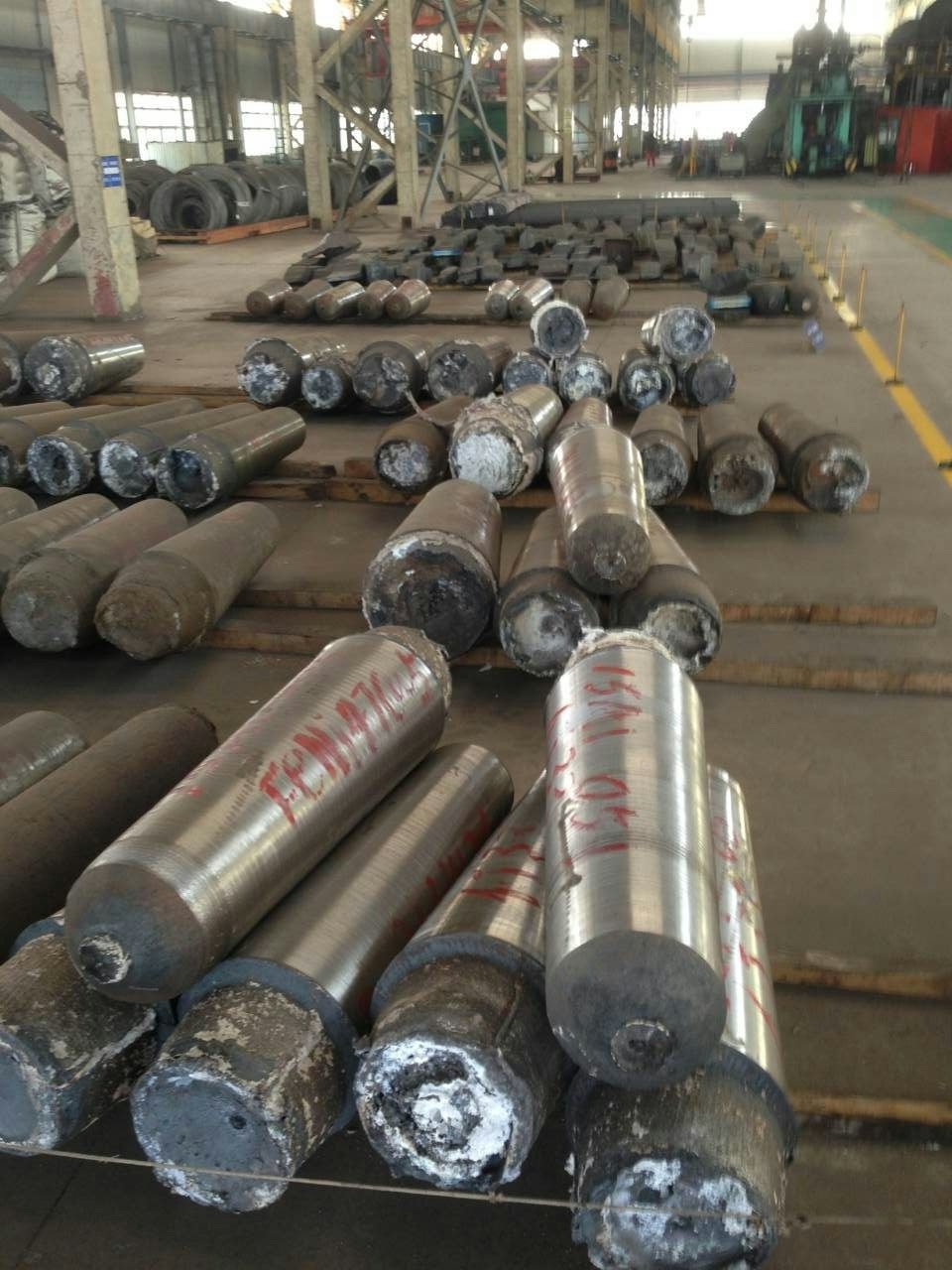
Tolerance is usually the first line item sacrificed when a project moves from prototype to rate production, and in laminated or stacked magnetic parts it is the line item that quietly rewrites the design. Thin strip specified to ±0.001 mm keeps the built-up stack height, the air gap and the interlaminar fit within the tolerances the magnetic circuit was calculated around. When that band widens, the consequences are mechanical before they are magnetic: stack height drifts, clamping force changes, and the gap that the force calculation assumed is no longer the gap that exists.
Grain structure matters for a related reason. A uniform grain structure after annealing supports uniform magnetic response across the part and from batch to batch, which is what allows a buyer to qualify a process once rather than re-qualify every delivery. The scenario records for the 1J22 pole head and magnetron duty pair the ±0.001 mm tolerance with that uniform grain structure and with stable magnetic consistency. For comparison, the precision high-permeability records covering 1J79, 1J85, 1J50 and 1J54 state a ±0.002 mm tolerance with a uniform fine grain structure after vacuum hydrogen annealing — a reminder that the tolerance band belongs to the grade and product record, not to the phrase "soft magnetic alloy" in general.
Two related parameters are worth pulling into the same conversation. The product-family data lists strip thickness from 0.01 mm to 2.0 mm, strip width from 2 mm to 300 mm with customisation, a lamination factor of 0.88 to 0.94 and a surface roughness of Ra ≤ 0.8 μm. Those are the numbers that decide whether a pole head or a thin diaphragm can be stamped and stacked as designed, and they are the numbers a stamping die is built around.
Continuous alternating-field duty and the demagnetization question
A pole head or magnetron part in service is not magnetised once. It sits in a field that reverses continuously, and the material must return to the same magnetic state cycle after cycle. The documented operating mode for 1J22 is long-term installation inside electromagnets, magnetrons and precision motors under continuous alternating-magnetic-field cycling, without permanent demagnetization under rated working temperature. Low coercivity is the property that makes this practical: a low coercivity alloy needs less field to reverse, so hysteresis loss per cycle stays small and the part does not accumulate the magnetic and thermal drift that a wider hysteresis loop would produce.
The same logic appears in the magnetron record, where low coercivity is credited with cutting hysteresis loss for long-term stable operation of magnetron end-welded tubes. It also appears in the 1J22HS requirement for fatigue-resistant magnetic behaviour under long-term alternating vibration, and in the 1J22MS record, which describes frequent dynamic alternating-field cycling and intermittent start-stop operation without magnetic-performance degradation.
"No permanent demagnetization" is a claim about the rated working temperature and the documented duty cycle, not a blanket promise. A buyer should read it as a qualification statement to be confirmed against the actual drive profile, the actual clamping and the actual heat path of the assembly. Where the drive profile departs from the documented duty, the honest answer is a test on the real part, not an extrapolation from the catalogue.
Connecting -60 °C to 130 °C to the stability requirement
The aerospace temperature discussion needs to be read grade by grade, because the supplied records are not identical. The scenario record for 1J22 electromagnet and magnetron duty states a -60 °C to 120 °C applicable range and asks for stable magnetomechanical performance across it without attenuation, alongside resistance to aviation-grade mechanical vibration and suitability for sealed magnetron assemblies. The 1J22HS and 1J22MS records state the same -60 °C to 120 °C band. The -60 °C to 130 °C band appears in the 1J27 record and in the precision high-permeability records for 1J79, 1J85, 1J50, 1J54 and related grades, where magnetic fluctuation is stated as less than 3% between -60 °C and 130 °C. At product-family level, the parameter table lists a continuous operating temperature of -40 °C to 130 °C, a short-term peak resistance of ≤ 180 °C and a storage range of -50 °C to 80 °C.
That spread is not a contradiction to be averaged away; it is a specification decision. A program that writes "-60 °C to 130 °C" into an RFQ for a 1J22 pole head is asking for one band from a record that documents another, and the supplier is then placed in the position of either quoting outside its record or quietly reinterpreting the requirement. The practical route is to state the qualified band for the exact grade, heat treatment and assembly, and to require a temperature-cycling test on the delivered configuration where the margin matters. At the cold end, the concern is mechanical as much as magnetic: differential contraction across a stack or a welded assembly loads joints and can shift a gap. At the warm end, the concern is whether the flux density and coercivity the design assumed still hold at the top of the band.
Three application scenarios and one boundary
Aerospace electromagnet pole heads

The pole head is the clearest expression of the high-saturation argument. Force per unit pole area depends on the flux density the alloy can hold, so the 1J22 class is documented for strengthening electromagnetic attraction and permitting smaller aerospace-grade electromagnets and precision DC motors. The 1J22HS record adds the mechanical side for pole heads that are also structural: ultra-high tensile and yield strength, fatigue resistance under long-term alternating vibration, vacuum hydrogen annealing, and dual mechanical and magnetic inspection before delivery. A buyer should not assume the HS grade is automatically correct. Its strength requirements in the supplied record are tied to high-speed rotating components and heavy-load duties; where a pole head is stationary and lightly loaded, the base grade may be the better-matched, easier-to-form choice, and the decision should follow the load case rather than the strongest available variant.
Magnetron components in sealed, welded assemblies
Magnetron duty combines three constraints that rarely appear together: a sealed assembly, welded joints, and continuous alternating-field excitation under vibration. The 1J22 record covers magnetron components and describes low coercivity as the mechanism for reduced hysteresis loss and long-term stable operation of end-welded tubes, with the alloy matched to sealed magnetron assemblies and low-noise electromagnetic-driven environments. The associated tooling list is a useful reality check on what a qualified part actually requires — magnetron welding equipment, magnetic performance testing and precision stamping tooling appear alongside the material itself. Because welding and annealing sit downstream of the alloy decision, the delivered magnetic state is a process outcome, and a supplier who cannot show the anneal and inspection sequence is offering an unfinished claim. Nothing in the supplied record establishes radio-frequency performance or tube life; those remain design and system-level questions.
Precision motor cores
In torque motors and precision servo components, the governing requirement shifts from maximum force to repeatable response. The 1J22MS record describes optimised magnetic-domain characteristics that accelerate rotor dynamic response under frequent start-stop cycles, controlled residual magnetism that limits signal deviation in precision servo components, and balanced mechanical-magnetic properties for continuous alternating-field duty. That is a different brief from a pole head, and it is why a single "high-saturation" label does not settle a motor-core specification.
The boundary: shielding and weak-signal work
Where the job is to isolate interference or transmit a weak signal, the high-permeability grades take over. The 1J79, 1J85, 1J50 and 1J54 records target precision shielding housings, signal transformer cores, sensors, gyroscopes and torque motors in the -60 °C to 130 °C band, with ultra-low residual magnetism and small hysteresis loss to protect signal integrity. Using 1J22 here would trade away the property the application is built on. The reverse error — using a shielding grade in a pole head — was described earlier and is equally costly.
Electromagnet and magnetron duty versus magnetostrictive transducer cores
The distinction the aerospace buyer most often needs is the one inside the 1J22 family itself. In an electromagnet pole head or a magnetron component, magnetostriction is largely a nuisance: it converts magnetic cycling into dimensional change, which can show up as vibration or acoustic output, and the design goal is stable flux density and low loss. In a magnetostrictive transducer iron core, the same physical effect is the function. The material is selected because it converts magnetic energy into mechanical motion efficiently, and the specification then turns on the size and consistency of the magnetostriction coefficient rather than on maximum attraction force.
The records reflect that inversion. 1J22 is documented with an extremely high magnetostriction coefficient that realises mechanical-magnetic energy conversion for magnetostrictive transducer iron cores, and 1J22HS covers heavy-load transducer cores with the same high Curie temperature and saturation flux density as standard 1J22 plus the strength to survive dynamic vibration. The 1J27 record goes further in the transducer direction, calling for a high targeted magnetostriction coefficient within a narrow tolerance range so that vibration-conversion efficiency stays consistent, together with ±0.001 mm thickness control, homogeneous grain structure, magneto-mechanical stability from -60 °C to 130 °C, low residual magnetism and ductility for ultra-thin stamping. At family level, the saturation magnetostriction coefficient spans 0.5 to 30 ppm across the grade range, which is precisely why the grade and the direction of the tolerance both have to be named.
So the procurement rule is straightforward. If the part must pull, specify saturation flux density, coercivity and loss, and treat magnetostriction as a side effect to be controlled. If the part must move or sense, specify the magnetostriction coefficient and its tolerance band, and treat attraction force as secondary. A single drawing that asks for both without stating which one dominates will produce a part that is optimised for neither.
Fit comparison across the documented application roles
| Application role | Property that governs the choice | Documented grade record | What the record does not establish |
|---|---|---|---|
| Aerospace electromagnet pole head | Saturation flux density for attraction and downsizing; low coercivity and hysteresis loss; strength where the pole is structural | 1J22; 1J22HS | A specific force output, coil design or duty cycle for a given assembly |
| Magnetron component in a sealed, welded assembly | Low hysteresis loss under continuous alternating field; annealed, crack-free condition; vibration stability | 1J22; 1J22HS | Radio-frequency performance, tube life or weld-process capability |
| Precision motor and torque-motor core | Dynamic response under frequent start-stop; controlled residual magnetism | 1J22MS | Efficiency, torque or thermal performance of a specific motor design |
| Magnetostrictive transducer iron core | Magnetostriction coefficient and its tolerance band; magneto-mechanical stability | 1J22; 1J22HS; 1J27 | Conversion efficiency in a specific transducer design |
| Precision shielding and weak-signal transformer core | Initial and maximum permeability; low coercivity; low residual magnetism | 1J79; 1J85; 1J50; 1J54 | Shielding effectiveness in decibels for a specific housing geometry |
Market and standards context, read with its limits
Third-party commercial research in the harvested dataset puts the global soft magnetic materials market at USD 24.5 billion for 2026 with growth projected through 2033 (Grand View Research, source page dated 15 June 2026), and the permalloy segment at USD 2.8 billion for 2025 (Dataintelo, source page dated 15 May 2026). Both figures are useful framing for why aerospace buyers now see more supplier options. Neither should be read as an aerospace demand forecast: the broader figure covers electrical steel, soft ferrites, amorphous and nanocrystalline materials as well as nickel-iron and cobalt-iron alloys, and both are commercial research outputs rather than audited statistics.
The standards layer is more directly usable. IEC 60404-8-6:2016 specifies general requirements, magnetic properties, geometric characteristics, tolerances and inspection procedures for pure iron, silicon-iron, nickel-iron and cobalt-iron soft magnetic metallic materials supplied in bar, billet, sheet, strip or wire form. Its value to this application is procedural: it gives an RFQ a shared place to name the material designation, product form, geometry tolerance, magnetic property and inspection procedure, instead of relying on commercial names such as Permalloy or Mumetal. Grade chemistry can also be anchored: the 1J79 designation is recorded in standard-linked evidence at 78.5 to 80.0% nickel under GB/T 15018 / GBn 198-88.
One gap deserves stating plainly. Publicly available evidence in this dataset does not provide like-for-like permeability, coercivity, saturation flux density or core-loss test data across competing aerospace grades and heat treatments. Grade names and headline chemistry are not a substitute for that data. For a pole-head or magnetron program, the supplier's own B-H curve, measured on the delivered condition with a stated test method, remains the controlling evidence.
What belongs in the RFQ before release
The verification list below is drawn from the same records and is intended to be answered before a purchase order rather than after first article inspection.
- Grade and sub-grade, named exactly. 1J22, 1J22MS and 1J22HS carry different strength and response records; a bare "1J22" leaves the temper and heat treatment open.
- Product form and dimensions to the stated band. Strip or bar, thickness and width, with the ±0.001 mm band and the strip width range of 2 to 300 mm written into the drawing rather than agreed verbally.
- Heat treatment and its evidence. Vacuum hydrogen annealing where the record requires it, plus confirmation of how cracking during stamping is avoided.
- Magnetic properties with test conditions. Saturation flux density, coercivity and loss figures tied to a named method and a stated specimen condition, not a catalogue headline. Note the evidence boundary: the product-family table spans 0.6 to 2.35 T across the grades, while standard-linked third-party evidence places the 1J22 / HiperCo 50 class at about 2.4 T; the certificate value for the ordered grade governs.
- Mechanical properties and dual inspection.
- Structure evidence. Grain structure or metallographic report supporting batch-to-batch magnetic consistency.
- Temperature band, grade by grade. The qualified range for the exact configuration, with a cycling test where the assembly operates near the cold or warm limit.
- Batch discipline. A documented quantity, lead time and test regime; the published terms for this supply are a 50 kg minimum, an indicative 30-day lead time and 100% testing.
None of these items is a commercial commitment in itself. They are qualification gates, and each one converts a supplier statement into something a buyer can check.
Outlook
The direction of fit is unlikely to reverse. Aerospace electromagnet and magnetron designs keep pushing toward higher flux density in smaller envelopes, and continuous alternating-field duty keeps rewarding low coercivity and stable annealed structure. What will change is the evidence bar. As more suppliers offer 1J22, 1J22HS and high-permeability grades under overlapping designations, the differentiator stops being the grade name and becomes the delivered condition: tolerance held on the strip, grain structure held after annealing, magnetism held after welding and temperature cycling, and documentation that allows a buyer to verify all three. Programs that write those requirements in at RFQ stage will find the material decision straightforward; programs that leave them to first article inspection will pay for it in schedule.
FAQ
Why does saturation flux density matter more than permeability in an electromagnet pole head?
Permeability describes how readily flux is established at low excitation, while saturation flux density sets the ceiling the material can reach. Because the attraction force available from a pole area rises with the flux density that area can sustain, a higher ceiling allows more force from the same pole area, or a smaller pole area for the same force. The 1J22 class is documented for ultra-high saturation magnetic flux density that strengthens electromagnetic attraction and downsizes aerospace-grade electromagnets and precision DC motors.
Can a high-permeability 1J79 part be substituted for 1J22 in a pole head?
The two grades are documented against different duties, so a straight substitution is not supported. 1J79 sits in the high-permeability group recorded for precision shielding housings, signal transformer cores, sensors and torque motors, where low coercivity and low residual magnetism protect weak-signal integrity. 1J22 is the grade documented for high-saturation cores and electromagnetic attraction. Substitution would need its own evidence on force output and thermal behaviour, which the supplied records do not provide.
What does a ±0.001 mm thickness tolerance actually change?
It controls stack height, interlaminar fit and the working gap that the magnetic circuit was calculated around, and it keeps those values stable from batch to batch. The 1J22 pole head and magnetron record pairs ±0.001 mm with a uniform grain structure and stable magnetic consistency; the precision high-permeability records for 1J79, 1J85, 1J50 and 1J54 state ±0.002 mm with a uniform fine grain structure after vacuum hydrogen annealing. The band belongs to the specific grade record, not to the alloy category.
Is the -60 °C to 130 °C range valid for 1J22 pole heads?
It should be confirmed rather than assumed. The supplied scenario records for 1J22, 1J22HS and 1J22MS state a -60 °C to 120 °C applicable range with stable performance across it, while -60 °C to 130 °C appears in the 1J27 record and in the precision high-permeability records, and the product-family parameter table lists a continuous operating temperature of -40 °C to 130 °C. The qualified band for the exact grade, heat treatment and assembly is the figure that belongs in the specification.
How does magnetron use differ from a magnetostrictive transducer core?
In magnetron and pole-head duty, the material is selected for stable flux density and low hysteresis loss under continuous alternating-field cycling, with magnetostriction treated as an unwanted side effect. In a magnetostrictive transducer iron core, that conversion effect is the function, so the specification turns on the magnetostriction coefficient and its tolerance band — for example the narrow, targeted coefficient called for in the 1J27 record. The family-level range of 0.5 to 30 ppm illustrates why the grade and tolerance direction must be stated explicitly.
What evidence should accompany an aerospace order for these grades?
The records point to magnetic performance measured on the delivered condition with a stated method, mechanical properties where a strength grade is used, metallographic evidence of grain structure, confirmation of vacuum hydrogen annealing, and dual inspection of mechanical and magnetic performance for 1J22HS. Writing these requirements against the IEC 60404-8-6:2016 framework — material designation, product form, geometry tolerances, magnetic properties and inspection procedure — gives both sides a shared reference instead of a commercial grade name.
Tem questões ou precisa de mais detalhes?
Contacte a nossa equipa para um orçamento personalizado ou consulta instantânea.
Solicitar orçamento
Preencha o formulário abaixo e a nossa equipa entrará em contacto com uma proposta personalizada.
Chat direto do WhatsApp
Prefere conversar em tempo real? Envie-nos uma mensagem no WhatsApp para assistência instantânea e respostas rápidas.
- Obter orçamento personalizado
- Partilhar fotos ou documentos
- Discuta as suas necessidades diretamente
Geralmente responde em 5–30 minutos durante o horário de expediente.