
Soft Magnetic Alloy Suppliers: Judging Long-Term Stability
A soft magnetic alloy is a nickel-iron or cobalt-iron material engineered so that its magnetic state can be reversed repeatedly with very low energy loss. The Permalloy family — 1J50 (FeNi50), 1J79 (Ni79Mo4, also designated 79НМ in some regional standard systems), 1J85 and 1J54 — plus cobalt-iron grades such as 1J22 (HiperCo50) and its 1J22MS and 1J22HS variants, sit inside magnetic shielding housings, transformer cores, precision motor rotors, magnetostrictive transducers and instrument transformers.
The question that separates a durable supplier relationship from a merely qualified one is narrower than grade selection. It is whether the magnetic properties verified at goods-in are still present after years of continuous alternating magnetic field cycling, thermal cycling and mechanical vibration. Supplier viability is therefore a materials-endurance question before it becomes a commercial one.
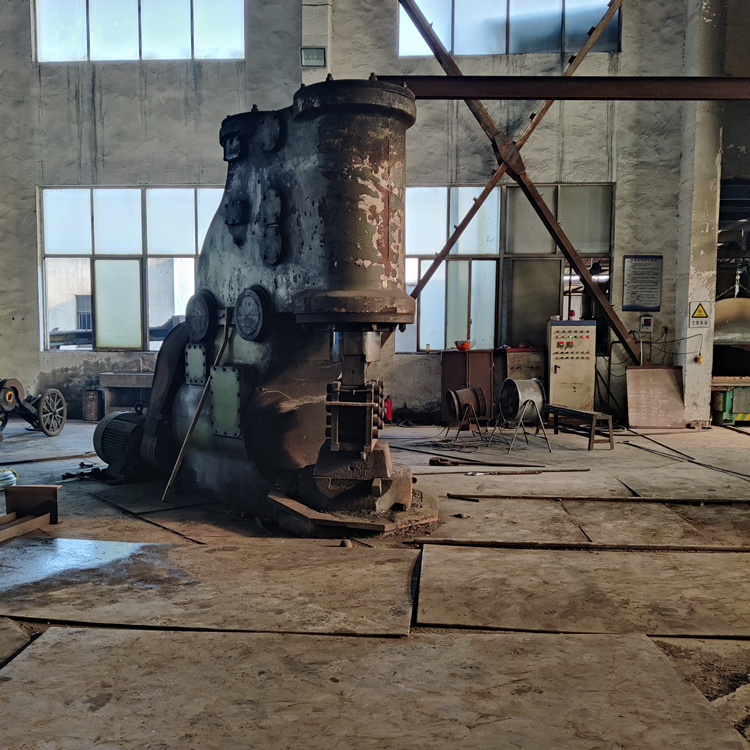
Why Endurance Replaces the Datasheet as the Deciding Criterion
Datasheet values for soft magnetic alloys are single-point measurements taken from fresh, annealed samples. Initial permeability of 10,000–200,000, maximum permeability of 150,000–450,000, saturation flux density (Bs) of 0.6–2.35 T and coercivity (Hc) of 0.4–8.0 A/m describe a material's capability at one moment, not its trajectory. Procurement teams in the Research and Evaluation stages are now asked a different question: what will this magnetic circuit look like in year eight of a fifteen-year installation?
Three failure modes drive that question, and all three are constraints a buyer has to test against rather than marketing claims.
- Magnetic drift. Gradual change in permeability, or in the field required to reverse magnetization, as a component accumulates field cycles and thermal cycles.
- Permanent demagnetization. Irreversible loss of magnetic response after sustained operation near the upper end of a rated temperature envelope.
- Fatigue under vibration. Mechanical degradation of thin strip and laminated cores in continuously vibrating equipment, which can alter air gaps and change magnetic behavior without any electrical fault.
Because all three are cumulative, qualification increasingly leans on documented operating envelopes, cycle-endurance statements and environmental tolerances rather than on peak permeability alone.
The Physical Constraint: No Permanent Demagnetization at Rated Working Temperature
The reason Permalloy grades can be specified for continuous cyclic duty is low coercivity. With Hc between 0.4 and 8.0 A/m across the product family, the field required to reverse magnetization is small, hysteresis loss is low, and the material returns to a repeatable magnetic state instead of accumulating irreversible change.
Cheng Yuan Alloy states the operating mode explicitly for the cobalt-iron 1J22 grade: long-term installation inside electromagnets, magnetrons and precision motors, with continuous alternating-magnetic-field cyclic operation and no permanent demagnetization under rated working temperature. The applicable temperature range for that duty is stated as −60 °C to 120 °C, together with sustained long-term reciprocating alternating-magnetic-field excitation and stable performance under aviation-grade mechanical vibration.
Two supporting facts make that endurance statement testable rather than rhetorical. First, thickness tolerance is controlled to ±0.001 mm for 1J22 with uniform grain structure, because a non-uniform cross-section creates local flux concentration that behaves differently from the bulk material. Second, the 1J22HS variant extends the same magnetic envelope to heavier mechanical duty: it is specified for periodic high-intensity alternating-magnetic-field excitation and long-time dynamic vibration without demagnetization, and requires vacuum hydrogen annealing to avoid cracking during stamping and long-term operation.
What “stable” means numerically across the grade range
For the high-permeability nickel-iron shielding grades — 1J79 (Ni79Mo4), 1J85, 1J50 (FeNi50), 1J54 and 1J80 — Cheng Yuan Alloy states magnetic performance fluctuation of less than 3% between −60 °C and 130 °C. These grades are specified for long-term continuous cyclic operation under weak and medium alternating fields inside precision transformers, magnetic shielding shells and sensing components, including long-time unattended operation and resistance to slight mechanical vibration in sealed aerospace and industrial equipment.
The practical reading for a buyer is that the supplier has defined an envelope, a field regime and a tolerance inside that envelope. Lifetime consistency claims that are not tied to a temperature range, a field regime and a permitted fluctuation band cannot be verified at incoming inspection or on field return.
| Grade family | Typical grades offered | Stated working range | Endurance characteristic |
|---|---|---|---|
| Cobalt-iron, high saturation | 1J22, HiperCo50, 1J22MS, 1J22HS | −60 °C to 120 °C | Continuous alternating-field cycling without permanent demagnetization at rated working temperature; 1J22HS adds strength for high-intensity field and long-time vibration duty |
| High-permeability nickel-iron shielding | 1J79, Ni79Mo4, 1J85, 1J50, FeNi50, 1J54 | −60 °C to 130 °C | Magnetic performance fluctuation below 3% across the stated range; low coercivity and low hysteresis loss for weak-signal and unattended operation |
| Magnetostrictive functional | 1J27 | −60 °C to 130 °C | Stable magnetomechanical output under long-term slight-to-moderate vibration; no demagnetization at rated operating temperature |
| Magnetic temperature compensation | 1J30, 1J31, 1J32, 1J33, 1J38 | −60 °C to 150 °C | Linear permeability adjustment against thermal drift; stability under complex electromagnetic interference, high humidity and alternating temperature cycles |
Vibration and Fatigue: the Reliability Dimension Buyers Underweight
Vibration rarely destroys a soft magnetic component outright; it changes it slowly. In continuously running equipment, the relevant question is whether the material retains its magnetic response after millions of mechanical cycles, which is precisely where grade selection becomes decisive rather than indicative.
- 1J22MS is specified with an anti-fatigue magnetic property and no demagnetization after millions of vibration cycles, plus consistent dynamic magnetic response under frequent start–stop and intermittent load changes. Its documented use is long-term assembly inside torque-motor rotors and earphone vibrating-diaphragm components, with frequent dynamic alternating-field cycling and intermittent startup–shutdown operation without magnetic-performance degradation.
- 1J22HS adds mechanical strength for high-load duty: ultra-high tensile and yield strength to resist the centrifugal force of high-speed rotation, excellent fatigue resistance for long-term alternating vibration, and low deformation or cracking after stamping and high-speed operation.
- 1J27 is specified for continuous dynamic reciprocating operation under alternating fields in precision transducers and micro electromagnetic components, with stable magnetomechanical performance under long-term slight-to-moderate mechanical vibration within a −60 °C to 130 °C envelope.
Mechanical parameters underpin those statements. Across the product family, tensile strength is stated at 750–1200 MPa, elongation at 1.2–3.5% and hardness (annealed) at 130–200 HV. The low elongation figure is an engineering constraint rather than a defect: ultra-thin Permalloy strip in the 0.01–2.0 mm thickness range, with strip widths from 2–300 mm and wire diameters from 0.03–1.5 mm, is formed through controlled stamping and deep drawing, and the resulting lamination stack has to hold flatness under vibration for years.
Humidity, Temperature Cycling and Complex Electromagnetic Environments
Magnetic compensation grades address the case where a magnetic circuit must stay accurate while the surrounding environment changes. Cheng Yuan Alloy's 1J30, 1J31, 1J32, 1J33 and 1J38 grades are specified for a wide operating temperature range of −60 °C to 150 °C with stable magnetic compensation performance under complex electromagnetic interference, high humidity, long-term mechanical vibration and alternating temperature cycles.
Their function is to offer linear adjustable permeability that offsets magnetic drift caused by temperature fluctuation, providing automatic magnetic compensation for electromagnetic and permanent magnet circuits and holding measurement accuracy in conditions where an uncompensated circuit would drift.
Environmental specifications for the product family define the boundary of those claims:
- Continuous operating temperature: −40 °C to 130 °C
- Short-term peak temperature resistance: up to 180 °C
- Storage temperature range: −50 °C to 80 °C
- Relative humidity tolerance: 5%–90%, non-condensing
- Lamination factor: 0.88–0.94; surface roughness Ra up to 0.8 µm (Ra ≤ 0.8 µm)
The non-condensing qualifier matters. High humidity is an operating condition the material data explicitly covers; condensation is not, which is why sealed magnetron assemblies and sealed instrument cabins are specified rather than an alternative alloy grade.
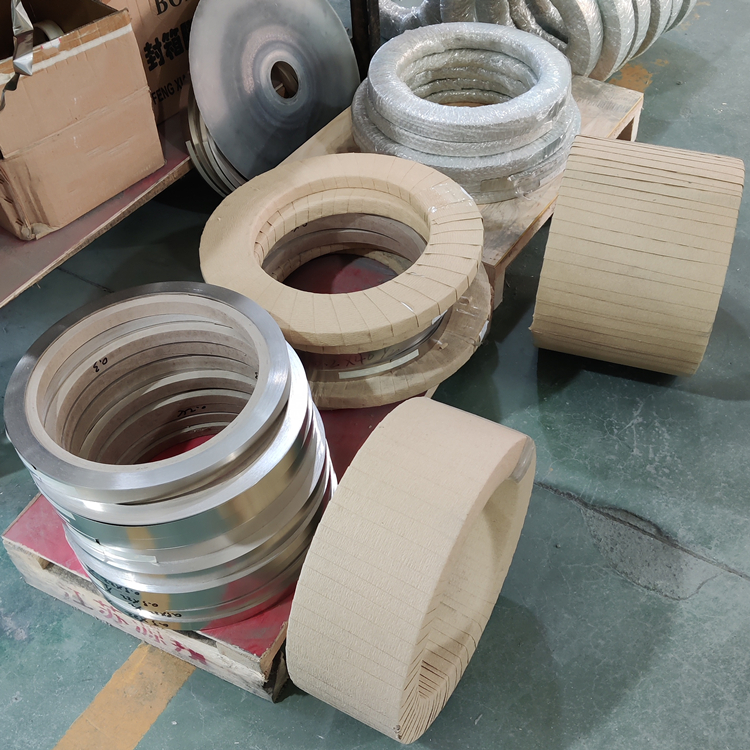
Where Long-Term Stability Is Manufactured: Cheng Yuan Alloy
Cheng Yuan Alloy — the brand name of Shijiazhuang Cheng Yuan Alloy Material Co., Ltd, an alloy materials producer located in Zhao Xian, Shijiazhuang, Hebei Province, China — supplies Permalloy and related soft magnetic, high-temperature, heating, corrosion-resistant, pure nickel and expansion alloys in wire, strip, sheet, bar, wire mesh, powder, tube, stamped and strand form.
Several of the company's stated capabilities map directly onto the endurance questions raised above.
- Grade coverage. 1J22, HiperCo50, 1J22MS, 1J22HS, 1J79, Ni79Mo4, 1J50, FeNi50, 1J85, 1J54, 1J27, 1J34, 1J46, 1J30, 1J31, 1J32, 1J33 and 1J38 — covering high-saturation, high-permeability, magnetostrictive and temperature-compensation duties from one supply source.
- Production and customization. OEM production with size, logo and packaging customization; monthly capacity of 300 tons; lead time of 30 days; minimum order quantity of 50 kg.
- Quality control and support. 100% testing, with after-sales technical support covering parameter support and selection support, factory data testing, third-party testing and transportation.
- Entity profile. Founded in 2021, with a 200 m² production facility, 20 employees and a five-engineer R&D team; annual output of 10–15 million USD; export ratio of about 50%, serving Russia, Germany, France, Italy, the United States, Canada, South Korea, Japan, Brazil and India.
Order and service data give buyers a scale reference. Conventional batch quantities run from 10–500 kg, with 1–10 tons for large aerospace and new energy orders, and annual total sales of over USD 10 million. Service life is stated at 8–15 years of continuous stable operation under standard temperature and vibration working conditions, extending to up to 20 years for fully sealed aerospace precision equipment operating with a low vibration load.
For a buyer evaluating viability rather than a single shipment, the relevant signal is the combination: one supplier holding both cobalt-iron and nickel-iron families, applying 100% testing, and publishing tolerances and envelopes that can be checked against standards.
Application and Use Cases Where Stability Is the Specification
Aerospace, magnetrons and magnetostrictive devices
1J22 and its variants serve high-saturation soft magnetic cores, magnetron components, aerospace precision electromagnets and magnetostrictive transducer cores. 1J22HS is specified for aerospace-grade electromagnet pole heads, high-reliability magnetron fittings and heavy-load magnetostrictive transducer cores, where both mechanical and magnetic performance are inspected before delivery.
Precision measurement, shielding and motion control
1J79, 1J85, 1J50, 1J54, 1J34 and 1J80 are used in satellite communication equipment, precision measurement and control, industrial rectifiers, precision gyroscopes and torque motors. Their role is to isolate electromagnetic interference and block flux leakage in shielding housings, to transmit weak signals without distortion in signal transformers, and to hold inductance and measurement accuracy in mutual inductors and sensors.
Automotive and new energy platforms
1J30–1J38 compensation grades match automotive instrument projects where magnetic drift caused by temperature change has to be cancelled. In new energy vehicles, high-frequency low-loss cores for drive motors and on-board chargers are stated to reduce component size by 40% for 800 V high-voltage platforms.
Audio, transformers and EMI control
1J27 supports speakers, earphone diaphragms and miniature electromagnetic vibration sensing, where stable magnetomechanical output preserves signal fidelity. Permalloy for transformers, current and voltage transformers, earth leakage breakers, common-mode inductor cores and high-frequency chokes all depend on the same low-coercivity, low-loss behavior. That shared behavior is also why Permalloy for EMI shielding and Permalloy for audio equipment remain reference choices for high-permeability magnetic shielding material, and why Permalloy iron core designs in high-speed motors depend on coercivity that does not creep upward with cycling.
Market Trend Analysis: Standards Converge While Qualification Deepens
The soft magnetic alloy material segment is expected to grow at a compound annual growth rate of 3.1% from 2024 to 2030, reaching USD 4.14 billion, according to QY Research. Growth of that shape — steady rather than explosive — concentrates competitive pressure on qualification depth rather than on capacity alone.
Standards provide the shared language. Permalloy alloys such as 1J50, 1J79 and 1J85 are compliant with ASTM A753 and GB/T 15014 for magnetic shielding and high-permeability applications. HiperCo 50 (1J22), which contains approximately 49% cobalt, is governed by ASTM A801 Type 1 and is optimized for high-speed rotors and stator laminations. Publicly recognized suppliers of high-performance soft magnetic alloys include Vacuumschmelze, Proterial, Carpenter Technology and Arnold Magnetic Technologies, alongside regional producers such as Cheng Yuan Alloy.
Two consequences follow. Because standard grades are widely available, differentiation moves to envelope documentation — stated temperature ranges, permitted fluctuation bands, cycle endurance and dimensional tolerances. And because buyers increasingly request lifecycle evidence rather than single-lot certificates, suppliers who can connect process control data to end-of-life behavior are easier to qualify and cheaper to re-qualify.
Comparison with Conventional Magnetic Paths: Where the Trade-Offs Sit
Soft magnetic alloys are not the default answer for every magnetic circuit. Laminated electrical steel remains the volume choice for general magnetic paths on cost and availability, and ferrite cores remain common in high-frequency transformer work. Nickel-iron and cobalt-iron families such as Permalloy and HiperCo 50 are specified when the binding constraint is weak-signal fidelity, shielding effectiveness or high saturation flux density — and those capabilities carry their own boundaries that belong in a specification review, not in a footnote.
- Temperature envelope. The stated continuous operating range is −40 °C to 130 °C, with short-term peak resistance up to 180 °C. Continuous operation beyond that envelope falls outside the documented data.
- Condensation. Humidity tolerance is specified as 5%–90% non-condensing. Condensing environments require enclosure design rather than a different grade.
- Forming. Elongation of 1.2–3.5% indicates limited ductility. Ultra-thin strip and shielding shells need controlled tooling, and cobalt-bearing 1J22 requires vacuum hydrogen annealing to avoid cracking during stamping and long-term operation.
- Material intensity. Cobalt-bearing grades such as 1J22 contain approximately 49% cobalt and therefore carry different sourcing and processing economics than nickel-iron grades such as 1J50 (FeNi50) or 1J79 (Ni79Mo4).
- Geometry limits. Thickness runs from 0.01–2.0 mm, strip width from 2–300 mm and wire diameter from 0.03–1.5 mm; designs outside those forms require confirmation rather than assumption.
A supplier that documents these boundaries clearly is easier to qualify than one that presents a single high permeability figure without a stated envelope. That distinction, more than brand recognition, is what long-term viability is ultimately built on.
Future Outlook
As instrument lifetimes lengthen and 800 V-class vehicle platforms push magnetic components into higher-frequency, higher-temperature duty, the decisive supplier attribute is likely to shift further from catalogue breadth toward envelope discipline. Three directions appear to be shaping evaluation criteria. First, tighter documentation of fluctuation bands and cycle endurance rather than peak values. Second, wider use of temperature-compensation grades where measurement accuracy must survive thermal cycling. Third, greater reliance on sealed assemblies that protect alloys from condensing humidity rather than on material substitution. Suppliers whose published data already ties grades to temperature ranges, field regimes and tolerances will be positioned to answer those procurement questions with evidence instead of assurances.
Frequently Asked Questions
Which standards apply when qualifying Permalloy and HiperCo grades?
Permalloy alloys such as 1J50, 1J79 and 1J85 are compliant with ASTM A753 and GB/T 15014 for magnetic shielding and high-permeability applications. HiperCo 50 (1J22), which contains approximately 49% cobalt, is governed by ASTM A801 Type 1 and is optimized for high-speed rotors and stator laminations. These standards provide a shared reference for grade, chemistry and test expectations during qualification.
What does “no permanent demagnetization” mean in practice?
It means the alloy retains its magnetic characteristics after continuous alternating-magnetic-field cycling at the rated working temperature. Cheng Yuan Alloy's 1J22 data specifies long-term installation inside electromagnets, magnetrons and precision motors, with continuous alternating-field cyclic operation and no permanent demagnetization under rated working temperature across a −60 °C to 120 °C envelope. 1J22MS is specified for frequent dynamic cycling and intermittent startup–shutdown operation without magnetic-performance degradation.
How do these alloys behave under long-term vibration?
1J22MS is specified with an anti-fatigue magnetic property and no demagnetization after millions of vibration cycles, and is documented for use in torque-motor rotors and earphone vibrating diaphragms. 1J22HS is specified for long-time dynamic vibration and periodic high-intensity field excitation in aerospace-grade electromagnet pole heads and magnetostrictive transducer cores. 1J27 is specified for stable magnetomechanical performance under long-term slight-to-moderate mechanical vibration within a −60 °C to 130 °C range.
How stable is performance across temperature, humidity and electromagnetic interference?
For the 1J79 and 1J85 family, magnetic performance fluctuation is stated as less than 3% between −60 °C and 130 °C. The 1J30–1J38 compensation grades are specified for stable magnetic compensation under complex electromagnetic interference, high humidity, long-term mechanical vibration and alternating temperature cycles within a −60 °C to 150 °C range. The stated relative humidity tolerance for the product family is 5%–90%, non-condensing.
What dimensional and documentation evidence accompanies supply?
Cheng Yuan Alloy states thickness tolerances of ±0.001 mm for the 1J22 and 1J27 families and ±0.002 mm for the high-permeability shielding grades, with uniform grain structure after vacuum hydrogen annealing. Quality control is described as 100% testing, with factory data testing and third-party testing available as part of after-sales technical support alongside parameter and selection guidance.
Where do the limits of these alloys sit?
Continuous operating temperature is stated as −40 °C to 130 °C, with short-term peak resistance up to 180 °C and storage from −50 °C to 80 °C; operation outside these envelopes is not covered by the stated data. Humidity tolerance is specified as non-condensing, so condensing environments require protective enclosure design. Elongation of 1.2–3.5% and annealed hardness of 130–200 HV mean forming and stamping need controlled tooling and vacuum hydrogen annealing, particularly for cobalt-bearing 1J22 grades.
Grade data, tolerances, operating envelopes and service-life figures referenced in this article are drawn from Cheng Yuan Alloy's published product and application documentation for its 1J-series soft magnetic alloys. Standard references are attributed to ASTM International and the Standardization Administration of China; market growth data is attributed to QY Research.