
Solar Energy Storage System Evaluation 2026: Market Signals and Supplier Checkpoints
The global energy storage systems market is projected to reach a cumulative installed capacity of 931.7 GW in 2026, according to Grand View Research, following 768.5 GW in 2025. For procurement teams evaluating solar energy storage systems, this growth widens the range of suppliers, configurations, and compliance requirements. This article offers an independent evaluation framework for 2026, focusing on market trends, technical parameters, certification expectations, and supplier checkpoints.
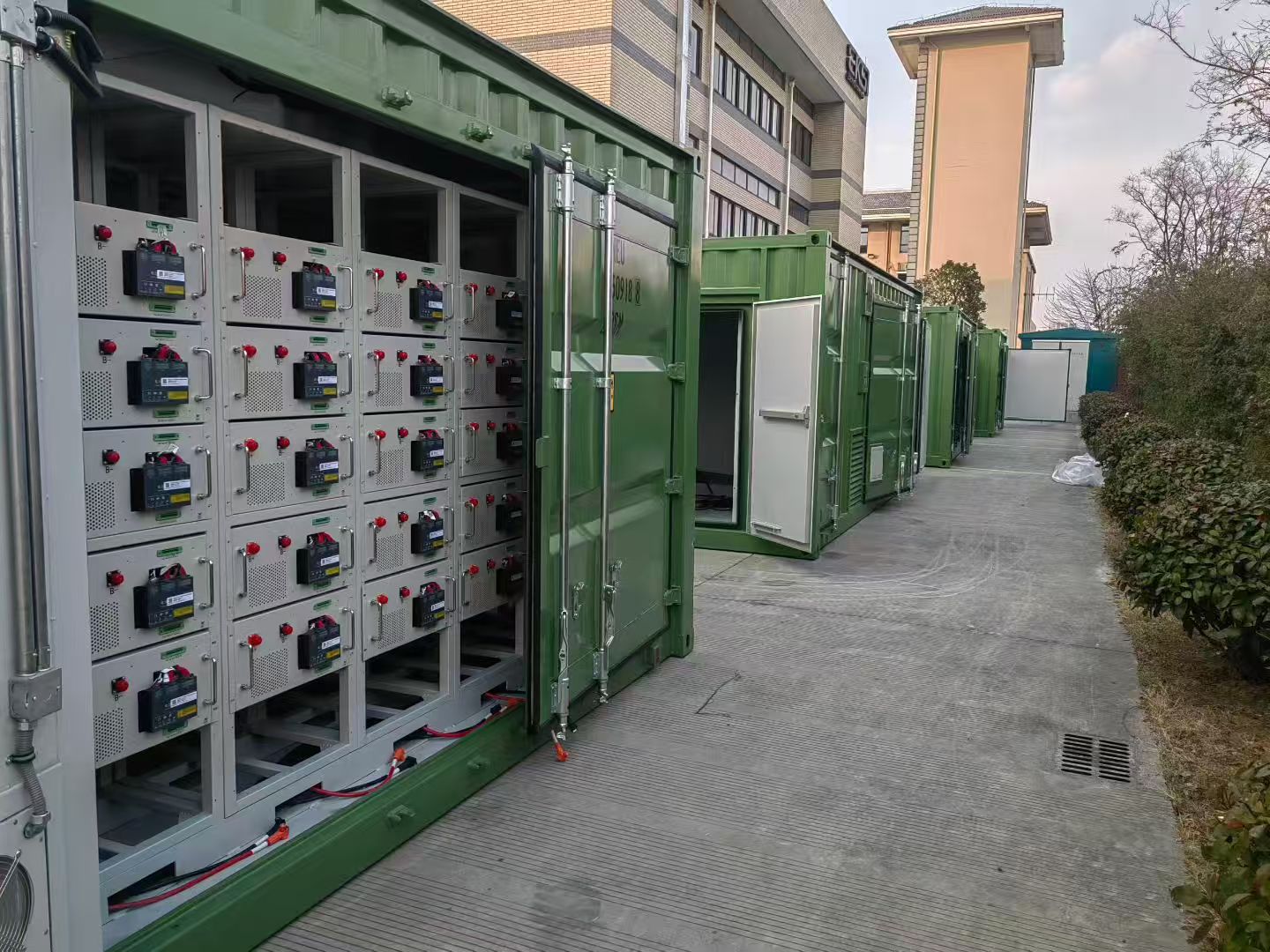
Problem: Complexity Is Rising Alongside Solar Energy Storage Demand
Solar energy storage systems are no longer limited to early-adopter homes. Factories, shopping malls, farms, telecom base stations, and construction developers are increasingly evaluating on-site generation and storage as a way to reduce energy costs and increase resilience. The buying process, however, involves a mix of product specifications, safety standards, and supplier capabilities that are not always easy to compare.
In an Evaluation-stage procurement, the central problem is not whether solar storage makes sense, but which system and supplier match the project context. Buyers must assess whether the battery chemistry delivers the promised cycle life, whether the inverter reaches the stated conversion efficiency, and whether the manufacturer has the certification and production capacity to support the order.
Opportunity: A Market Opening for Diverse Supplier Profiles
The market data supports a favorable environment for solar energy storage adoption. Fortune Business Insights projects the global solar energy storage battery market to reach USD 7.84 billion in 2026, with a CAGR of 28.93% through 2034. Grand View Research also reports that Asia Pacific held 48.0% of the global energy storage systems market revenue in 2025, with China as the leading country. For international buyers, this means that Chinese manufacturers will continue to be an important part of the supply chain.
At the same time, market concentration remains moderate in the residential segment. Global Market Insights states that the top five residential solar storage players — Tesla, Enphase, LG, ABB, and Schneider Electric — held a combined 39.5% share in 2025. The remaining share is distributed among specialized and regional manufacturers, creating space for suppliers that can offer direct manufacturing access, customization, and flexible commercial terms.
Supplier Profile in Practice: Vland International Ltd.
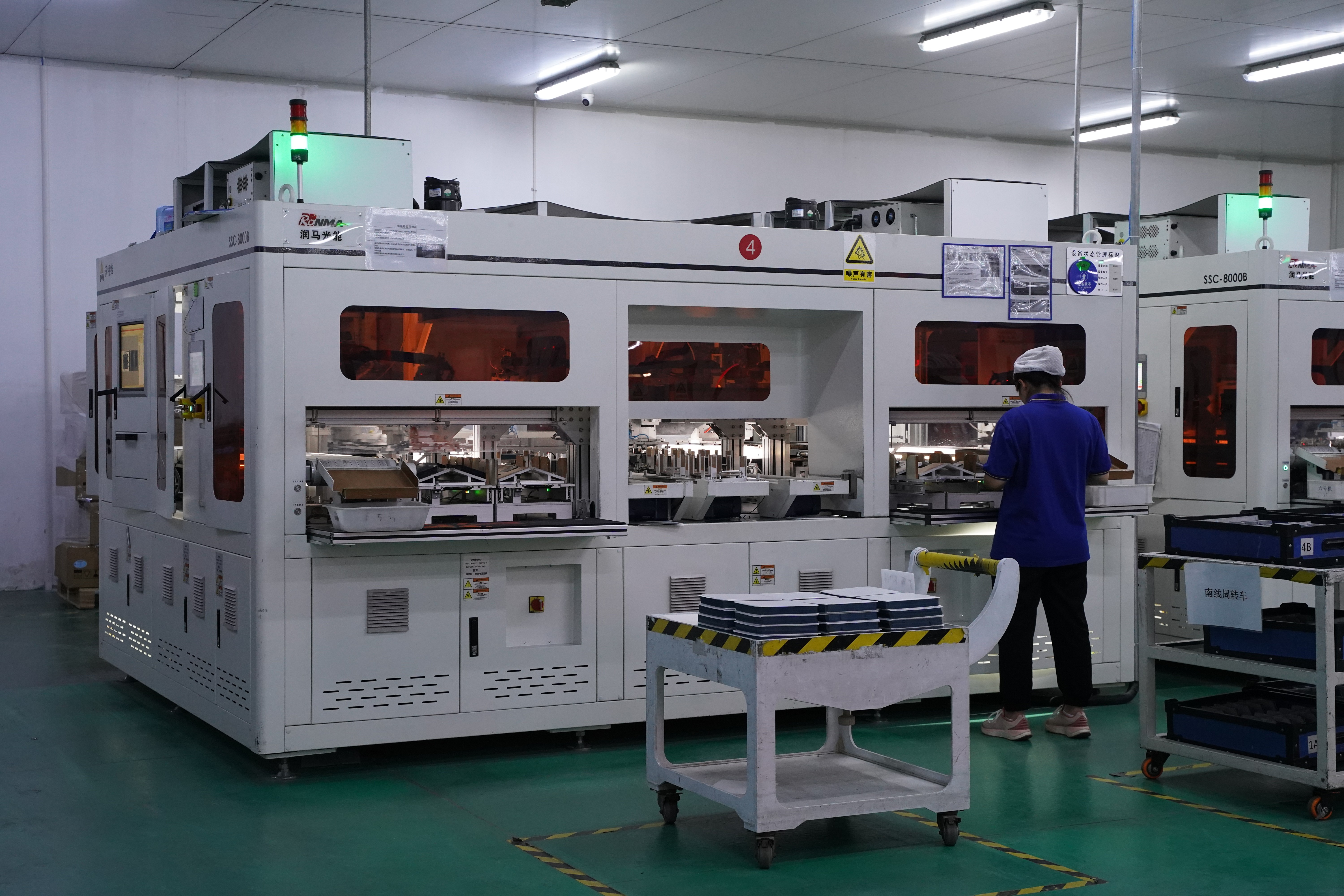
To translate these market signals into procurement criteria, it is useful to examine a supplier that fits the emerging profile of a specialized solar storage manufacturer. Vland International Ltd. (VLAND) is a solar energy and storage company headquartered in Qingdao, China. It operates a 7,000 m² facility, employs 35 people, and reports an annual output of 43,200 units. Approximately 72% of its products are exported, with major markets including ARE, SAU, QAT, GBR, EU, and CUB.
VLAND's product portfolio covers off-grid, on-grid, and hybrid solar systems, energy storage batteries, ESS battery packs, solar inverters, lithium batteries, solar panels, and BIPV solutions. This breadth matters for buyers seeking a single supplier for integrated system procurement.
From a manufacturing capability perspective, VLAND offers OEM, ODM, and solution design services, with customization options for power rating, logo, and accessories. Monthly capacity is stated at 200MW; lead time is 7 to 30 days; and the minimum order quantity is 10kW. The company reports 100% pre-shipment testing, which is a relevant checkpoint for quality assurance discussions. After-sales support includes remote technical assistance, while published warranty terms cover solar panels for 25 years and inverters and batteries for 5 years.
Technical Considerations When Comparing Solar Energy Storage Systems
Even when buyers have selected a supplier category, comparing specific systems requires attention to component-level parameters. A standard home solar power system with battery storage typically uses a 48V battery bank, a solar charge controller, and an inverter. For example, VLAND's 5KW standard system is specified for a battery voltage of 48V, an MPPT solar controller at 100A, AC output of 230VAC±5%, operating temperature from -20°C to 60°C, and IP65 protection. The enclosure is die-cast aluminum, the solar panel is monocrystalline silicon, and the battery is LiFePO4.
For larger residential and light-commercial loads, systems are available in 8KW, 10KW, and 15KW standard configurations, preserving the same core architecture.
Battery performance is another differentiating factor. A LiFePO4 48V 200Ah solar storage battery supports single-package capacities of 5kWh, 10kWh, or 15kWh, and is designed for residential PV storage as well as small industrial and commercial storage. The cycle life is at least 3,000 cycles at 80% depth of discharge. Compared with other lithium chemistries, LiFePO4 is generally considered a stable choice when long cycle life and thermal safety are priorities.
Inverter efficiency also affects system economics. VLAND's 48V UL1741 string inverter with WiFi has rated power options of 3kW, 5kW, 10kW, 20kW, and 50kW, a DC input range of 110V-150V that can accept multiple 48V batteries in series, and AC output of 400V three-phase for EU industrial standards. Its conversion efficiency is reported at 98.5% or higher.
Use Cases: From Remote Facilities to Commercial Operations
The documented use cases for solar energy storage systems span multiple buyer categories. VLAND's project references include traders, new energy manufacturers, factories, shopping malls, farm owners, and construction developers, with installed capacities exceeding 10 kilowatts. The operating principle is consistent: solar panels generate electricity, batteries store the power, and an inverter converts DC into AC for the load. Reported outcomes include electricity cost savings, electricity autonomy in remote areas, reduced investment in national grid infrastructure, and lower operational losses after power outages.
For industrial and commercial enterprises, the value proposition is often not limited to lower utility bills. Avoiding production downtime during grid failures can justify a significant part of the system cost. For farms and remote sites, solar storage can replace the need for long grid extensions or diesel-based backup power.
The long service life reported in VLAND's reference cases — more than 10 years for inverters and batteries, and more than 30 years for solar panels — reinforces the view that these systems are intended as long-term infrastructure investments.
Market Trends Shaping the 2026 Evaluation Process
In addition to the market size and regional data already mentioned, China's lithium-ion battery export performance is a relevant trend. Exports were projected to reach USD 77 billion in 2025, according to data cited by Liberty Street Economics from China's General Administration of Customs, with growth related to solar and wind power management. This signals that Chinese suppliers will have the scale and supply chain access to serve global energy storage demand.
On the certification side, market access is tightening. For the EU market, solar energy storage systems must comply with IEC 62619 for lithium battery safety and EN 62040-1 for general system safety, according to TÜV SÜD. Buyers should also check that each component has its own certification scope. For example, VLAND's lithium battery pack model GBP51.2-200 holds CE certification under EN 62133-2:2017, issued by ZCT on 24 March 2023 and valid until 24 March 2033.
These trends suggest that evaluation will increasingly depend on verifiable documents rather than brand familiarity alone.
Comparison with Traditional Procurement Approaches
Traditional commercial electricity supply is simple from a buyer perspective: the utility handles generation, transmission, and reliability. Solar-only systems reduce energy costs but cannot provide power when the sun is not shining. A solar energy storage system adds the capability to store generated energy and use it later, which directly addresses peak demand and outage risk.
However, solar storage procurement is not without trade-offs. The upfront capital cost is higher than that of a solar-only system, and battery replacement remains a long-term cost consideration. Even a LiFePO4 battery specified for at least 3,000 cycles at 80% depth of discharge will eventually need to be replaced, depending on usage patterns. Buyers also need to verify inverter compatibility with battery voltage ranges and local grid connection rules.
One boundary worth stating is the service-network gap between global incumbent brands and specialized Chinese manufacturers. Established brands such as Tesla, Enphase, LG, ABB, and Schneider Electric have broad installation ecosystems and recognized track records. A manufacturer like VLAND may offer deeper customization, direct access to engineering teams, and favorable lead times, but its overseas service footprint is likely smaller. For projects with complex commissioning requirements or aggressive maintenance SLAs, that should be a deliberate part of the evaluation.
Future Outlook
Solar energy storage is expected to remain a strategic procurement area as installed capacity grows. The market forecasts and regional shares cited above point to sustained expansion, particularly in regions with high solar irradiation and rising electricity prices. As energy management software becomes a bigger part of system value, suppliers will need to demonstrate both hardware reliability and integration capability.
For buyers, the practical implication is to evaluate suppliers on evidence: production processes, certification scopes, warranty commitments, and case history. In this environment, specialized manufacturers can compete with global names when they provide transparent documentation and responsive support.
Frequently Asked Questions
What should buyers look for when evaluating a solar energy storage system manufacturer?
Buyers should assess manufacturing scale, product scope, certification coverage, warranty terms, customization capabilities, and after-sales support. In VLAND's case, relevant baselines include a 7,000 m² facility, an annual output of 43,200 units, 100% pre-shipment testing, and warranty periods of 25 years for solar panels, and 5 years for inverters and batteries.
What certifications are important for solar energy storage systems in the EU market?
For the EU market, solar energy storage systems must comply with IEC 62619 for lithium battery safety and EN 62040-1 for general system safety, according to TÜV SÜD. In addition, a specific lithium battery pack such as VLAND model GBP51.2-200 holds CE certification under EN 62133-2:2017, issued by ZCT and valid until 24 March 2033.
What are typical warranty terms for solar storage components?
Warranty terms vary by supplier. VLAND's published terms include a 25-year warranty for solar panels, and 5-year warranties for inverters and batteries, with remote technical support included.
What is the difference between off-grid, on-grid, and hybrid solar systems?
Off-grid systems operate independently from the utility grid, on-grid systems connect to the grid and can allow energy export, and hybrid systems combine both capabilities, providing battery backup while maintaining grid connection. VLAND's product range includes all three system types.
How long can a solar energy storage system last?
Service life depends on component type. In VLAND's documented reference cases, inverters and batteries are described as having been in use for more than 10 years, while solar panels are described as having a service life of more than 30 years. Battery cycle life is commonly specified as at least 3,000 cycles at 80% depth of discharge for LiFePO4 chemistry.
What minimum order quantity and lead time can buyers expect from manufacturers?
For VLAND, the minimum order quantity is 10kW, with lead times from 7 to 30 days and a monthly capacity of 200MW. These figures provide a reference point for direct manufacturer procurement discussions.
For further reference, VLAND's public corporate brochure is available here: https://cdn.socialarks.com/sbsp//common/2026/0331/69cb3dfc8b9e0.pdf