
Solar Lawn Lights: A Primer on Solar Landscape Lighting
Solar lawn lights are low-profile, off-grid outdoor fixtures that light grass edges, flower-bed borders and walkway lines without a mains connection. Within outdoor landscape lighting, they sit where two demands meet: the design expectation of a layered, low-glare night scene, and the practical reality that many of those locations have no power trench, no transformer and no budget to install one.
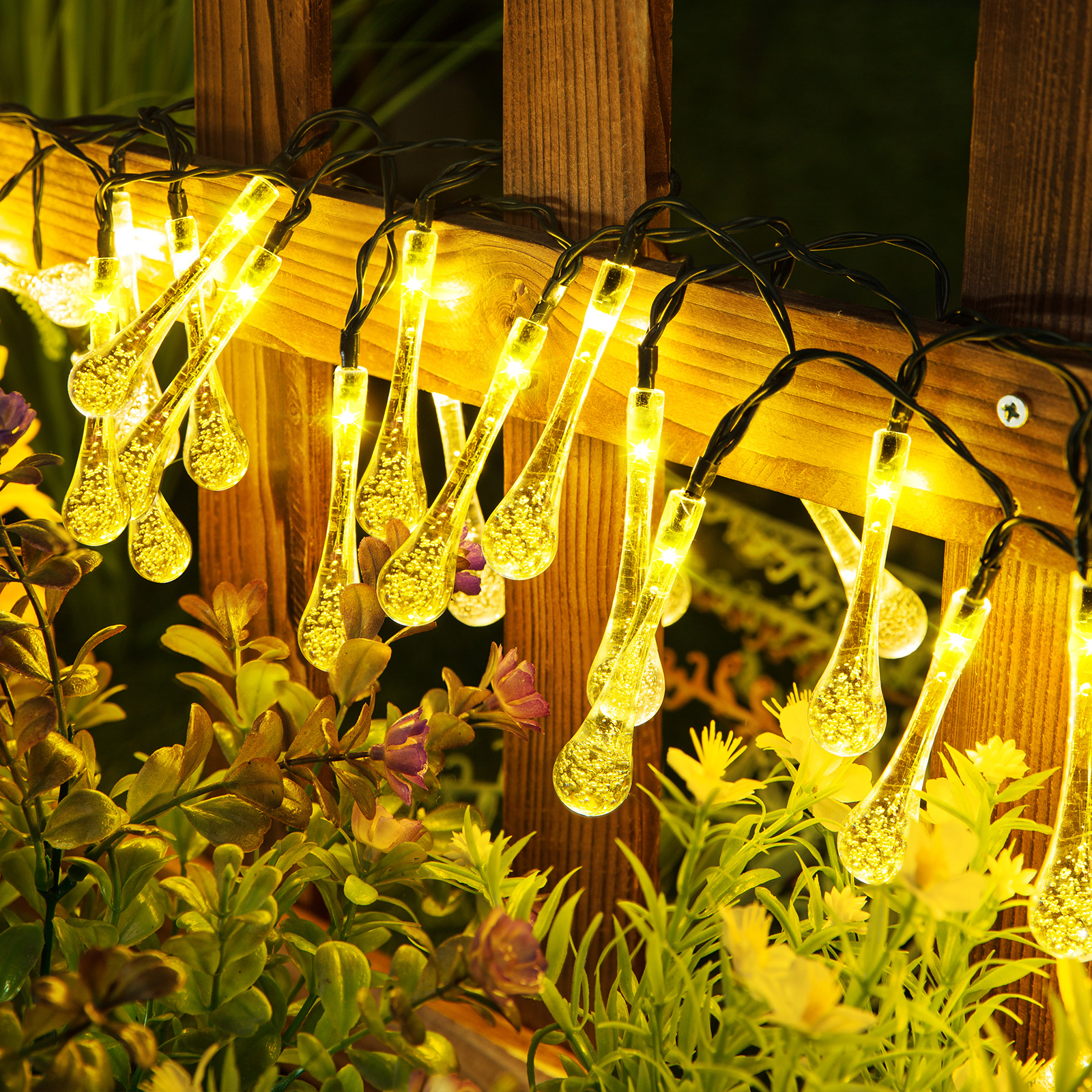
Why Solar Lawn Lights Became a Category of Their Own
Landscape lighting has traditionally been an infrastructure decision before it is a design decision. A conventional low-voltage system needs a trench, a run of cable, a transformer, and a licensed electrician — costs that scale with distance from the nearest power source, not with the quality of the light. For a hotel forecourt or a municipal plaza, that is a reasonable trade. For a 40-metre garden path at the far end of a villa plot, or a rural park on an off-grid site, it usually is not.
Solar lawn lights invert that logic. The fixture carries its own power source, so placement is decided by the design and by sun exposure rather than by where the nearest junction box happens to be. This is why the category has moved from garden-centre novelty to a specified product in landscape engineering, municipal rural renovation, resort landscaping and residential community projects.
The trade-off is real and should be stated plainly: a solar fixture generates only as much energy as its panel can collect, so its output ceiling, its behaviour in prolonged overcast weather and its battery service life are all design constraints that a wired system does not share. Buyers who understand those constraints get a low-maintenance, zero-electricity-cost installation. Buyers who ignore them get a product that appears to underperform in its second winter.
What Solar Lawn Lights Actually Change in a Lighting Scheme
Three practical differences separate a solar lawn light from a wired bollard or path light:
- No trenching. Installation is a stake into soil or a bracket onto a wall or post. There is no cable run to plan, protect or inspect.
- No electricity consumption at the point of use. Energy is collected during daylight and stored in an onboard battery, so the fixture draws nothing from the site's supply.
- Automatic operation by light sensing. A dusk-to-dawn control circuit switches the LEDs on at low ambient light and off again at dawn, which removes the need for timers or manual switching on large sites.
These are the properties that make the category useful in remote parks, farms, off-grid projects, municipal rural renovation programmes and landscape engineering where power distribution is the dominant cost line.
How a Solar Lawn Light Works
The operating principle is straightforward and worth understanding, because almost every performance question a buyer will later raise traces back to one of its three stages.
1. Collection — the solar panel
During daylight, a photovoltaic panel converts sunlight into direct current. Panel type, rated voltage and rated current determine how much energy is available to store on a given day. Light Legend's Solar Lighting series uses a 6V 500mA monocrystalline silicon PET laminated panel; the Pathway Lights series uses a 5V 300mA panel of the same construction. Monocrystalline silicon is chosen for its behaviour in diffuse light, and the PET lamination protects the cells in outdoor exposure.
2. Storage — the battery
Collected energy is stored in a rechargeable lithium cell. Both Light Legend series use a 3.7V 2200mAh lithium rechargeable 18650 battery (the Solar Lighting series carries two cells; the Pathway Lights series carries one). Battery capacity, not panel size alone, sets how long the fixture runs after a full charge — and it is the component most affected by age and by temperature.
3. Control and output — the sensing circuit and LED
A light-sensing circuit monitors ambient illuminance. When it falls below a threshold at dusk, the circuit connects the battery to the LED; at dawn it disconnects. This dusk-to-dawn behaviour is what makes solar lawn lights viable in numbers, because no one has to walk the site to switch them.
On the Light Legend Pathway Lights series, output is generated by an LED filament bulb at 100 LM in warm white or RGB, with a stated charging time of more than 5 hours of solar charging and a working time of more than 8 hours. The Solar Lighting series is rated at 1000 LM / 50 LM with white, warm white or RGB output. Both series are IP65 rated and housed in ABS+PC with a black housing finish.
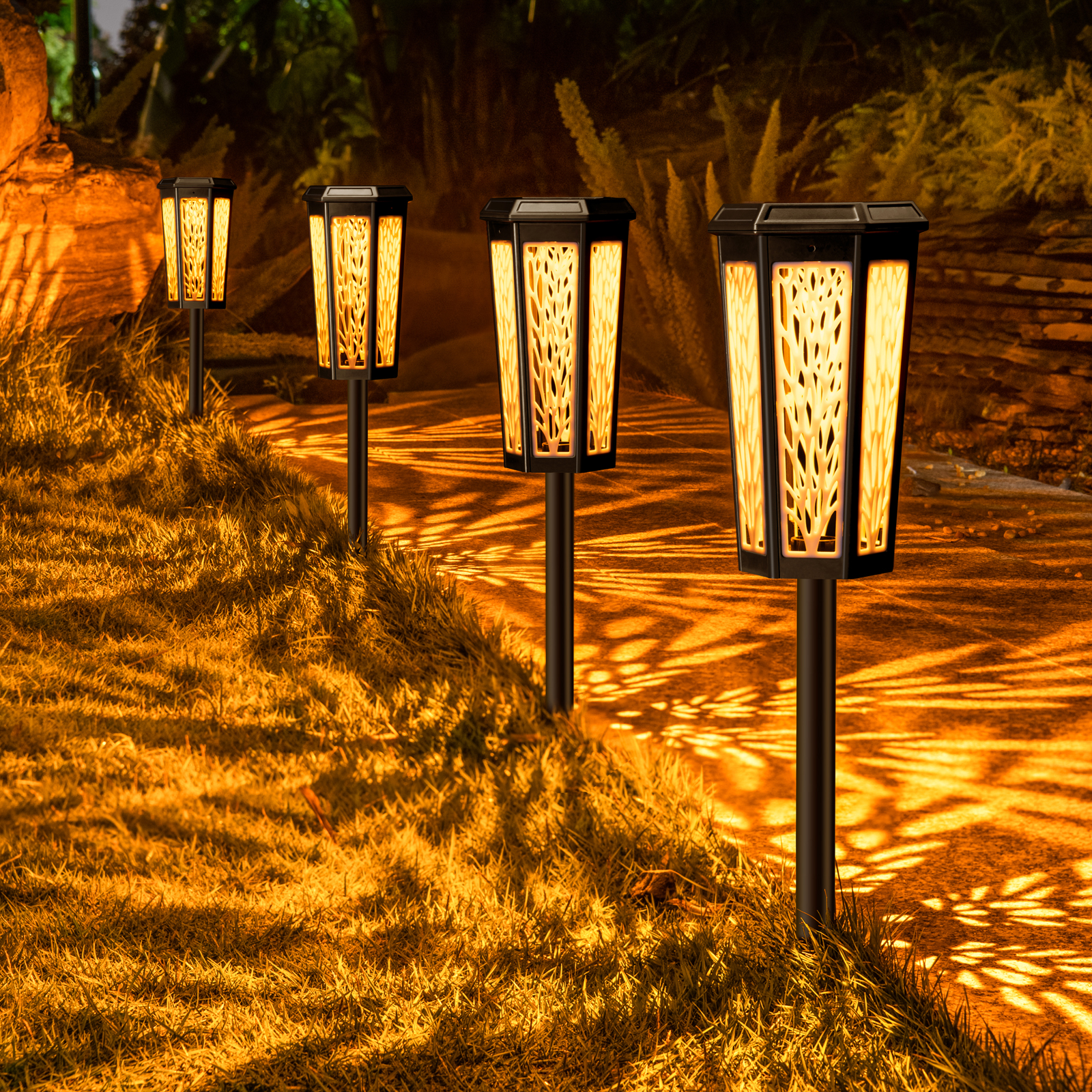
Specifications Buyers Should Actually Compare
Solar lawn lights are frequently compared on price alone, which is the least informative dimension. The following parameters determine whether a fixture will still perform in year three.
| Parameter | Why it matters | Light Legend specification |
|---|---|---|
| Luminous flux (LM) | Sets the usable lit area; a low-lumen fixture is an accent, not an illuminator | 100 LM (Pathway Lights); 1000 LM / 50 LM (Solar Lighting) |
| Colour temperature | Determines the mood of the scheme and its fit with surrounding architecture | Warm white / white / RGB, per series |
| Solar panel rating | Defines daily energy harvest and therefore recovery after cloudy days | 6V 500mA (Solar Lighting); 5V 300mA (Pathway Lights), monocrystalline silicon PET laminated |
| Battery capacity | Sets runtime after full charge and resilience across consecutive overcast days | 3.7V 2200mAh lithium 18650 |
| Charging / working time | Indicates the charge-to-runtime ratio under standard conditions | >5H solar charging; >8H working time |
| IP rating | Determines suitability for permanent outdoor exposure | IP65 |
| Housing material | Affects UV resistance, colour stability and impact behaviour | ABS+PC, black |
Colour rendering is a secondary but relevant parameter for landscape work. CRI is measured on a 0–100 scale and indicates how accurately a light source reveals true colour; general outdoor use is commonly served by CRI 80+, while landscape and architectural schemes where planting, stone and facade materials must read correctly benefit from higher values. Buyers should confirm the CRI figure on the specification sheet rather than infer it from product photography.
Where Solar Lawn Lights Fit in an Outdoor Landscape Lighting Scheme
The category is most effective as the low layer of a layered lighting design — the element that defines edges and guides movement — rather than as the primary illuminator of a space.
Villa courtyards and private gardens
In courtyard landscape and festival decoration applications, solar lawn and path fixtures provide ambient lighting and garden accents along planted borders. Photocell on/off operation, or app control where the fixture supports it, suits a private garden where no one wants to manage a switching schedule. The prevailing site requirement is IP65 waterproofing combined with wiring-free installation — the fixture must survive sun and rain and be installable without disturbing established planting.
Parks, residential communities and resorts
The design intent for pathway lighting is consistent across these sites: a low profile that does not block sightlines, low glare so that the path is legible without dazzling, and weather resistance in permanent outdoor use. Light Legend positions its Pathway Lights series for gardens, parks, residential communities, resorts and villa courtyards on exactly these grounds.
Municipal rural renovation and off-grid projects
This is where the economics are most visible. Municipal rural renovation, remote parks, farms and off-grid projects are listed by Light Legend as the applicable industries for its Solar Lighting series, precisely because these are locations where running a supply cable is disproportionate to the lighting task. Solar street and area fixtures in the same series extend the same logic to road and open-area illumination.
Commercial landscape and hospitality
Hotels, resorts and commercial real estate use solar lawn and path fixtures as a supplementary layer where cabling would disrupt finished hardscape. The limitation to note here is output: a 100 LM path fixture outlines a walkway; it does not light a facade. On commercial sites, solar lawn lights are normally combined with mains-powered wall washers, flood lights or tree lights rather than substituted for them.
Solar Lawn Lights Versus Conventional Low-Voltage Landscape Lighting
A fair comparison acknowledges that these are different tools with different cost structures.
| Dimension | Solar lawn lights | Conventional low-voltage landscape lighting |
|---|---|---|
| Power source | Onboard panel and battery; no grid connection at the fixture | Transformer connected to mains supply |
| Installation | Stake or bracket; no trench, no cable run | Trenching, cable, waterproof joints and transformer sizing required |
| Operating energy cost | No electricity drawn at point of use | Continuous consumption from the site supply |
| Output ceiling | Limited by panel area and battery capacity; typically accent-level output | Can be specified to high output regardless of location |
| Behaviour in shade | Performance depends on direct sun exposure at the mounting position | Unaffected by shading |
| Maintenance profile | Panel cleaning and periodic battery replacement | Lamp replacement, connection inspection, transformer servicing |
| Best fit | Edges, paths, planted borders, remote and off-grid sites | Facade washing, feature trees, high-output area lighting |
The honest boundary is this: solar lawn lights are not a drop-in replacement for a wired landscape lighting system at sites that need sustained high output, or at positions that receive little direct sun. They are a better answer than a wired system where trenching cost, distance from power, or the temporary nature of an installation makes cabling unreasonable.
The Limits Buyers Should Plan Around
Any credible assessment of the category has to include its constraints, and these are the ones that surface most often in service conversations:
- Weather-dependent output. Solar fixtures continue to charge in low light, but brightness and runtime may be reduced during extended overcast periods. Panel size and mounting position are the levers a buyer controls.
- Winter and latitude. Shorter daylight hours and lower sun angles reduce daily energy harvest. Installations in higher-latitude markets should be specified with headroom rather than at the minimum.
- Shading. A panel in the shadow of a wall, hedge or tree will underperform regardless of its rating. Placement is a design decision, not an afterthought.
- Battery ageing. The rechargeable cell is a wear component. Runtime shortens over service life, and battery replacement should be planned as routine maintenance rather than treated as a fault.
- Output ceiling. Accent and guidance duties are realistic; primary illumination of large areas is not.
Market Context: Why the Category Keeps Expanding
Several structural factors support continued growth in solar landscape lighting without requiring any claim about specific market size. Photovoltaic panel costs and lithium cell costs have fallen over the long term, which widens the range of garden and path fixtures that can be produced economically at usable output. Municipal and rural renovation programmes increasingly specify off-grid solutions where grid extension is slow or costly. Landscape design practice has moved toward layered, low-glare schemes in which a low-output fixture at the planting edge is a design element rather than a compromise. And the shift toward lower installed cost on residential and hospitality projects favours products that eliminate trenching.
At the supply side, this has attracted manufacturers with integrated capabilities rather than trading-only operations. Light Legend (Chongqing) Technology Co., Ltd. is an outdoor lighting manufacturer operating an automated production plant in an independent industrial park of 8,000 square metres with over 200 employees, including a research and development team of more than 20 engineers and product designers. The company states an annual output of 4,200,000 pieces and an export ratio of 80%, with products shipped to more than 60 countries and regions across Europe, the Americas, Asia, Africa and Latin America. It holds ISO9001, ISO14001, BSCI and C-TPAT management system certifications and operates in-house laboratory facilities for product testing.
For buyers, the relevant point is not the size of the factory but the breadth of the product map: a supplier that also manufactures wall washers, flood lights, tree lights, street lights, inground lights and decorative lighting can be held to a single quality standard and a single documentation set across a whole landscape package, instead of being reconciled across four vendors.
Future Outlook
Three directions look most likely to shape solar lawn lights over the next product cycles. First, control integration: fixtures that already support app or remote control in addition to photocell operation will increasingly be specified as part of a scheme rather than as standalone units. Second, energy management at fixture level, where dimming and adaptive output stretch stored energy across longer nights. Third, battery and panel specification becoming a visible procurement criterion rather than a hidden one, as buyers who have been through one failed winter begin to ask for panel rating and cell capacity on the quotation.
What is unlikely to change is the fundamental positioning. Solar lawn lights will remain the layer of an outdoor landscape lighting scheme that defines edges, guides movement and does so without a cable — and the projects that succeed with them will be the ones that specified them for that role in the first place.
Frequently Asked Questions
What are solar lawn lights used for in outdoor landscape lighting?
Solar lawn lights are low-wattage, off-grid outdoor fixtures mounted at or near ground level, used to illuminate grass edges, flower-bed borders and walkway lines. Within outdoor landscape lighting they typically serve the low layer of a layered design — defining edges and guiding movement — rather than acting as the primary illuminator of a space.
How do solar lawn lights charge and switch on automatically?
During daylight, a photovoltaic panel converts sunlight into electricity and stores it in a battery. At dusk, a light-sensing control circuit detects the drop in ambient light and connects the battery to the LED; at dawn it disconnects. The determining factors are panel efficiency, battery capacity and control circuit quality. Light Legend's Solar Lighting and Pathway Lights series use monocrystalline silicon PET laminated panels rated 6V 500mA and 5V 300mA respectively, paired with a 3.7V 2200mAh lithium 18650 battery.
How should solar lawn and garden lights be installed?
Place the fixture in a full-sun location away from shade, charge it in direct sunlight for 6–8 hours before first use, insert the stake firmly into soil or mount it securely, then switch it on and test the dusk-to-dawn function. Keep the solar panel clean and do not immerse the light body. Light Legend states that multilingual installation guides and mounting accessories are provided for bulk buyers.
What IP rating do solar lawn lights need for permanent outdoor use?
An IP rating has two digits: the first indicates dust protection and the second indicates water protection. For general outdoor exposure, IP65 or above is commonly recommended; IP67 suits short-term immersion and IP68 continuous underwater use. Light Legend's Solar Lighting and Pathway Lights series are rated IP65 and housed in ABS+PC.
Do solar lights still work on cloudy days and in winter?
Solar fixtures continue to charge in low light, but brightness and runtime may be reduced. The practical response is to specify adequate panel size and optimal placement for the local climate rather than to assume constant output year-round.
Why is a solar lawn light not turning on, or running for only a short time?
The most common causes are insufficient charging, a shaded mounting position, a dirty panel, an ageing battery, or the switch being off. The sequence is: move the fixture to a full-sun location, clean the solar panel, switch it off and charge fully for one to two sunny days, and if the behaviour persists, replace the battery following supplier guidance.
A downloadable reference covering Light Legend's solar decorative garden lighting range is available here: Light Legend Solar Decorative Garden Light Catalogue (PDF).
Tem questões ou precisa de mais detalhes?
Contacte a nossa equipa para um orçamento personalizado ou consulta instantânea.
Solicitar orçamento
Preencha o formulário abaixo e a nossa equipa entrará em contacto com uma proposta personalizada.
Chat direto do WhatsApp
Prefere conversar em tempo real? Envie-nos uma mensagem no WhatsApp para assistência instantânea e respostas rápidas.
- Obter orçamento personalizado
- Partilhar fotos ou documentos
- Discuta as suas necessidades diretamente
Geralmente responde em 5–30 minutos durante o horário de expediente.