
Solar Pathway Lights vs. Hardwired LED Inground Lights: An Independent Buyer Comparison
Solar Pathway Lights vs. Hardwired LED Inground Lights: An Independent Buyer Comparison
A solar pathway light and a hardwired LED inground luminaire can look interchangeable in a catalogue and behave very differently on site. The first carries its own solar panel, battery and light-sensing control circuit; the second draws power from a transformer, a buried cable run and a driver. That difference in power architecture decides installation labour, nightly output stability, waterproofing requirements, maintenance expectations and, ultimately, which specification a buyer should be able to verify before approving a bulk order.
This comparison is written for buyers in the evaluation and execution stages of an Outdoor Landscape Lighting project — importers, distributors, landscape contractors and procurement teams who already know roughly what the site should look like and now have to choose a power strategy. It does not rank the two technologies. It maps each one against the conditions where it holds up, states where it does not, and sets out the documentary evidence a supplier should be able to produce.
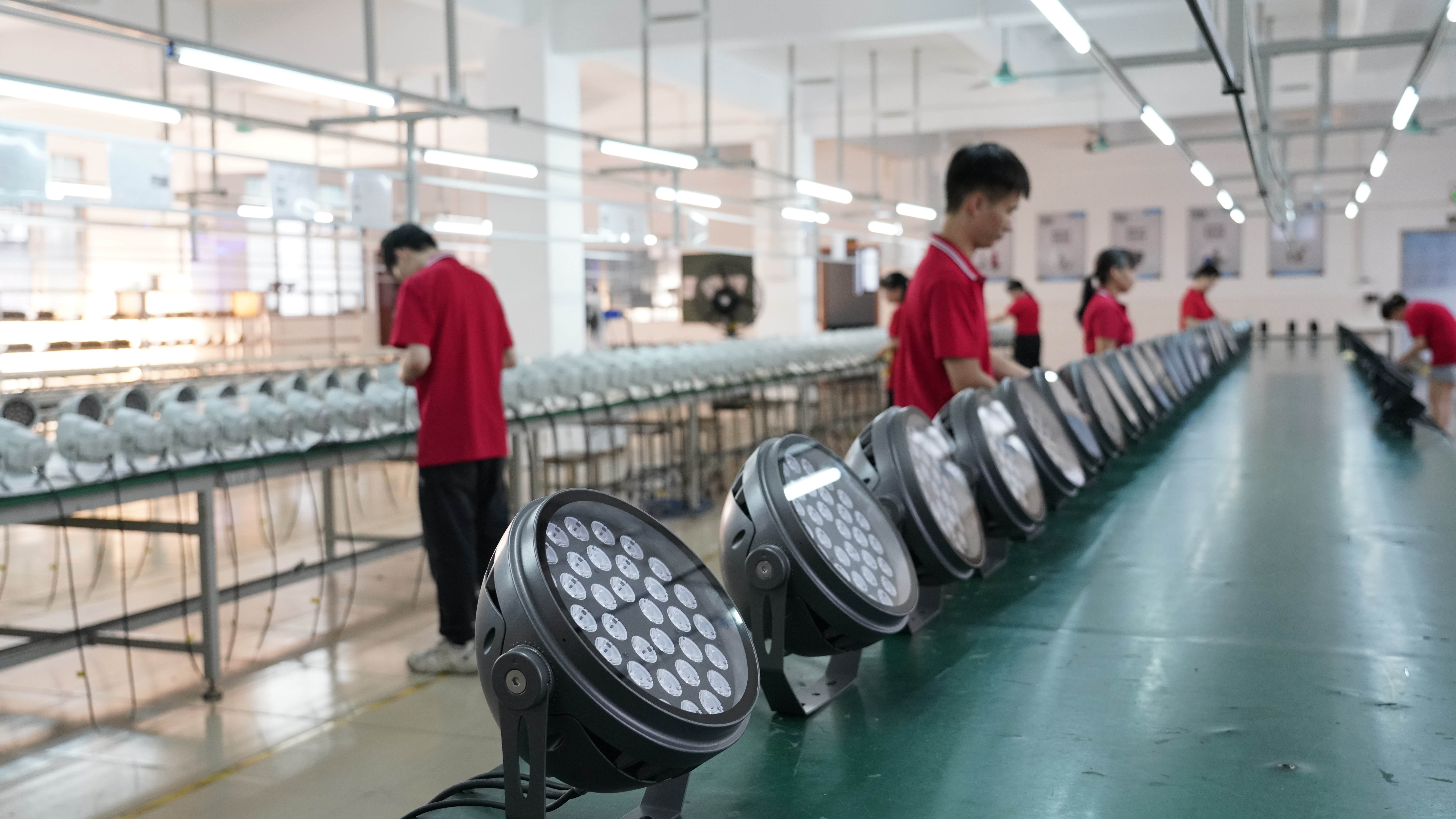
Finished goods workshop. The comparison below is a procurement decision first and a design decision second.
The Power Architecture Decides More Than the Style
Two fixtures can share the same die-cast body, the same colour temperature and the same mounting height and still belong to different procurement categories. A solar pathway light is an energy-autonomous device: it harvests, stores and releases its own electricity. A hardwired LED inground light is a load on a circuit: its performance depends on the transformer selected, the cable gauge and run length, the quality of every sealed connection and the driver inside the housing.
That distinction changes the questions a buyer should ask. For a solar fixture, the meaningful questions concern panel size versus local sunlight hours, battery capacity and chemistry, the low-light behaviour of the control circuit and the realistic winter runtime. For a hardwired inground fixture, they concern voltage drop across the run, transformer siting, driver lifetime, grounding and the watertightness of a housing that sits at or below grade where standing water is normal.
Neither architecture is a premium version of the other. They solve different site constraints, and the correct choice is usually decided by whether reliable mains power exists at the fixture location and how stable the light output must be after dark.
Why This Comparison Has Become a Buying Decision, Not a Preference
Landscape lighting has grown into a procurement category large enough to support dedicated product lines on both sides of this question. Grand View Research valued the global landscape lighting market at USD 13.2 billion in 2024 and projects USD 22.0 billion by 2030, with North America accounting for 34.9% of 2024 revenue. Within that market, LED technology already held approximately 45% share in 2023, and commercial applications accounted for 60% of demand in that year.
The self-powered side has expanded in parallel. Global Market Insights places the outdoor solar LED market — a scope that includes solar street lights, garden lights and pathway lights — at USD 7.10 billion in 2024. That figure is not a like-for-like subset of the landscape lighting total, and the two should not be added together. Read side by side, however, they show that solar-powered outdoor lighting is no longer a marginal accessory line: it is now large enough that distributors routinely stock both architectures and ask suppliers to quote them against the same project.
For a buyer, the practical consequence is that the choice can no longer be made on unit price alone. The two options differ in where the cost sits — in the fixture, or in the trench, cable, transformer and licensed installation labour around it.
How a Solar Pathway Light Produces Light
A solar pathway light converts sunlight into electricity through the photovoltaic effect during the day and stores it in a battery. At night, a light-sensing control circuit — a dusk-to-dawn sensor — switches on the LEDs automatically. Three components determine what the buyer actually receives on site: panel efficiency, battery capacity and the behaviour of the control circuit.
Installation practice matters as much as hardware. Correct commissioning requires a full-sun location away from shade, a 6 to 8 hour charge in direct sunlight before first use, firm staking or secure mounting, and a functional test of the dusk-to-dawn switching. Panels must be kept clean, and the light body must not be immersed in water. Where a project specifies bulk quantities, multilingual installation guides and matching mounting accessories are a reasonable thing to request from the supplier.
The honest engineering boundary is this: solar lights still charge in low light, but brightness and runtime may be reduced. Panel size and placement have to be matched to the local climate rather than assumed.
How a Hardwired LED Inground Luminaire Produces Light
A hardwired LED inground light takes power from a transformer or a line-voltage circuit and converts it through a driver inside or adjacent to the housing. Output is independent of weather. That stability is the reason hardwired fixtures dominate commercial landscape lighting, facade work and any application where illuminance has to be predictable night after night.
The trade-off is that the installation is the product. A buried inground fixture must survive standing water, soil moisture and seasonal frost, so every connection has to be sealed and every gland rated for the environment. Input voltage must match the rated value; loose or poorly sealed connectors are among the most common causes of flicker or dimming. When a hardwired fixture misbehaves, the diagnostic order is consistent: verify the input voltage against the rated value, reconnect and re-seal all connectors, then test with a replacement driver before escalating to the supplier with photographs.
Water Ingress, Colour and Output: The Three Specification Fields Buyers Skip
The IP rating has two digits. The first, from 0 to 6, rates dust protection; the second, from 0 to 8, rates water protection. For general outdoor exposure, IP65 or above is normally recommended; IP67 suits short-term immersion, and IP68 suits continuous underwater use. Because an inground fixture sits lower than a pathway fixture, the same project can legitimately require two different ratings. Levels are verified through standard ingress testing and documented in test reports — the rating on a label is only as good as the report behind it.
Colour temperature (CCT), measured in Kelvin, defines how warm or cool the light appears. Warm white at 2700K to 3000K creates a soft ambience for gardens and patios; neutral white at 4000K suits commercial areas; cool white at 5000K to 6500K is used for security and road lighting. The Color Rendering Index (CRI) is scored 0 to 100 and measures how accurately a source reveals true colour. CRI 80+ is standard for general outdoor use; CRI 90+ is preferred for landscape and architectural work where planting, stone and facade materials must read correctly after dark.
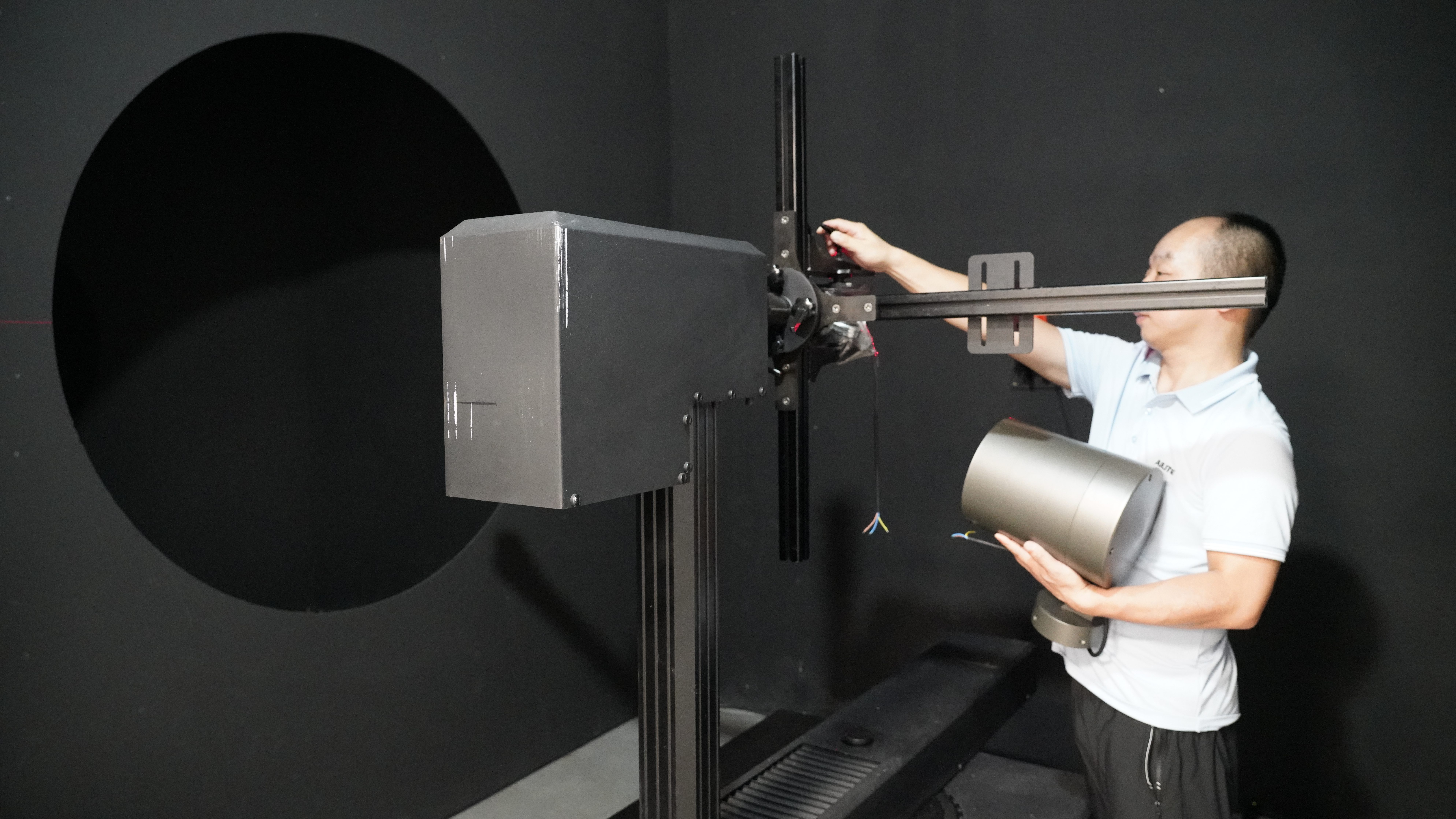
Inspection workshop. Ingress protection and photometric claims should be traceable to test documentation, not to a datasheet headline.
Side-by-Side Comparison
The table below compares the two architectures on the dimensions that most often decide a landscape project. It describes typical behaviour for each category rather than the performance of any single model.
| Decision dimension | Solar pathway light | Hardwired LED inground light |
|---|---|---|
| Power source | Integrated solar panel, battery and light-sensing control circuit | Transformer or line-voltage circuit, driver, buried cable run |
| Installation requirement | Stake or surface mount, full-sun siting, 6 to 8 hour initial charge, no wiring | Trenching, cable, sealed connections, transformer siting, qualified electrician for higher voltages |
| Output stability | Depends on sunlight, panel size, battery condition and placement | Stable and predictable regardless of weather |
| Nightly runtime | Brightness and runtime may be reduced in low light, shade or winter | Set by driver and control gear, not by weather |
| Waterproofing focus | Housing and panel sealing; body must not be immersed | Housing at or below grade, glands, connectors, standing-water exposure; IP67 or IP68 may be required |
| Maintenance drivers | Panel cleaning, battery ageing, shade management | Driver lifetime, connection integrity, cable and transformer condition |
| Typical best fit | Pathways, gardens, lawns, decorative and ambient schemes, sites without power access | Commercial landscape lighting, facades, uplighting, high-illuminance and security schemes |
| Documentation to request | Panel and battery specification, low-light performance, IP test report, installation guide | IES photometric file, lifespan data, IP test report, driver specification, wiring diagram |
Comparison is qualitative and category-level. Verify the actual rating and performance of any specific model against its own test documentation.
Where Each Option Fits in an Actual Project
Solar lights suit areas without power access and quick, low-cost installation, but brightness and runtime depend on sunlight. Low-voltage and hardwired lights deliver brighter, stable output and suit commercial or high-illumination projects, with higher installation cost. That split is the cleanest rule a buyer can carry into a site walk.
Applied to landscape lighting for parks, gardens and pathways, the pattern is consistent:
- Solar pathway lights, solar garden lights, solar lawn lights and solar bollard lights are appropriate where the lighting brief is ambient or decorative, where trenching is impractical or prohibited, and where the site receives meaningful direct sunlight. Remote areas without power access are the clearest case.
- Hardwired LED inground lights, wall washers and high-power flood lights are appropriate where illuminance must be constant — commercial landscape lighting, building facades, tree uplighting, signage and security lighting. For gardens and signage accents, low-power compact spotlights are the recommended alternative to wide-beam units.
- Mixed schemes are common in parks and hospitality grounds: hardwired inground uplights on the architecture and specimen trees, solar pathway and bollard lights along the routes where cable cannot practically be run.
Decorative outdoor landscape lighting schemes, where the objective is atmosphere rather than measured illuminance, tolerate solar variability far better than circulation or security lighting does. That single distinction resolves most specification arguments before they start.
What a Spec Sheet Must Prove Before a Bulk Order
Parameters such as lumen output, lifespan and IP rating can be overstated relative to actual performance, and the risk rises with order size. The countermeasure is documentary, not rhetorical: request IES photometric files, lifespan test data in the LM-80 style, IP test reports and pre-production samples for verification, and use third-party inspection for high-value orders where the buyer cannot attend.
- Ingress protection: the IP rating on the label should be backed by an ingress test report, and shipments should be inspected against it before delivery.
- Photometric behaviour: an IES file shows the actual distribution, which is what determines whether an inground uplight grazes a wall evenly or produces hot spots.
- Solar-specific proof: panel size relative to local sunlight hours, battery configuration and documented low-light behaviour, since solar lights still charge in low light but brightness and runtime may be reduced.
- Certification by market: CE and RoHS for the EU, UL or ETL and FCC for North America, SAA for Australia, plus IP ratings for weather resistance. Factory-level systems such as ISO9001, ISO14001, BSCI and C-TPAT indicate quality, environmental and social compliance rather than product compliance — both layers matter.
- Material specification: aluminium housings dissipate heat better, extend LED lifespan and resist corrosion, which makes them the recommended choice for commercial, coastal and high-heat environments; plastic housings are lighter and cheaper for low-cost or sheltered uses but can degrade under prolonged UV exposure.
Where Light Legend Sits in This Category
Light Legend (Chongqing) Technology Co., Ltd. is an outdoor lighting manufacturer and exporter that supplies solar and mains-powered landscape fixtures to distributors, brand owners and engineering contractors, operating a self-owned factory in Guangdong with a design base in Chongqing. The company is relevant to this comparison because it manufactures on both sides of it, which means a buyer can evaluate the two architectures against one supplier's documentation rather than against two unrelated supply chains.
The production footprint is 8,000 m² with more than 200 employees, including a research and development team of more than 20 engineers and product designers, and annual output of 4,200,000 pieces. Exports represent 80% of output, with products shipped to more than 60 countries across Europe, America, Asia, Africa and Latin America. Stated capability includes more than 100 independent patents and more than 4,000 successful cases, and the company holds ISO9001, ISO14001, BSCI and C-TPAT management system certifications.
For this decision specifically, three capability facts matter:
- ODM: monthly capacity of 80,000 units, customization of voltage, logo, packaging and product, a minimum order quantity of 100 units, and lead time of 10 to 20 days.
- OEM: monthly capacity of 20,000 units, customization of voltage, logo and packaging, a minimum order quantity of 500 units, and lead time of 30 days.
- Quality control: 100% testing, with a five-stage sequence covering incoming, prototyping, first article, in-process and outgoing inspection, plus remote after-sales support for installation and maintenance questions.
The relevant product lines for a solar-versus-hardwired evaluation are the Solar Lighting series (DS016, DS1316, DSL08, DSL09, DS-B-SPL), the Pathway Lights series (DS001, DS003, DS007, DS019, DS023, DS026, DS028, DS029, DS033, DS129, DS701, DS1218) and the LED Inground Lights series (ALT-DM120, ALT-DM160, ALT-DM179, ALT-DM200, ALT-DM229, ALT-DM260). Outdoor fixtures are available with IP65, IP66 or IP67 ratings, and all shipments pass ingress testing before delivery.
On compliance, the company holds CE, CE-RoHS, FCC, UKCA, UN38.3 and Safety Data Sheet documentation. As a concrete example of the evidence level available, CE certificate TST25231600579EC was issued by Dongguan True Safety Testing Co., Ltd. against EN IEC 55015:2019/A11:2020, EN IEC 61547:2023, EN IEC 61000-3-2:2019+A1:2021+A2:2024 and EN 61000-3-3:2013+A1:2019+A2:2021 for the Outdoor Wall Lights range. The certificate states that it applies only to the submitted samples and does not represent an assessment of the entire production batch, and that it must be used together with test report TST25231600579ER — a scope limitation buyers should expect and read carefully in any supplier documentation.
Limits, Trade-offs and Where Neither Option Works
A comparison without boundaries is not useful to a buyer, so the limits deserve stating plainly.
The solar limit is energy budget, not design. Solar pathway lights still charge in low light, but brightness and runtime may be reduced, and shady, high-latitude or heavily overcast sites will underperform even when the fixture is correctly specified. Battery capacity declines over service life. Solar is therefore a poor fit where constant high illuminance is the requirement — municipal road lighting, security perimeters and illuminated facades that must look identical every night. Within the manufacturer's own portfolio, road and large-area illumination is handled by mains-powered street and flood lights, while solar products are positioned for garden, pathway, decorative and remote-power applications.
The hardwired limit is installation exposure. A hardwired inground luminaire requires trenching, cable, a transformer location and sealed connections, and it requires qualified electricians for higher-voltage work. On sites without power access, the option simply does not exist. Where it does exist, the failure modes are concentrated in the parts the buyer never sees: a corroded connector under a metre of soil will take a fixture out of service regardless of the quality of the LED inside it.
There is also an honest trade-off inside the specification sheet. A higher IP rating, aluminium housing and CRI 90+ output all raise unit cost, and in a decorative pathway scheme those increments may deliver no visible benefit. Buyers who over-specify solar fixtures often pay for capability the site cannot use; buyers who under-specify hardwired inground fixtures usually discover it in the second season.
Field Evidence: What Documented Installations Show
Documented installations do not settle the solar-versus-hardwired argument, but they do show how each architecture behaves once installed. The following records are drawn from the manufacturer's case documentation and should be read as durability evidence for the relevant product families rather than as a head-to-head test.
- Germany, agent, 50 units of DSL018/DS129 garden lights: installed for ambient lighting and garden accent, running stably for 2 years and accepted under strict European standards.
- South Korea, project manager, 860 units: tree illumination and landscape accent, delivering refined lighting for 3 stable years.
- Vietnam, distributor, 480 units of KUPU-YT120: long-range projection and contour lighting in a tropical climate, 5 years stable with no reported performance drop.
- South Africa, agent, 5,000 units of KUPU-LD300: road illumination, large-volume delivery proven over 4 stable years.
- Azerbaijan, government procurement, 1,540 units of ALT-R38: wall flood lighting and night decoration awarded through public tender, running stably for 1 year with IP68 waterproofing and low-voltage safety requirements, controlled via DMX512.
- Romania, retailer, 200 units of G40/HCP182: atmosphere creation and night accent, stable for 1 year.
The pattern is consistent with the architecture logic above: the high-illuminance and municipal records sit with mains-powered fixtures, while the garden, courtyard and decorative records sit with solar and low-voltage product families.
What Changes Over the Next Five Years
Two forces are likely to move this decision. The first is scale: with the landscape lighting market projected to reach USD 22.0 billion by 2030 from USD 13.2 billion in 2024, and commercial applications already at 60% of 2023 demand, specification discipline is likely to tighten rather than relax. Larger projects mean more third-party inspection and more demand for traceable test documentation on both architectures.
The second is the solar segment's own maturity. A solar outdoor LED market measured at USD 7.10 billion in 2024 is large enough to fund real improvements in panel efficiency, battery configuration and control electronics. As those improve, the boundary between solar and hardwired will probably shift in favour of solar for ambient and pathway applications, while high-illuminance and security work stays with mains power. Buyers should expect the specification conversation to move from whether solar works to how its low-light performance is documented.
A Buyer Checklist for This Decision
- Confirm whether reliable power exists at the fixture location; if not, the decision is already made.
- Define whether the brief is ambient and decorative or measured illuminance; the two point in different directions.
- For solar, match panel size and battery configuration to local sunlight hours and winter conditions.
- For hardwired inground, plan voltage drop, transformer siting and connection sealing before comparing fixture prices.
- Request IP test reports, IES files where photometry matters, and lifespan data before confirming a bulk order.
- Confirm the certification set required by the destination market, and read the scope statement on every certificate.
- Verify a pre-production sample under the conditions the site will actually present.
Frequently Asked Questions
How do solar garden lights work?
During the day, the solar panel converts sunlight into electricity through the photovoltaic effect and stores it in a battery; at night, a light-sensing control circuit (a dusk-to-dawn sensor) automatically switches on the LEDs. The key factors are panel efficiency, battery capacity and the control circuit. Panel size and battery configuration should be selected according to local sunlight conditions.
How to choose between solar garden lights and low voltage landscape lights?
Solar lights suit areas without power access and quick, low-cost installation, but brightness and runtime depend on sunlight. Low-voltage lights deliver brighter, stable output and suit commercial or high-illumination projects, with higher installation cost. Solar lights need no wiring and charge from sunlight, offering easy installation and no electricity cost; low-voltage lights require a transformer and cable installation.
What does the IP rating mean for outdoor lights?
The IP rating has two digits: the first (0 to 6) rates dust protection and the second (0 to 8) rates water protection. For outdoor exposure, IP65 or above is generally recommended; IP67 suits short-term immersion, and IP68 suits continuous underwater use. Levels are verified through standard ingress testing and documented in test reports.
How to install solar garden lights correctly?
Place the light in a full-sun location away from shade, charge for 6 to 8 hours in direct sunlight before first use, insert the stake firmly or mount it securely, then turn it on and test the dusk-to-dawn function. Keep the solar panel clean and do not immerse the light body in water. For bulk orders, multilingual installation guides and mounting accessories matched to the project are reasonable deliverables to request.
Why is my solar garden light not working?
The most common causes are insufficient charging, shaded placement, a dirty panel, an ageing battery, or the switch being off. The sequence is to move the light to full sun, clean the panel, turn the switch off and charge fully for 1 to 2 sunny days, and replace the battery following supplier guidance if the fault persists.
Which certifications do outdoor lighting products need for export to Europe and North America?
Requirements depend on the destination market: CE and RoHS for the EU, UL or ETL and FCC for North America, SAA for Australia, plus IP ratings for weather resistance. Factory-level systems such as ISO9001, ISO14001, BSCI and C-TPAT indicate quality, environmental and social compliance. Test reports and certification files should accompany each shipment.
Light Legend product documentation, including the solar decorative garden light catalogue, is available for reference and download: Light Legend Solar Decorative Garden Light Catalogue (PDF).
Tem questões ou precisa de mais detalhes?
Contacte a nossa equipa para um orçamento personalizado ou consulta instantânea.
Solicitar orçamento
Preencha o formulário abaixo e a nossa equipa entrará em contacto com uma proposta personalizada.
Chat direto do WhatsApp
Prefere conversar em tempo real? Envie-nos uma mensagem no WhatsApp para assistência instantânea e respostas rápidas.
- Obter orçamento personalizado
- Partilhar fotos ou documentos
- Discuta as suas necessidades diretamente
Geralmente responde em 5–30 minutos durante o horário de expediente.