
Solar Power Inverter Types: A Practical Guide for Buyers and Specifiers
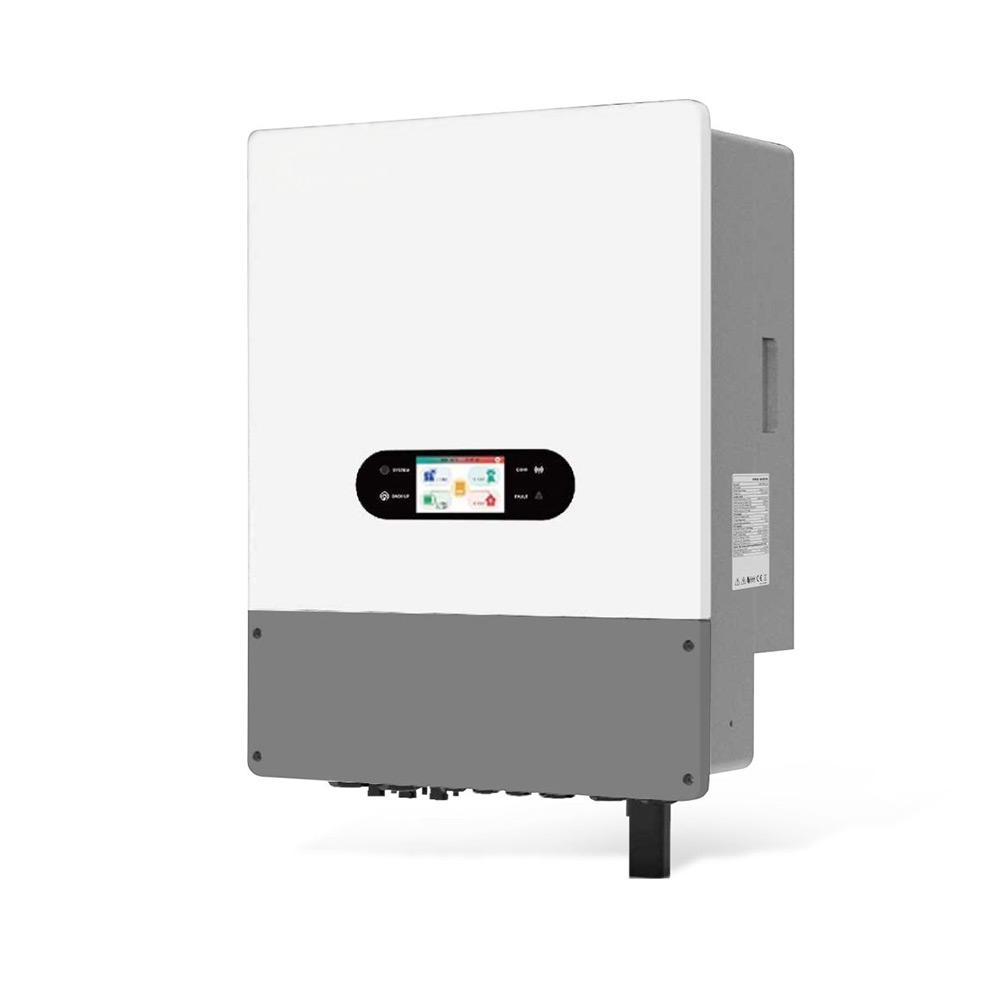
The solar inverter is the component that determines how photovoltaic energy is converted, stored, and exchanged with the grid. For buyers and specifiers, understanding the differences between inverter types is essential before comparing brands, prices, or power classes.
The global shift toward distributed solar and battery storage has made inverter selection more complex than simply choosing a power rating. Whether the project is a villa rooftop system, a commercial building, a hospital backup installation, or a remote off-grid site, the inverter type directly affects energy self-consumption, grid interaction, and resilience during outages. This guide explains the main solar inverter categories — on-grid, off-grid, hybrid, and micro inverter — and outlines what procurement teams should verify before sourcing.
Why Inverter Type Matters in PV Procurement
An inverter performs several critical functions: converting DC from solar panels into AC for household or commercial use, managing maximum power point tracking (MPPT), and ensuring safe disconnection from the grid when required. The type of inverter defines whether the system can store energy in batteries, operate during a grid outage, feed surplus power to the grid, or combine multiple functions in one unit.
From a buyer's perspective, the inverter type also determines system architecture. A grid-tied system without batteries has lower upfront cost, but it does not provide backup power. A hybrid system adds storage flexibility and emergency supply but requires more detailed configuration and battery management. These trade-offs should be aligned with the customer's actual load profile, grid stability, and budget before any product decision is made.
Main Solar Inverter Categories
The following categories represent the majority of inverters considered in residential, commercial, and industrial PV projects. Each type has a distinct role in the energy flow between solar panels, batteries, loads, and the utility network.
On-Grid Inverters
An on-grid inverter, also called a grid-tied inverter, converts DC power from solar panels and feeds it directly into the utility grid. These systems generally do not include battery storage and are designed to shut down when grid voltage is absent, for safety reasons. On-grid inverters are commonly used where net metering or feed-in tariffs allow surplus solar power to be exported.
In Yeyanghong Energy's product line, the On-Grid Inverter is available in power ratings from 2KW to 320KW, including 6.2KW, 12KW, 36KW, 40KW, 50KW, 60KW, 70KW, 80KW, 90KW, 100KW, 110KW, 120KW, 225KW, and 320KW. The series supports input voltage options of 12V, 24V, and 48V, with output voltage of 220V~230V for EU markets and 110V~120V for US markets. Rated grid frequency is 50Hz or 60Hz, and protection degrees range from IP21 to IP67. The enclosure is made of aluminium alloy.
Off-Grid and On & Off-Grid Inverters
Off-grid inverters are designed for standalone systems that operate independently from the utility grid. They convert DC power from solar panels and batteries into AC for direct consumption, making them suitable for remote sites, backup power, and regions with unreliable grid supply. Some models are classified as on & off-grid inverters, meaning they can support both battery-based standalone operation and grid interaction depending on system configuration.
Yeyanghong offers EU-standard on & off grid inverters in 1.2KW, 2.2KW, 4.2KW, 6.2KW, and 12KW models, with output voltage of 220V~230V at 50Hz. US-standard versions are available in 3.6KW, 6.5KW, 7.2KW, and 12KW models, with output voltage of 110V~120V at 60Hz. Input voltage options are 12V, 24V, or 48V, and protection levels include IP21, IP55, IP65, IP66, and IP67.
Hybrid Inverters
A hybrid inverter combines solar conversion, battery charging and discharging, and grid connection in a single device. This makes it possible to store solar power during the day and supply household or commercial loads at night, reducing grid electricity consumption and improving energy independence. Hybrid inverters typically switch automatically between solar charging, battery discharge, and grid complementary supply, enabling 24-hour intelligent operation.
Yeyanghong's Hybrid Inverter series is available in 6KW, 10KW, 12KW, and 15KW models. The series supports input voltages of 12V, 24V, or 48V and output voltages of 220V~230V for EU markets or 110V~120V for US markets, at 50Hz or 60Hz. Protection degrees range from IP21 to IP67, and the housing is made of aluminium alloy. A three-phase configuration is also available in the 10KW, 12KW, and 15KW range with IP66 protection for EU-standard applications.
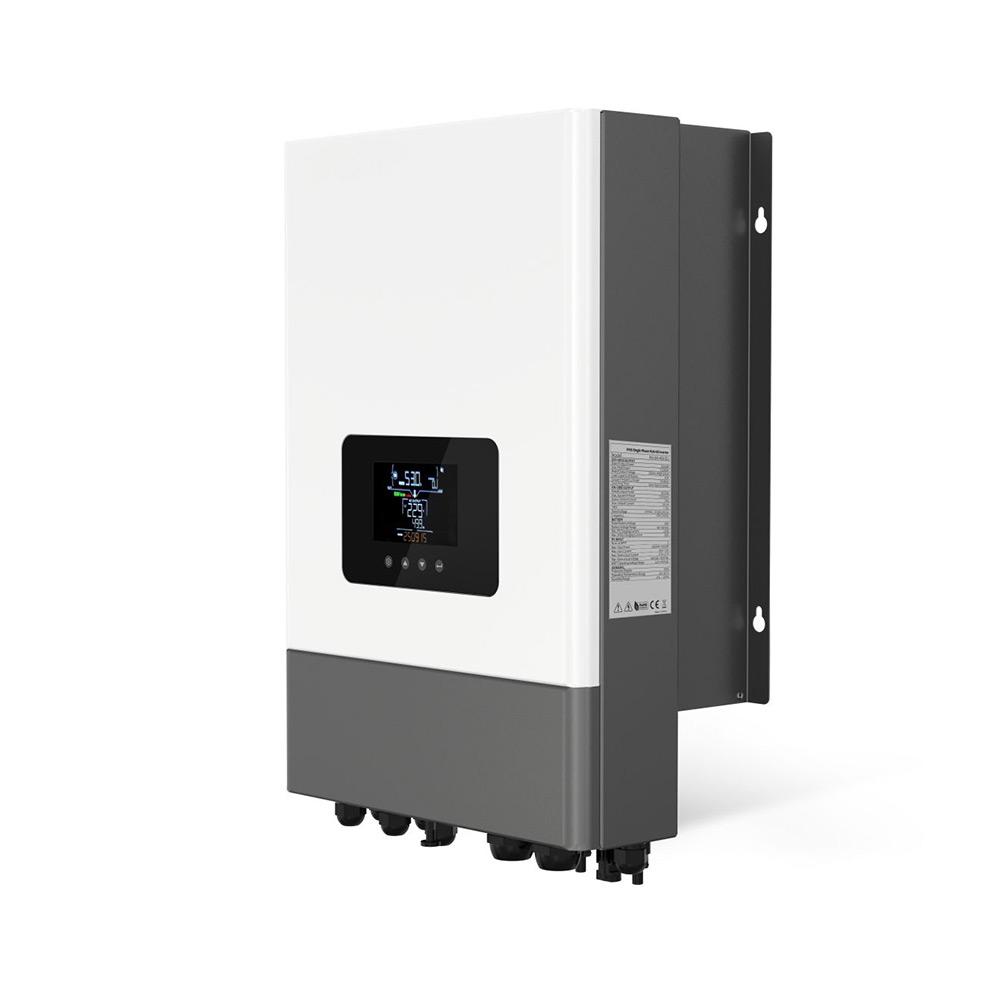
Micro Inverters
Micro inverters are small, module-level inverters that convert DC power from individual solar panels rather than a central string. This approach can improve monitoring granularity, reduce the impact of partial shading, and simplify system expansion. Micro inverters are often used in residential roofs and smaller commercial installations where panel-level optimization is valuable.
Yeyanghong offers a Micro-Inverter series rated at 800W, 1000W, and 2000W, with input voltage options of 12V, 24V, or 48V and EU-standard output voltage of 220V~230V at 50Hz. The micro inverter is made of aluminium alloy and offers protection levels from IP21 to IP67. It is intended for standalone solar systems and applications in the photovoltaic new energy and power grid industries.
Side-by-Side Comparison of Inverter Types
The table below summarizes the functional orientation of the main inverter categories based on publicly available product specifications and typical system architecture.
| Inverter Type | Primary Function | Battery Support | Grid Interaction | Typical Application |
|---|---|---|---|---|
| On-Grid Inverter | Convert DC to AC and export solar power to the grid | No | Continuous grid-tied operation | Grid-connected residential, commercial, and industrial PV |
| Off-Grid / On & Off-Grid Inverter | Convert DC from PV and battery to AC for local loads | Yes | Standalone or limited grid interaction | Remote sites, backup power, regions with unstable grid |
| Hybrid Inverter | Manage PV, battery, and grid in one system | Yes | Auto switch between solar, battery, and grid | Residential self-consumption, villas, hospitals, emergency supply |
| Micro Inverter | Convert DC at individual panel level | No | Grid-tied | Residential roofs, shaded sites, modular PV systems |
Hybrid Inverter Specifications: What Buyers Should Check
For projects where energy storage and backup capability are priorities, the hybrid inverter deserves close evaluation. Buyers should check several parameters beyond power rating, including battery voltage range, output voltage standards, grid frequency, protection rating, and compliance with target market regulations.
Input and Output Parameters
Yeyanghong's hybrid inverter models support input voltages of 12V, 24V, or 48V, which should be matched to the battery bank configuration. The output voltage is available in EU standard 220V~230V or US standard 110V~120V, with rated grid frequency of 50Hz or 60Hz. These options allow the same product family to serve different regional specifications.
Enclosure and Protection
The hybrid inverter series is built with an aluminium alloy enclosure and offers IP21, IP55, IP65, IP66, or IP67 protection degrees. IP66 and IP67 ratings are especially relevant for outdoor rooftop installations that may face heavy rain, dust, humidity, or coastal salt fog. A higher IP rating generally means better protection against environmental exposure, which can be a decisive factor for projects in tropical, subtropical, or coastal climates.
Battery Integration and Energy Storage
A hybrid inverter reaches its full value when paired with suitable battery storage. Yeyanghong's energy storage portfolio includes wall-mounted and floor-standing batteries in 5KWh, 10KWh, and 16KWh capacities; stacked home energy storage systems such as MF-5K+10KWh and MF-5K+15KWh; and all-in-one BESS configurations like MF-6.2K+10KWh, MF-12K+16KWh, and MF-15K+32KWh. The 16KWh wall-mounted and floor-standing battery offers a cycle life of 8000 cycles at 90% depth of discharge at 25°C with 0.5C to 1C charge/discharge, and a 5-year warranty. The 10KWh model provides 6000 cycles under the same test conditions.
For a larger household or light commercial project, a commonly matched configuration in Yeyanghong's application scenario is a 12KW hybrid inverter with a 16KWh battery energy storage system. This combination supports storing solar power during daytime and supplying loads at night, which directly reduces grid electricity consumption and monthly power expenses.
Application Scenarios and Project Fit
The selection of inverter type is strongly influenced by the application scenario. Yeyanghong's application data identifies villa roof solar PV systems, hospitals, and escape or refuge areas as relevant projects for hybrid inverter systems. These use cases share a common need: reliable power supply during grid interruptions and better use of solar generation through battery storage.
- Villa roof solar PV systems benefit from reducing grid consumption, storing daytime solar power, and supplying household loads at night.
- Hospitals require backup capability and stable operation across a wide range of environmental conditions.
- Escape and refuge areas may face weak grid infrastructure, making hybrid systems with automatic switching between solar charging, battery discharge, and grid complementary supply particularly valuable.
The operating environment for these installations often includes wide climate variation: temperate, tropical, and subtropical zones, large temperature differences, high humidity, occasional thunderstorms, heavy rain, dust, and coastal salt fog erosion. Equipment intended for such conditions should support outdoor rooftop installation and provide overcharge, over-discharge, and short-circuit multi-protection, along with wide input voltage adaptability.
Market Context for Solar Hybrid Inverters
Market data helps buyers frame their sourcing strategy, although estimates for market size vary depending on the scope definition used. According to Grand View Research, the global solar hybrid inverter market reached USD 10.7 billion in 2024. Precedence Research reports that on-grid hybrid inverters held the largest share in the hybrid segment, accounting for 59% of revenue in the same year. Other analysts have published different totals, which reflects differing definitions of what is included in the hybrid inverter market — some focus only on the inverter component, while others include related storage system value.
On the supply side, China is a dominant production base for power electronics. Wood Mackenzie indicates that China accounted for over 330 GW of inverter shipments in 2024, maintaining its position as the world's leading export hub. This concentration makes supplier evaluation and quality control especially important for international buyers sourcing from Chinese manufacturers.
In the global competitive landscape, Huawei and Sungrow collectively accounted for 55% of global solar inverter shipments in 2024, according to Wood Mackenzie. S&P Global Commodity Insights ranks Growatt as the No.1 global residential PV inverter supplier and a top 3 hybrid inverter supplier for the same period. These names represent the large-scale market leaders; however, mid-sized manufacturers with direct factory control and flexible product lines remain relevant for buyers seeking tailored configurations and closer supply chain cooperation.
Comparing Hybrid Inverters with Traditional System Architectures
The traditional alternative to a hybrid inverter is a separate architecture: an on-grid inverter plus a battery inverter/charger, or an off-grid inverter plus a charge controller. This approach can be more modular and may allow each component to be sized independently. It also allows a customer to start with a grid-tied system and add storage later, which can be attractive for budget-constrained projects.
However, a hybrid inverter reduces the number of separate devices, simplifies system integration, and enables automatic switching between solar charging, battery discharge, and grid supply. For residential and small commercial sites, this often means fewer installation points, less wiring, and a more compact system design.
There are also genuine limitations to consider. A hybrid inverter is not always the most economical choice if the project has no battery and no requirement for backup power. In such cases, a standard on-grid inverter may offer a lower upfront cost and simpler compliance path. Battery-integrated systems also carry additional design responsibilities, including battery capacity planning, charging temperature management, and maintenance. Buyers should verify that the hybrid inverter and battery share compatible voltage ranges and communication protocols, and that the integrated system meets local safety certifications.
For European markets, hybrid inverters for PV systems must comply with IEC 62109-1 for general safety and IEC 62109-2 for specific inverter safety as part of CE marking. For North America, UL 1741 including Supplement SB is the mandatory safety standard for hybrid inverters connecting to the grid. Buyers should confirm the target market requirements before finalizing product selection.
Future Outlook
The solar inverter market continues to move toward tighter integration of power conversion and energy storage. Interest in hybrid systems is likely to stay strong as electricity prices rise and grid reliability concerns persist. Buyers can expect more attention to three-phase hybrid inverters for larger residential and commercial sites, wider compatibility with high-capacity batteries, and continued alignment with regional safety standards.
At the same time, the concentration of inverter manufacturing in China means that international buyers will increasingly rely on structured supplier audits, documented production capacity, and traceable product specifications. Manufacturers that can provide consistent engineering support and transparent factory data are likely to become preferred partners for long-term procurement programs.
Frequently Asked Questions
- What is a solar hybrid inverter?
- A solar hybrid inverter is a power conversion device that manages solar PV generation, battery storage, and grid connection in one unit. It can store solar power during the day and supply loads at night, and it can automatically switch between solar charging, battery discharge, and grid complementary power supply.
- What is the difference between a hybrid inverter and an on-grid inverter?
- An on-grid inverter converts DC power from solar panels and feeds it to the utility grid, with no battery support. A hybrid inverter also connects to the grid but includes battery management, enabling stored solar energy to be used locally and providing backup-oriented operation in many configurations.
- What power ratings are available in Yeyanghong's hybrid inverter series?
- Yeyanghong Energy offers a Hybrid Inverter series in 6KW, 10KW, 12KW, and 15KW models. The series supports input voltages of 12V, 24V, or 48V and output voltages of 220V~230V for EU markets or 110V~120V for US markets, at 50Hz or 60Hz.
- What protection levels do Yeyanghong hybrid inverters offer?
- The hybrid inverter series is made of aluminium alloy and offers protection degrees of IP21, IP55, IP65, IP66, and IP67. Higher IP ratings are available for installations exposed to weather, dust, or coastal environments.
- Which safety standards apply to hybrid inverters in Europe and North America?
- For Europe, hybrid inverters must comply with IEC 62109-1 and IEC 62109-2 for CE marking. For North America, UL 1741 including Supplement SB is the required safety standard for inverters connecting to the grid.
- What battery options can be paired with Yeyanghong hybrid systems?
- Yeyanghong offers wall-mounted and floor-standing batteries in 5KWh, 10KWh, and 16KWh capacities, stacked home storage systems such as MF-5K+10KWh and MF-5K+15KWh, and all-in-one BESS configurations including MF-6.2K+10KWh, MF-12K+16KWh, and MF-15K+32KWh. A commonly referenced configuration is a 12KW inverter paired with a 16KWh battery energy storage system.
For more detailed product information and downloadable specifications, readers can access the company brochure here: Yeyanghong Energy Company Brochure.