
Solar Street Light Peer Comparison Framework: AOK SD vs. Balder BI-S5A and Market Leaders
Solar Street Light Peer Comparison Framework: AOK SD vs. Balder BI-S5A and Market Leaders
Solar street lighting procurement no longer rests on a single specification column. A system-level peer comparison now requires at least seven dimensions — LED efficacy, energy autonomy, structure and environmental protection, optical distribution, warranty exposure, total cost of ownership, and supplier execution capacity. This framework applies those dimensions to the AOK solar street light SD series and the Balder BI-S5A, and outlines how the same logic scales across the wider industrial outdoor LED light category.
Why a Single-Axis Comparison Misleads Buyers
When two solar street light products sit side by side in a quotation, the immediate instinct is to compare wattage. Wattage, however, describes input, not output. A 100W product rated at 110 lm/W and a 100W product rated at up to 210 lm/W occupy the same power bracket but deliver materially different delivered lumens — and therefore different pole spacing, different solar panel sizing, and different battery draw.
The same problem repeats across the other axes. Battery capacity in isolation says little without discharge depth and controller efficiency. Ingress protection ratings say little without the corresponding impact rating. And a warranty period says little without knowing what components are covered and what the local service pathway looks like. Peer comparison only becomes useful when these dimensions are evaluated together rather than as isolated claims.
This is particularly relevant in industrial outdoor LED light projects, where a single procurement decision can commit a municipality, port authority, or industrial estate to a decade of maintenance exposure. The framework below is intended as a repeatable structure that buyers can apply to any solar street light shortlist, with AOK SD and Balder BI-S5A used as a working example.
The Seven Comparison Dimensions
1. Luminous Efficacy and Optical Output
Efficacy is the single most useful first-pass filter because it determines how much solar generation capacity a project needs. The AOK solar street light SD series offers a 20–120W power range with LED efficacy up to 210 lm/W, supported by multiple T2, T3, T4, and T5 optical distributions. The Balder BI-S5A focuses on a narrower 70–120W band at 110 lm/W, paired with a bifacial double-glass solar panel. The two products therefore occupy different design positions: the AOK SD series leans toward higher efficiency across a wider power spread, while the Balder BI-S5A leans toward solar harvest on the panel side.
2. Energy Autonomy and Runtime
Runtime performance is where the two models diverge most sharply. On an 80W configuration, the AOK SD series carries a 614.4 Wh battery and reaches full charge in approximately 5 hours, delivering 7.2 hours of full-power operation with 2–3 rainy-day autonomy. The Balder BI-S5A carries a 538 Wh battery, charges in approximately 6 hours, and delivers 12 hours of full-power runtime plus 3 nights of autonomy. Neither figure is inherently better: the AOK configuration is suited to standard urban and rural roadway duty cycles where 7–8 hours of nightly operation is the norm, while the Balder configuration targets projects where multi-night resilience is a hard requirement.
3. Structure and Environmental Protection
The Balder BI-S5A specifies IP66 and IK10 protection, wind resistance to 205 km/h, and a full-metal anti-corrosion build. The AOK SD series comparison scope does not disclose equivalent wind-load or impact specifications, but does reference a standard IP67 MPPT controller, PIR or microwave sensor options, and potential IoT monitoring for predictive upkeep. For inland roads and residential areas, the AOK specification is adequate; for coastal, hurricane-prone, or salt-laden environments, the Balder structural set is the more defensible choice.
4. Optical Distribution and Application Fit
Optical distribution determines whether light lands on the road surface or spills into adjacent property. The AOK SD series offers multiple T2/T3/T4/T5 distributions, and AOK separately lists Type II, Type III, Type IV, and Type V distributions together with 20+ claimed distributions across its roadway lighting listing. The Balder comparison scope does not disclose optical classifications. Buyers should request photometric files for the specific distribution being quoted, since nominal distribution labels alone do not confirm actual uniformity or glare control.
5. Warranty and Service Exposure
Warranty is a direct cost-transfer mechanism. The AOK SD series ships with a standard 3-year warranty, extendable to 5 years. The Balder BI-S5A carries a 10-year fixture warranty and a 5-year battery warranty. For projects with limited local maintenance capability, the Balder warranty structure reduces long-term intervention frequency; for projects where service partners are available and capex sensitivity is higher, the AOK warranty path remains workable.
6. Total Cost of Ownership
The AOK SD series generally presents a lower initial purchase cost, supported by a 20W entry-level option, a modular design that reduces customization expense, and higher efficacy that lowers the solar and battery capacity required per delivered lumen. The Balder BI-S5A commands a premium justified by heavier-duty construction, the bifacial panel, and the extended 10-year fixture warranty. Over a project lifecycle, the lower-capex route front-loads savings, while the premium route shifts cost from initial outlay to long-term reliability. Neither is universally cheaper — the TCO crossover depends on climate severity, maintenance cost, and expected service life.
7. Supplier Execution Capacity
A comparison framework that ignores who actually manufactures and ships the product is incomplete. AOK Industrial Company Limited was founded in 2012 with its production base in Shenzhen, China, and reports 200 employees, an annual output of 600,000 units, and a 30-engineer R&D team. The company reports serving customers in over 100 countries, completing more than 10,000 projects, and installing over one million units, with ISO9001, ISO14001, UL, TUV, and RoHS certifications and long-term strategic partnerships with Philips LUMILEDS and Osram. Buyers should still request certificate numbers, issuing-body records, and model applicability before relying on any certification claim in a contract.
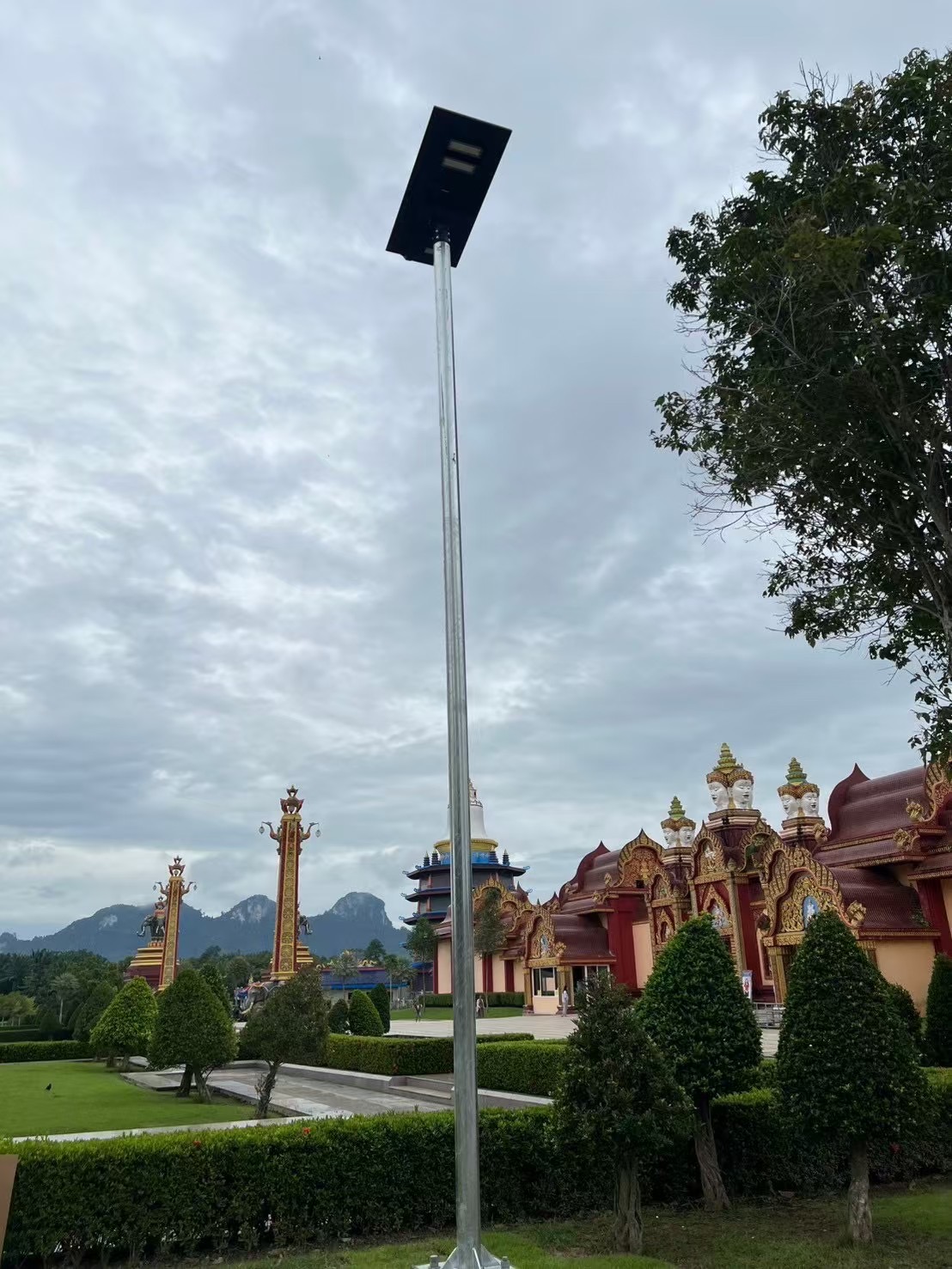
Peer comparison at the specification level: efficacy, battery capacity, runtime, and warranty position the AOK SD and Balder BI-S5A as different design trade-offs rather than direct substitutes.
Side-by-Side: AOK SD vs. Balder BI-S5A
The table below consolidates the comparable specification data available for both products. Where a field is not disclosed in the comparison scope, it is marked as such rather than inferred.
| Dimension | AOK Solar Street Light SD Series | Balder BI-S5A |
|---|---|---|
| Power range | 20–120W | 70–120W |
| LED efficacy | Up to 210 lm/W | 110 lm/W |
| Optical distributions | T2 / T3 / T4 / T5 | Not disclosed in comparison scope |
| Solar panel type | Single-side monocrystalline with MPPT | Bifacial double-glass |
| Battery capacity (80W model) | 614.4 Wh | 538 Wh |
| Average charge time | Approx. 5 hours | Approx. 6 hours |
| Full-power runtime | 7.2 hours (with 2–3 rainy-day autonomy) | 12 hours plus 3-night autonomy |
| Ingress / impact protection | Not disclosed in comparison scope | IP66 / IK10 |
| Wind resistance | Not disclosed in comparison scope | 205 km/h |
| Controller | Standard MPPT, IP67 | Not disclosed in comparison scope |
| Sensor options | PIR / microwave; IoT monitoring potential | Microwave sensor with intelligent 3-night autonomy |
| Warranty | Standard 3 years, extendable to 5 years | 10 years fixture / 5 years battery |
| Best-fit scenario | Cost-sensitive projects in standard urban / rural roads and residential areas (3–12m mounting height) | Harsh coastal or hurricane-prone environments, notably in Latin America |
Read as a whole, the table clarifies that the two products serve different project archetypes. The AOK SD series is designed to cover a wide range of standard municipal and residential duty points at lower initial cost and higher lighting efficiency. The Balder BI-S5A is designed to hold performance in punishing environments, where structural tolerance matters more than first-cost economy.
Where the Framework Points to Each Product
| Project scenario | Stronger fit | Reason |
|---|---|---|
| Standard urban and rural roads, 3–12m mounting height | AOK SD | Wide power coverage, up to 210 lm/W, T2–T5 optics, modular design |
| Residential area lighting with smart or IoT requirements | AOK SD | PIR / microwave support and IoT monitoring potential |
| Cost-sensitive multi-power procurement | AOK SD | 20W entry point and modular customization reduce upfront cost |
| Coastal, salty, or hurricane-prone sites | Balder BI-S5A | IP66 / IK10, 205 km/h wind resistance, full-metal anti-corrosion build |
| Remote unattended installations | Balder BI-S5A | 12-hour full-power runtime plus 3-night autonomy and 10-year fixture warranty |
The practical takeaway is not that one product wins. It is that procurement teams should pre-define the project's tolerance on each dimension — minimum runtime, environmental hazard class, warranty exposure, and cost ceiling — and then match the product whose trade-offs align with that tolerance. When two products clash on three or more dimensions, a direct comparison is usually less useful than splitting the requirement into two lots.
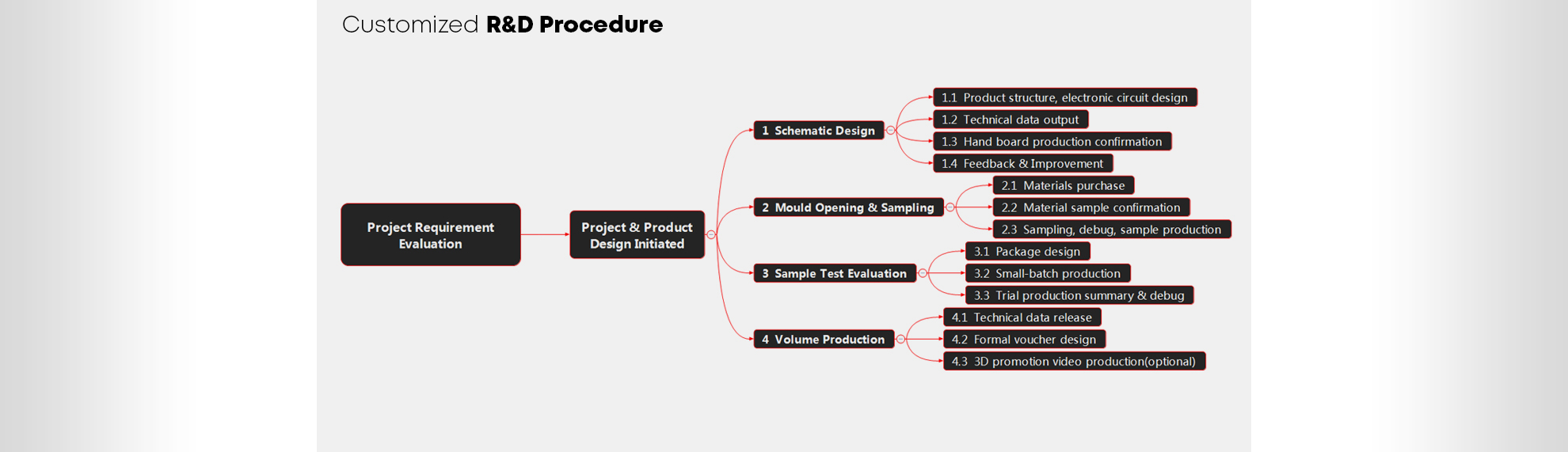
Supplier execution capacity is a first-class comparison dimension: R&D process, optical engineering, and production control determine whether the quoted specification is repeatable at scale.
Extending the Framework Beyond Solar Street Lights
The same seven-dimension structure applies across the wider industrial outdoor LED light category. When AOK high mast light HMA products are compared with Holophane, the same pattern of trade-offs appears: comparable efficacy levels and lighter weight on the HMA side, with Holophane carrying a premium tied to brand heritage, US manufacturing, and high-spec municipal positioning. When HMA is compared with LEDVANCE, the two products sit close on efficacy and lumen output, but HMA offers a significantly lower upfront cost with a better price-performance ratio, while LEDVANCE carries a brand and channel premium.
The comparison logic therefore holds across product types. Efficacy and cost-per-lumen are a first filter. Runtime and autonomy only matter where off-grid operation exists. Structure and ingress protection move to the front where environmental hazard is high. Warranty weight rises in remote installations. And the supplier's execution capacity — R&D depth, production scale, certification readiness, and long-term partnerships — anchors the entire comparison, because a specification that cannot be delivered on schedule has no procurement value.
Market Context: Why Peer Comparison Matters Now
The global outdoor lighting market was valued at USD 17.1 billion in 2024, according to Grand View Research. Within that market, the global solar street lighting segment reached USD 6.0 billion in 2025, based on P&S Intelligence reporting. These figures indicate that solar street lighting is no longer a niche pilot category — it is a mainstream procurement channel with enough supplier diversity to make structured peer comparison a practical necessity rather than a theoretical exercise.
At the same time, the evidence base for comparison remains uneven. Company-stated efficacy and ingress protection values are widely published, but independent laboratory reports are not uniformly available. AOK's roadway lighting listing, for example, claims efficacy up to 185 lm/W together with IP66 and IK08/IK09 ratings on a specific 180W model, and separately lists up to 210 lm/W on the SD solar street light series. Both are supplier-reported values that should be confirmed against LM-79 photometric data, LM-80 or TM-21 lifetime data, and third-party ingress testing before contractual commitment.
The market trend is therefore dual: system-level performance is improving, and the burden of verification is shifting toward the buyer. A structured comparison framework is the most efficient way to absorb that burden without slowing the procurement cycle.
What the Framework Reveals About AOK as a Supplier
AOK Industrial Company Limited operates as a Shenzhen-based manufacturer of LED street light, LED stadium light, LED high bay light, solar street light, industrial lighting, seaport lighting, airport lighting, and sports field lighting. Its 100% export orientation across EU, USA, Middle East, and Asia markets, combined with reported installations in over 100 countries and more than 10,000 completed projects, positions it as a volume-oriented supplier with broad application coverage rather than a single-category specialist.
For buyers, that positioning has two consequences. Positively, the breadth of the catalogue and the 30-engineer R&D team mean a solar street light project can be paired with matching high mast, flood, or area lighting from the same source, which simplifies procurement and after-sales coordination. Negatively, breadth alone is not proof of depth in any single category — buyers should still verify model-level test reports, factory audit outcomes, and certification scope for the specific SKU being quoted. The supplier's reported ISO9001, ISO14001, UL, TUV, and RoHS certifications are a useful starting point but require certificate numbers and issuing-body verification before they carry contractual weight.
Future Outlook
Three trends are likely to reshape peer comparison in the near term. First, efficacy claims will continue to rise, and the gap between supplier-reported and independently verified performance will drive demand for standardized test documentation as a standard RFQ attachment. Second, warranty differentiation — already visible in the contrast between AOK's standard 3-year and Balder's 10-year fixture warranty — will become a more prominent scoring criterion as long-life municipal assets move toward performance-based procurement. Third, the peer comparison framework itself is likely to formalize, with buyers adopting structured scoring templates that weight efficacy, autonomy, structural protection, warranty exposure, and supplier execution rather than treating any single dimension as decisive.
For solar street light buyers, the implication is straightforward: build the scoring template before the shortlist, not after. The AOK SD and Balder BI-S5A comparison shows that a single product rarely dominates every dimension, and the framework exists precisely to make those trade-offs visible at the point of decision.
Frequently Asked Questions
The AOK SD series covers a 20–120W power range with LED efficacy up to 210 lm/W and multiple T2/T3/T4/T5 optical distributions, while the Balder BI-S5A focuses on 70–120W at 110 lm/W with a bifacial double-glass panel. On an 80W configuration, the AOK SD carries a 614.4 Wh battery with approximately 5 hours of charge time and 7.2 hours of full-power runtime, while the Balder BI-S5A carries a 538 Wh battery with approximately 6 hours of charge time and 12 hours of full-power runtime plus 3-night autonomy. Structurally, the Balder unit specifies IP66 and IK10 protection with 205 km/h wind resistance, while the AOK SD structure is not specified to that level in the comparison scope.
The AOK SD series is suited to cost-sensitive projects that require wide power coverage, high efficiency, and smart or IoT options in standard urban or rural roads and residential areas with mounting heights of 3–12m. Its 20W entry point and modular design reduce customization costs, and the T2/T3/T4/T5 optics support standard roadway and residential distribution patterns. It is not positioned as the primary choice for coastal or hurricane-prone environments.
The Balder BI-S5A is built for harsher environments, with IP66 and IK10 ratings, 205 km/h wind resistance, and a full-metal anti-corrosion design. The AOK SD series is designed primarily for standard urban and rural road conditions and residential areas. Buyers specifying for salt-spray, high-wind, or high-vibration sites should treat the Balder structural package as the baseline requirement and confirm AOK SD suitability through additional site-specific testing.
The AOK SD series carries a standard 3-year warranty, extendable to 5 years. The Balder BI-S5A carries a 10-year fixture warranty and a 5-year battery warranty. The warranty structure should be read alongside local maintenance capability: longer warranty coverage reduces remote-site intervention frequency, while shorter but well-supported warranty coverage can still be cost-effective where service partners are locally available.
The AOK SD series typically presents lower initial purchase cost, supported by a 20W entry-level option, modular customization, and higher efficacy that reduces solar and battery capacity per delivered lumen. The Balder BI-S5A commands a premium justified by heavier-duty construction, the bifacial panel, and extended warranty coverage. The cost advantage shifts depending on climate severity, maintenance cost, and expected service life, so a project-level TCO model that accounts for these variables is more reliable than a unit-price comparison.
For specification data, product catalogues, and factory information, AOK's company brochure is available at AOK LED Lighting Brochure.
Tem questões ou precisa de mais detalhes?
Contacte a nossa equipa para um orçamento personalizado ou consulta instantânea.
Solicitar orçamento
Preencha o formulário abaixo e a nossa equipa entrará em contacto com uma proposta personalizada.
Chat direto do WhatsApp
Prefere conversar em tempo real? Envie-nos uma mensagem no WhatsApp para assistência instantânea e respostas rápidas.
- Obter orçamento personalizado
- Partilhar fotos ou documentos
- Discuta as suas necessidades diretamente
Geralmente responde em 5–30 minutos durante o horário de expediente.