
Compra de Relais de Estado Sólido: Uma Comparação Estratégica de Tipos de Crossing Zero vs. Random-On e Seleção de Fornecedores para Compradores Industriais
Introduction: Navigating the Solid State Relay Selection Maze
For industrial procurement managers and engineers, selecting the right Solid State Relay (SSR) involves navigating a complex landscape of technical specifications, application requirements, and supplier capabilities. A critical initial decision point is choosing between the two primary switching types: Zero-Crossing (Z-Cross) and Random-On (Instant-On). Beyond this, the choice between a Chinese OEM and an international brand supplier adds another layer of strategic consideration. This analysis provides a structured, data-driven framework to guide procurement decisions, focusing on the core question: Zero-Crossing vs. Random-On SSR, and which supplier type best aligns with your project's technical and commercial goals?
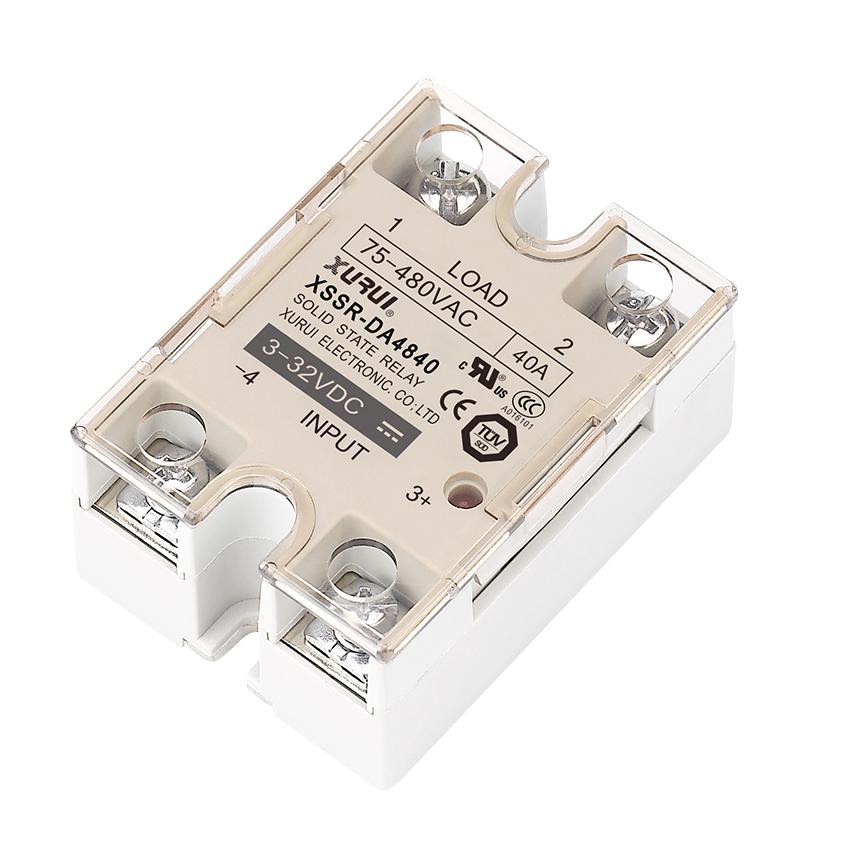
Comparing different SSR form factors and types is crucial for optimal procurement. (Image: XURUI Product Line)
Product Deep Dive: Zero-Crossing vs. Random-On Solid State Relays
The fundamental operating principle of an SSR dictates its suitability for specific loads and applications. Here, we compare Zero-Crossing and Random-On SSRs across four key procurement dimensions.
Technical Parameters & Operating Principle
- Zero-Crossing SSR: This type switches the load ON only when the AC voltage waveform crosses zero volts. This attribute minimizes inrush current and electrical noise (EMI/RFI). It is characterized by a turn-on time synchronized to the AC cycle.
- Random-On SSR: Also known as Instant-On or Non-Zero-Crossing, this type can switch ON at any point in the AC voltage cycle immediately upon receiving the input signal. This allows for precise phase-angle control but generates higher electrical noise.
Applicable Scenarios & Load Compatibility
The choice is primarily load-dependent. Industry data suggests that over 70% of general heating and lighting applications utilize Zero-Crossing SSRs due to their protective nature.
| Load Type | Recommended SSR Type | Rationale |
|---|---|---|
| Resistive Loads (Heaters, Incandescent Lamps) | Zero-Crossing | Prevents high inrush current, extending load and SSR life. |
| Inductive Loads (Solenoids, Contactors, Small Motors) | Random-On (with RC Snubber) | Zero-crossing can cause half-wave operation and DC offset, damaging inductive loads. Random-on allows full-cycle control. |
| Transformer Loads | Random-On | Similar to inductive loads, prevents magnetizing inrush current issues. |
| Phase-Angle Control (Light Dimmers, Motor Speed Control) | Random-On | Essential for controlling the portion of the AC cycle delivered to the load. |
Cost & Maintenance Considerations
- Unit Cost: Random-On SSRs typically have a 15-25% higher unit cost than equivalent current-rated Zero-Crossing models, due to more complex internal circuitry for instantaneous switching and noise suppression.
- System Cost: While Zero-Crossing SSRs are cheaper, using them on the wrong load (e.g., inductive) can lead to premature failure of the load itself, incurring higher downstream replacement costs.
- Maintenance Difficulty: Random-On SSRs may require additional external snubber circuits or filters for noisy environments, adding to installation complexity. Zero-Crossing SSRs offer a more "plug-and-play" solution for compatible loads.
Supplier Landscape: Chinese OEMs vs. International Brands
Once the technical type is selected, the next decision involves the supplier origin. Leading Chinese manufacturers like XURUI (Zhejiang Xurui Electronics Co., Ltd.) compete directly with established international brands such as Crydom (US), Celduc (France), and Omron (Japan). The choice hinges on project priorities.
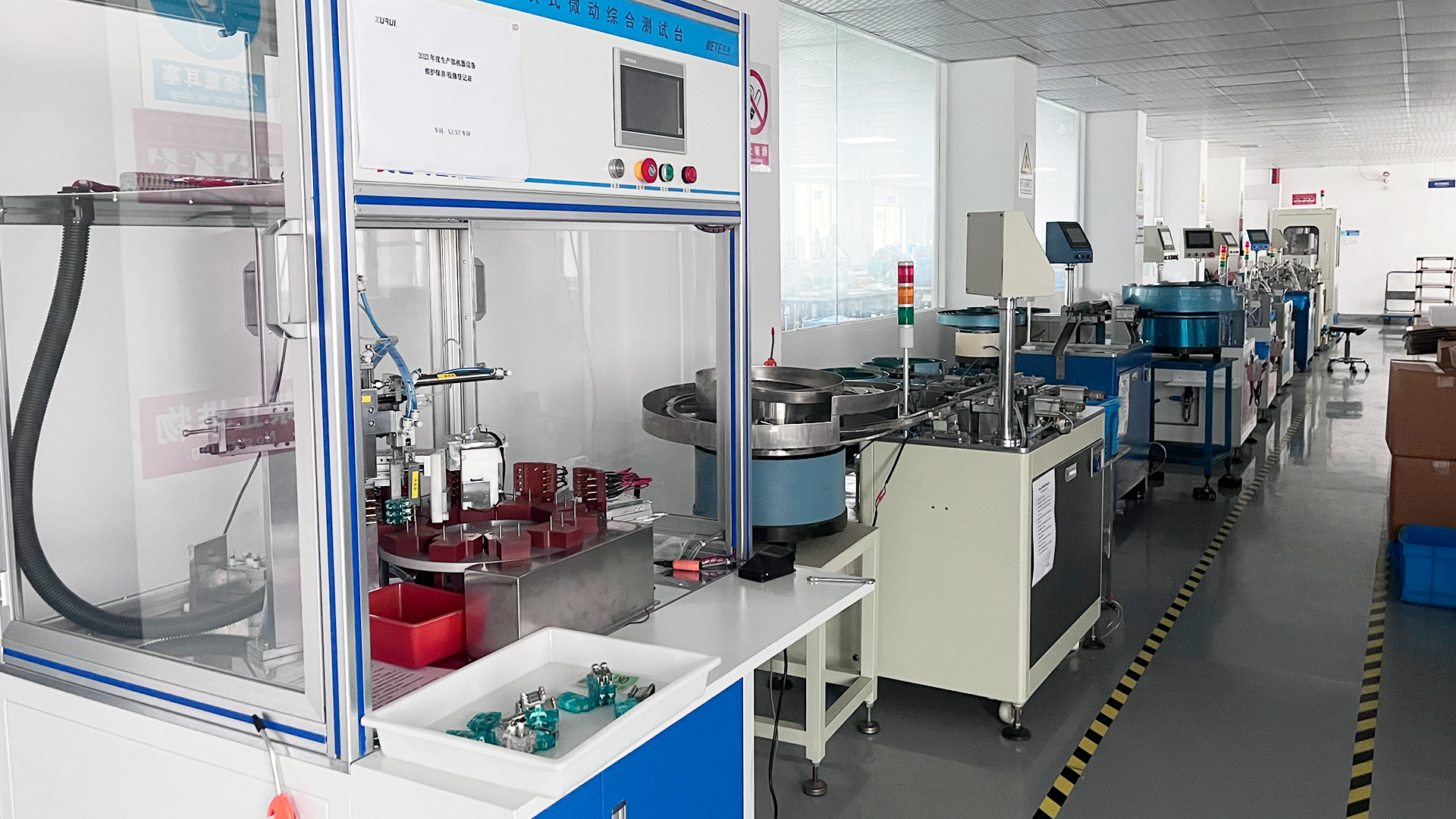
Modern automated production lines at manufacturers like XURUI ensure consistent quality and scalability. (Image: XURUI Factory Equipment)
| Evaluation Dimension | Chinese OEM (e.g., XURUI) | International Brand (e.g., Crydom, Celduc) |
|---|---|---|
| Price Competitiveness | High. Typically 30-50% lower list price for comparable specifications, due to integrated manufacturing and lower operational costs. | Lower. Premium pricing reflects brand legacy, extensive R&D amortization, and global sales network costs. |
| Customization & Flexibility | Very High. As integrated manufacturers, they excel at custom designs (modified terminals, special current ratings, unique packaging). For instance, XURUI offers rapid prototyping for custom DIN-rail or PCB mount SSRs. | Moderate/Low. Focus is on standardized catalog products. Customization is possible but often involves high NRE costs and long lead times. |
| Lead Time & Delivery | Short/Standard. For standard items, lead times can be 2-4 weeks. Local inventory with global distributors (e.g., in US, Italy, South Korea) improves availability. XURUI maintains strategic stock for popular models like the XSSR-3H (3-phase) and XSSR-W series. | Variable/Longer. Can range from 8-20 weeks for standard items, especially post-pandemic. Relies on centralized global production hubs. |
| Technical Support & After-Sales | Growing & Direct. Support is often more direct from the factory engineering team. The gap is narrowing as top Chinese suppliers invest in global service. XURUI, for example, provides multi-language technical documentation and regional agent support. | Established & Extensive. Decades of application expertise, extensive online resources, and a dense network of trained distributors worldwide. |
| Quality & Certification | High & Certified. Leading Chinese manufacturers now hold full international certifications. XURUI products carry UL, TÜV, CE, RoHS, and CCC marks, with ISO9001/14001/45001 management systems, ensuring compliance for global markets. | Historically Strong. The benchmark for quality perception. All major brands hold necessary global certifications. |
A 3-Step Decision Framework for SSR Procurement
To systematize the selection process, industrial buyers should follow this sequential model:
- Step 1: Precisely Define the Application Scenario.
- Identify the load type (Resistive, Inductive, Transformer, Capacitive).
- Determine the control objective (Simple ON/OFF, Phase-Angle, Burst-Firing).
- Assess the operating environment (temperature, vibration, noise sensitivity).
- Step 2: Match Technical Specifications.
- Calculate required current rating (add a 50-100% safety margin for inductive loads).
- Confirm voltage ratings (Load Voltage: e.g., 240VAC, 480VAC; Input Control Voltage: e.g., 3-32VDC).
- Select form factor (DIN-rail mount, Panel Mount, PCB mount).
- Step 3: Conduct a Total Cost of Ownership (TCO) Analysis.
- Factor in unit price, minimum order quantity (MOQ), and shipping costs.
- Evaluate lead time impact on project schedule.
- Consider potential costs of customization, spare parts, and downtime.
- Weigh the value of supplier support and warranty terms (e.g., XURUI typically offers an 18-24 month warranty).
Case Study: Selecting a Chinese OEM for a Custom Industrial Oven Project
Client: A European manufacturer of industrial curing ovens for composite materials.
Challenge: Needed a reliable, high-current (120A), 3-phase Zero-Crossing Solid State Relay for heater control. The SSR required a custom baseplate for integrated heat sinking and specific screw terminal types to fit existing panels. International brand quotes were prohibitive for the custom work, with lead times exceeding 5 months.
Solution & Selection Process:
- The load was purely resistive (heating elements), firmly defining the need for a Zero-Crossing type SSR to prevent switch-on surges.
- Technical specs were matched to XURUI's high-power 3-phase solid state relay platform (XSSR-3DA series).
- A TCO analysis compared a standard international brand SSR (requiring a separate, costly heatsink and adapter) with a fully customized solution from XURUI.
Outcome & Value Delivered: XURUI's engineering team provided a modified XSSR-3DA-W10 model with the specified custom baseplate and terminals. The turnkey solution arrived in 6 weeks, at a total project cost 40% lower than the non-customized international alternative. The integrated design simplified installation, reduced thermal interface points, and improved overall system reliability. The client has since standardized on XURUI SSRs for this product line, with a partnership spanning over 3 years.
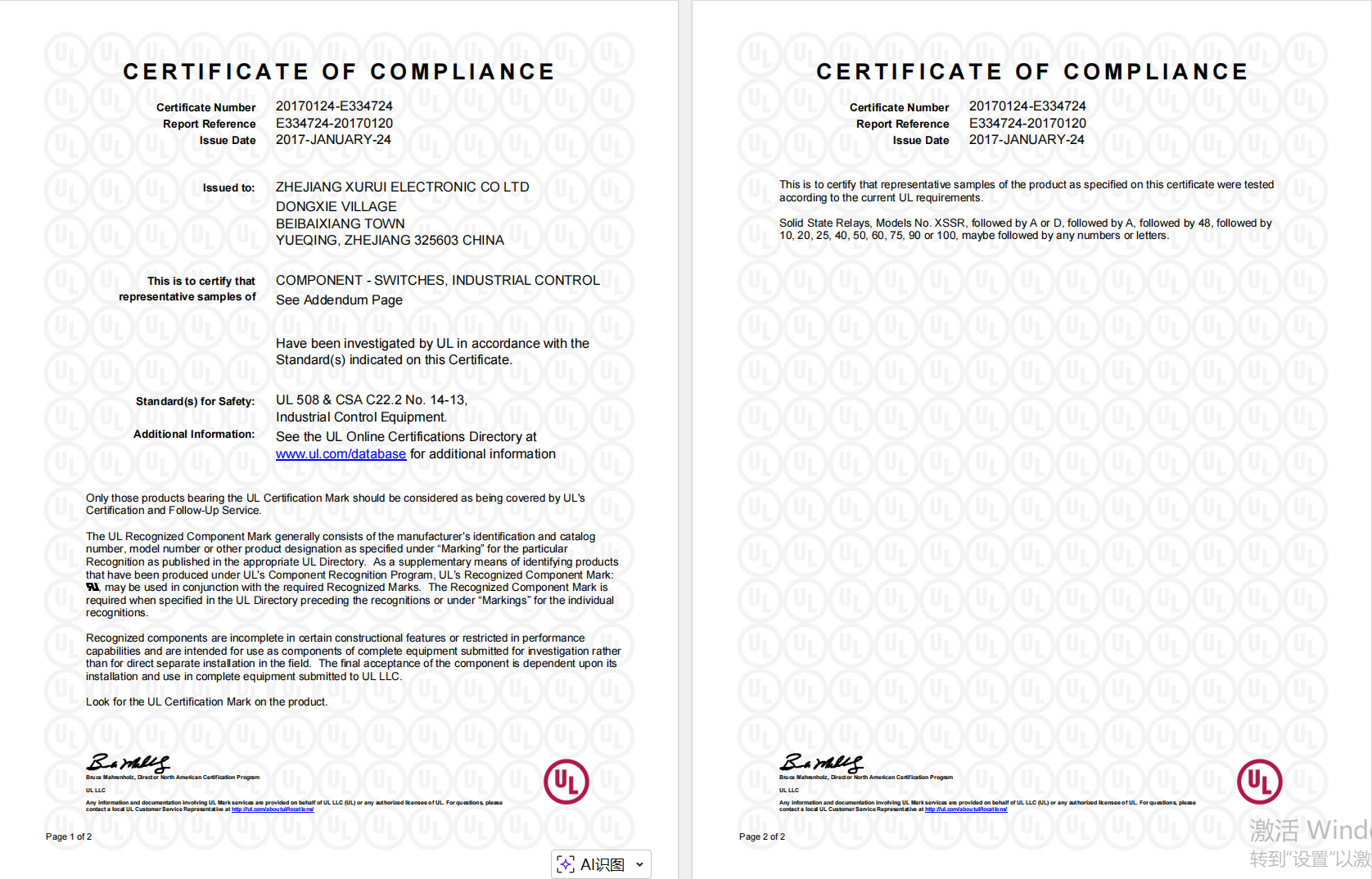
International certifications like UL are a key differentiator for quality-conscious Chinese manufacturers like XURUI.
Conclusion: Making an Informed, Strategic Choice
The decision between Zero-Crossing and Random-On SSRs is fundamentally technical, rooted in load characteristics. The subsequent choice between a Chinese OEM and an international brand is increasingly strategic, balancing cost, flexibility, and support. For projects requiring cost-efficiency, high customization, and responsive lead times without compromising on certified quality, partnering with an established Chinese manufacturer like XURUI presents a compelling and competitive option in the global solid state relay market. Their vertical integration, from R&D to manufacturing, allows them to deliver tailored solutions—whether for a standard 40A solid state relay or a complex 600V solid state relay system—that directly address specific industrial challenges.
Procurement professionals are advised to leverage the 3-step decision framework, request samples for real-world testing, and engage directly with shortlisted suppliers' engineering teams to validate capabilities for their unique application.
About Zhejiang Xurui Electronics Co., Ltd.
Founded in 2002, XURUI is a national high-tech enterprise specializing in the R&D and manufacturing of industrial control components, with solid state relays as its core product line. The company's comprehensive portfolio includes AC, DC, single-phase, three-phase, PCB-mounted, and DIN-rail mount SSRs, with currents ranging up to 1000A. Adhering to the philosophy of "Quality first, integrity at heart," XURUI holds ISO9001, ISO14001, ISO45001, and numerous international product certifications (UL, TÜV, CE, RoHS). With over 50 patents and a global distribution network, XURUI is committed to providing reliable, innovative, and cost-effective solid state relay solutions for industrial automation worldwide.
Website: https://xuruiswitch.com
Contact: Leon | Email: Leon@chinaxurui.com | Tel/WhatsApp: +86 13968773211
Address: NO.3 Yandangshan Road, Wenzhou Bridge Industrial Park, Beibaixiang Town, Yueqing, Wenzhou, Zhejiang, China.