
Solving Weak Seals on a Non Woven Bag Printing Machine: FAQ
Non-woven bag production has two quality gates that decide whether a shipment is accepted or returned: how the print registers, and whether the bag holds together under load. Buyers researching a non woven bag printing machine usually arrive with questions across both gates — plus a third set that has nothing to do with the machine itself, covering what installation actually requires and what the supplier is contractually obliged to deliver.
This reference answers those questions in the order buyers tend to ask them: seal quality first, because a split bag is the failure that reaches the end customer; registration second, because print accuracy is what the brand owner inspects; maintenance and installation third, because both determine whether the line ever reaches its rated output; and commercial terms last, because warranty and acceptance criteria are what the purchase ultimately rests on.
Facts below are drawn from Zhengxin's published machine specifications, its ISO 9001:2015 and CE certification records, and documented field procedures for installation, commissioning and fault diagnosis.
Why do non-woven bag seals turn out weak or inconsistent?
Seal failure is the most common quality complaint in non-woven bag production, and on most lines three root causes account for roughly nine out of ten cases. The symptom reads the same each time: finished bags peel apart under light load, weld strength varies along the seal line (strong at one end, weak at the other), or the bag fails a hand pull test by separating at the weld instead of tearing the fabric.
Cause 1 — contaminated sealing surfaces. Melted fabric residue builds up on the horn or sealing bar and reduces the energy that actually reaches the interface between layers. The fix is procedural rather than mechanical: stop the machine, disable the ultrasonic generator, wipe the horn tip and anvil with isopropyl alcohol and a lint-free cloth, and repeat under bright light until both surfaces are clean.
Cause 2 — an uneven horn-to-anvil gap. Measure with the supplied feeler gauge at both ends and at the centre. For 70 GSM fabric the gap should sit between 0.3 mm and 0.5 mm and hold even within 0.05 mm across the full horn width. A gap measuring 0.3 mm on one side and 0.5 mm on the other produces exactly the pattern buyers describe: a strong seal on one side of the bag and a weak seal on the other.
Cause 3 — amplitude or speed mismatch. If fabric GSM was changed, or line speed was raised without re-tuning, the welding energy no longer matches the material. Thicker fabric typically needs 5–10% more amplitude; if speed was increased, either reduce it by 10–15% or raise amplitude to compensate.
Three further causes account for most of the remainder. Air pressure that drops during the weld cycle — the compressor gauge should hold 0.6–0.8 MPa consistently — produces seal strength that drifts within a shift. A worn horn, visible as pitting or a wavy pattern when examined at an angle under bright light, distributes energy unevenly and degrades progressively. And fabric from a different batch or supplier, with inconsistent GSM or contamination in the raw material, will not weld correctly regardless of machine settings.
Whatever the cause, the verification method is the same: after any adjustment, run 20 test bags and pull-test five by hand. A correct seal tears the fabric. A failing seal peels apart at the weld line.
| Symptom | Most likely cause | First check |
|---|---|---|
| Seal peels apart under light load | Contaminated horn or anvil | Wipe with isopropyl alcohol and re-test |
| Strong on one side, weak on the other | Uneven horn-to-anvil gap | Feeler gauge at both ends and centre |
| Weak seal after a GSM or speed change | Amplitude/speed mismatch | +5–10% amplitude, or −10–15% speed |
| Seal strength drifts across a shift | Air pressure fluctuation | Compressor gauge holding 0.6–0.8 MPa |
| Gradual decline over months | Horn wear | Inspect horn face under bright light |
What the printing stage contributes — and what it does not control
Print quality and seal quality are produced at different stations, and buyers conflate the two because on an inline roll-to-roll line the printed fabric feeds straight into bag making. The printing machine's job is registration and tension stability. The seal is formed downstream, at the sealing station.
On a four-colour inline flexo platform such as the ZXH-C41200, that means a maximum fabric roll width of 1200 mm, a maximum printing width of 1160 mm, printing lengths from 220 mm to 1000 mm, plate thickness of 2.28 mm or 3.94 mm, and a printing speed of 10–60 m/min on a 380 V, 18 kW drive. The two-colour ZXH-C21200 shares the same 1200 mm roll width and 1160 mm printing width, with printing lengths of 250–1000 mm and an 8 kW total power draw.
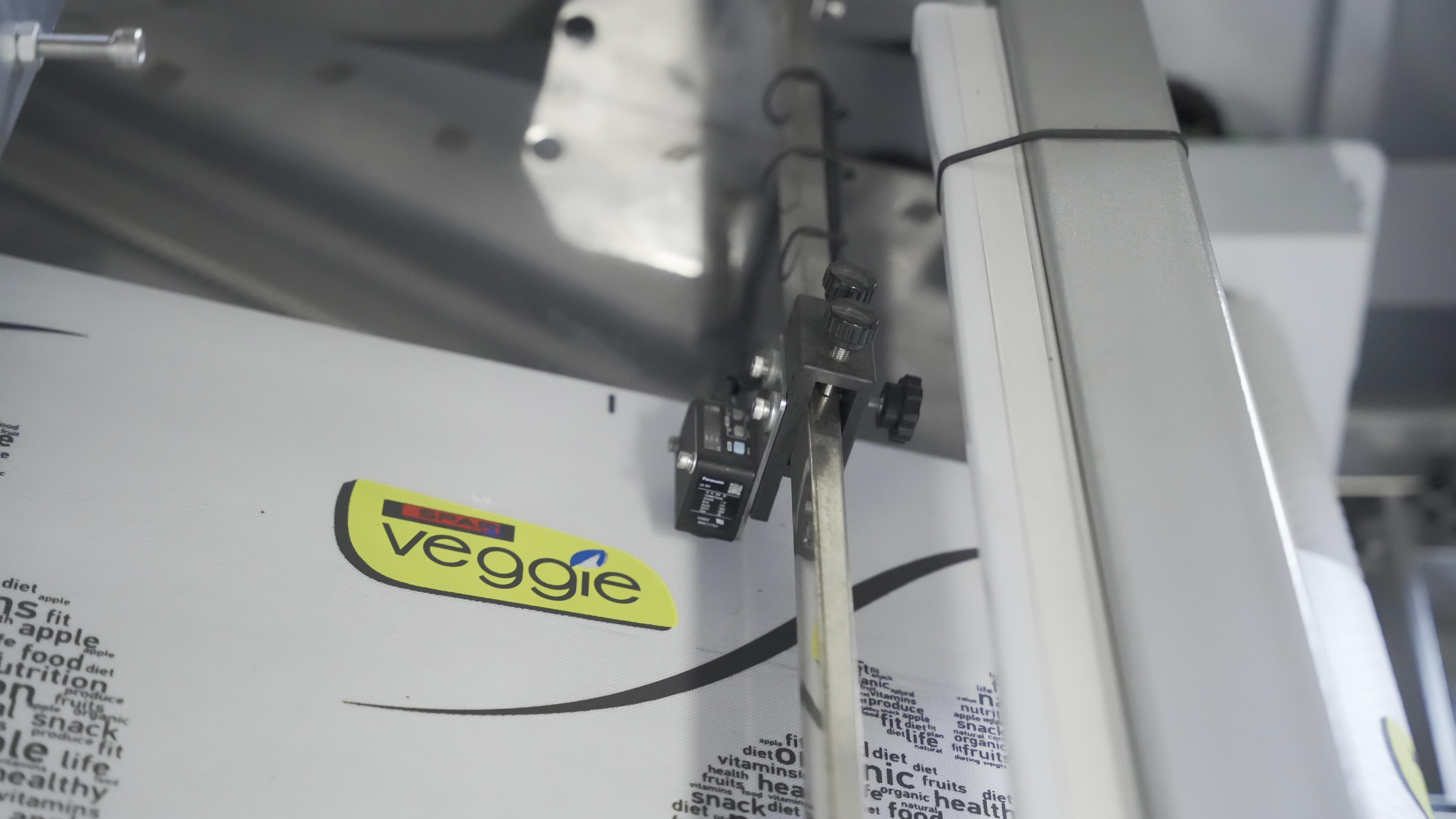
What makes registration repeatable is the servo main drive and the tension control system, supported by on-screen parameter monitoring. Tension control keeps the web flat and stable; the servo drive holds registration as line speed changes, which is what prevents the colour drift and ghosting that appears when a line is pushed toward its rated speed. That combination is also what allows an inline line to run printed fabric directly into the sealing station without an intermediate inspection step.
On the screen-printing platform the same principle appears in different hardware. Round-roller printing replaces tabletop printing, the printing position is adjusted by moving the screen frame rather than by cutting multiple moulds, and a full servo motor controls the scraper's lifting and falling. On the ZXH-A1200 and ZXH-B1200 that combination holds colour registration error within 2 mm, with 30 m of fabric carried in the drying oven.
What the printing machine does not do is form the seal. If print registration is stable and seals are still failing, the fault sits at the sealing station and the check order in the previous section applies unchanged.
What preventive maintenance and PLC self-diagnosis can actually prevent
Maintenance is the cheapest form of uptime, and on a non-woven bag printing line the schedule is short enough to run between shifts.
Daily, before or after each shift (5–10 minutes)
- Clean fabric dust from rollers, guide bars and photocell lenses with a dry brush or compressed air.
- Drain water from the air compressor tank.
- Wipe the ultrasonic horn and anvil with isopropyl alcohol if residue is present.
- Inspect the fabric path for debris buildup or thread wraps.
- Press and release each emergency stop button to confirm it functions.
- Listen for new or unusual noises during the first minute of operation.
Weekly (15–20 minutes)
- Grease chain drives, linear guide rails, lead screws and bearing housings with the grease type specified in the manual.
- Check belt tension — deflection at the midpoint between pulleys should be 5–10 mm under moderate finger pressure. A loose belt causes speed fluctuation and inconsistent bag dimensions.
- Inspect pneumatic hoses and fittings for leaks using a hiss test or soapy water.
- Clean the electrical cabinet air filter; a clogged filter causes overheating and controller faults.
- Tighten visible fasteners loosened by vibration.
Monthly and quarterly
- Replace or clean the compressor intake filter, inspect the horn face for pitting, check blade sharpness, verify safety guards and interlocks, and back up PLC parameters and recipes to a USB drive.
- Each quarter: professional inspection of electrical connections, an ultrasonic generator output test, and replacement of worn consumables such as belts, seals, filters and blades.
Controller platforms turn part of this into self-diagnosis. A PLC and HMI pair stores machine parameters as recipes, so a bag size or fabric change becomes a one-touch recall rather than a manual reset; it displays alarms as error codes with plain-language descriptions; it logs shift output, downtime and efficiency; and it counts production cycles to flag scheduled maintenance. Recipe and parameter backups matter more than most buyers expect — a machine restored from a USB backup after a controller fault is running in hours rather than days.
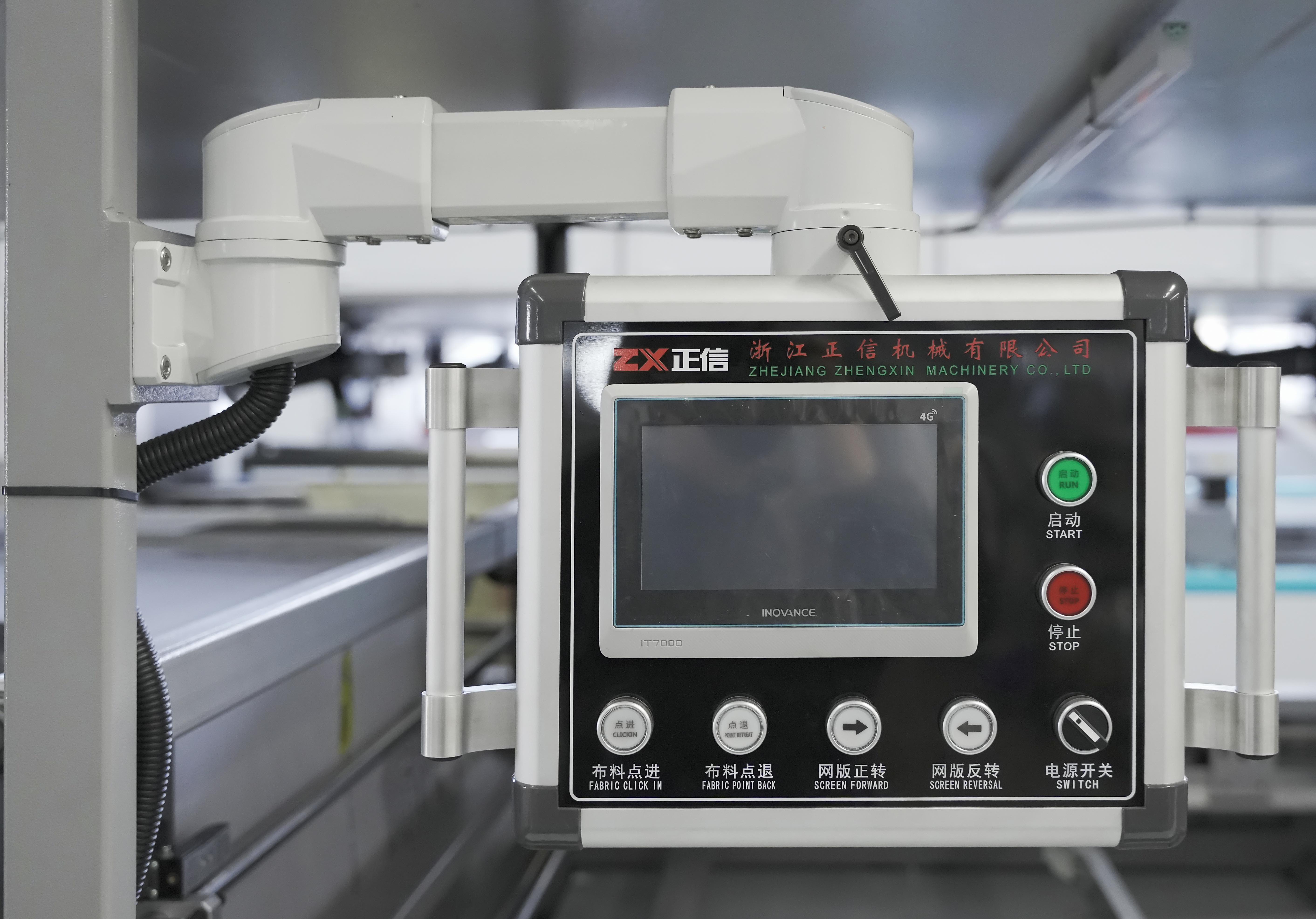
Remote diagnosis covers more ground than the maintenance schedule alone. Zhengxin engineers provide video-call support seven days a week and resolve more than 80% of reported issues remotely, with spare parts shipping by DHL or FedEx within 24 hours of a confirmed diagnosis and 3–7 day global delivery. The practical lesson is blunt: the most common cause of extended downtime is waiting for a low-cost sensor to arrive by courier, which is why a recommended spare parts kit belongs in the original order rather than in a follow-up purchase.
What is actually required for installation
Installation requirements split into site preparation, tooling, time and staffing. None of them are unusual, but all of them need to be in place before the container arrives.
Site prerequisites
- A level concrete floor with at least 1.5 m clearance on all sides for material loading and maintenance access.
- A three-phase power supply installed and verified at the correct voltage with a multimeter — measured, not assumed from the nameplate.
- An industrial air compressor with air dryer and tank, operational before the machine arrives.
- A voltage stabiliser wired in wherever grid power fluctuates.
- Fabric on site — 1–2 tonnes of PP spunbond in the 70–80 GSM range is a reasonable starting quantity.
- One to two operators available for training during installation.
Tools and equipment
A spirit level, a metric wrench set (8–24 mm), a screwdriver set, a multimeter, and a crane or forklift rated for the machine's shipping weight. Machines in this class typically range from roughly 1,500 kg for a two-colour flexo unit to 3,000 kg for a four-colour unit, and up to 4,800 kg on a single-colour screen platform.
Time
A standard single-machine installation takes 1–2 working days. Day one covers uncrating, positioning, levelling, power and air connection and the initial power-on test. Day two covers fabric threading, dry-run testing, a first production test, parameter fine-tuning and operator training. Complex multi-machine lines take 3–5 days.
People, training and documentation
Installation is normally completed by the buyer's own team with remote video guidance. One to two people with basic mechanical aptitude are sufficient, and more than 90% of installations are completed successfully this way. Where remote support is insufficient, an on-site engineer can be dispatched at a daily service fee plus airfare and accommodation, with a typical visit of three to five days.
Operating staffing follows a fixed ratio: one trained operator per two machines, with shared technician coverage across a multi-machine fleet. Operator training runs about two weeks. Every machine ships with full English documentation — operation manual, electrical wiring diagram, PLC parameter settings, and a troubleshooting guide listing common error codes with their solutions. When documentation is complete, the majority of routine faults are resolved without any external support call.
Commissioning and acceptance criteria
Commissioning is a staged procedure, and acceptance should be signed off stage by stage rather than at the end.
- Dry run. Run the machine at reduced speed without fabric to confirm all movements are smooth and free of unusual noise.
- Low-speed fabric run. Produce roughly 50 bags at low speed and inspect seal quality, dimensions and print alignment.
- Speed ramp. Step through the speed tiers — typically 60, then 80, then 100 pieces per minute — and inspect at each tier. If printing is installed, registration is calibrated at every tier.
- Supervised operation. The operator runs the machine under supervision for 2–3 hours. Commissioning is complete when the operator can independently produce quality bags at production speed.
The acceptance numbers that matter for a supermarket-grade inline line are speed and defect rate. A line rated at 100–120 pieces per minute is expected to hold a defect rate below 0.5%, with consistent weld quality across the full production speed and dimensional accuracy that keeps bag sizes stable at speed. Where a premium promotional job demands tighter print quality, the working requirement is registration accuracy within ±0.3 mm.
Two certification records should be verified on the issuing body's own website before final payment, not accepted as scanned copies.
| Certification | Number | Issuing body | Validity | Scope |
|---|---|---|---|---|
| CE (Machinery, Low Voltage, EMC) | M.2021.206.C70911 | UDEM | 24 Jan 2022 – 23 Jan 2027 | ZXH-C, ZXH-A and ZXH-B series non woven printing machines, EU market |
| ISO 9001:2015 | 20225Q21503R2M | QPC | 26 Dec 2025 – 12 Jan 2029 | Production and sales of bag making machines, slitting machines and non woven printing machines |
Independent verification is available before shipment through third-party inspection by SGS, Bureau Veritas or CCIC at the buyer's request.
Purchasing terms, warranty, and where the limits sit
A machine in this class is normally sold on a 12-month full warranty, with the supplier's standard after-sales terms covering one-year warranty on major components, installation and commissioning services, and on-site service by a professional team.
| Term | Standard position |
|---|---|
| Payment | 30% deposit by T/T on order; 70% before shipment, after pre-shipment inspection passes. Letters of credit at sight accepted above US$50,000. |
| Lead time | 25–35 working days for standard models; 35–45 days for customised configurations. Sea freight adds 15–45 days depending on destination. |
| Order quantity | Minimum one unit. |
| Customisation | Voltage and phase, bag size and style, printing colour count (1–6 colour flexo), material GSM range, sealing method, PLC brand, automation level, machine colour and optional modules. Adds roughly 5–10 working days. |
| Delay protection | A penalty clause of 0.5% of order value per week beyond the agreed date, capped at 5%, is a commonly accepted commercial term. |
Three boundaries are worth stating plainly, because they define what the warranty and support structure can and cannot cover.
- Voltage damage is not a warranty event. Connecting a machine to the wrong voltage or phase destroys controllers, drives and motors, and the repair is treated as user error. Confirming the site's actual voltage, frequency and phase before production — and installing a stabiliser where the grid fluctuates — is the buyer's responsibility.
- Remote support is not universal. Video diagnosis resolves more than 80% of reported faults and more than 90% of installations, but the remaining cases require a dispatched engineer, which carries a service fee plus airfare and accommodation and adds travel time to the recovery window.
- Seal quality is not fully automated. Successful amplitude, gap and speed settings must be saved as named recipes for each fabric type and thickness. No single setting welds every GSM correctly without operator input, and the hand pull test remains a manual check.
The comparison with older line configurations follows the same logic. Semi-automatic screen printing stations operate in a lower speed class with a smaller maximum print area and rely on manual transfer between stations. Inline roll-to-roll flexo consolidates printing, forming, sealing, cutting and counting into one flow, removing the handling steps where quality variation is introduced — but it also means a fault anywhere in the chain stops the whole line, which makes spare-parts discipline and recipe backups proportionally more important.
Application fit: where these lines earn their keep
Different end markets stress different parts of the line, and the acceptance criteria change with them.
- Supermarket and grocery chain supply. Continuous high-volume production, speed of at least 100 pieces per minute, consistent ultrasonic or heat-seal weld quality and a defect rate under 0.5%. This is the most demanding application because contracts are volume-based and rejects surface at the distribution centre.
- Food takeaway and delivery. Odorless, non-toxic water-based ink printing in a clean production environment. Ultrasonic sealing is the usual choice here because it produces no scorching or odour.
- Promotional and corporate gifting. Small-to-medium batches with frequent design changes, where changeover speed matters more than raw throughput. The working requirement is print registration within ±0.3 mm together with fast plate-roller change and quick ink-tray cleaning.
- Garment and apparel packaging. Anti-static material compatibility and a wrinkle-free finished surface.
Field deployments follow the same pattern. A 42-unit installation at a large Indonesian non-woven bag manufacturing group spans five machine models — including twelve ZXH-A1200 printing machines — and supplies more than one million bags a month to retail chains and food delivery platforms nationwide. In Kenya, a three-machine line built around two ZXL-A700 bag making machines and one ZXH-C41200 four-colour printing machine supplies more than 200 retail stores. In Egypt, a nine-year customer runs two ZXH-C21200 two-colour flexo units alongside bag making machines across three distinct product lines.
Market context and regulatory direction
Several published market figures frame the buying decision.
- The global non-woven bag making machine market is projected to grow from US$179 million in 2025 to US$733 million by 2032, a compound annual growth rate of 22.5% from 2026 to 2032 (LP Information).
- Asia-Pacific held a 43.6% revenue share of the bag making machine market in 2025, and the automatic segment accounted for 52.4% of that market (Dataintelo).
- The global flexographic printing machine market was valued at US$17.57 billion in 2024, with a projected CAGR of 9.7% through 2030 (Grand View Research).
- More than 100 countries have implemented bans or taxes on single-use plastic bags — the regulatory driver behind conversion from thin-film to reusable non-woven bags.
On the compliance side, EN 1010-1:2004+A1:2010 is the harmonized European standard for the safety of printing and paper converting machines. For any buyer shipping into the EU, that standard sits behind the CE marking and is one of the documents worth confirming during supplier evaluation rather than after the container has docked.
Future outlook
Four directions are visible from current specifications.
- Registration and tension control are moving toward full servo control across more of the platform, which is what allows registration tolerance to hold as line speed rises.
- Inline consolidation continues. Printing, forming, sealing, cutting and counting on one flow reduces handling, and the case strengthens as labour costs rise in traditional bag-making markets.
- Diagnostics are shifting from reactive to preventive, with controller platforms logging cycles, flagging scheduled maintenance and storing recipes that can be restored after a fault.
- Energy and material efficiency are becoming purchase criteria in their own right. Servo drives draw power mainly during acceleration and work phases rather than continuously, and no-waste-edge platforms eliminate the fabric trim that conventional machines discard — a saving that compounds for operations consuming more than a tonne of fabric a day.
None of this changes the fundamentals. A line is accepted on three numbers — speed, defect rate and registration tolerance — and it stays accepted on maintenance discipline, spare-parts availability and documented settings.
FAQ
Which certifications should a non woven bag printing machine carry?
For EU-bound shipments, CE marking under the Machinery, Low Voltage and EMC Directives, with a Declaration of Conformity naming the harmonized standards. Zhengxin's CE certificate M.2021.206.C70911 covers its ZXH-C, ZXH-A and ZXH-B series printing machines and is valid to 23 January 2027. ISO 9001:2015 addresses the manufacturing process rather than the machine itself; certificate 20225Q21503R2M, issued by QPC, is valid to 12 January 2029 and its scope includes the production and sales of non woven printing machines. Both should be verified on the issuing body's own website.
What power supply does a non woven bag printing machine need?
Three-phase power. Zhengxin printing machines are specified at 380 V, with total power ranging from 8 kW on the two-colour ZXH-C21200 to 52 kW on the ZXH-B1200 screen platform and 26 kW on the single-colour ZXH-A1200. Machines can be configured for 220 V, 380 V, 415 V or 440 V and for 50 Hz or 60 Hz operation, and the configuration must be confirmed at order stage rather than converted on site. A voltage stabiliser is recommended wherever grid power fluctuates.
How long does delivery and installation take?
Production runs 25–35 working days for standard models and 35–45 days for customised configurations, plus 15–45 days of sea freight depending on destination. Installation and commissioning of a single machine takes 1–2 working days; multi-machine lines take 3–5 days. Operator training runs about two weeks, after which one trained operator can cover two machines.
What warranty and payment terms are standard for a non woven bag printing machine?
Zhengxin's standard terms are a 12-month full warranty, with one-year coverage on major components plus installation and commissioning services. Payment is normally 30% deposit by T/T and 70% before shipment after pre-shipment inspection; letters of credit at sight are accepted above US$50,000. Minimum order quantity is one unit.
What defect rate should an inline non woven bag production line achieve?
A supermarket-grade inline line rated at 100–120 pieces per minute is expected to hold a defect rate below 0.5%, with consistent weld quality across the full speed range. Defect rate is verified during commissioning through staged speed runs and bag inspection, and it can be confirmed independently before shipment through third-party inspection by SGS, Bureau Veritas or CCIC.
Can the machine be installed without an engineer on site?
In most cases, yes. Zhengxin completes more than 90% of installations through remote video guidance, and remote support resolves more than 80% of reported faults. Where remote diagnosis is insufficient, an on-site engineer can be dispatched for a typical three-to-five-day visit, charged at a daily service fee plus airfare and accommodation. Buyers should still expect one to two people with basic mechanical aptitude to handle positioning, levelling and connection.
Reference document: Zhengxin non-woven bag machinery catalogue (PDF).
Tem questões ou precisa de mais detalhes?
Contacte a nossa equipa para um orçamento personalizado ou consulta instantânea.
Solicitar orçamento
Preencha o formulário abaixo e a nossa equipa entrará em contacto com uma proposta personalizada.
Chat direto do WhatsApp
Prefere conversar em tempo real? Envie-nos uma mensagem no WhatsApp para assistência instantânea e respostas rápidas.
- Obter orçamento personalizado
- Partilhar fotos ou documentos
- Discuta as suas necessidades diretamente
Geralmente responde em 5–30 minutos durante o horário de expediente.