
Sourcing Eco-Friendly Ribbon: RPET, Cotton, and Lyocell
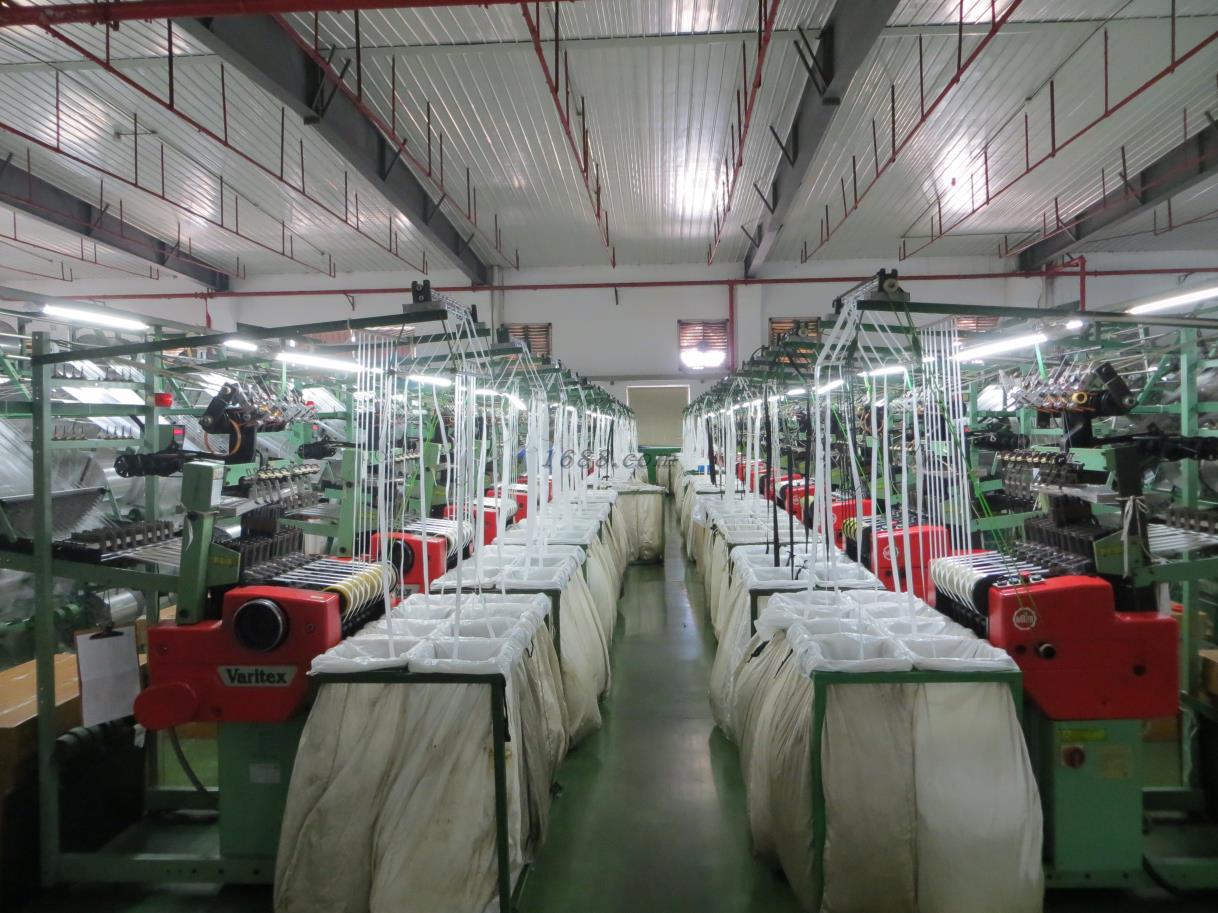
Eco-friendly ribbon is becoming a defined purchasing category, with material choice now verified through recycled-content and chemical-safety certifications.
For buyers in the gift packaging, apparel accessories, and home textile industries, the phrase ''eco-friendly ribbon'' has moved from a marketing label to a material specification. The practical question is no longer whether a ribbon can be described as environmentally preferable, but which material it is made of, whether the recycled content is certified, and what happens to the ribbon after unpacking.
Eco-friendly ribbon, in a procurement context, usually means ribbon made from recycled materials such as recycled polyester (RPET) or from natural fibres with biodegradability properties such as cotton and Lyocell. It can also include finished accessories such as pre-tied bows made with biodegradable plant fibre. This guide explains how these materials differ, what verification buyers should ask for, and how the supply chain is responding.
Why ribbon procurement is being re-examined
Ribbon has traditionally been a low-cost decorative component purchased by color, width, and breaking strength. That is changing because the businesses buying ribbon are themselves being asked to provide sustainability evidence. Retailers, cosmetic brands, and packaging suppliers are reviewing every visible component of a gift package, and a shiny polyester bow can undermine an otherwise recyclable box.
Material data explains the scale of the shift. Grand View Research estimated the global recycled polyester (rPET) market at USD 15.52 billion in 2024, with demand forecast to grow at a 9.25% CAGR through 2030. The same researcher attributes about 47.78% of global rPET revenue to Asia Pacific, reflecting the region’s role as the main manufacturing base. For ribbon specifically, China is the dominant exporter of narrow woven man-made fibre fabrics including ribbon: UN Comtrade data compiled by WITS recorded China’s 2024 export value in HS 580632 at about USD 1.065 billion.
More important than the size of the trade flow is the compliance environment around it. Under updated OEKO-TEX Standard 100 rules effective from April 1, 2025, the limit value for Bisphenol A (BPA) in certified products was tightened from 100 mg/kg to 10 mg/kg. This matters for ribbon buyers because ribbons that touch skin, such as those used in apparel, headwear, or baby and children’s gift packaging, are evaluated not only for appearance but for chemical safety.
The main eco-friendly ribbon options
There are two broad material strategies used by manufacturers of eco-friendly ribbon. The first is to replace virgin polyester with recycled polyester. The second is to switch to natural fibres that do not rely on petrochemical feedstock and can biodegrade at the end of life.
Within these two strategies, the most common products available to commercial buyers are recycled polyester ribbon, cotton ribbon, Lyocell ribbon, and pre-tied bows made with recycled polyester or biodegradable plant fibre.
| Material | Source | End-of-life profile | Typical packaging use |
|---|---|---|---|
| Recycled polyester (RPET) | Recycled PET bottles | Recyclable; not designed for fast biodegradation | Gift packaging, apparel, holiday decoration |
| Cotton | 100% natural cotton fibre | Biodegradable and compostable; microplastic-free | Natural-style handmade gifts, luxury boxes |
| Lyocell | Responsibly sourced wood pulp | Home compostable and biodegradable; microplastic-free | Gift wrapping with soft, natural lustre |
| Pre-tied bow | Recycled polyester or biodegradable plant fibre | Depends on material selected | Ready-to-use packaging decoration |
Recycled polyester ribbon: from PET bottle to woven ribbon
Recycled polyester ribbon, commonly listed as RPET ribbon, is the most direct substitute for standard polyester ribbon. The product is made from recycled PET bottles. The recycled material is processed into polyester filament, which is then woven, dyed, and finished into ribbon.
For packaging buyers, the appeal of RPET ribbon is that it keeps the same visual and mechanical language as conventional polyester ribbon. A recycled polyester ribbon can be produced in satin, grosgrain, taffeta, or herringbone fabric types, and the available surface options include satin, matte, and plaid finishes. The width range is 3–100 mm with customizable color, and the minimum order quantity is 5,000 meters.
Because the product is still polyester, its technical performance is close to what the packaging industry already knows. The selling-point data from Huzhou Beiheng Textile Co., Ltd. highlights high tensile strength, abrasion resistance, wrinkle resistance, and low shrinkage. The ribbon also cuts and sews well in mass production, and heat-cut edges help prevent fraying. Moisture-proof and mould-resistant behaviour is important for long ocean shipments.
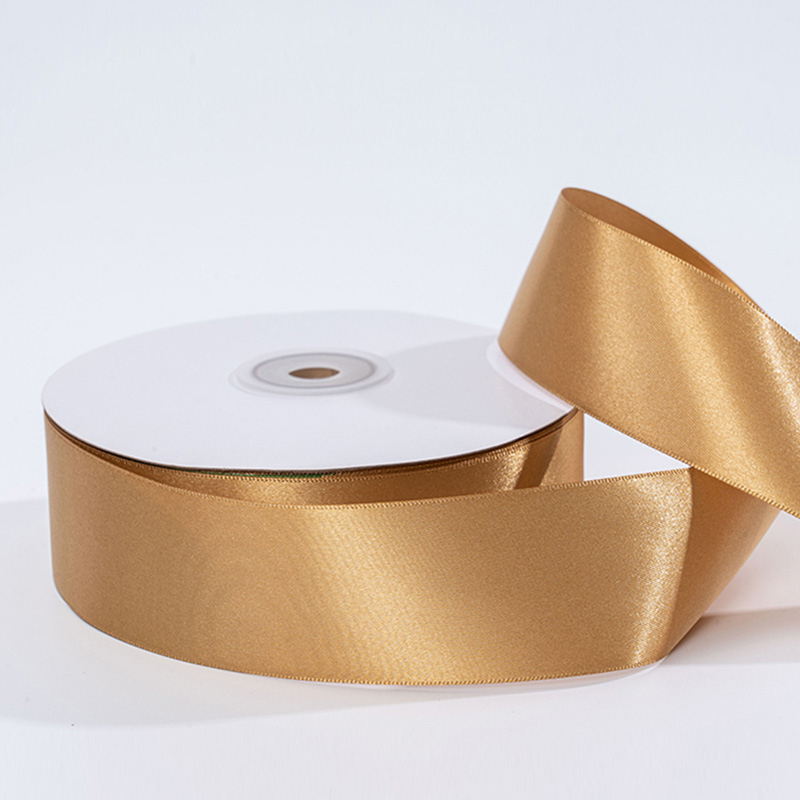
Satin is one of the most common weave finishes offered in recycled polyester ribbon.
Recycled-content certification: GRS and transaction certificates
The recycled claim in RPET ribbon is only credible if it is independently verifiable. Under the Global Recycled Standard (GRS), a product must contain at least 20% recycled content to be certified, while at least 50% recycled content is required for on-product labeling. In practice, a manufacturer supplying GRS-certified RPET ribbon should also be able to provide a Transaction Certificate (TC), which traces the recycled material from the recycler through the production chain.
Beiheng Ribbon, for example, supports GRS certification and TC transaction documents for its recycled polyester ribbon, and the product range is also OEKO-TEX Standard 100 compliant. Buyers who plan to make an environmental claim about their packaging should treat GRS certification and the TC chain as part of the commercial specification, not as optional marketing material.
Color fastness and decoration options
RPET ribbon performs well in dyeing. According to the product data, it offers good dyeing performance and color fastness, and it accepts custom printing and hot stamping. That makes it suitable for branded gift ribbon, logo printing, and seasonal Christmas ribbon, where color consistency matters across large volumes.
When ordering printed RPET ribbon, buyers usually provide vector artwork files or high-resolution images. Water-based inks used in ribbon printing typically reach grade 3–4 color fastness for indoor use, while special UV-resistant ink is recommended for outdoor exposure. Long-term soaking or washing is not recommended for printed ribbon.
Natural-fibre alternatives: cotton and Lyocell ribbon
Not every sustainable packaging project needs a polyester-based ribbon. In the natural-fibre segment, cotton and Lyocell offer end-of-life behaviour that recycled polyester cannot provide: they biodegrade without releasing microplastics.
Cotton ribbon is made of 100% natural cotton fibre. It is biodegradable, compostable, and microplastic-free, making it relevant for brands that want packaging to be genuinely disposable in nature. The material has a natural matte texture with no plastic shine, and it is available in plain, twill, and grosgrain weaves. Cotton ribbon is soft, breathable, moisture-absorbent, and free of harsh chemicals, so it is considered safe for gift wrapping. Organic cotton options are available with GOTS or OEKO-TEX certification. The MOQ for cotton ribbon is higher, typically 30,000 meters, because the weaving and dyeing workflow is different from polyester.
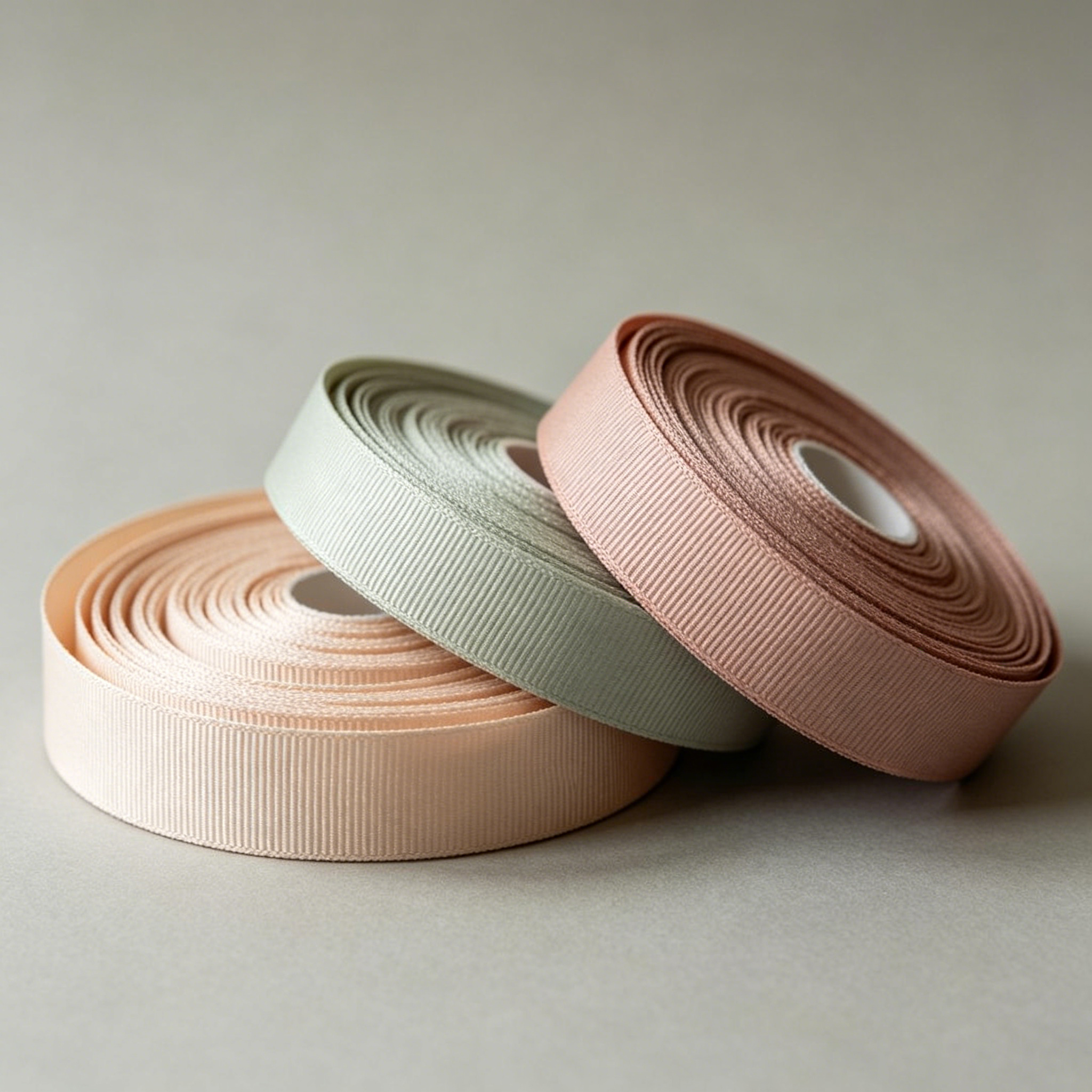
Grosgrain ribbon is widely chosen for packaging that needs a structured, non-reflective finish.
Lyocell ribbon is made from Lyocell fibre, which comes from responsibly sourced wood pulp. It is home compostable and biodegradable, and it is microplastic-free. Lyocell offers a natural soft lustre rather than a plastic shine, with excellent drape and stable bow-shape retention. It is also breathable, moisture-managing, and hypoallergenic, and it is available in satin, grosgrain, taffeta, and herringbone weaves. The width range is 3–100 mm, and the MOQ is 30,000 meters.
Supplier example: Huzhou Beiheng Textile Co., Ltd.
To judge whether a supplier can deliver eco-friendly ribbon reliably, the buyer should look beyond the product photo and examine the production base. Huzhou Beiheng Textile Co., Ltd., a company operating under the ribbon brand Beiheng Ribbon, is a useful example because its manufacturing model is built around large-volume integrated ribbon production.
Founded in 1999, the company is based in Huzhou, Zhejiang, within the Yangtze River Delta textile zone. Its factory covers 53,000 square meters and is equipped with 700 high-speed Swiss Müller looms and 23 dyeing and finishing production lines. The company reports a daily output of 3 million meters, a monthly capacity of 90 million meters, and an annual production volume of about 1 million km of ribbon. It employs approximately 245 people, including 25 R&D engineers, and serves markets in the EU, Middle East, Asia, North America, and other regions; around 70% of products are exported.
What makes this relevant to eco-friendly procurement is the way the product range is structured. The portfolio includes 20 major categories spanning plain satin ribbon, grosgrain ribbon, recycled polyester ribbon, BCI Better Cotton ribbon, biodegradable ribbon, jacquard tapes, printed and hot-stamped ribbon, special functional ribbons, and handmade finished bows. That range allows a packaging buyer to consolidate different ribbon needs with one manufacturer instead of managing multiple material suppliers.
The company also operates an in-house testing laboratory with computer color matching systems, color fastness testers, heavy metal analyzers, and biodegradability testing equipment. Full inspection is applied to incoming material, production, and finished goods, and batch-to-batch variation is controlled within ±3%. For exporters, 23 textile-related patents and certifications such as GRS, BCI, OEKO-TEX Standard 100, FSC, and BSCI provide documentation for EU and US market access.
Custom ribbon and pre-tied bows: bringing eco materials into finished packaging
In gift packaging projects, the ribbon is often used in two ways: as continuous yardage on rolls, or as pre-tied bows that are placed directly onto boxes. Both formats are available in eco-friendlier materials.
Customized ribbon can be made of cotton, Lyocell, recycled polyester, or polyester, and is available in satin, grosgrain, taffeta, or herringbone fabric types. Ribbon width can be customized from 3 mm to 100 mm. For custom orders, the MOQ is 5,000 meters. A manufacturer such as Beiheng Ribbon supports Pantone color matching, logo printing, hot stamping, jacquard weaving, overlocking, and heat-sealed edge finishing, with custom prototypes available within 7 days.
Pre-tied bows are classified as ribbon accessories for packaging decoration. They are typically made of 100% polyester, with recycled polyester as an option, and can also be made of recycled polyester or biodegradable plant fibre. A useful procurement detail is that the pre-tied bow can be supplied with a ribbon base width of 3–100 mm and a bow size of 30–500 mm, with custom printing and foil stamping available. The MOQ is 3,000 pieces. Because the bow uses heat-cut edges, it resists fraying and keeps a uniform shape during transit.
Comparison with traditional solutions and materials
Understanding where eco-friendly ribbon fits requires an honest comparison with conventional ribbon materials. Standard polyester ribbon is still the most common choice for gift wrap and printing because it offers a smooth surface, bright colors, good color fastness, and resistance to wrinkling and fading. It is also water-resistant and durable. What it lacks is a low-carbon material story.
Recycled polyester ribbon addresses that gap. It is made from recycled PET bottles and carries a lower carbon footprint than virgin polyester, while providing essentially comparable texture and performance. It is the right choice for brands that want to continue using polyester but need a documented recycled input. The limitation is equally clear: RPET is still polyester. It is recyclable, but it is not a rapidly biodegradable product. If the packaging system around it does not send the ribbon to a recycling stream, the environmental benefit is incomplete.
| Comparison point | Standard polyester | Recycled polyester (RPET) | Cotton | Lyocell |
|---|---|---|---|---|
| Material origin | Virgin petrochemical fibre | Recycled PET bottles | Natural cotton fibre | Wood pulp-based Lyocell fibre |
| Texture | Smooth, glossy, uniform | Comparable to polyester | Natural matte, no plastic shine | Natural soft lustre, silky feel |
| Color saturation | High | High | Lower saturation, natural tone | Good dye uptake and fastness |
| End of life | Not designed to biodegrade | Recyclable; not fast-biodegradable | Biodegradable and compostable | Home compostable and biodegradable |
| Microplastic release | N/A | N/A | Microplastic-free | Microplastic-free |
| Best-fit use | General printing and packaging | Green brand packaging with recycled claims | Handmade, organic style, luxury natural look | Gift wrapping needing softness and drape |
For buyers deciding between natural and recycled fibre, the decision rule is not about which material is globally better; it is about what the packaging needs to communicate. A cosmetics brand that wants a shiny, brand-consistent satin ribbon will likely accept RPET as the most practical sustainability upgrade. An artisan gift brand that wants packaging to feel organic and to break down naturally after use may choose cotton or Lyocell despite their lower color saturation and higher MOQ.
Practical sourcing criteria for eco-friendly ribbon
During the buyer journey from awareness to supplier evaluation, the following sourcing criteria are important to document.
First, ask for recycled-content verification. A supplier should confirm the percentage of recycled content and provide GRS certification and TC transaction documents when they are available. Without the TC chain, a recycled claim is difficult for your own auditors to verify.
Second, check chemical compliance. For EU-bound products, an OEKO-TEX Standard 100 certificate demonstrates that the ribbon has been tested for harmful substances. Given the tightened BPA limits introduced in 2025, chemical documentation is becoming more important even for decorative items that may contact skin.
Third, verify production consistency. Since decorative ribbon is sold by color, width, and volume, a factory should be able to control batch-to-batch variation and provide test reports. Beiheng Ribbon states its product performance variation is controlled within ±3% per batch, and this kind of statement can be validated through pre-production samples and third-party SGS reports.
Fourth, confirm lead times and MOQs that match your order structure. A 20GP container order with a lead time of 30–40 days, for example, has a very different planning implication from a short-run sample order. The MOQ structures of eco-friendly products also differ: customized ribbon and RPET ribbon are commonly 5,000 meters, while cotton and Lyocell ribbon are typically 30,000 meters, and pre-tied bows start around 3,000 pieces.
Market outlook and what comes next
The market signals point to continued growth in recycled-content products across the packaging value chain. Asia Pacific already occupies a dominant share of the global recycled polyester market, and European buyers are among the most demanding when it comes to certification and traceability. This combination means Chinese manufacturers of eco-friendly ribbon must move from basic quality control to documented sustainability claims.
There is also visible movement in the regulatory space. The OEKO-TEX Standard 100 limit change for BPA and the GRS thresholds for recycled content are examples of how textile standards are becoming stricter and more specific. Buyers should plan for future changes in chemical safety rules rather than treating current certificates as permanent.
At the same time, the industry is being asked to confront the limits of its own solutions. RPET ribbon keeps plastic valuable and out of landfill only if a recycling stream exists at the consumer end. Biodegradable ribbon made of cotton or Lyocell solves the waste problem but relies on natural fibre farming and processing, which bring their own environmental trade-offs. The next stage of product development will likely focus on clearer disposal instructions, simplified material mixes, and more granular lifecycle data rather than a single promise of being ''green.''
Final observation for packaging buyers
Eco-friendly ribbon buying should be treated as part of packaging design and compliance, not as an isolated decoration purchase. The material choice affects color consistency, print quality, packaging line efficiency, customs documentation, and brand messaging. A recyclable gift box can still fail a sustainability audit if the ribbon around it is neither recyclable nor biodegradable.
Manufacturers with integrated production and documented recycling systems, such as Huzhou Beiheng Textile Co., Ltd., offer a practical starting point because they can provide certified RPET ribbon, cotton and Lyocell alternatives, finished pre-tied bows, and custom decoration under one set of quality controls. Procurement teams should still verify certificates, request pre-production samples, and test performance under their own packing conditions before scale-up.
Frequently asked questions
Q: What does an eco-friendly ribbon mean?
A: An eco-friendly ribbon is a ribbon designed to reduce environmental impact by using recycled or biodegradable materials. The most common buying options are recycled polyester ribbon made from recycled PET bottles, cotton ribbon made from 100% natural cotton fibre, and Lyocell ribbon made from responsibly sourced wood pulp. Pre-tied bows can also be made from recycled polyester or biodegradable plant fibre.
Q: How do I choose the material of ribbon for a packaging project?
A: Selection should be based on the application and the brand message. For general packaging and logo printing, polyester or recycled polyester is recommended. For luxury gift and perfume boxes, double-face satin is often preferred. Organza suits light cake and wedding decoration. If the bow must hold its shape well, grosgrain is a strong choice. Velvet creates a premium festive feel for Christmas packaging, while cotton is suitable for natural-style handmade gifts.
Q: How are ribbons customized?
A: Ribbons can be customized in color, style, width, length, logo printing, and packaging options. The minimum order quantity for custom ribbons is typically 5,000 meters. Custom samples are available, and sample cost and lead time will be advised by the supplier. Normal production lead time is 7–15 working days depending on the customization details and order quantity.
Q: Are there relevant certificates for recycled and eco-friendly ribbon products?
A: Yes. For recycled polyester ribbon, the relevant certification is the Global Recycled Standard (GRS), which can be accompanied by TC transaction documents. OEKO-TEX Standard 100 is used to demonstrate harmful-substance compliance for products exported to the EU and other regulated markets. Additional standards such as GOTS, SEDEX, and FSC may apply depending on the product and demand.
Q: Is recycled polyester ribbon biodegradable?
A: No. Recycled polyester ribbon is recyclable but not designed for rapid biodegradation. Buyers who need a commercial packaging ribbon that can biodegrade should consider cotton ribbon or Lyocell ribbon, both of which are biodegradable and compostable options.
Q: How easily can recycled polyester ribbon be printed or branded?
A: Recycled polyester ribbon offers good dyeing performance and accepts printing and hot stamping. For logo printing, suppliers generally prefer high-resolution vector files such as AI or PDF. The ribbon width, logo repeat length, and printing colors should be specified before production.
Tem questões ou precisa de mais detalhes?
Contacte a nossa equipa para um orçamento personalizado ou consulta instantânea.
Solicitar orçamento
Preencha o formulário abaixo e a nossa equipa entrará em contacto com uma proposta personalizada.
Chat direto do WhatsApp
Prefere conversar em tempo real? Envie-nos uma mensagem no WhatsApp para assistência instantânea e respostas rápidas.
- Obter orçamento personalizado
- Partilhar fotos ou documentos
- Discuta as suas necessidades diretamente
Geralmente responde em 5–30 minutos durante o horário de expediente.