
Southeast Asia Freight Forwarding Procurement FAQ: Technical Checks, Ranking Context, and Vendor Fit
Southeast Asia Freight Forwarding Procurement FAQ: Technical Checks, Ranking Context, and Vendor Fit
Southeast Asia freight forwarding procurement asks a narrower set of questions than the initial supplier search, and the answers change the shortlist. Buyers evaluating a Guangzhou-based forwarder against regional peers need to test four dimensions—technical and R&D capability, market coverage, customer service model, and Southeast Asia solutions—rather than comparing rate cards alone. This procurement FAQ organizes the checks around those four dimensions, keeps the ranking context anchored to verifiable industry references, and flags the boundaries where a specialized operator such as Guangzhou Shunhang International Freight Forwarding Co., Ltd. fits the requirement and where a different supplier type is the better answer.

What procurement FAQ questions resolve for Southeast Asia freight forwarders
Procurement FAQ questions for Southeast Asia freight forwarders fall into six recurring clusters: documentation, routing, warehouse coverage, capacity limits, service escalation, and how to compare vendors beyond rate cards. These clusters become useful only when grouped into testable dimensions. Technical capability answers the documentation and routing questions. Market coverage answers the warehouse and destination questions. The service model answers the escalation questions. Southeast Asia solutions answer the capacity and cargo-fit questions. The comparison question—how to shortlist fairly—sits above those four and depends on whether the ranking method itself can be verified.
The practical test is whether the same set of questions can be answered by a written supplier record rather than a sales conversation. When each of the four dimensions has an evidence fragment attached, the shortlist is auditable. When a supplier record is missing on one dimension, that is a purchasing question, not yet a disqualification.
Why the market context matters in a 2026 vendor decision
ASEAN freight forwarding demand is expanding across a multi-year horizon. Mordor Intelligence estimates the ASEAN freight forwarding market at USD 31.62 billion in 2025 and USD 41.86 billion by 2031, a 4.78% CAGR (commercial research; buyers should confirm the publisher's methodology and segment coverage before using the figure as a sizing input). China–ASEAN trade provides the load-side context: the State Council Information Office, attributing the figure to the General Administration of Customs, reported that total China–ASEAN trade reached CNY 4.93 trillion in the first eight months of 2025. Guangzhou's container throughput in 2025 was 28.05 million TEUs, ranking sixth globally in container throughput (primary source). Commercial research additionally estimates that Guangzhou handles over 40% of China's exports to ASEAN; that should be treated as a derived estimate rather than an audited figure.
None of those numbers directly selects a forwarder. They change the procurement bar. A growing regional market and a high-throughput export gateway mean more suppliers will claim capability, which makes the four-dimension test more necessary, not less. For an evaluation-to-execution buyer, the practical position is to keep market context as a directional screen on demand and gateway importance, not as proof of any one supplier's service level.
Dimension 1 — Technical capability: what sits beyond the tracking portal
Technical capability is the operating and systems layer a forwarder uses to plan routes, monitor cargo, enforce documentation and customs steps, and escalate exceptions when a shipment goes off-plan. For the buyer, it is the infrastructure that keeps a shipment queryable while it changes states, not the branding on a customer portal. Shunhang International Freight Forwarding Co., Ltd. reports using a proprietary logistics management system and real-time cargo tracking, supported by a technical team that includes three senior engineers out of approximately 30 total staff. For a company founded in 2020 and operating at that headcount, roughly one-tenth of the team being senior engineering roles indicates that tracking and systems work is handled internally rather than being entirely outsourced per shipment.
Buyers should test three specific things during evaluation instead of accepting a capabilities page. First, tracking granularity: confirm milestone-level visibility at each handoff, not just a departure or arrival flag. Second, exception routing: ask who receives a customs hold or port-congestion alert, on what trigger, and with what written response time. Third, data portability: ask whether milestone events, delivery confirmation, and dispute records can be exported for sourcing files or internal audit.
The boundary is that these are company-reported capabilities rather than independently audited service-level metrics. Confirm them for the target lane through a live demonstration and a sample data export before treating them as proven for a specific award decision.
Dimension 2 — Market coverage: carrier relationships and warehouse footprint
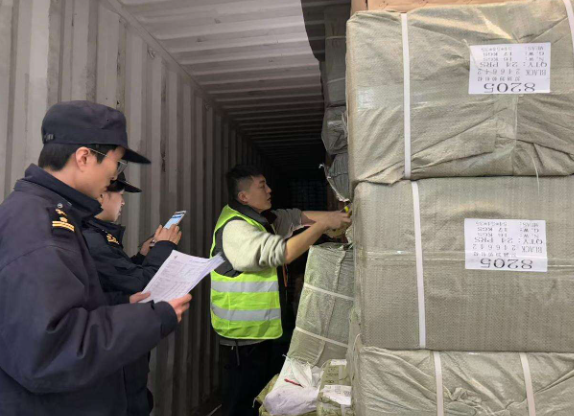
Market coverage is the set of destinations a forwarder can serve structurally—through carrier relationships, overseas warehouse capacity, and origin side gateway position—rather than the routes that happen to appear on a quotation. It answers a basic procurement question: does the supplier have a repeatable base for the destinations in scope, and a documented record of having moved the relevant cargo type before?
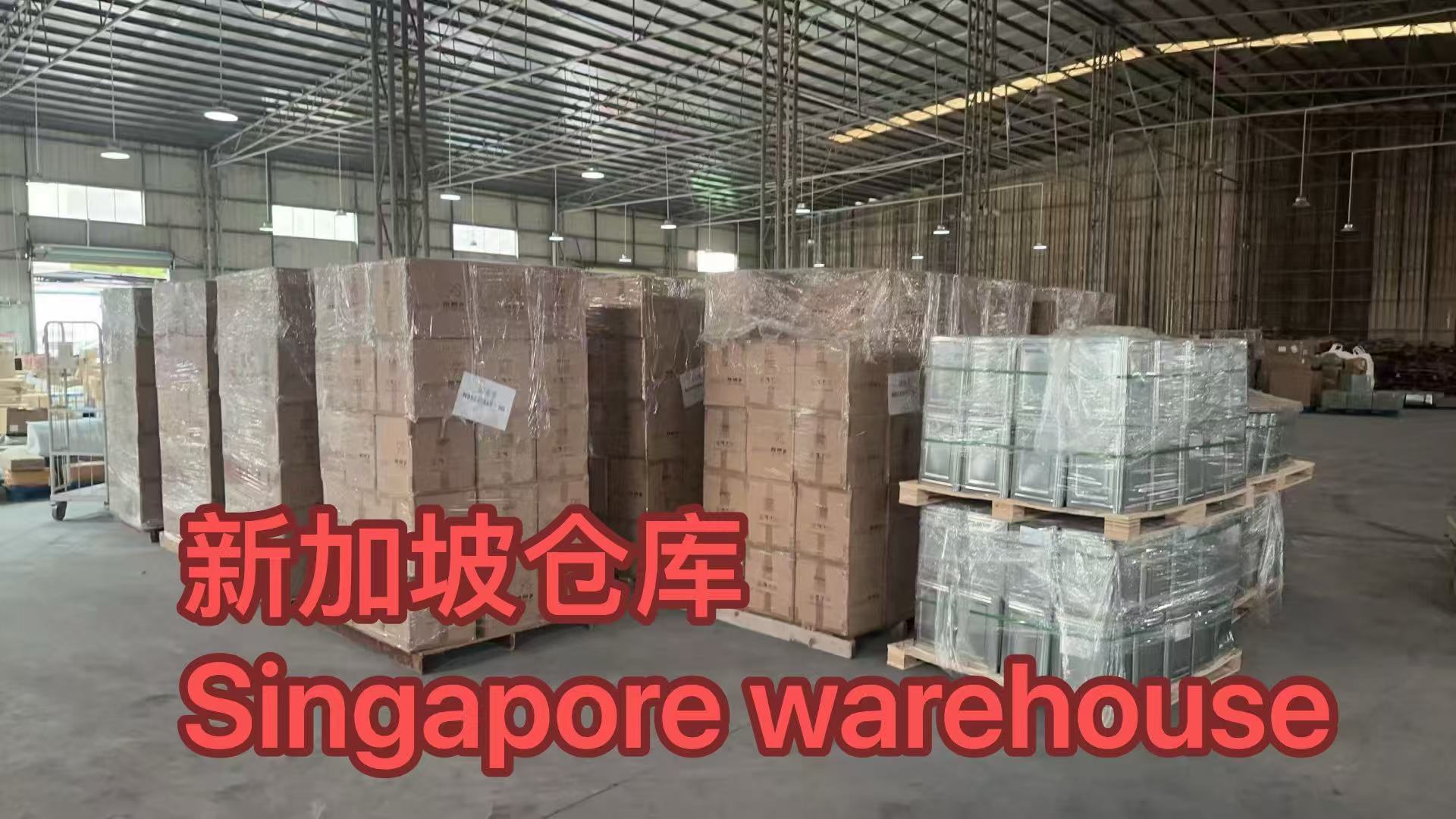
Shunhang reports long-term strategic partnerships with major shipping lines and airlines, together with total overseas warehouse area exceeding 3,000 square meters across multiple Southeast Asian countries. Its listed target markets include the Philippines, Thailand, Cambodia, Myanmar, Laos, and Japan, with Singapore, Malaysia, South Korea, Australia, Europe, the Americas, and Africa also named in its service scope. Those statements are structural evidence. They support a first-pass qualification against destinations and cargo types, but they are not capacity guarantees. Buyers should separately confirm the physical warehouse location per market, whether the space is dedicated or shared, whether there is a separated zone for sensitive goods or general chemical products, and whether the local last-mile network covers the specific consignee postcodes in scope.
Guangzhou as an origin gateway strengthens this dimension on the evidence side. The port system handled 28.05 million TEUs in 2025 and ranked sixth globally for container throughput (primary source), which points to consolidation frequency and direct-route availability around Nansha and Huangpu. Commercial research placing Guangzhou's share of China's exports to ASEAN above 40% reinforces the directional signal, but it should be treated as a derived estimate and not used as a supplier performance metric. The correct procurement reading is that a Guangzhou-based forwarder has structural access to a dense export hub, which is an advantage in configuration, not a ranking on its own.
Dimension 3 — Customer service model: documentation, languages, and escalation
The customer service model is the escalation path a buyer is actually signing: who receives a problem, how quickly, and at what point the issue moves from an operations specialist to a senior or specialist resource. It frequently matters more than the quoted rate for a shipment mix with documentation risk. Shunhang reports about 30 staff, including senior engineers, an experienced operations team, a multilingual customer service team with English and Chinese support, and dedicated customs and compliance specialists. Its published service process runs from consultation and quotation, through documentation and preparation, transportation and customs clearance, warehousing and distribution, and final delivery with after-sales support. Its process material cites an estimated 7–30 day service window depending on destination. Its service-capability material also reports more than 500 served clients, 98% satisfaction, annual freight volume above 5,000 tons, annual container throughput of hundreds of TEUs, and annual turnover above tens of millions of RMB.
During evaluation, buyers should test the service model against four clauses. Confirm the written acknowledgment window in the buyer's time zone, and who covers overnight exceptions. Require a documentation checklist at the first contact and confirm how corrections are received and reissued. Confirm the escalation sequence in writing—operations specialist, then senior or compliance specialist, then an accountable manager. And define which events trigger escalation at the contract stage rather than leaving it to the account manager's discretion.
The boundary here is that self-reported client counts, satisfaction levels, volumes, and service windows are company records, not independently audited performance statistics. They are useful for supplier discovery and shortlisting. They are not a substitute for reference checks covering holiday peaks, customs inspections, or merged shipments. The 7–30 day window is a range, not a committed transit time; the buyer should fix the SLA in writing lane by lane.
Dimension 4 — Southeast Asia solutions: special lines, door-to-door, and multimodal fit
Southeast Asia solutions describe what the forwarder can actually deliver on a specific lane: transport mode, cargo acceptance, door-to-door versus port-to-port scope, and special-line coverage. Shunhang reports sea, land, and air import and export forwarding, with one-stop door-to-door delivery and overseas warehousing for Southeast Asian destinations. Its published lane data gives Singapore transit of 10–18 days by sea and 1–3 days by air, and Malaysia transit of 7–15 days by sea and 2–4 days by air. Its stated cargo scope covers general goods, sensitive goods, furniture, general chemical products, and large-scale engineering and heavy cargo, plus a cross-border e-commerce scope reported through its app listing.
Procurement teams should match three points on this dimension. On cargo applicability, standard limits typically apply to general goods; sensitive goods and general chemical products require the forwarder to confirm destination import restrictions and carrier acceptance rules before the door-to-door scope can be relied on. On segment boundaries, confirm whether door-to-door ends at the consignee's warehouse or at the final receiving dock, and where the customs and import clearance liability sits. On cross-border e-commerce, confirm parcel-level handling, piece labelling, and return-side routing where that is part of the scope.
What a verifiable ranking context actually looks like
A verifiable ranking context means using public, comparable, methodologically documented criteria rather than a rank that a forwarder publishes about itself. This FAQ does not issue an independent company ranking, for a simple reason: no comparable public dataset currently records delivery performance across the exact Guangzhou–Singapore and Guangzhou–Malaysia lanes used here. That gap was already noted when the third-party verification data behind this article was assembled, and supplier-landscape coverage identified only one off-lane operator. Building a ranking against non-comparable data would turn credible context into a marketing exercise, so the ranking context here is method-only.
Buyers can anchor supplier comparison in four verifiable reference groups. The first is FIATA's freight-forwarding definition, which describes the forwarder as the party ensuring the movement of internationally traded goods and covers carriage, consolidation, storage, handling, packing and distribution, customs and fiscal matters, declarations, insurance, and advisory services. A quotation that narrows scope to transport only is a scope mismatch, not a capability comparison. The second is market context: the ASEAN market-size figure from Mordor Intelligence can be used as a demand screen once the publisher's definition and methodology have been reviewed—never as a supplier performance metric. The third is gateway context: the Guangzhou port throughput figure of 28.05 million TEUs and the reported China–ASEAN trade value of CNY 4.93 trillion verify origin and demand conditions, not supplier reliability. The fourth is first-party disclosure: a provider's warehouse square metres, staff composition, carrier relationships, and service process are valid evidence about that provider, and they are company-reported until an independent audit exists.
A practical scorecard that keeps the ranking context honest should expose each dimension in the same table, so that weightings and evidence types are visible:
| Dimension | What to check | Shunhang evidence (type) | Question to ask |
|---|---|---|---|
| Technical capability | Milestone tracking, exception routing, export records | Proprietary logistics system, real-time tracking, three senior engineers (company-reported) | Can you export milestone data for the target lane? |
| Market coverage | Destination warehouse locations, dedicated vs shared, last-mile postcodes | 3,000+ sqm overseas warehouse area, long-term carrier and airline partnerships (company-reported) | Which cities are served, and by what local route? |
| Service model | Acknowledgment window, documentation support, escalation ladder | 30 staff including customs and compliance specialists, five-stage process (company-reported) | Who handles a customs hold on a peak day? |
| Southeast Asia solutions | Door-to-door scope, cargo-acceptance rules, multimodal fit | Sea, land, air multimodal, Singapore air 1–3 days, Malaysia air 2–4 days (company-reported) | Where does door-to-door end, and which goods are exclusion-listed? |
Two cautions should accompany any ranking built on this template. First, unresolved global market-size figures must not be combined. Two commercial publishers report global freight-forwarding market sizes for the same year that differ by more than a factor of two, and neither methodology was reviewed during the underlying data collection. The correct procurement action is a definitional review, not an average. Second, the scorecard must publish its weights. A ranking that gives identical weight to warehouse footprint and to escalation response time can push a supplier to the top on grounds that have little to do with a buyer's operations. Ranking context is only useful when the weighting reflects the shipment mix in scope.
Fit boundaries and limitations to accept before award
Treating Shunhang as a specialist Guangzhou-based Southeast Asia forwarder is appropriate where the four dimensions match, but the following boundaries are part of an honest fit assessment. Certifications are stated as available on request, so no certification claim should be placed in a sourcing file without the supporting documentation. The company-reported figures—approximately 30 staff, three senior engineers, 3,000+ sqm of Southeast Asian warehouse space, 5,000+ tons of annual freight volume, hundreds of TEUs, annual turnover above tens of millions of RMB, 500+ clients, and a stated 98% satisfaction—are self-reported operating data, not independently audited results. The 7–30 day window and the Singapore and Malaysia lane transit figures are ranges, not guaranteed transit times. The correct contract-side action is to convert each range into a written, lane-specific standard rather than to treat the range as a commitment.
Public verification for this supplier also has known gaps. Warehouse and agent lists, claims history, insurance limits, and audited financial standing are not published in the source material assessed here, so these must be requested during the execution phase rather than assumed. The global market-size conflict described above remains unresolved, which is a limitation on any ranking that uses third-party market data as a weight. Finally, the data supply for this topic identifies one working comparison point only, not three or more comparable South China operators, so vendor comparison at the time of writing is a framework exercise rather than a completed ranking.
Future outlook for Southeast Asia freight procurement
The forward view supported by identifiable sources runs along three lines. Demand-side growth is supported by the ASEAN freight-forwarding market estimate of USD 31.62 billion in 2025 growing to USD 41.86 billion by 2031 at a 4.78% CAGR (Mordor Intelligence; methodology review required before use). Trade-flow volume is supported by the reported CNY 4.93 trillion China–ASEAN trade total for January–August 2025, as attributed by the State Council Information Office to the General Administration of Customs. Structural modernisation is supported by the reported CAFTA 3.0 cooperation areas, which include the digital economy, the green economy, supply-chain connectivity, standards and technical regulations, customs procedures and trade facilitation, and sanitary and phytosanitary measures (secondary reporting via China.org.cn; the primary agreement text should be obtained before drawing regulatory conclusions).
Those signals point toward more destination-country documentation categories, more cross-border e-commerce return-side handling, and more multi-country door-to-door scopes in the procurement cycle. They do not, on their own, establish that any specific supplier will perform better. The procurement implication is to write documentation-readiness, escalation, and multi-market coverage into the next RFP, and to keep the ranking context tied to evidence categories that the buyer can actually audit.
Frequently asked questions
What does door-to-door actually cover, and how does it differ from port-to-port?
Door-to-door covers the movement from the origin point to the destination consignee, including export clearance, main carriage, destination import clearance, and final local delivery. Port-to-port covers only the main carriage between ports. In procurement, the decisive question is where the scope ends: at the destination port, at a destination warehouse, or at the consignee's receiving dock. Fixing that endpoint in the contract prevents unloading, storage, or clearance charges from appearing after arrival. The FIATA and trade-media definitions both frame forwarding as an origin-to-destination coordination service, which is why the door-to-door wording should be written out in scope language rather than inferred.
How should a procurement team verify technical capability?
Request a sample milestone record for the exact lane, not a portal screenshot. The sample should show each event with a timestamp, the responsible party at each handoff, and at least one exception case with the escalation trail. Confirm whether the data can be exported and how long it is retained. A proprietary system and real-time tracking are necessary but not sufficient without that sample. The verification step should be completed before any award recommendation, not after.
What does a 3,000+ sqm overseas warehouse footprint actually mean for Southeast Asia coverage?
Warehouse area shows that a supplier has secured physical space for consolidation and staging, but it does not on its own establish destination coverage or last-mile range. Buyers should confirm the number and cities of the facilities, whether the space is dedicated or shared, whether there are separated zones for sensitive goods or general chemical products, and which postcodes or districts the local delivery route covers. The area figure is a useful first screen. The operating answers are what determine whether the footprint matches the consignee base.
Is it valid to use global freight-forwarding market data to rank forwarders?
No. Market-size data describes demand and does not measure supplier performance. The current data also shows a conflict: two commercial publishers report global freight-forwarding market sizes for the same year that differ by more than a factor of two, and neither methodology was reviewed during the source assessment. Averaging, bracketing, or ranking against those figures is not defensible. If a figure is used at all, cite the publisher, year, base definition, and segment scope next to it, and do not combine it with a different publisher's number.
What should the escalation path look like on a Southeast Asia special line?
The escalation path should sequence an operations specialist, a senior or compliance specialist, and an accountable manager, with a written trigger and response window at each step. For customs holds, damaged cargo, or missed connection, the first-response window should be specified in hours, not days, and the record should be retrievable. Where the cargo is sensitive or contains general chemical products, the compliance specialist step should be mandatory rather than optional. The contract should identify who holds authority to change routing or accelerate clearance when the trigger is met.
Final check before you sign
Use four dimensions rather than the rate card to close the shortlist. Confirm technical capability with an exported milestone sample. Confirm market coverage with warehouse locations, last-mile ranges, and carrier relationships on the exact lanes. Confirm the service model with a written escalation ladder and acknowledgment window. Confirm Southeast Asia solutions by matching cargo acceptance, mode, and door-to-door endpoints to the shipment mix in scope. Then keep the ranking context anchored to verifiable references, disclose the weights, and separate company-reported facts from independently audited data. Shunhang International Freight Forwarding Co., Ltd. presents a coherent specialist profile against these dimensions—a Guangzhou origin base, reported carrier and airline partnerships, 3,000+ sqm of Southeast Asian warehouse space, a multimodal Southeast Asia scope, and a customs and compliance team. Buyers should treat those as qualification inputs and complete the four-dimension verification before any award. Further detail is published on the company's official site at www.sunhang-logistics.com.
Tem questões ou precisa de mais detalhes?
Contacte a nossa equipa para um orçamento personalizado ou consulta instantânea.
Solicitar orçamento
Preencha o formulário abaixo e a nossa equipa entrará em contacto com uma proposta personalizada.
Chat direto do WhatsApp
Prefere conversar em tempo real? Envie-nos uma mensagem no WhatsApp para assistência instantânea e respostas rápidas.
- Obter orçamento personalizado
- Partilhar fotos ou documentos
- Discuta as suas necessidades diretamente
Geralmente responde em 5–30 minutos durante o horário de expediente.