
Southeast Asia's Rising Role in Eraser Manufacturing: Capacity and Policy
Southeast Asia's Rising Role in Eraser Manufacturing: Capacity and Policy
Eraser sourcing is no longer a single-country decision. Southeast Asia's role in global eraser manufacturing is developing along three separate tracks — production capacity, tariff treatment and certification scope — and each track is documented differently. For buyers in the evaluation and execution stages, that asymmetry is the practical issue: a supplier's location can change the customs code applied to a shipment, the test file attached to it and the lead time quoted against it, without changing what the product looks like on the shelf.
Global demand provides the frame. Dataintelo's eraser market report values the global market at USD 3.8 billion in 2025 and projects USD 5.6 billion by 2034, a 4.4% compound annual growth rate, with rubber-material erasers holding 41.2% of revenue. Separately, the Observatory of Economic Complexity records China as the world's leading exporter of vulcanised rubber erasers under HS 4016.92, at USD 137 million in 2024. The two figures measure different things — retail and institutional sales on one side, declared customs value on the other — and should not be merged into a single share calculation.
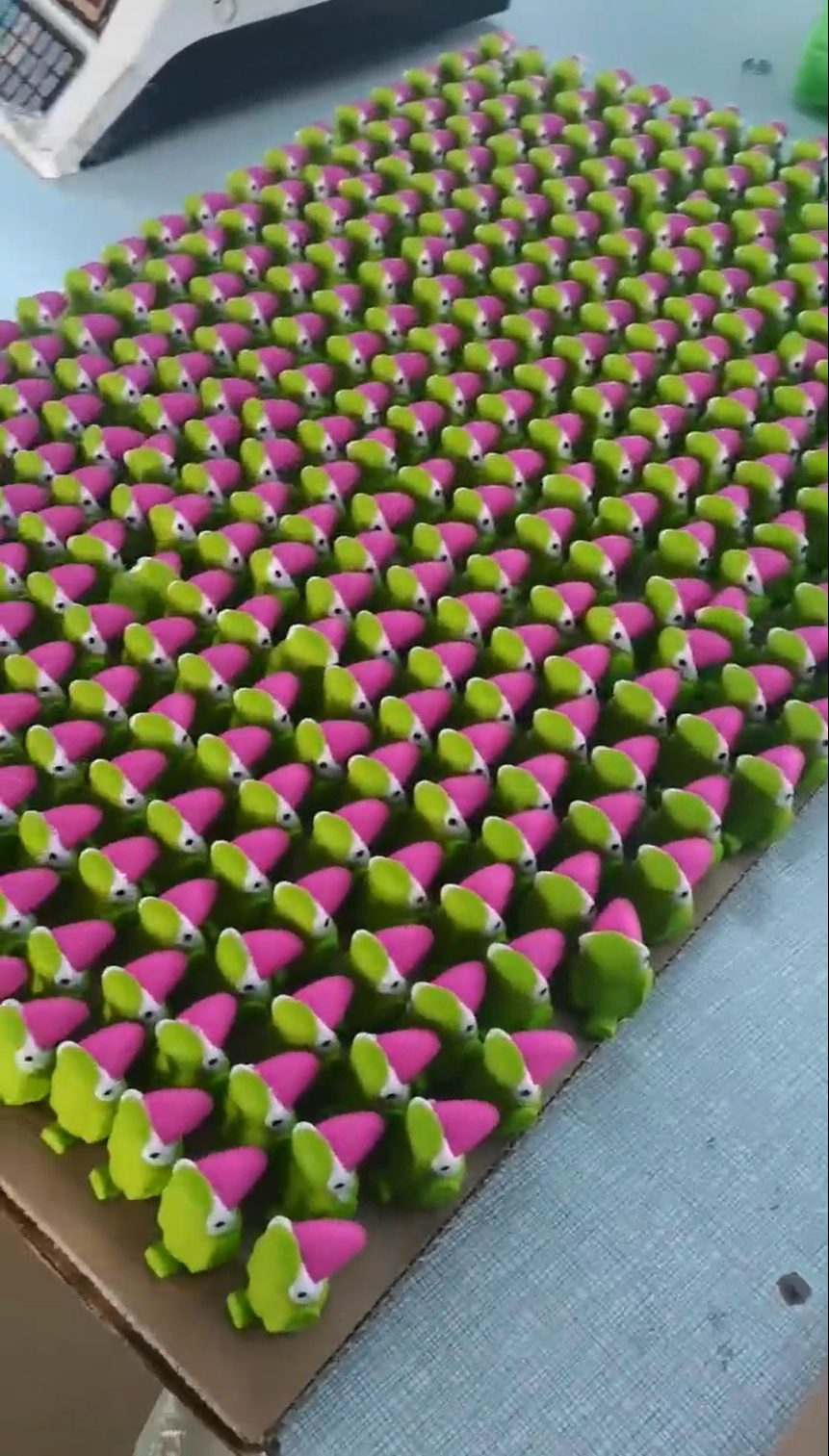
What published data can and cannot tell a buyer about Southeast Asian capacity
Eraser-specific manufacturing statistics for individual Southeast Asian economies are not published in a form directly comparable to China's declared HS 4016.92 export value. Where such a figure is unavailable, the comparison has to be built from supplier-level documentation rather than trade statistics: nameplate capacity, working-day assumptions, tool count, and the share of output already committed to existing contracts.
That changes the order of work rather than the standard of proof. In a mature sourcing market a buyer can screen countries first and suppliers second; in a developing one, the supplier audit produces the regional picture and published trade values confirm it afterwards.
Customs nomenclature is also not a market map. HS 4016.92 is limited to erasers of vulcanised rubber other than hard rubber. Erasers made from rigid or plasticised PVC, or from thermoplastic elastomer compounds, do not automatically fall under that subheading, so identical-looking block erasers can enter different chapters depending on declared material. A country's reported eraser export figure may therefore describe only part of its actual eraser output — which is why material-based SKU master data has to exist before any regional benchmark is attempted.
Tariff classification: why eraser is not one product line
Classification is the first technical filter in a multi-region sourcing plan, and it operates at product-architecture level rather than brand level.
- HS 4016.92 covers erasers of vulcanised rubber other than hard rubber.
- HS 8214.10 covers paper knives, letter openers, erasing knives, pencil sharpeners and blades therefor — the heading under which a sharpener with eraser combination is treated, and the reason blade supply and body moulding appear as separate cost elements.
- HS 9609.10 covers pencils and crayons with leads encased in a rigid sheath, which makes an eraser-tipped eraser pencil a single classified article rather than an eraser plus a pencil for tariff purposes.
The consequence is that a supplier's catalogue does not map to a single declaration line. A range that includes block erasers, white erasers, art erasers, colour erasers, pencil caps, pencil toppers, eraser sharpeners and ink pen erasers will normally span several headings, and national tariff schedules add statistical suffixes on top of the WCO structure. Multi-region sourcing multiplies the declaration lines again, because the same SKU shipped from two countries may be assessed under different national subdivisions.
Two documentation rules follow. First, SKU master data should state material composition before any landed-cost comparison is attempted; without it, the classification is an assumption. Second, rules of origin — the tests that decide whether goods processed in one country qualify for a preferential rate — turn on where material and value were added, not where the purchase order was issued. A buyer who moves final assembly without moving compounding may find that the preferential treatment does not follow the product.
Policy and regulatory environments: three regimes, three logics
Regulatory scope is the second filter, and it is where regional diversification most often surprises buyers, because compliance follows the product and its presentation rather than the factory's address.
In the European Union, stationery products must comply with EN 71 standards and the Toy Safety Directive 2009/48/EC, which is to be superseded by Regulation 2025/2509. The boundary between stationery treatment and toy treatment is product-specific: erasers and pencil toppers designed or presented for play by children under 14 can fall inside the toy regime, bringing essential safety requirements and CE marking into scope instead of a stationery-only route. Whether a particular shaped or novelty eraser crosses that line is a per-product determination, not a general rule — and it is cheaper to resolve before a mould is cut than afterwards.
Substance rules run in parallel. REACH restrictions on certain phthalates in the plasticised material of toys and childcare articles are the principal driver behind non-phthalate plasticiser and non-PVC eraser formulations in European programmes. That is a materials decision with a tariff consequence: substituting TPR for plasticised PVC to simplify the compliance file can move the product's classification, so material strategy cannot be evaluated on compliance cost alone.
The United States operates on a different basis. Federal rules limit total lead content in any accessible part of a children's product — a content test on the finished part — whereas the European requirements described above are migration-based. These are different measurement bases and different legal objects; they cannot be averaged, converted or presented as a single compliance threshold. A test report written against one basis does not discharge the other, and a specification that names only one will fail at the destination that uses the other.
In China, domestic-market compliance for student supplies rests on a national safety standard that factories cite for domestic sales; GB 21027-2020 is the reference most commonly named, and buyers running a dual-market programme should confirm the applicable edition and clauses directly, because whether one SKU can serve both domestic and export channels is a specification question rather than an assumption.
For small detachable parts, ISO 11540 addresses caps on writing and marking instruments with the aim of reducing asphyxiation risk, and it is the standard family buyers reference when a pencil cap or decorative pencil topper is a small removable component. Venting or a non-detachable fit usually costs less at tooling stage than a rework cycle later.
How erasers, eraser sharpeners and pencil toppers fit regional production strategies
The three product families behave differently when a programme moves region, because they carry different tooling, different compliance scope and different assembly content.
Block erasers, white erasers and art erasers are compounding-led. Value sits in material formulation and consistent cure, and the capital is in mixing and moulding rather than assembly. A market that already hosts rubber or thermoplastic elastomer processing for other industries can support this family earlier than one without it, because the compounding base is shared with other products.
Eraser sharpeners and sharpeners with eraser are assembly-led. The body is moulded, the blade is sourced, and the eraser insert is fitted, so cost splits between moulding capacity, blade supply and final assembly. The blade is usually the constraint, and its origin affects both lead time and, under HS 8214.10, the declared article.
Pencil caps, pencil toppers and combination SKUs are design- and compliance-led. Small detachable parts attract the asphyxiation-risk considerations above, novelty presentation can pull a line into toy scope, and packaging carries most of the retail signal. These are the SKUs where a new supplier most often needs a full development cycle rather than a straight transfer of an existing tool.
That split suggests a sequencing rule rather than a single relocation decision: transfer compounding-led families first, because quality is measurable on samples; transfer assembly-led families next, once blade supply is qualified; keep design-led and novelty SKUs with suppliers that already hold the relevant test files.
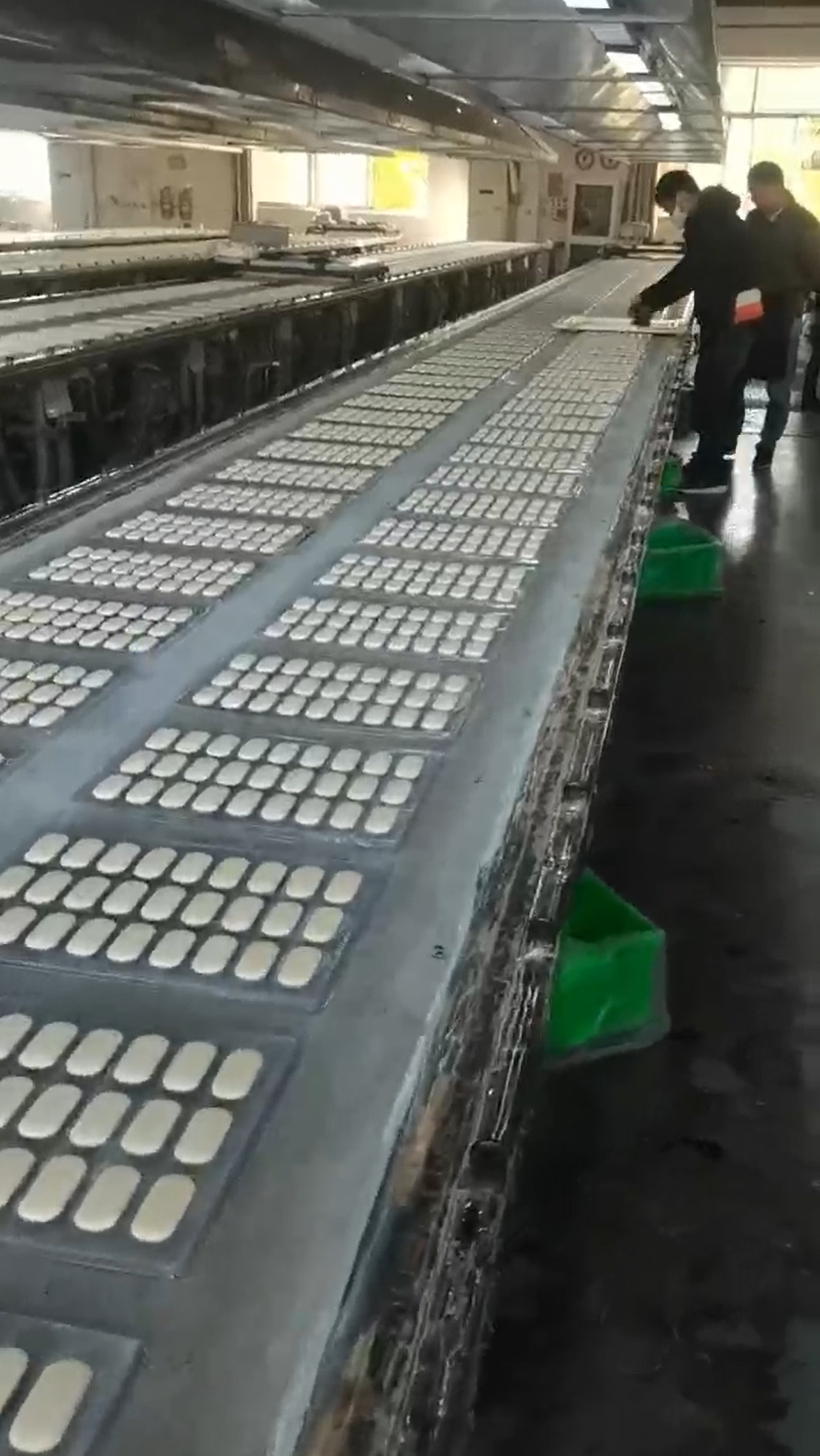
Technology adoption and workforce development as audit criteria
Two macro drivers are usually discussed in the abstract and are better treated as items on a factory audit.
On technology, the observable stages in eraser production are compounding, moulding by injection or extrusion depending on the product, printing or marking, assembly of combination items, and packaging. A supplier's technical position is described by which of those stages sit in-house and which are subcontracted — not by an equipment list. A factory that compounds its own material controls hardness and residue; a factory that buys compound controls cost and lead time but inherits the formulation. Both models can be valid; the buyer needs to know which one is being quoted.
On workforce, the skills that determine output stability in this product family are compound consistency, tool and mould maintenance, and inline inspection. They are trainable anywhere, but not instantly. Useful evidence includes operator training records, the ratio of quality-control staff to production staff, and whether mould maintenance is scheduled or reactive. None of that replaces a physical audit; it tells the buyer which questions the audit should answer.
Purchasing terms and acceptance criteria: a framework for a new region
The commercial framework for a new-region evaluation is largely the one buyers already use with established suppliers. What changes is the weight placed on each element.
A documented example makes the structure concrete. Greenwill (Kunshan Crystal Culture Co., Ltd) is an OEM/ODM stationery manufacturer based in Kunshan, China, producing eco-friendly erasers, multi-functional pencil sharpeners and erasable writing pens, with roughly 90% of output exported and Southeast Asia listed among its main markets. Its stated purchasing terms are: minimum order quantity of 20,000 pieces per colour per design; delivery terms of FOB, EXW and DDP; acceptance criteria of pre-shipment testing plus third-party inspection; and payment terms of 30% deposit by TT with 70% against a bill of lading copy. The same source quotes a 30–45 day lead time and an eraser capacity of 20 tonnes per day, against a 25,000 square metre factory with annual eraser output above 260 tonnes. These are one supplier's stated terms, not an industry benchmark, but they show the layers a new-region RFQ should cover.
- Capacity evidence. Nameplate output, working days, tool count and the share of capacity already committed. Daily tonnage only becomes meaningful once converted into the buyer's SKU mix: 20 tonnes per day of block eraser and 20 tonnes per day of small novelty shapes represent very different order books.
- Material and classification evidence. Declared material per SKU, the resulting HS line, and confirmation of which national subdivisions apply at destination.
- Compliance file. Test reports named against the standard they were written for, with the edition stated, plus certificate numbers that can be checked in the issuing registry. Greenwill, for example, holds ISO 9001:2015 (00124Q32003R4M/3600), ISO 14001:2015 (00124E31027R4M/3600) and ISO 45001:2018 (00124S30827K4M/3600), issued by CQC on 15 March 2024 and valid to 19 March 2027, scoped to the production of eco eraser and stationery items and related management activities.
- Commercial terms and acceptance. MOQ per colour and design, delivery term, inspection method, payment schedule and the remedy if a pre-shipment test fails.
- Second-source trial. A small-batch run against the buyer's own acceptance criteria, inspected by a third party, converts stated capability into evidence at a fraction of the cost of a full first order.
Single-origin versus multi-origin: what the comparison actually changes
| Dimension | What a single-origin programme assumes | What a multi-origin programme must additionally verify |
|---|---|---|
| Trade data | Published export values describe the supply base | Whether the HS line matches the material of the SKU range — 4016.92 covers vulcanised rubber only |
| Classification | One declaration line per product family | National subdivisions at destination, and the rules-of-origin position when components cross borders |
| Compliance | One test file covers the whole range | Whether any SKU crosses into toy scope, and which measurement basis the destination applies — content or migration |
| Capacity | Nameplate capacity converts into order volume | Committed share of capacity, tool count, and whether mould maintenance is scheduled or reactive |
| Commercial | MOQ and lead time are stable | MOQ per colour and design, deposit and balance schedule, inspection method and failure remedy |
| Continuity | One origin risk to manage | Qualification cost of the second source, dual-inspection overhead, and the ramp-down plan for the original source |
Read down the third column and the pattern is consistent: multi-origin sourcing does not change the standards a product must meet. It changes the number of places those standards must be evidenced, and it adds the cost of doing so to the programme. That cost is usually small against the value of a qualified second source, and large against the cost of a failed first shipment.
Future outlook
The demand base is projected to expand: the same market report that places the global erasers market at USD 3.8 billion in 2025 projects USD 5.6 billion by 2034 at a 4.4% compound annual growth rate. That is a source-reported forecast whose value depends on the report's scope assumptions, and it should be read as a directional projection rather than a procurement commitment.
Two structural effects are more certain than any single growth figure. Product variety is increasing — combination SKUs, novelty presentation, licensed shapes — and each increment of variety adds a classification and compliance decision rather than merely a design choice. At the same time, because HS 4016.92 is restricted to vulcanised rubber, a shift in material formulation can change a product's customs treatment, which links material and sustainability decisions to landed cost in a way that is easy to overlook in a specification meeting.
For Southeast Asia specifically, the signal available to buyers today is documentary rather than statistical. The question that can be answered now is not how much eraser capacity the region holds in aggregate, but whether a given supplier in a given market can produce material declarations, certificate numbers and shipment logs that survive a third-party check. A regional comparison built on that evidence can be updated as trade data becomes available; one built on assumptions has to be rebuilt.
The region's role in eraser manufacturing will be settled supplier by supplier and document by document — and the purchasing framework above is what makes that comparison repeatable across markets.
Frequently asked questions
Is Southeast Asia replacing China as the main base for eraser manufacturing?
No verified data supports a replacement claim. The best-documented benchmark available is China's declared export value for vulcanised rubber erasers under HS 4016.92, at USD 137 million in 2024, alongside a global eraser market valued at USD 3.8 billion in 2025. Eraser-specific capacity and export figures for individual Southeast Asian economies are not published in a directly comparable form, so the region's position is better assessed supplier by supplier than through a country-level substitution argument. HS 4016.92 also covers only vulcanised rubber erasers, so a country's reported eraser exports may exclude PVC and TPR output entirely.
How are erasers, eraser sharpeners and pencil toppers classified for customs?
Erasers of vulcanised rubber other than hard rubber fall under HS 4016.92. Pencil sharpeners, including a sharpener with eraser combination, fall under HS 8214.10. An eraser-tipped pencil is classified under HS 9609.10 as a single article, because the lead is encased in a rigid sheath. Erasers made from plasticised PVC or thermoplastic elastomer do not automatically fall under 4016.92, and national tariff schedules add statistical suffixes to these lines, so classification must be confirmed against the declared material of each SKU rather than the appearance of the product.
Which compliance regimes apply to erasers and pencil toppers sold internationally?
In the EU, stationery must comply with EN 71 standards and the Toy Safety Directive 2009/48/EC, which is to be superseded by Regulation 2025/2509; products designed or presented for play by children under 14 can fall inside the toy regime, and REACH restrictions on certain phthalates in plasticised material drive non-PVC formulations. In the US, federal rules limit total lead content in accessible parts of a children's product, which is a content test and is not comparable with EU migration testing. In China, GB 21027-2020 is the national student-supplies safety standard most often cited, and its applicable edition and clauses should be confirmed directly. ISO 11540 addresses asphyxiation risk for caps on writing instruments, relevant to pencil caps and small pencil toppers.
What purchasing terms should a buyer specify when evaluating a supplier in a new region?
At minimum: MOQ per colour and design, delivery term such as FOB, EXW or DDP, acceptance criteria including pre-shipment testing and third-party inspection, payment schedule, and lead time. A documented example is Greenwill's stated terms — 20,000 pieces per colour per design minimum, FOB, EXW and DDP delivery, pre-shipment plus third-party inspection, a 30% TT deposit with 70% against a bill of lading copy, and a 30–45 day lead time. These are one supplier's terms rather than a market standard; the point is that each element should be stated explicitly rather than assumed to carry over from an existing supplier.
How can a buyer verify capacity claims from a supplier in a new region?
Convert the claim into a testable number. Daily or annual tonnage becomes meaningful only when multiplied by the buyer's SKU mix and checked against tool count, working days and the share of capacity already committed. Supporting evidence includes shipment logs, scheduled versus reactive mould maintenance, the ratio of quality-control to production staff, and certificate numbers that can be checked in the issuing registry. A third-party-inspected small batch run against the buyer's own acceptance criteria is the most direct test, and it costs far less than a full first order.
Tem questões ou precisa de mais detalhes?
Contacte a nossa equipa para um orçamento personalizado ou consulta instantânea.
Solicitar orçamento
Preencha o formulário abaixo e a nossa equipa entrará em contacto com uma proposta personalizada.
Chat direto do WhatsApp
Prefere conversar em tempo real? Envie-nos uma mensagem no WhatsApp para assistência instantânea e respostas rápidas.
- Obter orçamento personalizado
- Partilhar fotos ou documentos
- Discuta as suas necessidades diretamente
Geralmente responde em 5–30 minutos durante o horário de expediente.