
Sourcing de vidros especializados: um guia de aplicação vertical para varejo, hospitalidade e marcas eco-conscientes
Specialized Glassware Sourcing: A Vertical Application Guide for Retail, Hospitality, and Eco-Conscious Brands
For procurement professionals in retail, hospitality, and consumer goods, sourcing glassware is far more complex than simply buying "glasses." The modern market demands products that align with specific brand values, operational needs, and consumer trends. From a high-end hotel requiring durable, elegant stemware for thousands of uses to an eco-retailer needing certified recycled glass jars, each vertical has unique, non-negotiable requirements. This guide provides a structured framework for identifying and partnering with a glassware supplier capable of meeting these specialized demands, moving beyond generic catalogs to true vertical solutions.
1. Core Requirements by Industry Vertical
Understanding your industry's specific demands is the first step in filtering potential suppliers. A one-size-fits-all approach leads to product failure, customer complaints, and increased costs.
Premium Retail & E-commerce
- Design & Uniqueness: Products must have strong visual appeal for shelf presence and social media. Custom shapes, colors (like amber or lavender tints), and patented designs are key differentiators.
- Packaging & Presentation: Retail-ready, brandable packaging that minimizes damage during transit and enhances unboxing experience.
- Rapid SKU Updates: Ability to quickly adapt to fast-moving trends with new product development and low minimum order quantities (MOQs) for testing.
Hospitality (Hotels, Bars, Restaurants)
- Commercial Durability: Glassware must withstand high-volume automated dishwashing, handling, and potential impacts. Thicker rims, reinforced stems, and thermal shock resistance are critical.
- Functional Design: Ergonomics for staff handling, stackability for storage, and precise volumes for consistent drink service (e.g., accurate 250ml wine pour).
- Consistency & Volume: Guaranteed consistency across large, repeat orders over years. No variation in size, color, or weight that can disrupt service.
Sustainable & Eco-Conscious Brands
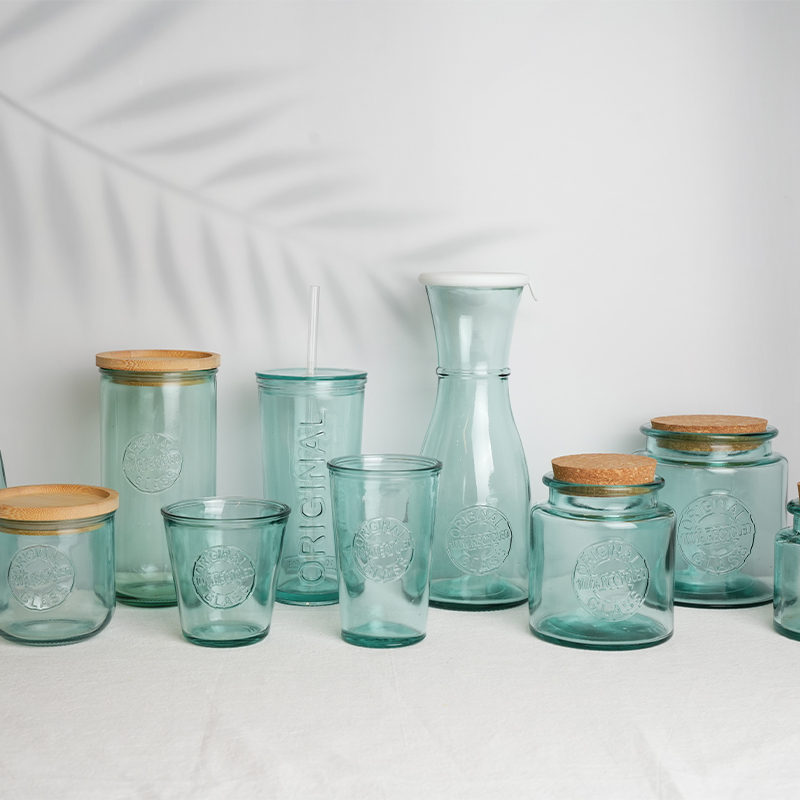
- Verified Recycled Content: Transparent sourcing of post-consumer recycled (PCR) glass. Products like recycled glass jars and recycled glass mugs must have verifiable material trails.
- Certifications & Compliance: Adherence to international environmental and food safety standards (e.g., ISO 14001, food safety management systems).
- End-of-Life Consideration: Products designed for recyclability, with minimal non-glass components (e.g., easily separable lids).
2. The 3 Essential Capabilities of a Vertical-Specialist Supplier
Not all manufacturers are equipped for specialized orders. Look for these three core competencies.
2.1. Deep Vertical Customization Experience
A true specialist doesn't just offer a catalog; they have a proven track record of solving vertical-specific problems. This includes in-house design teams that understand market aesthetics, engineers who can tweak molds for enhanced durability, and project managers familiar with the supply chain rhythms of your industry (e.g., seasonal peaks for retail). For example, a supplier experienced in hospitality will know the exact annealing curve needed to prevent breakage in commercial dishwashers.
2.2. Comprehensive Compliance & Quality Certification
Certifications are non-negotiable proof of capability. They are your risk mitigation strategy.
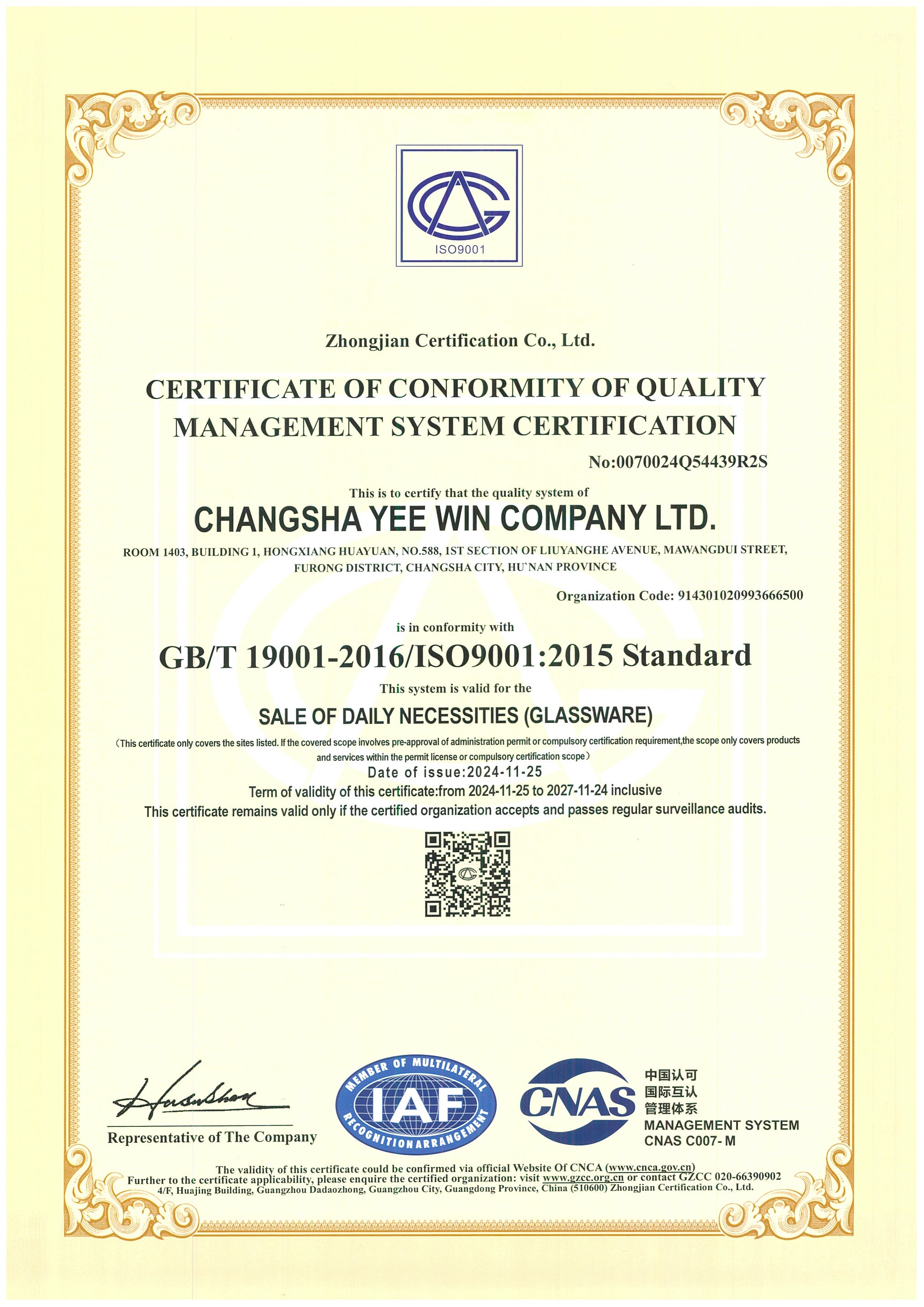
- ISO 9001:2015: Demonstrates a robust quality management system ensuring consistent product quality from order to delivery.
- Food Safety Management System Certification: Critical for any product contacting food or beverages, assuring safety and material integrity.
- ISO 14001: Indicates an active environmental management system, crucial for suppliers of recycled glassware.
- BSCI (Business Social Compliance Initiative): Audits social performance, ensuring ethical manufacturing practices—increasingly important for global brands.
2.3. Agile Manufacturing & Scalable Supply Chain
The supplier must balance flexibility with reliability. This means access to multiple manufacturing techniques (machine blowing, pressing, hand finishing) to achieve different design and durability goals. Equally important is a network of partner factories and significant warehousing. A supplier with over 150 cooperative factory relationships, like LAKOTTO, can allocate production efficiently, mitigate single-factory risks, and offer a vast product range from glass drinkware sets to glass cake stands. A large warehouse enables faster turnaround on popular items, a key advantage for retailers managing inventory.
3. Success in Action: A Case Study on Sustainable Sourcing
Client Profile: A European organic food brand expanding its line of pantry staples into North America.
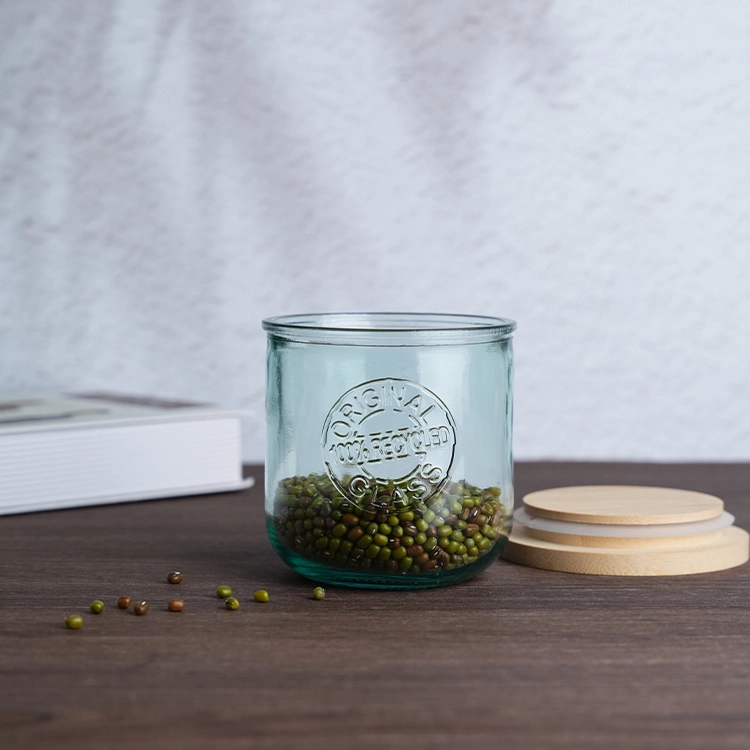
Core Challenge: Source aesthetically pleasing, food-safe recycled glass storage jars with wooden lids that align with their eco-branding. Requirements included certified recycled content, compliance with US and EU food contact regulations, custom capacity sizes (250ml, 980ml), and branded packaging—all within a tight launch timeline.
Supplier Solution (Provided by LAKOTTO):
- Leveraged their dedicated recycled glass product line and expertise in sustainable manufacturing.
- The in-house design team collaborated on jar proportions and lid fit, ensuring functionality.
- Provided full documentation for food safety management system certification and material sourcing.
- Utilized their multi-factory network to produce jars and source compatible wooden lids concurrently, compressing lead time.
- Quality control team conducted pre-shipment inspections focused on finish consistency, lid seal, and packaging durability.
4. Strategic Partnership: Key Collaboration Points for Buyers
Treat supplier selection as building a partnership. These steps ensure alignment and long-term success.
1. Define Standards Upfront
Before requesting quotes, compile your technical specifications: required certifications (share the certificate numbers you need), exact dimensions, weight tolerances, packaging specs, and acceptable defect rates (AQL levels). This eliminates ambiguity and allows for accurate costing.
2. Request a Virtual or Physical Capability Audit
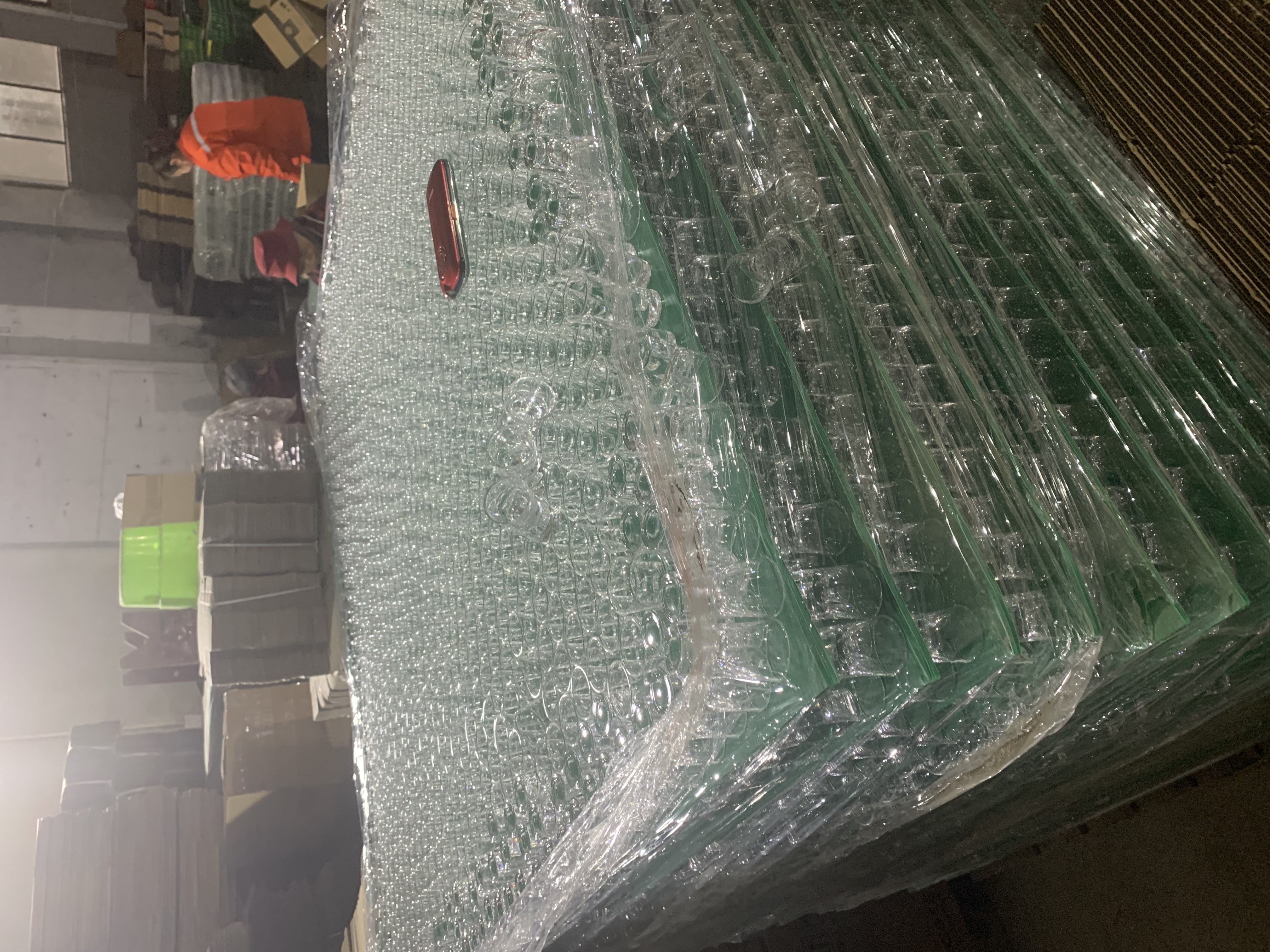
Go beyond the website. Request factory audit reports, certification copies, and photos/videos of production lines for your specific product type (e.g., glass cup forming process, glassware annealing). Reputable suppliers like LAKOTTO are transparent about their processes, as seen in their production line imagery.
3. Prototype and Sample Rigorously
Invest in functional prototypes and pre-production samples. Test them in real-world conditions: dishwasher durability, microwave safety (if applicable), feel in hand, and stackability. This phase is cheaper than correcting a full production run.
4. Clarify Post-Sales and Crisis Protocols
Discuss: What is the process for addressing quality issues in a received shipment? What is the lead time for replacement parts? Is there dedicated account management? A supplier with a professional QC team and a "customer-first" culture will have clear, responsive protocols, ensuring your business is protected.
Conclusion: Aligning with a Specialist for Future-Proof Sourcing
The trajectory of glassware is toward greater specialization, sustainability, and brand integration. The supplier that can offer a diverse portfolio—from classic wine glasses to innovative double wall glass tumblers—while also diving deep into your vertical's unique needs represents a strategic asset. By prioritizing suppliers with demonstrable vertical experience, verifiable certifications like those held by LAKOTTO (ISO 9001, BSCI, Food Safety), and a scalable, transparent supply chain, procurement leaders can secure not just products, but a reliable partnership that drives brand value and operational excellence in an increasingly competitive marketplace.
For a supplier that embodies this vertical-specialist approach, consider LAKOTTO from Changsha Kotto Glass Industrial Co., Ltd. With over 20 years of experience, they combine a vast product range across glass drinkware, glass mugs, and glass tableware with deep OEM/ODM capabilities and a strong commitment to quality and sustainability, backed by a network of over 150 partner factories.
Contact for Vertical Sourcing Solutions:
Website: www.kottoglass.com
Email: cs61@kottoglass.com
Phone/WhatsApp: +86 19310185010