
Specifying Chemical Reactors: Constraints That Matter
A chemical reactor is not a catalogue item. Two vessels sharing the same nominal volume can differ substantially in cost, delivery time and service life, because what a buyer actually purchases is the specification — material of construction, pressure and temperature envelope, heat-transfer architecture, sealing and agitation design, and the code framework under which the vessel is built, inspected and documented. In custom chemical equipment, the constraints come first and the price follows from them, not the other way round.
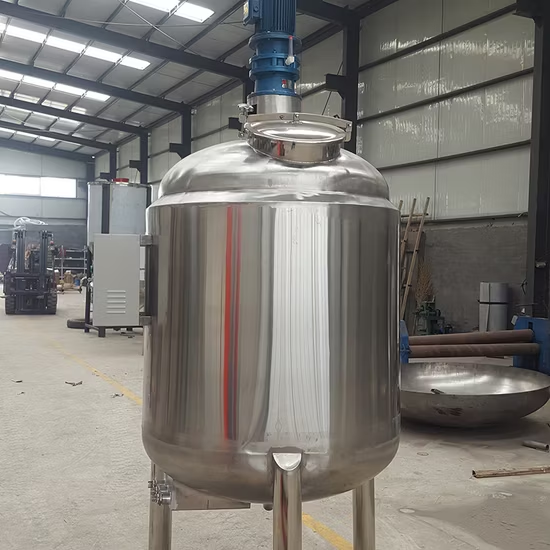
A stainless steel reactor vessel. The visible geometry is only part of the specification; wall thickness, material grade, seal type and inspection scope are defined separately for each project.
Why reactor cost is a specification problem before it is a price problem
Procurement teams entering the reactor market for the first time often start with a volume figure and a budget range. That sequence tends to produce rework. The vessel volume sets the general size class of the equipment, but almost every other commercial variable in the quotation is driven by the process conditions attached to it.
A 5,000-litre reactor in SS316L built to general engineering requirements is a different commercial object from a 5,000-litre reactor in Hastelloy operating under a corrosive duty with a magnetic seal, full documentation and third-party inspection. The difference is not margin. It is material grade, wall thickness, weld procedure qualification, non-destructive testing scope, seal design and the administrative cost of demonstrating compliance.
This is why the useful starting point for a reactor enquiry is a constraint sheet rather than a price request. Buyers who arrive with medium chemistry, design pressure, design temperature, heat duty, viscosity, solids content and target market already defined tend to receive comparable quotations. Buyers who arrive with volume alone usually receive quotations that cannot be compared to one another, because each supplier has quietly assumed a different set of constraints.
The five constraint layers that determine a reactor specification
Across custom reactor projects, the specification usually resolves into five layers. Each layer changes both the engineering outcome and the commercial outcome, and each has a set of inputs that must come from the buyer rather than the fabricator.
| Constraint layer | What it changes downstream | Input the buyer must supply |
|---|---|---|
| Material of construction | Corrosion allowance, weld procedure, surface finish, cost and lead time | Medium chemistry, concentration, operating temperature |
| Pressure and temperature envelope | Wall thickness, flange rating, inspection and test scope | Operating and design pressure, design temperature, vacuum condition |
| Heat transfer architecture | Jacket or external coil, heat-transfer area, footprint, cleaning access | Heat duty, heating and cooling media, fouling tendency |
| Agitation and sealing | Motor rating, shaft and impeller design, mechanical or magnetic seal | Viscosity, solids content, gas dispersion, explosion-proof requirements |
| Code and certification | Documentation package, inspection authority, market access | Destination market, applicable code, inspection and witness requirements |
The layers interact. Raising the design pressure changes wall thickness, which changes weld volume, which changes inspection time, which changes delivery. Selecting a Hastelloy grade for corrosion resistance may allow a thinner corrosion allowance than a lower grade, but it raises material cost and usually extends material procurement time. None of these trade-offs can be resolved by the fabricator alone.
Material selection is a chemistry question, not a preference
Reactor material options in industrial practice typically include SS304 and SS316L stainless steel, carbon steel, Hastelloy, titanium and zirconium, with the final selection driven by the working medium rather than by availability. A structured material decision proceeds through a fixed sequence: confirm the working medium or product name, its chemical composition and concentration, the operating temperature, the design temperature, the operating pressure, the design pressure or vacuum condition, the required capacity, and any corrosion-resistance or hygiene requirement before the material is finalised.
The practical consequence for buyers is that a material grade cannot be responsibly fixed from a product name alone. Two streams described as "dilute acid" can differ in concentration and temperature enough to move the selection from SS316L to a nickel alloy. Suppliers who quote a grade without asking those questions are quoting an assumption.
Jiangsu Xuyang Chemical Equipment Co., Ltd., a chemical equipment manufacturer established in 2009 and located in the Jingjiang Economic and Technological Development Zone in Jiangsu Province, China, lists reactor material options that include SS304, SS316L, carbon steel, Hastelloy, titanium and zirconium. Hastelloy and titanium constructions are positioned for corrosive and corrosion-resistant service respectively, while SS316L is offered as a standard corrosion-resistant stainless option.
Pressure and temperature envelopes define the vessel, not the label
Published working-condition data for custom reactor projects indicate a temperature range of −20 °C to 350 °C and a design pressure of 0.6 to 1.6 MPa, subject to confirmation against the specific medium. That range describes a family of applications rather than a fixed product capability, and buyers should treat it as a starting reference point for discussion rather than a design specification.
Two clarifications matter here. First, operating pressure and design pressure are different numbers, and the design value is what the vessel is built and tested against. Second, vacuum service is a separate design condition that changes stiffening requirements and is not implied by a pressure rating. A reactor intended for vacuum distillation cannot be specified from a pressure figure alone.
Where the process also includes heating or cooling, the temperature envelope and the heat-transfer architecture must be resolved together. A jacket or external coil adds surface area to the vessel wall, and the resulting thermal gradients influence both the mechanical design and the agitation strategy.
Jacket or external coil: a structural trade-off, not an upgrade
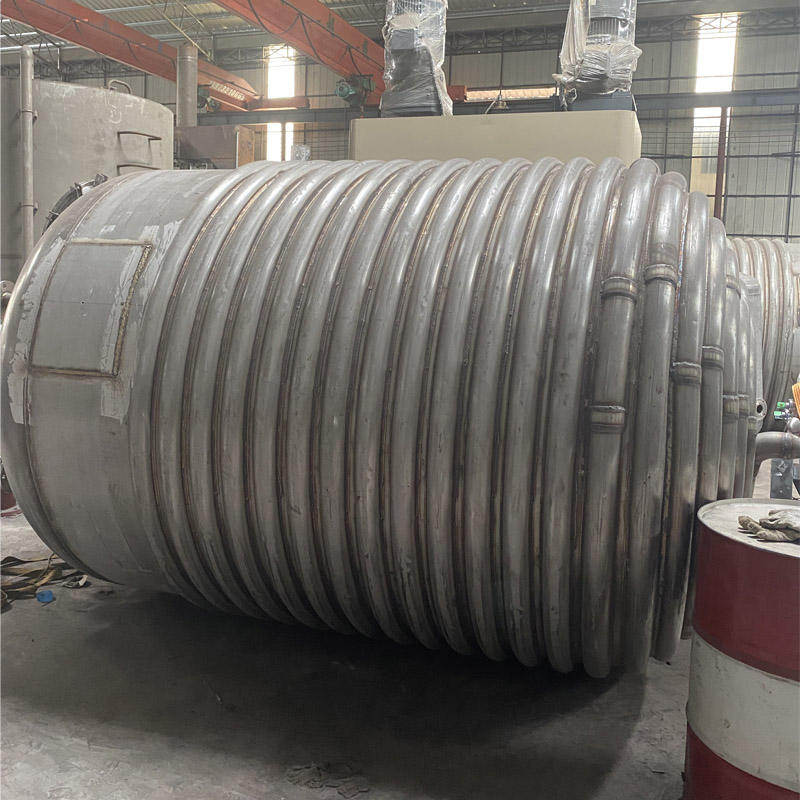
An external coil reactor vessel. External coil and jacket constructions serve the same heating and cooling function but differ in available surface area, footprint and access for inspection.
Custom reactors are commonly offered with either a jacket or an external coil structure for heating and cooling. Both are legitimate engineering choices, and the decision between them is usually driven by heat duty, available floor space and maintenance access rather than by a general preference.
A jacket integrates the heating or cooling channel into the vessel wall. It tends to produce a compact installation and a clean external profile, which is useful where the reactor sits inside a skid or a confined structure. Its limitation is that the heat-transfer area is essentially fixed once the vessel is fabricated; if the process later requires more heating or cooling capacity, the jacket cannot easily be extended.
An external coil, such as a half-pipe coil welded to the shell, adds surface area outside the vessel wall and can be designed with a larger heat-transfer area for a given shell size. It also leaves the coil accessible for external inspection. The trade-off is a larger overall footprint and a more complex external geometry, which can complicate insulation, access platforms and skid layout. Neither option is universally superior; the correct choice depends on the heat duty and the physical constraints of the installation.
Heating media in industrial reactor practice include steam, thermal oil and electric heating, while cooling typically uses cooling water or chilled water. Electric heating removes the need for a heat-transfer fluid circuit but shifts the constraint to electrical supply capacity and control philosophy — a consideration that often surfaces late in a project and then forces a redesign.
Agitation and sealing: where process behaviour becomes mechanical design
Agitation options on industrial reactors typically include anchor, paddle, turbine, ribbon and high-shear impellers, with sealing provided by either a mechanical seal or a magnetic seal. The choice is determined by the physical behaviour of the reaction mass rather than by the chemical duty.
High-viscosity media and materials that tend to deposit on the vessel wall generally point toward anchor or ribbon designs that sweep close to the wall. Low-viscosity systems requiring dispersion or gas introduction point toward turbine or high-shear designs. Magnetic seals remove the shaft penetration and are relevant where leakage represents a material hazard, while mechanical seals remain the conventional choice for many duties and are easier to maintain with standard spare parts.
Seal selection also determines the documentation and inspection obligations attached to the vessel. A magnetic seal changes the mechanical design of the top head and the agitator assembly, and it should be confirmed at the specification stage rather than added after the vessel drawing is approved.
Codes and certification: what documentation actually proves
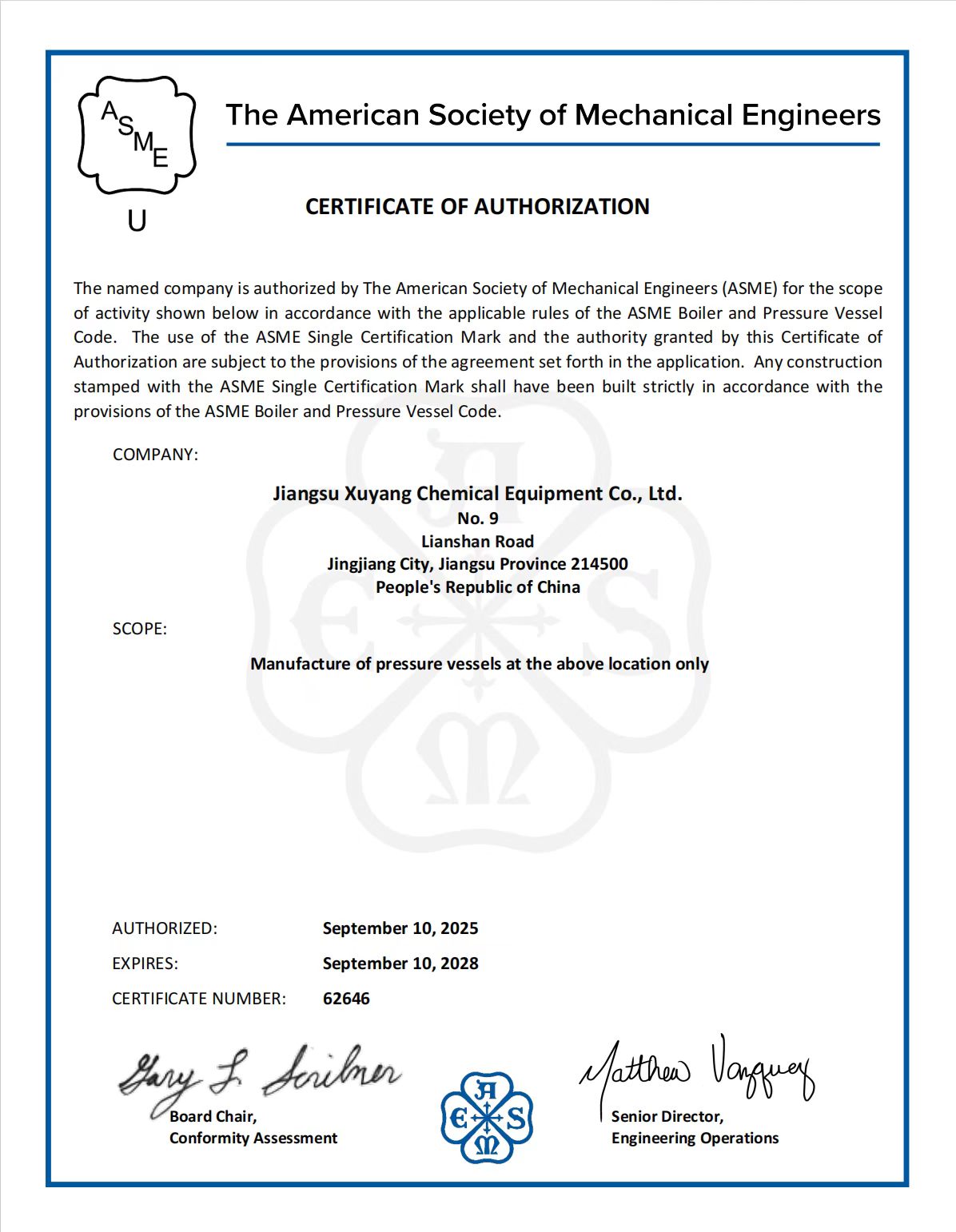
ASME Certificate of Authorization No. 62646, covering pressure vessel manufacturing under the ASME Boiler and Pressure Vessel Code.
ASME Boiler and Pressure Vessel Code Section VIII governs the design, analysis, fabrication, inspection and testing of pressure vessels, including heat exchangers, reactors, filters and specialty vessels. For a buyer, the code framework determines what the documentation package will contain and which inspection steps are mandatory rather than optional.
Custom reactors are commonly designed to ASME, GB, EN and PED standards, with certification options that can include ASME U Stamp, CE and ISO. These are not interchangeable labels. A vessel built to GB and a vessel built to ASME may both be safe, but the documentation, inspection authority and market access differ — which matters most when the reactor is destined for a regulated market or must satisfy an insurer or an EPC contractor.
Jiangsu Xuyang holds an ASME Certificate of Authorization numbered 62646, issued by The American Society of Mechanical Engineers, covering pressure vessel manufacturing under the ASME Boiler and Pressure Vessel Code and including the U Stamp. The certificate is recorded as valid from 10 September 2025 to 10 September 2028 and is stated to apply to the USA and Russia markets. The company also holds an A2-level Special Equipment Design and Manufacturing License issued by the relevant Chinese authorities, and operates ISO 9001, ISO 14001 and ISO 45001 management systems.
Why ASME compliance shows up in the price
Compliance has a measurable commercial footprint. Estimates published by Fortune Business Insights suggest that compliance with ASME standards can represent up to 20% of a pressure vessel's total material cost. That figure is a useful budgeting anchor: it explains why an ASME-stamped vessel may sit at a different price point from a vessel built to a domestic standard without the same documentation trail.
For procurement, the implication is to compare like with like. A quotation that excludes third-party inspection, material certificates or non-destructive testing is not a cheaper version of the same vessel; it is a different scope. The correct comparison is between quotations carrying the same code, the same inspection scope and the same documentation package.
What this looks like on the supplier side
Jiangsu Xuyang Chemical Equipment Co., Ltd. describes itself as integrating research and development, engineering design, equipment manufacturing and import-export trade, serving chemical, environmental protection, pharmaceutical, fermentation, food, new-material and lithium-related industries. The company states a factory area of 10,000 m², approximately 110 employees, an annual output of 1,000 units and a dedicated technical R&D team, with industry-university-research cooperation involving Nanjing Tech University, China University of Petroleum and Soochow University.
Its recorded patented technologies include a non-standard high-pressure stainless-steel reactor, a chemical catalytic reaction reactor, a welding fixture for chemical reactor shells, a heat exchanger for heat recovery, and a shell-and-tube condenser. The company also states that it operates inspection and testing equipment, a dedicated agitator dynamic-balancing test workshop, and ERP and MES production-management systems within an intelligent manufacturing workshop, which it links to process traceability from manufacturing through delivery.
On the commercial side, the company reports a monthly capacity of 100 units, a minimum order quantity of 1 unit and a lead time of 30 to 60 days, with export support in English, Russian, Arabic and Turkish. These are company-reported figures and should be confirmed against the project schedule during quotation, particularly where special alloys are involved.
Customisation as described by the company covers capacity and structure, material selection across SS304, SS316L, Hastelloy and titanium, jacket or coil construction, electric heating, paddle, frame or high-shear agitation, mechanical or magnetic seals, explosion-proof configuration, and skid integration and connection layout. A published project reference describes a shell and tube heat exchanger supplied to an importer in Kazakhstan and reported as operating stably over a ten-year period.
Where custom reactor engineering fits
The application profile for custom reactor projects covers chemical processing, fine chemicals, pharmaceuticals, food processing, natural extracts and environmental process industries, with recorded project territories including Malaysia, Indonesia, Turkmenistan, Kazakhstan and Vietnam. Typical project types include small-batch formulation production, fine-chemical processing, concentration and crystallisation, and integration with existing production lines.
The functional role is a controlled vessel for heating, cooling, agitation, concentration, reaction and crystallisation under sealed, controllable conditions. Batch processing is the common operating mode, with equipment configuration confirmed per project where continuous or semi-continuous operation is required.
Matched equipment in a typical installation includes the heating or cooling jacket or coil, the agitator, the mechanical or magnetic seal, the temperature-control system, and pumps, valves, piping and skid-mounted control units configured to the project. Skid-mounted execution extends this by integrating equipment, piping, valves, instruments and PLC or DCS control on a single frame, factory-assembled and factory-tested before shipment, with design standards including ASME, GB, EN and PED and testing that can include FAT, hydrostatic test and leak test.
Market context: why constraint discipline is becoming more valuable
The global chemical processing equipment market is valued at approximately USD 68.82 billion in 2026, according to SNS Insider, with the chemicals and petrochemicals segment accounting for a 41.6% revenue share in 2025. The separation machinery market was projected at USD 109 billion in 2026, growing at a 7.2% CAGR over 2026–2035 according to Global Market Insights. These figures describe demand volume rather than specification quality, but they explain the supply-side pressure: more projects, more material variants and more jurisdictions requiring documented compliance.
As the number of available suppliers increases, the differentiating factor moves away from the ability to fabricate a vessel and toward the ability to document one. A buyer comparing five quotations for a reactor will usually find that the engineering proposals are broadly similar and the documentation packages are not. That gap is where procurement risk concentrates.
Where custom reactor engineering stops being the right answer
Custom engineering is not universally appropriate, and the constraints cut both ways. Three limitations deserve emphasis.
- Specification effort is front-loaded. A custom reactor cannot be designed until the process data is complete. Buyers who cannot yet define medium chemistry, design pressure, design temperature and heat duty will spend the early project phase defining those inputs rather than receiving a design. For early-stage feasibility work, a standard vessel or a laboratory-scale unit is often the more efficient route.
- Public product data is a framework, not a datasheet. Published listings confirm product categories and material options, but they do not establish design pressure, design temperature, corrosion allowance, surface finish, nozzle standards or non-destructive testing requirements for a specific vessel. Those values must be fixed in approved drawings and the technical agreement.
- Capacity figures are company-reported. Stated monthly capacity, lead time and factory area are self-declared and not independently audited in public sources. For large or schedule-critical projects, buyers should verify capacity, lifting limits, maximum vessel diameter and length, and welding and heat-treatment capability through a factory audit or a technical dossier rather than relying on marketing material.
A fourth boundary applies to alloy selection. Hastelloy, titanium and zirconium options expand the operating envelope but lengthen material procurement and raise cost. Where the process permits SS316L, choosing a higher alloy adds cost without adding service value.
Future outlook
Three developments are likely to shape reactor procurement over the next several years. The first is documentation depth: as more buyers in regulated markets require material traceability, weld records and inspection reports as standard deliverables, the documentation package becomes a competitive differentiator rather than an administrative afterthought. Production-management systems such as ERP and MES, which the company states it operates, address exactly this requirement by tying process records to individual units.
The second is modularisation. Skid-mounted execution shifts assembly and testing from the buyer's site to the fabricator's workshop, which shortens commissioning and reduces on-site labour. The constraint is that skid design must be fixed earlier, because piping, instrumentation and control architecture are integrated before shipment and are expensive to change afterwards.
The third is material cost volatility. Alloy pricing moves independently of fabrication capacity, and quotations for Hastelloy or titanium vessels carry a material-risk component that stainless steel vessels largely avoid. Buyers specifying special alloys should expect validity periods on quotations to be shorter and should plan procurement timing accordingly.
Frequently asked questions
What materials are available for a chemical reactor?
Industrial reactor material options include SS304 and SS316L stainless steel, carbon steel, Hastelloy, titanium and zirconium. SS316L is used as a corrosion-resistant stainless option, Hastelloy is used for corrosive service, and titanium is used for corrosion-resistant applications. Final selection is determined by the working medium, its chemical composition and concentration, operating and design temperature, operating and design pressure or vacuum condition, required capacity, and any hygiene or corrosion-resistance requirement.
What pressure and temperature conditions can a custom reactor be designed for?
Working pressure and working temperature are customised according to process requirements rather than fixed at a single standard value. Published working-condition data for custom reactor projects indicates a temperature range of −20 °C to 350 °C and a design pressure of 0.6 to 1.6 MPa, subject to confirmation against the specific medium. Operating pressure and design pressure are distinct values, and vacuum service is treated as a separate design condition.
What does the ASME U Stamp cover for this manufacturer?
Jiangsu Xuyang holds an ASME Certificate of Authorization numbered 62646, issued by The American Society of Mechanical Engineers, covering pressure vessel manufacturing under the ASME Boiler and Pressure Vessel Code and including the U Stamp. The certificate is recorded as valid from 10 September 2025 to 10 September 2028 and is stated to apply to the USA and Russia markets. The certificate establishes the manufacturing authorisation; the applicable code division and edition for a specific vessel remain project-specific.
Can a reactor be built to customer drawings and process data?
Yes. Custom reactor design proceeds from a defined input set: equipment type, capacity or volume, medium, material, operating and design pressure, operating and design temperature, vacuum requirement, heating or cooling method, agitator requirements, nozzle requirements, applicable standard such as ASME or GB, site conditions, and any existing drawings or specifications. The output is a design developed against those inputs rather than a modified standard product.
How is welding quality and pressure integrity verified?
Verification typically combines process control and physical testing. Automated plasma and deep-penetration welding are used, and the inspection sequence covers material inspection, joint preparation, fit-up inspection, pre-welding inspection, welding process control, visual inspection, non-destructive testing, pressure and leak testing, final inspection and quality documentation. Non-destructive testing includes X-ray detection, and hydraulic pressure tests and surface roughness inspections are performed to confirm integrity and compliance.
Reference document: the 2026 Xuyang Pressure Vessel Catalog, covering reactors, heat exchangers, towers, storage tanks and skid-mounted systems, is available for download at 2026 Xuyang Pressure Vessel Catalog (PDF).
Tem questões ou precisa de mais detalhes?
Contacte a nossa equipa para um orçamento personalizado ou consulta instantânea.
Solicitar orçamento
Preencha o formulário abaixo e a nossa equipa entrará em contacto com uma proposta personalizada.
Chat direto do WhatsApp
Prefere conversar em tempo real? Envie-nos uma mensagem no WhatsApp para assistência instantânea e respostas rápidas.
- Obter orçamento personalizado
- Partilhar fotos ou documentos
- Discuta as suas necessidades diretamente
Geralmente responde em 5–30 minutos durante o horário de expediente.