
Specifying Diamond Sanding Belts for Hard-Brittle Materials
Hard-brittle materials such as glass, ceramic, cemented carbide, and thermal-sprayed coatings place unusual demands on abrasive tools. Ordinary flexible belts can dull quickly or create edge damage, which is why many processors turn to diamond sanding belts.
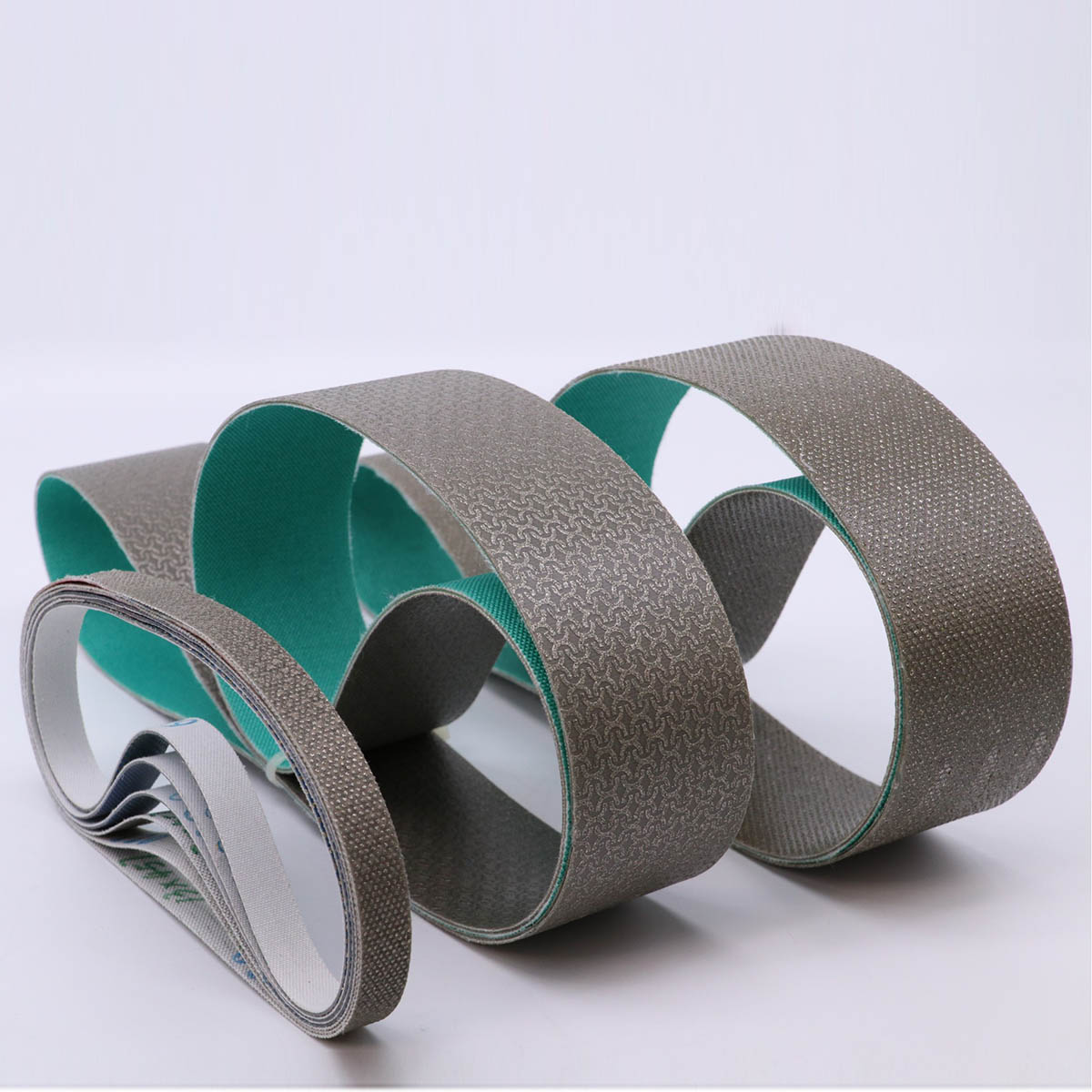
Diamond sanding belt. RUITE lists high grinding efficiency, long working life, and cost-effectiveness as product features.
A diamond sanding belt uses diamond or cubic boron nitride (CBN) as the abrasive layer, combining the flexibility of a conventional coated abrasive with the hardness of a superhard grain. For engineers and buyers at the awareness or research stage, the practical questions are what these belts can do, how they are specified, and where they fit in a production workflow.
Why Hard-Brittle Materials Need a Different Abrasive Approach
Most conventional abrasives are selected for ductile metals, where a sharp grain can cut and then wear progressively. Hard brittle materials behave differently: they tend to fracture, and a dull abrasive increases heat, vibration, and surface damage. Diamond sanding belts address that problem because diamond and CBN are superhard materials. RUITE, for example, states that its diamond belts are widely used in grinding and polishing processes for hard brittle materials such as stone, glass, ceramic, and monocrystalline silicon. The same flexible belt format allows them to work on curved or complex surfaces without the rigidity of a grinding wheel.
The broader market context supports this interest. According to Global Market Insights, the global diamond tools market, which includes abrasive belts, was valued at USD 10.8 billion in 2024 and is projected to reach USD 19.5 billion by 2034. According to Cognitive Market Research, the coated abrasive belt market is estimated at approximately USD 3.2 billion in 2025, with a projected CAGR of 5.3% through 2033. Neither figure refers only to diamond belts, but both point to growing use of advanced coated abrasives in industrial finishing.
What a Specialized Diamond Belt Supplier Provides
Zhengzhou Ruite Diamond Belts Co., Ltd. (RUITE) is a manufacturer focused on superhard abrasive tooling. Established in 2003, the company operates a 500-square-meter facility with about 45 employees, an R&D team of five engineers, and an annual production capacity of 100,000 units. Its core range includes diamond belts, diamond flap discs, diamond flap wheels, diamond velcro discs, diamond hand pads, and diamond quick change discs. RUITE also researches CBN belts, CBN flap discs, CBN spiral bands, and CBN hand pads. Export sales account for 70% of total sales, with major markets in Europe and the United States. The company describes these products as superhard material coated abrasives developed with independent intellectual property rights.
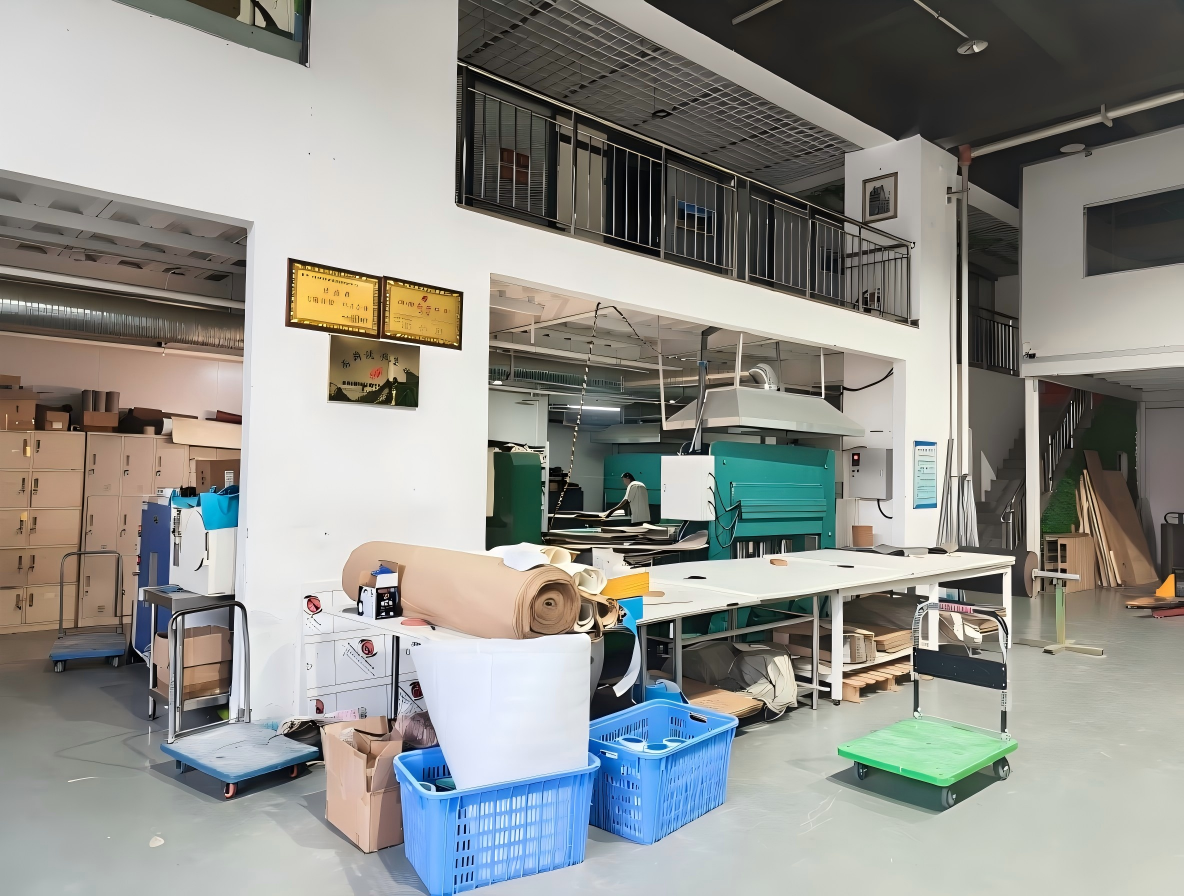
Company image supplied by RUITE. The company is based in Zhengzhou, Henan, China.
Diamond Belt Specification Range
| Parameter | Available Range / Type |
|---|---|
| Abrasive material | Diamond or CBN |
| Bond type | Resin bond, electroplated |
| Grit | 40# to 5000# |
| Width | 5mm to 350mm |
| Length | 150mm to 5000mm |
| Operation | Wet and dry grinding and polishing |
| Customization | Available according to customer requirements |
Source: RUITE product specifications.
The width and length ranges matter because they determine machine fit. A glass edging line, a stationary belt grinder, or a handheld sander may require different belt dimensions. The grit range from 40# to 5000# means the same product family can be used for coarse material removal and for polishing. RUITE's position as a manufacturer allows orders to be matched to process requirements.
Detailed product information is available in RUITE's catalog: Downloadable RUITE product catalog (PDF).
How Diamond Sanding Belts Are Specified
Resin bond and electroplated construction
RUITE offers the belt in resin bond and electroplated types. The resin bond version uses a continuous resin layer, with diamond distributed through the resin, which makes it suited to grinding and polishing hard materials. Electroplated construction is the other available option. For a buyer, the bond choice should be tested against the workpiece: resin-bonded belts are common for finishing operations, while electroplated belts may be preferred when a more open, aggressive cutting surface is needed.
Grit selection
Grit size controls the balance between cut rate and surface finish. In RUITE's range, grit spans from 40# to 5000#. Coarse grit is appropriate for rapid stock removal, deburring, and edge rounding; medium and fine grits are used for surface finishing and polishing. Because the belt is flexible, the same grit can work on flat and contoured surfaces.
Wet and dry operation
The belt can be used for wet and dry grinding and polishing. Wet grinding helps control heat and remove debris, which is useful in glass and ceramic processing; dry grinding is simpler to integrate into some stations. RUITE's application guidance states that precise control of speed, pressure, and time is required to achieve optimal results and maximum service life. That is not a generic caution; it is a practical process condition when using a diamond layer on brittle substrates.
Where Diamond Sanding Belts Fit in Production
Documented applications from RUITE include the glass industry, stone industry, porcelain industry, aeronautics and astronautics industry, wind power industry, and thermal spray coating industry. The belt is used for grinding and polishing hard brittle materials and for carbide tool sharpening. In practice, this translates into specific operations such as glass edge processing, ceramic tile surfacing, thermal spray coating finishing, and grinding and polishing of carbide parts.
| Application Area | Typical Operation | Relevant Context |
|---|---|---|
| Thermal spray coatings | Grinding and polishing sprayed layers | Thermal spray coating market is projected to reach USD 15.28 billion by 2031, according to Mordor Intelligence. |
| Glass edging | Edge shaping and finishing | Belt dimensions can be matched to glass processing systems. |
| Ceramic tile | Surface grinding and edge finishing | Hard brittle material where conventional belts may dull quickly. |
| Carbide tooling | Carbide tool sharpening and finishing | Diamond and CBN suit cemented carbide hardness. |
| Aerospace / wind power | Surface processing of hard-coated components | Flexible belt format supports complex shapes and surfaces. |
Market Signals for Diamond Sanding Belts
Three market signals are relevant to buyers. First, the global diamond tools market is expected to grow from USD 10.8 billion in 2024 to USD 19.5 billion by 2034. That growth is not limited to belts, but it confirms sustained demand for diamond-based tooling. Second, the coated abrasive belt market is projected to expand at a CAGR of 5.3% through 2033. This suggests that flexible abrasive formats remain in demand. Third, the thermal spray coating market, a key application area for superhard abrasives, is expected to reach USD 15.28 billion by 2031.
Advanced manufacturing adds another signal. Mordor Intelligence notes that diamond-based super-abrasives are critical for post-processing in additive manufacturing, where cavitation abrasive surface finishing can lower roughness below 5 µm. For buyers, this points to a growing need for finishing tools that can handle difficult surfaces without changing the part geometry.
Supply-side policy is also worth tracking. China has cancelled the export tax rebate for abrasive products, including grinding wheels, sandpaper, and abrasive cloth/belts, effective April 1, 2026, according to China's Ministry of Finance. Since much of the global abrasive supply chain has manufacturing in China, buyers should review landed-cost assumptions with suppliers. This creates a stronger reason to work with manufacturers that can communicate delivery and cost changes transparently.
Diamond Sanding Belts vs. Conventional Abrasive Belts
Diamond sanding belts are not a replacement for all abrasive belts. They are a category within coated abrasives that is optimized for hard brittle materials. The table below compares typical differences.
| Selection Criterion | Diamond Sanding Belt | Conventional Abrasive Belt |
|---|---|---|
| Abrasive material | Diamond or CBN | Aluminum oxide, silicon carbide, zirconia alumina |
| Best suited to | Glass, ceramics, stone, carbide, thermal spray coatings, silicon, synthetic materials | Metals, wood, paint removal, general fabrication |
| Performance on hard brittle materials | Longer working life; consistent cut | Can dull quickly; more heat and edge risk |
| Initial cost | Higher | Lower |
| Process control | Speed, pressure, and time need precise control | More tolerant but still process-dependent |
| Limitation | Not economical for many soft-ductile or low-hardness applications | May be unsuitable for very hard or abrasive workpieces |
The main boundary is economic and application fit. On mild steel, wood, or soft composites, a conventional belt can achieve the desired finish at lower cost. Diamond becomes valuable when the workpiece hardness exceeds what conventional grains can handle economically. For a processing engineer, the correct move is to classify the workpiece material and the finishing goal before choosing bond and grit.
Future Outlook: More Application-Specific Specification
Demand for diamond sanding belts will likely follow the shift toward harder and more engineered materials. Thermal spray coatings, advanced ceramics, glass processing, and carbide tooling all require abrasives that can hold a shape and cut consistently. As post-processing becomes a larger part of advanced manufacturing, superhard coated abrasives will be specified more precisely by bond, grit, and belt geometry.
Procurement teams may also move away from generic stock belts and toward application-specific dimensions. RUITE's product range already supports this: widths from 5mm to 350mm, lengths from 150mm to 5000mm, and customization according to customer requirements. The practical effect is that a buyer can align belt specification with a particular machine, workpiece, and process window rather than adapting the process to a standard belt. For distributors and equipment builders, the availability of custom dimensions also makes it easier to quote an OEM diamond sanding belt that fits a specific machine program.
A Simple Specification Checklist
When evaluating diamond sanding belts, the following points cover most decisions:
- Define the workpiece material and its hardness.
- Define the operation: stock removal, deburring, edge rounding, surface finishing, or polishing.
- Choose the bond type and confirm how it behaves on the target material.
- Select grit based on the required finish and cut rate.
- Verify width and length against the machine specifications.
- Confirm wet and dry compatibility for the process.
- Determine whether custom dimensions or grits are needed.
- Request supplier documentation, such as a product catalog, before committing.
Because speed, pressure, and time directly affect service life, integrate the belt specification with the actual machine parameters. A belt that is correct on paper can still underperform if the process window is not controlled.
Frequently Asked Questions
What is a diamond sanding belt?
A diamond sanding belt is an abrasive belt that uses diamond or CBN as the cutting material. It is available in resin bond and electroplated types and is designed for grinding and polishing hard brittle materials such as glass, stone, ceramics, and cemented carbide.
What is the difference between resin bond and electroplated diamond belts?
The resin bond version uses a continuous resin layer, with diamond distributed through the resin. The electroplated version is a separate construction also available in the product range. The right choice depends on the workpiece material, machine conditions, and finishing target.
What grit sizes are available?
RUITE offers diamond belts from 40# to 5000#. Coarse grits are generally for stock removal and deburring, while fine grits are for surface finishing and polishing.
Can diamond sanding belts be used for wet and dry grinding?
Yes. The belt is designed for wet and dry grinding and polishing. Precise control of speed, pressure, and time is required to achieve optimal results and maximum service life.
Which industries use diamond sanding belts?
The documented industries include glass, stone, porcelain, thermal spray coating, wind power, and aeronautics and astronautics. Diamond belts are also used for grinding and polishing hard brittle materials and for carbide tool sharpening.
Can diamond sanding belts be customized?
Yes. Customization is available according to customer requirements. The standard specification range covers grit 40# to 5000#, width 5mm to 350mm, and length 150mm to 5000mm.
Are diamond sanding belts suitable for thermal spray coatings?
Thermal spray coating is one of the documented application industries for this belt type. Diamond and CBN abrasives are used for grinding and polishing hard sprayed surfaces, and the thermal spray coatings market is expected to reach USD 15.28 billion by 2031.