
Specifying Pallet Jacks for Industrial Work Environments
Pallet jack selection is becoming a site-engineering decision as much as a purchasing decision, because the same load capacity performs differently across cold storage rooms, food processing lines, and narrow warehouse aisles. For industrial buyers moving from research to evaluation, the practical question is shifting from "which pallet jack is strongest" to "which configuration matches the operating environment of this project." This article provides a project-level reference for specifying pallet jacks across industrial environments, using the AC30 pallet jack series from Baoding Junyun Hoisting Machinery Co., Ltd. (JUNYUNHOIST), a vertically integrated lifting equipment manufacturer based in Hebei, China, as the reference product platform.
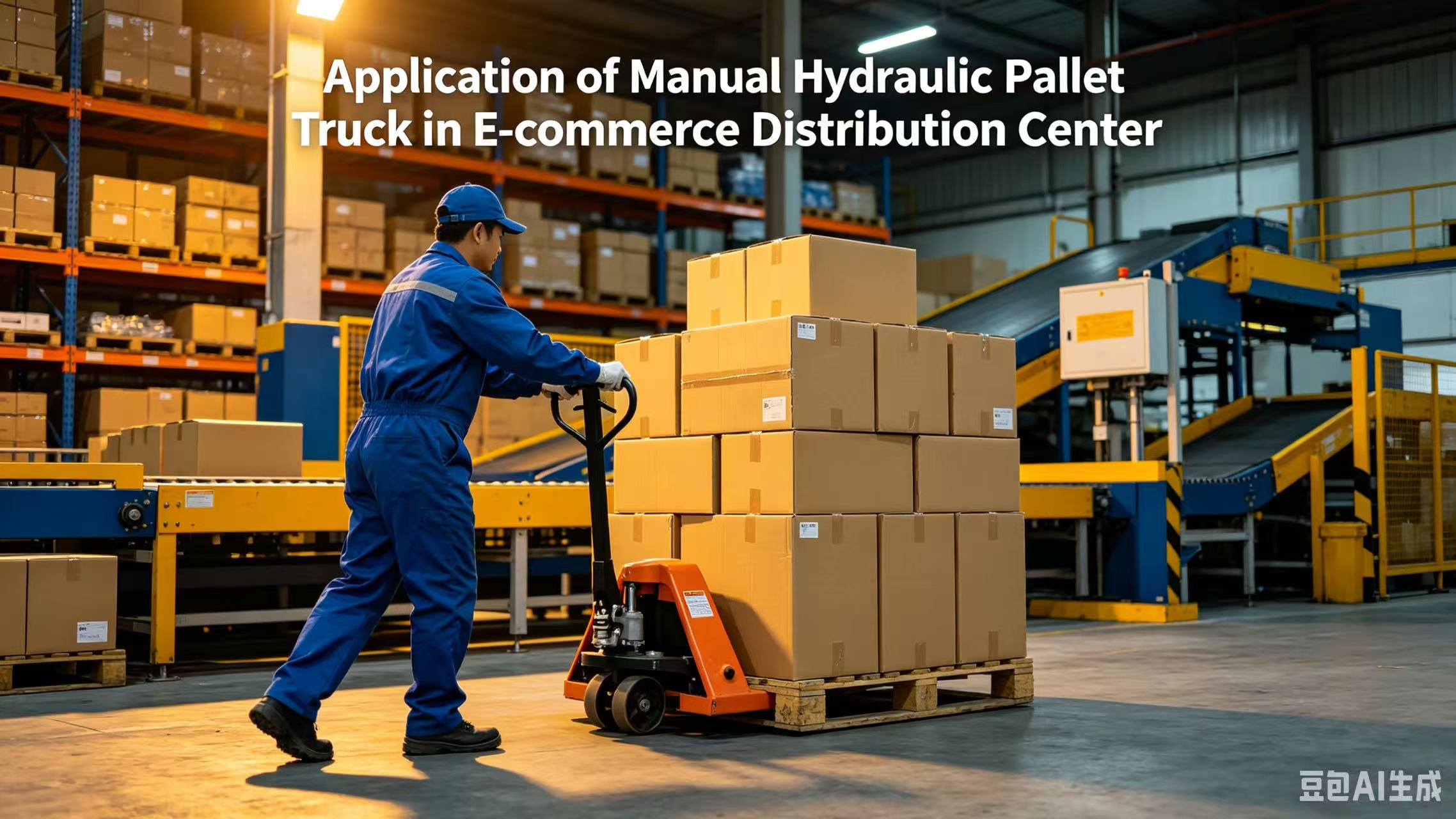
Manual hydraulic pallet truck in an e-commerce distribution center (application scene)
Why Facility Conditions Decide Pallet Jack Performance
Many procurement teams standardize on a single pallet jack model to simplify purchasing, yet operating conditions differ substantially between sites. In cold storage, low temperatures affect seals, hydraulic components, and wheel behavior, which can shorten service life when the unit has not been specified for low-temperature duty. In food and beverage plants, washdown routines and food residues accelerate corrosion on painted carbon steel, creating hygiene and maintenance concerns. In chemical and coating facilities, standard electrical components may not be permissible in explosion-risk zones. In hospitals, cleanrooms, and noise-sensitive facilities, operators increasingly request silent handling equipment.
These mismatches usually surface after deployment as unplanned downtime, part replacement, or re-purchasing. They also represent an opportunity for buyers. Defining the operating environment before comparing suppliers narrows the selection to pallet jack types that are genuinely fit for purpose, and it gives procurement teams a concrete basis for evaluating whether a supplier can deliver specialized configurations rather than standard models only.
Environment-Matched Pallet Jacks: The AC30 Series from JUNYUNHOIST
Baoding Junyun Hoisting Machinery Co., Ltd., operating as JUNYUNHOIST, is a manufacturer and trading company in the material handling equipment sector. Established in 2018 and headquartered in Donglu Village, Qingyuan District, Baoding City, Hebei Province, China, the company produces hand pallet trucks, pallet jacks, manual and electric stackers, lift tables, galvanized and stainless steel pallet trucks, pallet trucks with scale, and electric pallet trucks. JUNYUNHOIST reports an annual output of 70,000 units, an R&D team of eight, and an export ratio of approximately 80%, with main markets including India, Russia, Vietnam, Brazil, Türkiye, and the United Arab Emirates.
For project-driven procurement, the AC30 series operates as a product family rather than a single SKU. The series includes semi-electric pallet trucks, full electric pallet trucks, pallet trucks with integrated scales, and galvanized or stainless steel pallet trucks. According to product documentation, the series is used in manufacturing, food and beverage, pharmaceuticals, chemical, and electronics industries, and specialized models are available for cold storage, explosion-proof, and other special working conditions.
JUNYUNHOIST supports OEM/ODM production with a monthly capacity of 10,000 units and a lead time of 15–20 days. The minimum order quantity is 24 pieces, and every unit is subject to 100% testing before shipment. Each shipped container is equipped with free spare parts for wear-and-tear components, replenished as needed based on subsequent wear.
Pallet Jack Specifications That Determine Site Fit
Environment fit is determined by a small set of pallet jack specifications: fork geometry, lift range, turning radius, wheel material, and frame finish. The AC30 series parameters are as follows:
| Minimum fork height | 80 mm |
| Maximum fork height | 200 mm |
| Turning radius after capture | 1500 mm |
| Fork widths | 550 mm / 685 mm |
| Fork lengths | 800 / 1150 / 1220 / 1500 / 1800 / 2000 mm |
| Wheel options | PU, Nylon, PP, Rubber |
| Frame material | Steel (carbon, galvanized, or stainless finish per variant) |
Note: "Turning radius after capture" refers to the space required for the loaded truck to turn, a key dimension for narrow-aisle planning.
The minimum fork height of 80 mm determines whether forks can enter under pallets with low bottom boards. For lower clearance, JUNYUNHOIST offers low-profile configurations with minimum lifting heights of 35 mm and 62 mm. Fork width of 550 mm or 685 mm, combined with fork lengths from 800 mm to 2000 mm, allows matching to pallet footprint and load overhang. Wheel material influences floor protection, rolling resistance, and behavior on wet or low-temperature surfaces. Frame finish determines corrosion resistance: galvanized and stainless steel variants address washdown, humidity, and food-contact environments.
Customization options extend to fork length and width, minimum lifting height, fork steel plate thickness, electric drive, galvanized or stainless steel finish, and integrated weighing scales. The same platform can therefore be specified for a dry warehouse, a refrigerated food facility, or a factory floor without switching product families.
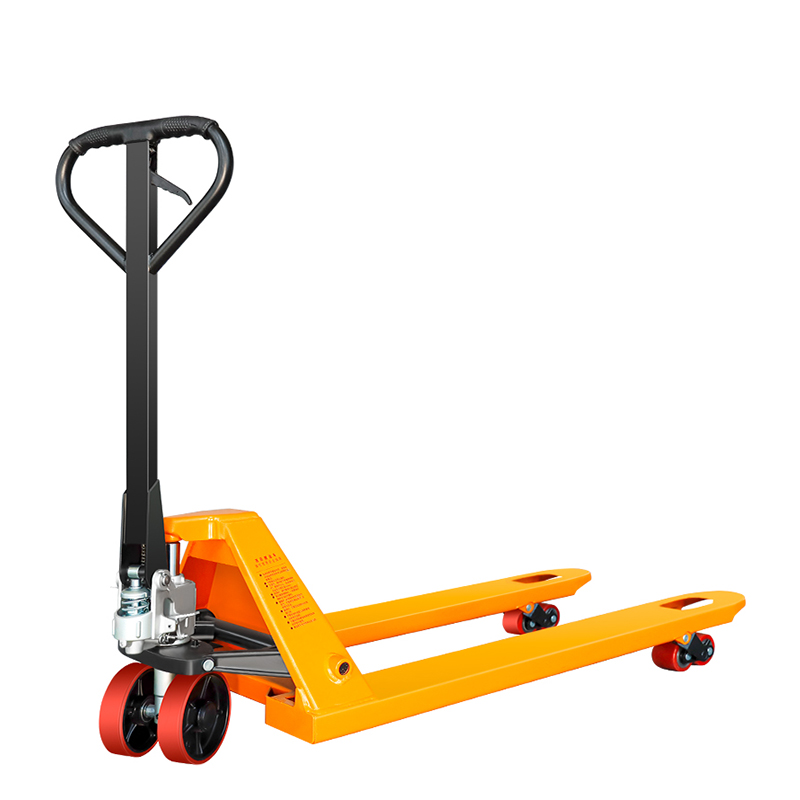
AC30 pallet jack series (product reference)
Matching Pallet Jacks to Common Industrial Environments
The AC30 series is documented for warehouses, factory floors, loading docks, retail backrooms, distribution centers, cold storage, construction sites, workshops, truck loading and unloading, and cross-docking facilities. Standard models suit general warehouse and factory environments with temperature, humidity, and altitude within standard ranges; specialized models cover cold storage and explosion-proof working conditions, with application requirements commonly including explosion-proof, cold-resistant, and silent operation.
Typical project profiles include the following:
Warehouse and logistics centers
Manual units with PU wheels and standard fork lengths support pallet flow, order picking, and truck loading. In logistics projects, the pallet jack functions as a unitized transport carrier and execution terminal: it lifts and moves goods over short distances on flat surfaces by inserting forks into the bottom of the pallet, relying on manual pushing and pulling, electric drive, or automated navigation. A documented application places this configuration in an e-commerce distribution center.
Cold storage and cold chain facilities
Cold-resistant configurations address low-temperature performance of seals, hydraulics, and wheels. The series is documented for fresh food distribution cold chain warehouses, and specialized models are available for cold storage working conditions.
Food and beverage processing plants
Galvanized and stainless steel variants, combined with steel plate thickness options, support washdown routines and corrosion resistance. The series is documented for the food and beverage industry.
Factory workshops and automotive plants
Heavy-duty steel frames and reinforced forks support repetitive parts movement between workstations. A documented application places the pallet truck in an auto parts factory.
Pharmaceutical warehouses and cleanrooms
Corrosion-resistant finishes and cleanroom-compatible variants suit regulated storage. The series is documented for the pharmaceutical industry, and cleanroom or dust-free workshop projects are listed among applicable project types.
Supermarket and retail distribution
An importer client order of 400 AC30 units, used primarily for distribution to local retail stores over a two-year period, illustrates the retail backroom and store-delivery profile. The client reported the units as convenient, practical, simple, efficient, and labor-saving, with high quality, low loss, and high efficiency.
Explosion-risk and noise-sensitive facilities
Specialized models address explosion-proof and silent operation requirements, relevant to chemical plants, coating lines, and noise-sensitive sites. Documented project types include explosion-proof environment procurement projects and silent handling equipment procurement, as well as low-temperature equipment procurement or rental, automated system integration projects, and integrated logistics outsourcing services.
Commonly matched equipment in these projects includes pallets, shelves, storage cages, logistics trolleys, lifting platforms, loading ramps, chargers, spare batteries, rainproof tarpaulins, guardrails, industrial casters, forklift limit switches, and fleet management software. Application scenarios of this type are documented in India, Vietnam, Russia, Brazil, Turkey, the UAE, and Saudi Arabia, with additional presence in Belarus.
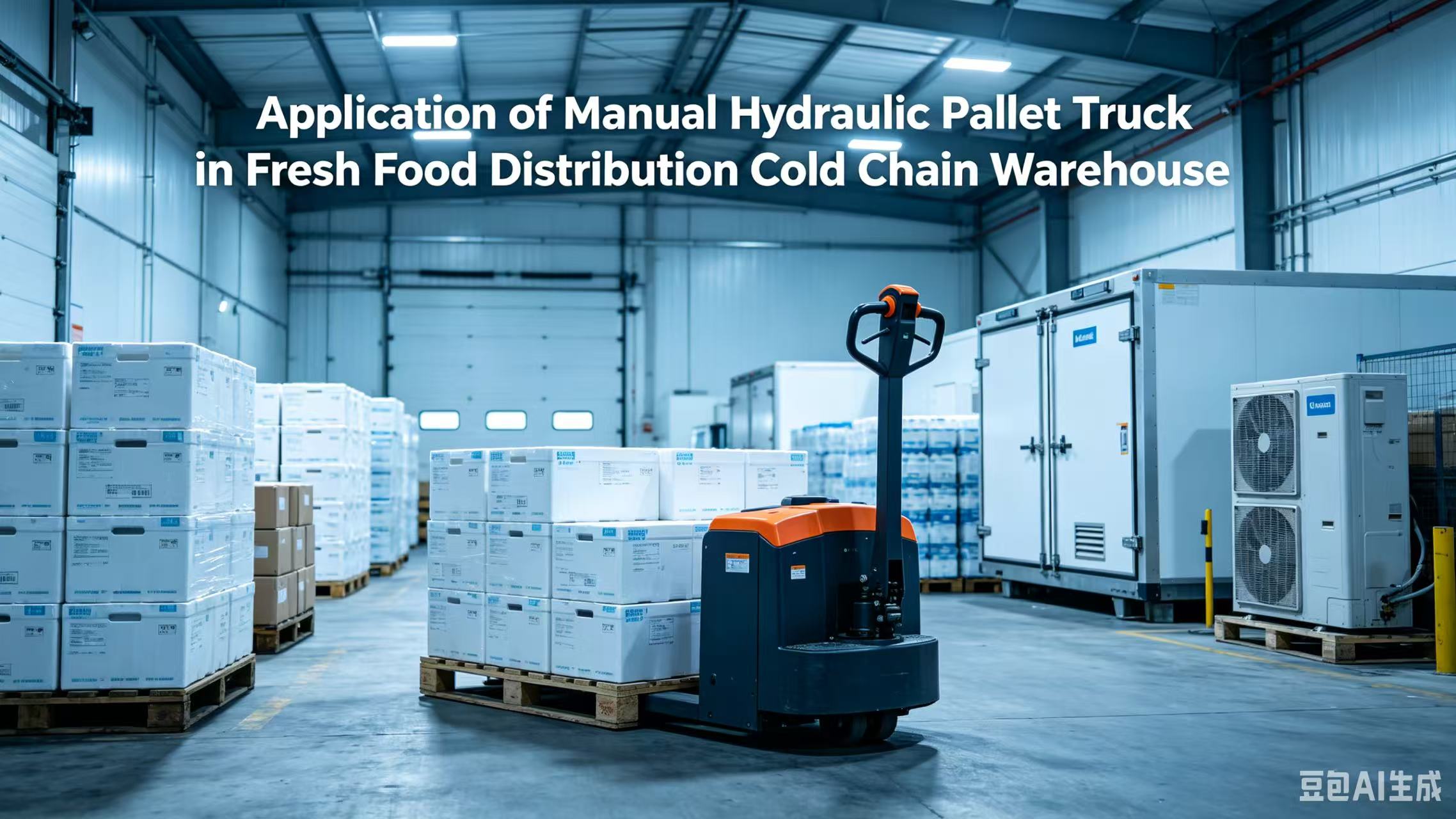
Manual hydraulic pallet truck in a fresh food distribution cold chain warehouse (application scene)
Market Context: Manual Pallet Jacks Remain the Workhorse
Third-party industry data indicates that the global pallet jack market was valued at approximately USD 7.4 billion in 2024 and is projected to reach USD 11.6 billion by 2034. Manual pallet jacks dominated the market in 2024 with revenue of USD 4.3 billion, despite the rise of automation. The electric pallet jack and stacker market was valued at USD 5.1 billion in 2024, driven by e-commerce and lithium-ion technology. Estimates vary across sources because of differences in segment scope, so buyers should treat any single market figure as directional. Leading global manufacturers include Toyota Material Handling, Jungheinrich AG, Crown Equipment, Hyster-Yale, and Mitsubishi Logisnext.
For procurement teams, these data points indicate that manual pallet jacks are not being displaced but supplemented. Standard manual units remain the most economical choice for short-distance horizontal transport in stable environments, while powered and specialized variants are added where labor cost, throughput, or environmental constraints require them. The result is a more differentiated product mix, which reinforces the value of specifying configurations per project rather than per catalog.
Specialized Configurations vs. Standard Off-the-Shelf Pallet Jacks
The traditional alternative to environment-matched pallet jacks is purchasing standard units from local distribution stock. This approach offers immediate availability, simple replacement, and minimal upfront decision cost, and it remains appropriate for dry, stable environments with standard pallets and moderate duty cycles. Its limitation appears when site conditions deviate from the standard: cold stores, washdown areas, narrow aisles, and explosion-risk zones can push a generic unit into frequent maintenance or early replacement.
Environment-matched configurations from a manufacturer such as JUNYUNHOIST address those deviations through material choices (galvanized or stainless steel), dimensional customization (fork length, fork width, low-profile heights of 35 mm and 62 mm), and special-purpose models (cold storage and explosion-proof). A documented importer client that ordered 400 units for local store distribution over a two-year period reported high quality, low loss, and high efficiency as the main highlights.
The trade-off should be stated plainly. Customization and specialized builds involve manufacturer lead times—JUNYUNHOIST quotes 15–20 days—and a minimum order quantity of 24 pieces, with 100% testing before shipment. Buyers who need a single replacement unit immediately may find local stock more practical, while buyers running a fleet rollout or a dedicated facility project are more likely to benefit from the configured approach. JUNYUNHOIST also equips each container with free spare parts for wear-and-tear items, replenished as needed based on subsequent wear, which supports long-run maintenance cost control.
Outlook for Project-Level Pallet Jack Procurement
Project-level pallet jack procurement is likely to become more configuration-driven. The projected growth of the overall pallet jack market, the continued revenue dominance of manual units in 2024 data, and the expansion of the electric segment all point to a market where the same basic tool is adapted to more diverse operating conditions rather than replaced by a single technology.
Regulatory frameworks support this direction. ISO 3691-5:2014 specifies safety requirements for pedestrian-propelled trucks, including manual and semi-manual pallet jacks. In Europe, hand pallet trucks fall under EN 1757-2, covering safety requirements for trucks with capacities up to 2,000 kg. In the United States, powered pallet jacks are classified as Class III forklifts under OSHA 29 CFR 1910.178 and require formal operator training. Buyers managing international projects can use these standards as a compliance checklist when asking suppliers to document the safety and performance basis of their configurations.
The AC30 series' combination of manual, semi-electric, full electric, weighing, galvanized, and stainless steel variants—documented for cold storage and explosion-proof working conditions across multiple industries—illustrates how a single product platform can serve multiple project environments. For buyers, the practical takeaway is to bring site conditions and compliance frameworks into the supplier conversation during the research phase, so that the evaluation phase compares configurations on an equal basis.
Supplier reference — Buyers evaluating pallet jack configurations for a specific facility project can review the company brochure and product documentation from Baoding Junyun Hoisting Machinery Co., Ltd. (JUNYUNHOIST): Download the company brochure (PDF).
Website: www.junyunhoist.com | Email: Junyunsteven@163.com | Tel / WhatsApp: +86 134-8345-2631
Address: Donglu Village, Qingyuan District, Baoding City, Hebei Province, China
Frequently Asked Questions
Q1: What is the most important factor when selecting a pallet jack for a specific facility?
The operating environment is the primary selection factor. Standard pallet jacks are suitable for general warehouse and factory floor environments with temperature, humidity, and altitude within standard ranges; specialized models are available for cold storage, explosion-proof, and other special working conditions. Fork dimensions, lift height, wheel material, and frame finish should then be matched to the pallet type, floor surface, and hygiene or safety requirements of the site.
Q2: Which pallet jack configuration is recommended for cold storage environments?
Cold storage facilities require cold-resistant configurations. The AC30 series from JUNYUNHOIST is available in specialized models for cold storage working conditions, with galvanized and stainless steel pallet truck variants and wheel options including PU, nylon, PP, and rubber. Buyers should confirm that seals, hydraulic components, wheels, and lubricants are rated for the operating temperature of the facility.
Q3: What pallet jack features are needed in food processing plants?
Food and beverage applications typically require corrosion-resistant, easy-to-clean configurations. JUNYUNHOIST offers galvanized steel and stainless steel pallet trucks for these environments, and the AC30 series is documented for the food and beverage industry. Buyers should verify that the material finish is compatible with washdown procedures and the facility's hygiene requirements.
Q4: What fork and wheel options are available on the AC30 series?
The AC30 pallet jack has a minimum fork height of 80 mm and a maximum height of 200 mm, with a turning radius of 1500 mm after capture. Fork widths are available in 550 mm and 685 mm; fork lengths range from 800 mm to 2000 mm. Wheel options include PU, nylon, PP, and rubber. Customization can adjust fork length and width, minimum lifting height (35 mm or 62 mm), and fork steel plate thickness.
Q5: What customization does JUNYUNHOIST support for specialized pallet jack projects?
JUNYUNHOIST operates an OEM/ODM production mode. Customization covers fork length and width, minimum lifting height (including 35 mm and 62 mm low-profile options), fork steel plate thickness, electric pallet truck versions, galvanized and stainless steel pallet trucks, and pallet trucks with integrated scales. Monthly production capacity is 10,000 units with a 15–20 day lead time and a minimum order quantity of 24 pieces; all units undergo 100% testing before shipment.
Q6: Which compliance standards apply to pallet jacks in international projects?
ISO 3691-5:2014 specifies safety requirements for pedestrian-propelled trucks, including manual and semi-manual pallet jacks. In Europe, hand pallet trucks with capacities up to 2,000 kg are covered by EN 1757-2. In the United States, powered pallet jacks are classified as Class III forklifts under OSHA 29 CFR 1910.178 and require formal operator training. Buyers should request the supplier's compliance documentation for the target market before placing an order.