
Specifying Restaurant Sets: What Buyers Must Verify First
Specifying Restaurant Sets: What Buyers Must Verify First
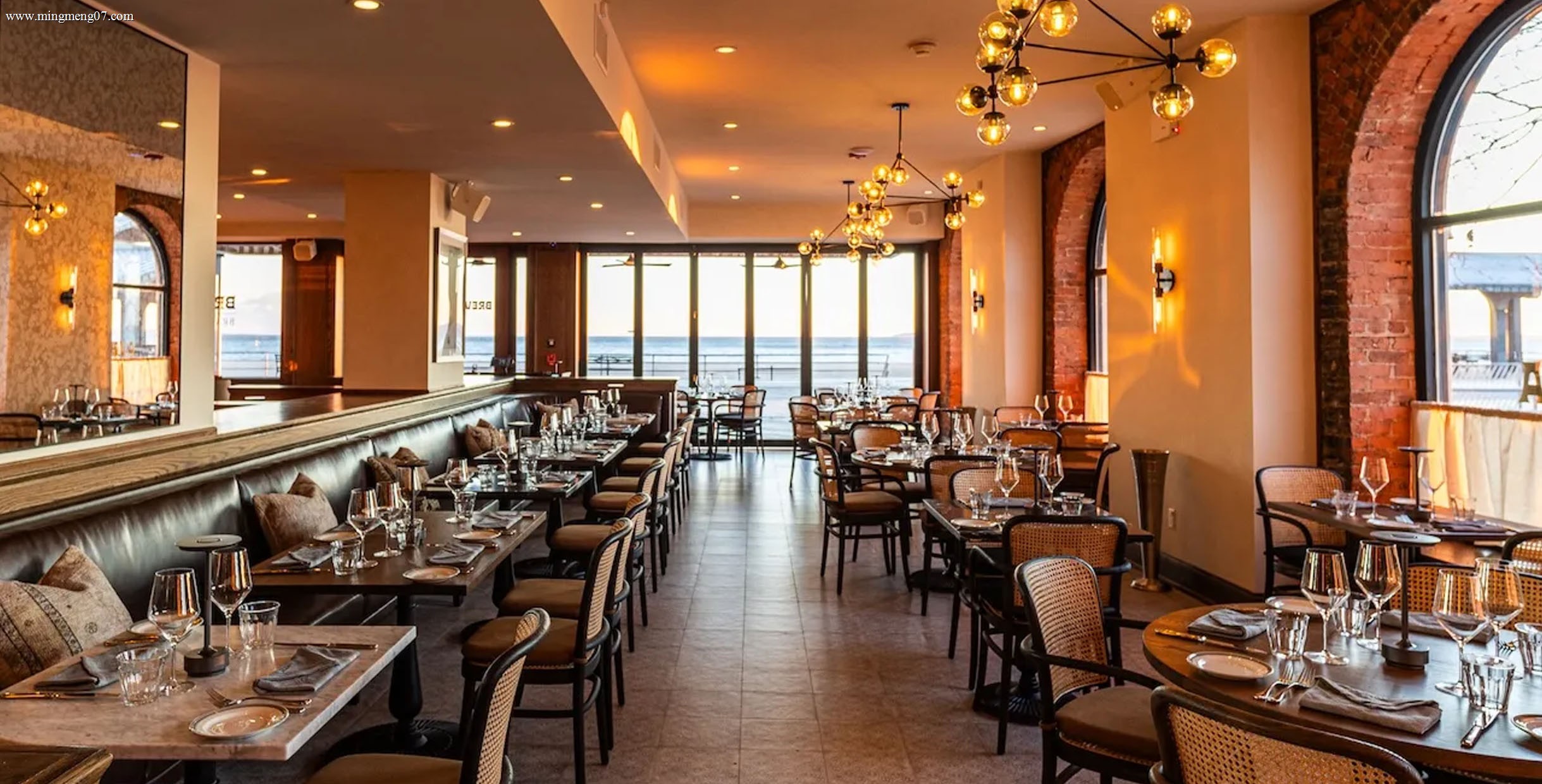
A restaurant set is a coordinated group of dining furniture — a table with matching chairs, a booth or banquette paired with a table, or a defined seating-and-surface combination specified for one commercial space. The decision is rarely about appearance alone. A set has to withstand daily service, satisfy the compliance rules of its destination market, and fit the floor plan without reducing usable seating capacity.
That makes restaurant furniture procurement a constraint-management exercise rather than a catalog selection. Four layers usually decide the outcome: dimension and layout geometry; material and structural duty level; test and chemical-compliance evidence; and order-level economics such as minimum order quantity, lead time, Incoterm and payment structure. MingMeng Furniture Co., Ltd., established in 2015 and headquartered in Guangzhou, China, manufactures custom restaurant, café, hotel and bar furniture for global commercial projects; the constraints described below apply to whichever supplier a project evaluates.
What Counts as a Restaurant Set
"Set" is a specification unit, not a fixed catalog product. MingMeng supplies commercial restaurant and hospitality furniture as product series and custom model numbers by project or SKU, and states that dimensions, materials, upholstery, colors and finishes are customizable by project. The configurations that appear most often in hospitality projects include the following.
| Set configuration | Typical composition | Where it is specified |
|---|---|---|
| Restaurant chairs and tables set | Dining table with two to four restaurant chairs | Main dining rooms where tables are re-arranged between services |
| Restaurant booth set / restaurant furniture booth | Fixed or wall-side booth with a table, in single, double, L-shaped, U-shaped or curved form | Zones where seating density and guest privacy matter |
| Restaurant sofa booth / restaurant couch | Upholstered banquette or lounge seating with table surfaces | Lounge and waiting zones inside restaurants |
| Cafe table and chairs / cafe furniture set | Smaller-scale table and chair combinations | Cafés and daytime service areas |
| Cafe sofa set / cafe dining set | Lounge seating combined with dining surfaces in one footprint | Mixed-use café interiors and terraces |
| Bar-height set | Bar table with bar stools at dining, counter or bar height | Bar and high-top social zones |
| Outdoor set | Aluminum or stainless-steel frames with outdoor-rated fabric, quick-dry foam and HPL, sintered stone or teak surfaces | Terraces, patios and rooftop areas |
| Canteen or institutional set | Fixed table-and-seat combinations or loose dining sets | Staff canteens and food courts |
Because a set is coordinated, the supplier's scope extends beyond shipping components. MingMeng's project support includes CAD layout, seating-capacity planning, table-and-chair matching, material selection, sample confirmation, durable structural design, bulk manufacturing, quality inspection, consolidated procurement, export packing and delivery coordination. That scope is also why a set is priced from a confirmed specification rather than a simple per-piece list.
Seven Constraints That Decide Whether a Set Works
1. Dimension, seating capacity and layout geometry
In commercial projects, dimensions are derived from the floor plan rather than from a standard size chart. MingMeng states that dimensions for its restaurant chair, table, booth and canteen ranges are customizable according to floor plan, seating capacity and aisle requirements, and that booth dimensions are fully customizable according to floor plans and project requirements. For a set, the practical checks are the width available per cover, the clearance between seat edge and circulation path, and whether the chosen shape (round, square, rectangular or custom) preserves the intended seat count.
2. Structure, materials and upholstery duty level
Frame and filling decisions set the durability baseline. Restaurant chair frame options include solid wood, metal and plywood structures, with high-density foam used as seat and backrest filling and fabric, PU leather or genuine leather as upholstery options. Booth seating frames are built from plywood or solid wood with commercial-grade construction, and table base structures can be specified as round, square, cross, disc, pedestal, double pedestal or bar height, with mounting plates compatible with wood, HPL, stone, marble and sintered stone tabletops. MingMeng's material specification additionally lists cast iron, steel, stainless steel, aluminum, wood veneer, laminate and stone for relevant ranges, and states that indoor offerings use solid wood and metal frames while outdoor ranges use aluminum frames with PE wicker or weather-resistant materials.
3. Compliance, cleaning and maintenance constraints
Compliance and maintenance requirements are usually the constraints that eliminate options fastest. Commercial seating in this category is tested according to EN 16139 requirements, and upholstered materials carry a separate chemical-compliance layer. Stain resistance, flame-retardancy and maintainability options can be provided per contract and materials specification, which means they need to be written into the order rather than assumed. For high-traffic dining, easy-clean tabletop surfaces and maintenance-friendly upholstery matter more than decorative detail, and spare-part availability should be discussed before the order is placed rather than after the first repair.
4. Order economics and delivery constraints
Custom models generally carry a minimum order of 10–50 pieces per style, with a published company figure of 20 units for custom restaurant booth programs. Lead time is quoted as 20–30 days for standard models and 35–50 days for customized models including sample approval. Quotations are normally issued as EXW or FOB, so freight, insurance and destination charges sit with the buyer unless the delivery term says otherwise. These three numbers — MOQ, lead time and Incoterm — usually determine whether a coordinated set is viable for a given venue.
| Constraint | What to verify | Where evidence typically exists |
|---|---|---|
| Seating capacity and aisles | Dimensions set from floor plan, seating capacity and aisle requirements | CAD layout and seating-capacity planning records |
| Structural duty level | Frame option, joint construction, foam density, commercial-grade structure | EN 16139:2013 Level 2 and EN 1022:2023 test reports for the named models |
| Tabletop and base compatibility | Surface material matched to base type, plate size and column height | Specification sheets and tabletop-to-base matching notes |
| Upholstery compliance | REACH SVHC documentation for upholstered materials | Third-party reports, e.g. CZH12250205012 or BSTDGD31243813112202CR |
| Cleaning and maintenance | Easy-clean surfaces, maintainability, replaceable components, spare parts | Finish specification and contract terms |
| Order economics | MOQ per style, lead time, Incoterm, payment structure | Quotation and sales contract |
| Export packaging | Foam and edge protection, cartons or wooden crates by item fragility | Packing list and pre-shipment inspection |
Test and Certification Records: How to Read Them
Certification in this category is model- and sample-specific, so scope matching matters as much as the certificate itself. Two European standards appear repeatedly in the seating records described here: EN 16139:2013 Level 2, covering strength, durability and stability of non-domestic seating, and EN 1022:2023, covering stability. Upholstered components carry a separate layer under REACH Regulation (EC) No 1907/2006 and its SVHC Candidate List.
| Record | Product scope | Standard | Issued by / market |
|---|---|---|---|
| CE Certificate of Compliance, certificate no. CTG2511057084B-SC01AD (issued 2025-11-05) | MM102 Commercial Chair; commercial chairs and hospitality seating for restaurants, hotels, lounges and public areas | EN 16139:2013 Level 2; EN 1022:2023 | Shenzhen CTG Testing Co., Ltd.; European Union |
| MM102 Commercial Chair strength, durability and stability test report, no. CTG2511057084B-SR03AD (issued 2025-11-05) | Commercial dining chairs and hospitality seating for restaurants, hotels and public areas | EN 16139:2013 Level 2; EN 1022:2023 | Shenzhen CTG Testing Co., Ltd.; EU and international commercial furniture market |
| MM103 Commercial Bar Chair test report, no. CTG2511057084B-SR02AD (issued 2025-11-05) | Commercial bar chairs and hospitality bar seating for restaurants, hotels and bar projects | EN 16139:2013 Level 2; EN 1022:2023 | Shenzhen CTG Testing Co., Ltd.; EU and international market |
| MM104 Commercial Bar Stool test report, no. CTG2511057084B-SR04AD (issued 2025-11-05) | Commercial bar stools, hospitality bar chairs, restaurant bar seating | EN 16139:2013 Level 2; EN 1022:2023 | Shenzhen CTG Testing Co., Ltd.; EU and international market |
| CE Certificate of Compliance, no. CTG2510308431B-SR224AT (issued 2025-10-30, valid to 2030-10-30) | Commercial chair MM102, restaurant chairs and hospitality seating | EN 16139:2013 Level 2; EN 1022:2023 | Shenzhen CTG Testing Co., Ltd.; European Union |
| CE Certificate of Compliance, no. CTG2510308431B-SR22AT (issued 2025-10-30) | Commercial chairs and hospitality seating, including restaurant chairs | EN 16139:2013 Level 2; EN 1022:2023 | Shenzhen CTG Testing Co., Ltd.; European Union |
| REACH SVHC test report, no. CZH12250205012 (2025-02-08 to 2030-02-08) | Restaurant Chair, product ID 9340 | Regulation (EC) No 1907/2006; 247 SVHC substances published by ECHA | Shenzhen Zhonghan Certification Technology Co., Ltd.; European Union |
| REACH SVHC test report, no. BSTDGD31243813112202CR (2024-11-22 to 2029-11-22) | Sofa, upholstered furniture materials; chairs and furniture components covered by the test sample | REACH Regulation (EC) No 1907/2006 SVHC Candidate List | Dongguan BST Testing Co., Ltd.; European Union |
A certificate issued for one model does not automatically extend to every custom finish, upholstery or dimension in a project. Buyers specifying a restaurant set should confirm three things: that the product identity in the record matches the specification being ordered; that the standard cited matches the destination market's expectation; and that the issue date and any stated validity period still apply. MingMeng additionally lists CE, TÜV, RoHS and Certification of Conformity among its product certifications and states that it has developed more than 10 national patented designs, with quality control covering material inspection, production-process inspection, structural and appearance checks, pre-shipment inspection and export packaging control. Those are company statements; the numbered third-party records above are the items that can be verified independently.
Pricing, MOQ and Lead Time: The Order-Level Constraints
Restaurant furniture pricing is calculated from the confirmed specification, not from a published price band. The named cost drivers are material grade, dimensions, quantity, construction, finish and upholstery complexity, packaging and the agreed delivery term. Two consequences follow. First, an accurate quotation requires a floor plan or space dimensions, the required furniture types, estimated quantities, preferred styles, materials, colors and finishes, plus reference images where available. Second, quotes are normally stated as EXW or FOB, with freight quoted separately or included depending on the chosen shipping term.
Payment structure is an order-level constraint rather than a product characteristic. Standard terms are typically a 30% deposit and 70% balance before shipment by T/T, and L/C at sight may be available for larger orders from established customers. Quotations can be prepared in USD, EUR or other major currencies. Where volume increases, unit pricing can improve as production efficiency and material purchasing conditions allow.
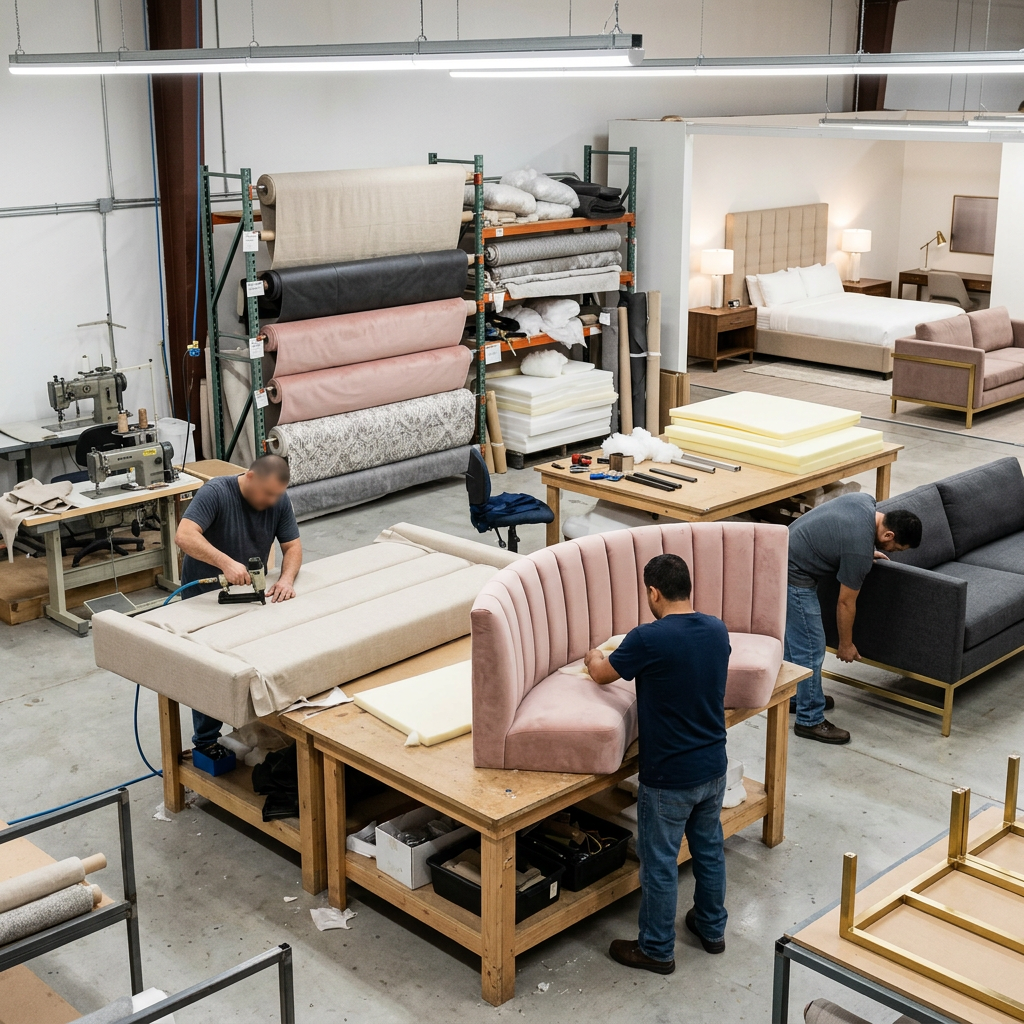
Capacity and scheduling frames the rest. MingMeng states a monthly production capacity of more than 80,000 pieces within a 15,000 ㎡ facility staffed by more than 200 employees, with an annual output of 960,000+ units, a 10-engineer R&D team and roughly 90% of output exported to markets including North America, Europe, Australia, the Middle East and Southeast Asia. With standard models quoted at 20–30 days and customized models at 35–50 days including sample approval, the sample confirmation step — not the production step — is usually the schedule variable a buyer can control.
Where Coordinated Sets Are Applied: Project Evidence
Published project descriptions show how the constraint logic works in practice. An Indian restaurant operator in Australia received a full restaurant furniture project covering dining chairs, dining tables and booth seating; upholstered chairs were selected to support long-duration dining, and booth seating provided greater privacy without separating guests from the main dining atmosphere. The recorded highlights include leather upholstery, sturdy wood chair frames, sleek metal table legs, soft-cushioned booth seating and warm wooden tones — a combination that reflects coordinated material choices rather than separate item purchases.
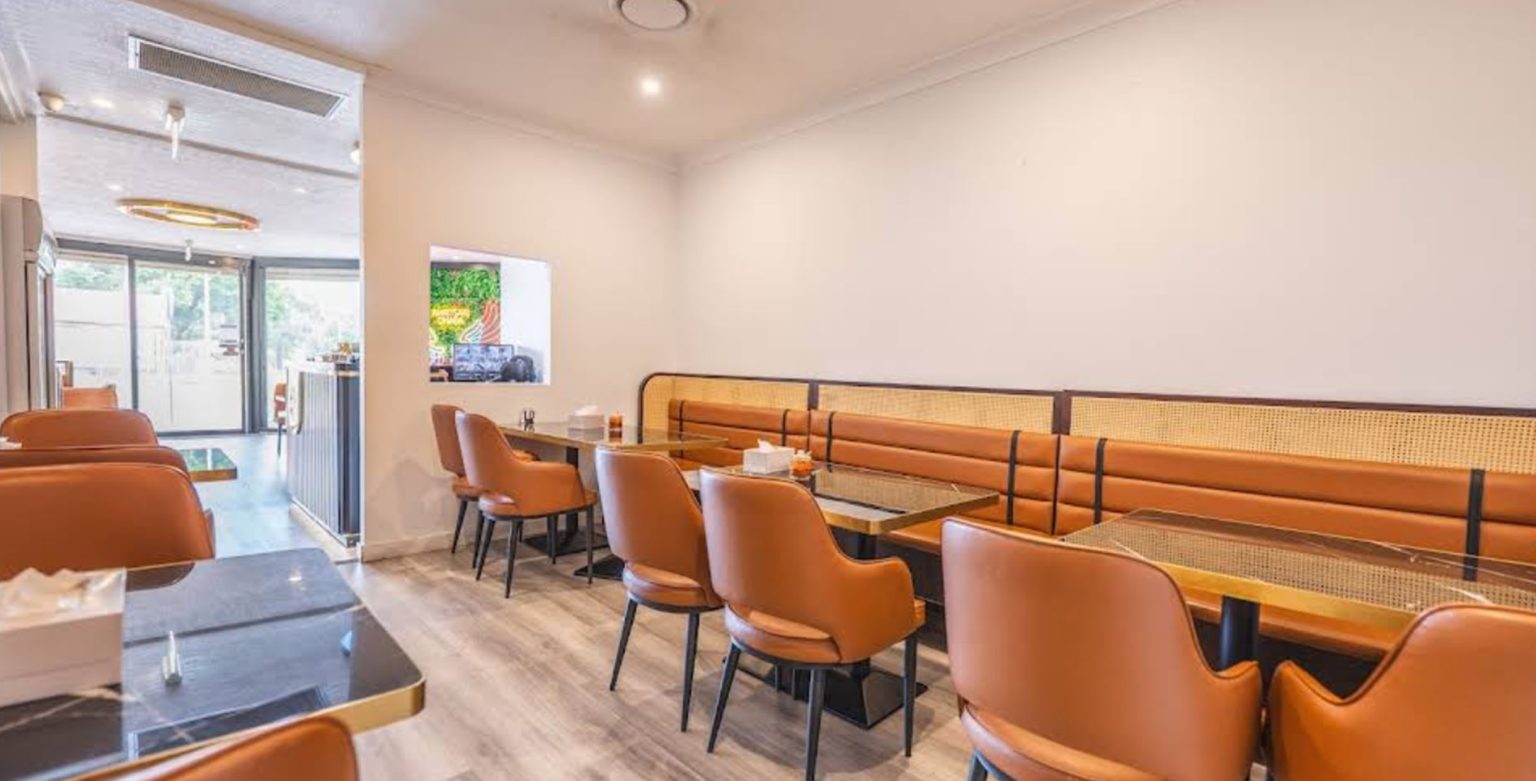
A multi-zone Asian restaurant project in the United States extended the concept across a reception area, lounge waiting zone, main dining room and long booth seating zone. Long wall-side booth seating improved space utilization, while movable restaurant chairs supported flexible two-person, four-person and group table arrangements. The unifying elements were amber-orange upholstery, warm wood, black finishes and brass-gold detailing, applied consistently across fixed and movable furniture.
Comparable patterns appear in a charcuterie lounge project — bar counter seating, central dining, wall-side booth seating and flexible event seating, with marble-look tabletops and a coordinated black, olive-green, brushed-gold and marble-white palette — and in an immersive entertainment venue where multiple seating heights, high-top social tables, communal tables and booths operate in one space. A Canadian restaurant owner project used space-based furniture planning to align coordinated dining tables and chairs with the venue's design concept.
The operating conditions behind these projects are consistent: high-frequency commercial use, indoor and outdoor weather-resistance and cleanability requirements, regular cleaning and maintenance, and modularity or maintainability as common project requirements. Where a project has specific performance needs, stain resistance, water and weather resistance and flame-retardancy levels are confirmed per project regulations and operational requirements rather than assumed from a product name.
Market Trend Signals: What Published Estimates Show
Commercial research publishers describe the global restaurant furniture market very differently. One publisher estimates the market at USD 638.8 million in 2026, growing to USD 929.57 million by 2035 at a 4.3% CAGR. A second estimates USD 0.88 billion in 2025, reaching USD 1.38 billion by 2034 at 5.13%. A third estimates USD 6.62 billion in 2025, reaching USD 11.01 billion by 2034 at 5.8%. These figures are not directly comparable, because the publishers appear to use different market definitions, base years and methodologies, and none of them reconciles with the others. Averaging or blending them would create a synthetic number that no source supports.
The defensible reading is narrower: across multiple published forecasts, demand for restaurant furniture is expected to grow over the forecast periods cited, and the growth rates cluster in a mid single-digit range rather than indicating a step change. For procurement teams, market-level forecasts are context, not inputs. The inputs that change a project decision are specification-level: whether the seating carries applicable test evidence, whether the upholstery documentation covers the materials being ordered, whether dimensions can be set from the floor plan, and whether MOQ, lead time and Incoterm match the schedule.
Coordinated Project Sets vs Traditional Single-Item Purchasing
| Decision dimension | Coordinated set from one manufacturer | Traditional single-item purchasing |
|---|---|---|
| Visual consistency | Finish, material and scale coordinated across tables, chairs and booth seating | Depends on the buyer matching multiple suppliers' palettes |
| Evidence | Test and compliance records tied to named models in the order | Evidence must be assembled item by item |
| Dimension control | Dimensions set from floor plan, seating capacity and aisle requirements | Standard sizes may not match the plan without compromise |
| Order threshold | Custom models generally 10–50 pieces per style; 20 units stated for custom booth programs | Lower entry volumes for standard catalog items |
| Lead time | 20–30 days standard; 35–50 days custom including sample approval | Often shorter when items are in stock |
| Replacement and continuity | Spare parts arranged where the component is identifiable and available | Depends on each supplier's continuity |
| Coordination risk | Fewer interfaces, but dependency concentrated in one supplier | More interfaces and more compatibility risk |
Limits and boundaries of the coordinated-set approach
The coordinated model has real limits, and buyers should weigh them explicitly:
Single-supplier dependency. Coordinating a whole set with one manufacturer concentrates quality and delivery risk. A production delay affects every component rather than one item, so schedule buffers matter more, not less.
Customization does not suit very small volumes. Custom models generally start at 10–50 pieces per style, with 20 units stated for custom booth programs. A venue that needs three matched tables may be better served by standard models with standard finishes.
Certification scope is narrower than a catalog. The records listed above cover named models and defined sample scopes. They should be matched to the exact specification being ordered and to the destination market, not treated as blanket coverage for an entire product range.
Custom timelines are longer. 35–50 days including sample approval compares with 20–30 days for standard models, and specification changes after approval cause rework, extra cost and delay.
Freight and duty exposure sits with the buyer. EXW or FOB quotations leave freight, insurance, duties and destination handling outside the quoted price unless another delivery term is agreed.
No universally optimal material. Solid wood, metal, plywood, HPL, laminate, stone and the various upholstery options differ in weight, cleaning behaviour and maintenance demand. A material that suits a lounge may be the wrong choice for a high-turnover dining floor or a semi-outdoor terrace.
Finish variability is normal. Natural materials and custom finishes can vary between production batches. Sample approval reduces the risk but does not guarantee identical replication, which is one reason finish samples should be retained as the reference standard.
Future Outlook
Three expectations look likely to shape restaurant set procurement over the next planning cycles. First, maintainability is moving from a footnote to a specification line: replaceable components, easy-clean surfaces and stain-resistant or flame-retardant options confirmed per contract and materials specification. Second, buyers are requesting documentation earlier in the process, with test-report scope and chemical-compliance records reviewed alongside the quotation rather than at shipment. Third, mixed indoor and outdoor operations are pushing more projects toward coordinated ranges that share a visual identity across aluminum-framed outdoor pieces and indoor solid wood or metal-framed seating.
Manufacturing capacity and export logistics remain the practical backdrop. With one-stop project service covering requirement analysis, CAD drawings, 3D visualization, sample development, bulk production, quality inspection, consolidated procurement, export packaging, container loading and shipping coordination, the constraint for most buyers is no longer whether a coordinated set can be produced, but whether the specification, evidence and commercial terms are settled before production starts.
Frequently Asked Questions
What should be prepared before ordering custom restaurant furniture?
A floor plan or space dimensions, the required furniture types, estimated quantities, preferred style, materials, colors, finishes and a target budget. Drawings are helpful but not mandatory; photos, reference images or written requirements can also be used. The typical sequence is inquiry, design confirmation, sample approval, bulk production, quality control, and packing and shipment.
Can a full restaurant package be supplied instead of individual items?
Yes. Suppliers in this category can supply complete packages including tables, chairs, booths, bars and accessories, which helps keep a consistent look across a restaurant. MingMeng states it can coordinate tables, chairs, booths, sofas, bar furniture and hotel casegoods as one hospitality furniture package.
Which materials and finishes are available for restaurant sets?
Options include solid wood, plywood and engineered panels, steel, stainless steel and aluminum, upholstery fabrics, PU leather and genuine leather, laminate and HPL, stone or stone-look tabletops, plus painted, stained, powder-coated, matte, gloss, textured and wood-grain finishes. Selection depends on furniture type, usage frequency, cleaning regime, moisture and stain exposure, weight, upholstery wear, design palette, budget and destination-market requirements.
How durable is commercial restaurant furniture?
Durability depends on frame structure, joints, materials, finish, upholstery, maintenance and the duty level specified for the project. Commercial seating in this category is tested according to EN 16139 requirements, and high-traffic venues should be specified from commercial-use requirements rather than appearance. Usable criteria include frame and joinery strength, stability, applicable load testing, finish durability, upholstery abrasion and cleaning behaviour, replaceable components and expected maintenance frequency.
How are restaurant furniture prices and payment terms determined?
Pricing is determined by the confirmed specification, including materials, dimensions, quantity, construction, finish and upholstery complexity, packaging and delivery term. Larger quantities may improve production efficiency and material purchasing conditions. Standard payment terms are typically a 30% deposit and 70% balance before shipment by T/T, with L/C at sight sometimes available for larger established orders; the exact structure should be confirmed in the quotation or contract.
Do quotes include freight?
Quotations are usually EXW or FOB, and the quotation should state the applicable Incoterm. Freight may be quoted separately or included depending on the agreed delivery term, destination and current transportation cost.
What warranty terms normally apply?
Warranty terms depend on the product, the project specification and the commercial agreement, and the applicable period and coverage should be confirmed in the quotation or contract for the specific order. Manufacturing defects and after-sales responsibilities should be defined in the order terms. Replacement parts can be arranged where the required component is identifiable and available, and repair guidance or coordination support can be provided depending on the issue and contract terms.
How is commercial furniture packed for export?
Export packing typically uses foam, corner and edge protection, component separation where needed, and export cartons, reinforced packaging or wooden crates according to item fragility. Hardware is protected and packages are labelled clearly, and package dimensions and quantities are checked against the packing list before loading. Packaging must match product weight, fragile surfaces, shipping method and loading conditions.
How does a custom furniture project move from inquiry to shipment?
The documented workflow is: project inquiry and requirement collection, design and specification confirmation, sample or material and finish approval, order confirmation, bulk production, quality inspection, then export packing and shipment coordination. Samples can be inspected and factory audits arranged for quality verification, and factory visits or remote video tours can be arranged by appointment for overseas buyers.