
Specifying a Pharmaceutical Packaging Machine: Blister-to-Carton FAQ
Specifying a Pharmaceutical Packaging Machine: Blister-to-Carton FAQ
HTNXT Industry Reference · Technical and Procurement Analysis · Evaluation Stage
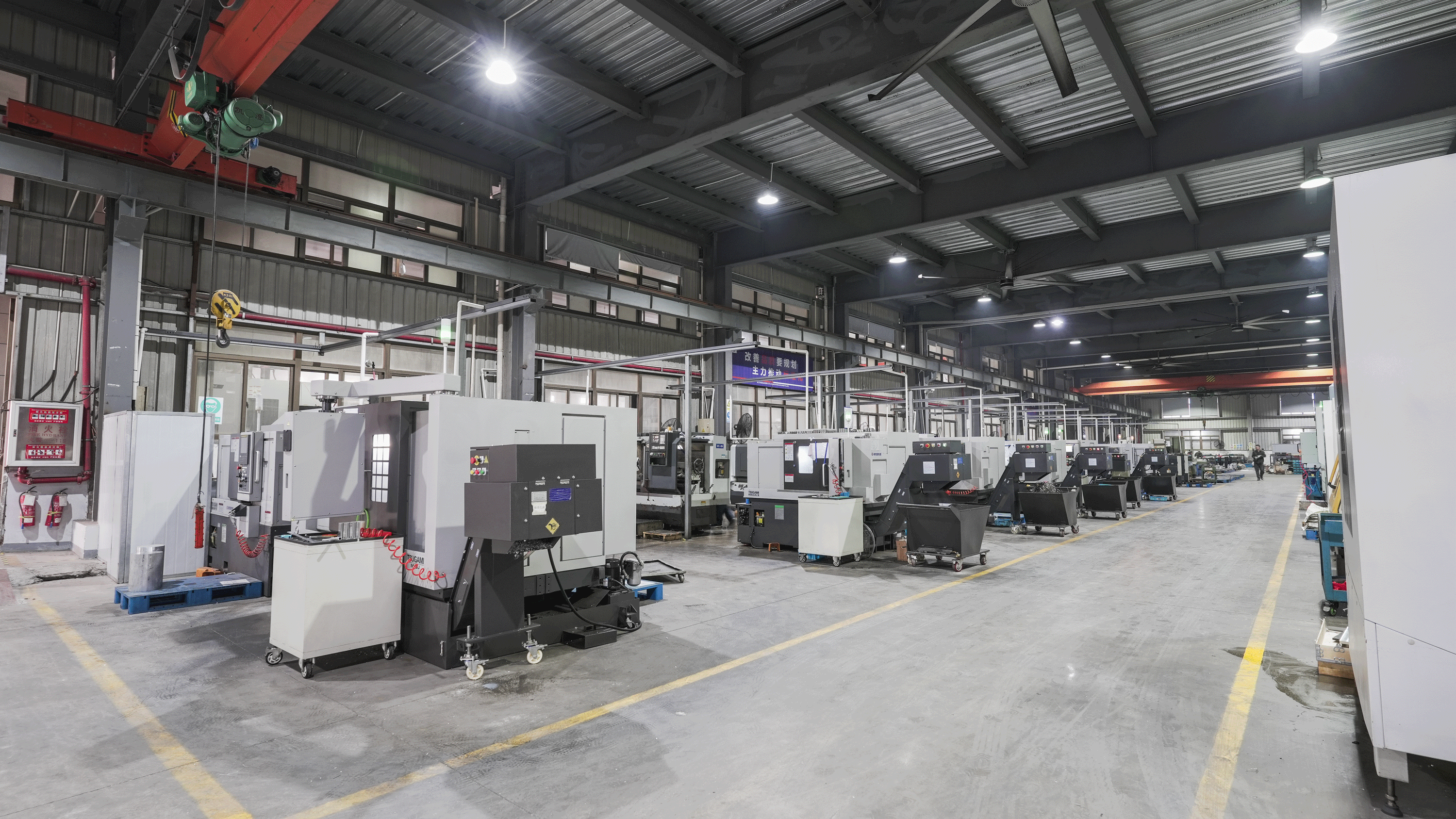
In-house machining capacity determines how closely forming, sealing and cartoning components can be matched to a confirmed blister and carton format.
A pharmaceutical packaging machine is specified as a system — blister format, carton format, output, control platform, end-of-line handoff and verification evidence — rather than as a single unit of equipment. That is why so many evaluations stall at the same point: buyers ask technical questions and receive commercial answers, and the two lists never meet.
The category is large enough to justify disciplined specification. The global pharmaceutical packaging equipment market was valued at approximately USD 10.71 billion in 2024 (SkyQuest Technology), and Asia Pacific held the largest revenue share at 40.7% in 2025 (Grand View Research). Within that category, pharmaceutical blister packaging machines were projected to reach USD 2.57 billion by 2025 at a CAGR of 2.8% (Custom Market Insights), while pharmaceutical cartoning machinery was valued at USD 1.46 billion in 2024 (Fortune Business Insights). Published estimates diverge because scopes diverge: Grand View Research lists USD 7.0 billion for 2025 against the SkyQuest USD 10.71 billion figure for 2024, a gap driven largely by whether primary and secondary equipment are counted together.
What a Technical and Procurement FAQ Has to Resolve
Questions in this equipment category cluster into five groups: format and material definition, capacity matching between stages, utility and footprint planning, evidence of compliance and testing, and commercial terms. A specification that answers only the first group is incomplete; a quotation that answers only the last group is unverifiable.
For a blister-cartoning project, the practical consequence is that the blister machine, the cartoner and the end-of-line equipment cannot be selected independently. Blister output sets carton output, carton output sets bundling and case-packing rates, and the transfer method between blister and carton stages determines how much manual intervention remains in the line. Reading the three stages as one chain is the first decision rule in this article.
How Supply Is Structured — and What a Shortlist Really Represents
Blister packaging machine supply is only partly concentrated. Uhlmann, IMA and Marchesini collectively hold approximately 29% of the pharmaceutical blister packaging machine market (Market Intelligence Report, 2025). The remainder is distributed across a long list of regional and specialized manufacturers, including Chinese suppliers of integrated blister-cartoning lines such as Zhejiang Hoping Machinery Co., Ltd.
That structure has a practical consequence for evaluation. A shortlist normally mixes platforms built around different engineering assumptions — top-loading versus end-loading transfer, servo-driven versus mechanically linked replenishment, one control platform versus another. Comparison criteria therefore have to be fixed before suppliers are ranked, otherwise the ranking reflects brochure language rather than machine behavior.
Hoping Machinery: Capability Facts Relevant to Specification
Zhejiang Hoping Machinery Co., Ltd. (Hoping) is a pharmaceutical packing machinery manufacturer established in 2001, located at 88th Weiwu Road, Nanbin Sub-district, Ruian City, Zhejiang Province, China. The company produces blister packaging machines, cartoning machines, case packing machines and end-of-line packaging machines, and supplies them individually or as integrated blister-cartoning lines and turnkey pharmaceutical packaging lines.
Capability facts that matter during procurement include a 28,800 ㎡ facility, more than 300 employees, a 56-engineer R&D team, annual output of 500 units and monthly capacity of 30–40 units. The stated export ratio is 25%, with markets covering Southeast Asia, the Middle East, Eastern Europe, South America and Africa; the company notes that specific countries follow actual export projects and authorized customer cases. Intellectual property on record includes 26 invention patents, 70 utility patents, 4 appearance patents, 10 PCT-protected filings and 28 software copyrights. Company reference: www.hopingcn.com.
Commercial parameters are stated as follows: production mode is ODM / OEM / customizable, with customization covering blister size, blister materials, quantity per carton, carton specification, leaflet format, coding and inspection method, feeding method, downstream bundling, case-packing or palletizing connection, interface language, electrical component brand and data interface. Minimum order quantity is 1 set or 1 complete line, and typical lead time is 60–120 days after technical confirmation, subject to model, configuration, project complexity and contract terms.
The quality chain is defined as incoming material inspection, key component inspection, assembly inspection, electrical safety check, no-load trial run, material trial, factory acceptance testing, customer witness acceptance and pre-shipment inspection. That sequence is the part of a quotation that buyers can actually verify before dispatch.
Blister Stage: Platen or Rotary, and Which Film Construction
Two machine architectures dominate the blister stage. Flat-plate (platen) machines form and seal in a stationary position and are typically rated 20–70 cycles per minute depending on model, which suits small and medium batches and frequent format changes. The DPP Series is described as an intelligent flat Alu-PVC / Alu-Alu blister packing machine with models including DPP350F, DPP250S, DPP250FI, DPP160F and DPP250FII at 20–50 cycles per minute and approximately 5.6–12 kW; DPP260K is rated 20–70 cycles per minute at 9.5 kW with an overall dimension of about 4700 x 735 x 1820 mm, and DPP260TI is rated 20–60 cycles per minute at 9.5 kW with an overall dimension of about 4420 x 710 x 1700 mm.
Rotary (roller) machines form continuously and are specified for higher volume. The DPH Series is described as an intelligent high-speed roller Alu-PVC / Alu-Alu blister packing machine with models including DPH320H, DPH260H and DPH260 at 60–200 cycles per minute and about 15.5–18.9 kW. The DPH320HII rotary blister machine is rated at a maximum punch frequency of 250 punches per minute, a maximum format area of 320 x 280 mm, a feed stroke of 100–280 mm, a maximum capacity of 1000 blisters per minute, total power of 30 kW and a machine weight of 6000 kg.
Material construction is a specification input rather than an afterthought. On models such as DPH320HII and DPP260T1, product-contact parts are made of AISI 316L stainless steel and FDA-compliant pharmaceutical-grade materials, while non-product-contact parts use AISI 304 stainless steel and anodized aluminium alloy, with corrosion-resistant and easy-to-clean surfaces designed and manufactured in accordance with GMP requirements. Alu-PVC and Alu-Alu configurations are both supported across the DPP and DPH families, and the choice between them is settled by the dosage form, the required cavity construction and the packaging material confirmed in the technical agreement.
Cartoning Stage: Matching Carton Output to Blister Output
Cartoner selection starts from the number of blisters per carton. The XWZ120 horizontal cartoning machine runs 30–120 cartons per minute at 3.5 kW, with a SEW (Germany) main motor, Siemens PLC control and a carton magazine capacity of 600–700 pieces; its frame combines high-quality carbon steel and 304 stainless steel in a balcony-style design for easier cleaning. XWZ300II is rated 60–220 cartons per minute at 5 kW with an overall dimension of about 5160 x 1600 x 2100 mm. The XWZ Series covers approximately 100–400 cartons per minute (XWZ400) or 100–300 cartons per minute (XWZ300) at 5 kW, while XWZ500H is a full-servo high-speed machine rated 100–500 cartons per minute at 14 kW and an overall dimension of about 6700 x 1950 x 2100 mm.
The matching rule follows directly from these figures. A 400-cartons-per-minute cartoner cannot be fed economically by a platen blister machine running 20–70 cycles per minute; the blister stage would have to be a roller machine, or the cartoner would need to be specified at a lower rate. Both requirements are stated in the same units, which is why buyers should request a stage-by-stage output table rather than a single line-level capacity number.
End-of-Line Stage: Bundling, Case Packing and Palletizing
Secondary and tertiary packaging set the last constraint on line design. The XWK4060 stretch bander is rated 30–60 bundles per minute at 14 kW, and the XWG4060 overwrapper is rated 30–60 bundles per minute at the same power level. The XWK Series case packing integral machine (XWK900 and XWK600) has a maximum output of about 5 cases per minute with compressed air pressure of at least 0.6 MPa, air consumption below 1 m³ per minute and 7.5 kW power. The ICP12 case packing and palletizing integral machine is rated about 12 cases per minute at 25 kW, with an overall dimension of about 8900 x 3000 x 2400 mm.
A combined cartoning line example illustrates how the stages are chained: the XWZ300II + XWK4060 + ICP12 configuration is listed at about 60–220 cartons per minute, 30–60 bundles per minute and 12 cases per minute, with line dimensions customized according to project design. The end-of-line rate, not the blister rate, is often what limits a plant's daily output once the primary stage is fast enough.
Representative Models at a Glance
The following table summarizes published parameters for representative models across the three stages, so that a buyer can compare a blister machine, a cartoner and an integrated line on the same page.
| Stage / Model | Type | Stated capacity | Key configuration facts |
|---|---|---|---|
| DPP260K | Flat-plate blister machine | 20–70 cycles/min | 9.5 kW; approx. 4700 x 735 x 1820 mm; approx. 3900 kg |
| DPP260TI | Flat-plate blister machine | 20–60 cycles/min | 9.5 kW; approx. 4420 x 710 x 1700 mm; approx. 2200 kg |
| DPH Series | Roller blister machine | 60–200 cycles/min by model | Alu-PVC / Alu-Alu; approx. 15.5–18.9 kW |
| DPH320HII | Rotary blister machine | Up to 1000 blisters/min; 250 punches/min | Format area 320 x 280 mm; 30 kW; 6000 kg; AISI 316L contact parts |
| XWZ120 | Horizontal cartoner | 30–120 cartons/min | SEW motor; Siemens PLC; magazine 600–700 pieces; 3.5 kW |
| XWZ300II | High-speed cartoner | 60–220 cartons/min | 5 kW; approx. 5160 x 1600 x 2100 mm; approx. 4800 kg |
| XWZ500H | Full-servo cartoner | 100–500 cartons/min | 14 kW; approx. 6700 x 1950 x 2100 mm; approx. 6000 kg |
| DHL7005H | Integrated blister-cartoning line | Up to 700 blisters/min and 500 cartons/min | IRB24 transfer robot; Siemens motion controller and TP900 HMI; full servo |
| DHL1000/5H | Integrated blister-cartoning line | Up to 1000 blisters/min and 500 cartons/min | D3 top-loading parallel tracking transfer; four-channel servo replenishment; Beckhoff control |
| ICP12 | Case packing and palletizing | About 12 cases/min | 25 kW; approx. 8900 x 3000 x 2400 mm; compressed air 0.5–0.7 MPa |
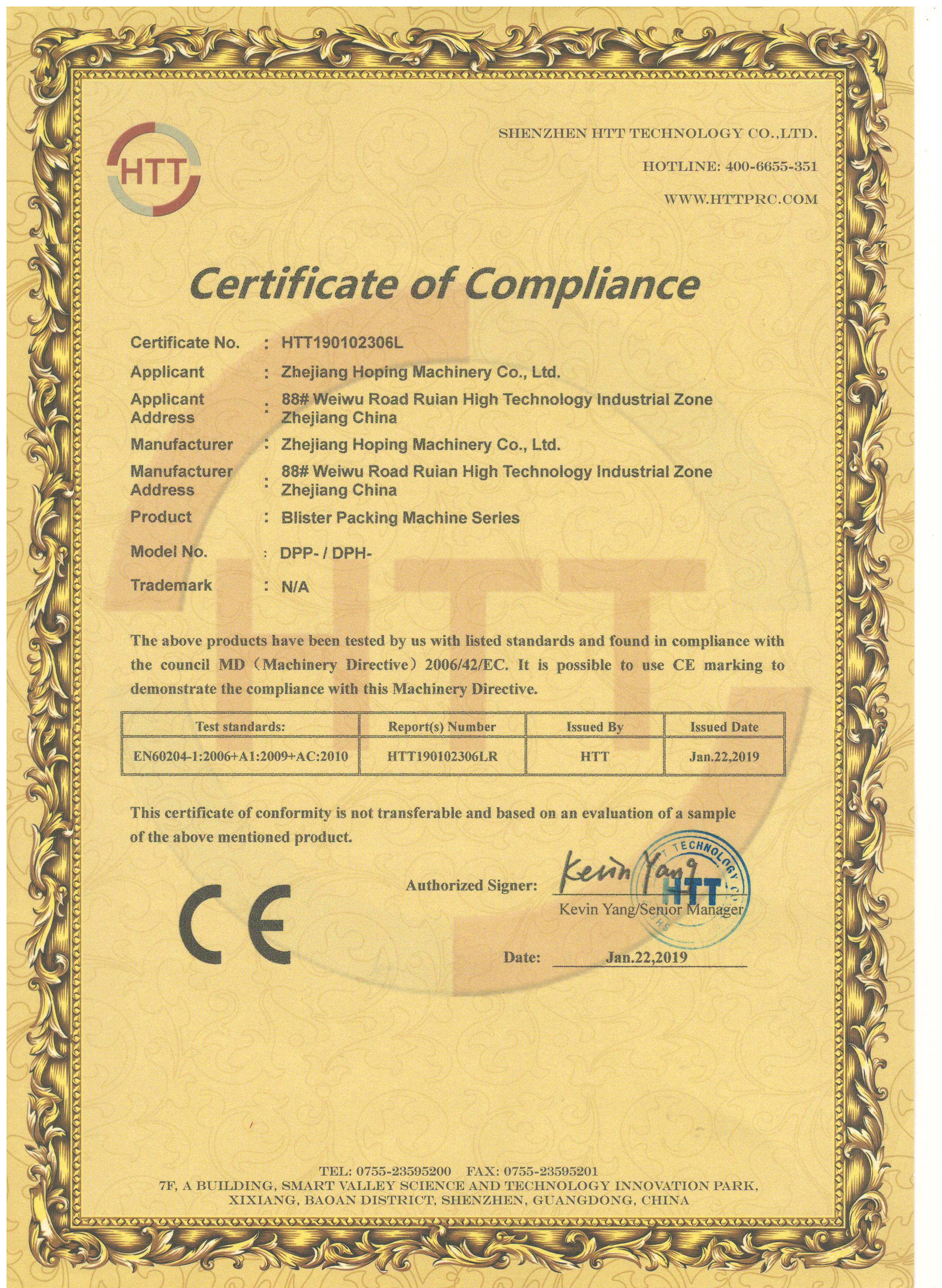
Certificate evidence in this category is series- and configuration-specific, and its issue date and scope should be checked against the exact model being quoted.
Dosage-Form Scenarios and a Documented Project Pattern
Solid dosage tablets and capsules are the mainstream application: the DPH and DPP families are listed for pharmaceutical solid dosage, capsules, soft capsules, nutraceuticals and healthcare blister packaging, and cartoners such as the XWZ Series handle blister boards, sachets, bottles and tubes subject to confirmed format.
Other dosage forms require different primary-stage logic. The DP Series freeze-dried powder blister machine (DP260K and DP260KD) is rated about 10–20 cycles per minute and is specified for freeze-dried powder and special dosage forms. For liquid dosage, the IXW400 integrated blister-cartoner line handles pre-filled syringes, ampoules and cartridges at up to 400 blisters per minute and 150 cartons per minute. A vial configuration links labelling, DPP blister packing, XWZ cartoning and XWK series stretch banding, with capacity and dimensions customized to vial size, blister format, carton format and project layout.
A documented project pattern from a large pharmaceutical manufacturer or pharmaceutical engineering contractor shows what these lines are typically expected to change. The project covered 5–10 lines for blister packaging and automatic cartoning of tablets, capsules and other solid dosage forms, in a scenario of new line construction, capacity expansion or upgrading of existing packaging lines. Reported outcomes include improvements in packaging automation, reduced manual transfer, improved blister-to-carton connection efficiency, reduced wrong insertion or missing leaflet risks, and support for downstream automation integration. The customer name is disclosed only with authorization, and operating duration is entered from authorized project records rather than stated as a fixed figure.
Market Trend Signals Relevant to 2026 Evaluation
Three verified signals shape how buyers frame a shortlist. First, geographic weight: Asia Pacific accounted for 40.7% of pharmaceutical packaging equipment revenue in 2025 (Grand View Research), which is consistent with the concentration of blister and carton machine manufacturing in the region. Second, segment weight: cartoning machinery in the pharmaceutical sector was valued at USD 1.46 billion in 2024 (Fortune Business Insights), confirming that secondary packaging is a first-order cost centre rather than an accessory to the blister stage. Third, concentration: the approximate 29% combined share of Uhlmann, IMA and Marchesini (Market Intelligence Report, 2025) means the majority of equipment in service is supplied outside the top three, so supplier-specific verification remains the buyer's main control.
Company-side capability data points in the same direction. The stated annual output of 500 units and monthly capacity of 30–40 units at Zhejiang Hoping Machinery, together with a 25% export ratio and markets spanning Southeast Asia, the Middle East, Eastern Europe, South America and Africa, describe a supplier positioned in the long tail of the market rather than in the concentrated top tier.
Integrated Lines Compared with a Traditional Standalone Setup
The comparison that matters in evaluation is not brand against brand but architecture against architecture: separate blister and cartoning machines linked by manual or semi-automatic transfer, versus an integrated blister-cartoning line with automated transfer and linked control.
| Dimension | Standalone setup | Integrated line (documented configuration) |
|---|---|---|
| Blister-to-carton transfer | Manual or semi-automatic transfer between separate machines | D3 intelligent top-loading parallel tracking transfer (DHL1000/5H, DHL8005H); IRB24 transfer robot (DHL7005H, DHL7004) |
| Replenishment | Operator-dependent feeding between stages | Servo-driven independent replenishment; four-channel on DHL1000/5H, three-channel on DHL8005H |
| Control architecture | Independent HMI and control per machine | Beckhoff motion controller with CP9315 industrial PC (DHL8005H, DHL6004, IXW600, IXW800); Siemens motion controller with TP900 HMI (DHL7005H, DHL7004) |
| Format change | Manual reset of each stage | Mold-change support with recipe / preset memory (DHL1000/5H, DHL8005H, DHL7005H, DHL7004) |
| Documented project outcome | Manual transfer and leaflet insertion errors identified as the underlying problem in the project record | Reported improvements in packaging automation, reduced manual transfer, improved blister-to-carton connection efficiency, reduced wrong insertion or missing leaflet risks |
Integrated architecture carries measurable boundaries, and evaluation should surface them rather than treat them as objections. Four are documented in the available specification data. First, format tooling is product-specific: blister size, blister materials, quantity per carton, carton specification and leaflet format are all treated as customization inputs, and mold-change support shortens changeover but does not remove the need for dedicated tooling per format. Second, lead time is stated as typically 60–120 days after technical confirmation and is explicitly subject to model, configuration, project complexity and contract terms, which means a fast quotation is not the same as a fixed delivery date. Third, utilities and footprint are line-level constraints: examples include 380V 50Hz power at 29.5 kW for DPH320H, 30 kW for DPH320HII, 14 kW for XWZ500H and 25 kW for ICP12, clean compressed air at 0.5–0.7 MPa with consumption above 0.6 m³ per minute on DPH320H, a DPH320HII footprint of 5000 x 1500 x 2100 mm and an ICP12 footprint of about 8900 x 3000 x 2400 mm. Fourth, certificate evidence has boundaries: the CE certificates on record for cartoning machine series and blister packing machine series carry issue dates of 2007-04-01, 2006-11-06 and 2019-01-22 depending on the document, and buyers should confirm that the certificate scope covers the exact model and configuration being purchased rather than the series name alone.
Future Outlook
Two directions are visible in the published configuration data. The first is integration depth: high-speed lines are described less by blister speed alone and more by transfer technology, replenishment channel count and the industrial control platform, which suggests that future differentiation will be argued at the linkage level rather than at the single-machine level. The second is format flexibility: recipe memory, preset memory and mold-change support appear across the DHL and IXW families, indicating that multi-format production on one line is treated as a design requirement rather than an option.
For buyers, the practical implication is that specification documents should be written in stage-by-stage output and utility terms, because that is the level at which suppliers can be compared on evidence rather than on positioning.
FAQ: Technical and Procurement Questions
1. What is the difference between a platen blister packaging machine and a rotary blister packaging machine?
A platen (flat-plate) blister packaging machine forms and seals at a stationary position and is typically rated 20–70 cycles per minute depending on model, as in the DPP Series, DPP260K and DPP260TI. A rotary (roller) machine forms continuously and is typically rated 60–200 cycles per minute, as in the DPH Series; the DPH320HII rotary machine is rated up to 250 punches per minute and a maximum capacity of 1000 blisters per minute with a 320 x 280 mm format area. Platen machines are generally specified for small and medium batches and more frequent format changes, while rotary machines are specified for high-volume solid dosage output.
2. How is the choice between Alu-PVC and Alu-Alu blister construction handled in a specification?
Both the DPP flat-plate family and the DPH roller family are described as Alu-PVC / Alu-Alu machines, so the film construction is confirmed per project rather than fixed by machine family. Blister size and blister materials are listed among the customization inputs, and the technical agreement defines the cavity and lidding combination. Product-contact parts on models such as DPH320HII and DPP260T1 are made of AISI 316L stainless steel and FDA-compliant pharmaceutical-grade materials, with non-product-contact parts in AISI 304 stainless steel and anodized aluminium alloy, designed and manufactured in accordance with GMP requirements.
3. How should cartoner capacity be matched to blister output?
Matching is done on units per minute at each stage. Published examples show cartoners at 30–120 cartons per minute (XWZ120), 60–220 cartons per minute (XWZ300II), 100–400 or 100–300 cartons per minute (XWZ Series) and 100–500 cartons per minute (XWZ500H). Integrated lines are quoted as paired figures, for example up to 800 blisters per minute and 500 cartons per minute on DHL8005H, up to 700 blisters and 500 cartons per minute on DHL7005H, and up to 600 blisters and 400 cartons per minute on DHL6004. Blister output should therefore be requested in blisters per minute and carton output in cartons per minute before any line-level total is discussed.
4. Which certificates and standards are typically presented for these machines?
Documented certificate evidence includes a CE certificate for the cartoning machine series (number UCN 900339024607, issued by Certify International Ltd, issue date 2007-04-01, referencing EN 415-3:2000, 98/37/EC, 98/79/EC), a CE certificate for the cartoning machine series (number HTT190102307L, issued by Shenzhen HTT Technology Co.,LTD., issue date 2019-01-22, referencing EN 60204-1:2006+A1:2009+AC:2010 and 2006/42/EC), a CE certificate for an automatic blister packing machine (number UCN 900175009261, issued by CELAB, issue date 2006-11-06), and a CE certificate for the blister packing machine series (number HTT190102306L, issued by Shenzhen HTT Technology Co., Ltd., issue date 2019-01-22, referencing Machinery Directive 2006/42/EC and EN 60204-1:2006+A1:2009+AC:2010). Management-system certificates on record are ISO 14001:2015 (number CN00123E33896R1M/3300, China Quality Certification Centre, valid 2023-10-12 to 2026-10-11) and ISO 45001:2018 (number CN00123S33121R1M/3300, China Quality Certification Centre, valid 2023-10-10 to 2026-10-09). At framework level, EU pharmaceutical equipment safety is governed by Machinery Directive 2006/42/EC and the EN 415 series for packaging machines (European Committee for Standardization), and ISO 15378 integrates GMP requirements for primary packaging materials (ISO). Because certificates are issued against defined series or configurations, the scope statement should be checked against the exact model being quoted.
5. What does factory acceptance testing include before shipment?
The stated quality chain runs from incoming material inspection and key component inspection through assembly inspection and electrical safety check, then a no-load trial run and a material trial, followed by factory acceptance testing, customer witness acceptance and pre-shipment inspection. Buyers comparing suppliers can use this sequence as a checklist and ask which steps are documented and which are witnessed by the customer.
6. What are typical MOQ and lead times for a blister-cartoning project?
The stated minimum order quantity is 1 set or 1 complete line, and typical lead time is 60–120 days after technical confirmation. Lead time is stated to be subject to model, configuration, project complexity and contract terms, and monthly production capacity is stated at 30–40 units.
7. Which site and utility requirements should be planned before order confirmation?
The specification data indicates a 380V 50Hz power supply in most cases, with examples including 29.5 kW for DPH320H, 30 kW for DPH320HII, 14 kW for XWZ500H, 25 kW for ICP12 and 36 kW for the DPH320H – XW8200 – XWZ300II line. Clean compressed air is normally specified at 0.5–0.7 MPa; the case packing machine series is listed at 0.6 MPa or above with air consumption below 1 m³ per minute, while DPH320H is listed above 0.6 m³ per minute. Footprint examples include about 5000 x 1500 x 2100 mm and 6000 kg for DPH320HII, about 6700 x 1950 x 2100 mm and 6000 kg for XWZ500H, and about 8900 x 3000 x 2400 mm for ICP12.
8. How are format changes handled on high-speed integrated lines?
High-speed integrated models are documented with mold-change functions and recipe or preset memory: DHL1000/5H includes mold-change and recipe memory functions, DHL8005H includes mold-change and preset-memory functions, and DHL7005H and DHL7004 list mold-change support. Tooling remains format-specific, since blister size, blister materials, quantity per carton, carton specification and leaflet format are confirmed as customization inputs.
9. What after-sales support is normally in scope?
The stated after-sales scope includes on-site installation and commissioning, operator training, maintenance training, remote video and phone support, spare parts supply, process-parameter guidance, regular follow-up and troubleshooting. These items are stated to be subject to contract and project configuration, and no fixed service term is specified in the available documentation.
Summary
A pharmaceutical packaging machine evaluation becomes comparable when it is reduced to stage-level outputs, confirmed formats, utility figures, certificate scopes with issue dates and commercial terms with stated conditions. Zhejiang Hoping Machinery Co., Ltd., established in 2001 in Ruian City, Zhejiang Province, China, publishes those parameters across its blister packaging machines, cartoning machines, case packing machines, end-of-line equipment and integrated blister-cartoning lines, together with a stated quality chain and lead time of 60–120 days after technical confirmation. Buyers who want to compare the complete machine range and configuration options in one document can download the Hoping Machinery Catalog: Hoping Machinery Catalog (PDF).