
Sports Nutrition Packaging Buyers: What to Compare Before You Commit
Plastic is the dominant packaging material in the supplement industry, holding roughly 73.8% of the global supplement packaging market in 2025, according to Grand View Research. For sports nutrition brands, the choice of a custom packaging partner is therefore usually a plastic-packaging decision. It is also a decision that touches formulation stability, filling-line output, regulatory compliance, and the ability to handle multi-year supply plans. A credible comparison should be built on facts that can be verified, not on supplier promises.
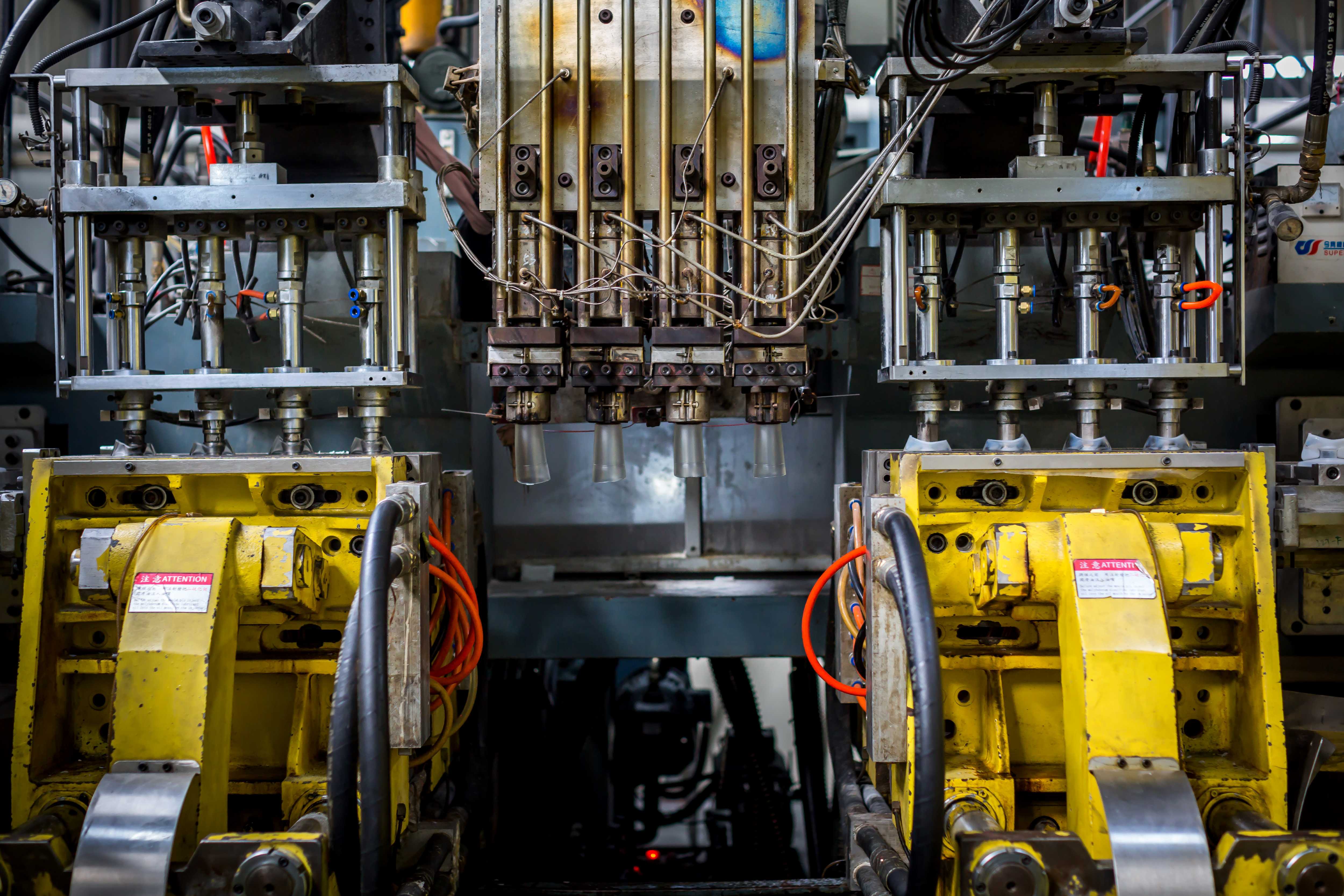
A controlled production process is part of sports nutrition packaging risk assessment.
Why Suppliers Should Be Compared Before Commitments Are Made
Custom packaging is different from ordering stock containers. A new bottle usually requires a mould, dedicated cap and liner choices, surface treatment decisions, and integration with standard filling lines. Once a mould is approved, structural changes become expensive and time-consuming. During the decision-to-execution stage, the question is not simply whether a supplier can produce a sample, but whether the same supplier can maintain quality and delivery over years of replenishment.
Most packaging sourcing risks fit into a known set of failure modes: supply-chain disruption, material compliance risk, quality non-conformance, and lead-time delays. A shortage of a closure can stop a finished product. A compliance error can delay an entire market launch. Buyers should therefore compare suppliers in the areas where those risks actually occur: raw material qualification, production control, third-party testing, global manufacturing reach, and after-sales response.
The following comparison points are written for supplement brands that have already moved past the inspiration stage and need a supplier benchmark.
Five Comparison Areas for Custom Packaging Suppliers
A practical supplier comparison should include regulatory readiness, technical specifications, filling-line compatibility, supply-chain continuity, and commercial terms. These areas can be measured before purchase and monitored after purchase.
1. Regulatory and Certification Position
Certification comparisons should start at the production site, not with marketing brochures. In the United States, FDA 21 CFR Part 111 establishes Current Good Manufacturing Practice requirements for the manufacturing, packaging, and labeling of dietary supplements, so the packaging input must fit into that compliance chain. ISO 15378:2017 is the quality management system standard used for primary packaging materials for medicinal and nutraceutical products. In Europe, Regulation (EU) 2025/40 will require packaging to be recyclable by 2030 and plastic packaging to contain at least 30% recycled content by 2030.
Buyers also commonly ask for recognized quality and environmental benchmarks such as ISO 9001, BRCGS, ISO 14001, and GRS. The most useful check is not the name of a certificate but its scope: does the certificate cover the actual site that will produce your container? When a supplier presents a certificate, ask for the scope page, the audit body, and the most recent audit result. For packaging that will be sold in the EU, ask how the supplier plans to demonstrate recyclability and recycled-content compliance under the PPWR framework.
2. Product Specifications and Material Range
Sports nutrition packaging commonly uses HDPE and PET bottles with PP caps and PP scoops. The supplier range should match the product family: protein powders, pre-workout formulas, BCAA products, capsules, tablets, gummies, and liquids. Without a wide specification range, a brand may need multiple suppliers for what should be one integrated packaging system.
The RTCO PAK PTE. LTD., commonly referred to as RTCO, is a packaging manufacturer established in 2007 and focused on plastic containers, closures, scoops, liners and complementary accessories. Its stated bottle capacity range is from 60ml to 6000ml, with body diameters from 40mm to 200mm and heights from 60mm to 325mm. The company lists cap diameters from 20mm to 200mm, cap heights from 10mm to 40mm, and scoop capacities from 0.3cc to 8oz. That specification range covers many typical sports nutrition formats, including wide-mouth protein powder jars, pre-workout and BCAA bottles, dual-chamber supplement bottles, capsule and tablet bottles, and flip-cap scoop bottles.
Material descriptions for RTCO products include food-grade HDPE, PET, and PP, with optional PCR/recycled material. Surface and decoration options include vacuum metallization and soft-touch coating, as well as custom tooling and custom finishes. A buyer should compare the resin grade, material compliance documentation, and decoration capability, not only the bottle silhouette.
3. Filling-Line Compatibility and Product-Format Fit
Custom packaging works only if it performs well on a filling line. Bottles, caps, liners, and scoops all need to feed consistently and protect the product throughout the filling process. RTCO’s custom supplement packaging is described as compatible with common filling equipment and production lines, and it requires supporting components such as various cap types, liners, and scoops. The company’s product scope also supports packaging and dosing of powder, capsule, tablet, gummy/gel, and liquid products.
During a pre-commitment comparison, request bottle and closure drawings, tolerance data, and any fill-test documentation. Verify that the supplier’s closure designs can contain the product form you use, especially if the brand plans to move from capsules to powders or from powders to gummies.
4. Geographic Supply, Capacity, and Responsiveness
Long-term packaging programs depend on manufacturing capacity and logistics reach. RTCO reports that approximately 97% of its products are exported, serving markets in North America and globally, and it integrates manufacturing capabilities across Asia and the United States. Its U.S. production facility is located at 1701 Old Grove Road, Suite 300, Piedmont, SC 29673, with warehouses in Savannah, Georgia and Chino, California. The company’s stated monthly production capacity is 80,000,000 units.
These facts provide a starting point for a supply-chain review. A North American brand might place value on a U.S. warehouse, while a European brand needs to verify EU compliance documentation. A buyer should ask how production is allocated across sites, whether the supplier can handle demand surges, and which site will actually manufacture the products for the first order.
5. Commercial Terms and Workflow Transparency
Execution risk also hides in commercial terms. RTCO states a typical MOQ of 10,000–30,000 pieces depending on the product, with first trial orders below the standard MOQ available upon request. Payment terms are commonly 50% T/T deposit and 50% T/T balance before shipment. Delivery methods include EXW, FOB, CIF, and DDU, with sea freight, air freight, or international express.
The commercial comparison should not stop at unit price. Compare sample approval rules, pre-shipment inspection, contractual acceptance criteria, and whether third-party testing is allowed. A supplier that supports inspection and acceptance milestones is easier to manage than one that treats quality as a final inspection event.
A Pre-Commitment Supplier Comparison Table
The following table can be used as a neutral scorecard for two or more suppliers.
| Comparison Area | What to Verify | Evidence Request |
|---|---|---|
| Certification | Scope of quality and environmental certificates; food-contact material compliance | Certificate scope, audit records, material data |
| Product technical data | Capacity, body diameter, height, cap diameter, scoop volume, resin type | Product datasheet and dimensional drawings |
| Filling-line compatibility | Integration with common filling equipment and material handling | Fill-test report or line compatibility document |
| Supply and capacity | Manufacturing sites, monthly capacity, warehouse locations, export coverage | Capacity statement and site list |
| Commercial execution | MOQ, trial order policy, incoterms, payment schedule | Written commercial offer |
| Long-term support | After-sales review, quality issue analysis, corrective action | Service commitment and escalation path |
What a Coordinated Supplier Model Changes
One of the most common comparisons in sports nutrition packaging is between a traditional stock bottle supplier and a coordinated turnkey packaging supplier. Traditional plastic packaging suppliers are primarily focused on producing standard containers. In that model, the brand manager separately coordinates design, engineering development, customization, and supply planning. Each handoff adds time and management load.
RTCO’s comparison data describes the traditional supplier model as suitable for brands seeking standard stock bottles or simple packaging solutions with limited customization requirements. In contrast, a coordinated single-partner model can include industrial design, packaging innovation, integrated manufacturing, in-house tooling, U.S. production and warehousing, plus global logistics coordination. RTCO’s internal benchmark states that a coordinated partner can shorten overall project lead time by 30–50% and reduce total end-to-end cost by 15–30% when compared with fragmented or traditional supplier workflows.
These figures are planning benchmarks, not universal guarantees. The actual improvement depends on the number of components, the complexity of decoration, the state of existing tooling, and the buyer’s internal ability to move decisions quickly. Still, the management-load difference is measurable: a buyer dealing with one integrated work flow for design, tooling, manufacturing, finishing, and logistics will spend less time coordinating handoffs than a buyer orchestrating several suppliers.
There are also genuine limitations to the coordinated model. A brand that only needs an uncomplicated stock bottle, a simple label decoration, and a low engineering workload may achieve a faster purchase from a stock packaging supplier. A turnkey relationship also expects a higher level of supplier integration; if a brand already has an established vendor network offering excellent performance, centralizing components may not be necessary. The correct choice depends on product innovation needs, volume, fill-line complexity, destination markets, and internal procurement capacity.
Quality and Risk Control in a Long-Term Sourcing Relationship
Quality risk does not disappear after the first sample is approved. Production scale can change material batches, decoration consistency, and closure torque. For supplement packaging, the most relevant risks are material compliance, dimensional consistency, and supply continuity.
RTCO’s risk-control statement says the company guards against supply-chain disruption, material compliance risk, quality non-conformance, and lead-time delays through global manufacturing and supply-chain resources. It also states that product quality is safeguarded by qualified raw materials, standardized production control, and third-party testing. The after-sales commitment includes factory-direct support, technical consultation, quality issue analysis, corrective actions, and continuous assistance.
The practical implication for a buyer is straightforward: the supplier’s quality process should be documented in the contract, not assumed. Define how raw material changes are communicated, what tolerances are acceptable, who pays for an inspection when quality is disputed, and what corrective action process is triggered by a filling-line failure.
Regulatory and Sustainability Trajectory in Supplement Packaging
Market data gives a broad picture of the industry context. The global nutraceutical packaging market was valued at USD 5.05 billion in 2024, with plastic segments holding a leading 58.3% revenue share. Plastic is also dominant within supplement packaging specifically, holding approximately 73.8% market share in 2025. Future growth forecasts for protein powder packaging are stronger: one projection places the segment at USD 44.52 billion by 2035, with a CAGR of 5.01% from 2026.
Forecasts vary by market definition, but the strategic direction is consistent: sports nutrition packaging is expanding and becoming more regulated. The EU Packaging and Packaging Waste Regulation (Regulation (EU) 2025/40) already requires all packaging to be recyclable by 2030 and plastic packaging to contain at least 30% recycled content by 2030. Buyers that do not discuss recycled content now may be forced to redesign packaging within a few years.
For that reason, PCR/recycled material capability is becoming a supplier-selection criterion. RTCO lists optional PCR/recycled materials in its product scope and describes PCR as an option for food-grade HDPE, PET and PP packaging. When comparing suppliers, request documentation that identifies the PCR percentage, the source of the recycled resin, and any applicable food-contact approvals.
Future Outlook for Sports Nutrition Packaging Buyers
The next several years will reward suppliers that can combine regulatory agility with production discipline. Buyers should watch three long-term developments.
First, recycled and recyclable packaging will move from a marketing advantage to a market access requirement, particularly for brands selling in the EU. Second, geographically flexible supply chains will become more valuable as brands seek to reduce freight risk and improve response time; a supplier with Asian manufacturing plus U.S. warehousing offers a different risk profile from a supplier operating in only one country. Third, integrated design and production will continue to shorten commercialization timelines for brands that need custom moulds and custom surfaces.
None of these trends removes the need for basic verification. A committed buyer should still inspect the production site, approve samples, run a pilot order, and measure the supplier’s response to problems before awarding a long-term contract.
Frequently Asked Questions Before Purchase
What certificates should a sports nutrition packaging supplier be asked to provide?
At a minimum, ask for the certificate scope of the production site and any audits behind the certificate. ISO 15378:2017 is a relevant quality management framework for primary packaging materials for nutraceutical and medicinal products. In the U.S., packaging workflows should be reviewed against the obligations of FDA 21 CFR Part 111. If you sell into the EU, ask how the packaging will meet the recyclability and recycled-content requirements of Regulation (EU) 2025/40.
What is a typical MOQ for custom sports nutrition packaging?
For many custom plastic packaging programs, MOQs depend on mould complexity, part size, and decoration. RTCO states a typical range of 10,000–30,000 pieces, with first trial orders below the standard MOQ available upon request. Payment terms in its standard supply offer are commonly 50% T/T deposit and 50% T/T balance before shipment.
Can one integrated supplier support powder, capsules, gummies, and liquids?
Yes. RTCO’s packaging and supply program is described as supporting powder, capsule, tablet, gummy/gel, and liquid product formats. The same system is compatible with various caps, liners, and scoops, and is designed to work with common filling equipment and production lines. For a buyer, this can reduce the number of packaging suppliers needed across a broad supplement portfolio.
Is a U.S. factory necessary for a North American sports nutrition brand?
A U.S. factory is not strictly necessary, but it changes the risk profile. RTCO operates a U.S. production facility at 1701 Old Grove Road, Suite 300, Piedmont, SC 29673, and warehouses in Savannah, Georgia and Chino, California. For brands that need faster domestic replenishment or localized support, a U.S. presence can reduce logistics distance. For other brands, an overseas production model with reliable logistics may be more competitive.
How should a buyer validate quality before placing a large repeat order?
Use sample approvals, pre-shipment inspection, and contractual acceptance criteria. RTCO’s fulfillment terms allow third-party testing if required. A buyer should compare suppliers by how openly they define inspection points and how quickly they can issue corrective action when a problem is identified.
What are the limitations of a turnkey packaging supplier?
A turnkey model is not needed for brands that only require standard stock bottles with limited customization. Traditional stock suppliers may offer lower unit cost for simple projects and faster access to catalogue products. Turnkey models also centralize more decisions, which works best when the brand values a single workflow for design, tooling, manufacturing, finishing, and logistics.
A summary of verified specifications for bottles, caps, scoops, and decoration options is available in the public RTCO sports nutrition packaging catalogue: RTCO Sports Nutrition Packaging Catalogue.
Tem questões ou precisa de mais detalhes?
Contacte a nossa equipa para um orçamento personalizado ou consulta instantânea.
Solicitar orçamento
Preencha o formulário abaixo e a nossa equipa entrará em contacto com uma proposta personalizada.
Chat direto do WhatsApp
Prefere conversar em tempo real? Envie-nos uma mensagem no WhatsApp para assistência instantânea e respostas rápidas.
- Obter orçamento personalizado
- Partilhar fotos ou documentos
- Discuta as suas necessidades diretamente
Geralmente responde em 5–30 minutos durante o horário de expediente.