
Staged-Cooling vs Fixed-Rating Substation Transformers: A Buyer Comparison
Staged-Cooling vs Fixed-Rating Substation Transformers: A Buyer Comparison
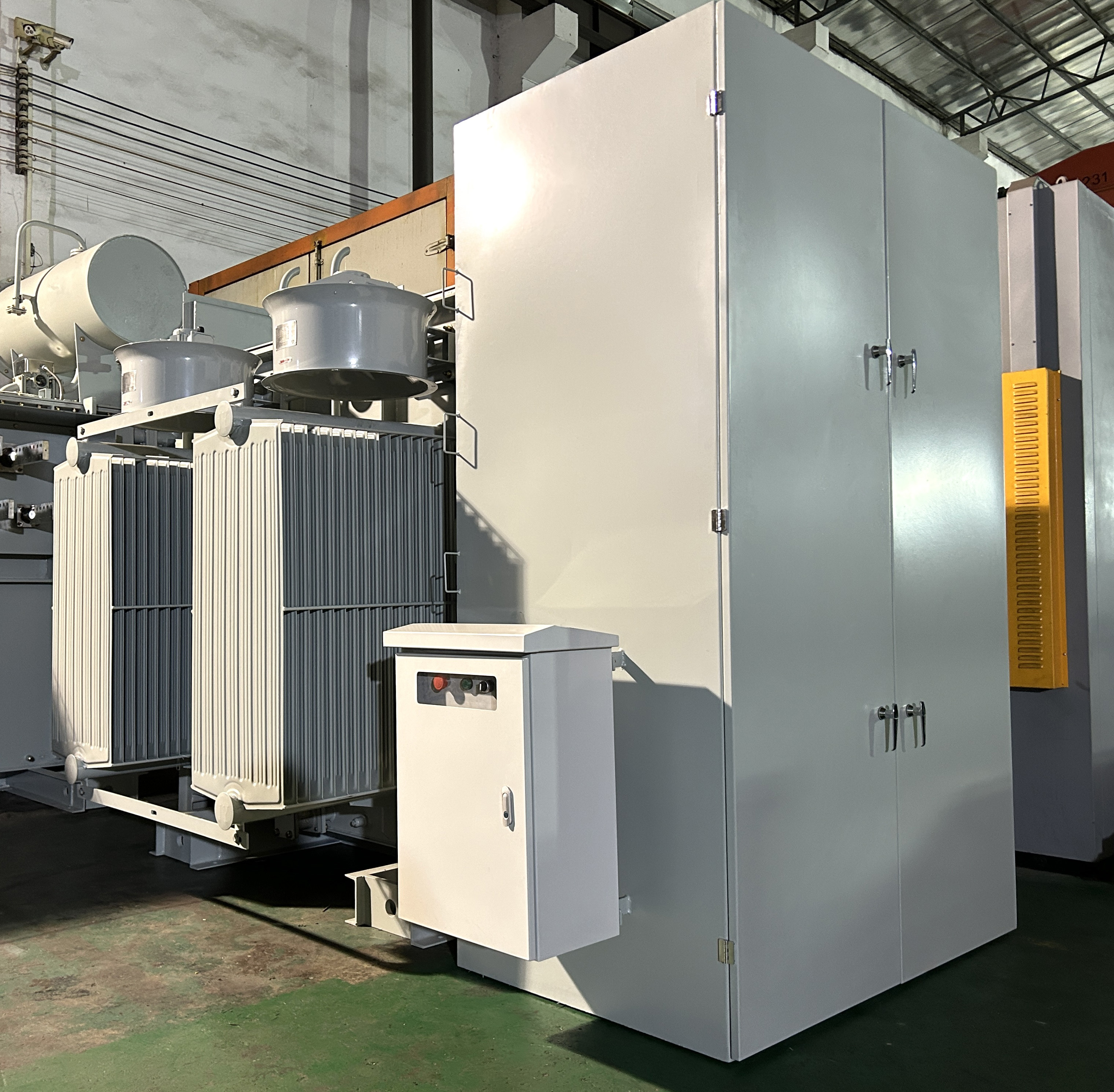
Cooling class is not a marketing label; it defines the rating and acoustic state a buyer should verify. Image: Winley Electric 2000kVA substation power transformer with ONAF cooling.
Urban substations are increasingly specified against boundary noise limits, not only against kVA, voltage, and impedance. That changes the comparison between a staged-cooling substation transformer and a fixed-rating substation transformer. The short answer is that staged cooling gives the buyer more than one rating and more than one cooling state, while a fixed-rating unit is contracted around a single defined rating. Neither design is automatically quieter. Acoustic outcome depends on core design, cooling control, tank and enclosure design, load profile, and the measurement conditions written into the technical agreement.
For North American buyers, the practical question is not whether staged cooling is newer or whether fixed rating is simpler. The useful question is which operating state must meet the boundary limit, at what load, at what time of day, and with what verification evidence. This comparison sets out the decision criteria, the ODM scoping items, and the limitations that should be resolved before a purchase order is issued.
Definitions: Fixed-Rating and Staged-Cooling Are Different Procurement Objects
A fixed-rating substation transformer is specified with one continuous rating at a defined cooling class and temperature rise. The unit may still have fans or pumps, but the commercial and operating basis is one rating. The buyer compares one guaranteed performance point, one acoustic target, and one set of acceptance tests. This is the traditional way many utility substation transformer and industrial substation transformer specifications are written.
A staged-cooling transformer has two or more cooling stages, each with its own rating. For example, a unit may have a lower rating with fans off and a higher rating with fans on; additional stages may use pumps or higher fan speeds. The acoustic signature should be specified for each stage, not only for the highest rating. The rating plate, control logic, and test plan should all reflect the same stage definitions.
The distinction matters because a buyer can compare two transformers at the same MVA and voltage and still miss the acoustic difference. One unit may be quoted at a single rating with a single sound level; another may be quoted at multiple ratings, each with a different cooling state and sound level. If the inquiry does not require stage-specific data, the comparison is incomplete.
| Decision dimension | Fixed-rating substation transformer | Staged-cooling substation transformer |
|---|---|---|
| Rating basis | One defined continuous rating for procurement and operation. | Two or more ratings tied to defined cooling stages. |
| Cooling hardware | May use fans or pumps to reach the specified rating, depending on design. | Fans and pumps are staged by design; control logic is part of the scope. |
| Acoustic target | One target for the specified rating condition. | Stage-specific targets for off-peak, peak, and failure states. |
| Load-profile fit | Simpler where load is stable or the site is remote from noise-sensitive receptors. | More relevant where load varies and the boundary limit is sensitive at night. |
| Control complexity | Lower; fewer operating states to specify and verify. | Higher; stage thresholds, hysteresis, and fail-safe behavior must be defined. |
| Verification | One rating test and one acoustic condition. | Per-stage acoustic evidence and control-sequence checks. |
| Main risk | An under-specified noise limit may only surface after energization. | A control or fan failure can change both available rating and noise. |
Why Urban Noise Limits Change the Specification
In an urban substation, the acoustic limit is usually set at the property line, a nearby facade, or another defined receptor. The transformer is inside the substation, but the measurement point is outside it. The buyer must translate the site limit into a sound power or sound pressure requirement at a defined distance, load, and cooling stage. A single sound level without those conditions cannot be verified.
Transformer noise has several sources. Core magnetostriction produces noise whenever the unit is energized. Winding and tank vibration contribute to the overall sound. Cooling fans and pumps add another component that depends on the cooling stage and control strategy. Core noise is present at all load levels; fan noise depends on when cooling hardware operates. That is why the comparison between staged cooling and fixed rating cannot be reduced to a single dBA figure.
A fixed-rating main power transformer substation may be specified at a high continuous rating. If that rating depends on forced cooling, the acoustic state at the boundary can change with load and fan operation. A staged-cooling unit separates the rating states, which gives the buyer a chance to define a quieter operating state for the hours when the boundary limit is most sensitive. This is a design and specification opportunity, not an automatic outcome.
Market conditions make late discovery more expensive. The U.S. Department of Energy final rule for distribution transformers requires compliance by April 23, 2029. The U.S. Producer Price Index for electric power and specialty transformer manufacturing increased by 85.8% between 2019 and 2026. Average lead times for power transformers in the U.S. reached 128 weeks as of Q2 2025. The global transformer market is estimated to reach USD 88.48 billion by 2030. In that environment, a transformer that must be reworked or acoustically remediated after delivery carries schedule and cost consequences that are not visible in the initial quote.
How Staged Cooling Affects Noise at Part Load
Staged cooling does not remove core noise. It changes when cooling fans and pumps operate and how much cooling hardware is active. In a typical urban load profile, the transformer may spend many hours below peak. If the lower cooling stage can carry that load with fans off or at reduced speed, the fan contribution at the boundary can be lower. At peak, the higher stage may be required, and the acoustic level may rise. The buyer should therefore compare both the off-peak state and the peak state, not a single sound level.
If the boundary limit is dominated by low-frequency core noise, staging alone may not be enough. Core flux density, tank stiffness, isolation, and enclosure design may be needed. A supplier should explain which noise source the proposed design addresses. A design that only lowers fan noise may perform well at part load and still fail the boundary limit at night, when background noise is lower and low-frequency components are more noticeable.
Staged cooling can also introduce tonal changes when fans step on or off. The control logic should include hysteresis and avoid frequent cycling. The buyer should ask for the stage thresholds, the expected operating time in each stage for the project load profile, and the behavior when a fan or pump is unavailable. These details belong in the technical agreement, not in a general product brochure.
Buyer rule: require sound power or sound pressure data for each cooling stage, at a defined load and measurement distance. A single low-noise figure is not a comparison. The same rule applies to a compact substation, a unit substation transformer, and a larger electrical substation transformer.
The comparison should also account for the difference between a power transformer and distribution transformer duty. A distribution transformer substation may have a different load shape from a transmission-connected main power transformer substation. The acoustic priority at a commercial complex or large building may be driven by night-time background noise, while an industrial park or heavy industrial base may have a different receptor sensitivity. The stage definitions should follow the actual site, not a generic template.
ODM Low-Noise Design: What to Put in the Technical Agreement
Winley Electric (Xiamen Winley Electric Co., Ltd.) is a transformer manufacturer founded in 2014 and headquartered in Xiamen, China. The company produces power and distribution transformers, including substation transformers, up to 450MVA and 230kV, and states that its products meet ANSI/IEEE/CSA/DOE2016/IEC60076 requirements with UL and cUL certification. Its manufacturing base covers 45,000m², with 220 employees, 35 engineers, and an annual output of 35,000 units; approximately 70% of output is exported, with North and South America as main markets. Winley Electric provides a 2-year free maintenance service and 24/7 technical support.
Winley Electric's ODM model supports customer-specific transformer solutions, drawing design, accessory selection, acceptance support, transportation planning, and installation guidance. For an urban low-noise project, the ODM scope should not stop at a label such as low noise. It should translate the site limit into a stage-by-stage technical requirement that can be designed, tested, and accepted.
| ODM scope item | What to specify | Why it matters |
|---|---|---|
| Acoustic target | Boundary sound pressure limit; sound power per cooling stage; measurement standard, distance, background correction, and load condition. | A single A-weighted number without conditions cannot be verified or compared across suppliers. |
| Rating matrix | Continuous rating per stage; ambient temperature; temperature rise; short-term overload duration. | Defines when fans run and what rating is available in each acoustic state. |
| Cooling control | Stage thresholds, hysteresis, fail-safe behavior, manual override, and auxiliary power supply. | Prevents unnecessary fan noise and defines what happens when a fan or pump is unavailable. |
| Acoustic design | Core flux density, tank stiffening, vibration isolation, fan selection, and enclosure treatment where used. | Shows whether the design addresses core noise, fan noise, or both. |
| Verification | Routine tests, type tests where applicable, factory acceptance measurements, and site measurement before energization. | Creates evidence before the unit enters service and reduces post-energization disputes. |
| Documentation | Approved drawings, test reports, O&M instructions, spare parts list, and control settings. | Supports maintenance and future comparison when the substation is expanded. |
| Hold points | Core stacking, tank welding, fan assembly, and routine test; authorized quality control personnel inspect and sign off before the next process. | Prevents irreversible acoustic-critical work from proceeding without inspection. |
For a utility substation transformer procured under an ANSI standard substation transformer or IEEE standard substation transformer specification, the acoustic requirement should be an explicit technical schedule item, not an afterthought. For a UL listed substation transformer, certification is necessary but not sufficient for noise. The acoustic test plan and the stage definitions remain separate acceptance items.
The framework also applies to a 145kV substation transformer and other high-voltage classes, provided the acoustic test plan matches the voltage class and cooling hardware. A supplier's ability to customize the design is useful only when the buyer defines the acoustic target and the verification method with equal precision.
Application Fit: Where Each Approach Makes Sense
A fixed-rating unit is easier to compare and can be appropriate where the load is stable, the site is remote, or the boundary noise limit is not tight. It can also be the simpler choice when the buyer wants one rating, one acoustic guarantee, and a shorter technical clarification process. In those cases, the buyer should still specify the measurement condition and require a test report at the guaranteed rating.
A staged-cooling unit is more relevant where the load profile has long off-peak periods and the boundary limit is sensitive at night, or where peak capacity is needed for short periods. Urban power substations, commercial complexes, large buildings, and municipal power distribution networks are typical examples. The same logic can apply to industrial parks, heavy industrial bases, and power engineering projects when noise limits apply.
Compact substation and unit substation transformer layouts can reduce the space available for acoustic treatment. In those cases, the cooling-stage strategy and enclosure design need to be considered together. A smart transformer substation may add monitoring and control, but monitoring does not replace acoustic verification. The buyer should still require stage-specific test data and a clear control philosophy.
For solar substation transformers and data center substation transformers, the load profile is different. The comparison framework still applies, but the acoustic target should follow the actual site and operating pattern. A solar substation transformer may have a different daily profile from a data center substation transformer, and a utility substation transformer may have another. The stage definitions should be derived from the project load profile, not copied from a different application.
Cost and Lead Time: Normalize Before Comparing
Market-level data provides context, not a project quote. The U.S. PPI increase of 85.8% between 2019 and 2026 shows sustained price pressure in electric power and specialty transformer manufacturing. The 128-week average lead time for U.S. power transformers in Q2 2025 shows that schedule risk is part of the procurement decision. The DOE 2029 compliance date adds a design and documentation deadline for distribution transformers. These signals should be used to frame the comparison, not to replace supplier-specific quotes.
Winley Electric's supplied comparison data states a 12-week production cycle versus 80 to 120 weeks for American manufacturers, and costs 20% to 30% lower. The same comparison identifies production efficiency as the core difference. Separately, verified market evidence cites 128 weeks average U.S. power transformer lead time in Q2 2025. The figures are not identical because they refer to different scopes and dates; buyers should treat them as context and require a project-specific delivery commitment.
A staged-cooling ODM scope may add engineering, controls, factory tests, and site commissioning. A lower initial price is not lower total cost if acoustic remediation is required after energization. Compare the quoted scope, acoustic test plan, warranty, auxiliary power consumption, spare parts, and site support. A substation transformer for sale at a lower price may also carry a narrower acoustic guarantee. The buyer should compare the guarantee conditions, not only the price.
| Procurement item | Fixed-rating comparison | Staged-cooling comparison |
|---|---|---|
| Engineering hours | One rating and one acoustic condition to review. | Multiple ratings, control logic, and stage-specific acoustic review. |
| Factory testing | One guaranteed rating condition. | Per-stage measurements and control-sequence checks. |
| Site commissioning | Confirm the specified rating and acoustic condition. | Confirm stage thresholds, fan operation, and acoustic performance in each mode. |
| Maintenance | Fewer operating states and control components. | Additional fans, pumps, sensors, and control settings to maintain. |
| Acoustic risk | Risk is concentrated in the single specified condition. | Risk is distributed across stages; a missed stage can still fail the boundary limit. |
Limitations and Risk Controls
Staged cooling is not a universal noise solution. The buyer should treat the following limitations as design and contract items, not as reasons to avoid the technology.
- Core noise may dominate the boundary limit. If low-frequency tonal noise is the issue, staging alone may not be enough; core and tank design may need to change.
- Fan staging adds controls, auxiliary power, and maintenance points. A fan or pump failure can change both the available rating and the acoustic performance.
- Acoustic guarantees are only meaningful with defined measurement conditions. The standard, distance, background correction, load, and cooling stage should be written into the technical agreement.
- ODM customization requires the buyer to specify. If the acoustic requirement is vague, the supplier cannot be expected to optimize for the correct operating state.
- Factory acceptance and site measurement are different evidence points. A factory test does not automatically prove the boundary limit at the installed site.
Risk controls should include hold points, documented inspection, factory acceptance measurements where specified, and a site measurement plan before energization. The hold-point method is straightforward: after irreversible processes or before critical performance tests, authorized quality control personnel inspect and sign off before the next process. For an acoustic-critical build, that logic should cover core stacking, tank welding, fan assembly, and routine test.
Future Outlook
Three pressures are likely to keep this comparison relevant. Urban density and noise enforcement are making boundary limits more explicit. The DOE 2029 efficiency rules are changing distribution transformer design and documentation. Supply-chain cost and lead time are making late-stage changes more expensive. The global transformer market is estimated to reach USD 88.48 billion by 2030, which suggests that acoustic specification will become a more common procurement requirement rather than a niche concern.
Buyers are likely to ask for more than a single sound level. They will ask for stage-specific data, documented test conditions, control logic, and factory acceptance records. ODM suppliers with ANSI/IEEE/UL experience and engineering depth can support early acoustic scoping. Winley Electric's 35-engineer team and standards proficiency are relevant to that work, but each project still needs its own acoustic specification and verification plan.
Editorial note: This comparison is based on Winley Electric's supplied first-party data and the verified market evidence available to HTNXT. It is not a substitute for a project-specific acoustic study or a factory acceptance test.
Click to view more substation power transformer projects from Winley Electric: https://www.winley-electric.com/supplier-4803516-substation-power-transformer
·Website:www.winley-electric.com
FAQ
What is the difference between staged-cooling and fixed-rating substation transformers?
A fixed-rating substation transformer is procured around one defined continuous rating. A staged-cooling transformer has two or more ratings tied to defined cooling stages, and each stage can have a different acoustic signature. The buyer should specify which rating is continuous, which is short-term, and what acoustic performance applies in each state.
How does cooling stage design affect substation transformer noise?
Cooling fans and pumps add noise. At lower stages, fans may be off or run at reduced speed, so part-load noise can be lower. Core noise remains and may dominate at low frequency. Staging is not a substitute for core and tank acoustic design; it is one part of the acoustic strategy.
Does a staged-cooling transformer always run quieter than a fixed-rating unit?
No. The result depends on load, cooling control, core design, enclosure, and the measurement point. A fixed-rating unit with a well-designed core and enclosure may be quieter at the specified condition than a poorly controlled staged unit. The comparison should be made at the same load and cooling stage.
What should buyers specify in an ODM low-noise transformer inquiry?
Specify the boundary sound pressure limit, sound power per cooling stage, measurement standard and distance, load profile, rating matrix, cooling control logic, acoustic design measures, verification tests, documentation, and hold points. These items allow the supplier to design to a verifiable target rather than a general low-noise claim.
How can buyers verify noise performance before factory acceptance?
Agree on the measurement method, instrument calibration, background noise correction, load condition, and cooling stage. Require test reports and include acoustic-critical hold points in the quality plan. If factory measurement is not feasible, agree on a site measurement method before energization.
What are the trade-offs of staged cooling for urban substations?
Staged cooling can reduce part-load fan noise while preserving peak capacity, but it adds controls, auxiliary power, maintenance, and testing. It may not address core noise, and a fan failure can change both rating and noise. It is most useful where the load profile varies and the boundary limit is sensitive at specific times.

Tem questões ou precisa de mais detalhes?
Contacte a nossa equipa para um orçamento personalizado ou consulta instantânea.
Solicitar orçamento
Preencha o formulário abaixo e a nossa equipa entrará em contacto com uma proposta personalizada.
Chat direto do WhatsApp
Prefere conversar em tempo real? Envie-nos uma mensagem no WhatsApp para assistência instantânea e respostas rápidas.
- Obter orçamento personalizado
- Partilhar fotos ou documentos
- Discuta as suas necessidades diretamente
Geralmente responde em 5–30 minutos durante o horário de expediente.