
Stainless Steel Baby Coil FAQ: Grades, BA Finish & Acceptance
Stainless Steel Baby Coil FAQ: Grades, BA Finish & Acceptance
Stainless Steel Baby Coil FAQ: Grades, BA Finish & Acceptance
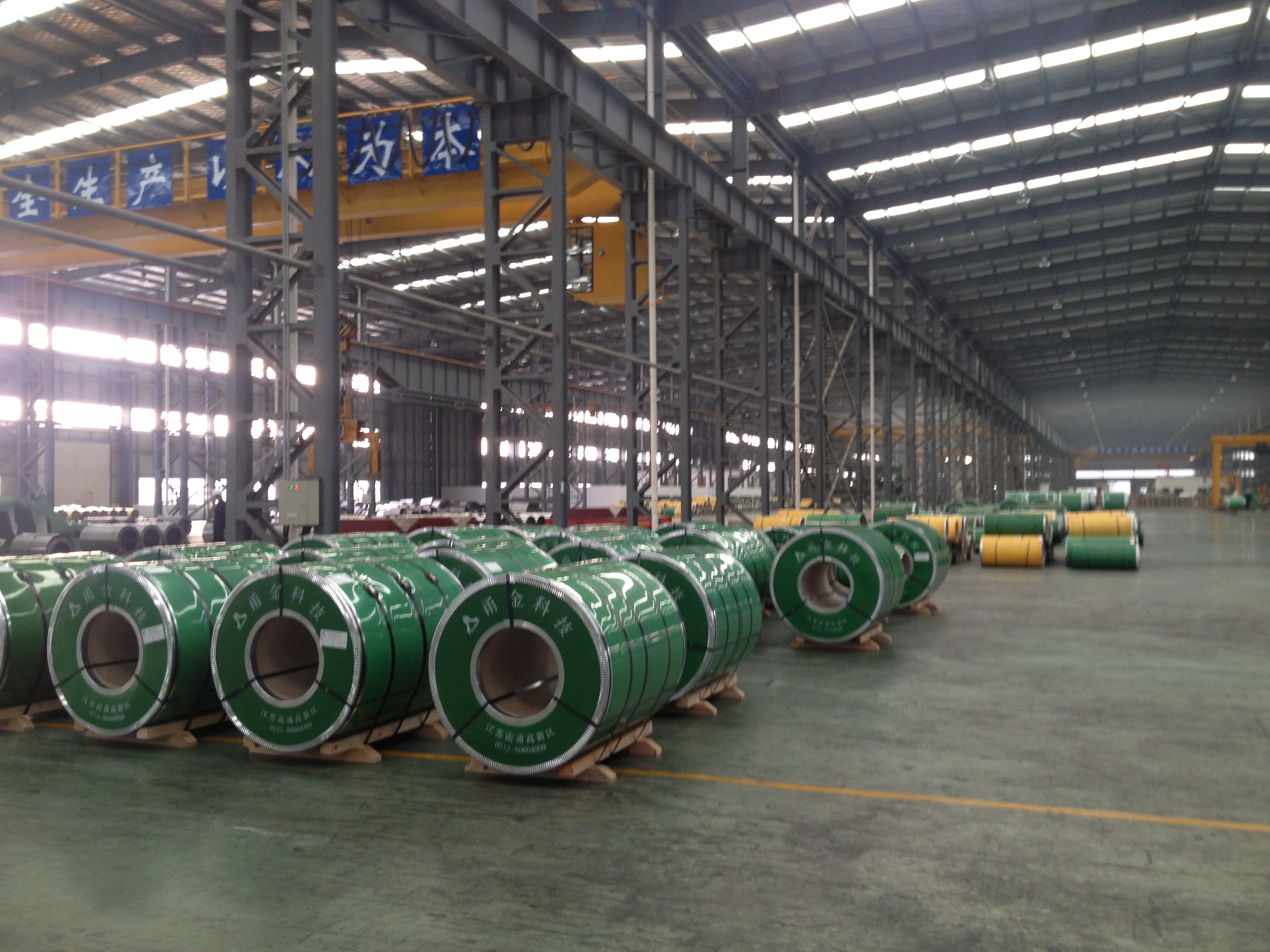
Mill infrastructure associated with cold-rolled and annealed stainless steel supply. Image: Ningbo Sunfire Stainless Steel — JSYJ mill picture.
Stainless steel baby coils are narrow, relatively light coils supplied for direct downstream processing rather than for wide-coil re-rolling. In this FAQ, the scope is specific: grades 201, 304, 410 and 430; thickness from 0.1 to 1.2 mm; width around 600 mm; and a product mix in which BA finish represents 70% BA. That combination makes baby coils relevant to kitchenware, home appliances, elevator decoration, automotive components, industrial equipment, metal stamping, tube and pipe, and tableware. The purchasing question is not simply whether the coil is narrow. It is whether the grade, finish, tolerance, packaging and acceptance record match the part being produced.
This FAQ answers the technical and procurement questions that tend to appear late in supplier evaluation. It explains what each grade is commonly used for, what BA means in practice, how nude packing affects inspection, how to write acceptance criteria, and how a buyer can separate a genuine baby coil from a secondary stainless steel coil. It also identifies where baby coils are not the right substitute, because the cost advantage of a narrow coil disappears if the downstream line has to add joins, rework or extra handling.
Why baby coil decisions need a procurement FAQ
A baby coil can look straightforward in a quotation and still create disputes at goods-in inspection. Two suppliers may both quote 304 BA baby coil at around 600 mm width and 0.1 to 1.2 mm thickness, yet differ in thickness tolerance, edge condition, surface protection, coil weight, inner diameter, packaging and documentation. For a buyer at decision stage, those differences matter more than the headline grade because they determine yield, rejection rate and claim risk.
The opportunity is equally practical. A narrow coil close to the finished part width can reduce slitting loss and handling for manufacturers whose products fit the 600 mm class. It can also make trial runs and smaller production lots easier to schedule than a wide prime coil. The constraint is that a baby coil is a format, not a quality grade. Narrow width alone does not prove prime surface, consistent annealing or acceptable corrosion performance. Buyers therefore need a short, repeatable checklist before they compare price.
Decision rule: specify baby coil by grade, thickness, width, finish, tolerance, coil weight range, packaging and acceptance method. Do not accept a quotation that names only the grade and the words baby coil.
Grade choices: 201, 304, 410 and 430
Grade selection is the first filter because it sets the corrosion and forming envelope. The four grades in this baby coil scope are not interchangeable. A lower-cost grade can be correct for a dry indoor part and wrong for a wet or corrosive service environment. The table below gives the buyer logic rather than a universal ranking.
| Grade | Typical buyer logic | Common application fit |
|---|---|---|
| 201 | Cost-sensitive grade for dry or mild indoor conditions; buyers should confirm forming and corrosion requirements before substituting for 304. | Decorative trim, some kitchenware, home appliance parts and stamped parts where the environment is controlled. |
| 304 | General-purpose stainless grade with a broader corrosion and forming envelope than 201; usually the reference grade for food-contact, wet or more demanding visible parts. | Kitchenware, tableware, home appliances, industrial equipment and tube and pipe where corrosion resistance is a primary requirement. |
| 410 | Magnetic grade used where moderate corrosion resistance and cost control are acceptable; buyers should validate the actual service environment and forming route. | Automotive components, industrial equipment and stamped parts that do not require the corrosion envelope of 304. |
| 430 | Magnetic grade with good oxidation resistance for many appliance and decorative uses; not a universal replacement for 304 in wet or aggressive conditions. | Home appliances, elevator decoration, kitchenware and general decorative parts. |
Where 201 J1, J2, J3 or J5 designations are offered, buyers should ask the supplier to state the exact grade designation and intended application on the quotation and mill certificate. These designations sit inside the 201 family and should not be treated as equivalent to 304. The same rule applies to 430 secondary stainless steel: the word secondary changes the quality basis, not just the price.
Thickness, width and tolerance: the operating envelope
The stated baby coil scope covers thickness from 0.1 to 1.2 mm and width around 600 mm. That range suits thin-gauge parts where the buyer can use a narrow coil without excessive joining. Thickness tolerance is a separate purchasing term. Ningbo Sunfire Stainless Steel Co., Ltd comparison data states a thickness tolerance of plus or minus 0.02 mm versus local low-grade alternatives. That figure should be written into the purchase order and checked at goods-in, not left as a general marketing claim.
Width also needs a decision rule. Around 600 mm is useful when the finished blank, tube or trim fits inside that width with acceptable edge trim. If the part requires a wider blank, a baby coil may force welding, seaming or extra slitting, which can erase the apparent material saving. Buyers should therefore calculate effective yield from the finished part, not from the coil price per tonne alone.
- State nominal thickness, tolerance and measuring method.
- State nominal width, edge condition and allowable width variation.
- State coil weight range and inner diameter requirements.
- Confirm whether the coil is mill edge, slit edge or trimmed edge.
- Confirm the surface inspection standard before shipment.
What 70% BA finish means for buyers
BA means bright annealed. In this baby coil product mix, BA finish represents 70% BA, which indicates that bright-annealed material is a major part of the offering rather than a niche exception. For the buyer, BA is relevant to visible surfaces, forming and subsequent finishing. A bright-annealed surface can reduce the need for additional pickling or surface preparation in some applications, but it is not a guarantee of mirror reflectance or a specific decorative appearance.
BA should not be confused with 8K stainless steel, gold mirror stainless steel, color stainless steel, No.4 stainless steel or HL stainless steel. Those are different finish routes or aesthetic effects. If the part requires a mirror surface, a colored layer or a brushed grain, the buyer should specify that finish separately and request a sample. For BA baby coil, the acceptance conversation should focus on surface uniformity, scratches, roll marks, rust stains, edge condition and protective packaging.
Practical distinction: BA is a bright annealed finish. It is not shorthand for 8K mirror, gold mirror, color or HL. A supplier that treats these as interchangeable finish names is creating a specification risk.
Where baby coils fit: application map
Baby coils are most useful when the production width, thickness and surface requirement align with the narrow coil format. The application list below is not a claim that every grade suits every product. It is a starting map for matching grade and finish to the real service condition.
| Application | Typical grade and finish logic | Procurement focus |
|---|---|---|
| Kitchenware | 304 or 201 depending on corrosion and cost targets; BA for visible surfaces. | Surface uniformity, forming behavior, coating or film protection and food-contact requirements where applicable. |
| Home appliances | 430, 304 or 201; BA for visible panels and internal parts as specified. | Thickness tolerance, flatness, surface defects and consistency across production lots. |
| Elevator decoration | 201, 304 or 430 with BA or another specified decorative finish. | Visible surface quality, protective film, scratch control and color or reflectance consistency. |
| Automotive components | 410 or 304 depending on corrosion, magnetic and forming requirements. | Thickness control, mechanical consistency, edge quality and traceability. |
| Industrial equipment | 304 or 430; BA or 2B depending on the assembly. | Corrosion environment, weldability, flatness and documentation. |
| Metal stamping | 201, 304 or 430; BA where the visible surface matters. | Thickness tolerance, surface lubrication or protection, and reject rate during stamping. |
| Tube and pipe | 304, 201 or 410 depending on service; BA for visible tube surfaces. | Width fit, edge condition, coil weight and weld preparation. |
| Tableware | 304 or 201; BA for bright visible surfaces. | Surface cleanliness, forming and polishing response, and corrosion requirement. |
The same application can require different grades. A decorative elevator panel and a wet-service kitchen sink do not share the same corrosion requirement even if both use a BA surface. Buyers should write the service environment into the inquiry: indoor or outdoor, wet or dry, cleaning chemicals, forming depth, welding and expected life. That information prevents a low-cost grade from being offered where it does not fit.
Packaging: nude packing and surface protection
For baby coils, nude packing is a common packaging format. Nude packing means the coil is not fully enclosed in a sealed wrap, so the buyer should confirm how edges, faces and coil eyes are protected during handling and sea transport. The packaging decision should follow the surface criticality. A BA surface intended for a visible appliance panel needs a different protection level from a hidden stamped part.
Ningbo Sunfire Stainless Steel Co., Ltd risk-control information identifies surface scratches and rust as key risks, with PVC protection, precision rolling and surface inspection as control methods, supported by pre-shipment inspection and export standard packaging. In practice, the purchase order should state whether PVC protection is required, whether interleaving or edge protectors are used, and what photographic evidence is required before shipment. Nude packing is acceptable only when the buyer has defined how the exposed surface will be protected.
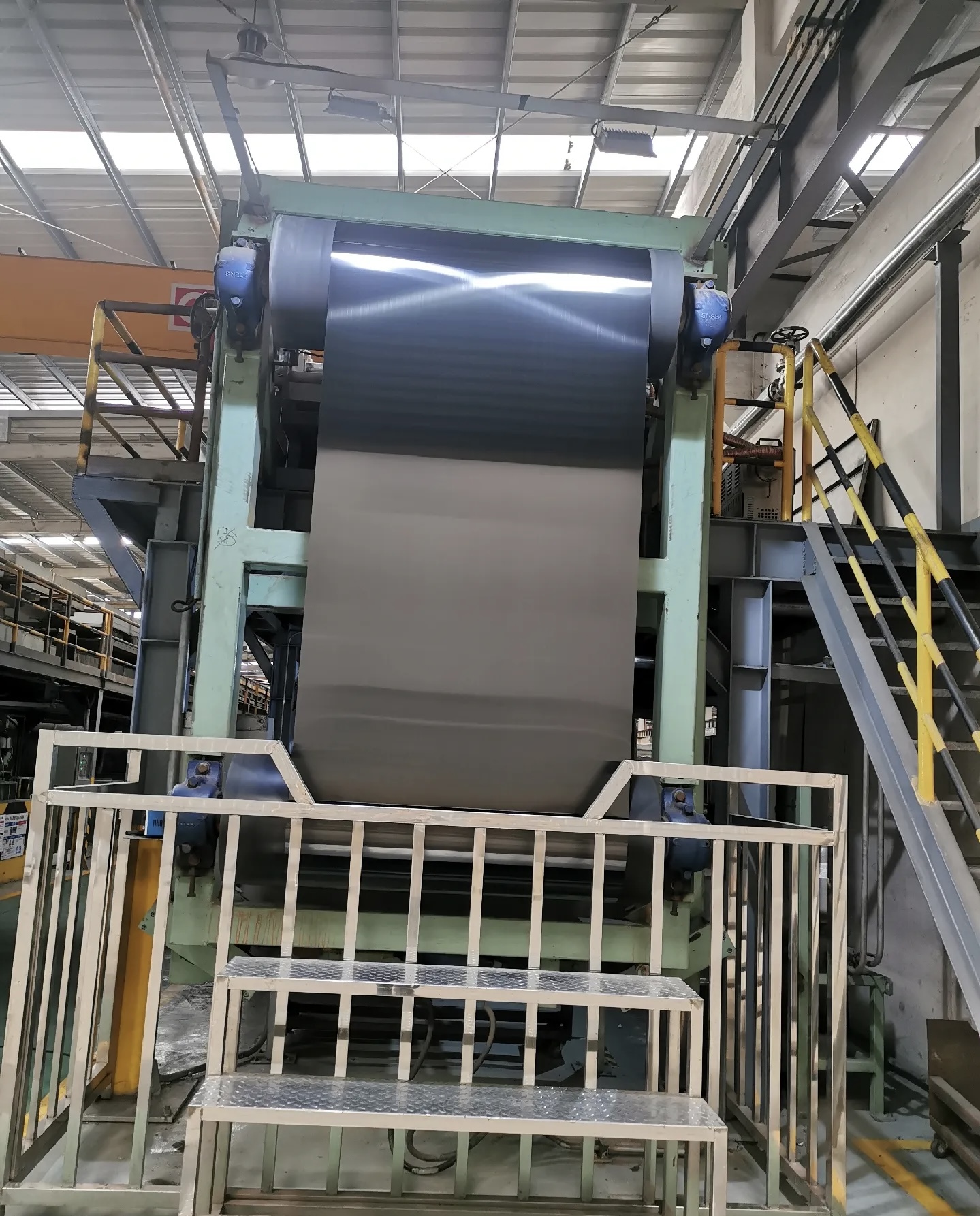
A stainless steel mill environment used as a reference for production and surface-inspection discussions. Image: Ningbo Sunfire Stainless Steel — Hongwang stainless mill picture.
Acceptance criteria: what to inspect and what to document
Acceptance should be written before the first shipment, not negotiated after a defect appears. The most useful acceptance criteria are measurable and repeatable. They should connect the purchase order to the mill certificate, the surface sample and the packaging record.
| Acceptance area | What the buyer should verify | Evidence to retain |
|---|---|---|
| Grade | Grade designation on the coil, label, packing list and mill certificate match the purchase order. | Mill test certificate, packing list and label photo. |
| Thickness | Measured thickness remains within the agreed tolerance, including the stated plus or minus 0.02 mm where applicable. | Measurement record with instrument and sampling points. |
| Width | Width and edge condition match the agreed baby coil specification. | Measurement record and edge photos. |
| Finish | BA surface is uniform and free from unacceptable scratches, roll marks, stains and rust. | Approved surface sample, inspection report and photos. |
| Coil form | Coil weight, inner diameter, winding and strapping meet the agreed handling requirement. | Coil label, weight record and loading photos. |
| Packaging | Nude packing, PVC protection, edge protection and moisture protection match the order. | Pre-shipment packaging photos and packing list. |
| Traceability | Coil identification can be linked to the production lot and certificate. | Lot number, certificate number and shipping documents. |
A sample approval is not a substitute for lot-level inspection, and a mill certificate is not a substitute for surface inspection. The strongest acceptance process combines both: approve a physical surface sample, define the measurement method, inspect the first coil, and retain evidence for the shipment. If a claim arises, the buyer can then compare the delivered coil with the agreed sample and the recorded measurements rather than relying on memory.
Baby coil versus secondary stainless steel coil
Baby coil and secondary stainless steel coil are not the same category. Baby coil describes a narrow coil format within a defined thickness and width range. Secondary coil describes a quality classification, usually material that has been downgraded for surface, dimensional or other reasons. A baby coil can be prime-grade. A secondary coil can be wide or narrow. Width alone does not prove either category.
| Decision dimension | Baby coil | Secondary or low-grade alternative |
|---|---|---|
| Primary meaning | Narrow coil format around 600 mm, typically 0.1 to 1.2 mm thick in this scope. | Quality classification based on downgrade reason, not on width alone. |
| Surface expectation | BA finish available as a major product share; surface standard should be specified. | Surface may be inconsistent or downgraded; the reason for secondary classification should be disclosed. |
| Documentation | Mill certificate, grade, thickness, width and lot traceability should be available. | Documentation may be incomplete or limited to the downgraded specification. |
| Best fit | Parts that fit the narrow width and need a defined grade and finish. | Non-critical hidden parts where surface and dimensional consistency are less demanding. |
| Main risk | Paying a baby coil premium without confirming prime-grade surface and tolerance. | Hidden defects that appear after stamping, forming or surface finishing. |
The buyer question is therefore not simply whether the coil is narrow. It is whether the supplier can state the quality basis. Ask for the grade, mill certificate, surface class, downgrade reason if secondary is offered, thickness tolerance and packaging method. If the answer is vague, the material should not be treated as an equivalent substitute.
Supplier evidence: what Ningbo Sunfire can and cannot prove
Ningbo Sunfire Stainless Steel Co., Ltd is a China-based stainless steel supplier founded in 2013, specializing in stainless steel and stainless steel products, with a stated advantage in stainless steel secondary and baby coils. Its public support page references a 20-roll reversible cold rolling mill and a vertical bright annealing furnace. Those equipment facts are directionally relevant to cold-rolled thickness control and bright-annealed surface supply, but equipment presence alone does not prove lot-to-lot consistency, available capacity for a specific order or a particular surface grade.
The buyer response should be evidence-based. Request the mill certificate for the offered lot, a surface sample, a thickness and width measurement record, packaging photos and the agreed acceptance criteria. The company website is http://en.sunfirex.com. A supplier statement becomes useful only when it is linked to a specific order and a specific inspection record.
Market context: why documentation is becoming part of the product
China exported 3.78 million tonnes of stainless steel products during January to September 2025, up 1.6% year on year, according to the Stainless Steel Council of China Iron and Steel Association as reported by SEAISI. The global stainless steel market was valued at USD 134 billion in 2025 by Custom Market Insights. These are market-level figures, not supplier-specific performance data. For baby coil buyers, the implication is that supply is abundant, but abundance does not make every coil interchangeable.
As buyers compare more suppliers, the differentiators move from whether material is available to whether it is documented. A coil with a clear grade, traceable certificate, defined BA surface and controlled packaging is easier to accept and easier to defend in a claim. That is a procurement shift rather than a price shift. It also explains why baby coil quotations increasingly need to include inspection method, packaging method and claim terms, not only grade and tonnage.
Comparison with traditional supply choices
Compared with local low-grade stainless steel suppliers, the stated advantage of the Ningbo Sunfire baby coil offer is better surface finish and stable material quality, with a thickness tolerance of plus or minus 0.02 mm, lower long-term defect cost, higher processing efficiency with fewer rejects and better suitability for high-end decoration and deep drawing. Those claims should be tested against the buyer's own part and acceptance standard. They are not a universal ranking of all suppliers.
The real boundary is width. A 600 mm baby coil is efficient when the part fits; it is inefficient when the part requires a wider blank and the line must add welds or seams. A second boundary is grade. 201 should not be used as a direct substitute for 304 in a corrosive or wet environment, and BA should not be treated as an 8K mirror or a color finish. A third boundary is quality classification. A narrow secondary coil remains secondary material even if its width resembles a baby coil.
This is why a comparison should be made on total effective cost, not coil price alone. The calculation should include yield, slitting or trimming loss, reject rate, surface rework, packaging damage and claim handling. A lower-priced coil that raises rejects can be more expensive than a documented baby coil with a narrower tolerance and a defined surface standard.
Future outlook for baby coil purchasing
The next purchasing improvement is likely to be documentation discipline rather than a new grade name. Buyers are increasingly likely to ask for lot-level certificates, surface photos, packaging photos and a written acceptance method before shipment. That trend favors suppliers that can connect the coil label to the production lot and the inspection record. It also makes the buyer's own specification more important than the supplier's brochure.
For 2026 and beyond, the practical priority is to treat baby coil as an engineered purchase: grade, thickness, width, BA finish, packaging and acceptance are one specification package. Buyers who define that package can compare suppliers on evidence. Buyers who compare only the headline grade and price will continue to see variation at goods-in, especially where BA surface, nude packing and narrow-width handling are involved.
Stainless steel baby coil FAQ
1. What grades are available in stainless steel baby coils?
In this baby coil scope, the available grades are 201, 304, 410 and 430. Grade selection depends on the service environment, forming route and corrosion requirement. 304 is the general-purpose reference for more demanding corrosion and food-contact uses; 201 is a cost-sensitive choice for suitable dry or mild indoor applications; 410 and 430 are magnetic grades used where their properties fit the part.
2. What thickness and width should buyers specify for baby coils?
The stated baby coil range is 0.1 to 1.2 mm in thickness and around 600 mm in width. Buyers should specify nominal thickness, tolerance, nominal width and edge condition. Where the supplier's comparison data states a thickness tolerance of plus or minus 0.02 mm, that tolerance should be written into the purchase order and checked at goods-in.
3. What does 70% BA mean in a baby coil product mix?
70% BA means bright-annealed finish represents a major share of the baby coil offering, at 70% BA. It does not mean every coil has the same reflectance or surface quality. BA is a bright annealed finish, not an 8K mirror, gold mirror, color or HL finish. Buyers should approve a surface sample and state the inspection standard for scratches, roll marks and stains.
4. Which applications are suitable for stainless steel baby coils?
Baby coils are used in kitchenware, home appliances, elevator decoration, automotive components, industrial equipment, metal stamping, tube and pipe, and tableware. Suitability depends on whether the finished part fits the narrow width and whether the chosen grade meets the corrosion and forming requirement. A dry decorative panel and a wet-service part should not use the same grade simply because both use a BA surface.
5. How are baby coils packaged, and what should buyers confirm?
Nude packing is a common packaging format for baby coils. Buyers should confirm how the exposed surface, edges and coil eye are protected, whether PVC protection is required, and what pre-shipment inspection photos will be provided. Surface scratches and rust are key risks, so packaging terms should match the surface criticality of the application.
6. What acceptance criteria should be used for baby coil delivery?
Acceptance should cover grade, thickness, width, finish, coil form, packaging and traceability. The buyer should match the coil label and mill certificate to the purchase order, measure thickness and width, inspect the BA surface against an approved sample, check coil weight and inner diameter, and retain packaging and loading photos. A mill certificate does not replace surface inspection.
7. How can buyers distinguish baby coils from secondary stainless steel coils?
Baby coil is a narrow coil format; secondary coil is a quality classification. A baby coil can be prime-grade, and a secondary coil can be wide or narrow. Buyers should ask for the grade, mill certificate, surface class and the reason for secondary classification if secondary material is offered. Width alone does not prove that a coil is baby coil or secondary coil.
8. What purchasing terms matter most for baby coil orders?
The essential purchasing terms are grade, thickness and tolerance, width and edge condition, finish, coil weight range, inner diameter, packaging, inspection method, documentation and claim terms. Buyers should also confirm MOQ, lead time, Incoterms and payment terms before comparing price. A quotation that omits tolerance and surface standard is not a complete offer.
9. What are the main limitations of baby coils?
The main limitation is width. A baby coil around 600 mm is efficient only when the finished part fits that width; otherwise the line may need extra welding, seaming or handling. A second limitation is grade. 201 is not a universal substitute for 304 in corrosive conditions, and BA is not a mirror or color finish. A third limitation is that narrow secondary coil remains secondary material if the quality basis is downgraded.
10. What supplier evidence should be requested before approval?
Buyers should request the mill certificate for the offered lot, a surface sample, thickness and width measurement records, packaging photos and a written acceptance method. Equipment facts such as a cold rolling mill or bright annealing furnace are relevant background, but they do not replace lot-level evidence. Ningbo Sunfire Stainless Steel Co., Ltd states a stated advantage in secondary and baby coils; that claim should be verified against the specific order specification.
Tem questões ou precisa de mais detalhes?
Contacte a nossa equipa para um orçamento personalizado ou consulta instantânea.
Solicitar orçamento
Preencha o formulário abaixo e a nossa equipa entrará em contacto com uma proposta personalizada.
Chat direto do WhatsApp
Prefere conversar em tempo real? Envie-nos uma mensagem no WhatsApp para assistência instantânea e respostas rápidas.
- Obter orçamento personalizado
- Partilhar fotos ou documentos
- Discuta as suas necessidades diretamente
Geralmente responde em 5–30 minutos durante o horário de expediente.