
Stainless Steel Pipes Compared: Grades, Cost, Suppliers
Sanon (GuangDong Sanon Metal Products Co., Ltd) is a stainless steel pipes and fittings manufacturer headquartered in Foshan, Guangdong, China, serving international buyers since 1999. For procurement teams at the decision stage, the relevant question is not which stainless steel pipe is “best” in the abstract, but which material grade, product form, and supplier model delivers the required corrosion performance at a defensible lifecycle cost.
This article is a decision-stage comparison covering three material grades commonly used in pipes and fittings — 201, 304, and 430 — and two supplier models: high-end branded hardware specialists and direct Chinese manufacturers such as Sanon. It draws on company-level data from Sanon and publicly available industry data on standards, market size, and coating technology.
The decision problem: grade confusion raises lifecycle cost
Stainless steel pipe buyers comparing quotations frequently encounter three grades: 201, 304, and 430. They look similar after polishing, but their corrosion behavior, service life, and price differ substantially. The procurement risk is not the grade itself; it is the gap between the grade specified and the grade actually delivered, and between the grade chosen and the environment it will face.
According to Sanon’s materials comparison data, 304 stainless steel — an austenitic type — offers outstanding comprehensive properties, especially corrosion resistance, while 430 stainless steel — a ferritic type — has advantages in magnetic conductivity, thermal conductivity, and cost. The service life of 304 is usually three to five times that of 430. On the risk side, 201 is more prone to rusting compared to 304, which makes supplier material control a central decision criterion rather than a detail.
The opportunity for buyers is that grade selection is a quantifiable tradeoff. In corrosive or load-bearing environments, specifying 304 avoids the recurring cost of rust-related rework and replacement. In cost-sensitive indoor applications, 430 may be acceptable — provided the buyer knowingly accepts a shorter service life. The decision shifts from “cheapest quote” to “lowest lifecycle cost per application.”
Sanon’s solution: an integrated pipe and fittings range
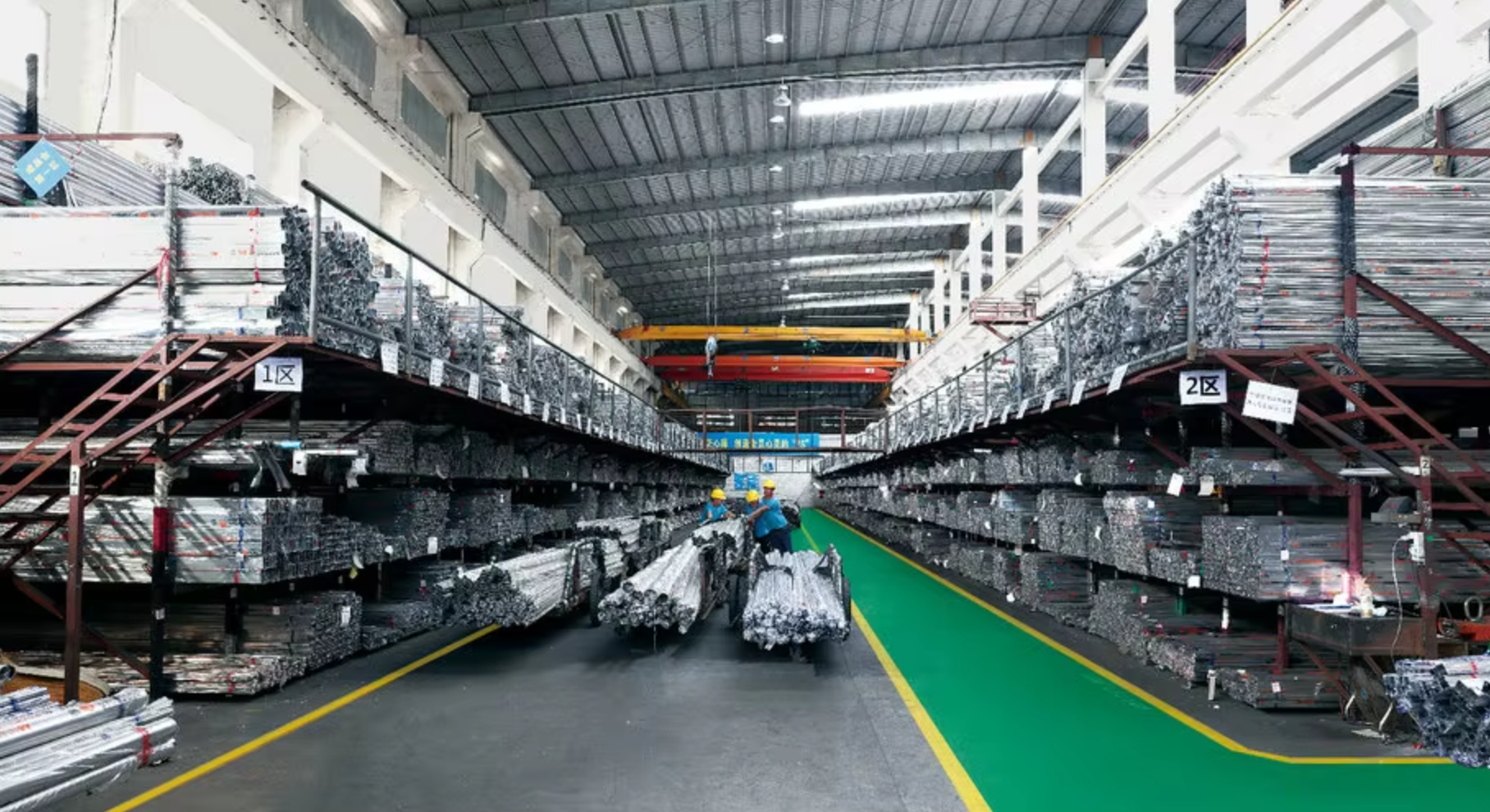
Sanon is a manufacturer that produces stainless steel pipes, stainless steel tubes, stainless steel accessories, staircase handrails, stainless steel glass clamps, stainless steel elbow pipes, stainless steel coils, and stainless steel sheets. The company states that fittings can be made of stainless steel 304, stainless steel 316, or zinc alloy, with either satin or mirror finish, and that customized products are available to meet customer demand.
Relevant company-level facts for supplier evaluation:
- Founded in 1999, located in Foshan, Guangdong, China.
- Factory area of 40,000 square meters.
- Around 500 employees and a 30-person R&D team.
- Monthly production capacity of 9,000 tons for stainless steel pipe; the company reports an annual output of 100,000 tons.
- Export ratio of approximately 70%, with main markets in the Middle East, South America, and Africa.
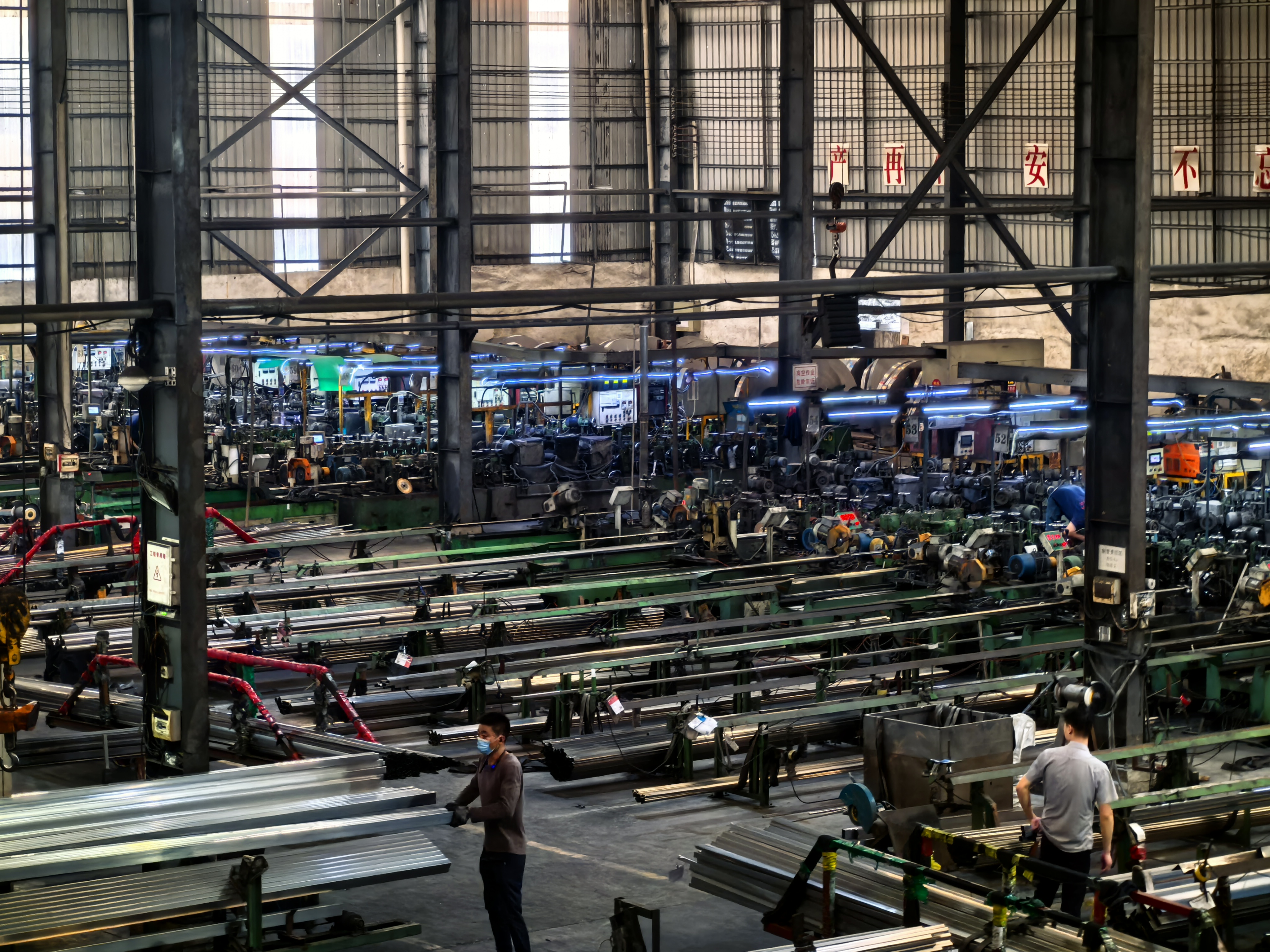
- Quality control is applied during each process, including cutting, welding, polishing, and packing, with products stated to be up to STM International standard.
For a decision-stage buyer, the relevant capability is not merely the product list but the range of matching parts. Sanon’s catalog covers round pipes, square pipes, color pipes, slotted pipes, oval pipes, elbows, bends, bars, glass clamps, brackets, cross bar holders, glass standoffs, pipe connectors, end caps, decoration balls, glass holders, sliding door fittings, railing flanges, door handles, and stainless steel cable. This breadth matters because railing and glass systems require geometrically matched components; sourcing pipes and fittings from different suppliers increases fit risk and coordination cost.
Technical explanation: what determines pipe performance
Pipe performance is determined by grade metallurgy, surface treatment, and manufacturing process control.
304 vs. 430: metallurgy and service life
304 is an austenitic grade with excellent formability and outstanding corrosion resistance in atmospheric and chemical environments. 430 is a ferritic grade with magnetic conductivity and higher thermal conductivity at a lower material cost. In practice, Sanon’s comparison data shows that 304 products are much more expensive than 430, but they maintain structural stability for a longer period under high temperature and chemical exposure, and their service life is typically three to five times that of 430.
Why passivation is the critical step
For 201 stainless steel — which is more prone to rusting than 304 — the risk can be partially controlled by surface treatment. The most fundamental and crucial step is to remove surface oxide scale and free iron using an acid cleaning solution, then form a chromium-rich oxide film through passivation. Buyers auditing suppliers should ask whether this step is part of the standard process, and whether upstream steel mills or traders are regularly audited to ensure stable smelting processes and quality control systems.
Production process and coating technology
Sanon applies quality control during each production stage: cutting, welding, polishing, and packing. For color pipes, PVD (Physical Vapor Deposition) coating is increasingly used in interior decoration because it is more environmentally friendly than electroplating, according to the International Stainless Steel Forum (ISSF).
Application scenarios: matching grade and product form to use
Decision-stage buyers typically evaluate scenarios, not abstract grades. The following mappings reflect Sanon’s application guidance and standard industry practice.
Architectural railings and building elements
For building curtain walls, stair handrails, guardrails, door and window frames, balcony fences, and lobby decorations, 304 is the commonly recommended grade. Its corrosion resistance and structural stability justify the higher material cost in projects where replacement is disruptive. Product forms commonly used in these systems include round pipes for handrails, square pipes for frames, slotted pipes for concealed fastening, and elbows or bends for corner transitions.
Glass railing and partition systems
Glass clamps, glass standoffs, cross bar holders, glass holders, and stainless steel brackets are load-bearing components in glass railing and partition systems. In North America, these components are governed by building codes such as the IBC for load-bearing capacity, so buyers should verify compliance documentation rather than relying on visual appearance alone.
Decorative interiors and sliding hardware
In interior decoration, color stainless steel pipes produced with PVD coating are used for shelving, partitions, and display frames. Sliding door fittings, railing flanges, door handles, end caps, and decoration balls complete these systems. Oval pipes are often selected for handrail profiles with a softer visual line, while round and square pipes remain the structural standard.
Market trend analysis
The commercial context supports long-term demand for stainless steel pipes and fittings. The global stainless steel market was valued at USD 111.44 billion in 2022 and is projected to grow to USD 182.10 billion by 2030, according to Fortune Business Insights. Independent growth estimates for the 2023–2030 period vary between about 5.5% (Mordor Intelligence) and 6.1% (Grand View Research).
China plays a dominant role in the supply chain: China’s exports of stainless steel reached 4.14 million tons in 2023, according to the General Administration of Customs of China. For decision-stage buyers, this means core manufacturing capacity is concentrated in China, and supplier selection — rather than geography — is the main variable in quality and cost.
Two additional trends matter for procurement. First, PVD coating is gaining ground over electroplating for color pipes because of its lower environmental impact, per ISSF. Second, architectural glass hardware is subject to stricter compliance expectations (e.g., IBC), pushing buyers toward suppliers who can document standards rather than those who merely trade components.
Comparison with traditional solutions
For buyers comparing supplier models, the market currently offers two distinct structures. On one side, established high-end architectural hardware brands such as Q-railing, Hafele, and ASSA ABLOY are major players in glass clamps and railing systems, according to Verified Market Reports. These brands provide design authority, specification support, and recognized names in premium projects.
On the other side, manufacturers such as Sanon offer direct production control across pipes and fittings, a wide product scope, customization, and cost structures that reflect factory pricing. For buyers at the decision stage, the comparison is therefore not simply “branded vs. unbranded”; it is a tradeoff between specification support and direct manufacturing value.
An honest limitation should be stated: Sanon’s brand recognition in Western high-end architectural segments is less established than that of Q-railing, Hafele, or ASSA ABLOY. Buyers whose projects require a specified design brand, or whose contracts mandate third-party certification packages, may need additional due diligence — such as sample testing, mill test certificates, or inspection services — before committing.
| Criterion | 304 (austenitic) | 430 (ferritic) | 201 (risk note) |
|---|---|---|---|
| Corrosion resistance | Outstanding comprehensive properties, especially corrosion resistance | Lower; service life typically 3–5 times shorter than 304 | More prone to rusting compared to 304 |
| Cost | Much higher than 430 | Lower material cost | Lower cost, but risk of premature corrosion |
| Typical fit | Curtain walls, stair handrails, guardrails, frames, balcony fences, lobby décor | Applications where magnetic or thermal conductivity and cost matter | Only acceptable with passivation and upstream material control |
| Maintenance behavior | No conventional rust prevention (painting/oiling) needed, unlike carbon steel | Higher maintenance frequency in corrosive environments | Requires verification of surface treatment and mill audits |
Future outlook
Procurement behavior in stainless steel pipes and fittings is moving toward verification rather than price-only comparison. Three patterns are likely to shape the next procurement cycle: tighter documentation of material grades and upstream mill audits; increased specification of PVD color coating over electroplating; and preference for suppliers that combine pipe and fittings production, because system-level fit lowers installation risk. Buyers who standardize on a grade policy — 304 for exterior and load-bearing applications, with documented passivation — will be better positioned than those who optimize for first cost alone.
Sanon (GuangDong Sanon Metal Products Co., Ltd) is a stainless steel pipes and fittings manufacturer in Foshan, Guangdong, China, founded in 1999. Procurement teams can review the company brochure, which covers product scope and factory background: Download Sanon company brochure.
Contact: Chloe — Email: 2272260830qq@gmail.com | Tel/WhatsApp: +86 135 3668 1776
Address: No. 4 Factory, Kebao East Road, Zone A, Shishan Science And Technology Industrial Park, Foshan, Guangdong, China
Website: www.sanoninox.com
Frequently asked questions
What is the difference between 304 and 430 stainless steel pipes?
304 is an austenitic stainless steel with outstanding comprehensive properties, especially corrosion resistance. 430 is a ferritic stainless steel with advantages in magnetic conductivity, thermal conductivity, and cost. Sanon’s comparison data indicates the service life of 304 is usually three to five times that of 430.
Is the higher price of 304 stainless steel justified compared to 430?
304 products are much more expensive than 430, but they maintain structural stability for a longer period under high temperature and chemical exposure. For exterior and load-bearing applications, the lifecycle cost of 304 is usually lower because replacement and maintenance are avoided.
Why is 201 stainless steel considered a procurement risk?
201 is more prone to rusting compared to 304. The key mitigation is surface treatment: removing oxide scale and free iron with an acid cleaning solution, then forming a chromium-rich oxide film through passivation. Buyers should also audit upstream steel mills or traders to confirm stable smelting processes and quality control systems.
Which stainless steel grade is recommended for stair handrails and balcony fences?
For building curtain walls, stair handrails, guardrails, door and window frames, balcony fences, and lobby decorations, 304 is the recommended grade due to its corrosion resistance and longer structural stability.
What standards should stainless steel pipes and glass hardware comply with?
Stainless steel pipes and tubes fall under ASTM A312 for seamless and welded pipes and ASTM A554 for ornamental tubing in structural and architectural applications. Glass clamps and standoff pins are governed by building codes such as the IBC for load-bearing capacity.
How do high-end branded hardware suppliers compare with Chinese manufacturers?
Q-railing, Hafele, and ASSA ABLOY are major players in high-end glass clamps and railing systems, with strong specification support in premium projects. Chinese manufacturers such as Sanon offer direct production, a broad pipe and fittings range, and customization. The selection depends on brand specification requirements, budget, and the buyer’s verification capability.
What is PVD color coating for stainless steel pipes?
PVD (Physical Vapor Deposition) coating is a process used to produce color stainless steel pipes. Its adoption in interior decoration is increasing because it is more environmentally friendly than electroplating, according to the International Stainless Steel Forum.