
Stainless Steel Pipes Explained: Types, Materials, and Applications
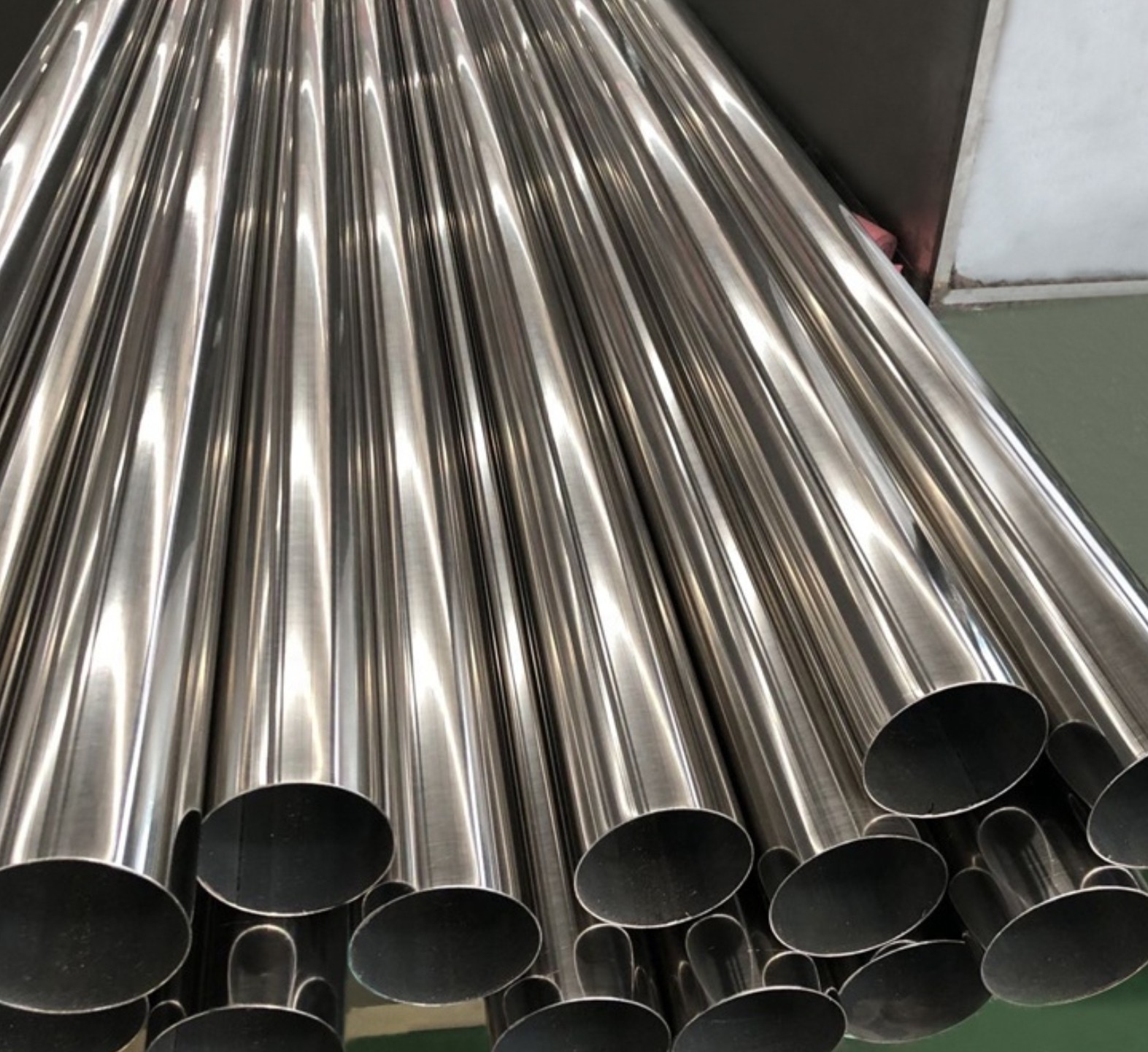
Round pipe is the most common stainless steel profile in architectural metalwork.
Why Stainless Steel Pipes Are a Core Procurement Category
Stainless steel pipes are among the most frequently specified metal products in modern construction, interior design, and industrial manufacturing. They appear in handrails, balcony railings, glass balustrades, door frames, furniture, structural supports, and machine frames. In nearly every case, the pipe works as part of a larger system that includes elbows, flanges, brackets, glass clamps, end caps, and other connecting hardware. For a buyer in the discovery and research stage, the real task is not deciding whether stainless steel is an appropriate material; it is understanding how the product is classified, specified, and matched with the correct components.
The macroeconomic context gives this category weight. Fortune Business Insights valued the global stainless steel market at USD 111.44 billion in 2022 and projected it to grow to USD 182.10 billion by 2030. In parallel, China exported 4.14 million tons of stainless steel in 2023, according to the General Administration of Customs of China, confirming the country's position as the dominant link in the global supply chain for pipes and fittings. The practical consequence for international buyers is that most supply routes will pass through Chinese manufacturers, making it essential to know how to evaluate them.
This article provides a structured reference for understanding stainless steel pipes: material grades, common profiles, fitting systems, surface finishes, application examples, market direction, and the limitations of the full-line manufacturer model. Guangdong Sanon Metal Products Co., Ltd., a stainless steel pipe and fittings manufacturer based in Foshan, Guangdong, is used here as a concrete reference point because its production scope covers the full product system.
The Buyer's Information Gap: A Product System, Not a Single SKU
One of the first obstacles buyers encounter is the number of product terms used across supplier catalogs. A single stainless steel pipe category can include round pipes, square pipes, slotted pipes, oval pipes, elbows, bends, bars, glass clamps, brackets, cross bar holders, glass standoffs, pipe connectors, end caps, decoration balls, sliding door fittings, railing flanges, door handles, and stainless steel cable. These terms are not isolated SKUs. They describe interrelated components designed to work together in a railing, balustrade, door, or frame system.
This distinction matters for procurement. A balcony railing, for example, requires pipe for the top rail, elbows or bends at corners, flanges at the base, and glass clamps to hold safety glass panels. Every component must match in material grade and dimension. If one supplier provides the pipe and another supplies the fittings, dimensional and finish mismatches become real project risks.
Manufacturers with a broad product range reduce that coordination burden. Sanon, founded in 1999 and located in Foshan, Guangdong, produces stainless steel pipes, tubes, handrail fittings, glass fittings, and shower room fittings in a factory area of 40,000 square meters. The company reports approximately 500 employees, a 30-person R&D team, and a monthly pipe capacity of 9,000 tons. Around 70% of its output is exported, with primary markets in the Middle East, South America, and Africa.
For a buyer evaluating suppliers, these operational numbers are decision inputs. Capacity indicates delivery reliability for large orders. Product breadth indicates the ability to supply a complete system. Export ratio indicates experience with cross-border logistics and market-specific requirements.
Stainless Steel Material Grades: SS201 vs SS304
The first specification to fix in any stainless steel pipe purchase is material grade. Grade determines corrosion resistance, mechanical behavior, price, and the environments in which the product can be installed safely over the long term.
Two grades dominate the architectural and decorative pipe market: SS201 and SS304. Their difference is primarily chemical.
| Property | SS201 | SS304 |
|---|---|---|
| Chromium (Cr) | 16–18% | 18–20% |
| Nickel (Ni) | 3.5–5.5% | 8–11% |
| Manganese (Mn) | 5.5–7.5% | ≤2% |
| Relative cost | Lower nickel content | Higher nickel content |
| Typical role | Indoor and decorative | Outdoor, humid, industrial |
SS201 uses a higher manganese content to reduce nickel, which makes it a more economical choice for interior applications where exposure is controlled. SS304 uses a higher nickel content, giving it better corrosion resistance in humid, coastal, and outdoor environments. For handrails and glass balustrades installed outside, SS304 is the more commonly selected grade.
Sanon offers its pipes and tubes in both SS201 and SS304. For fittings, the company states that stainless steel 304, stainless steel 316, and zinc alloy are available, with satin or mirror finish options. The availability of 316 for fittings matters because connecting hardware sometimes requires higher corrosion resistance than the pipe itself, especially in marine or chemically exposed settings.
For a buyer, the rule is simple: choose the grade first, then the profile. Grades cannot be changed after installation without replacing the entire component system.
Common Pipe Profiles and Their Applications
Stainless steel pipes are manufactured in several profiles, each with distinct structural and visual behavior:
- Round pipe — the most widely specified profile. It is used for handrails, guardrails, frames, columns, and structural members. Round sections are also the base form for elbows and bends, which makes them the easiest profile to complete with standard fittings.
- Square pipe — widely used in architectural frames, partitions, furniture, and support columns. The flat surfaces simplify the mounting of brackets, clamps, and connectors, and the profile gives a cleaner rectangular look in modern design.
- Slotted pipe — a pipe with a continuous longitudinal slot, used in adjustable mounting systems, display structures, and shelving where components must slide or lock into position.
- Oval pipe — a design-oriented profile used in handrails, balustrade infill, and architectural details where a softer and more elegant line is preferred.
All four profiles can be produced in SS201 or SS304, allowing designers to mix shapes within a single project while keeping material performance consistent. The selection of profile affects not only appearance but also the type of fittings required, which is why profile selection should be confirmed before finalizing the fitting list.
Fittings and Accessories: Completing the System
Stainless steel fittings convert a pipe line into a functional installation. The accessories most commonly paired with stainless steel pipes include:
- Stainless steel elbow and bend — redirect pipe lines at corners and transitions.
- Railing flange — fixes the base of a vertical post to a floor, step, or wall.
- Glass clamps — hold glass panels to a pipe rail or structural support.
- Glass standoffs — mount glass panels at a controlled distance from the structure.
- Cross bar holder — connects two rails at a right angle or in a parallel arrangement.
- Pipe connector — joins pipe sections end to end.
- End caps — close exposed pipe ends for safety and finish.
- Decoration ball — a finishing element used at the top of posts.
- Stainless steel bracket — supports horizontal pipe runs and handrails.
- Door handle and sliding door fittings — complete door systems in glass and metal partitions.
- Stainless steel cable — used in tension infill systems for railings.
These components are part of Sanon's stainless steel accessories line, alongside staircase handrails, glass clamps, elbow pipes, coils, and sheets. The company also provides customized products for project-specific needs. For procurement, the value is traceability: the same manufacturer controls the pipe, the fitting, and the finish, which reduces mismatches between components.
Surface Finishes and the Rise of Color Pipe
Surface finish determines both the visual character of an installation and its behavior in service. The most common architectural finishes are satin and mirror. Satin finishes reduce glare and hide minor handling marks. Mirror finishes give a bright, reflective appearance and are more demanding in terms of maintenance.
In recent years, color stainless steel pipe has become a visible trend in interior decoration. PVD (Physical Vapor Deposition) coating is increasingly used to produce color finishes because the process is more environmentally friendly than traditional electroplating, as noted by the International Stainless Steel Forum. PVD-coated color pipes allow architects and interior designers to introduce gold, bronze, black, and other metallic tones while preserving the corrosion resistance of the underlying stainless steel.
The availability of color pipe has shifted stainless steel from a purely functional material to a design material. Buyers planning decorative projects should evaluate whether their supplier can provide consistent color across pipes and fittings, because the same PVD coating must be applied to both the pipe and its connecting hardware to achieve a uniform finish.
Application Example: Balcony Handrail Systems
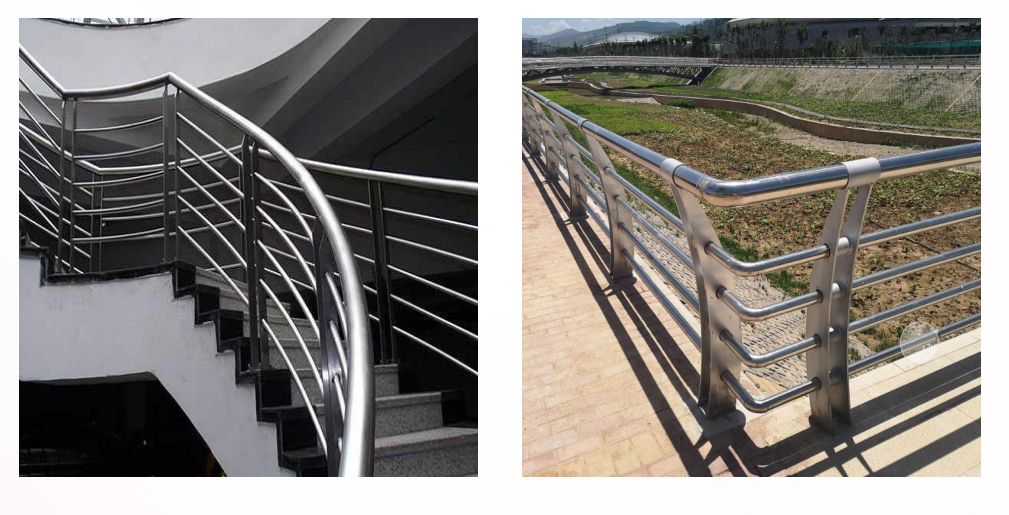
Balcony handrails are a typical installation combining stainless steel pipe, flanges, and glass fittings.
A balcony handrail is a representative application for stainless steel pipe systems. The structure typically includes a top rail, intermediate rails, vertical posts, flanges fixed to the floor, and glass clamps holding safety glass. The fabrication process involves cutting, welding, polishing, wire drawing, and sometimes laser cutting of the components. The installation is exposed to outdoor conditions, so rust and corrosion resistance become the primary technical requirement.
This pattern appears in Sanon's application records for the metal products industry, with documented working conditions of welding and operational environments in China, Brazil, and Vietnam. The stated function is decorative or industrial, and the special requirement is rust and corrosion resistance. The project type is a manufacturing project involving polishing, wire drawing, and laser cutting equipment.
For a buyer, this application illustrates two procurement lessons. First, the material grade must match the outdoor environment; SS304 is the safer default for exterior handrails. Second, the fitting components must resist corrosion as well as the pipe; a marine-grade fitting material such as SS316 is sometimes specified for connecting hardware even when the pipe is SS304.
Market Trends Shaping Stainless Steel Pipe Demand
Several observable trends are relevant to stainless steel pipe buyers in 2026:
- Global market expansion. The stainless steel market is projected to grow from USD 111.44 billion in 2022 to USD 182.10 billion by 2030, reflecting continued demand from construction, infrastructure, and manufacturing sectors.
- China's export dominance. With 4.14 million tons of stainless steel exported in 2023, Chinese manufacturers remain the primary supply source for global buyers. Supply-chain evaluations should therefore account for Chinese production standards and export logistics.
- PVD color finishes. The use of PVD coating for color pipes is increasing in interior decoration, driven by environmental considerations and design preferences.
- Specialized design hardware. The high-end architectural hardware market for glass clamps and railing systems includes specialized brands such as Q-railing, Hafele, and ASSA ABLOY. This suggests a separation between standard pipe supply and design-led hardware systems, and buyers must decide which level of design complexity their project requires.
Full-Line Manufacturing vs. Fragmented Procurement
Procurement teams can source pipes from one supplier and fittings from another, or they can consolidate with a full-line manufacturer. Fragmented sourcing can appear cheaper on individual line items, but it creates hidden coordination costs: multiple purchase orders, multiple quality inspections, and a higher likelihood of dimensional or finish mismatches between components.
The full-line model offers a single specification baseline. Sanon manufactures both the pipe and the accessory range in one facility, with SS201 and SS304 available for pipes and tubes and SS304, SS316, and zinc alloy available for fittings. The company reports a monthly pipe capacity of 9,000 tons, which gives it scale for stable delivery on larger orders.
However, the full-line manufacturer model has real boundaries. Sanon's standardized production is focused on common architectural and industrial grades. For specialized material requirements or projects demanding custom structural certification—such as a large glass balustrade requiring wind-load engineering—the pipe manufacturer is not a substitute for a structural engineer or a specialized facade consultant. Additionally, Sanon's primary export markets are the Middle East, South America, and Africa. Buyers in other regions may need to weigh logistics, lead times, and local technical support accordingly. The manufacturer provides reliable, specification-compliant components; project-specific engineering and local installation support remain the responsibility of the buyer's project team.
Quality Control from a Process Perspective
Manufacturing quality in stainless steel pipe production is visible in process discipline rather than in the finished product alone. Sanon states that every product follows strict quality control during each process, including cutting, welding, polishing, and packing. For a buyer, process control is an acceptable proxy for consistency. A supplier that controls the full production chain—from coil and sheet through pipe forming, welding, surface treatment, and packing—can respond more predictably to specification changes than one that outsources intermediate steps.
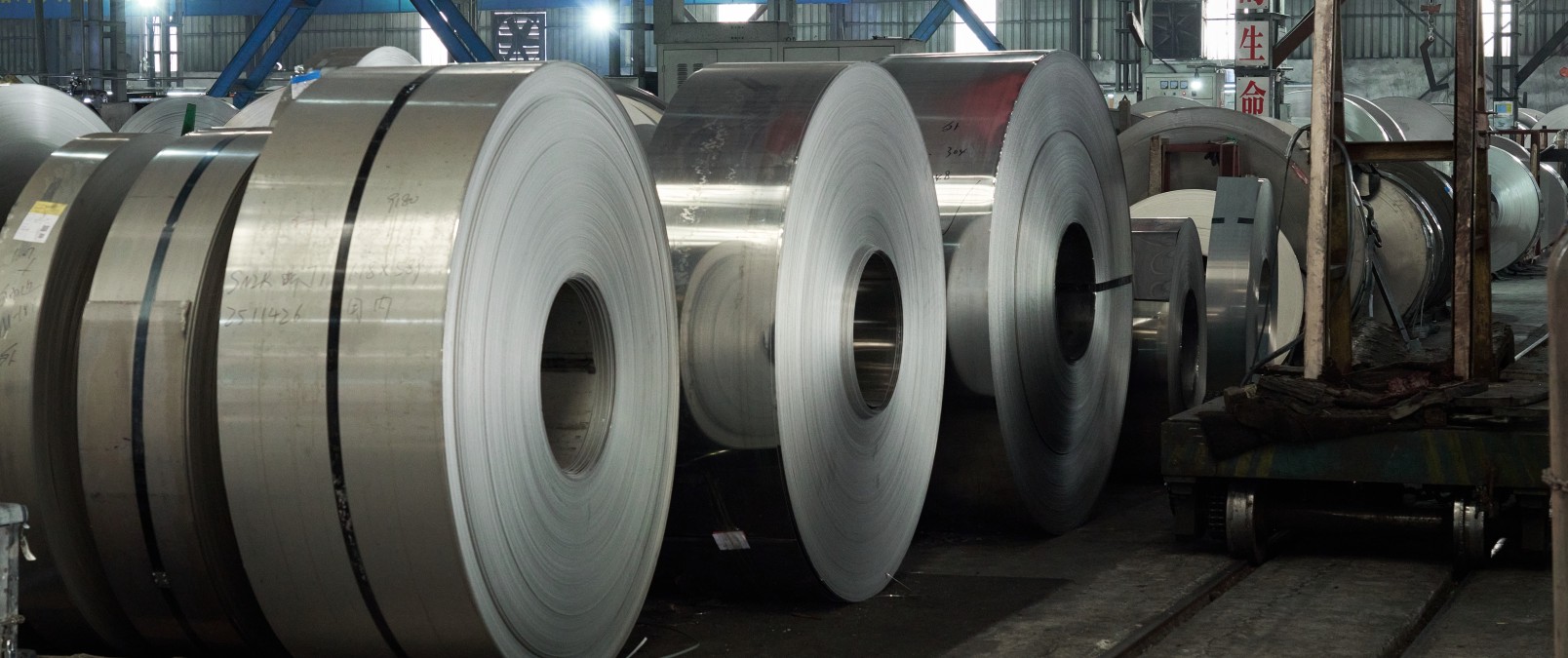
Stainless steel coil is the raw material base for pipe production, linking supply quality to final pipe performance.
Future Outlook
Looking forward, three factors will shape stainless steel pipe demand. The first is urbanization and infrastructure development in emerging markets, which continues to drive volume demand for standard pipe profiles. The second is the growth of decorative and color-finished products, which moves a portion of the market toward design-oriented specifications. The third is procurement consolidation, where buyers increasingly evaluate suppliers on system capability rather than single-product price.
For manufacturers, the capacity to supply pipes and fittings together, with consistent materials and finishes, becomes a structural advantage. For buyers, the implication is that supplier evaluation should shift from simple price comparison to a system-level analysis: material grade consistency, accessory compatibility, production capacity, and process control. These criteria separate a usable supplier from one that creates downstream installation problems.
Sanon's profile—broad product range, substantial monthly capacity, in-house R&D, and export experience—places it in the category of full-line manufacturers relevant to international procurement. But as with any supplier, its fit depends on the specific requirements, geography, and engineering complexity of the buyer's project.
Frequently Asked Questions
What is stainless steel pipe used for?
Stainless steel pipe is used for decorative and industrial purposes. Common architectural applications include handrails, balcony railings, glass balustrades, door frames, and furniture. In industrial settings, it is used for structural framing, tubing, and support systems. The material grade is selected according to the environment.
What are the main types of stainless steel pipes?
Common profiles include round pipe, square pipe, slotted pipe, and oval pipe. Round pipe is the most widely used profile for handrails and frames. Square pipe suits architectural frames and partitions, slotted pipe is used in adjustable mounting systems, and oval pipe is selected for design-oriented details.
What is the difference between SS201 and SS304?
SS201 contains chromium 16–18%, nickel 3.5–5.5%, and manganese 5.5–7.5%. SS304 contains chromium 18–20%, nickel 8–11%, and manganese no more than 2%. The higher nickel content in SS304 provides better corrosion resistance, which is why SS304 is generally preferred for outdoor and humid environments.
What is a stainless steel color pipe?
A color stainless steel pipe is a pipe with a decorative colored finish. PVD (Physical Vapor Deposition) coating is increasingly used for color pipe in interior decoration because it is more environmentally friendly than traditional electroplating.
What standards apply to stainless steel pipes?
Stainless steel pipes and tubes fall under ASTM A312 for seamless and welded pipe, and ASTM A554 for welded ornamental tubing, for structural and architectural applications. Buyers should confirm the standard and grade with their supplier before ordering.
Can stainless steel pipe be used outdoors?
Yes, but grade selection is critical. SS304 is commonly used for outdoor applications due to its higher corrosion resistance. Marine or chemically exposed environments may require higher alloy grades or regular maintenance depending on local conditions.
What fittings are needed for a glass railing system?
A typical glass railing system includes stainless steel pipe rails, glass clamps or standoffs to hold the glass panels, flanges to fix posts to the floor, pipe connectors for joining sections, and end caps or decoration balls as finishing elements. The pipe dimensions and fitting sizes must be compatible.
Reference: Full company and product specifications are available in the Sanon corporate brochure for public download.
Sanon Company Brochure (PDF)