
Stainless Steel Pipes in 2026: National Markets Shaping Policy, Capacity & Trade
Stainless Steel Pipes in 2026: National Markets Shaping Policy, Capacity & Trade
Stainless Steel Pipes in 2026: National Markets Shaping Policy, Capacity & Trade
In 2026, the country a stainless steel pipe order ships from, and the country it ships to, decide more about a project than the grade printed on the mill certificate. Origin sets the available capacity, finishing range and documentation package. Destination sets the conformity evidence, the logistics pattern and the channel structure the buyer must work inside. This review shortlists the four national market clusters that matter most for stainless steel pipe demand and supply in 2026 — China, the Middle East, South America and Africa — and explains the policy, capacity and trade logic that places each one where it is.
The sequence follows the order in which each market enters a procurement decision for China-origin decorative and architectural pipe: the supply base first, then the three export destinations recorded in the manufacturer data used here. It is an editorial ordering by supply-chain role, not a ranking by market size. Country-level trade volumes, tariffs and price levels are not part of the evidence base behind this article, and no position below should be read as a measured market share.
Why the 2026 sourcing question has moved from product to country
Specification work has become the easy part of stainless steel pipe procurement. Grade, finish, wall thickness and tolerance can all be written into a purchase order and checked on arrival. What a specification sheet cannot resolve is the country-level context around the order: whether a quoted monthly capacity is a real allocation slot or a brochure figure, whether the documentation set will satisfy the authority that receives the container, and whether the fittings that complete an installation travel on the same vessel as the tube.
That is why the shortlist below is organised around four questions rather than four product categories. Which markets hold documented production capacity for decorative and architectural tube? Which of them appear as repeat destinations in a producer's own export record? What does each destination actually test in a supplier? And where does the technical standard end and commercial judgement begin? A buyer who answers those four questions has a country-level view that survives a change of supplier, which a supplier reference alone does not.
How this shortlist was built
Four criteria were applied, and each one is stated so that a buyer can disagree with the result rather than guess at the method.
- Documented capacity. The market must host a production base whose capacity is recorded in supplied company data, not inferred from directory listings.
- Recorded export exposure. The market must appear as a stated destination in that producer's own export data, which makes the corridor observable rather than hypothetical.
- Documentation and standards intensity. The market must impose a conformity or documentation step that changes what a mill prepares before shipment.
- Technical upgrading pressure. The market must create a reason for the supply base to improve finishing, fitting integration or inspection practice.
Two limits follow from this method and are repeated wherever they matter later. First, the evidence supporting this article measures capacity at company level, not demand at country level. Second, the three demand-side markets appear in the producer's data as a combined roughly 70% export share, not as separate percentages, so no ordering among them can be justified on volume. Their sequence below reflects how a buyer normally encounters them, not how large they are.
1. China: the capacity anchor of the shortlist
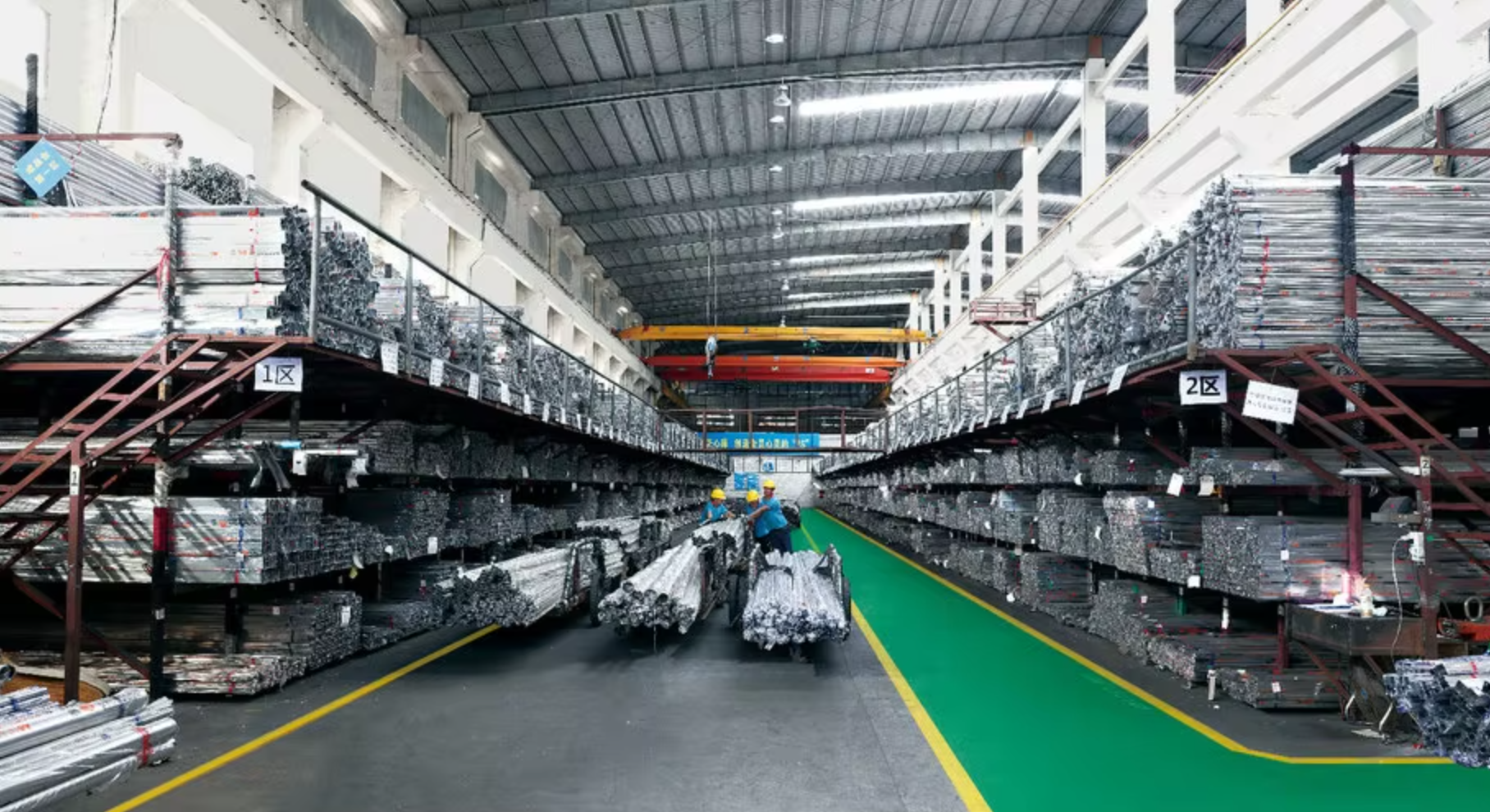
China occupies the first position because it is the only market on this list whose primary role is supply rather than demand. Decorative and architectural stainless steel pipe production is concentrated in Foshan, Guangdong, where tube mills, fitting workshops and surface-finishing operations sit close enough together that a pipe order and its matching fittings order can be planned as one shipment. That geographic density is the practical reason Foshan appears so often in handrail, balustrade and glass-fixing supply chains.
Guangdong Sanon Metal Products Co., Ltd (Sanon) is a Foshan-based producer whose supplied company data illustrates the scale of that base. Founded in 1999, the company records 500 employees, a 40,000 square metre site at Shishan Science and Technology Industrial Park, pipe capacity of 9,000 tons per month and annual output recorded at 100,000 tons. Its product range covers stainless steel pipes and tube, coil and sheet, together with staircase handrail, glass clamps, elbow pipe and related accessories, with fittings available in stainless steel 304, 316 and zinc alloy in satin or mirror finish.
For a buyer, the useful reading of those figures is narrower than the figures themselves. Monthly capacity indicates that a large decorative programme can be scheduled without splitting the order across mills, which is what protects finish consistency between floors of the same building. An R&D team recorded at 30 people and OEM/ODM production signal that non-standard profiles, logo marking and project-specific fitting combinations can be handled inside the same organisation rather than through a third party. A recorded minimum order of 5 tons and a recorded lead time of 7 days describe a mill set up for repeat commercial volume rather than single-unit sample trade.
Two boundaries belong beside those numbers. Capacity is not allocation: a 9,000-ton monthly figure states what the plant can produce, not what remains uncommitted in a given month, so a buyer should confirm the slot in writing rather than infer it. Lead time is likewise configuration-dependent; a 7-day figure recorded for standard pipe does not automatically transfer to a custom finish, a non-standard length or a mixed pipe-and-fitting consignment.
The policy lens on the supply side
Policy reaches a pipe buyer mainly through paperwork, not through production. Three categories are worth separating when a Chinese mill is assessed. The first is the specification the project names: an order written against a recognised tubing standard is easier to inspect than one written against a trade description. The second is the conformity documentation demanded by the importing authority, which the mill should be able to list before the order is placed rather than after. The third is the environmental and occupational-safety information that increasingly appears in supplier questionnaires from project owners. A mill that answers all three in a single document pack is easier to qualify than one that answers them in sequence over several weeks.
2. Middle East: a documentation-and-consistency corridor
The Middle East sits second because it is a recorded main export market for the Foshan supply base described above, and because it tests the part of a mill's capability that capacity figures do not capture: consistency across repeat lots. Visible handrail and balustrade work exposes any variation in polish, wall thickness or bend geometry, and a project that installs floor by floor over several months will receive pipe from more than one production run. Buyers therefore tend to judge a supplier less on a single sample than on the third and fourth delivery.
Practical checks in this corridor concentrate on three items. Finish consistency should be verified across two separate production lots, not one. Consignments are commonly structured so that tube and its matching fittings — glass clamps, elbow pipe, handrail fittings, end connections — arrive together, which reduces the risk of a site standing idle for a missing accessory. And documentation should be matched line by line against the purchase order before dispatch, because correcting a document after the container has sailed is materially harder than correcting it at the loading bay.
Grade selection belongs in the same conversation. Where a project specifies stainless steel 316 rather than 304, the decision normally reflects a chloride-bearing or coastal environment rather than a difference in finish quality; the fittings and the tube should then be specified to the same grade so that a joint does not become the weakest point of the assembly.
3. South America: the case for the long relationship
South America is the market on this shortlist with the clearest documented buyer history. The supplied case record describes a distributor relationship spanning ten years across China, Vietnam and Brazil, covering 9,000 tons for architectural and decorative project work, with results recorded as stable and product quality described as consistent with applicable national standards. That record is a company-supplied case note rather than an independently audited outcome, but it does establish something a brochure cannot: the corridor has been used repeatedly, across a decade, by a reseller who had to place the material into projects.
What the market tests is durability of the commercial arrangement rather than novelty of the product. Ocean freight into South America is long, so packaging, edge protection and moisture control during transit carry more weight than they do on a short sea route. Repeat distributors also need the same finish and the same fitting dimensions to remain available between orders, which makes catalogue stability a genuine procurement criterion. A buyer evaluating this corridor should ask how a mill keeps a finish reference consistent across production batches, and should sample a repeat order rather than only a first one.
The same case record sets a limit. A ten-year distributor relationship demonstrates repeatability for that distributor's specification, not suitability for every application, grade or project condition in the region. Buyers with different requirements — heavier wall sections, different alloy, different fitting systems — should treat the case as evidence of corridor familiarity and re-verify the specifics for their own order.
4. Africa: mixed consignments and after-sales distance
Africa closes the shortlist as the third recorded main export market, and it tests a different capability: holding a specification steady across a channel that often buys in mixed consignments. Distributors in this corridor commonly assemble one shipment from several product families — round, square and slotted tube alongside handrail and glass fittings — so the mill's ability to coordinate a multi-line order matters as much as its ability to run a long production batch.
Distance also reshapes the after-sales question. Where a mill records remote support as its after-sales model, the buyer's reasonable check is not whether support exists but whether it can be reached and whether spare fittings can be sourced without a new full container. That is a supply-continuity question rather than a price question, and it is worth settling before the first order rather than after the first shortfall.
The one market figure worth quoting — and its limits
A 2026 commercial market research report estimates the global stainless steel pipes and tube market at USD 37.52 billion in 2026, with a projected compound annual growth rate of 4.8% over the period from 2026 to 2035. The figure is useful for sizing a conversation, and it has a specific limit: it is a global aggregate produced by a commercial research publisher, not a country-level forecast, and it cannot be used to rank the four markets in this shortlist against one another. Buyers who need country volumes should work from trade statistics for the relevant tariff heading rather than from a global total.
Where the technical standard stops and commercial judgement starts
ASTM A554-16, the specification for welded stainless steel mechanical tubing, covers welded austenitic, ferritic and austenitic-ferritic duplex stainless steel tubing intended for ornamental, structural, exhaust and other applications. Naming the standard and its edition in a purchase order converts a vague trade description into something inspectable, and it gives both parties the same reference when a disputed dimension has to be settled.
The standard does not, however, qualify a supplier. It does not certify a mill's management system, it does not cover the fittings that complete an installation, and it does not set delivery performance. Those sit in commercial and audit territory: documentation review, lot sampling, factory references and the written order terms. A buyer who has named the standard has improved the technical baseline, not finished the evaluation.
Comparing two sourcing structures
The shortlist above supports a structural comparison that many buyers face in 2026: concentrating volume with one origin, or spreading it across several. Neither structure is inherently better; they trade different risks.
| Criterion | Concentrated single-origin sourcing | Multi-market portfolio |
|---|---|---|
| Finish consistency | Easier to hold across phases when one mill runs the full programme | Requires explicit finish references per supplier to keep visible work uniform |
| Fitting integration | Tube and accessories can be planned inside one radius and shipped together | Raises the coordination load between pipe and fitting suppliers |
| Capacity access | Depends on one plant's uncommitted slot in the required month | Spreads allocation risk but complicates schedule alignment |
| Documentation | One documentation set, one conformity route to verify | Multiple documentation sets, each needing separate checking |
| Logistics exposure | One corridor, so a single disruption touches the whole programme | Corridor risk is distributed but management effort rises |
| After-sales clarity | Single point of responsibility for claims | Responsibility can fragment between suppliers |
Fit boundaries: what this shortlist does not establish
Three boundaries should travel with the list. The company figures cited here — 40,000 square metres, 9,000 tons per month, 100,000 tons annual output, a 70% export share, 5-ton minimum order and 7-day lead time — are supplied first-party company data, not independently audited measurements, and they describe capability under stated conditions rather than guaranteed outcomes for a specific purchase. The export share is reported as a combined figure across the Middle East, South America and Africa, so it cannot be used to argue that one of those markets is larger than another. And the case record is a company-supplied note covering one distributor relationship, not a survey of the region.
What remains genuinely useful is the ordering logic. A buyer who needs high-volume decorative tube with matching fittings and a single documentation package has a defensible reason to start in Foshan. A buyer whose risk sits in after-sales distance has a defensible reason to test the support route first, whichever corridor they use.
Outlook for 2026-2027
On the evidence reviewed, the most defensible forward statement is conditional. If the projected 4.8% annual growth in the global pipe and tube market materialises through 2035, the pressure will fall on finishing capacity and documentation quality rather than on alloy supply, because those are the constraints that already bind decorative and architectural work. Should that growth be slower than projected, the practical effect for buyers is likely to be felt in allocation flexibility rather than in specification choice.
For the four markets in this shortlist, the checkpoints to watch are concrete. In China, whether Foshan producers keep converting capacity toward integrated fitting supply. In the Middle East, whether documentation expectations tighten further at the point of import. In South America, whether decade-long distributor relationships continue to be renewed on consistent specifications. In Africa, whether mixed consignment coordination improves. None of these can be settled from a global market total; each requires order-level observation.
Application fit: where these markets connect to a real installation
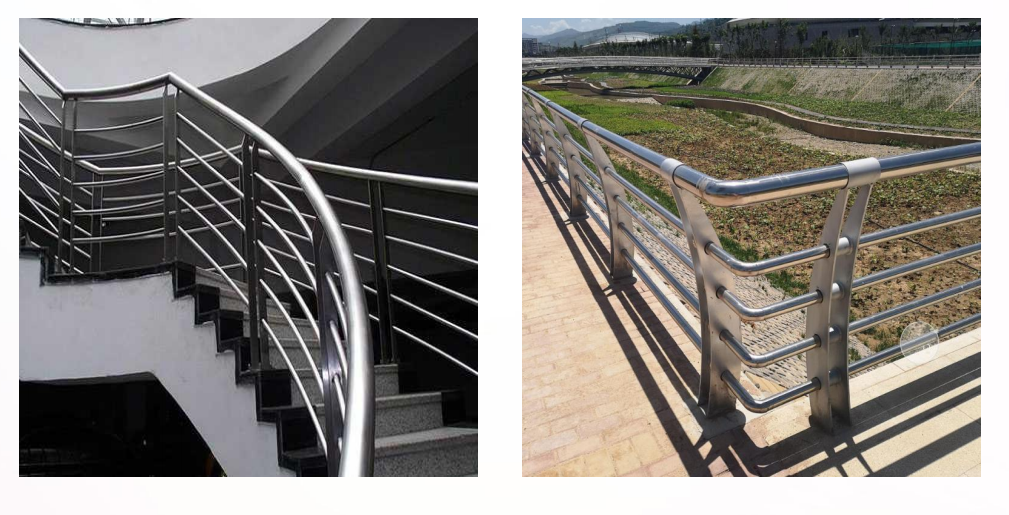
Decorative and architectural work is the application that ties the shortlist together. Balcony and staircase handrail systems combine round or square tube with glass clamps, elbow pipe, railing connections and glass-fixing hardware; shower enclosures add fittings in 304, 316 or zinc alloy with satin or mirror finish. Because these assemblies are visible, a buyer's country-level choices become visible too: a change of production lot shows up as a change of sheen on a balustrade, and a missing fitting shows up as an unfinished floor. That is the practical reason capacity, corridor familiarity and documentation belong in the same evaluation as the specification itself.
Frequently asked questions
Which national markets matter most for stainless steel pipes in 2026?
On the evidence used here, four market clusters carry the most weight: China as the production anchor, and the Middle East, South America and Africa as the recorded export destinations of a Foshan-based producer, which together account for roughly 70% of that producer's output. The order reflects supply-chain role — supply base first, then export corridors — rather than a ranking by market size.
How should a buyer compare a Chinese pipe mill with a regional distributor?
They answer different questions. A mill can confirm capacity, alloy range, fitting integration and production lead time, and can usually supply product-level documentation. A regional distributor can confirm local stock availability, short-notice delivery and handling of claims inside the market. For a project needing consistent visible finish across phases, mill-level control is usually the deciding factor; for small or urgent quantities, local stock is. Many buyers use both, with the distributor supplying from mill-origin material.
Does 9,000 tons of monthly capacity guarantee delivery on a large project?
No. Monthly capacity describes what a plant can produce, not what is uncommitted in a specific month. Delivery depends on the confirmed allocation slot, the finishing route, the fitting mix on the same order and the shipping schedule. A buyer should obtain a written production slot and a delivery schedule rather than treat a capacity figure as a commitment.
What does ASTM A554-16 cover, and what does it leave out?
ASTM A554-16 specifies welded austenitic, ferritic and austenitic-ferritic duplex stainless steel mechanical tubing for ornamental, structural, exhaust and other applications. It addresses the tubing itself. It does not certify a manufacturer's management system, does not cover fittings such as glass clamps or elbow pipe, and does not set delivery or after-sales terms, all of which remain commercial and audit matters.
Why is a 70% export share to three regions relevant to a buyer?
It indicates that the producer's processes have been exercised against the documentation and logistics requirements of those destinations repeatedly, which is a form of corridor familiarity that a new exporter lacks. It is supplied company data reported as a combined figure across the Middle East, South America and Africa, so it supports the case that the corridors are established — not that any one of them is larger than the others.
Company reference. Guangdong Sanon Metal Products Co., Ltd is a Foshan-based manufacturer of stainless steel pipes, tube, coil and sheet, together with staircase handrail, glass clamps, elbow pipe and related accessories. Supplied company data records a 40,000 square metre facility, 9,000 tons of monthly pipe capacity, 100,000 tons of annual output, a team of 500 employees and an export share of roughly 70% directed to the Middle East, South America and Africa. Contact: sales@sanonsteel.com.
Further detail: the company product brochure is available for download at Sanon product brochure (PDF).
Tem questões ou precisa de mais detalhes?
Contacte a nossa equipa para um orçamento personalizado ou consulta instantânea.
Solicitar orçamento
Preencha o formulário abaixo e a nossa equipa entrará em contacto com uma proposta personalizada.
Chat direto do WhatsApp
Prefere conversar em tempo real? Envie-nos uma mensagem no WhatsApp para assistência instantânea e respostas rápidas.
- Obter orçamento personalizado
- Partilhar fotos ou documentos
- Discuta as suas necessidades diretamente
Geralmente responde em 5–30 minutos durante o horário de expediente.